Where Is Warm in Europe in May? 10 Destinations Compared
May warmth in Europe runs from 21°C in Nice to 27°C in Cyprus and Turkey. Compare typical highs, sunshine and rain to choose your destination.
On this page
If you want reliable warmth in May without July heat, aim for Cyprus, the Turkish Riviera or the Canary Islands, where typical daytime highs run from about 24°C (75°F) to 27°C (81°F). Crete, the Balearics and southern Italy sit a step cooler at roughly 22-24°C (72-75°F), which suits walking and sightseeing better than sunbathing. Greece's mainland and the Adriatic coast are warmer than April but still carry a real chance of rain, so island choice becomes a weather decision as much as a scenic one.
Where May Delivers Warmth: The Short Answer
Cyprus is the hottest mainstream choice. At Larnaca, the 1991-2020 normals give a mean daily maximum of 27.0°C (81°F) and a minimum of 16.4°C (62°F) in May, with 338 hours of sunshine across the month. Paphos is marginally softer at 24.9°C (77°F) by day and 15.2°C (59°F) at night.
| Destination | Average high | Average low | Sunshine | Rain days | Source |
|---|---|---|---|---|---|
| Seville | 27.2 °C (81 °F) | 14.2 °C (58 °F) | 293 h | 3.7 | AEMET, 1981-2010 |
| Larnaca | 27 °C (81 °F) | 16.4 °C (62 °F) | 338 h | – | WMO normals, 1991-2020 |
| Bodrum | 26.6 °C (80 °F) | 17.2 °C (63 °F) | 266 h | 2.8 | WMO normals, 1991-2020 |
| Antalya | 26.4 °C (80 °F) | 15.7 °C (60 °F) | 9.4 h/day | 7.1 | MGM, 1991-2020 |
| Sicily (Catania) | 26.1 °C (79 °F) | 12.3 °C (54 °F) | – | 2.61 | WMO normals, 1991-2020 |
| Athens | 25.2 °C (77 °F) | 16.1 °C (61 °F) | – | 6.8 | HNMS, 1991-2020 (temperatures) |
| Thessaloniki | 24.9 °C (77 °F) | 13.7 °C (57 °F) | – | 10.7 | HNMS, 1991-2020 (temperatures) |
| Paphos | 24.9 °C (77 °F) | 15.2 °C (59 °F) | 337 h | – | WMO normals, 1991-2020 |
| Lanzarote | 24.6 °C (76 °F) | 16.8 °C (62 °F) | 297 h | 0.4 | AEMET, 1981-2010 |
| Amalfi Coast (Capri station) | 24.4 °C (76 °F) | 15.8 °C (60 °F) | – | 4.08 | WMO normals, 1991-2020 |
| Tuscany (Florence) | 24.3 °C (76 °F) | 11.9 °C (53 °F) | – | 7.62 | WMO normals, 1991-2020 |
| Málaga | 24.3 °C (76 °F) | 14.2 °C (58 °F) | 292 h | 3.1 | AEMET, 1981-2010 |
| Fuerteventura | 24.1 °C (75 °F) | 17.1 °C (63 °F) | 280 h | 0.2 | AEMET, 1981-2010 |
| Sardinia (Cagliari) | 24.1 °C (75 °F) | 13.3 °C (56 °F) | – | 4.19 | WMO normals, 1991-2020 |
| Lake Garda (Verona) | 24 °C (75 °F) | 12.5 °C (55 °F) | 241 h | 7.73 | WMO normals, 1991-2020 |
| Tenerife (south) | 23.9 °C (75 °F) | 17 °C (63 °F) | 246 h | 0.3 | AEMET, 1981-2010 |
| Crete (Heraklion) | 23.9 °C (75 °F) | 15.6 °C (60 °F) | – | 4.4 | HNMS, 1991-2020 (temperatures) |
| Rhodes | 23.8 °C (75 °F) | 17.8 °C (64 °F) | – | 4.6 | HNMS, 1991-2020 (temperatures) |
| Corfu | 23.8 °C (75 °F) | 12.9 °C (55 °F) | – | 8 | WMO, not stated by source |
| Kos | 23.8 °C (75 °F) | 16.6 °C (62 °F) | – | – | HNMS, 1991-2020 (temperatures) |
| Mallorca | 23.7 °C (75 °F) | 11.3 °C (52 °F) | 283 h | 3.8 | AEMET, 1981-2010 |
| Gran Canaria | 23.6 °C (74 °F) | 17.3 °C (63 °F) | 272 h | 0.3 | AEMET, 1981-2010 |
| Algarve (Faro) | 23.5 °C (74 °F) | 15 °C (59 °F) | – | 3.8 | IPMA, 1991-2020 |
| Kefalonia (Argostoli) | 23.4 °C (74 °F) | 14.6 °C (58 °F) | – | 4.6 | HNMS, 1991-2020 (temperatures) |
| Valencia | 23.4 °C (74 °F) | 14.6 °C (58 °F) | 258 h | 4.3 | AEMET, 1981-2010 |
| Rome | 23.4 °C (74 °F) | 12.6 °C (55 °F) | 271 h | 6.03 | WMO normals, 1991-2020 |
| Palermo | 23.3 °C (74 °F) | 15.3 °C (60 °F) | – | 4.1 | WMO, 1971-2000 |
| Malta (Luqa) | 23.3 °C (74 °F) | 14.9 °C (59 °F) | – | 2.8 | WMO, 1961-1990 |
| Santorini | 23.1 °C (74 °F) | 16.9 °C (62 °F) | – | – | HNMS, 1991-2020 (temperatures) |
| Lisbon | 23.1 °C (74 °F) | 14.4 °C (58 °F) | – | 5.8 | IPMA, 1991-2020 |
| Bologna | 23 °C (73 °F) | 12 °C (54 °F) | – | 8.1 | WMO, 1971-2000 |
| Ibiza | 22.7 °C (73 °F) | 14.6 °C (58 °F) | 272 h | 3.2 | AEMET, 1981-2010 |
| Cinque Terre (Sarzana-Luni) | 22.2 °C (72 °F) | 13 °C (55 °F) | – | 5.81 | WMO normals, 1991-2020 |
| Madeira (Funchal) | 22 °C (72 °F) | 16.2 °C (61 °F) | – | 3.3 | IPMA, 1991-2020 |
| Lake Como (Milan Malpensa) | 21.8 °C (71 °F) | 10.2 °C (50 °F) | – | 8.14 | WMO normals, 1991-2020 |
| Menorca | 21.6 °C (71 °F) | 13.9 °C (57 °F) | 270 h | 4.4 | AEMET, 1981-2010 |
| Dubrovnik | 21.3 °C (70 °F) | 15.2 °C (59 °F) | – | 9.5 | WMO, not stated by source |
| Cappadocia (Nevşehir) | 21.2 °C (70 °F) | 9.3 °C (49 °F) | 8.3 h/day | 13.4 | MGM, 1991-2020 |
| Barcelona | 21.1 °C (70 °F) | 12.8 °C (55 °F) | 250 h | 4.7 | AEMET, 1981-2010 |
| Nice | 21 °C (70 °F) | 14.5 °C (58 °F) | 271 h | 5.1 | Météo-France, 1991-2020 |
Long-term averages (climate normals) from national weather services or WMO normals; periods differ by source and are shown per row. Rain days count days with at least 1 mm where the source states a threshold. Averages describe a typical month, not a forecast.
The Turkish coast matches it: Antalya averages 26.4°C (80°F) by day and 15.7°C (60°F) at night in May, and Bodrum records 26.6°C (80°F) with 17.2°C (63°F) after dark. The Canaries are close behind at 23.6-24.6°C (74-76°F) by day, with nights near 17°C (63°F) and very little rain.
Crete, Sicily and Sardinia form the next band. Heraklion reaches 23.9°C (75°F) and Cagliari 24.1°C (75°F), both with nights around 13-16°C (55-61°F). Malta is comparable at 23.3°C (74°F), though its published normals are an older 1961-1990 set, so treat it as a guide rather than a like-for-like comparison.
How Warm, How Sunny, How Wet: The Numbers Compared
Sunshine separates the contenders as much as temperature. Larnaca logs 338 hours in May and Paphos 337, while Rome's Ciampino station records 271 hours and Nice 271. The Canary Islands sit lower at 246-297 hours, still generous but rarely cloudless, because trade-wind cloud builds over the northern islands.
Rain is the bigger divider. Corfu averages 8 rain days in May and Dubrovnik 9.5, whereas Lanzarote records 0.4 and Gran Canaria 0.3; the rain-day thresholds differ between weather services, so read these as a sense of risk rather than an exact count. Mainland Greece and the Ionian islands are noticeably wetter than the Cyclades in the same month.
The Canary Islands: Warmest Reliable Bet, Coolest Sea Breeze
For a family or a first taste of guaranteed sun, the Canaries are the safest May booking in Europe. Tenerife South averages 23.9°C (75°F) by day and 17.0°C (63°F) at night with 246 sunshine hours; Fuerteventura runs 24.1°C (75°F) and 17.1°C (63°F) with 280 hours and effectively no rain. Those steady figures suit pool days, easy coastal walks and children who do not want to be chased indoors.
The trade-off is wind and the Atlantic. The breeze that keeps the islands comfortable in summer is already blowing in May, so sheltered southern resort beaches feel warmer than exposed northern ones, and the water is still bracing rather than inviting. If you plan to be in it rather than beside it, look at Fuerteventura and Tenerife's resort strips and accept that afternoons can turn breezy.
If a May Canaries trip appeals, our guide to the best places to visit in Europe in May puts the islands alongside other options, and our guide to Gran Canaria covers the island's own case in more detail. For the wider comparison, see the best places to visit in Europe in April.
Cyprus and the Turkish Coast: The Hottest Mainstream Choice
Cyprus wins if you want heat without long-haul flights. Larnaca's 27.0°C (81°F) daytime average comes with 16.4°C (62°F) nights and a dry month, and Paphos trades a couple of degrees for a softer, more coastal feel. Late May can push towards genuine summer heat, which is welcome on the beach and punishing on exposed archaeological sites such as Kourion or the Tombs of the Kings around Paphos.
The Turkish Riviera behaves similarly. Antalya is already at 26.4°C (80°F) in May with 63 mm of rain, most of it early in the month, and Bodrum at 26.6°C (80°F) with just under 20 mm. Start with ruins and inland sights in the first half of the month and shift to the coast as the rain tapers off.
Inland, Cappadocia is a different proposition: Nevsehir averages 21.2°C (70°F) by day but only 9.3°C (49°F) at night, with a high chance of rain and cool balloon-launch mornings. It is marvellous walking country in May and a poor choice if you want to lie by a pool.
Crete, Rhodes and the Aegean: Warm Enough Before the Meltemi
The eastern Aegean is the sweet spot in May. Rhodes averages 23.8°C (75°F) with 17.8°C (63°F) nights, Heraklion 23.9°C (75°F) with 15.6°C (61°F), and Kos 23.8°C (75°F) with 16.6°C (62°F). The strong summer meltemi has not yet set in, so boat trips to Spinalonga, Symi or the small Dodecanese islands are more likely to run as planned than in July.
Rhodes suits sightseeing well: the walled medieval town, Lindos and the west-coast hill villages are comfortable at these temperatures, and the east coast is more sheltered. Crete rewards a split stay, with Heraklion and the archaeological sites in the north and the quieter Libyan Sea coast to the south, where the sea warms first.
Santorini is the coolest of the group at 23.1°C (74°F) by day and 16.9°C (62°F) at night, and its exposed caldera edge catches wind. It is fine for cliff walks and village wandering in May, less so for lounging. If Greece is your priority, our guide to Greece in April explains what changes as the season opens.
Sicily, Sardinia and Malta: Central Mediterranean Balance
Sicily offers the best balance of warmth and things to do. Catania Sigonella, inland, averages 26.1°C (79°F) by day and 12.3°C (54°F) at night in May; Palermo's published normals, an older 1971-2000 set, give 23.3°C (74°F) and 15.3°C (59°F). Coastal Catania and Taormina sit closer to Palermo's feel than to the inland station's midday heat.
Sardinia is nearly as warm and a touch more unsettled: Cagliari records 24.1°C (75°F) by day, 13.3°C (55°F) at night and about four rain days in May, with the interior hill towns cooler than the coast. Malta, at 23.3°C (74°F) and 14.9°C (59°F), is at its best for Valletta's streets, Mdina and the megalithic temples before the summer crowds arrive.
Andalusia and the Algarve: Inland Heat vs Atlantic Air
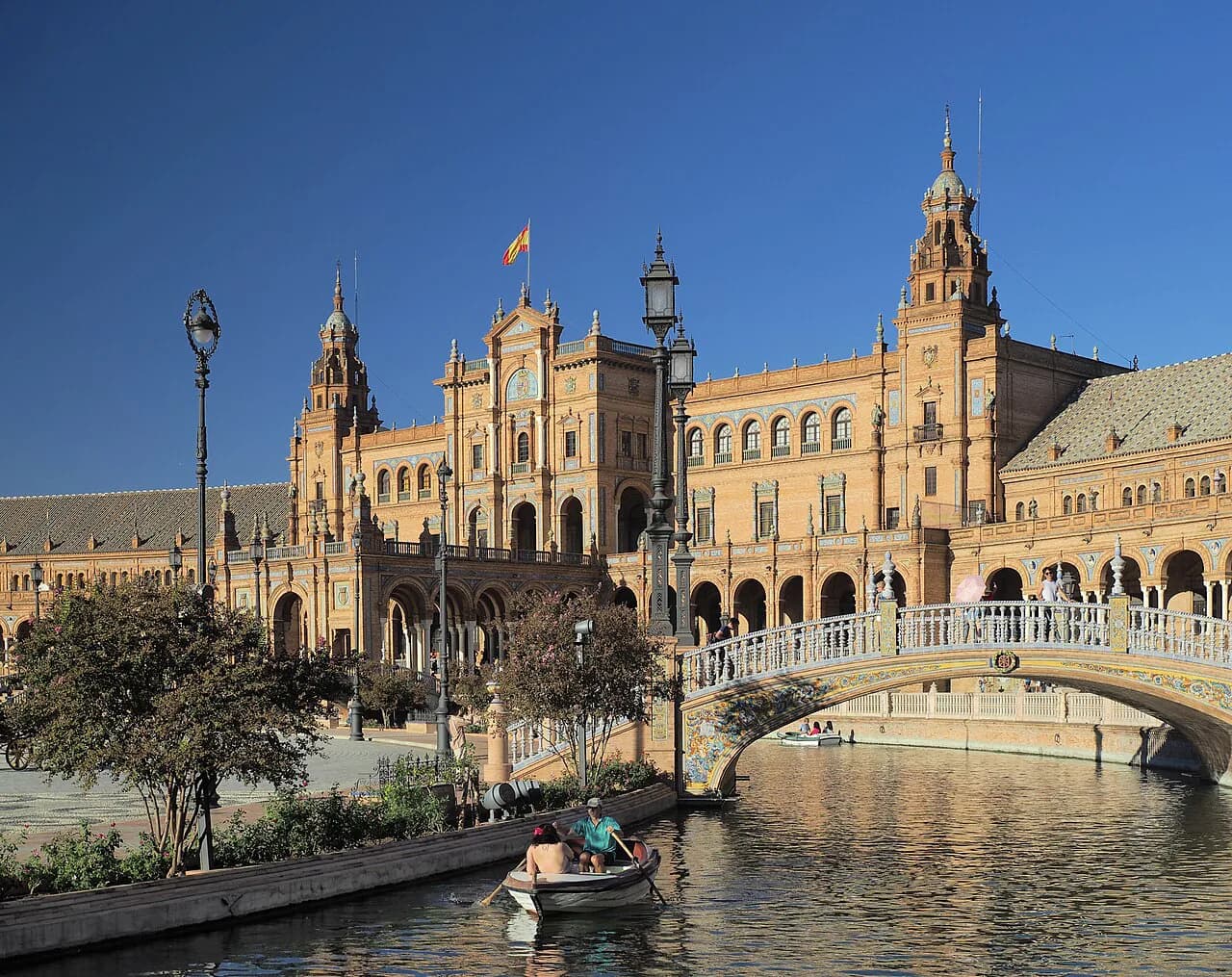
Andalusia splits sharply between coast and interior. Seville averages 27.2°C (81°F) by day and 14.2°C (58°F) at night in May, with about four rain days; Málaga on the coast runs 24.3°C (76°F) and 14.2°C (58°F) but with a sea that stays cold well into June. Base yourself in Seville for city sightseeing and Córdoba day trips, then move to the coast for the last few days.
The Algarve is milder and windier. Faro averages 23.5°C (74°F) by day and 15.0°C (59°F) at night with around four rain days, and the Atlantic breeze makes the western Algarve noticeably cooler than the sheltered eastern coves around Tavira. Lisbon is similar in temperature but wetter, at about six rain days in May.
Madeira is the outlier on this coast: Funchal averages just 22.0°C (72°F) in May but 16.2°C (61°F) at night, with a mild, spring-like feel that suits levada walking far more than beach days. Book it for scenery and gardens, not for heat.
Croatia and the Adriatic: Warming Up, Still Unsettled
Dubrovnik is the weakest May bet of the major Mediterranean destinations on warmth. It averages 21.3°C (70°F) by day and 15.2°C (61°F) at night with 9.5 rain days, so a short break can easily lose a day to a wet spell. The compensation is a walled city and island ferries running without July crowds.
Late May is meaningfully better than early May here, both for sea temperatures and for the opening of seasonal boat services to the Elaphiti islands and Mljet. If Croatia is the plan, build in flexibility for a washed-out day and keep the cable car and old-town walks for the clearer one.
Italy's Lakes and Cities: Pleasant, Not Hot
Northern Italy is comfortable rather than warm in May. Lake Garda, measured at Verona Villafranca, averages 24.0°C (75°F) by day but 12.5°C (55°F) at night, with nearly eight rain days and about 71 mm; Lake Como at Malpensa is cooler still at 21.8°C (71°F). Pleasant for walking and boat trips, not for swimming or sunbathing.
Tuscany and Rome are warming nicely: Florence averages 24.3°C (76°F) and Rome 23.4°C (74°F), both with around six to eight rain days. The Amalfi Coast, measured on Capri, records 24.4°C (76°F) by day and 15.8°C (60°F) at night, which makes coastal path walking genuinely enjoyable before the summer heat.
Bologna and the Cinque Terre sit at the cooler, wetter end, at 23.0°C (73°F) and 22.2°C (72°F) respectively, with eight and six rain days. Cinque Terre's coastal paths are lovely in May but demand a dry forecast; save the toughest stretches for a settled day.
Greece's Ionian and Mainland: Wetter Than the Cyclades
The Ionian and mainland Greece are warmer than April but still fickle in May. Corfu averages 23.8°C (75°F) by day but only 12.9°C (55°F) at night with eight rain days; Kefalonia records 23.4°C (73°F) and 14.6°C (58°F) with under five rain days. Green and lush, they reward walkers and sailors over beach seekers.
Athens is warmer and drier than the islands to its west: 25.2°C (77°F) by day, 16.1°C (61°F) at night, with around seven rain days. Thessaloniki is two degrees cooler with similar rain, and its waterfront and archaeological museum suit a city break rather than a beach holiday.
Early vs Late May: What Changes
Early May behaves like a warmer April: expect more rain days in the western Mediterranean and cooler evenings, especially in northern Italy and Croatia. The last ten days are usually the most reliable, with the Greek islands drying out, the Turkish coast settling and Cyprus entering genuine summer heat.
Late May also brings the UK school half-term and the first big holiday push, so ferry seats, boat trips and popular restaurants book up faster than in the first fortnight. If your dates are fixed to half-term, choose a destination with plenty of indoor or covered alternatives for a wet day, such as Rome, Athens or Valletta.
Cool Evenings, Wind and Rain Spells: Honest Drawbacks
Everywhere on this list cools down after dark. Seville drops to 14.2°C (58°F), Florence to 11.9°C (53°F) and Lake Garda to 12.5°C (55°F); only Larnaca, Paphos and the Canaries keep nights above 15°C (59°F) reliably. A second layer for the evening is not optional in Italy or mainland Greece.
Rain remains a real risk across the Adriatic, the Ionian and northern Italy, and the sea is still cold around most of the Mediterranean in May, so swimming is a bonus rather than a plan. Wind is the other factor: the Canaries, Santorini and the Dalmatian coast can all turn blustery, which affects boat trips and exposed hikes.
Crowds and Prices in Words
May is a shoulder month, so prices are well below August levels, but the gap narrows sharply from the third week onwards as half-term and early-summer demand build. Spain and Greece see the biggest jump around bank-holiday weekends; the Canaries stay busy year-round because the market is not purely seasonal.
If you want quiet, target the first fortnight and choose a destination that is not dominated by the UK market. Inland Tuscany, the Turkish interior and Kefalonia are calmer in early May than the resorts of the Balearics, which are already gearing up for summer.
May or June? Choosing Your Month
June wins on reliability: Rome records about six rain days in May but the Ciampino sheet gives no June rain count, while Cyprus and southern Turkey dry out almost completely and the Greek islands record around one to two rain days. June also warms the sea, which matters if swimming is central to your trip.
May wins on comfort. Athens jumps from 25.2°C (77°F) in May to 30.3°C (87°F) in June, Seville from 27.2°C (81°F) to 32.2°C (90°F), and Antalya from 26.4°C (80°F) to 31.6°C (89°F), which makes June hard work for walking and sightseeing. If your trip is about cities, ruins and hiking, May is the better month; read where is warm in Europe in June if you are weighing the switch.
The Verdict: Which Destination Suits Which Trip
For guaranteed sun and beach days, choose Larnaca, Paphos, Antalya or the Canaries; for a mix of heat and culture, Rhodes, Crete or Malta; for walking, wine and food with milder temperatures, Sicily, Tuscany or the Amalfi Coast. For a city break where you will be on your feet all day, Athens, Rome and Seville are comfortable in May and much harder in June.
If you are still torn between months, our comparison of where is warm in Europe in April sets out how much earlier the season starts in the Canaries, Cyprus and Andalusia. Mallorca in April is a different proposition again, with cooler evenings and a cooler sea.
Plan Your Visit
Pick your destination by what you intend to do, not by a headline temperature. If you want to lie outdoors all day, book Cyprus, the Turkish Riviera or the Canaries for late May; if you want to walk, sightsee and eat well, choose Sicily, mainland Greece or central Italy in the first half of the month and accept a cooler evening and a chance of rain.
Whatever you choose, plan around the shoulder-season rhythm: mornings and late afternoons for walking and sights, midday for the coast, and a flexible day for the weather. Check entry requirements on the official government travel advice page for your destination before booking.
More Europe spring guides
Frequently Asked Questions
Where is the warmest place in Europe in May?
Larnaca in Cyprus is the hottest mainstream choice among the destinations compared here, with a typical May daytime high of 27°C (81°F) and nights around 16°C (62°F). Antalya on the Turkish coast and Bodrum come close, both averaging just over 26°C (80°F), while the Canary Islands sit at roughly 24°C (75°F) with very little rain.
Is the Canary Islands warm in May?
Yes, and steadily so. Tenerife South averages around 24°C (75°F) by day and 17°C (63°F) at night in May, with Fuerteventura, Gran Canaria and Lanzarote within a degree of that and almost no rain. The trade wind keeps the islands comfortable rather than hot, and it is strongest on exposed coasts, so sheltered southern beaches feel notably warmer.
Is Cyprus too hot in May?
Early and mid May are comfortable for sightseeing and walking, with daytime highs near 27°C (81°F) at Larnaca and cooler nights. Late May is when it starts to feel like summer, which is ideal for the beach but tiring on exposed archaeological sites in the middle of the day. Paphos runs a couple of degrees cooler than Larnaca.
Is Greece warm enough in May?
The eastern Aegean islands are, with Rhodes, Crete and Kos all averaging close to 24°C (75°F) by day. The Ionian and mainland Greece are similar or warmer by day, but Corfu and Kefalonia still see a handful of rain days and cooler evenings. Santorini is the coolest of the islands and its exposed caldera edge catches the wind.
Where in Europe is warm but not crowded in May?
The first half of May is the quietest stretch across most of the Mediterranean, before UK half-term and the early-summer build. Inland Tuscany, the Turkish interior around Cappadocia, Kefalonia and the smaller Sicilian towns are calmer than the Balearic and Greek resort strips. The Canaries stay busy year-round because their market is not purely seasonal.
Is Spain warmer than Greece in May?
It depends on the region. Seville averages 27°C (81°F) by day, warmer than anywhere in Greece, but its nights drop to 14°C (58°F). Coastal Málaga and Faro are close to the Greek island averages, while Athens at roughly 25°C (77°F) by day is warmer than Corfu or Kefalonia.
Sources
- Málaga climate normals (AEMET, Malaga Airport (AEMET 6155A))
- Lanzarote climate normals (AEMET, Lanzarote Airport (AEMET C029O))
- Gran Canaria climate normals (AEMET, Gran Canaria Airport (AEMET C649I))
- Tenerife climate normals (AEMET, Tenerife South Airport (AEMET C429I))
- Fuerteventura climate normals (AEMET, Fuerteventura Airport (AEMET C249I))
- Seville climate normals (AEMET, Seville Airport (AEMET 5783))
- Greek climate normals (HNMS)
- Corfu climate normals (WMO World Weather Information Service, Kerkyra / Corfu (HNMS))
- Sicily climate normals (WMO Climate Normals 1991-2020, Catania Sigonella (WMO 16459))
- Palermo climate normals (WMO World Weather Information Service, Palermo (Aeronautica Militare))
- Sardinia climate normals (WMO Climate Normals 1991-2020, Cagliari Elmas (WMO 16560))
- Amalfi Coast climate normals (WMO Climate Normals 1991-2020, Capri (WMO 16294))
- Lake Garda climate normals (WMO Climate Normals 1991-2020, Verona Villafranca (WMO 16090))
- Lake Como climate normals (WMO Climate Normals 1991-2020, Milano Malpensa (WMO 16066))
- Tuscany climate normals (WMO Climate Normals 1991-2020, Firenze Peretola (WMO 16170))
- Bologna climate normals (WMO World Weather Information Service, Bologna (Aeronautica Militare))
- Cinque Terre climate normals (WMO Climate Normals 1991-2020, Sarzana Luni, near La Spezia (WMO 16125))
- Rome climate normals (WMO Climate Normals 1991-2020, Roma Ciampino (WMO 16239))
- Malta climate normals (WMO World Weather Information Service, Luqa (Malta Meteorological Office))
- Algarve climate normals (IPMA, Faro Airport (IPMA station 554))
- Lisbon climate normals (IPMA, Lisboa / Instituto Geofisico (IPMA station 535))
- Madeira climate normals (IPMA, Funchal / Observatorio (IPMA station 522))
- Paphos climate normals (WMO Climate Normals 1991-2020, Paphos Airport (WMO 17600))
- Larnaca climate normals (WMO Climate Normals 1991-2020, Larnaca Airport (WMO 17609))
- Cappadocia climate normals (MGM, Nevsehir (MGM))
- Antalya climate normals (MGM, Antalya regional station (MGM))
- Dalaman climate normals (WMO Climate Normals 1991-2020, Bodrum (WMO 17290))
- Nice climate normals (Meteo-France, Nice Cote d'Azur Airport (Meteo-France 06088001))
- Dubrovnik climate normals (WMO World Weather Information Service, Dubrovnik (DHMZ))
Spring sun notes
Optional updates when we add destinations and months.
You might also like

Continue reading
More guides you'll find useful