Crete in May: Is It Warm Enough for a Beach Trip?
Crete in May brings typical highs near 24°C, mild nights and little rain. Here is what that means for beaches, walking, crowds and early-season openings.
On this page
May is one of the best months to be in Crete: warm enough for long outdoor days, dry enough to plan walks and ruins without a backup plan, and still well short of the July and August crush. It is not yet full summer, though, and the gap between a bright afternoon and an evening on a harbour terrace is real.
The figures below come from the Hellenic National Meteorological Service normals for Heraklion, averaged over 1991 to 2020, so treat them as typical conditions rather than a forecast for your week. If you are weighing the island against the rest of the Mediterranean, our guide to where is warm in Europe in May sets Crete beside the competition.
Weather in May
Heraklion's long-term normals put the average daytime high in May at 23.9 °C (75 °F) and the average night-time low at 15.6 °C (60 °F). That is a comfortable working temperature: warm enough for a T-shirt from mid-morning, cool enough that climbing around Knossos at midday does not flatten you.
Rain is tapering off fast. The WMO city climate page for Heraklion, supplied by the Hellenic National Meteorological Service, gives roughly four rain days and around 14 mm for May, against close to eight rain days and 28.5 mm in April. Showers, when they come, tend to be short-lived rather than settled days of grey.
Crete's mountains split the island's weather in two. The north coast around Chania, Rethymno and Heraklion catches more cloud and the prevailing north-westerlies, while the south coast and the Messara plain behind it run hotter and drier, which is why the south feels a couple of weeks ahead of the north in May.
Is it warm enough?
For sightseeing, walking and eating outside, May is close to ideal. You can spend a full day at Phaistos or Aptera without the heat exhaustion that July brings, and village tavernas are pleasant at lunch and still comfortable at nine in the evening with a jumper.
For families, the air temperature is on your side but the water is not. The sea is still recovering from winter, so children will swim briefly and then want to get out; afternoon is noticeably better than morning. If swimming is the main event rather than a bonus, June is the more sensible month.
Anyone who wants guaranteed wall-to-wall heat, late dinners in shorts and a sea you can stay in for an hour should look at Crete in June instead. May rewards people who want to move around the island rather than lie still on it.
Early vs late May
The month warms steadily rather than dramatically, but the practical difference between the first and last week is mostly about what is running, not the thermometer. Early May still behaves like a late-spring month: cooler evenings, more chance of a grey spell, and a thinner choice of boat trips and seasonal restaurants.
By the second half of the month the coastal season is properly under way, with more ferries, more organised boat excursions and more beachfront places open for the evening. If your trip depends on getting to Spinalonga or out to Gramvousa by boat, aim late in the month and let the published sailing schedule decide the day.
The trade-off is straightforward: early May buys you quiet and lower prices at the cost of a few closed doors and cooler evenings; late May costs a little more and brings the first hint of summer crowds, but everything works.
How May compares with April and June
April is a genuine spring month in Crete, with highs around 20.3 °C (69 °F), lows near 12.3 °C (54 °F) and roughly twice May's rainfall. It is wonderful for archaeology, wildflowers and empty villages, but you will want a jacket in the evening and the sea is for the brave.
June jumps to a 27.5 °C (82 °F) average high and a 19.7 °C (67 °F) average low, with rain almost gone at around 1.3 rain days. That is the month for people whose holiday is mostly beach and pool; the heat is pleasant rather than punishing, but the easy, uncrowded feel of May starts to slip.
Seen end to end, May sits in the sweet spot for mixed holidays: warm enough to swim a little, cool enough to hike, dry enough to trust the forecast. If you are still choosing between months, our month-by-month look at the best time to visit Crete lays out the same trade-offs in more detail.
What is open
The big archaeological sites are the reliable part of a May trip: Knossos, Phaistos, Gortyn and the Heraklion Archaeological Museum run through the year and do not depend on the season starting. Check the official ticketing and opening details before you build a day around one of them, since hours shift between winter and summer.
Coastal businesses are the variable. Tavernas, beach clubs and boat operators in the resorts north and east of Heraklion ramp up through the month, and the smaller south-coast places come back to life a little later. Rough Guides makes the sensible point that airlines and ferry companies are not yet on full summer schedules in May, and that travelling later in the month widens your options.
For anything schedule-dependent, the ferry company's own timetable is the only reliable answer: ferry timetables change with demand and weather, and small boat trips often confirm the day before. Build a flexible day into the plan rather than pinning the whole trip on one crossing.
Things to do
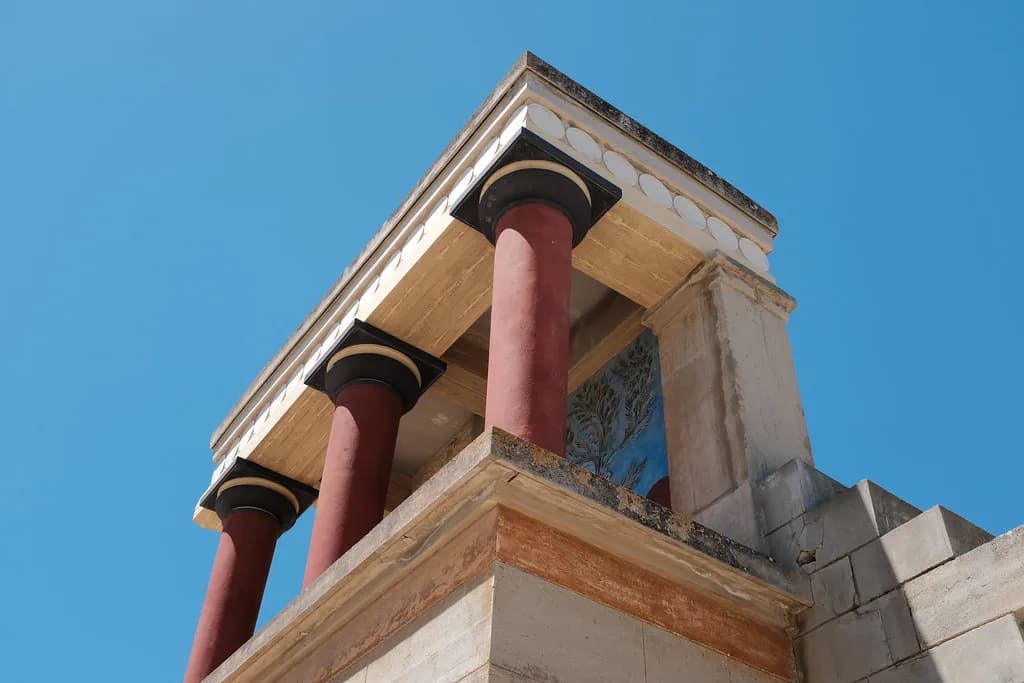
Knossos and Phaistos are at their best now. The Minoan palaces have almost no shade, so a morning start matters, and in May you can linger over the reconstruction at Knossos and the storerooms at Phaistos without the midsummer press of coach groups.
Walking is where May genuinely wins. Gorges and upland paths still carry running water and spring greenery, and the heat is not yet a hazard on the climb. The Samaria Gorge opens for the season once the snowpack clears and the route is declared safe, so the opening date varies year to year; check the official national park information before planning around it.
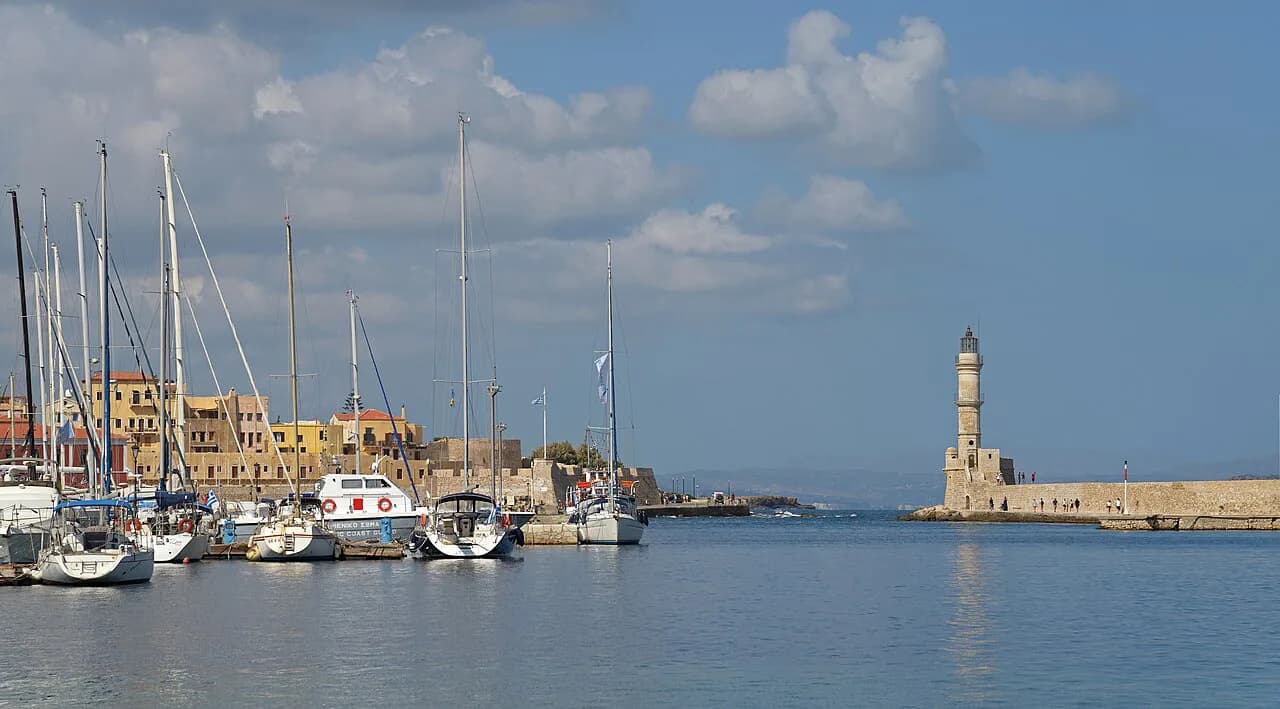
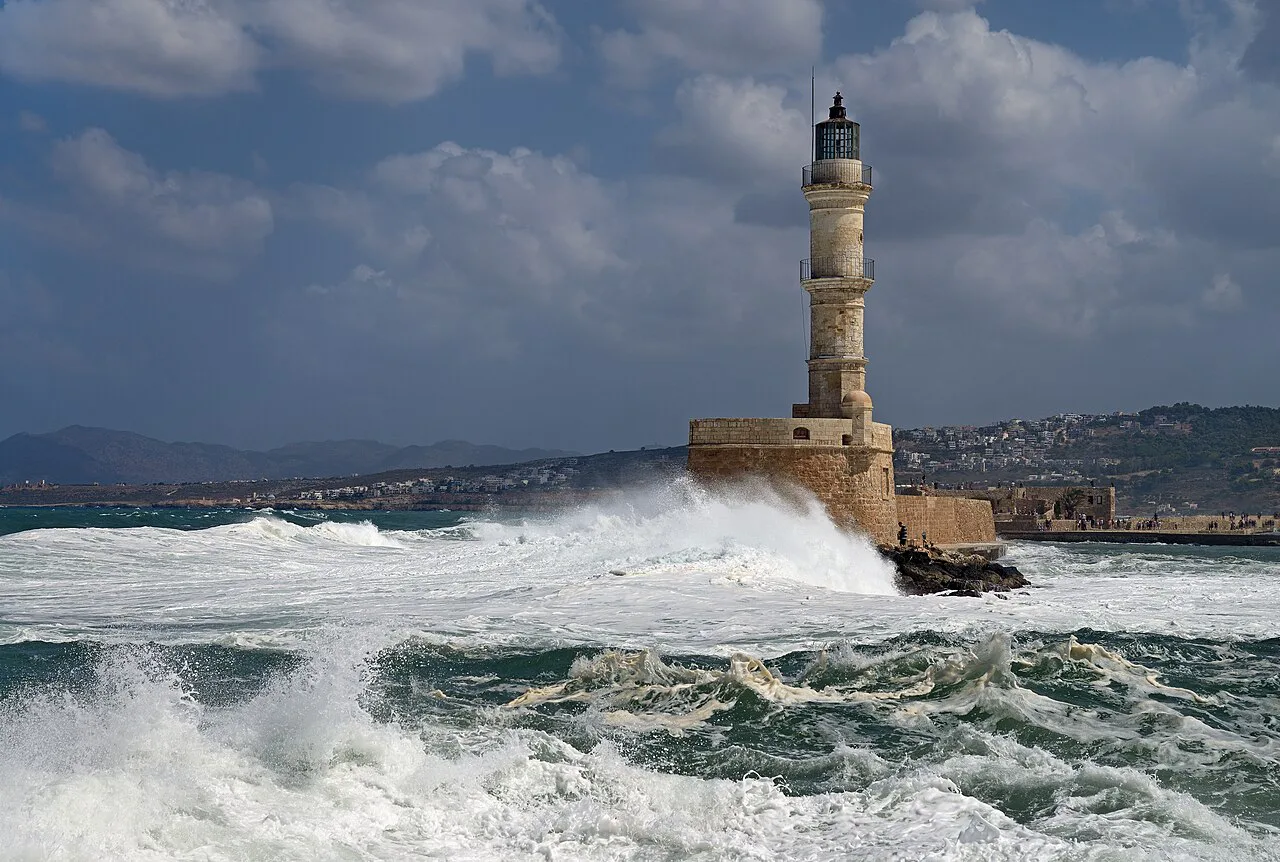
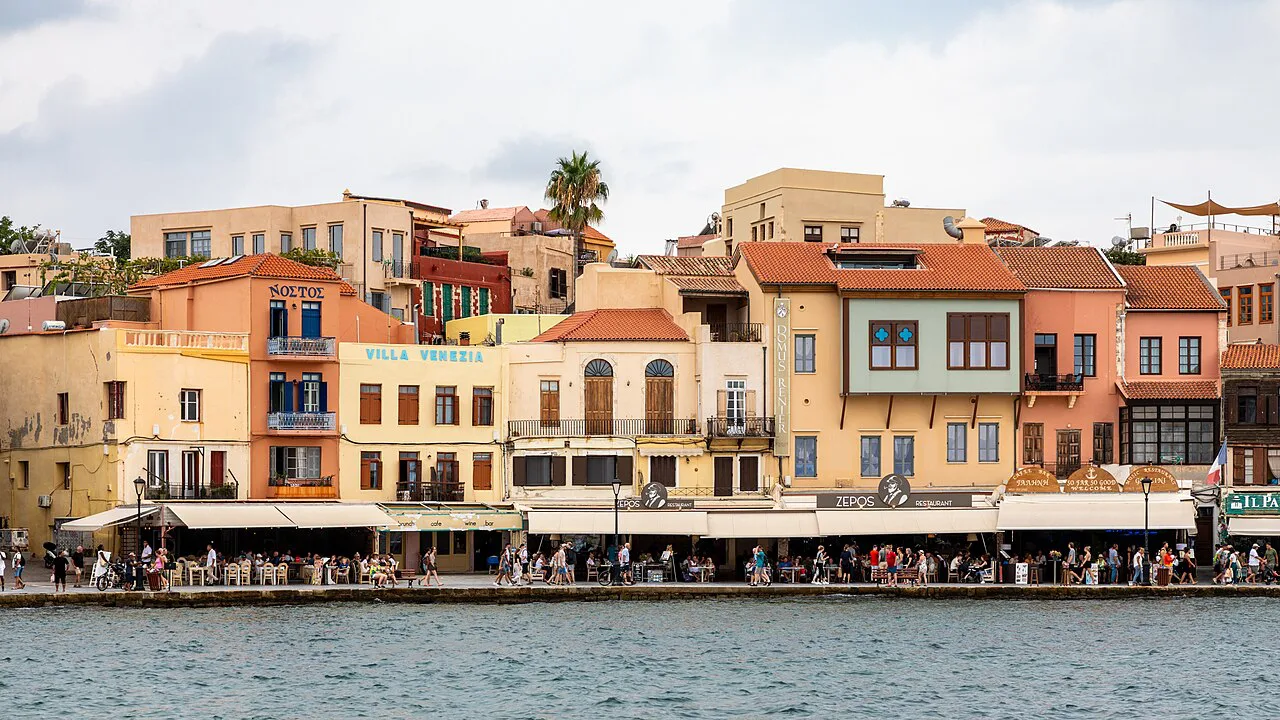
For gentler days, the harbours of Chania and Rethymno are the obvious anchors, with Venetian walls, a lighthouse and enough cafés to fill an afternoon, while Agios Nikolaos gives you the eastern side and the easy run down to Elounda and the Spinalonga boat.
Beaches are quieter than in high summer, with Elafonissi on the far west and Preveli on the south coast as the standout long-day options. Preveli's palm gorge and river mouth are the most rewarding in May, when the walk in is comfortable rather than scorching.
If you want a fuller list of what suits the season across the island, things to do in Crete in May goes deeper on walks, ruins and boat days than this overview can.
Food in season
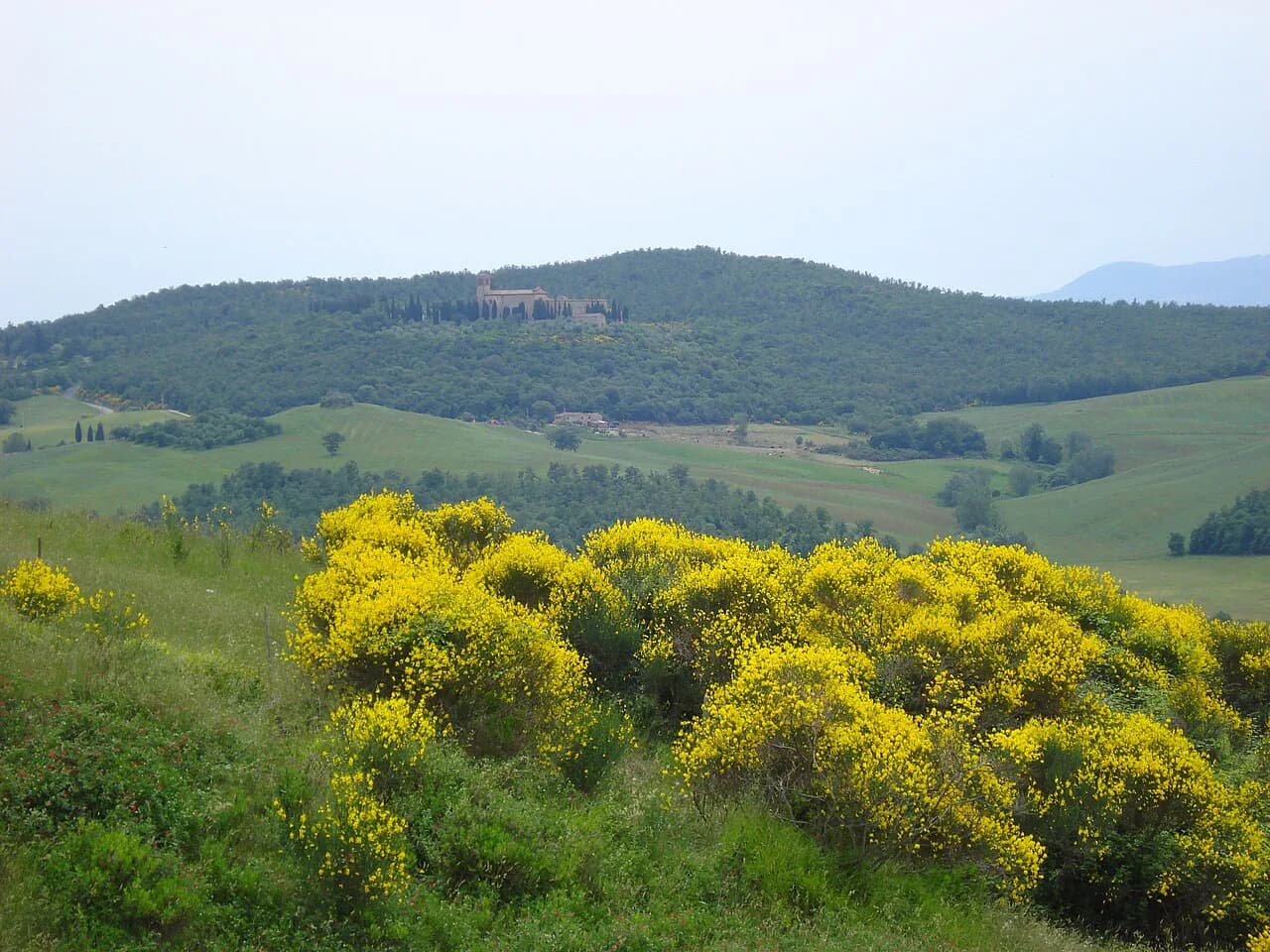
May is the last stretch of Crete's spring kitchen. Artichokes, wild greens gathered from the hillsides, fresh myzithra and the first broad beans turn up in village tavernas alongside the standard menu, and dishes cooked with them are often the best thing on the table.
Look for mountain villages in the foothills of the Psiloritis and Lefka Ori ranges, where the cooking follows the garden rather than the tourist calendar, and the Lasithi plateau for the cooler upland version of the same produce.
Dakos, the barley rusk with tomato and cheese, and grilled lamb or goat are available year-round, but the spring greens and artichoke dishes are the ones to order now. Do not expect a printed seasonal menu: ask what has just come in.
Crowds and prices
May is shoulder season in the commercial sense, and it shows in both queues and rates. The UK May bank holidays and half term are the busiest windows, when flights and coastal hotels fill and weekend rates rise; the weeks between them are noticeably calmer.
Late May tightens further as the Greek season opens and domestic visitors travel, and prices climb through June as high season approaches. Expect the biggest step up in flights, car hire and accommodation rather than in taverna prices, which stay fairly steady.
The practical rule: book flights and a car early if you want a specific week, and leave hotels on the coast late if you want a better rate. If you are planning around the UK school calendar, our guide to where is warm in Europe in May helps you compare Crete with alternatives at the same price point.
Honest drawbacks
Cool evenings are the main thing people underestimate. A 15.6 °C average low sounds mild, but a sea breeze on a harbour terrace after dark feels cooler than the number suggests, and the north coast is windier than the south.
The water is the other caveat: warm air, cooler sea, so plan swims for the afternoon and keep expectations modest. Windy spells can also close boat trips at short notice, and mountain roads to places like the Omalos plateau or the Lasithi villages can still be slow going after spring rain.
Some places genuinely are not ready. Small south-coast tavernas and seasonal hotels open on their own timetable rather than the calendar, and a village that is thriving in July can be half-shuttered in the first week of May. Later in the month narrows the gap considerably.
May or June?
If your holiday is mostly sand, swimming and long evenings outside, choose June. The sea is warmer, rain is almost irrelevant, and the resorts are fully running; you accept more crowds and higher prices in return.
If your holiday is walking, ruins, harbours and driving the island, choose May, and aim for the second half of the month. You get comfortable temperatures for effort, a green landscape that disappears by July, and a quieter version of the same coast.
If you can only travel in the first week of May, go anyway, but treat it as a spring trip and build in flexibility for boats and a cooler evening.
The verdict
May is the best all-round month for a first trip to Crete. The weather is reliable enough to plan outdoor days, the island is not yet crowded, and the things that make Crete worth the flight, the archaeology, the gorges, the food and the mountain villages, are all at their most enjoyable.
Go late in the month if you want the widest choice of ferries, boat trips and restaurants; go earlier if you prize quiet and lower prices over having everything open. Either way, the island's spring is short and worth catching.
Plan Your Trip
Book flights and a car early for the second half of May, keep the first few days flexible for weather and boat schedules, and treat the sea as a bonus rather than the point of the trip. The island's best May days are spent moving: ruins in the morning, a long lunch, a harbour in the evening.
If you are comparing destinations across the Mediterranean before booking, our guide to warm places in Europe in April shows what a month earlier looks like elsewhere, and for Greece as a whole, Greece in May sets Crete against the mainland and the other islands.
For official entry requirements, use the UK government's Greece travel advice page once before you book; everything else about a May trip is a question of timing rather than paperwork.
More Crete spring guides
Frequently Asked Questions
Is it worth going to Crete in May?
Yes, for most travellers it is the best-balanced month of the spring. Daytime highs typically sit near 24°C (75°F) with nights around 16°C (60°F), and rain becomes infrequent, so you can plan long days outdoors without the midsummer heat. What you give up is a truly warm sea and a fully open resort season, especially in the first week.
How hot will Crete be in May?
Heraklion's long-term normals give an average daily maximum of 23.9°C (75°F) and an average night-time low of 15.6°C (60°F) for May. The south coast and the Messara plain run warmer than the north coast, and the last week is reliably warmer than the first. Treat these as typical conditions rather than a forecast for any given week.
Can you sunbathe in Crete in May?
Yes, on most days. Air temperatures are comfortably warm and sunshine is plentiful, though breezes on the north coast can make it feel cooler than the thermometer suggests and a cloudy spell can pass through. The sea is the limiting factor rather than the air, so plan swims for the afternoon if you want to stay in longer.
Is the sea warm enough to swim in Crete in May?
It is swimmable but bracing, especially early in the month, and children tend to come out quickly. Afternoon water is noticeably more comfortable than morning, and sheltered south-coast bays warm faster than exposed northern beaches. If long, warm swims matter more than walking or sightseeing, June is the better choice.
Is Crete crowded in May?
It is busy in patches rather than crowded overall. The UK bank holidays and half term are the tightest windows for flights and coastal hotels, while the weeks between them are calmer. Late May tightens again as the Greek season opens and prices begin their climb towards June.
Is May too early to go to Greece?
For Crete it works well, because the island is the southernmost part of Greece and warms early. Ferry schedules and seasonal restaurants are still filling out, so the second half of May gives you more choice than the first. If you want guaranteed beach weather and a full range of island connections, later in the season is safer.
Sources
Spring sun notes
Optional updates when we add destinations and months.
You might also like
Continue reading
More guides you'll find useful