Corfu in May: Warm Enough, Quiet Enough, and Not Yet Busy
Corfu in May averages 23.8°C by day and 12.9°C at night, with eight rain days. Green walking country, cool sea, soft evenings: here is who May suits.
On this page
Corfu in May is warm rather than hot, and that is the point. Long-term normals for Kerkyra give an average daily maximum of 23.8°C (74.8°F) and an average night-time low of 12.9°C (55.2°F), with 8.0 rain days and 37.0 mm of precipitation across the month.
That mix suits walkers, sightseers and anyone who wants the countryside at its greenest without the July heat. It does not suit swimmers or sunbathers who want a reliably warm sea, because the Ionian is still cold early in the month and only beginning to soften by the end. If your holiday is beach-first, June or September pays you back better; if your holiday is about long days outdoors, May is the month to take.
Weather in May: average highs, nights and rain
The figures to plan around come from the Hellenic National Meteorological Service data published through the WMO World Weather Information Service for the Kerkyra station. Expect average daytime highs near 23.8°C (74.8°F) and average lows near 12.9°C (55.2°F), with roughly eight rain days and 37 mm of rain over the month.
Read those numbers as typical conditions rather than a forecast: eight rain days is a real allowance for a spring shower, often a heavy morning that clears to sun by afternoon. Evenings sit in the low teens, so a walk back from dinner along the Liston or a harbour front needs a layer. Daytime is comfortable for moving around, not the kind of heat that forces you indoors at two in the afternoon.
Is it warm enough for sightseeing, walking and lazing outdoors?
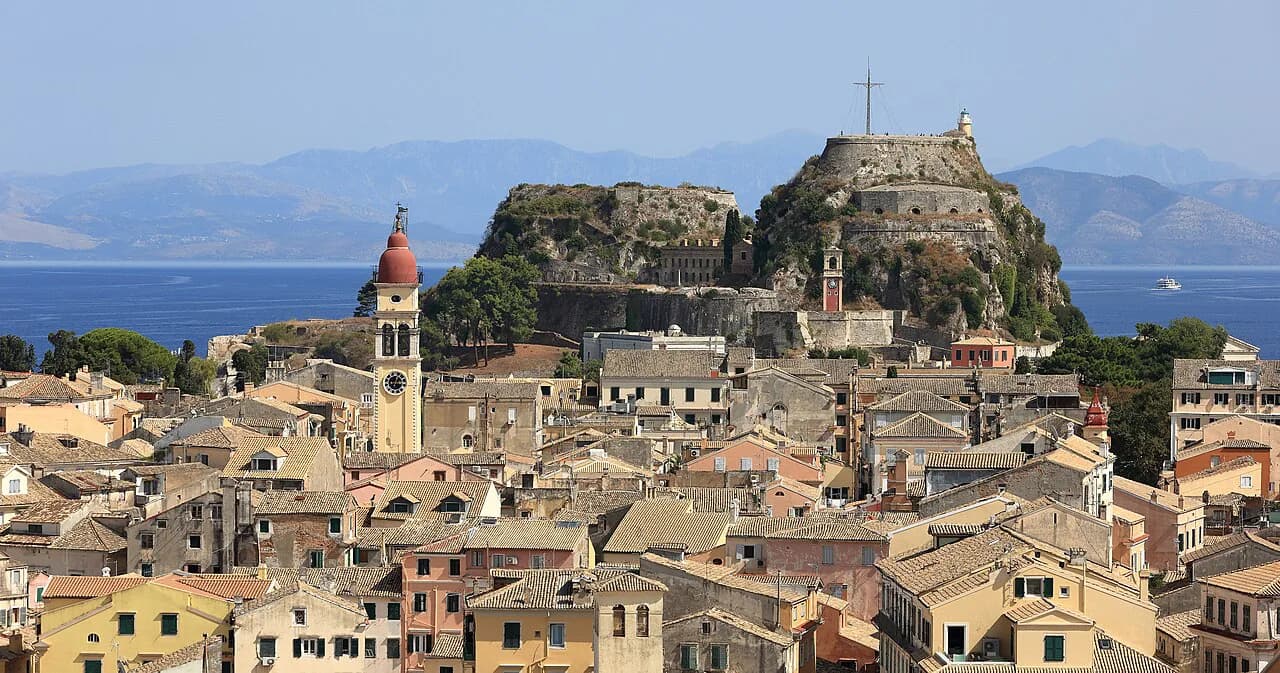
For sightseeing, May is close to ideal. Corfu Town's Venetian lanes, the fortresses and the museum-heavy old quarter are pleasant to wander when the high is 23.8°C rather than the 28.0°C typical of June, and you are not competing with the peak-season crowd that arrives later.
Walking is where May earns its reputation. The island's trails through olive groves and hillside villages are at their best while the ground still holds winter moisture and wildflowers are out; by July the same paths are hot, dry and far less forgiving. Birdwatchers also do well, with spring migration passing through the island in these weeks.
Lazing outdoors is the weaker suit. Sitting on a beach all day is fine in the sun, but the breeze off the Ionian and the cool sea limit how long most people want to stay in or near the water. The sea warms slowly, so a quick dip is refreshing rather than inviting, especially in the first half of the month. If swimming is the reason for the trip, look at Corfu in June instead, when the nights reach 16.4°C (61.5°F) and the sea has had another month of sun.
Early vs late May
The month is not one block of weather. Early May behaves more like a mild April, with the sea at its coldest, softer evenings and fewer seasonal places fully running; late May is the shoulder sweet spot, with settled days, warmer water and the island's tavernas, boat operators and beach clubs in fuller swing.
If you have a fixed week, aim for the second half of the month. You get more of the long, warm evenings that make outdoor dining worthwhile, and boat trips to nearby coves and islets are more likely to run in calm conditions. Early May still works well for walkers and for anyone who values space over certainty.
May compared with April and June
April on Corfu averages 19.0°C (66.2°F) by day and 9.2°C (48.6°F) at night with 12.9 rain days, so May gains almost five degrees of daytime warmth and loses nearly five rain days. That is a meaningful jump: April is a walking and sightseeing month with a real chance of wet days, while May is drier and easier to plan around.
June pushes on again to 28.0°C (82.4°F) by day and 16.4°C (61.5°F) at night with only 4.9 rain days, which is genuine early-summer heat and a warmer sea. The trade is more people, higher prices and less comfortable midday walking. May sits between the two, and for most people choosing on activity rather than sunbathing, it is the better balance.
What is open: ferries, boat trips, tavernas and beach clubs
May is when the island opens up for the season. Seasonal tavernas, boat operators and beach clubs that close over winter generally start operating again in May, and conditions on the water are calm enough for trips to nearby coves and islets. The pace is unhurried rather than empty, which means you can usually turn up without booking far ahead.
Corfu is not an island-hopping base in the way the Cyclades are: ferry links run to Igoumenitsa on the mainland rather than across a chain of islands, so plan day trips on and around Corfu rather than between islands. Direct international flights build up again from March, which is why May arrivals are straightforward compared with winter. Confirm sailing times and season-opening dates with the ferry companies before you build a day around them.
Things to do in May
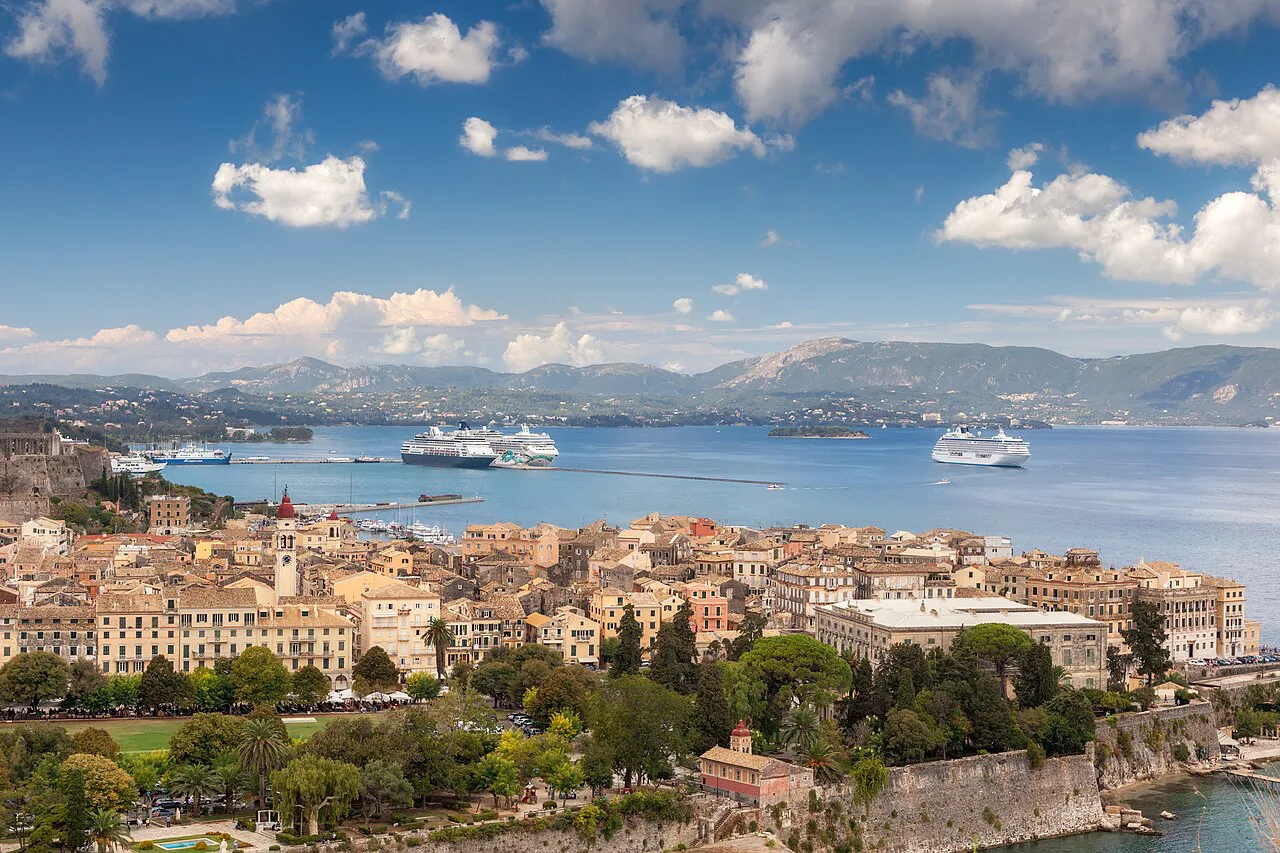
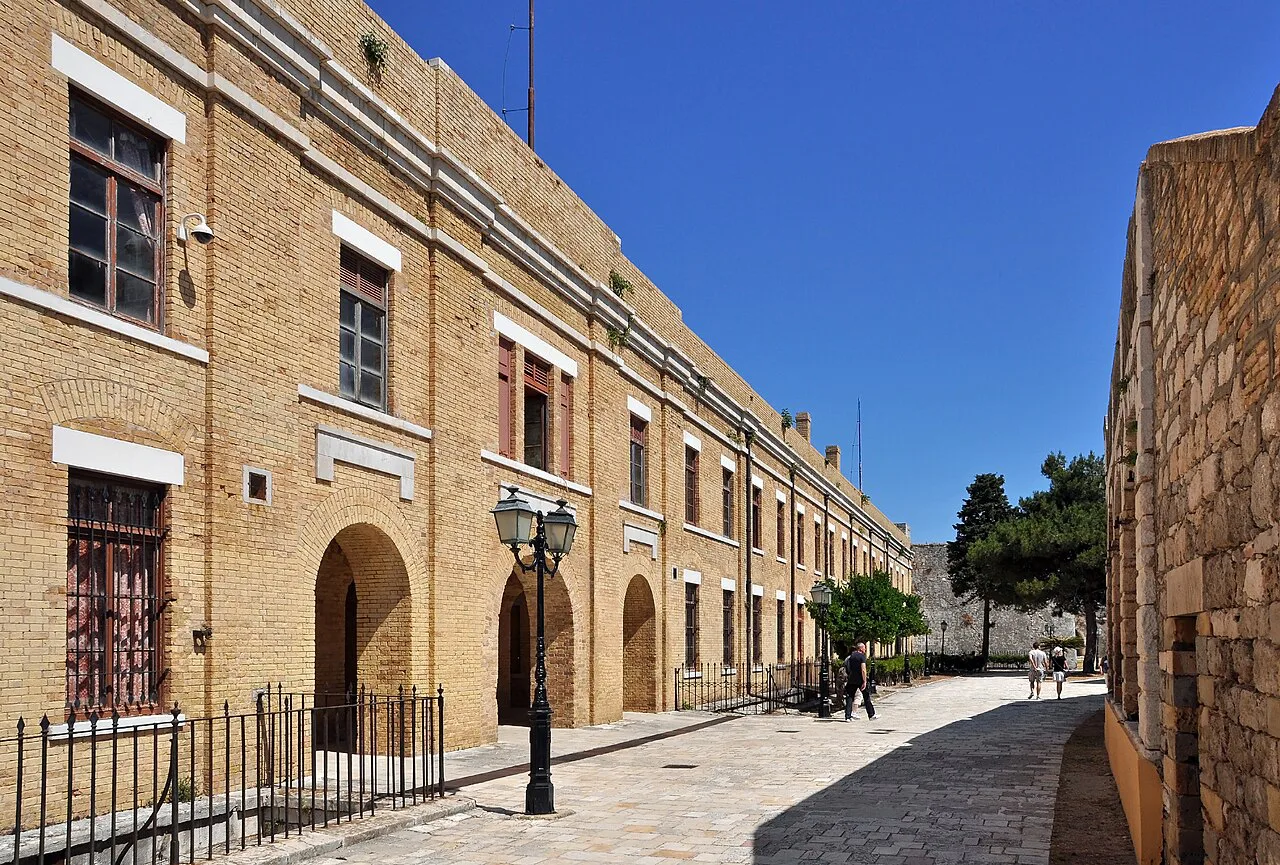
Spend a full day in Corfu Town while the heat is still kind: the old quarter's lanes, the two Venetian fortresses and the café gardens are the cultural core of the trip, and May lets you cover them on foot without wilting. Add the Halikiopoulou Lagoon south of town if you want the odd spectacle of aircraft coming in low over the water.
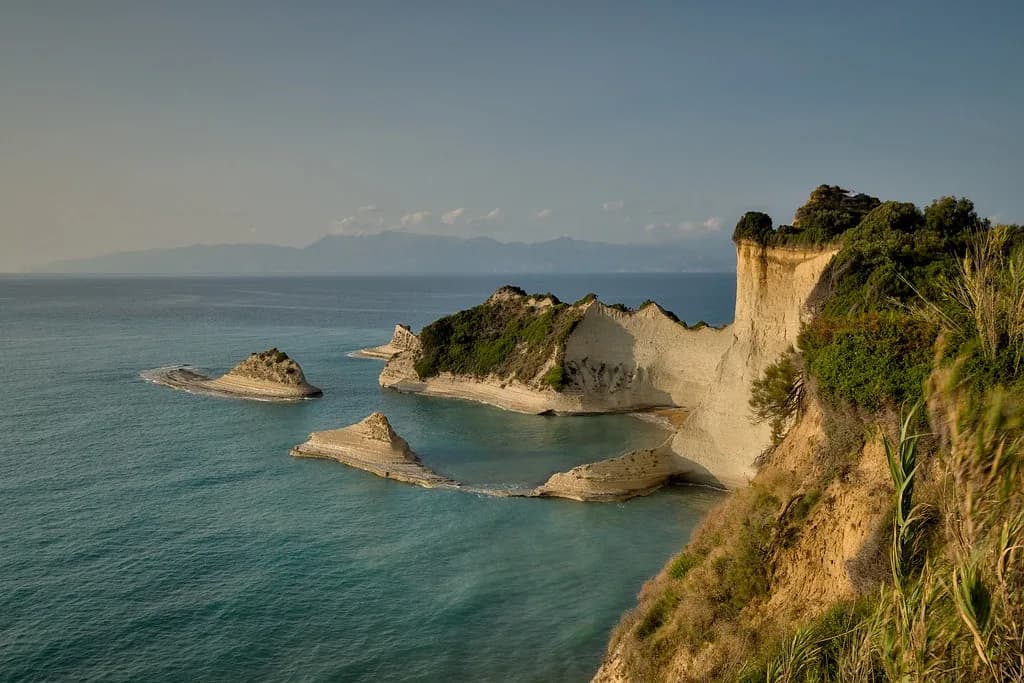
Walk the interior. The island's olive groves, hillside villages and monasteries are at their most photogenic in May, when the landscape is still green from winter rain and the light stays soft for much of the day. The higher ground around Mount Pantokrator gives you the island's best wide views, and the climb is far more agreeable now than in midsummer.
Eat what the island does well. Corfu's cooking leans on olive oil from millions of trees, citrus in season, casual grill houses and Venetian-influenced dishes such as pastitsio; wash it down with portokalada, the local orangeade, if you want something other than the British-style ginger beer the island also serves.
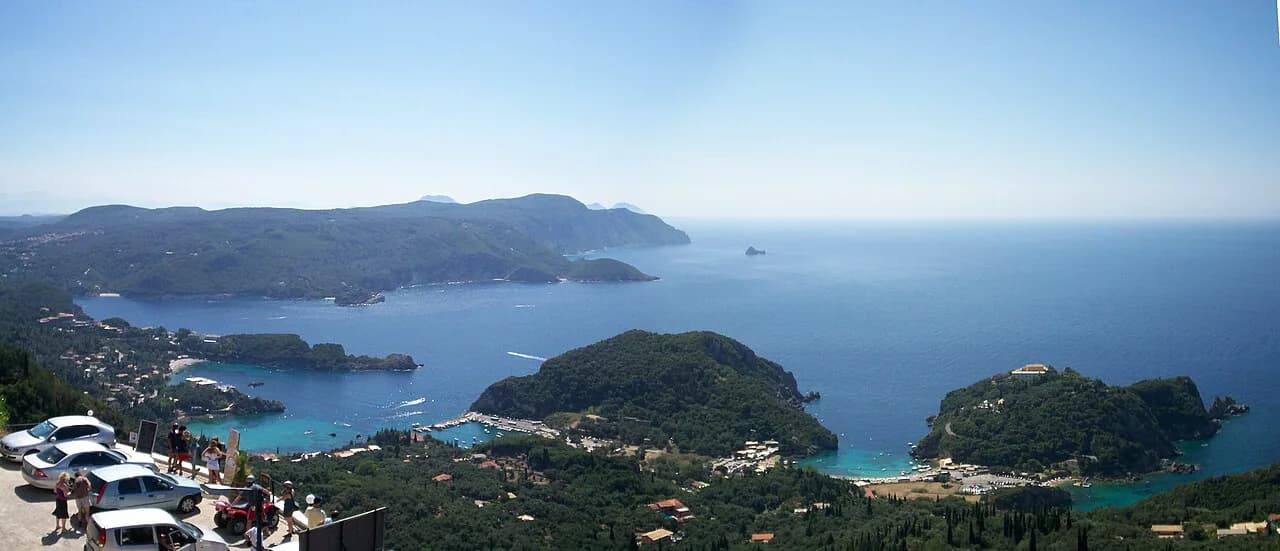
Take to the water on a calm day. Boat trips along the coast, including the cliffs and coves around Paleokastritsa, are running again and the sea is usually gentle in May. Keep in mind that the water itself is cold, so treat a swim as a brisk extra rather than the main event.
Where to go across the island
Base yourself according to what you want from the month. Corfu Town suits sightseers and city-break tastes; Paleokastritsa and the north-coast resorts of Sidari and Kassiopi suit people who want coastal scenery and boat access, though the north cools faster than the south as the season turns.
The south, including Benitses and the quieter beaches toward Myrtiotissa, holds warmth a little longer and is a sensible choice for a late-May trip with an eye on the shoulder season. Wherever you base, the island is small enough that a car opens up the interior villages and the walking, which is the real reason to come in May.
Crowds and prices in May
May is busier than the winter and quieter than June, July and August, and it is cheaper than high summer. The catch is that Corfu is a favourite with British visitors, so the UK May bank holidays and half term push demand and prices up in those weeks; if you can travel outside them, you get noticeably more space and better value.
Expect roads and beaches to feel open rather than packed, with room to stop where you like and change plans as you go. Restaurants are running but not overwhelmed, and service is more personal than in the height of summer. Book accommodation early for the bank-holiday weeks and late in the month, when the shoulder-season crowd arrives.
The honest drawbacks
The evenings are cool for a Mediterranean island: 12.9°C (55.2°F) on average means you will want a jacket after dark, and outdoor dinners can end earlier than you expect. The sea is cold, particularly in early May, so swimming is for the hardy rather than the whole family.
Rain is still a factor. Eight rain days in the month means a real chance of a wet spell, sometimes heavy, and the island's drainage and water infrastructure can struggle after downpours. Build flexibility into your plans: keep a town day or a museum day in reserve for the wettest morning, and don't schedule a boat trip as the only option for your last day.
Some seasonal places are not fully running early in the month, and the north of the island cools sooner than the south. If you are set on beach clubs and late dinners on the sand, late May is the version of the month you want.
May, June or September?
Choose May if you want walking, sightseeing, green countryside and space, and can accept a cool sea and soft evenings. Choose June if you want heat, a warmer sea and long evenings, and can tolerate more people and higher prices. September is the other strong option: it keeps much of the summer warmth without the school-holiday peak, which makes it a good match for swimmers who don't want July crowds.
If you are comparing Corfu against warmer corners of Southern Europe, the honest answer is that the Aegean islands and Crete generally run warmer and drier than the Ionian in May. Corfu's advantage is its greenness, its Venetian town and its walking, not its beach weather; our guide to the warm places in Europe in April shows how much earlier the southern end of that range starts to deliver.
The verdict
May is the best month of the spring for Corfu if your holiday is about being outdoors rather than in the water. The typical 23.8°C days are made for the Corfu Trail, the old town, the hill villages and boat days, while the cool sea and eight rain days are the price you pay for all that green.
Beach-first travellers should wait a month and go in June; sightseers and walkers should aim for the second half of May and dodge the UK bank-holiday weeks. If you are still deciding between destinations rather than months, our guide to where is warm in Europe in May sets Corfu against the warmer, drier alternatives.
Plan Your Visit
Book late May, avoid the UK bank-holiday weeks, and plan your days around walking, the old town and the water rather than sunbathing. Pack a layer for the evenings and keep one flexible day for a rain spell.
For passport, entry and travel requirements, use the UK government's Greece travel advice page and the Greek authorities' own guidance. For more on the island earlier in the year, see Corfu in April.
More Corfu spring guides
Frequently Asked Questions
What is the weather like in Corfu in May?
Typical conditions are an average daily maximum of 23.8°C (74.8°F) and an average night-time low of 12.9°C (55.2°F), with about eight rain days and 37 mm of rain across the month. Days are warm and often sunny, but evenings are cool enough for a jacket and a wet spell is always possible.
Is Corfu warm enough in May for a beach holiday?
It depends what you want from the beach. Sitting and reading in the sun is comfortable at 23.8°C, but the sea is still cold, especially early in the month, so swimming is brisk rather than balmy. If swimming is the main point of the trip, June or September suits better.
Is the sea warm in Corfu in May?
No. The Ionian warms slowly and May water is still cold, particularly in the first half of the month. Conditions on the surface are usually calm, which makes boat trips pleasant, but treat swimming as a quick dip rather than a long soak.
Is May a good time to visit Corfu?
Yes, for walking, sightseeing and outdoor dining. The island is green from winter rain, wildflowers are out, and daytime temperatures are comfortable for long days outside. It is less good for beach-first holidays, because the sea is cold and evenings are soft.
Is Corfu busy in May?
Busier than winter, quieter than the summer peak. The UK May bank holidays and half term fill the island noticeably, so travelling outside those weeks gives you more space on roads, beaches and at restaurants. Late May is the most popular part of the month.
Should I visit Corfu in May or June?
June is warmer and drier, with averages of 28.0°C by day and 16.4°C at night and only around five rain days. May is cooler, greener and quieter, and better for walking and sightseeing. Choose May for activities and June for heat and a warmer sea.
What is there to do in Corfu in May?
Walk the interior trails and hillsides while the landscape is green, explore Corfu Town's old quarter and fortresses, eat at the island's grill houses and tavernas, and take a boat trip along the coast on a calm day. Birdwatching is also good during spring migration.
Sources
Spring sun notes
Optional updates when we add destinations and months.
You might also like

Continue reading
More guides you'll find useful