Crete in April: How Warm It Is and Whether to Go
Crete in April averages 20.3°C by day and 12.3°C at night at Heraklion. Warm enough for walking and ruins, cool for the sea, and quiet outside Easter.
On this page
April in Crete is warm enough for walking, ruins and long lunches, but not for the sea. At Heraklion the long-term climate normals for 1991–2020 put the average daytime high at 20.3°C (68.5°F) and the night-time low at 12.3°C (54.1°F), which makes the island one of the most reliably pleasant corners of Southern Europe at this point in the year.
Rain is still possible but not a theme of the month: the same station records about 28.5 mm, so you should expect a shower or two rather than a washout. What you will not get is heat or a warm sea, and anyone whose holiday depends on both should look at May or June instead.
Weather in April
The Heraklion normals describe a month in transition: mild middays, cool evenings and a fair number of bright days. The average high of 20.3°C (68.5°F) is comfortable in a light jacket, while the 12.3°C (54.1°F) mean minimum means dinner outside needs a layer underneath and a terrace that faces the evening sun.
The island's north coast is windier and slightly cooler than the far south, which sits behind the mountain chain and blocks the north-westerly flow. That means the south-coast villages and the low hills around Ierapetra are where an April day feels most genuinely warm, while Heraklion, Hersonissos and Elounda trade a couple of degrees for convenience and easier transport.
Is it warm enough?
For sightseeing, city wandering and sitting on a taverna terrace for three hours, April is genuinely good: the 20.3°C (68.5°F) average high is warm enough to eat outside and walk between sites without overheating. For swimming, it is not: the sea is still cool at this point in the season, and even sunbathers find the water brisk. Treat April as a walking, ruins and taverna month and keep swimming for the following month.
Families with small children and travellers who want a beach-led holiday are better off in June, and anyone who would rather be hot than comfortable should look at our guide to Crete in June, where daytime highs reach 27.5°C (81.5°F). April suits couples, walkers, archaeologists and anyone who prefers a quieter island to a crowded one.
Early vs late April
The last ten days of April feel markedly different from the first: the land is warm, the wildflowers are at their height and the first beach clubs and boat operators start to test the water. Early April can still bring sharp showers and cold evenings, so if you have flexibility, aim for the second half of the month.
Easter is the one genuinely busy window, and because the date moves each year it can fall anywhere from late March to late April, so timing matters far more for crowds than for weather. If you can travel in the quieter non-Easter stretch, you will find flights and rooms considerably cheaper than in June.
April or May?
May raises the daytime high to 23.9°C (75°F) and the night-time low to 15.6°C (59°F), and cuts the rain substantially, which is the month when swimming and beach days start to make sense. April's advantage is fewer tourists, lower prices and cleaner light for photography; May's is a warmer sea and a more reliable long-stretch of settled days.
Things to do in April
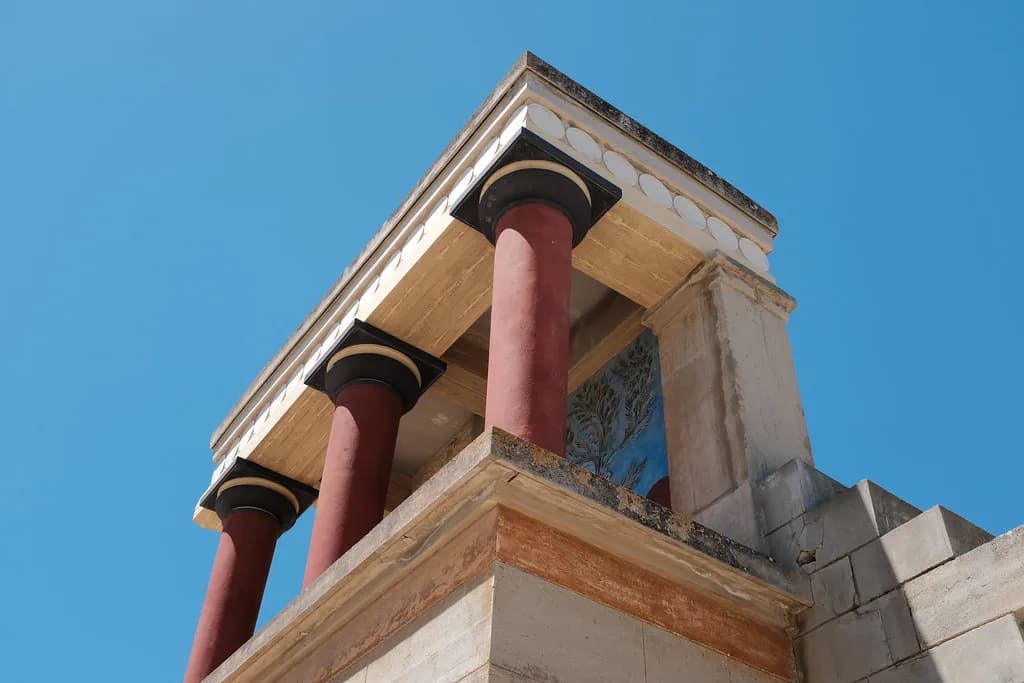
Knossos is the obvious first outing, best visited in the morning before the day warms up. The nearby Heraklion Archaeological Museum is the natural companion: the Minoan collection makes far more sense after you have walked the site itself, and it is also a good choice on a showery afternoon.
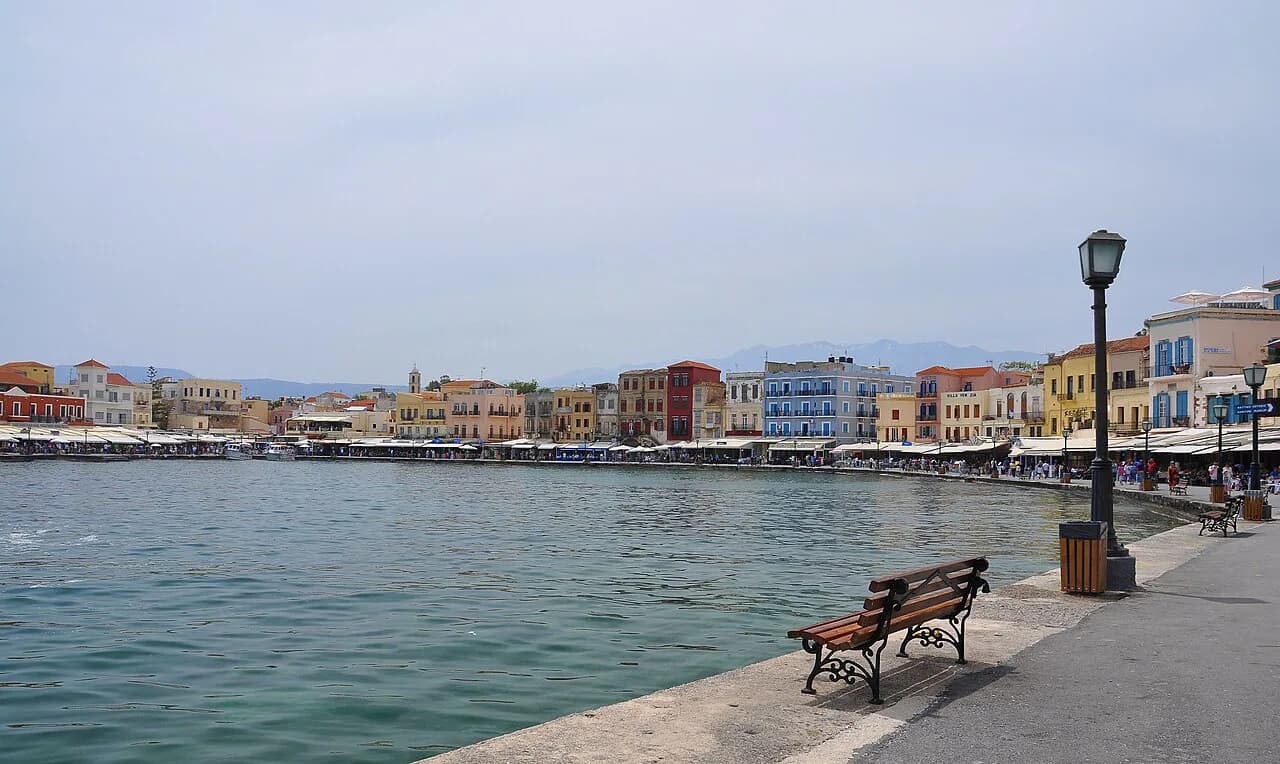
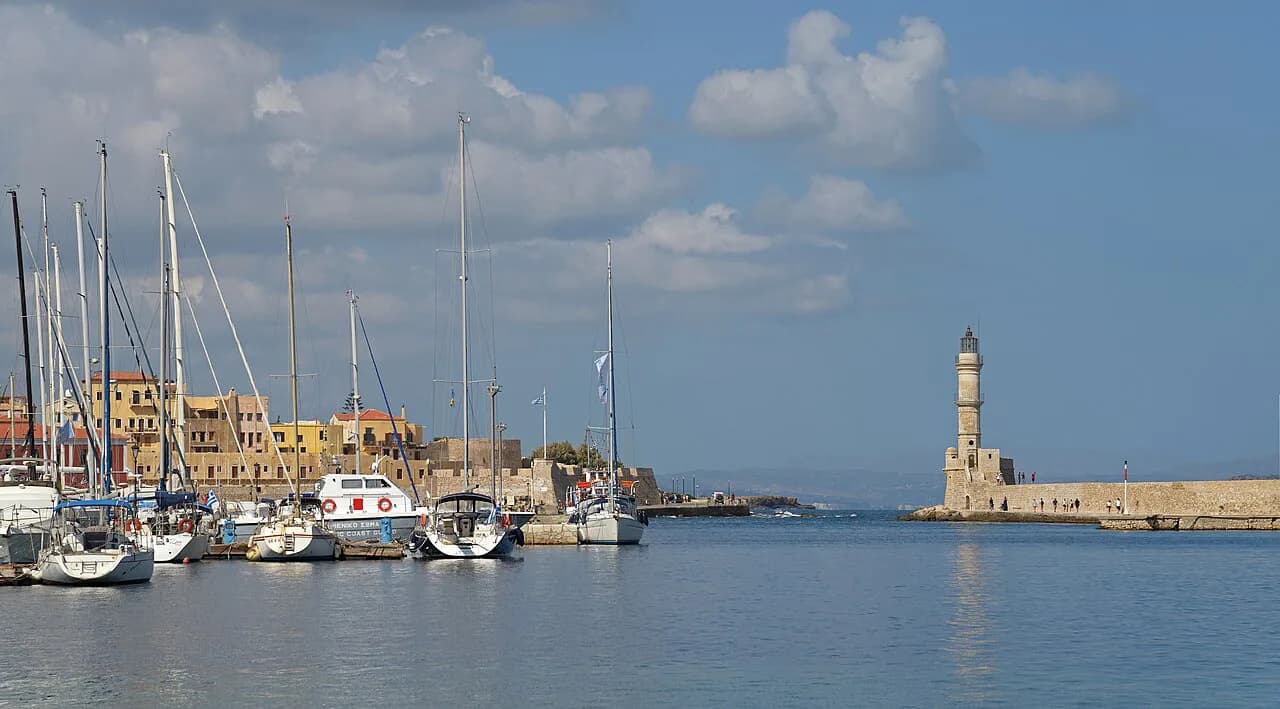
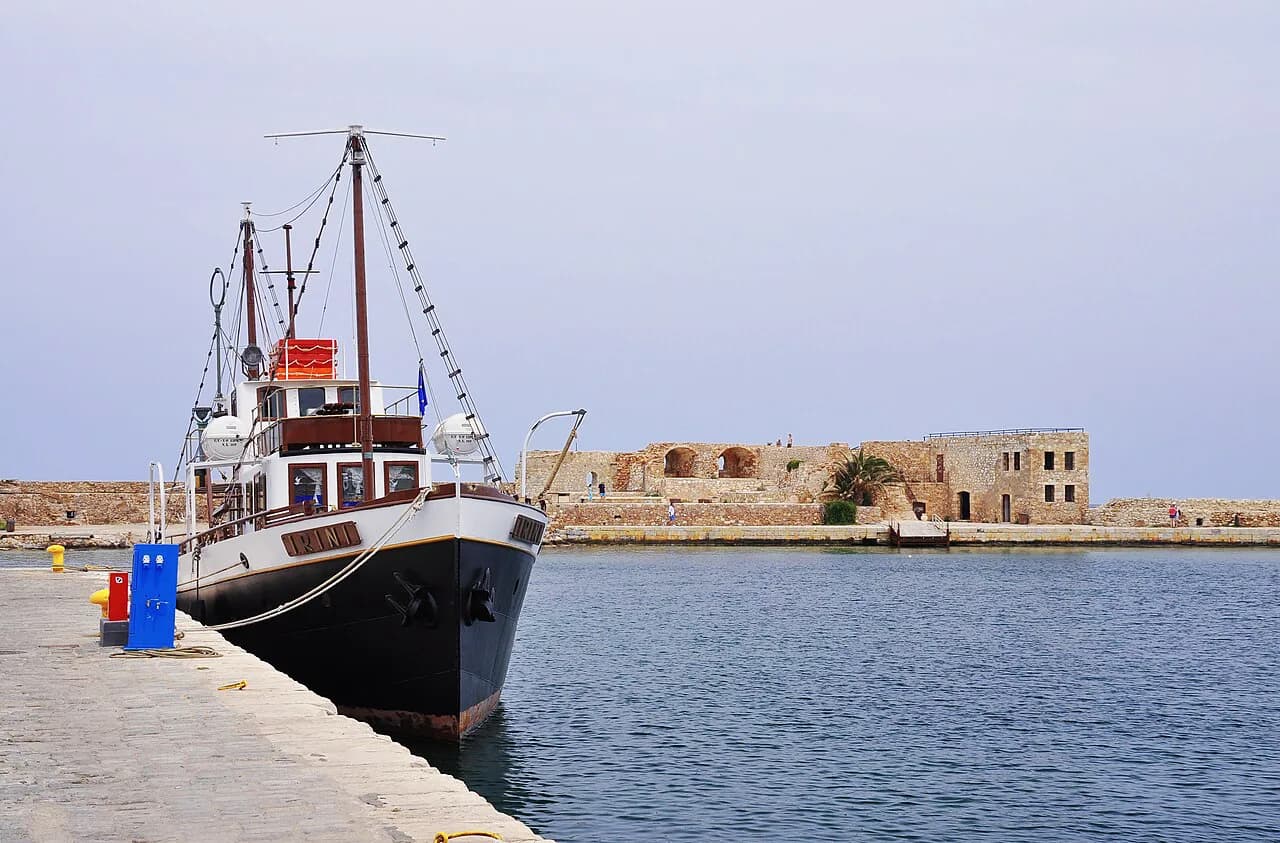
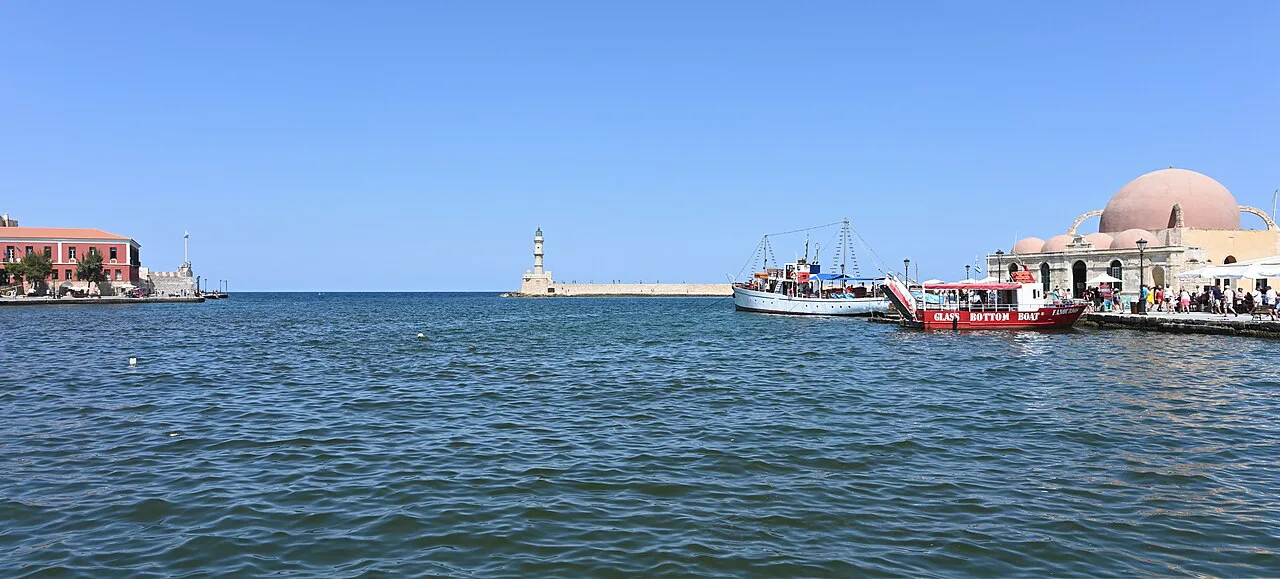
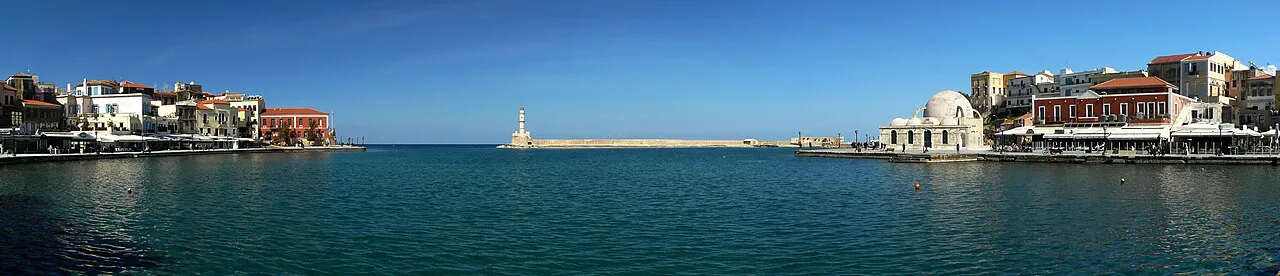
Chania's Venetian harbour is at its best before the summer crowds, when the Venetian and Ottoman buildings are still easy to walk past without queues and the waterfront tavernas are open but not full. Rethymno's old town and harbour have the same pre-season feel, with a slower pace and more time to sit and eat.
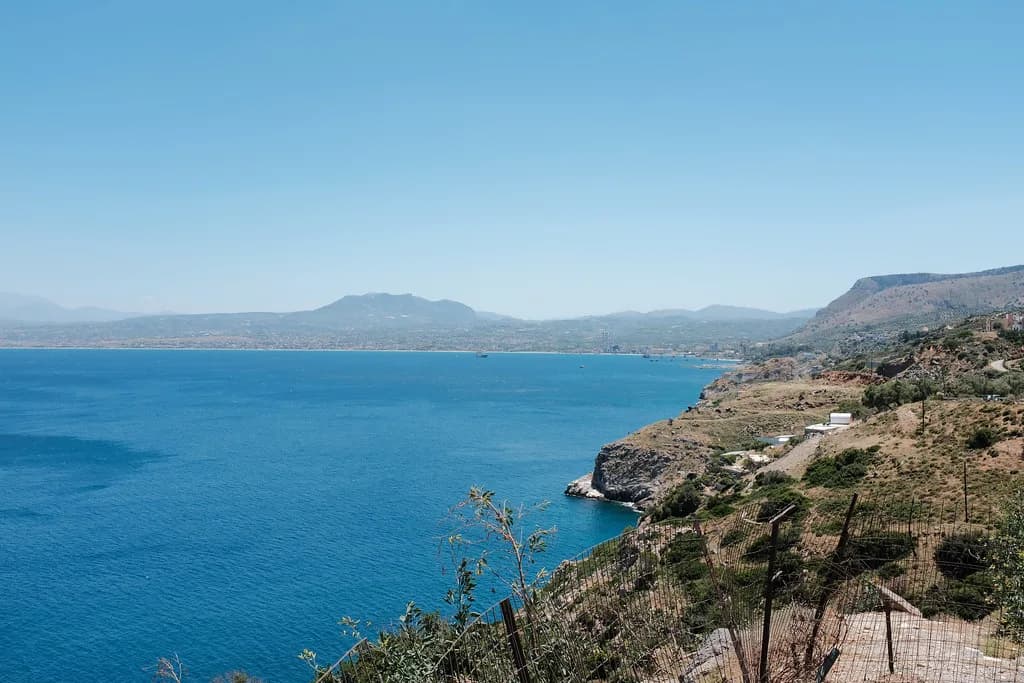
Inland, the Lasithi plateau and the mountain villages are green and quiet in April, with the walled fields and windmills visible against the still-snowy peaks. For somewhere genuinely warm, the south-coast villages around Ierapetra and the quieter beaches near Sfakia are the places to head, where a clear April day feels much closer to summer.
Walks and wildflowers
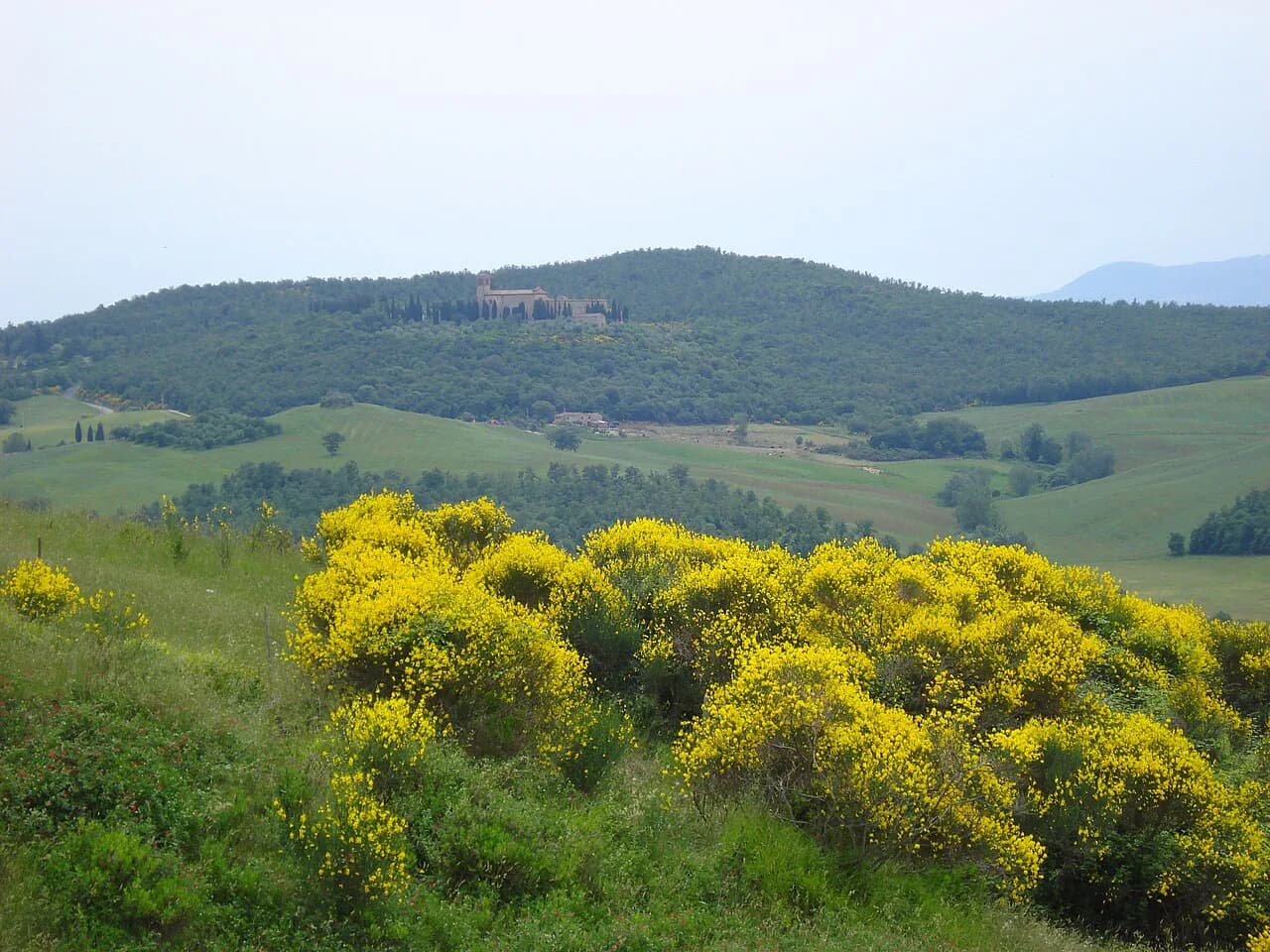
Spring is the best time for the island's walks: the hills are green, the wildflowers are out and the heat has not yet arrived. The Samaria Gorge opens for the season later in spring, and in April the lower, nearer gorges and coastal paths around the south coast are the more reliable choices, so plan the walk for the morning while the day is still cool.
Ridge paths and village tracks in the Amari and the White Mountains reward early starts, with mist still in the valleys and the smell of herbs underfoot. Carry water, layer up and be out by mid-afternoon: the temperature drops quickly once the sun goes off the slopes.
What is open
April is when the tourist infrastructure comes back to life, but not everything runs at full summer levels: boat trips, ferries to Gramvousa and Spinalonga, beach clubs and some mountain roads tend to open through the month and may not be running as often as they will in June. Timetables for those services can be thin in early April, so plan around a reduced rather than a full summer schedule.
Hotels and restaurants in Chania, Rethymno and Heraklion are generally open, but smaller coastal places may open only in late April or early May. That means a bit more planning, but also the quiet lanes, empty car parks and personal service that disappear by June.
Food in season
Spring is when Crete eats greens: wild horta, stamnagathi and other mountain herbs appear on taverna tables alongside fresh cheese pies and snails with rosemary. This is also the season of roast lamb and the Easter table, so if your trip falls in the Easter fortnight you get some of the best traditional food of the year, though restaurants are busier than in the rest of the month.
Crowds and prices
Outside the Easter fortnight and the May bank-holiday and half-term weeks, April remains genuinely quiet: fewer queues at Knossos and the museums, and more space in the popular towns. Airlines and hotels price the month lower than June, and the premium for Easter week itself is the main exception, so book early if your dates overlap with Easter or half term.
Honest drawbacks
April is not a beach holiday in disguise: the sea is still cool, evenings are chilly once the sun goes and the north coast can be windy. Occasional rain spells, some places still on reduced hours and the risk of a colder early-April snap are all genuine possibilities, and anyone hoping for hot days and warm water should wait for May or head further south.
The verdict
April suits walkers, history-lovers, food travellers and anyone who values quiet over sunshine and warm water. If you want a beach holiday, hot days and swimming, come back in May or June; if you can only travel in April, Crete is one of the best choices in the Mediterranean, and our guide to where is warm in Europe in April shows how it compares with the other options.
How to plan your days around the April weather
Once you have decided the warmth is enough, the day-by-day planning follows from the monthly figures. At Heraklion the average daily maximum in April is 20.3 °C and the average daily minimum is 12.3 °C, so mornings and evenings sit closer to the lower number while the middle of the day reaches the higher one. May shifts the same averages to 23.9 °C and 15.6 °C, and June to 27.5 °C and 19.7 °C. Thomas Cook puts the average sea temperature in April at 17 °C, so the water is not the warmest part of the day; the land is.
Rain, rather than cold, is what shapes an April itinerary. The same station records 7.7 rain days and 28.5 mm of precipitation for April, falling to 4.4 rain days and 14.2 mm in May and 1.3 rain days and 3.5 mm in June. Rough Guides describes April showers on Crete as typically short-lived, with sunny skies often following, and Thomas Cook gives 13 hours of daylight with eight hours of sunshine each day in April, sunset around 7.40pm at the beginning of the month and gradually later. In practice that argues for keeping the flexible, outdoor-heavy days early in a trip and holding the indoor or town-based ones in reserve, since a wet morning need not cost you a whole day.
There is also a regional split worth building into the plan. Thomas Cook notes that the mountains running east to west across Crete give the south of the island hotter and drier weather, because north-westerly winds are blocked and the north has a more Mediterranean feel. If warm days are the priority, the south is where the numbers point; the north is where the breezier, more changeable spring conditions sit. Either way, Rough Guides warns that the sea is not exactly hot at this time of year and that evenings and nights cool down, which matches a 12.3 °C average minimum — a light jacket earns its place in the bag for the hours after sunset, even on a day that felt like summer at noon.
Plan Your Visit
For British and American travellers, April is a smart shoulder-season bet: cheap flights, small crowds and enough warm dry daylight for the island's archaeology, harbour towns and mountain walks. The one genuine deciding factor is the Easter calendar, so fix your dates around it before you book anything else.
Read more detail on spring, Easter crowds and late-April openings on the best time to visit Crete page, and if you are still choosing between islands, check whether April works better in the Cyclades or the Dodecanese before you commit.
More Crete spring guides
Frequently Asked Questions
Is Crete hot in April?
Not hot. Daytime highs average around 20.3°C (68.5°F) and nights drop to about 12.3°C (54.1°F) at Heraklion, so the month is mild rather than hot. Think of it as warm spring weather good for walking, ruins and outdoor lunches, not beach weather.
Can you sunbathe in Crete in April?
Yes, on a clear day the sun is strong enough for sitting out on the beach or a hotel terrace, but the sea remains cool and most people find swimming brisk. Anyone hoping for a proper swimming holiday should choose May or June instead.
Is April a good time to visit Crete?
For quiet sightseeing, walking, archaeology and food, yes: crowds are small outside Easter, prices are lower than in June, and the weather is pleasant if not hot. For a beach-led family holiday with swimming, April is not the right month.
What should you see in Crete in April?
Good April choices are Knossos and the Heraklion museum, the old harbours at Chania and Rethymno, the green Lasithi plateau, the south-coast villages near Ierapetra, and the lower coastal walks and wildflower paths. Save the Samaria Gorge and the high mountain routes for later in the season.
Is April busy in Crete?
Generally quiet, with one clear exception: Easter week, when demand for flights and rooms rises sharply. Outside that window and the May bank-holiday and half-term weeks, April is one of the calmest months to travel around the island.
Sources
Spring sun notes
Optional updates when we add destinations and months.
You might also like
Continue reading
More guides you'll find useful