Best Places to Visit in Europe in April: Where It's Warm
April in Europe splits into warm southern islands and cool northern cities. Compare typical highs by destination and pick the month that suits your trip.
On this page
If you want warmth in April, book the Canaries or Cyprus: Lanzarote averages a 23.5 °C (74 °F) daytime high with 5 mm of rain across the month, and Larnaca reaches 23 °C (73 °F) with 15.8 mm. If you want a city or a walking island without summer heat or crowds, April is better than May almost everywhere in the Mediterranean. The catch is that the sea is still cold, evenings are cool in the Aegean, and the northern lakes need a proper jacket.
Our guide to where is warm in Europe in April sorts the continent into three honest tiers, and this page compares the destinations inside them: genuinely warm, mild and good for sightseeing, and cool enough that April is a shoulder-season compromise rather than a sun trip. Where you land matters more than the month itself.
April in Europe at a glance: warm, mild or cool
Three tiers hold up across the climate records. The Canary Islands and Cyprus are the only places where a typical April afternoon clears the mid-twenties and rain is close to irrelevant, which makes them the default for a holiday built around sitting outside. Mainland Spain, the Balearics, Malta, southern Italy, coastal Greece and the Algarve sit in the high teens to low twenties, which is ideal for walking and sightseeing but not for roasting on a lounger. The Italian lakes, northern Italy, Cappadocia and the Atlantic-facing Croatian and French coasts stay cool, often under 18 °C (64 °F), and you will want a layer in the evening.
The normal periods are not identical, so treat cross-country comparisons as close approximations rather than like-for-like. Spanish figures come from AEMET's 1981–2010 tables, Portuguese from IPMA's 1991–2020 sheets, Italian and Cypriot figures from WMO 1991–2020 normals, Greek temperatures from HNMS 1991–2020, and Malta from a 1961–1990 series. Within a country the figures are directly comparable; across borders, a degree either way is not meaningful.
How warm it is: typical April highs and night-time lows
Start with the Canaries, because they win on every count. Lanzarote averages 23.5 °C (74 °F) by day and 15.7 °C (60 °F) at night with 255 hours of sunshine and 1.3 rain days; Fuerteventura runs 22.9 °C (73 °F) and 16 °C (61 °F) with 242 hours; Gran Canaria 22.6 °C (73 °F) and 16.2 °C (61 °F); and Tenerife 23.1 °C (74 °F) and 16 °C (61 °F). The night-time figures are the ones that matter — these are the only destinations on the list where an evening outdoors in a T-shirt is realistic in April.
Cyprus is the eastern Mediterranean's answer to the Canaries, with more sun and a hotter inland. Paphos averages 21.8 °C (71 °F) and 11.9 °C (53 °F) with 277.9 hours of sunshine in the month and 15.2 mm of rain, while Larnaca is warmer at 23 °C (73 °F) and 12.1 °C (54 °F), reaching 273.6 sunshine hours. Nights are noticeably cooler than the Canaries, so Paphos and Larnaca suit people who want sun by day and do not mind a jumper after dark.
Andalusia is the warmest corner of mainland Europe in April. Seville averages 23.4 °C (74 °F) by day and 11.1 °C (52 °F) at night but records 6.1 rain days and 54 mm, so April is a month of warm spells punctuated by proper showers; Málaga on the coast is slightly cooler at 21.4 °C (71 °F) and 11.1 °C (52 °F) but drier in feel with 44 mm over 4.5 rain days and 244 sunshine hours.
The Balearics are mild rather than warm, and Menorca is the coolest and wettest of the three. Palma averages 19.8 °C (68 °F) and 7.4 °C (45 °F) with 234 sunshine hours and 4.8 rain days, Ibiza 19.7 °C (67 °F) and 11.4 °C (53 °F) with 246 hours, and Menorca 18 °C (64 °F) and 10.6 °C (51 °F) with 6 rain days and 45 mm — meaning Menorca suits walkers who accept a wet day, and Ibiza suits anyone who wants the mildest evenings of the three.
Portugal divides sharply between the Algarve, Lisbon and Madeira. Faro averages 20.7 °C (69 °F) and 12.4 °C (54 °F) with 5.3 rain days and 39 mm, Lisbon 20.4 °C (69 °F) and 12.3 °C (54 °F) but with 7.9 rain days and 71.8 mm, and Funchal in Madeira a steady 21 °C (70 °F) and 14.9 °C (59 °F) with 4.7 rain days. Madeira's nights are the warmest in Portugal in April, which is why it works for a walking holiday with evening meals outside.
Where is warm in Europe in April?
Genuinely warm in April means the Canaries, Cyprus and, on a good day, Seville and Antalya. Everything else is mild: pleasant in the sun, cool in the shade and chilly after dark. If your test is whether you can sit by a pool in the late afternoon without a towel over your legs, only the Canaries and Cyprus reliably pass it in April.
Crete and Rhodes sit just below that line. Heraklion averages 20.3 °C (69 °F) by day and 12.3 °C (54 °F) at night with 7.7 rain days and 28.5 mm, and Rhodes 20 °C (68 °F) and 14.2 °C (58 °F) with 7.6 rain days. Rhodes has the warmer evenings of the two, which makes it the better pick for late dinners outside; Crete's edge is the walking, with the Lasithi plateau and the Samaria gorge area approaching their best conditions.
Travellers hunting for somewhere above 25 °C in April should adjust expectations. No destination on this list averages a daytime high above the mid-twenties, and the closest are Larnaca at 23 °C (73 °F), Lanzarote at 23.5 °C (74 °F) and Seville at 23.4 °C (74 °F). For reliable 25 °C-plus days you are looking at May or June, which is why our comparison of where is warm in Europe in May is the natural next step if your trip can move.
The Canaries: warmest, driest and best for lazing outdoors
If you want one destination and no debate, pick Lanzarote or Fuerteventura. Lanzarote's 23.5 °C (74 °F) days, 15.7 °C (60 °F) nights and 1.3 rain days make it the most dependable April sunshine in Europe outside Cyprus, and its landscapes — the lava fields of Timanfaya, the vineyards of La Geria, the white villages of Teguise and Yaiza — reward a hire car rather than a resort routine. That dry figure is what puts it ahead of every other island here.
Gran Canaria and Tenerife are the more varied pair, with green mountains behind dry coasts and enough altitude to change the weather within an hour's drive. Both average around 22.6 to 23.1 °C (73 to 74 °F) by day and 16 °C (61 °F) at night, with only 1.1 to 1.3 rain days in the month. Tenerife has slightly more cloud-prone northern valleys and a sunnier south; Gran Canaria packs coast, pine forest and the Roque Nublo walks into a small island.
Cyprus: the sunniest April in the eastern Mediterranean
Cyprus gives you the most sunshine of any destination here — 277.9 hours in Paphos and 273.6 in Larnaca — and very little rain, at 15.8 mm in Larnaca and 15.2 mm in Paphos across the month. That makes it excellent for archaeological sites and coastal walking, from the Tombs of the Kings outside Paphos to the salt flats and hills behind Larnaca.
The trade-off is the evenings. Paphos drops to 11.9 °C (53 °F) on average at night and Larnaca to 12.1 °C (54 °F), so a terrace dinner in April needs a jacket even after a 23 °C (73 °F) afternoon. Larnaca is the warmer of the two by day at 23 °C (73 °F) against Paphos's 21.8 °C (71 °F), so travellers who feel the cold should base themselves on the south-east coast.
Mainland Spain and the Balearics: Seville and Málaga versus the islands
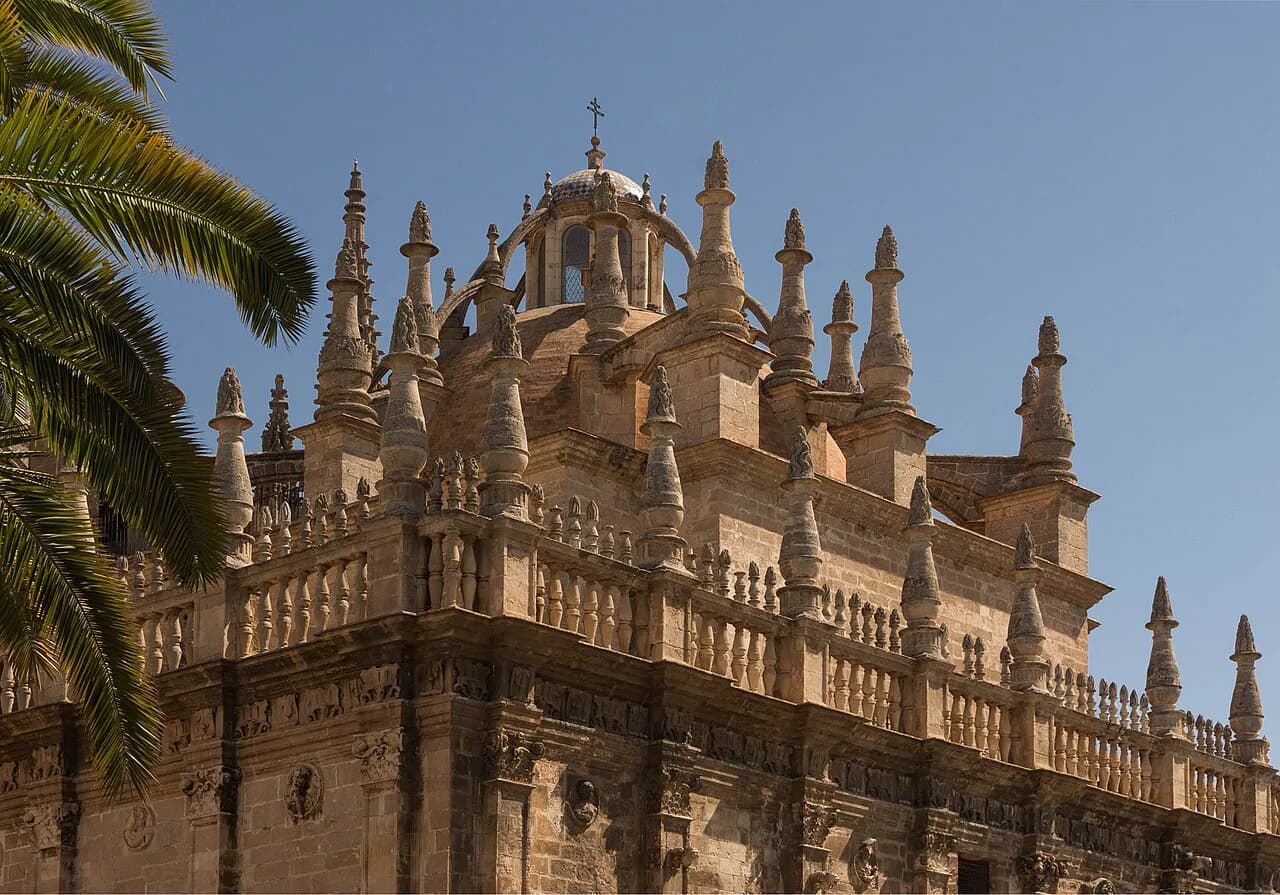
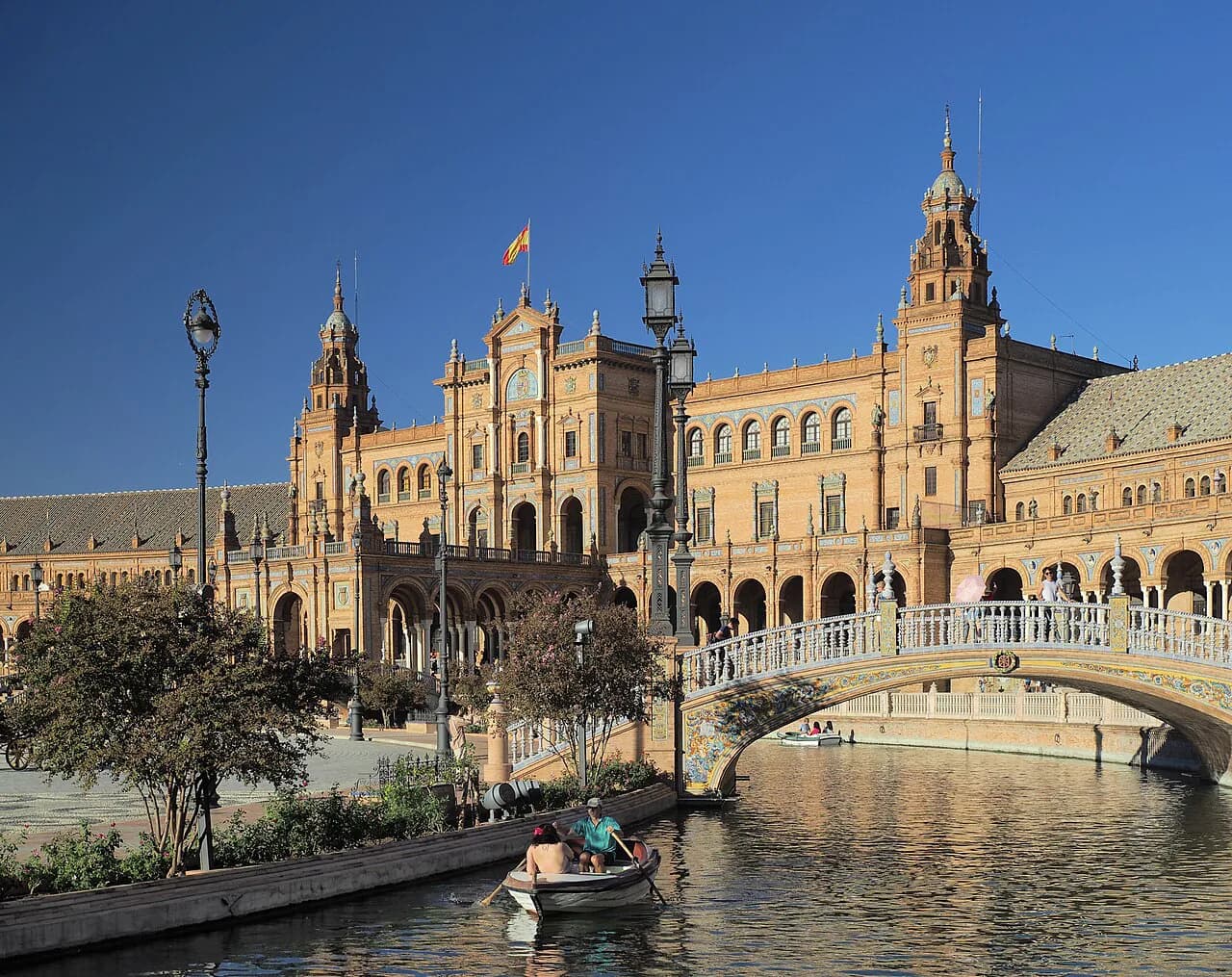
Seville is the boldest April city on the continent: 23.4 °C (74 °F) afternoons, 238 sunshine hours and the orange blossom out, with the Alcázar gardens and the Santa Cruz lanes at their best before the summer heat arrives. Go early in the day for the major sights and keep a free afternoon for when a shower passes through, because 6.1 rain days and 54 mm is a real feature of the month.
Málaga trades a degree of warmth for a gentler month: 21.4 °C (71 °F) days, 244 sunshine hours, and rain concentrated into 4.5 wet days and 44 mm. That is good conditions for the Alcazaba, the Picasso museum and a day trip up to Ronda or the white villages, with the coast as a fallback when the cloud comes in.
In the Balearics, Palma is the most practical April base for a city-and-country trip: 19.8 °C (68 °F) days, 234 sunshine hours, and the Serra de Tramuntana and Port de Sóller within easy reach. Ibiza is a degree cooler by day but noticeably milder at night at 11.4 °C (53 °F), and Menorca is the one to choose if you want quiet walking and can live with 45 mm of rain spread over six days.
Greece: Crete, Rhodes, the Cyclades and the Ionian islands
Greek April temperatures are consistent but the rain and wind are not. Heraklion averages 20.3 °C (69 °F) and 12.3 °C (54 °F), Rhodes 20 °C (68 °F) and 14.2 °C (58 °F), Santorini 18.9 °C (66 °F) and 13.3 °C (56 °F), Kos 19.2 °C (67 °F) and 12.9 °C (55 °F), and Athens 20.2 °C (68 °F) and 11.8 °C (53 °F). Rhodes and Santorini have the warmest nights, which matters for anyone planning to eat outside.
The Ionian is the wetter side. Corfu averages 19 °C (66 °F) and 9.2 °C (48 °F) but records 12.9 rain days and 66.7 mm in April, and Kefalonia 19.2 °C (67 °F) and 11.2 °C (52 °F) with 9.5 rain days and 60.4 mm. That does not rule them out — the green Ionian scenery depends on that rain — but it means planning around indoor afternoons and keeping a wet-day list that includes the old towns rather than boat trips.
Athens is the pick for a city break with ruins rather than a beach holiday: 20.2 °C (68 °F) by day, 9.7 rain days and 26 mm, which is enough wet weather to justify a museum ticket as backup. The Acropolis climb is far more comfortable now than in June, when the average high climbs to 30.3 °C (87 °F).
Italy: Sicily and Sardinia warm, Rome and Tuscany mild, the north cool
Sicily is the warmest part of Italy in April. Catania Sigonella averages 21.44 °C (71 °F) by day and 8.65 °C (47 °F) at night with 4.78 rain days, while Palermo runs 18.7 °C (66 °F) and 11.4 °C (52 °F) but with 8.6 rain days and 65.1 mm on a 1971–2000 series. Inland Catania gives you Etna's foothills and the baroque towns; Palermo gives you the city and the coast at the cost of more wet days.
Sardinia sits between the two in spirit: Cagliari averages 19.91 °C (68 °F) and 9.66 °C (49 °F) with 6.49 rain days and 45.62 mm. That is walking weather rather than beach weather, and it suits the coastal paths and the interior around Barumini better than it suits a lounger.
Rome and Tuscany are mild and often lovely, but wet. Rome averages 18.81 °C (66 °F) and 8.63 °C (47 °F) with 8.11 rain days, 74.35 mm and 209.3 sunshine hours; Florence averages 20 °C (68 °F) and 8.05 °C (46 °F) but with 8.66 rain days and 67.17 mm. The pattern is a genuinely pleasant afternoon followed by a wet one, so plan the outdoor days flexibly and hold the Uffizi or the Vatican for the rainy spell.
Head north and April becomes a compromise. The Capri and Amalfi Coast station averages 19.83 °C (68 °F) and 12.07 °C (54 °F) with 5.7 rain days, which is workable for the coastal paths and the ferry between towns; Lake Garda is 18.65 °C (65 °F) and 7.58 °C (46 °F) with 8.56 rain days, Lake Como 17 °C (63 °F) and 5.9 °C (43 °F) with 71.76 mm, and the Cinque Terre 17.97 °C (64 °F) and 9.22 °C (49 °F) with 80.5 mm. The lakes and the Ligurian coast are places to walk between showers, not to sunbathe.
Malta, the Croatian coast and the French Riviera: the middle ground
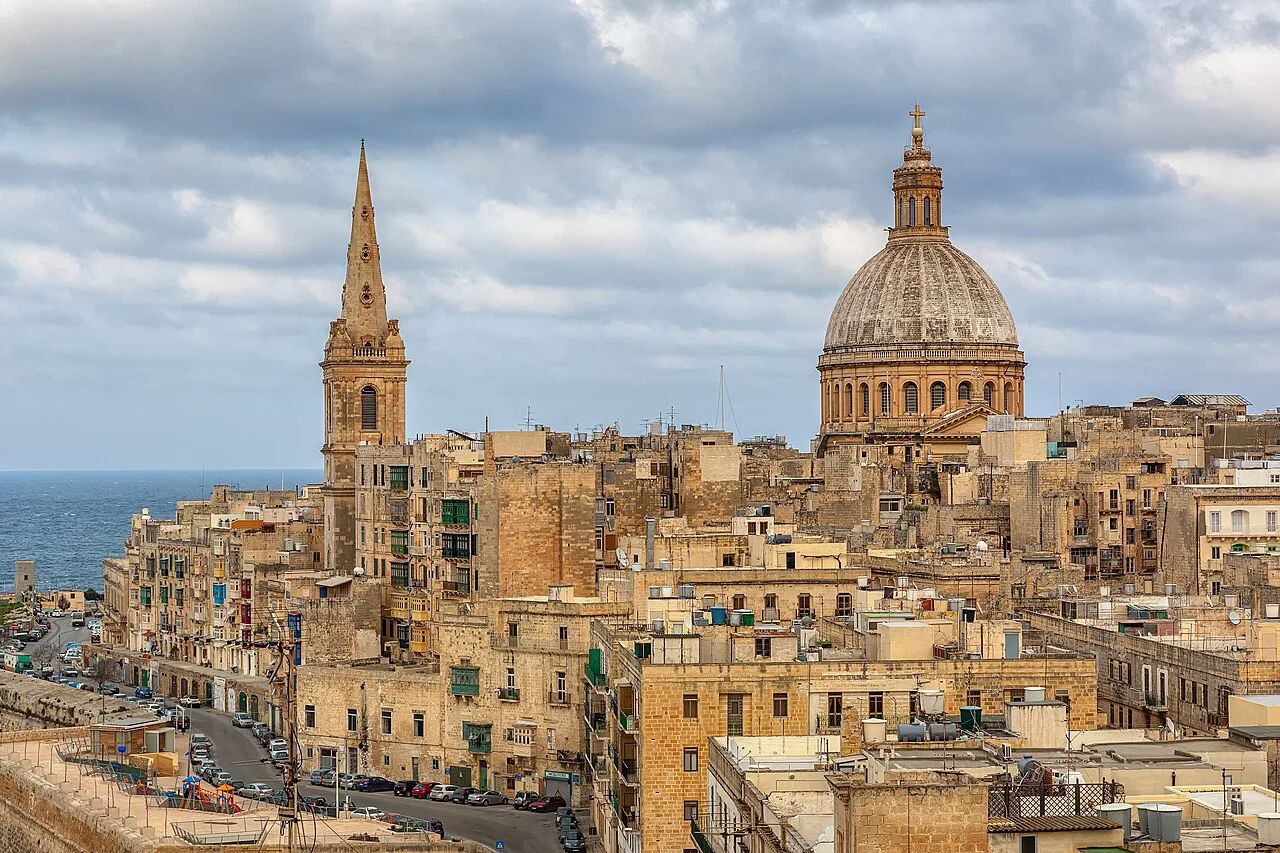
Malta averages 19.1 °C (66 °F) by day and 11.9 °C (52 °F) at night with 6.4 rain days and 22.5 mm, on a 1961–1990 series that is older than the Italian and Spanish figures. The rain total is low even if the rain-day count is not, and the compact size means you can switch between Valletta, Mdina and the Three Cities as the weather turns.
Dubrovnik is the coolest of the trio and the wettest, at 16.9 °C (62 °F) by day and 10.9 °C (51 °F) at night with 11.2 rain days and 90.9 mm. It is a city for wandering the walls between showers and for eating inside rather than a sun destination, and the reward is a UNESCO old town without the summer crush.
Nice averages 17.4 °C (63 °F) by day and 10.8 °C (51 °F) at night with 229.2 sunshine hours but 6.4 rain days and 68.8 mm. The sunniest hours are genuinely pleasant, which is why the Promenade des Anglais and the hill villages behind the coast work in April — but the Riviera's April showers are not a myth, and a museum afternoon is a sensible plan.

Further east and inland: Antalya, Bodrum and Cappadocia
Antalya is one of the best value warm options in April, with 21.8 °C (71 °F) days and 11.3 °C (52 °F) nights, 7.7 hours of sunshine a day and 63.1 mm of rain over 8.43 rain days. The old harbour, Hadrian's Gate and the Roman remains suit a city-and-coast trip, and the sea is more for looking at than swimming.
The Bodrum peninsula is warmer still at 21.7 °C (71 °F) by day and 13.1 °C (55 °F) at night, with 232.5 sunshine hours and only 5 rain days, which makes it the most appealing Turkish coastal choice for April evenings. Cappadocia is a different proposition entirely: Nevsehir averages 16.3 °C (61 °F) and 5.2 °C (42 °F) with 11.33 rain days, and at around 1,260 m the balloons and valley walks come with cold mornings.
Cities for sightseeing rather than sun: Barcelona, Valencia and Athens
Barcelona averages 18 °C (64 °F) and 9.4 °C (49 °F) with 228 sunshine hours and 5.1 rain days in April, which is close to ideal for walking the Gothic Quarter, the superilles and the parks without the crush of June. Valencia is warmer at 20.8 °C (69 °F) and 11.5 °C (52 °F) with 234 sunshine hours and a similar 4.8 rain days, and it is the better pick if you want the beach within reach as a fallback.
Athens and Seville are the two big sightseeing cities where April is clearly better than May or June. Both average around 20 to 23 °C by day and both have wet days in the month, so build in a museum or a long lunch and keep the ruins for the sunshine.
Early vs late April: warming up, and the Easter effect
Late April is warmer than early April almost everywhere on this list, by a couple of degrees at most in the south and rather more in the north. The bigger swing is in what is open: coastal boat trips, beach clubs and seasonal restaurants tend to be on reduced hours early in the month and closer to full service by the end. Operators publish their own start dates, so it is worth checking the specific boat or beach club before you build a day around it.
Easter and the UK school holidays move crowds and prices within April, and the dates shift each year, so check the current year's holiday calendar before you book. Outside those windows, April remains cheaper than May or June in most Mediterranean destinations, with more availability and shorter queues at the headline sights.
Honest drawbacks: cool evenings, rain spells and a cold sea
The evening temperature is where April catches people out. Seville drops to 11.1 °C (52 °F), Palma to 7.4 °C (45 °F), Florence to 8.05 °C (46 °F) and Cappadocia to 5.2 °C (42 °F) on average, which means an al fresco dinner needs a jacket even after a 23 °C afternoon. Only the Canaries and, to a lesser extent, Cyprus and Rhodes keep nights warm enough to sit out comfortably.
Rain is unevenly distributed. Menorca records 6 rain days and 45 mm, Corfu 12.9 rain days and 66.7 mm, Dubrovnik 11.2 rain days and 90.9 mm, and the Cinque Terre 7.17 rain days and 80.5 mm — while Lanzarote records 1.3 rain days and Larnaca 15.8 mm. A rain spell is entirely normal in the western Mediterranean in April, so an itinerary that collapses in the wet is a badly planned one.
April or May? Who should wait and who should book now
Book April if you want the Canaries or Cyprus, if you are walking in the Balearics, Crete or Tuscany before the heat, or if you want Seville, Athens or Rome without June temperatures. Wait for May or June if you need the sea to be tolerable for swimming, if you want beach clubs and boat trips in full swing, or if you are heading to the Italian lakes or the Adriatic coast and want reliable sunshine.
For a full month-by-month comparison of the same destinations as the season opens, including the jump in temperatures and the shift in crowds, see our guide to where is warm in Europe in June.
The verdict
Pick Lanzarote or Larnaca for warmth, sunshine and evenings outside. Pick Seville, Málaga, Palma or Athens for a spring city break with genuine sun in the afternoons. Pick Crete, Rhodes or Madeira for walking with mild days and cool nights, and only choose the lakes, the Cinque Terre or Cappadocia in April if you want quiet trails more than warmth.
Whichever you choose, look at the night-time figure as carefully as the daytime one, accept that a wet day or two is normal outside the Canaries and Cyprus, and leave the swimming for a later month. That is the honest trade in April: fewer crowds and cheaper prices in exchange for cooler evenings and an unheated sea.
More Europe spring guides
Frequently Asked Questions
Where is warm in Europe in April?
The Canary Islands and Cyprus are the only destinations that reliably clear 22 to 23 °C (72 to 73 °F) by day with warm evenings: Lanzarote averages 23.5 °C (74 °F) and 15.7 °C (60 °F), and Larnaca 23 °C (73 °F) and 12.1 °C (54 °F). Seville, Málaga, Antalya and the eastern Aegean islands are mild rather than hot, with warm afternoons and cool nights.
Is April a good time to visit Europe?
Yes, for sightseeing, walking and city breaks. Crowds are lighter than in May or June, prices are usually lower, and afternoon temperatures in Spain, Portugal, Italy and Greece are comfortable rather than hot. The drawbacks are cool evenings, a higher chance of rain in the western Mediterranean and a sea that is still cold.
Where in Europe is over 25 °C in April?
Nowhere on this list averages above the mid-twenties in April. The warmest typical daytime highs are Lanzarote at 23.5 °C (74 °F), Seville at 23.4 °C (74 °F) and Larnaca at 23 °C (73 °F). For dependable 25 °C-plus days, look at May or June instead.
Is it warm enough to sunbathe in the Canaries in April?
Yes, in sheltered spots. Lanzarote, Fuerteventura, Gran Canaria and Tenerife all average daytime highs of 22.6 to 23.5 °C (73 to 74 °F) with night-time lows around 16 °C (61 °F) and very little rain. Wind is the variable to expect, and the sea remains cold for swimming.
Is Greece warm in April?
Mild rather than hot. Heraklion averages 20.3 °C (69 °F) and Rhodes 20 °C (68 °F), with Athens at 20.2 °C (68 °F), while Santorini is cooler at 18.9 °C (66 °F). Nights drop to between 11.8 and 14.2 °C (53 to 58 °F), and the Ionian islands such as Corfu and Kefalonia see more rain days than the Aegean.
Is the sea warm enough to swim in Europe in April?
No, not comfortably, including in the Canaries and Cyprus. April is a month for walking, sightseeing and sitting outside, not for swimming. If swimming matters, plan for later in the season.
Where in Europe is cheapest in April?
Prices are generally lower than in May and June everywhere outside the Easter and school-holiday windows. Antalya and the Bodrum peninsula offer warm days and good value, and inland Spain, Portugal and Greece tend to be cheaper than the islands in the same month. Check current fares and rates for your dates.
Should I visit the Canaries or Cyprus in April?
The Canaries have the warmer nights and the least rain, which suits an evening-outdoors holiday. Cyprus has more sunshine hours and slightly warmer daytime highs in Larnaca, which suits sightseeing and coastal walking, but its evenings are noticeably cooler. Choose the Canaries for lazing and Cyprus for ruins and long lunches.
Sources
- Mallorca climate normals (AEMET, Palma de Mallorca Airport (AEMET B278))
- Ibiza climate normals (AEMET, Ibiza Airport (AEMET B954))
- Menorca climate normals (AEMET, Menorca Airport, Mahon (AEMET B893))
- Málaga climate normals (AEMET, Malaga Airport (AEMET 6155A))
- Lanzarote climate normals (AEMET, Lanzarote Airport (AEMET C029O))
- Tenerife climate normals (AEMET, Tenerife South Airport (AEMET C429I))
- Fuerteventura climate normals (AEMET, Fuerteventura Airport (AEMET C249I))
- Seville climate normals (AEMET, Seville Airport (AEMET 5783))
- Greek climate normals (HNMS)
- Corfu climate normals (WMO World Weather Information Service, Kerkyra / Corfu (HNMS))
- Sicily climate normals (WMO Climate Normals 1991-2020, Catania Sigonella (WMO 16459))
- Sardinia climate normals (WMO Climate Normals 1991-2020, Cagliari Elmas (WMO 16560))
- Amalfi Coast climate normals (WMO Climate Normals 1991-2020, Capri (WMO 16294))
- Lake Garda climate normals (WMO Climate Normals 1991-2020, Verona Villafranca (WMO 16090))
- Lake Como climate normals (WMO Climate Normals 1991-2020, Milano Malpensa (WMO 16066))
- Tuscany climate normals (WMO Climate Normals 1991-2020, Firenze Peretola (WMO 16170))
- Cinque Terre climate normals (WMO Climate Normals 1991-2020, Sarzana Luni, near La Spezia (WMO 16125))
- Malta climate normals (WMO World Weather Information Service, Luqa (Malta Meteorological Office))
- Algarve climate normals (IPMA, Faro Airport (IPMA station 554))
- Lisbon climate normals (IPMA, Lisboa / Instituto Geofisico (IPMA station 535))
- Madeira climate normals (IPMA, Funchal / Observatorio (IPMA station 522))
- Paphos climate normals (WMO Climate Normals 1991-2020, Paphos Airport (WMO 17600))
- Larnaca climate normals (WMO Climate Normals 1991-2020, Larnaca Airport (WMO 17609))
- Cappadocia climate normals (MGM, Nevsehir (MGM))
- Antalya climate normals (MGM, Antalya regional station (MGM))
- Dalaman climate normals (WMO Climate Normals 1991-2020, Bodrum (WMO 17290))
- Nice climate normals (Meteo-France, Nice Cote d'Azur Airport (Meteo-France 06088001))
- Barcelona climate normals (AEMET, Barcelona Airport, El Prat (AEMET 0076))
- Valencia climate normals (AEMET, Valencia city (AEMET 8416))
- Dubrovnik climate normals (WMO World Weather Information Service, Dubrovnik (DHMZ))
Spring sun notes
Optional updates when we add destinations and months.
You might also like

Continue reading
More guides you'll find useful