Thessaloniki in May: Weather and What to Expect
Thessaloniki in May averages 24.9°C by day and 13.7°C at night, with about 11 rain days. Here is what that means for sightseeing, the sea and crowds.
On this page
May is warm enough for sightseeing in Thessaloniki, but not for the sea. Hellenic National Meteorological Service normals for Thessaloniki airport put the average daytime high at 24.9°C (77°F) and the night-time low at 13.7°C (57°F), which makes afternoons comfortable for walking and evenings cool enough to want a jacket.
Rain is still part of the picture: the city averages about 10.7 rain days and 44.4 mm in May, so a short spell of wet weather is likely on any week-long trip. Plan museum and church time around it, and treat the waterfront and the upper city as fair-weather outings.
Weather in May
The Hellenic National Meteorological Service publishes 1991–2020 normals for Thessaloniki airport: May averages 24.9°C by day and 13.7°C at night, June jumps to 29.9°C and 18.6°C, and April sits at 19.3°C and 8.8°C. Read those three months together and May is the hinge month, mild rather than hot.
The rain figures come from the World Weather Information Service city page for Thessaloniki, supplied by the same national service but averaged over 1959–1997: 10.7 rain days and 44.4 mm in May. That is wetter than June, so a week in May usually includes one or two grey days rather than a washout.
Sunshine matters as much as temperature here: clear May days are bright and long, but the city sits at the head of a gulf and breezes off the water make the shade and the evening noticeably cooler than the afternoon. Judge the month by the hours you will actually spend outdoors, not by the peak reading.
Is it warm enough?
For sightseeing, yes. A 24.9°C afternoon is close to ideal for the Archaeological Museum, the Museum of Byzantine Culture, the Roman Agora and the Rotunda, all of which involve standing and walking rather than sheltering from heat. The lower morning temperatures around 13.7°C mean a light layer is worth having for the first couple of hours.
For lazing outdoors, May is good but not guaranteed: a taverna table in Ladadika or on Aristotelous Square is pleasant at lunchtime and needs a jumper after dark. For swimming, look later; the Thermaic Gulf is a northern sea and lags well behind the air temperature at this point in the season.
Families with small children generally find May easier than July because the afternoons stay bearable, but the cool evenings and the chance of rain mean fewer long beach days. Anyone whose main aim is reliable sunbathing should look further south or book for late June.
Early vs late May
The month warms steadily rather than evenly. WeatherSpark's US-unit figures for Thessaloniki show average daily highs climbing from roughly 71°F to 80°F across May, with lows rising from about 51°F to the high fifties, which translates to noticeably softer evenings by the final week.
In practice, early May behaves like a mild version of April: pleasant midday walking, cold shade, and a higher chance of rain. Late May is the better bet for outdoor eating, the waterfront promenade and day trips, because the afternoons and the evenings both improve together.
Anyone deciding between the two halves of the month should weigh what they want to do after 7pm. If long dinners outside and a stroll back along the promenade are the point of the trip, aim for the second half; if you want quieter streets and lower demand, the first half delivers that.
May compared with April and June
April in Thessaloniki is a cooler, more unsettled month at 19.3°C by day and 8.8°C at night, with rain days close to May's. It rewards people who care more about empty streets than warm afternoons, and it is the better month for a purely urban visit that ends indoors.
June is the step change: 29.9°C highs, 18.6°C lows and fewer rain days, which finally makes warm evenings and sea swimming realistic. The cost is a city that starts to feel hot by mid-afternoon and a season that is properly under way.
May occupies the useful middle: close enough to April's prices and quiet to feel like a shoulder month, warm enough by the end to sit outside comfortably. If you want a compromise between sightseeing weather and summer atmosphere, take the last ten days of May over the first ten days of June.
What is open
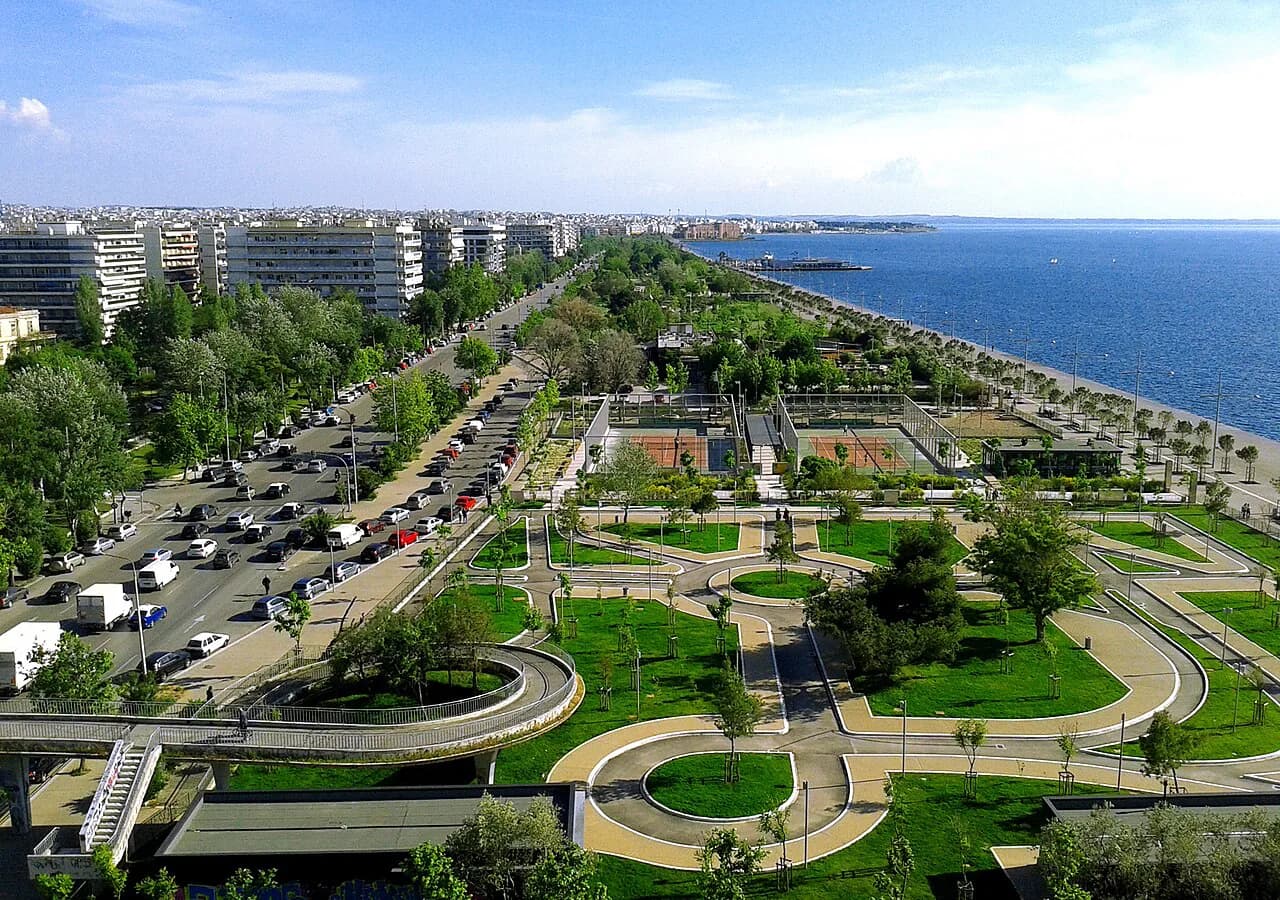
May is when Thessaloniki's outdoor season comes back to life: the waterfront cafés fill up, the promenade is busy in the evenings, and the upper city's squares become usable again. Spring is the moment the city moves outside, which is why the month feels livelier than its modest temperatures suggest.
Opening hours and seasonal schedules for individual museums, boat trips and archaeological sites change through the spring, and the organisers publish them directly. Check the site or museum you care about before fixing a day's plan, particularly for the White Tower and the out-of-town archaeological museums.
Things to do in May
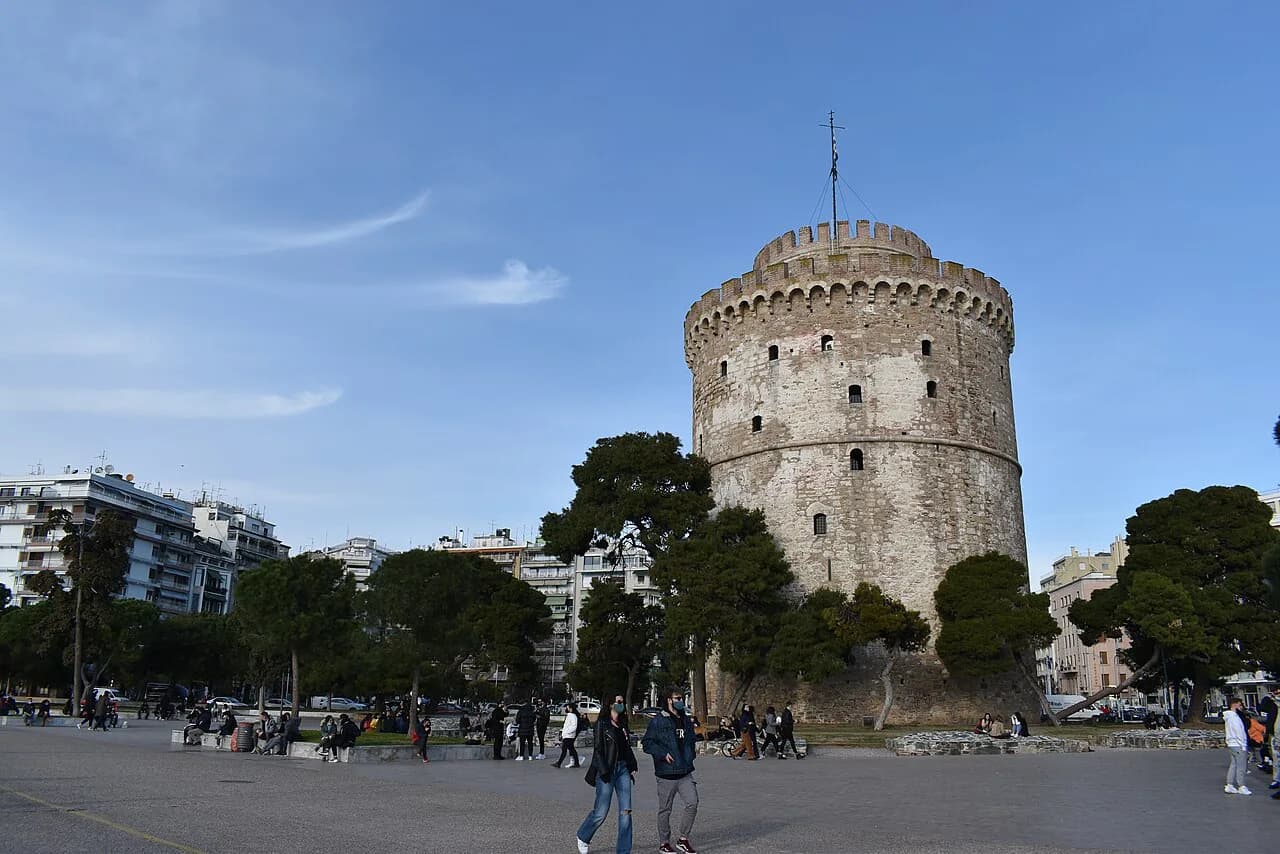
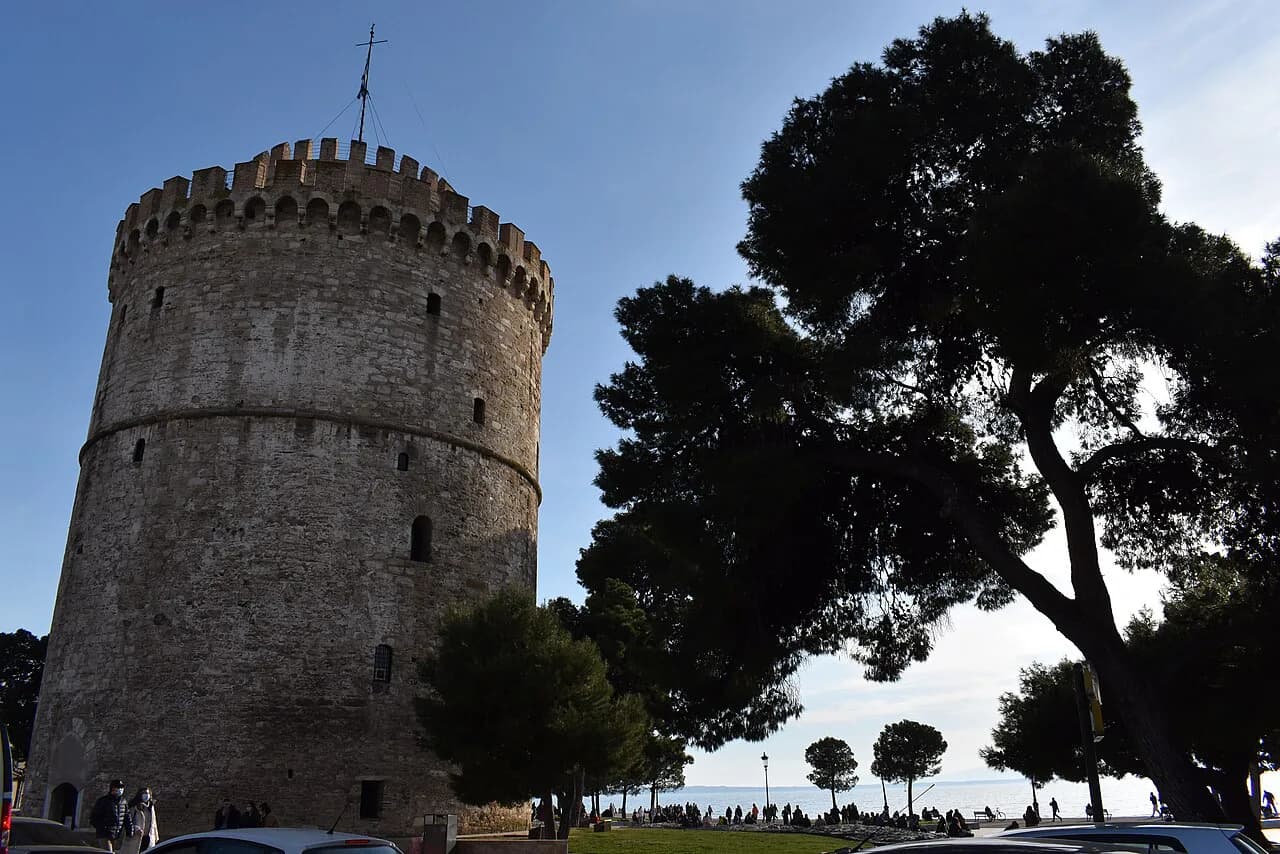
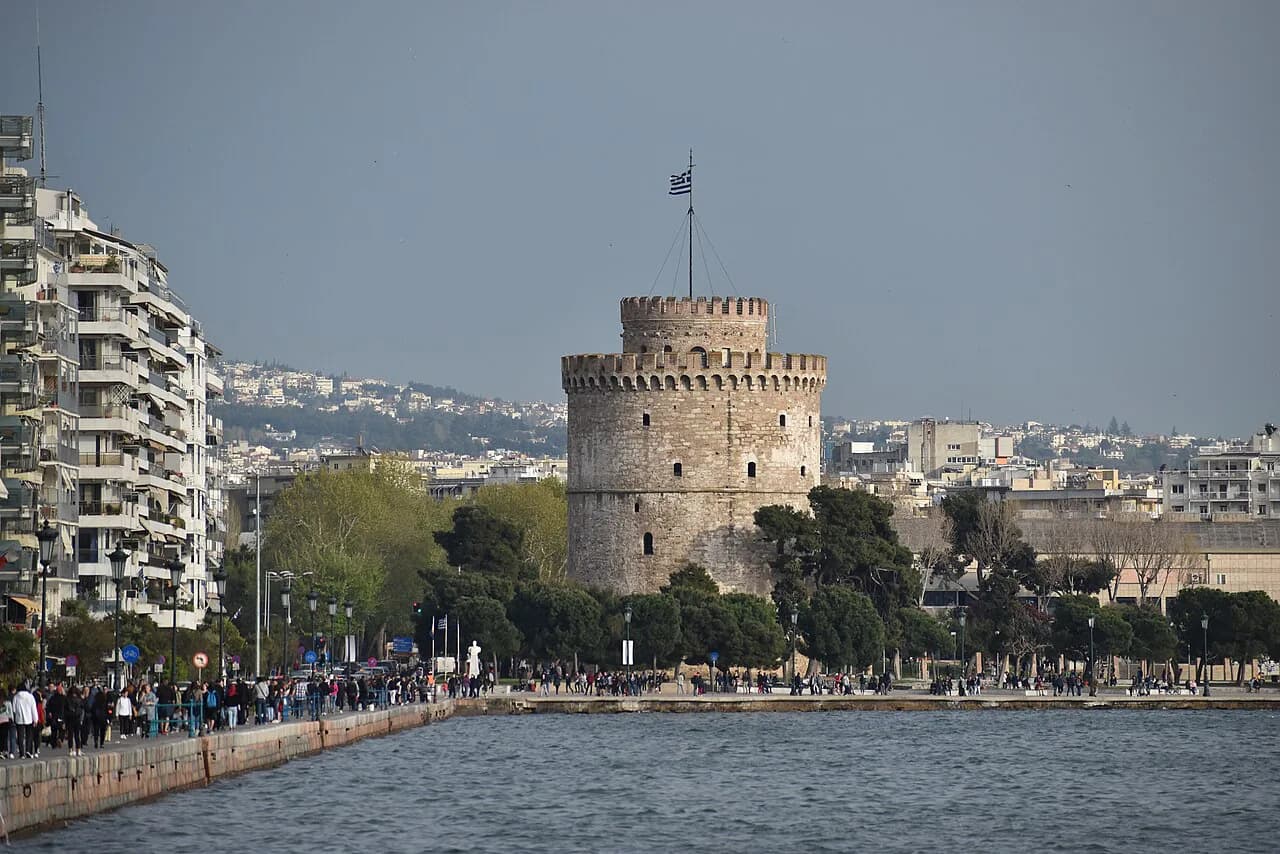
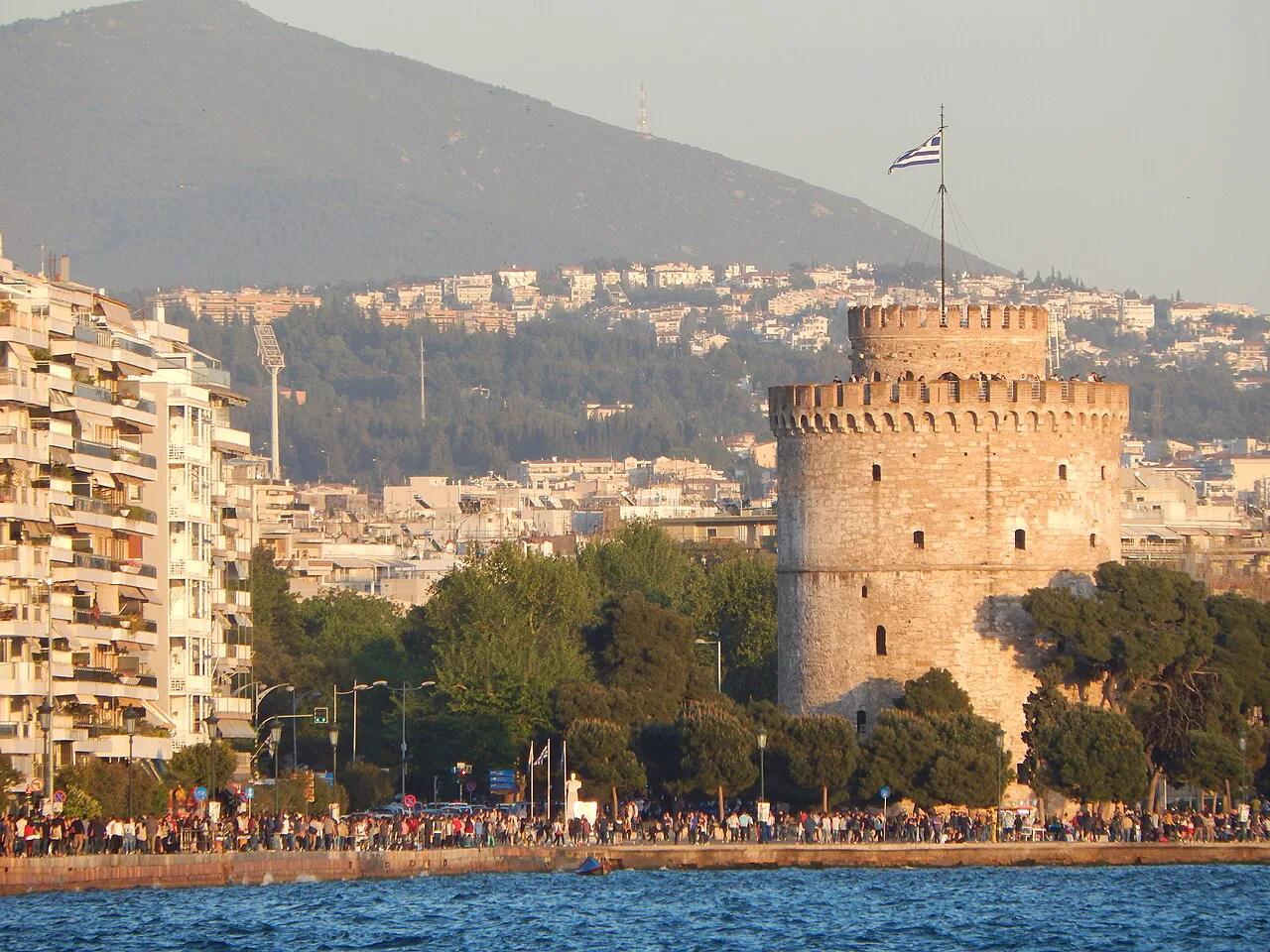
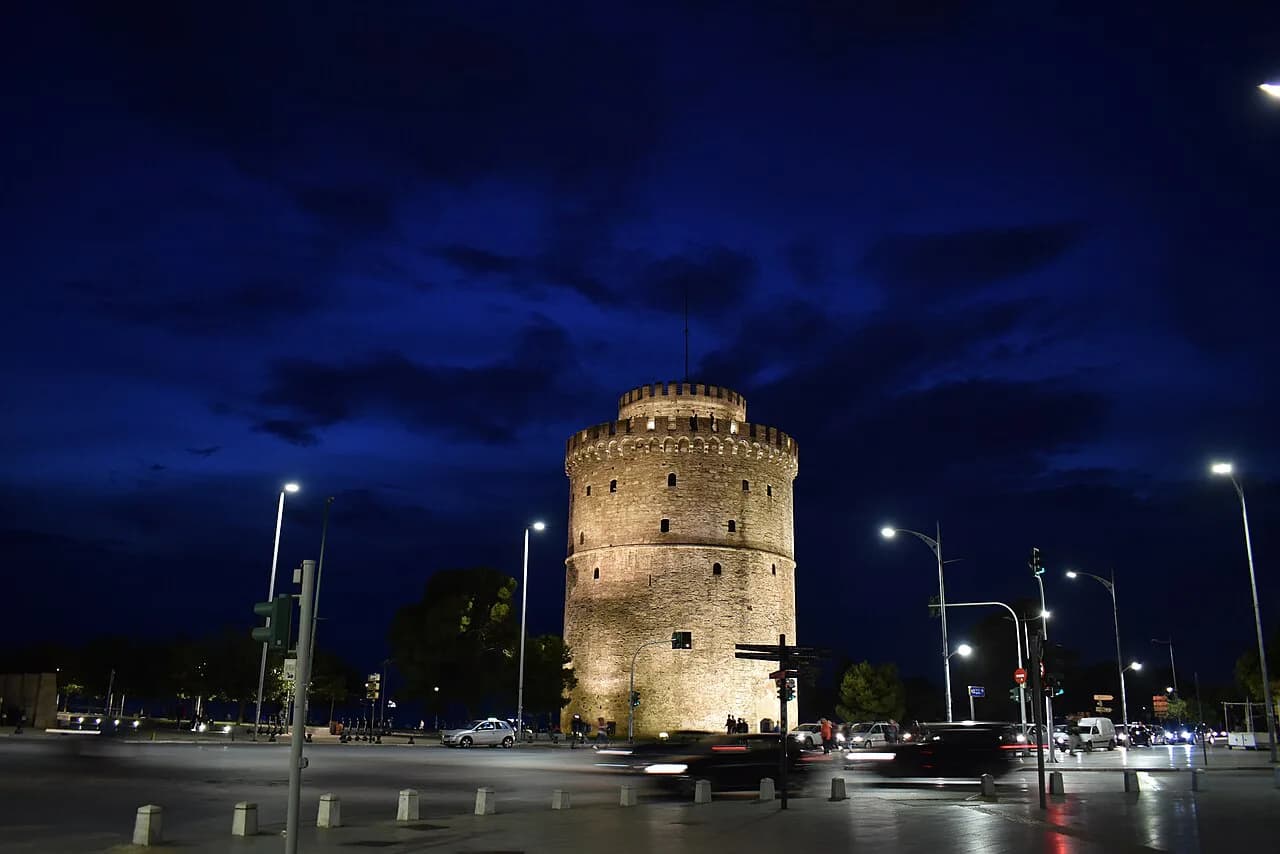
The classic city circuit works well in this weather: the White Tower and the waterfront in the morning, the Archaeological Museum and the Museum of Byzantine Culture in the heat of the afternoon, then the Ladadika district for dinner. It is a compact, walkable sequence that keeps you indoors at the warmest and coolest parts of the day.
Ano Poli, the upper city, is the best use of a mild May day: narrow lanes, old houses, the Byzantine walls and views down over the gulf, with the Vlatadon Monastery and the little churches of Hosios David and Nikolaos Orphanos along the way. Climb in the morning, when the temperature is still in the mid-teens.
The Byzantine churches are the other reason to come in May rather than high summer: Agios Dimitrios with its crypt, Agia Sofia and the Rotunda are all within a short walk of each other, and the month's temperatures make a church-and-museum day comfortable rather than exhausting.
Day trips in May
Vergina and Pella make the strongest day out: the Museum of the Royal Tombs of Aigai at Vergina and the archaeological museum at Pella cover the Macedonian royal sites, and both are indoor-heavy enough to survive a rainy May day. The round trip runs to a full day, so give it one of your drier slots.
The countryside around the city is at its best in May, green and mild, and the wine estates of the Macedonia region make an easy half-day. This is the month to combine a site visit with a long lunch outside rather than to push on to the coast.
Food in May
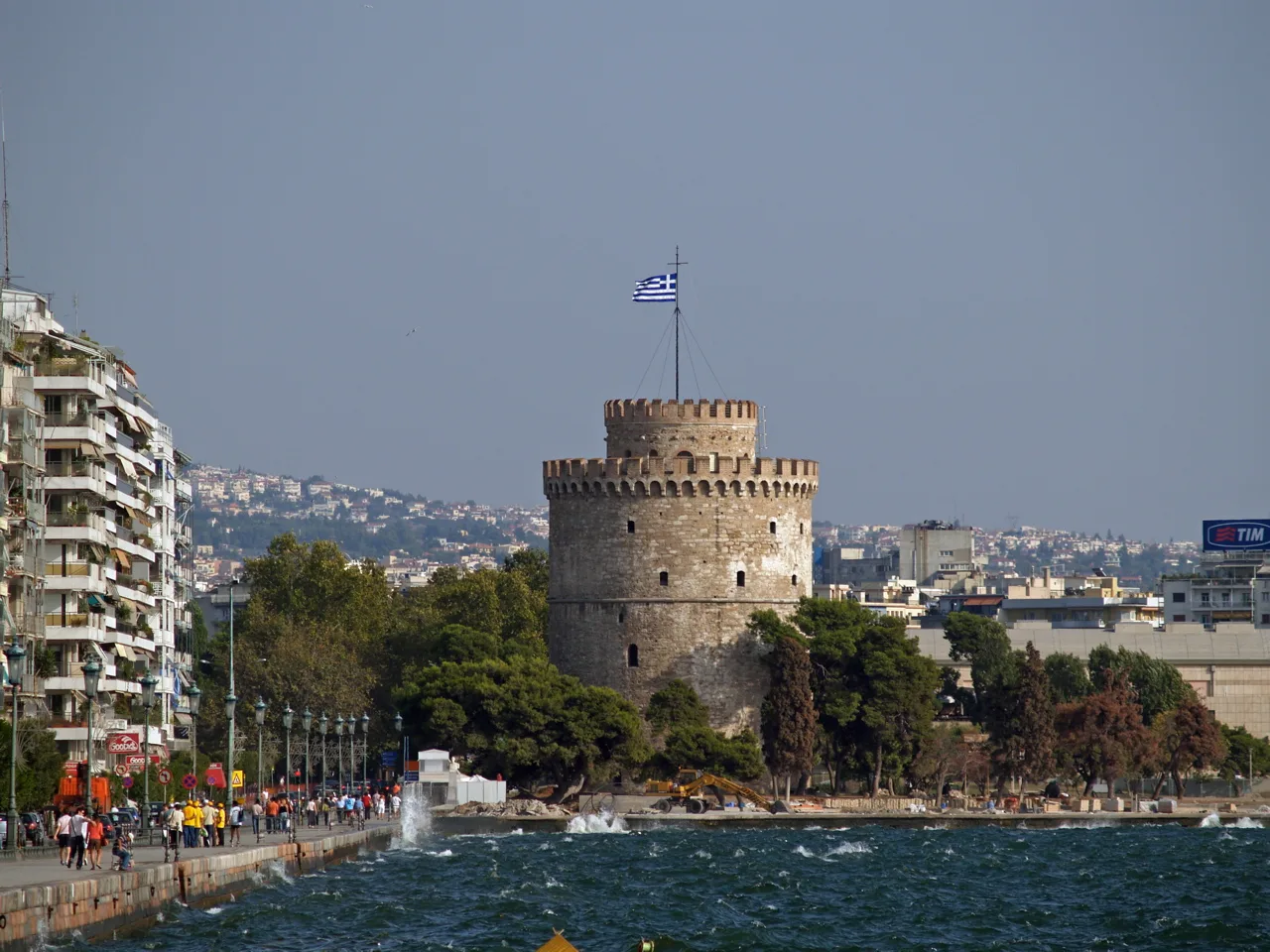
Late spring is a good time to eat in Thessaloniki, which has a serious claim to be Greece's gastronomic capital. The covered markets and the tavernas around Ladadika and Agia Sofia square carry the season's vegetables and pulses alongside the city's year-round staples, and the food tours that run through the historic markets work better in May's temperatures than in August's.
Build the day around eating rather than sightseeing: a market breakfast, a late lunch after the museums close their hottest hours, and a long dinner in the Ladadika district. The mild evenings are the point, so pick somewhere with outside tables and a jacket within reach.
Crowds and prices
May is busier than April but nothing like July. Greek Easter moves through the calendar in some years and lifts demand around it, and the UK bank holidays and half term put pressure on the second half of the month, particularly late May. Expect city hotels and the more popular tavernas to be fuller on those weekends.
Outside those peaks, May still feels pre-season: queues at the museums are short, the promenade is not packed, and the city is working rather than hosting. Prices sit below high summer in general terms; for current rates, check directly with the hotel or restaurant you have in mind.
Honest drawbacks
The evenings are the main catch. A 13.7°C average low is cool by Mediterranean standards, and with a breeze off the gulf a late dinner outside can be uncomfortable without a layer. The city's terraces are at their best at lunchtime, not after ten.
Rain is the second: more than ten rain days in May means a wet day is a real possibility, and the museums absorb one or two but not a week. Wind on the promenade is a third, and the sea stays cold enough that swimming is not what this month is for.
Anyone booking May expecting beach weather will be disappointed. Book it for the city: the churches, the markets, the upper town and the food, with the waterfront as a place to walk rather than to lie on.
May or June?
Choose May for sightseeing, eating and walking, and June for swimming, long evenings and reliable heat. The gap between 24.9°C and 29.9°C daytime highs is the difference between a comfortable city day and a hot one, and the night-time shift from 13.7°C to 18.6°C is what finally makes outdoor dinners easy.
If your dates are fixed and the weather matters more than the calendar, look at the wider picture. Comparing options with our guide to where is warm in Europe in May, or the round-up of where is hot in April for an earlier trip, shows how far north Thessaloniki sits relative to the Aegean islands and the Canary Islands.
The verdict
May is a good month for Thessaloniki if you want a city rather than a beach: warm afternoons, cool evenings, some rain, and a place that is lively without being crowded outside the bank holiday and Easter weeks. Book it for Byzantine churches, the Ano Poli, markets and day trips to Vergina and Pella.
If swimming and hot evenings are the priority, wait until June, when the numbers finally support them. If you want quiet streets and do not mind a jumper, late April works too, and pairs naturally with a longer spring itinerary.
More Thessaloniki spring guides
Frequently Asked Questions
How hot is Thessaloniki in May?
The May normals for Thessaloniki airport give an average daytime high of 24.9°C (77°F) and a night-time low of 13.7°C (57°F). Those are typical values rather than a forecast for a particular week, so a late-May trip will usually feel warmer than an early-May one, and the evenings stay cool enough for a layer throughout the month.
Is it warm enough to swim in Thessaloniki in May?
The air temperature is not the issue; the water is. The Thermaic Gulf is a northern sea and warms more slowly than the Aegean, so May is a month for the waterfront as a place to walk rather than to swim. If swimming is central to the trip, June is the more sensible target.
Does it rain in Thessaloniki in May?
Yes, rain is still normal. The city averages around 10.7 rain days and 44.4 mm in May, which is slightly wetter than April and wetter than June. On a week-long trip, expect one or two grey days and keep the Archaeological Museum and the Museum of Byzantine Culture in reserve for them.
Is May a good time to visit Thessaloniki?
It is one of the best months for a city visit: warm afternoons, cool evenings, and short queues at the sights outside the Easter and bank holiday weeks. It suits walking in Ano Poli, the Byzantine churches, the markets and day trips to Vergina and Pella. It does not suit anyone who wants guaranteed beach weather.
Should I go to Thessaloniki in May or June?
Pick May for sightseeing and eating, with daytime highs around 24.9°C and evenings near 13.7°C. Pick June for warmer nights around 18.6°C, fewer rain days and realistic sea swimming, at the cost of hotter afternoons and a busier city.
What is there to do in Thessaloniki in May?
The city circuit works well: the White Tower and waterfront in the morning, the Archaeological Museum and the Museum of Byzantine Culture in the afternoon, and Ladadika for dinner. Give a mild day to Ano Poli, its walls and the Vlatadon Monastery, and save a full day for Vergina and Pella.
Sources
Spring sun notes
Optional updates when we add destinations and months.
You might also like
Continue reading
More guides you'll find useful