Canary Islands in May: How Warm, How Sunny and Which Island
In May the Canary Islands run from 23.6°C in Gran Canaria to 24.6°C in Lanzarote by day, with almost no rain and nine hours of sun.
On this page
May is the month the Canary Islands stop being a winter-sun bolt-hole and start behaving like a proper late-spring destination. AEMET's long-term normals for the four main airports put average daytime highs between 23.6°C (74°F) on Gran Canaria and 24.6°C (76°F) on Lanzarote, with night-time lows of 16.8–17.3°C (62–63°F) and rain days countable on one hand. That is warm enough for hiking, sightseeing and long lunches outside, but not so hot that the islands' volcanic interiors become a punishment. If you are still comparing months across the continent, our guide to where is hot in April shows how much cooler the islands' neighbours are a month earlier.
Where May falls short is the water and the wind. The Atlantic around the archipelago is still on its way up from winter, so people who book May expecting bath-warm sea will be disappointed; treat swimming as a bonus rather than the point of the trip. The trade winds, meanwhile, are a bigger factor than the thermometer on Fuerteventura and Lanzarote, where a 24°C afternoon can feel distinctly fresh on an exposed terrace.
Weather in May
The four main airports give a tight and reassuring picture. Tenerife South averages 23.9°C (75°F) by day and 17.0°C (63°F) at night in May, with 246 hours of sunshine and 0.3 rain days. Gran Canaria is a shade cooler at 23.6°C (74°F) and 17.3°C (63°F), with 272 sun hours and the same negligible rain count.
Lanzarote tops the temperature table with 24.6°C (76°F) by day and 16.8°C (62°F) at night, and it is also the sunniest of the four in May at 297 hours, with 0.4 rain days and 2 mm of rain across the month. Fuerteventura sits between them at 24.1°C (75°F) and 17.1°C (63°F), with 280 sun hours and 0.2 rain days.
In plain terms, you are looking at roughly nine hours of usable sunshine a day and a month that is close to dry. These are AEMET's 1981–2010 station normals, so they describe what May typically delivers rather than any particular forecast. The practical consequence is that you can plan outdoor days with confidence and keep only one flexible day in reserve for the occasional cloudy spell.
Is it warm enough?
Twenty-four degrees in Canary Islands sunshine feels considerably warmer than the same number in Britain, and on a sheltered south-facing terrace in May it reads as genuine lunch-outside weather. Add the trade wind, though, and the same afternoon can feel cool enough for a light layer, especially near the coast in the late afternoon. The lesson is to pick your spot: lee sides and low ground are comfortable, exposed promenades are not.
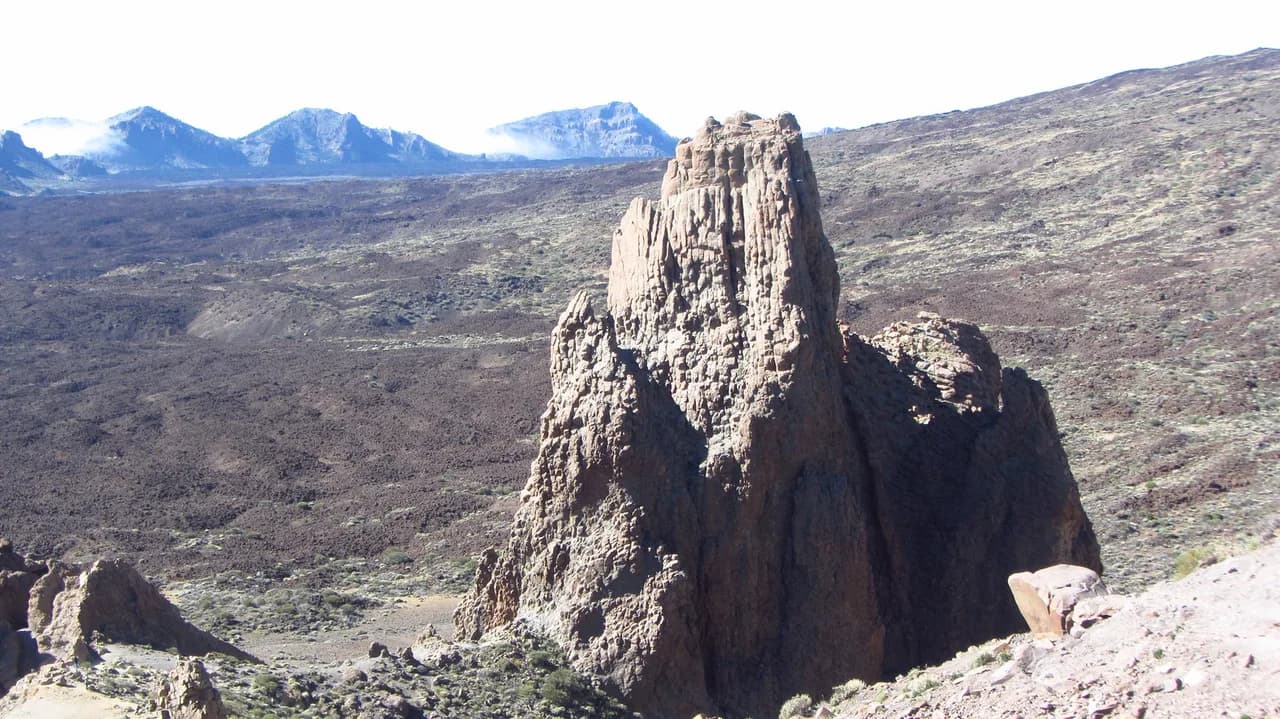
Altitude changes everything. Teide National Park sits far above the coast, and even in May the air up there is bracing, with cloud and wind that have little to do with the beach temperature you left behind. The same applies to the high interior of Gran Canaria around Roque Nublo and the laurel forests of Garajonay on La Gomera. Build those days around walking rather than lazing, and start early.
Evenings are mild rather than balmy. With lows around 17°C (63°F), dinner outside is comfortable for most people, but a table in the wind after dark is a different proposition. This is the month where a balcony facing the right way matters more than some hotel detail you will barely notice, and where a light sweater earns its place in the bag.
Which is the warmest Canary Island in May?
On the numbers, Lanzarote is the warmest of the four main islands in May at 24.6°C (76°F) by day, followed by Fuerteventura at 24.1°C, Tenerife at 23.9°C and Gran Canaria at 23.6°C. The whole spread is one degree, which is less than the difference a cloudy afternoon or a windy headland makes. Choosing an island on temperature alone is therefore the wrong way to decide.
Wind and cloud matter more. Lanzarote and Fuerteventura are the windiest pair, which is why they rack up the most sunshine hours while feeling fresher on exposed coasts. Tenerife and Gran Canaria offer more shelter if you pick the right side of the island, but their northern coasts are cloudier. If you want the warmest-feeling trip rather than the warmest number, choose a sheltered southern coast on Tenerife or Gran Canaria.
Early vs late May, and how it compares with April and June
May is a month of small, steady gains rather than a dramatic shift. Late May is noticeably warmer than early May, and the sun is stronger, but the bigger change is in the sea and in how open the islands feel as the summer season approaches. Late May also brings the UK half-term week, which is when the resorts start to fill.
Against April, May is drier and sunnier on every island: compare the rain-day counts and sunshine hours and the direction of travel is obvious. If you are weighing the two months, our guide to the Canary Islands in April explains what the earlier month gives you in exchange for a little more weather risk. Against June, May is cooler and quieter, but June brings more reliable heat and a warmer sea.
If your priority is walking and sightseeing, May is the better-balanced month of the three. If your priority is beach days and warm water, June is the stronger choice, and our Canary Islands in June guide sets out what changes. The wider picture of spring warmth across the continent is covered in our guide to where is warm in Europe in May, which puts the islands alongside the Greek and Iberian alternatives.
The wind question
The trade winds are the defining feature of a May trip to the eastern islands. On Fuerteventura they shape the whole day: the same breeze that makes the island a wind-sports destination also keeps coastal walks pleasant and makes an unsheltered beach feel cooler than the thermometer suggests. The practical answer is to plan around the wind rather than against it, choosing a sheltered cove or an inland excursion when it picks up.
Lanzarote behaves similarly, which is part of why its 297 sunshine hours in May do not translate into stifling heat. The interior, with its black volcanic soil and low walls, offers more shelter than the coast, and the wine country of La Geria is a good place to spend a windy afternoon. On both islands, mornings tend to be calmer than afternoons, so front-load outdoor plans.
Gran Canaria in May
Gran Canaria's great advantage in May is its microclimates. The mountains in the centre split the weather, leaving the south coast drier and sunnier while the north around Las Palmas de Gran Canaria and the historic Vegueta quarter sees more cloud. In practice this means you can choose your day by the sky: south for a lazy afternoon, north for a city day with museums, markets and old streets.
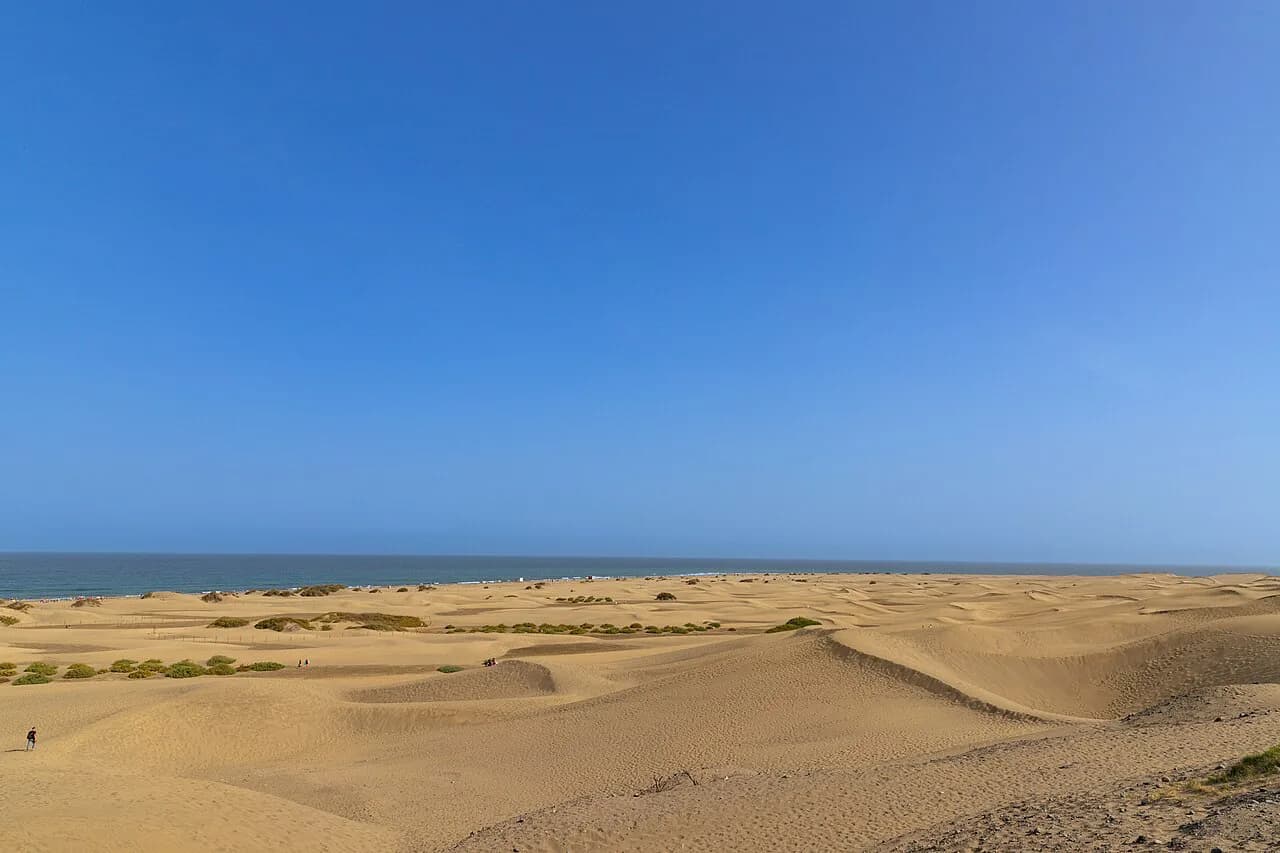
The Maspalomas dunes are at their best in May, warm without the summer crush, and the walk up to Roque Nublo is comfortable at this time of year in a way it is not in August. Our Gran Canaria in May guide goes deeper on how to combine the two. Allow a full day for the interior, and start early to catch the mountain views before the cloud builds.
Tenerife in May
Tenerife splits cleanly in two in May. The south coast, served by Tenerife South Airport, is dry and sunny and the obvious base for outdoor lazing, while the north around Puerto de la Cruz and La Orotava is greener, cloudier and more traditional. The northern towns reward a slower day of colonial streets, gardens and local restaurants, and they are cooler in a way that suits walking.
Teide National Park is the standout day out, with its lunar landscape and cable car, but the altitude means you should treat it as a mountain day rather than a beach day. May is a good month for it because the coast is warm but the mountain air stays crisp. Give yourself a full day and go early before the main flow of visitors arrives.
For a broader comparison of how the islands behave through the seasons, the best time to visit the Canary Islands is worth reading before you fix dates. May is the month where Tenerife offers the best balance of warmth, quiet and open attractions before the summer rush.
Lanzarote in May
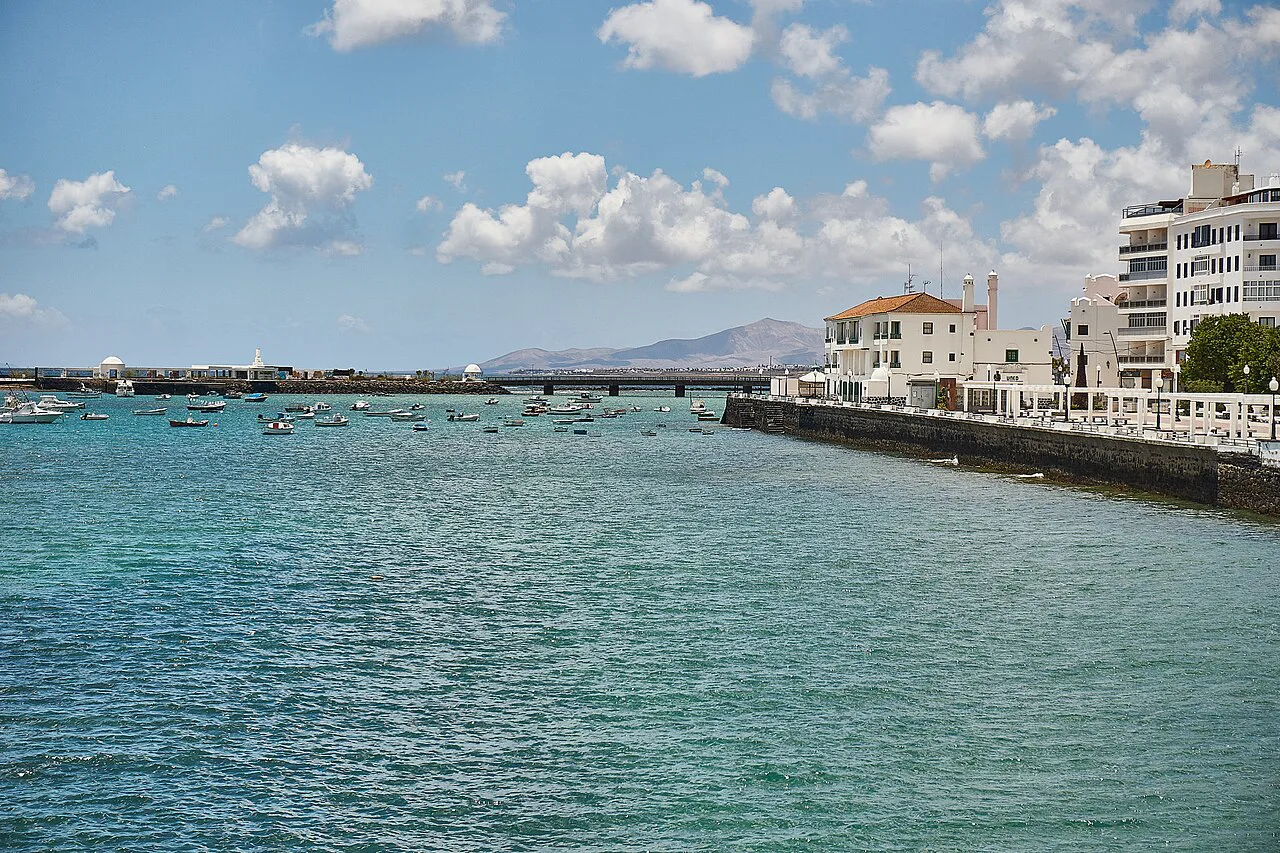
Lanzarote in May is the sunniest of the main islands, which makes it a strong choice for anyone whose priority is blue sky. Timanfaya National Park, the volcanic heart of the island, is more comfortable to visit now than in high summer, and the underground lagoon at Jameos del Agua is a fine way to spend a hot midday. The La Geria vineyards, grown in hollows of black ash, are at their most photogenic in spring light.
The Mirador del Río, looking across the strait to La Graciosa, is the island's best viewpoint and a natural half-day outing. From the north coast you can take a boat to La Graciosa, a car-free island of sandy tracks and quiet beaches that makes a genuinely different day out. Book the crossing with the ferry company that runs it and keep an eye on the wind, which can make the passage choppy.
Fuerteventura in May
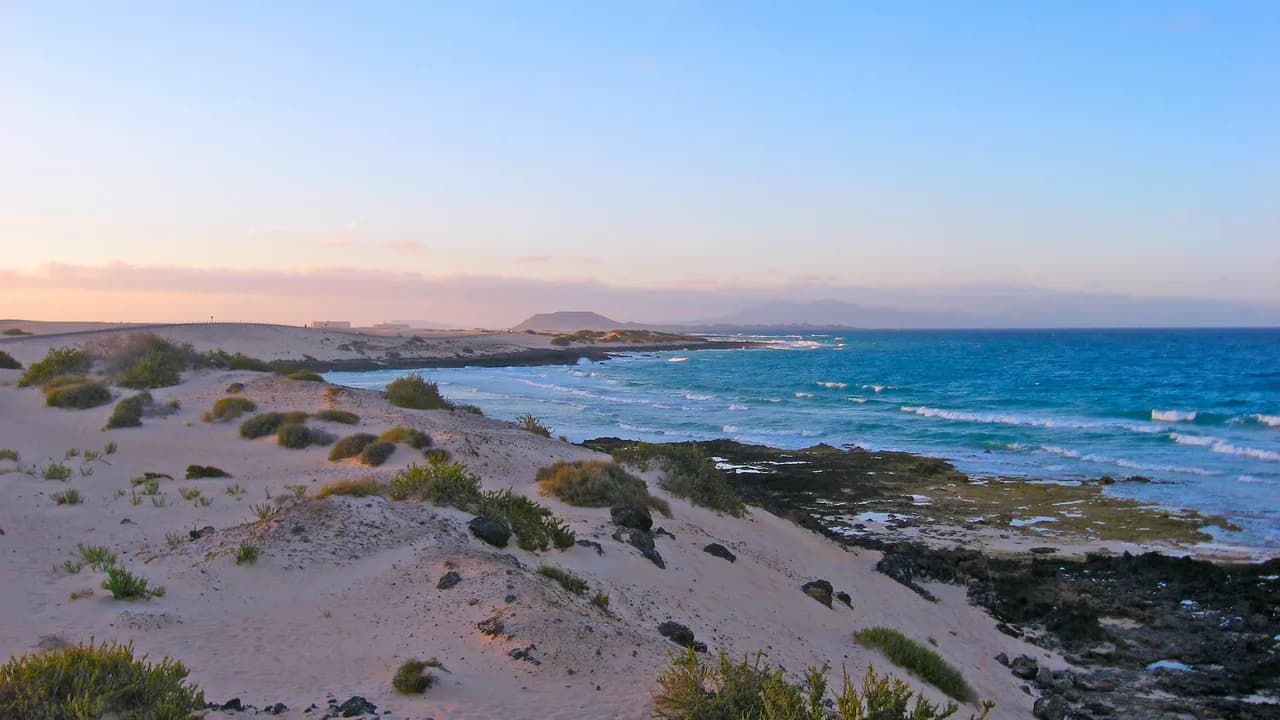
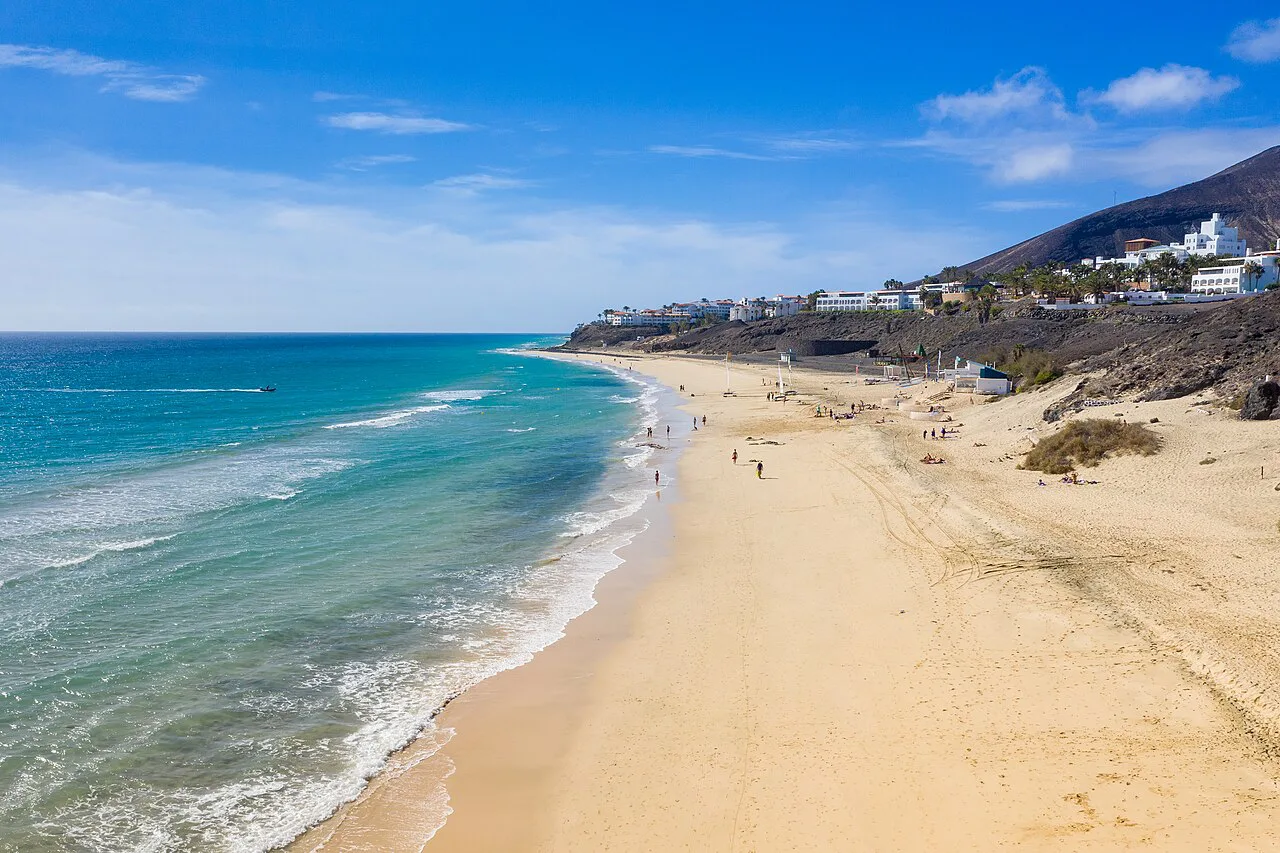
Fuerteventura is the island for wind-led days. The dunes of Corralejo National Park are the classic image, and in May the light is good and the heat manageable. Cofete, on the wild west coast, is a dramatic and remote beach reached by a rough track, and it is worth the effort for the sense of space.
Isla de Lobos, a short boat trip from Corralejo, is a nature reserve with walking trails and calm water, and it suits families and anyone who wants a quiet day away from the resorts. The boat crossing is run by an operator and is worth booking ahead in late May, when half-term visitors arrive. This is also the island where a windbreak on the beach earns its place more than a sunshade.
The quieter islands
La Palma, La Gomera and El Hierro are where May really comes into its own for walkers. La Palma's Caldera de Taburiente National Park and the Roque de los Muchachos viewpoint are at their most comfortable now, and La Gomera's Garajonay National Park, a UNESCO World Heritage laurel forest, is often draped in cloud in a way that keeps the walking cool. El Hierro is the most remote and the quietest, and May gives it dry paths and open views.
These islands do not have the resort infrastructure of Tenerife or Gran Canaria, and that is the point. Ferries and small flights link them to the main islands, but services are less frequent than in summer, so plan the crossings around the days you want rather than the other way around. The reward is walking without crowds and a pace of life that suits a spring trip.
What is open
By May the islands are shifting from winter to summer, and most visitor attractions and ferry routes are running. The main national parks and visitor centres are open, and the inter-island ferry network is fully operational, though timetables may still be on a shoulder-season footing compared with July and August. Look up the ferry company's own timetable for the route you need instead of counting on a summer frequency.
Boat trips, guided walks and water-based excursions generally start their season around now, but not everything is running daily. The practical approach is to book the specific trip you want directly with the company running it a few days ahead and ask what is running that week. Restaurants and beach clubs on the coasts are largely open, with a few seasonal places still gearing up for summer.
Crowds and prices
Early May is still comfortably quiet across the islands, with space on the main trails and no difficulty finding a table. Late May changes that: the UK half-term week brings families, and the approach of summer lifts demand on the south coasts of Tenerife and Gran Canaria especially. If you want the calm version of May, aim for the first half of the month.
Prices follow the same pattern. Accommodation and flights are generally better value in early May than in late May or June, and shoulder-season rates hold until the half-term week arrives. The islands are not a budget destination in the way some of southern Spain is in spring, but May remains one of the better-value months of the year.
The honest drawbacks
The main compromise in May is the sea. The Atlantic is still cool around all the islands, so swimming is bracing rather than luxurious, and anyone who wants warm water should look at June or later. The second is the wind, which can turn a sunny coastal afternoon cool, particularly on Fuerteventura and Lanzarote. The third is the occasional cloudy spell, more common on northern coasts.
There is also the odd calima, the dust-laden wind from the Sahara that can blow in during the changing seasons, reducing visibility and raising the temperature for a day or two. It is not an everyday event, but it is a reason to keep one flexible day in your plan. Otherwise, the drawbacks are modest: cool evenings, a chance of rain on the northern islands, and heat that is still building rather than intense.
May or June?
For beach-led trips, June is the better month. The sea has had another month to warm up, the days are longer, and the weather is more reliably hot. For walking, sightseeing and anyone who prefers not to deal with summer crowds, May wins: the temperatures are kinder, the trails are quieter and you can still get a table without booking.
The gap between the two months is not dramatic on paper, but it is real in practice, particularly in the water and in the number of visitors. If your trip is built around the coast and swimming, go in June. If it is built around the interior, the volcanoes and the smaller islands, May is the stronger choice. Our Canary Islands in June guide shows what the later month adds.
The verdict
May is the best-balanced month of spring in the Canary Islands. It delivers daytime highs of 23.6–24.6°C, night-time lows near 17°C, a near-dry month and around nine hours of sun a day, which is enough for walking, sightseeing and outdoor lunches without the heat of summer. It suits walkers, couples and anyone who wants the islands before the crowds arrive.
Choose Lanzarote if you want the most sunshine and can live with wind, Fuerteventura if wind sports and wild beaches are the point, Gran Canaria if you want variety and a genuine city in Las Palmas, and Tenerife if you want the widest choice of coast, mountain and traditional towns. For the smaller islands, May is the walking month. If warm sea is non-negotiable, wait for June.
Plan Your Visit
Book for early or mid May if you want quiet trails and better value, and accept that the sea will be cool. Late May is warmer and busier, and the UK half-term week is the point at which the islands start to feel like summer. Whichever you choose, match the island to the trip: sunshine on Lanzarote, wind and wild beaches on Fuerteventura, variety on Gran Canaria, and mountains and tradition on Tenerife.
Check the official Spanish government travel advice page once for entry and safety information, and confirm ferry times and excursion availability directly with the operators as your dates approach. For the wider spring picture, including how the islands compare with Greece and Iberia, our guide to where is warm in Europe in May sets out the alternatives, and if you are travelling earlier, our Canary Islands in April guide covers the month before.
More Canary Islands spring guides
Frequently Asked Questions
Is Lanzarote hot in May?
Lanzarote averages 24.6°C (76°F) by day in May, with night-time lows around 16.8°C (62°F). It is the warmest of the four main islands on the AEMET normals, but the trade winds can make exposed coastal spots feel cooler than the number suggests. It is warm rather than hot, which suits walking and sightseeing better than a heat-seeking beach holiday.
What is the warmest Canary Island in May?
On average daytime highs, Lanzarote leads at 24.6°C (76°F), followed by Fuerteventura at 24.1°C, Tenerife at 23.9°C and Gran Canaria at 23.6°C. The spread is about one degree, so wind, cloud and which side of an island you choose matter more than the headline figure. A sheltered south coast on Tenerife or Gran Canaria often feels warmer than a windy day on Lanzarote.
What is the weather like in Tenerife in May?
Tenerife South averages 23.9°C (75°F) by day and 17.0°C (63°F) at night in May, with 246 hours of sunshine and 0.3 rain days. The south coast is dry and sunny, while the north around Puerto de la Cruz and La Orotava is greener and cloudier. Teide National Park is much cooler at altitude and best treated as a mountain day.
Is May a good time to visit the Canary Islands?
Yes, for walking, sightseeing and outdoor days. May brings daytime highs of 23.6–24.6°C, night-time lows near 17°C and very little rain across the main islands. It is less good for swimming, because the sea is still cool, and late May gets busier with the UK half-term week.
Is the sea warm enough to swim in the Canary Islands in May?
The sea is still on its way up from winter in May and feels cool rather than comfortable for most people, so swimming is bracing. If warm water is a priority, June or later is the better choice. The air temperature is warm enough for the beach, but the water is the part of the trip that lags behind.
Should I go to the Canary Islands in May or June?
Choose May for walking, sightseeing and quieter trails, and June for beach-led trips and warmer sea. May is cooler and less crowded, while June brings more reliable heat and a sea that has had another month to warm up. The difference is modest on paper but noticeable in the water and in visitor numbers.
Is Gran Canaria warmer than Tenerife in May?
No. Gran Canaria averages 23.6°C (74°F) by day against Tenerife's 23.9°C (75°F), a difference small enough to ignore. What matters more is the microclimate: Gran Canaria's south coast is drier and sunnier, while its north around Las Palmas is cloudier, and Tenerife splits the same way between south and north.
Is it windy in the Canary Islands in May?
Yes, particularly on Fuerteventura and Lanzarote, where the trade winds shape the day and can make a sunny afternoon feel cool on exposed coasts. Tenerife and Gran Canaria offer more shelter if you pick the right side of the island. On windy days, plan outdoor activity for the morning and choose a sheltered cove or an inland excursion in the afternoon.
Sources
Spring sun notes
Optional updates when we add destinations and months.
You might also like

Continue reading
More guides you'll find useful