Kefalonia in May: Plan Your Quiet Beach Getaway
Kefalonia in May averages 23.4°C by day and 14.6°C at night, with 4.6 rain days. Here is how warm it feels, what is open, and who should wait.
On this page
Kefalonia in May is warm enough for the beach and cool enough for real walking. Average daytime highs reach 23.4°C (74.1°F) and night-time lows sit around 14.6°C (58.3°F), so days feel like early summer and evenings still need a layer. That combination suits sightseeing, hill walking and families with young children far better than high summer does.
The month is also dry by Ionian standards, with roughly 4.6 rain days and 17.9 mm across May at Argostoli, which means most of your holiday will be spent outdoors rather than waiting out showers. The trade-off is the sea, which is still waking up, and a tourist season that only clicks into gear towards the end of the month. If you want bathtub water and everything running, June is the better bet.
Weather in May
Expect typical May conditions at Argostoli of a 23.4°C (74.1°F) average daily maximum and a 14.6°C (58.3°F) average daily minimum, according to the Hellenic National Meteorological Service normals for 1991–2020. Rain is modest for the Mediterranean spring: about 4.6 rain days and 17.9 mm for the month. Treat these as climate averages rather than a forecast, because a single unsettled week can deliver a good share of the month's rain at once.
In practice, a May day in Kefalonia often starts bright and mild, builds to a comfortable afternoon, and cools noticeably after sunset. A light breeze off the Ionian takes the edge off the warmest hours and keeps hiking and long drives pleasant. Rain, when it comes, tends to arrive as a passing shower rather than a lost day.
The jump from April is significant. April at the same station averages 19.2°C (66.6°F) by day and 11.2°C (54.0°F) at night with 9.5 rain days, so May adds roughly four degrees and halves the wet days. If you are weighing up an earlier trip, our guide to Kefalonia in April sets out what the cooler, greener version of the island looks like.
Is it warm enough?
For walking, sightseeing and eating outside, yes, comfortably. Mount Ainos, the Venetian fortress at Assos and the harbour at Fiskardo are all far more enjoyable at 23°C than at August temperatures, and you will not be queuing for shade. Families with young children get the same benefit: warm afternoons, cooler evenings and beaches that are easy to supervise.
For swimming and serious sunbathing, May is marginal. The sea is still cool and only just inviting, and if your ideal holiday is hours in the water followed by a sun lounger, June or July will serve you better. The same applies if you want guaranteed heat: late May can feel like summer, early May can feel like a bright spring.
If your dates are flexible and warmth is the deciding factor, it is worth comparing the island with the rest of the region. Our guide to where is warm in Europe in May shows which Mediterranean destinations run hotter than the Ionian in the same month, which helps if you are choosing between Kefalonia and somewhere further south. Anyone travelling in the previous month can also see where is warm in Europe in April before deciding whether to wait.
Early vs late May
Early May is the quieter, greener end of the month. Wildflowers still cover the slopes of Ainos and the hills between Argostoli and Myrtos are at their most vivid, but some tavernas and tourist-facing businesses are only just opening and a few hold out until later. Late May brings a fuller island, warmer afternoons and the settled pattern most visitors expect.
The season opening is the real argument for going late rather than early. Most restaurants and businesses on the island open from the start of May, with a handful of niche spots in the busiest areas following later, so a mid-to-late May trip avoids the guessing game. If a particular boat trip or taverna matters to your plan, contact the boat company or taverna directly before booking around it.
Compared with June, May is a step cooler and noticeably less crowded. June averages 27.8°C (82.0°F) by day and 18.4°C (65.1°F) at night with only 1.5 rain days, a genuine shift into hot summer. Read our Kefalonia in June guide if you want that heat and are prepared to share the island with more people.
What is open
Melissani Cave and nearby Drogarati Cave are the classic May wins. In high summer the queue for the Melissani boat can stretch to 45 minutes, while in May you tend to walk straight in. The light on the underground lake is at its best towards the end of the month, when the sun is high enough to hit the water directly.
The Argostoli to Lixouri ferry is a short hop across the bay and runs frequently enough to make the Paliki peninsula an easy day out; timetables are posted at the port when you arrive. On the water, boat trips to Fteri and the island's remoter coves pick up as the month goes on, though the walk-in route to Fteri is the reliable option for anyone unwilling to depend on a sailing.
Inland, the Robola Cooperative in the Omala Valley is a relaxed May stop: tastings are unhurried, the vineyards are lush, and the citrusy white is exactly what you want with Kefalonian seafood. Beach clubs and sunbed operators on the main beaches are out by May but rarely busy, so you get the facilities without the crowds.
Things to do
Mount Ainos is the standout May walk. The island's high point reaches about 1,600 m inside a protected national park of Kefalonian fir, with wild horses on the upper slopes and views as far as Ithaca and Zakynthos on a clear day, and the marked trail from the plateau takes roughly two hours return. Start early before the midday cloud builds.
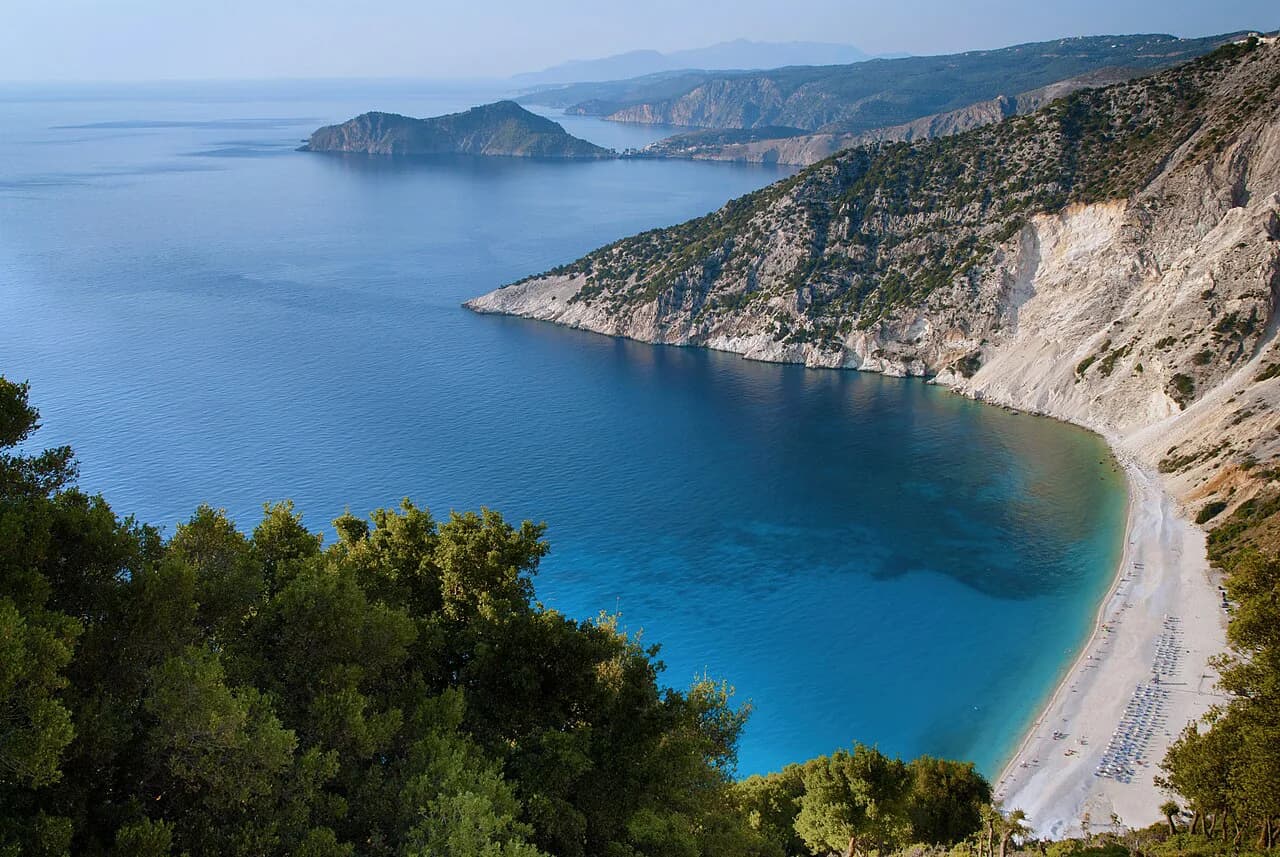
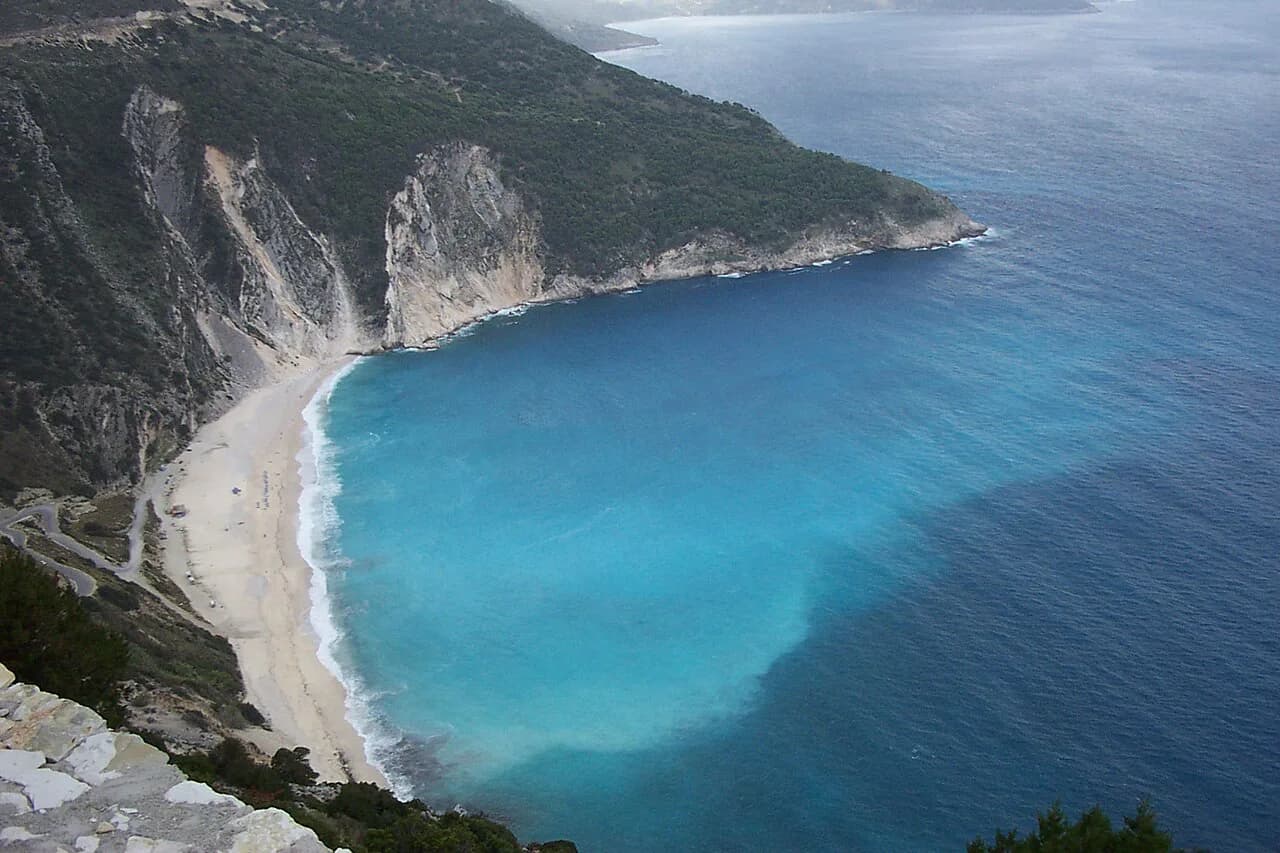
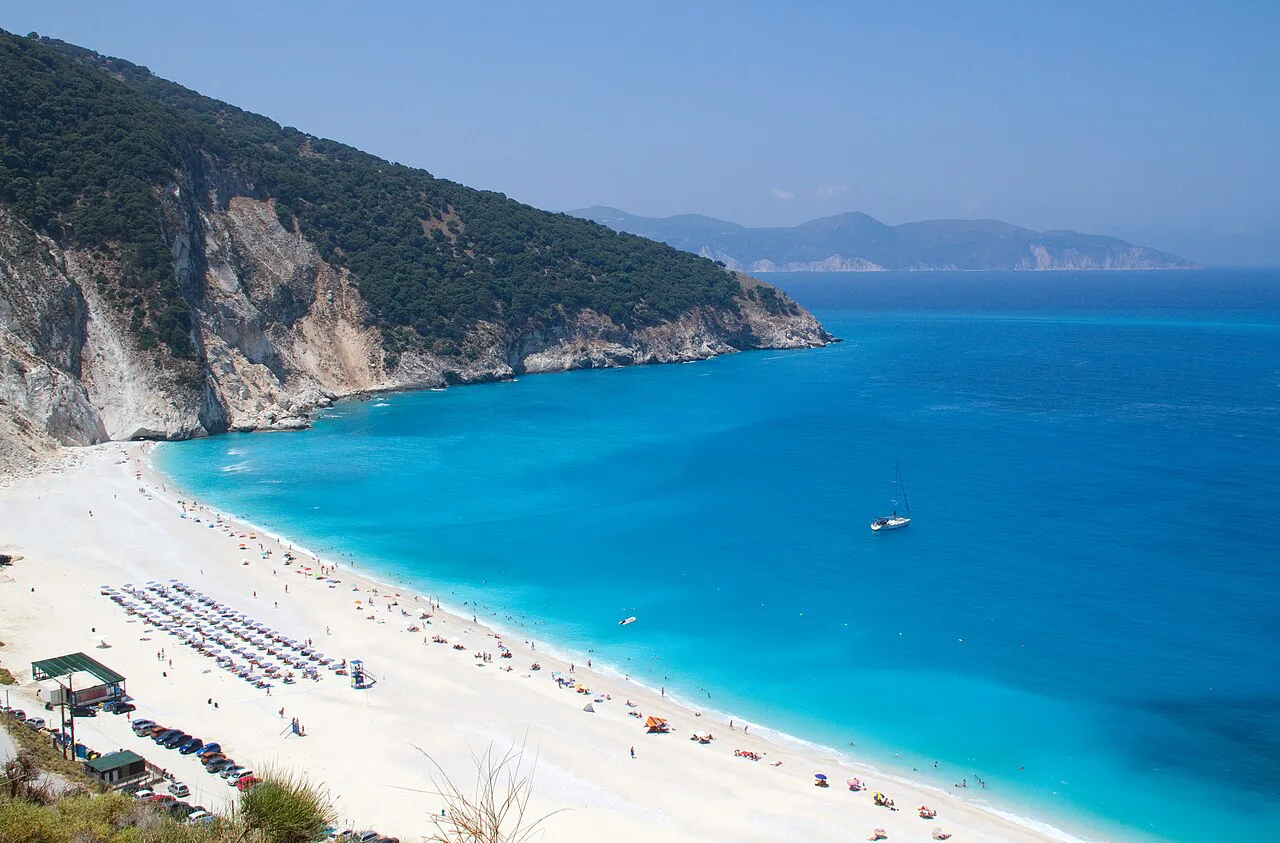
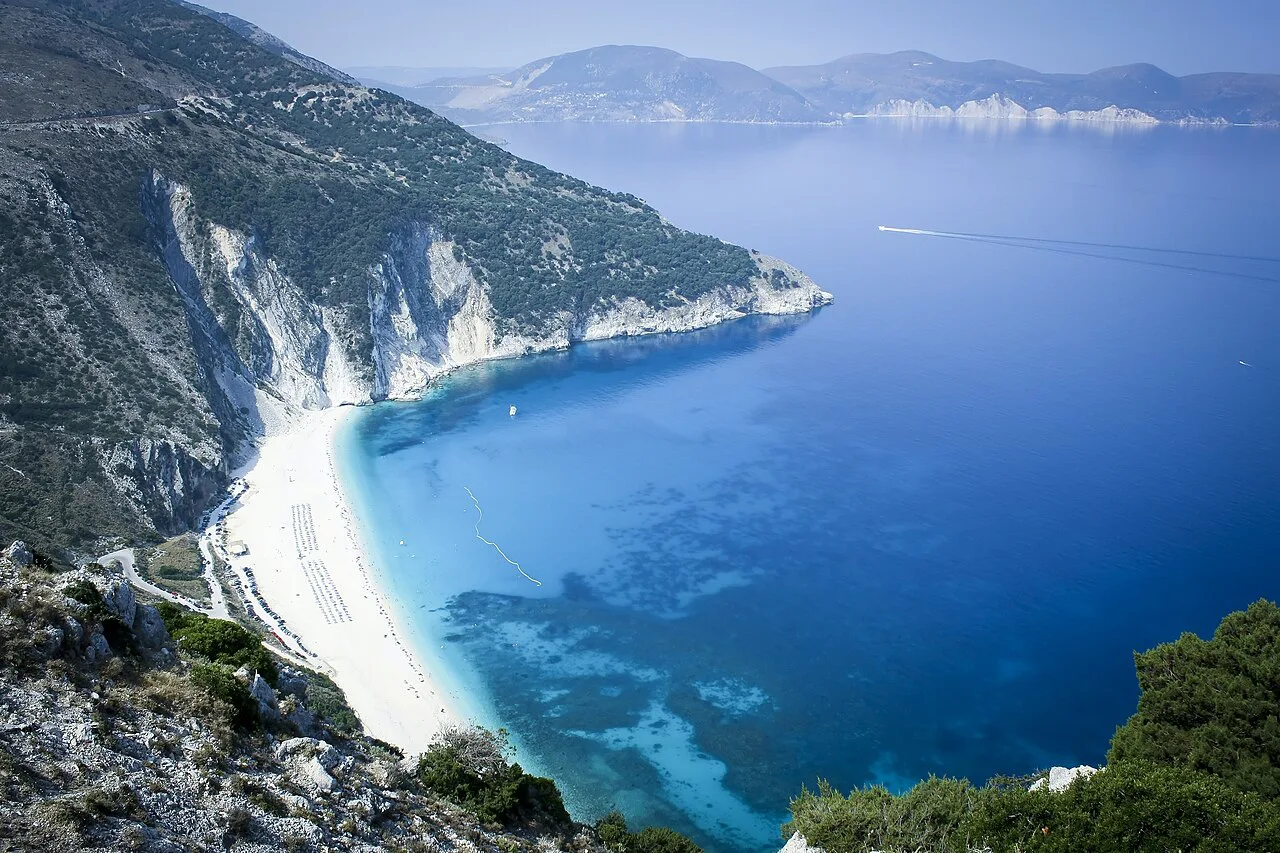
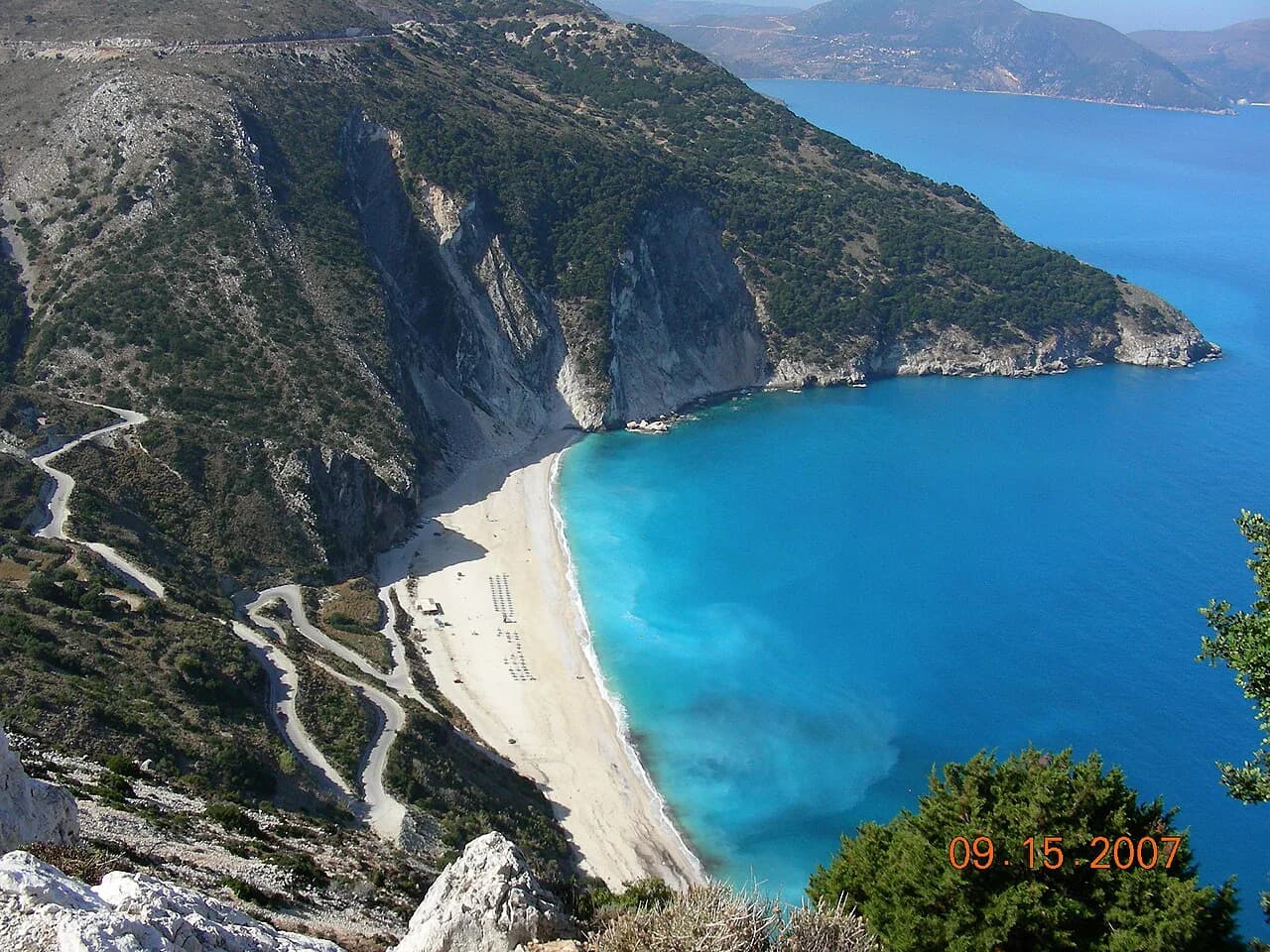
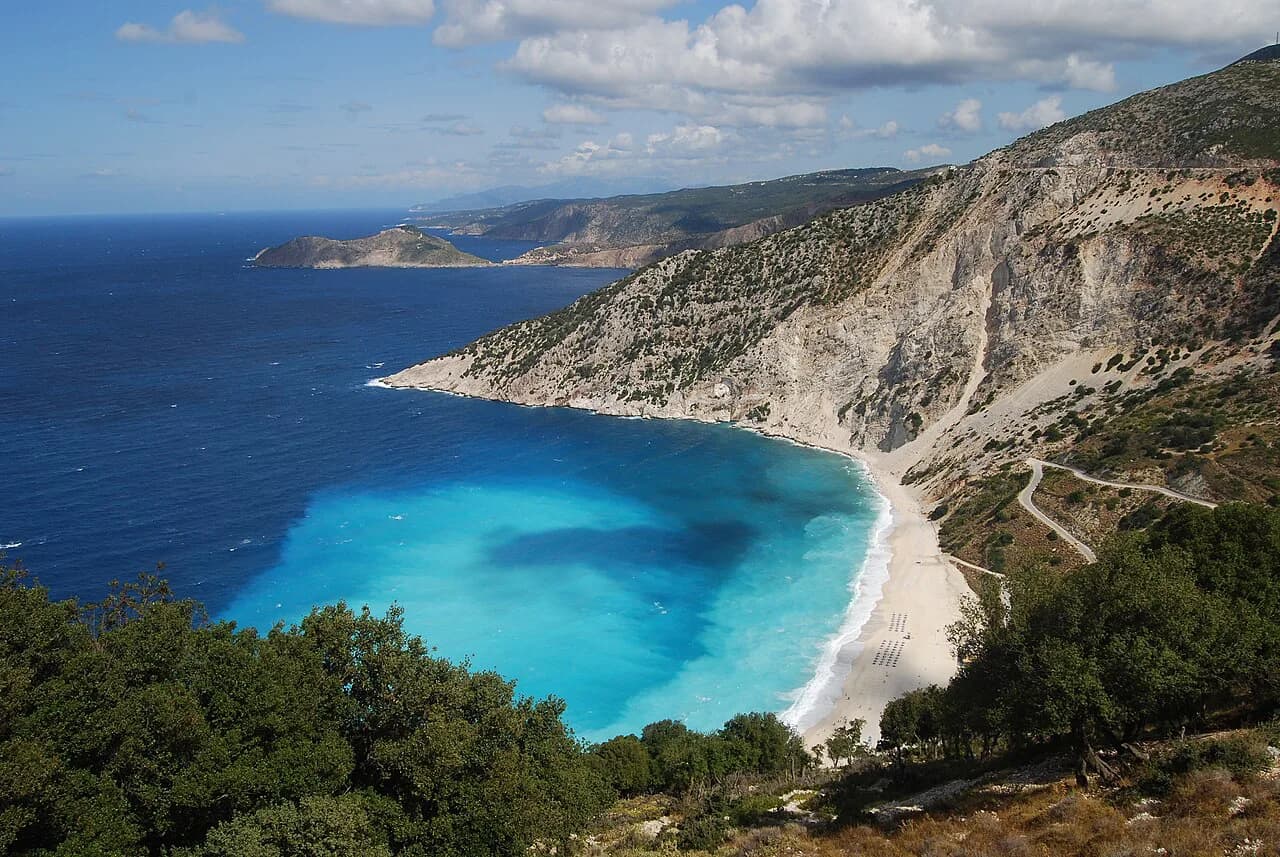
Myrtos Beach, the white-pebble sweep under limestone cliffs on the west coast, is accessible and calm in May, with a few sunbeds out and none of the July scramble. Antisamos, backed by pine-covered hills, is at its greenest and can be near-empty if you arrive in the morning. Both are the kind of place that justifies May over August on their own.
For villages, base a day around Assos and Fiskardo in the north: the drive down to Assos between wildflowers, the Venetian castle above it and the photogenic harbour at Fiskardo are all pleasant without high-season prices and waitlists. Lixouri, the second town across the bay, feels most local in May, with its morning market and tavernas serving whatever was caught or raised that week.
In Argostoli itself, loggerhead turtles gather in the bay from early spring, and by May they surface regularly around the harbour and along Koutavos Lagoon. Walk the De Bosset Bridge in the morning and watch the water rather than booking anything. It is a genuinely wild sight and a good reason to keep a morning free.
Crowds and prices
May is quiet by Kefalonia's standards. You will share beaches with Greek families, a growing number of European visitors and the occasional early-bird traveller, not with the July and August influx. Hotels tend to offer their best rates in May, though that is a pattern rather than a promise, so compare prices for your own dates.
Two things push numbers up within the month. Greek Easter can fall in April or May depending on the year, and when it lands in May it brings domestic travel and fuller tavernas for a few days. The UK May bank holidays and half term lift demand too, so book car hire in advance: rental desks get busy even in shoulder season, and a car is close to essential for reaching Ainos, Assos and the west-coast beaches.
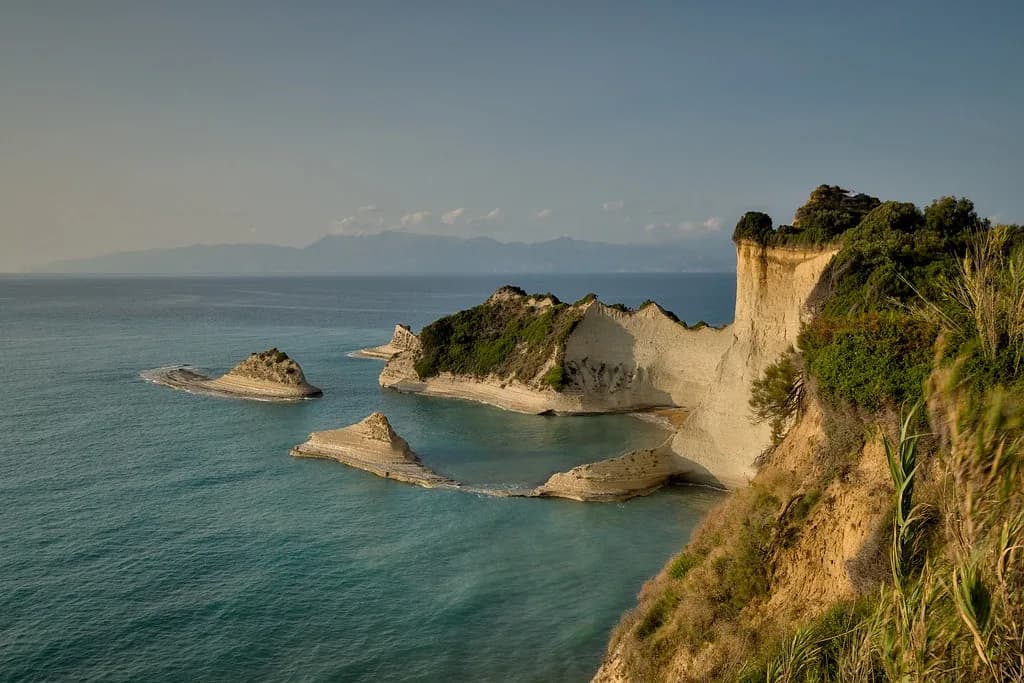
If you are weighing up the wider region, our comparison of where is warm in Europe in May is a useful check on how the Ionian compares with hotter options such as Crete. Closer to home, Corfu in May runs a similar climate with a wetter, greener feel, and the ferry link between the islands makes a two-island trip feasible.
Honest drawbacks
Evenings are cool. A 14.6°C average minimum means dinner on a terrace is pleasant but not balmy, and a table right on the water can feel chilly once the sun drops. If you want to sit outside late into the night in summer clothes, June is the more honest choice.
The sea is the other compromise. It is refreshing rather than inviting for long soaks, which is fine for a quick dip after a walk but not for hours of swimming. Occasional rain showers are still possible, and early in the month a few tavernas remain shut, so a little flexibility on where you eat helps.
None of this is a reason to avoid May, but it is a reason to choose it deliberately. If your trip mixes beaches with hills, villages and caves, the cool evenings and cooler sea cost you little. If the beach is the whole point, they matter.
May or June?
June wins on heat and water: warmer days, much less rain at 1.5 rain days for the month, and a sea that finally feels like the Mediterranean holiday you pictured. It also brings more people, higher demand and a busier feel around Myrtos, Fiskardo and the caves. May wins on space, value and comfort for anything that involves moving.
A useful rule: if your itinerary includes Ainos, Assos, the Omala Valley and at least two boat or cave visits, choose May. If it is mostly sunbathing and swimming, choose June. If you want the fullest picture of how the months compare, The Best Time to Visit Kefalonia sets the whole spring and summer out side by side.
If you are still choosing between Greek islands for the same dates, our Crete in May guide covers a southerly option that runs warmer and drier than the Ionian. Kefalonia's appeal is the mix: mountains, caves, villages and beaches within an hour of each other, at a temperature that lets you enjoy all of them.
The verdict
Go to Kefalonia in May for a holiday that combines beaches with walking, caves and villages, and aim for the second half of the month when the island is fully open and the afternoons are reliably warm. The 23.4°C days and 14.6°C nights suit almost everything except long swims and late nights in summer clothes.
Skip May if you want hot water, guaranteed heat and a resort in full swing; June delivers all three and the figures show it. Book car hire early, plan around the caves and Ainos rather than the sunbed, and May will give you the island at its most usable.
More Kefalonia spring guides
Frequently Asked Questions
What is the weather like in Kefalonia in May?
Typical May conditions at Argostoli are an average daily high of 23.4°C (74.1°F) and a night-time low of 14.6°C (58.3°F), with about 4.6 rain days and 17.9 mm for the month according to Hellenic National Meteorological Service normals. Days are usually bright and comfortable with a light Ionian breeze, and evenings cool down noticeably after sunset.
Is Kefalonia hot in May?
Warm rather than hot. Afternoons around 23°C feel like early summer and are ideal for walking and sightseeing, but the month does not deliver the sustained heat of June, which averages close to 28°C by day. If you want proper heat, late June onwards is the safer bet.
Can you swim in Kefalonia in May?
Yes, but expect a refreshing dip rather than warm water. The sea is still waking up in May, so short swims after a walk are realistic while long soaks are not. Swimmers who want bathtub conditions should choose June or later.
Is May a good time to visit Kefalonia?
It is one of the best months for a mixed trip. You get warm days, few wet days, quiet beaches and open restaurants, plus Melissani Cave and Mount Ainos without the summer queues. It is less good for a sunbathing-only holiday because the sea and evenings are still cool.
Is Kefalonia busy in May?
No. May is quiet compared with July and August, with Greek families and a growing number of European visitors rather than peak-season crowds. Greek Easter, when it falls in May, and the UK bank holidays and half term do lift demand for a few days, so book car hire in advance.
What is open in Kefalonia in May?
Most restaurants and businesses open from the start of May, with a few niche spots in touristy areas following later. The caves, the Argostoli to Lixouri ferry, the Robola Cooperative and the main beaches are all running, and boat trips to remoter coves build up as the month goes on.
Should I visit Kefalonia in May or June?
Choose May for space, lower demand and comfortable conditions for walking and sightseeing. Choose June for hotter days, a warmer sea and much less rain, at the cost of more people and busier beaches.
Sources
Spring sun notes
Optional updates when we add destinations and months.
You might also like
Continue reading
More guides you'll find useful