Santorini in May: Warm Enough, Quiet Enough, and Worth It
Santorini in May averages 23.1°C by day and 16.9°C at night, warm enough for walking and outdoor lunches, while the sea stays bracing.
On this page
Santorini in May is warm rather than hot, and that is exactly what makes it work. The Hellenic National Meteorological Service gives an average daily high of 23.1 °C (74 °F) and a night-time low of 16.9 °C (66 °F) for the island, typical conditions rather than a forecast, and they describe a month built for walking, sightseeing and eating outside rather than lying on a beach all day.
It is the middle step of a steep seasonal climb: April averages 18.9 °C by day and June 27.7 °C, so May sits in the comfortable band between a cool spring and the first real heat. Come for the caldera villages, the archaeology and the vineyards; wait for June if warm sea and dependable boat days are the point of the trip.
Weather in May
Plan on daytime temperatures in the low twenties Celsius, with nights that stay mild enough for a terrace after dark but not for sitting out in shirtsleeves until midnight in early May. The official normals put the average daily maximum at 23.1 °C (74 °F) and the minimum at 16.9 °C (66 °F), which is a working temperature for a day of walking and climbing steps rather than a sunbathing one.
Rain becomes uncommon as the month goes on, and long blue-sky spells are the norm rather than the exception, though the island gets the occasional unsettled spring day. The bigger factor is wind: the Meltemi, the northerly Aegean wind, strengthens through May and by late in the month can be strong enough to affect life on the exposed western rim and, occasionally, inter-island sea traffic.
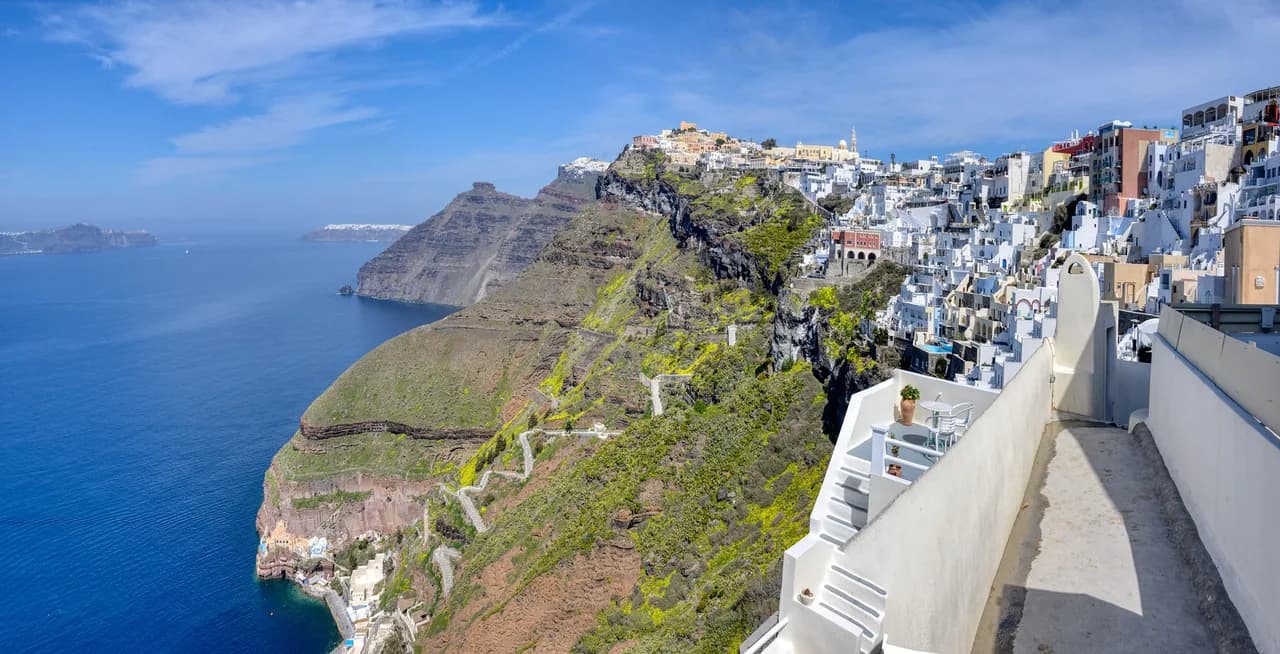
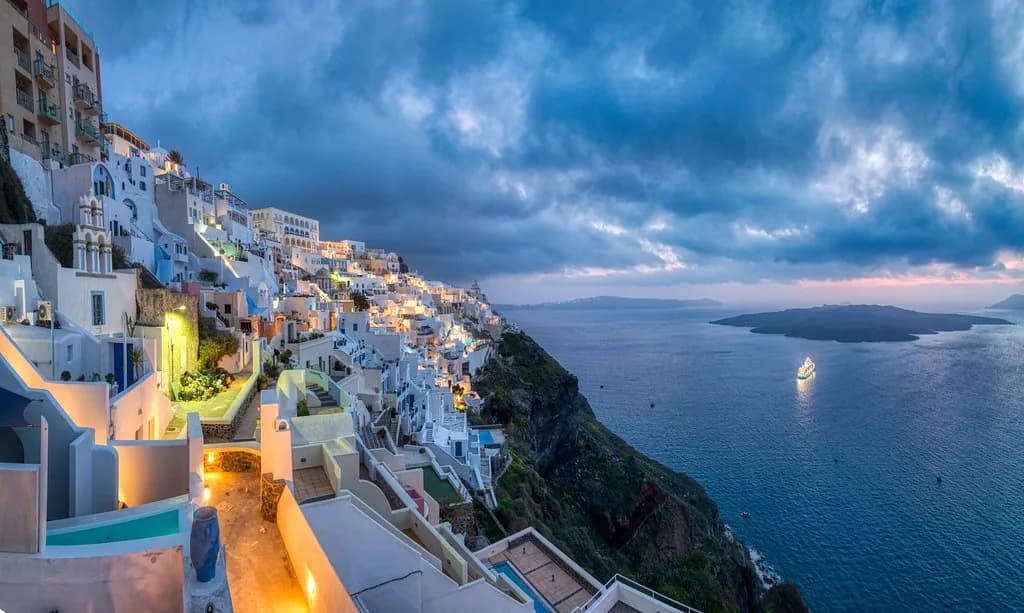
For an island whose main pleasures are outdoors, that adds up to a generous month. Views from Imerovigli and Oia stay sharp on clear days, the caldera path is walkable without the punishing heat of July, and there is usually enough breeze to keep the exposed ridge comfortable even at midday.
Is it warm enough?
For sightseeing and walking, yes, comfortably. The Fira to Oia caldera path, the climb to Profitis Ilias above Pyrgos and the excavated Bronze Age town at Ancient Akrotiri all suit a dry, low-twenties day far better than the mid-thirties of high summer, and outdoor lunches in Fira, Imerovigli and Oia are pleasant from mid-morning onwards.
For lazing by water, it is a mixed month. The air warms faster than the Aegean, so the sea still feels bracing even on a sunny afternoon, and most people will sit by the water rather than swim for long. If your ideal holiday is built around swimming and boat trips, June is the better month; our comparison of Santorini in June sets out the difference in heat and crowds.
Families with young children do well in May, because the heat is manageable and the days are long without being draining. Anyone chasing a proper beach holiday, or determined to spend afternoons in the water, should book later or pick a warmer corner of the Mediterranean; our guide to where is hot in April explains how the alternatives compare for anyone tied to spring dates.
Early vs late May
The month changes character from start to finish. Early May behaves like a warm extension of spring, with cooler evenings, fresher winds and a sea that is still cold to the touch; late May feels like early summer, with evenings that stay warm and a landscape that has dried out.
If you want outdoor dinners that last, book the second half of the month rather than the first week. The trade-off is that late May brings more visitors and the first signs of the summer wind pattern, so the calmest, quietest days usually fall in the first fortnight while the most reliably summery evenings fall in the last.
What is open
May is when Santorini finishes waking up. Ferry connections from Athens and the Cyclades run through spring, but the full summer frequency and the widest choice of boat trips and caldera cruises fill in as the season builds towards the end of the month, with the added risk that strong Meltemi days can disrupt sailings.
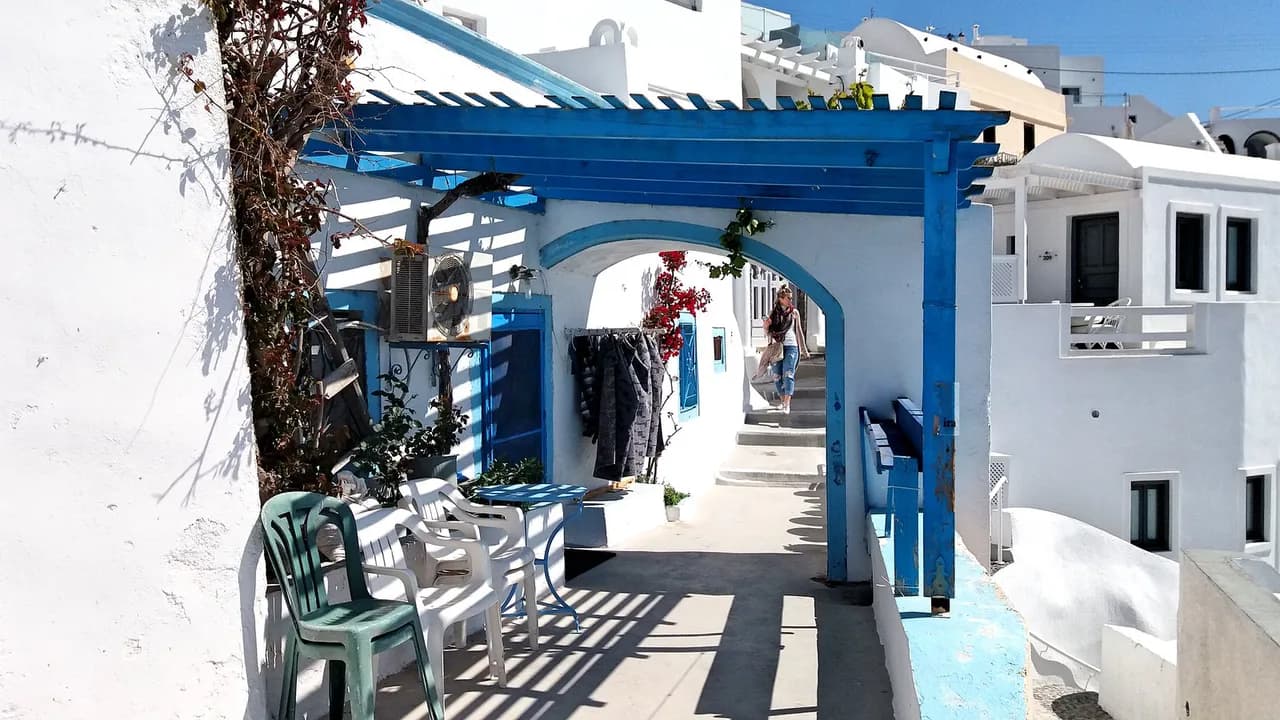
The main archaeological sites, including Ancient Akrotiri, are central to a May visit and worth building a day around; the site is the island's best rainy-day and windy-day option because so much of it sits under cover. Villages such as Pyrgos, Megalochori and Emporio are lived-in places rather than seasonal sets, so they function fully in May when the coastal resorts are still quiet.
Wineries generally welcome visitors through spring, and May is a good moment for a tasting built around the volcanic-soil wines of Assyrtiko, Vinsanto and Nykteri, before the summer tasting rooms get busy. Whatever your dates, check opening times with the individual site or winery before you set out, since shoulder-season hours vary.
Things to do in May
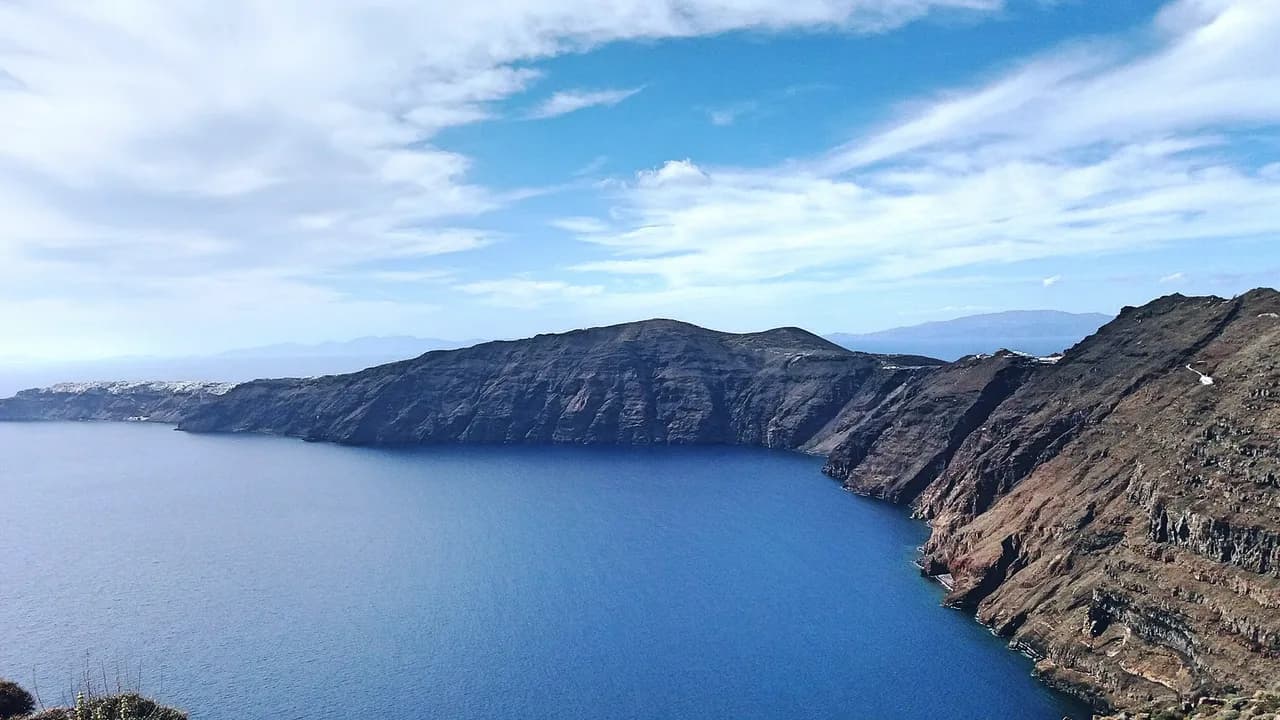
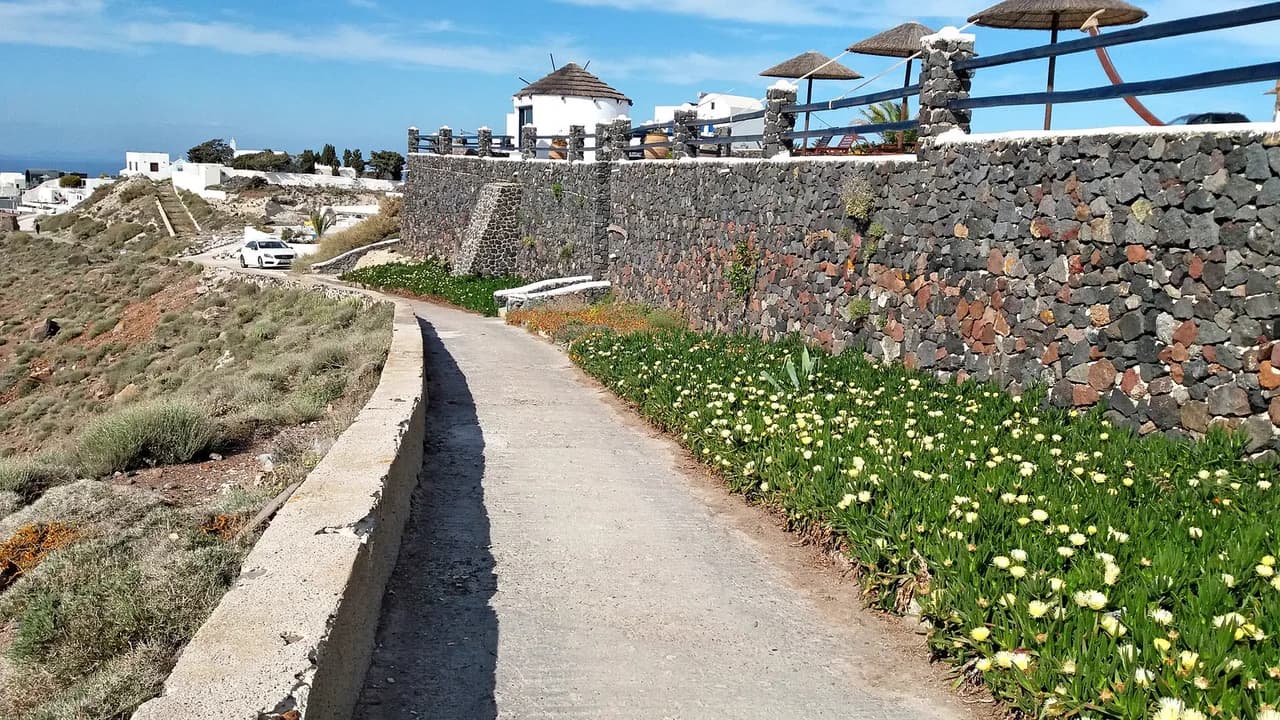
Walk the caldera rim from Fira to Oia, or the shorter stretch from Imerovigli to Skaros Rock, in the morning before the day warms and the path gets crowded. The route is exposed and stepped, so start early and carry water; the reward is the island's best free view of the volcanic basin.
Give Ancient Akrotiri half a day, then head for the villages. Pyrgos, the island's highest village and its former capital, is quieter and more authentically lived-in than the caldera towns, while Megalochori's lanes and bell towers make an easy hour's wander followed by lunch.
Climb to the monastery at Profitis Ilias, the island's highest point, for a view across the whole caldera and out to the neighbouring Cyclades. Add a vineyard tasting on the same day, since the volcanic soil and the Assyrtiko grape are the island's most distinctive contribution to Greek food and drink.
Beaches and the sea in May
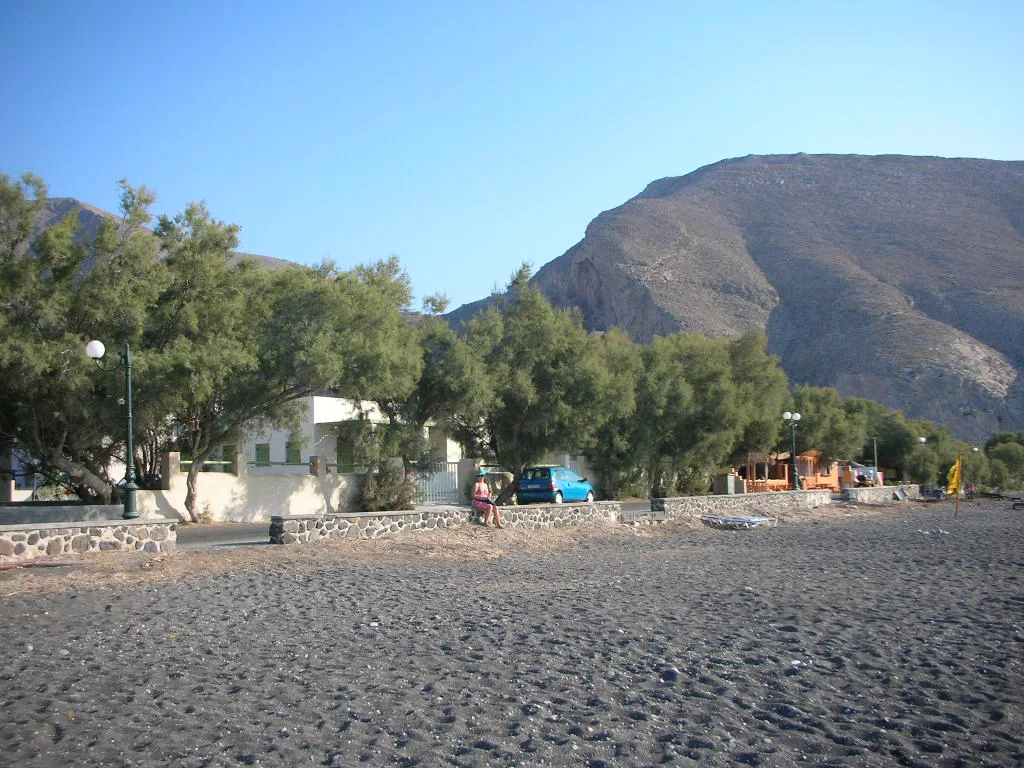
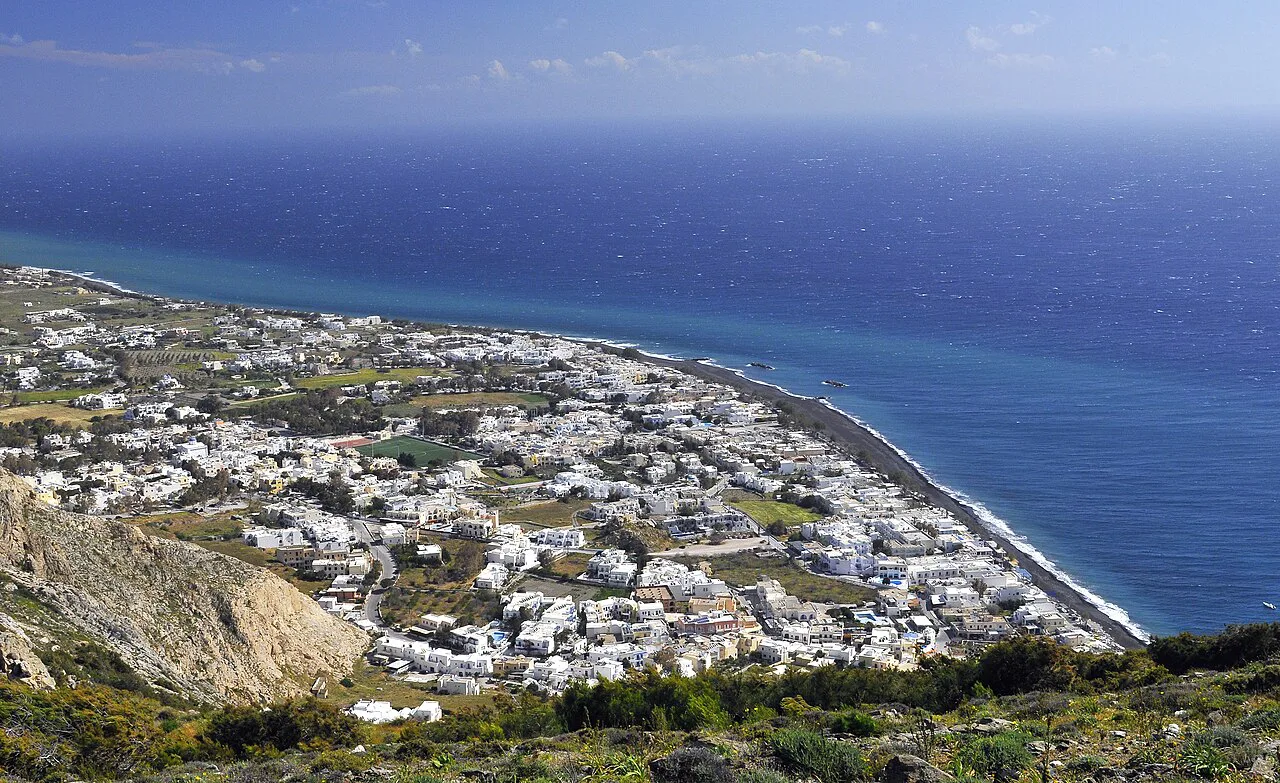
Kamari and Perissa, the two long dark-sand beaches on the east and south-east coast, suit sitting, lunching and walking rather than swimming in May. The volcanic sand heats up quickly and the water is still cold, so treat a dip as a bracing addition rather than the main event. Red Beach near Akrotiri is worth a look for the cliffs and the colour, but it is a short visit rather than a day out.
Boat trips to the volcanic islets and hot springs pick up through the month, and the caldera is at its best viewed from the water on a calm day. Watch the wind forecast rather than committing to a fixed date, and keep a flexible day in reserve in case a sailing is moved.
Crowds and prices
May is still shoulder season, so the island feels lively without being packed: Fira and Oia are busy at sunset but walkable the rest of the day, and the caldera path is nothing like its summer self. Expect prices below the July and August peak, with more availability and better terms on the ferries, tours and tastings that fill up later.
Two things tighten the island briefly. The Greek May Day holiday on 1 May is a public holiday, with many businesses closed, and island panigiria, the local saint's-day festivals, bring bursts of music, processions and evening feasting to particular villages; both can make specific dates busier or quieter than the month as a whole suggests.
The quietest window tends to fall before the late-May pickup, when the first summer-feeling weather arrives along with more visitors. If you have flexibility, aim for the middle of the month to combine reasonable conditions with genuinely calm sightseeing.
Drawbacks
The honest list starts with the evenings, which are mild rather than warm in early May, and the sea, which stays cold enough to shorten any swim to minutes. The Meltemi is the other factor: it can whip sand across the beaches, make the exposed caldera rim bracing, and by late May disrupt ferry schedules and boat trips.
Some seasonal places still run reduced or pre-season hours in early May, and a few coastal tavernas and beach clubs open only as the month progresses. That is another argument for late May over early May if you want the island running at full strength.
May or June?
June is hotter, sunnier and better for the sea: the same official normals give an average daily maximum of 27.7 °C (82 °F) and a minimum of 20.9 °C (70 °F), which is proper summer weather. It also brings the crowds and prices that May avoids, so the choice comes down to whether you want warm water or a quieter island.
If you are tempted earlier, our guide to Santorini in April sets out how the island behaves when the weather is cooler and the island is quieter still. Comparing the months side by side is the quickest way to decide, and our guide to the best time to visit covers the whole year at a glance.
It also pays to widen the frame before you commit to Santorini, since the Aegean in May is not evenly warm and the wind behaves differently from island to island. Where Is Warm in Europe in May? The Destinations Compared puts the Cyclades alongside the Dodecanese, the Ionian and the Canary Islands, so you can see whether Santorini's low-twenties May is the version of spring you actually want.
The verdict
Book May for walking the caldera, exploring Ancient Akrotiri, eating outside in the villages and tasting volcanic-soil wines without the summer crush. It is the best month for anyone who treats Santorini as a landscape and a culture rather than a beach resort, and it rewards travellers who can be flexible about wind.
Wait for June if the sea matters, if you want dependable daily boat trips, or if you are travelling with people who feel the cold. And if you are still weighing up the wider region, our guides to Crete in May and Corfu in May show how the Greek islands compare for warmth and crowds in the same month.
Plan Your Visit
May on Santorini is a month for walking, sightseeing and long lunches in the open air, with official averages of 23.1 °C by day and 16.9 °C at night that describe comfortable rather than hot conditions. Build the trip around the caldera, the archaeology and the villages, and treat the sea as a bonus rather than the plan.
Aim for the second half of the month if warm evenings matter, keep a day flexible for wind, and confirm opening times directly with the sites and wineries you want to visit. For entry rules, use the UK government's travel advice for Greece, and leave the rest of your planning to the weather and the ferries.
More Santorini spring guides
Frequently Asked Questions
Is Santorini warm in May?
Yes, comfortably warm rather than hot. Official climate normals for the island give an average daily maximum of about 23 °C and a night-time low of about 17 °C, which suits walking, sightseeing and eating outside. Evenings in early May are mild rather than warm, and the sea stays cold.
Is Santorini packed in May?
No, it is busy but manageable. Fira and Oia draw a sunset crowd, but the caldera path and the villages are far quieter than in July and August. The Greek May Day holiday on 1 May and local saint's-day festivals can briefly concentrate visitors in particular places.
Is the sea warm enough to swim in Santorini in May?
Not really. The air warms well ahead of the Aegean, so the water feels bracing even on a sunny afternoon and most people sit by it rather than swim for long. If swimming is central to your holiday, June is the better choice.
Is May or June better for Santorini?
May is better for quiet sightseeing, walking and lower-season prices. June is better for warm sea, dependable boat trips and summer heat, but it brings bigger crowds. Choose May for the island itself, June for the water.
Does it rain in Santorini in May?
Rain becomes uncommon as the month goes on, with long sunny spells the norm rather than the exception. The wind matters more than rain: the Meltemi strengthens through May and can affect the exposed caldera rim and, by late May, inter-island ferries.
Is 4 days in Santorini too long?
No, four days is a good length in May. It gives you time for the Fira to Oia caldera walk, Ancient Akrotiri, a village wander in Pyrgos or Megalochori and a vineyard tasting, with a spare day in reserve in case the wind disrupts a boat trip.
Is the sunset better in Fira or Oia?
Oia is the classic sunset spot and gets correspondingly crowded; Fira and Imerovigli offer strong caldera views with more breathing room. In May, arriving early and choosing a west-facing terrace in Imerovigli is a quieter compromise.
What should I book ahead for a May trip?
Book ferries and any boat trips you are set on, since the summer schedule fills in through the month and strong winds can force changes. Confirm opening times with individual sites and wineries closer to your dates, as shoulder-season hours vary.
Sources
Spring sun notes
Optional updates when we add destinations and months.
You might also like
Continue reading
More guides you'll find useful