
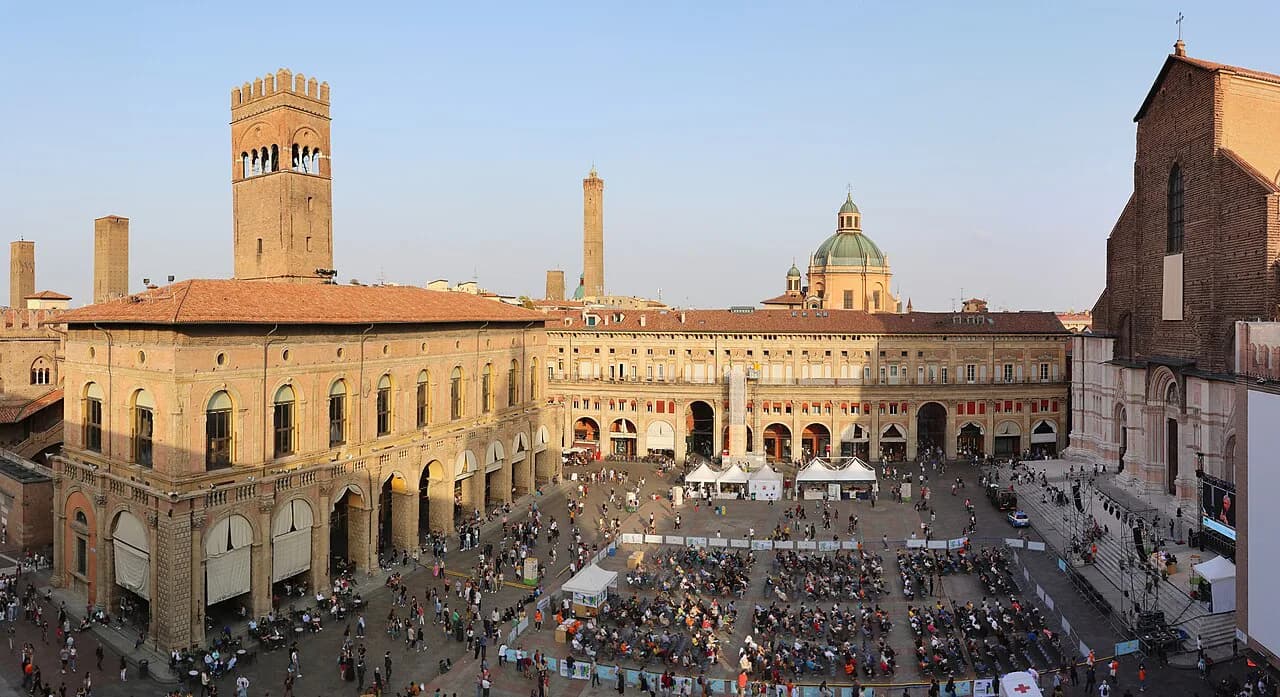
Best City Breaks in May: 10 Europe Cities Ranked by Weather
Ten European cities that hit their stride in May, with typical highs, sunshine and rain from national weather services, plus who each one suits best.
On this page
May is the strongest single month for a city break in southern Europe: warm enough for terraces and long walks, short of the heat that makes June sightseeing a slog, and still outside the summer peak. The cities below earn their place on typical May daytime highs, sunshine hours and rain days, not on festival calendars, so you can weigh warmth against crowds on your own terms.
Each pick is measured against the months either side. Seville and Larnaca are the warmest and the closest to overheating, Dubrovnik and Nice the coolest and wettest, and the rest sit in a comfortable band where a light jacket in the evening is still sensible. If you need earlier sun, see where is warm in Europe in April; if you can stretch to June, compare it with where is warm in Europe in June.
How to Read the Picks
Every figure here is a long-term normal, not a forecast: the average daytime high and night-time low for May, plus sunshine and rain days where the national service publishes them. Averages hide bad weeks, so treat a city with six or more rain days as one where you plan a museum or a long lunch into the itinerary instead of banking on wall-to-wall sun. Check current prices and dates before booking a trip built around a specific week.
The spread is wider than most people expect. Seville averages 27.2 °C (81 °F) by day, Athens 25.2 °C (77 °F), while Dubrovnik manages 21.3 °C (70 °F) and Nice 21 °C (70 °F) — a five-degree swing that decides whether you want linen or a jacket after dark.
Rain days matter more than monthly totals for a short break. Athens records around 15 mm across May and Larnaca barely more than 11 mm, so a wet hour is a brief interruption; Rome and Dubrovnik both average six or more rain days, which means one decent soaking is likely somewhere in a five-night stay.
Seville: The Warmest of the Bunch
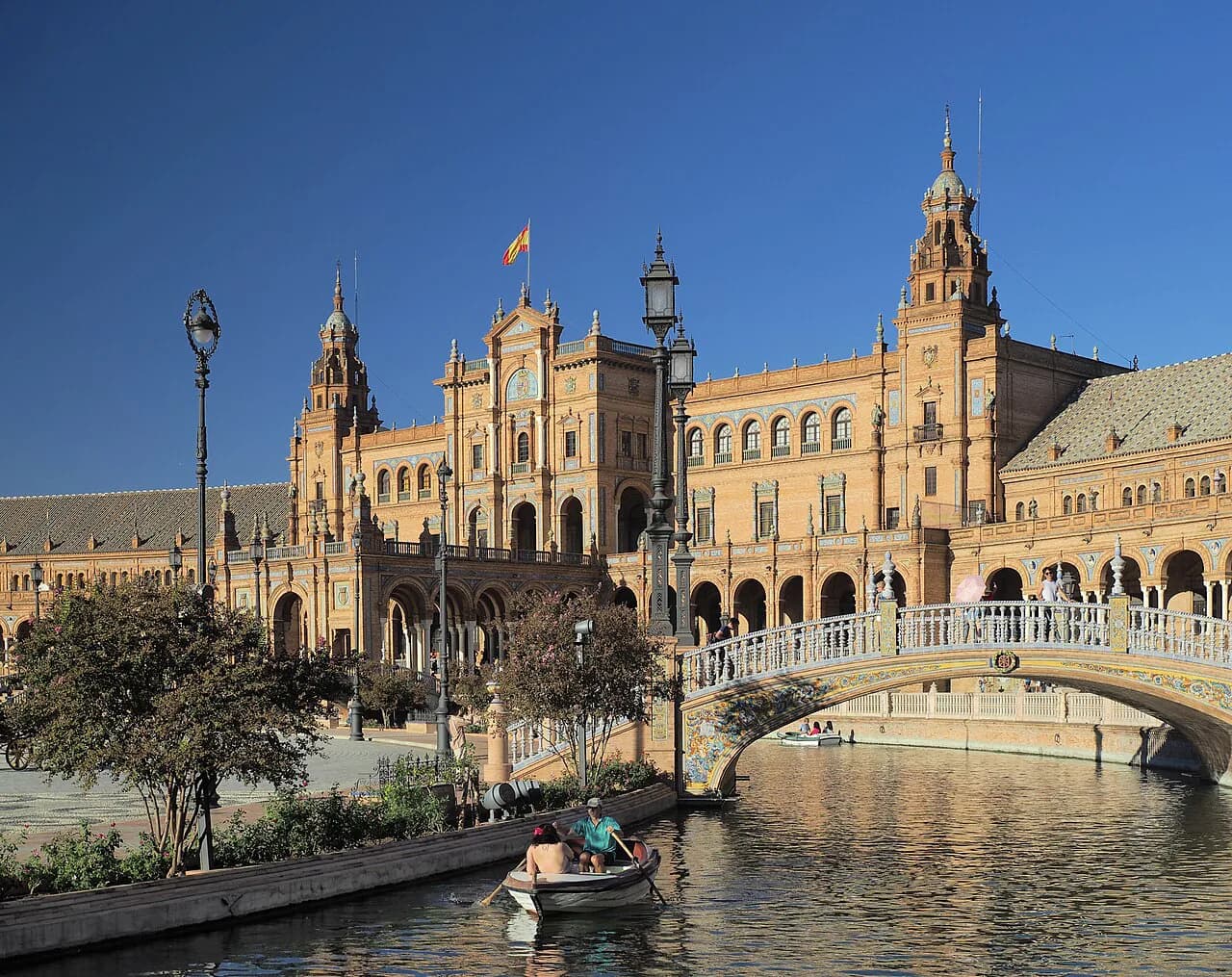
Seville averages 27.2 °C (81 °F) by day in May with a night-time low of 14.2 °C (58 °F), and it is the warmest city on this list by a clear margin. That is exactly the temperature range for unhurried tapas lunches and evening strolls through the Barrio de Santa Cruz, and for the courtyards and gardens of the Real Alcázar before the sun gets serious. It is AEMET's 1981-2010 normals for Seville Airport, which read a touch hotter than the shaded alleys of the old town feel at midday.
The trade-off is timing, not comfort. June jumps to 32.2 °C (90 °F) and Seville becomes a city of early starts and shuttered afternoons, so May is the last month you can sightsee through the middle of the day without wilting. Expect around 3.7 rain days and 30 mm, so a spring shower is possible but rarely settles in for the day.
Who it suits: food-led travellers, couples and anyone who wants heat without a siesta schedule. Who should look elsewhere: families with small children in pushchairs will find the old town's narrow pavements and midday warmth tiring, and walkers wanting cool air should head north or wait for April.
Málaga: City and Coast in One
Málaga averages 24.3 °C (76 °F) by day and 14.2 °C (58 °F) at night in May, with 292 hours of sunshine and only 20 mm of rain across the month. That combination — hot enough for the beach strip at La Malagueta, mild enough to climb to the Alcazaba without breaking a sweat — makes it the best balance of city sightseeing and a coast you can genuinely use.
The month-on-month comparison is persuasive: April brings 21.4 °C (71 °F) and 44 mm, so May is markedly drier and warmer, while June climbs to 28.1 °C (83 °F) and drops to almost no rain. May is the sweet spot; June is better only if you want guaranteed pool weather and can handle the heat in the old town.
Practically, Málaga suits a long weekend that mixes the Picasso museum and the cathedral with an afternoon on the sand and a plate of fried fish at a chiringuito. It also works for families, because the historic centre is flat, compact and easy to walk, and the airport sits a short train ride from the middle of town.
Valencia: Compact Old Town, Big Green Space
Valencia averages 23.4 °C (74 °F) by day in May with 258 hours of sunshine and 4.3 rain days, putting it just behind Málaga on warmth but ahead on the sheer amount of space to walk in. The Turia gardens, laid out in the old riverbed, and the City of Arts and Sciences give a long weekend a shape that a purely historic centre cannot.
The old town is small enough to cross on foot in twenty minutes, which means you can do the cathedral, the Central Market and an afternoon in the gardens without a single taxi. May's 18.6 °C (65 °F) night-time low is warm enough to eat outside late, and June's 27.1 °C (81 °F) highs are a step up rather than a leap.
It suits sightseers who like a city with breathing room and cyclists who want flat, car-light routes. If you specifically want a beach-led break, Málaga or Sicily deliver more coast for the same effort.
Rome: Superb, With a Wet Afternoon Built In
Rome averages 23.4 °C (74 °F) by day and 12.6 °C (55 °F) at night in May, with 271 hours of sunshine — near-perfect conditions for the Forum, the Palatine and long evenings in Trastevere. The catch is rain: around six rain days and 62 mm means you should plan around the odd wet afternoon rather than assume wall-to-wall sun.
May is also where Rome stops being a compromise. April's 18.8 °C (66 °F) is pleasant but jacket weather, and June's 28.1 °C (83 °F) turns the archaeological sites into a test of endurance by early afternoon. The middle of the month, after the bank holiday weekend, is the version of Rome most people are hoping for.
Who it suits: first-time visitors, museum-goers and anyone who wants a big-city break with genuine outdoor time. Who should not: travellers who only have a few days and cannot absorb a washed-out day, or those who want heat hot enough for the sea.
Athens: Dry, Warm and Built for Long Lunches
Athens averages 25.2 °C (77 °F) by day and 16.1 °C (61 °F) at night in May, with only 15 mm of rain across the month. That is dry even by Greek standards, and it makes the Acropolis and the Agora comfortable in the morning rather than a scramble before the heat.
The comparison with June is the strongest argument for May: June averages 30.3 °C (87 °F) with 20.7 °C (69 °F) nights, which turns the exposed archaeological sites into an early-morning-only proposition. May is also drier than April, when Athens still sees around 26 mm and 9.7 rain days.
It suits sightseers who want a dense classical itinerary, and anyone happy to spend the afternoon at a taverna table in Plaka or Koukaki. It is less good for families chasing a beach holiday, since the coast at Glyfada and Vouliagmeni is a tram ride out and the water is still bracing in May.
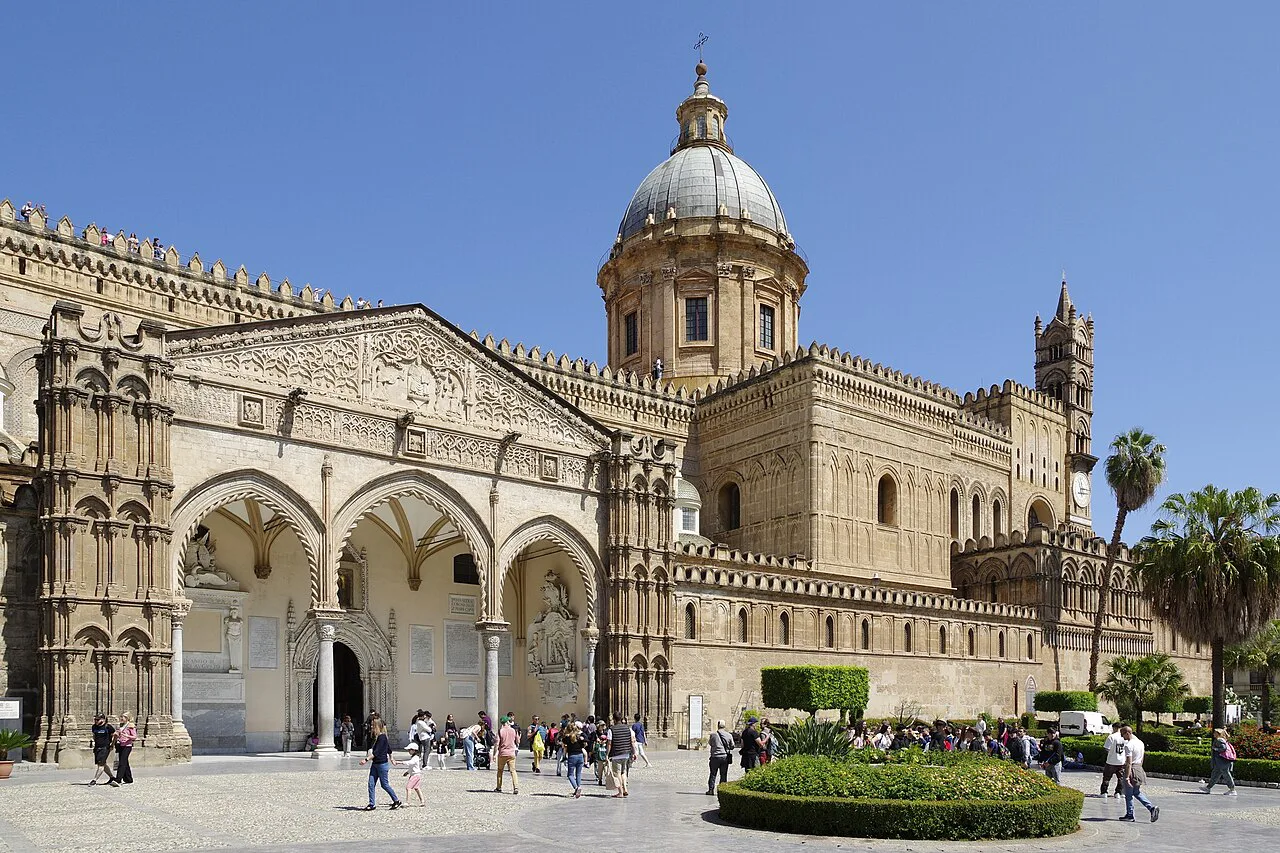
Sicily: Catania, Taormina and Etna
Eastern Sicily is the warmest of the Italian picks, with Catania averaging 26.1 °C (79 °F) by day and 12.3 °C (54 °F) at night in May, and only 2.6 rain days. The inland Sigonella station runs hotter and drier than the seafront, so expect the coastal breeze to take the edge off at Taormina and Syracuse.
The geography does the work: Etna's lower slopes, Taormina's Greek theatre and Syracuse's island of Ortygia all sit within a short drive of Catania, so a four-night base gives you volcano, coast and baroque town without long transfers. May is before the Etna access roads and the cable car settle into their full summer rhythm, so leave the mountain day flexible rather than booking it solid.
It suits anyone who wants city and landscape in one trip, and families with older children who will enjoy the volcano. It does not suit travellers without a car — the best of eastern Sicily is spread out, and the rail line along the coast is slow.
Sardinia: Cagliari and the Coast
Cagliari averages 24.1 °C (75 °F) by day in May with 4.2 rain days and 26 mm, which makes it a strong city-plus-coast choice before the summer rush. The Castello quarter and the Poetto beach sit within the same city, so you can walk the ramparts in the morning and be on the sand by early afternoon.
May is noticeably warmer and drier than April's 19.9 °C (68 °F) and 46 mm, and it arrives well before June's 28.7 °C (84 °F). That gap matters if you plan to spend the day on the Costa del Sud or at Nora, where shade is scarce and the afternoon sun is unforgiving from June onwards.
Who it suits: couples and independent travellers who want a city base with beaches and archaeological sites within an hour. Who should avoid it: anyone relying on public transport for the coast, since the best beaches need a car, and families who want guaranteed pool-and-sea days may prefer a resort island further south.
Dubrovnik: Cooler, Wetter, Still Worth It
Dubrovnik is the coolest of the classic Adriatic picks, averaging 21.3 °C (70 °F) by day and 15.2 °C (61 °F) at night in May, with 9.5 rain days and 76 mm. That is a genuine trade-off: you take a real chance of a wet day in exchange for walking the city walls before the cruise crowds and the July heat arrive.
The reward is the old town at its most usable. May sits between April's 16.9 °C (62 °F) and June's 25.2 °C (77 °F), so mornings are fresh and the wall walk is comfortable, while the evening still needs a layer. Boat trips to Lokrum and the Elaphiti islands run in May but on a reduced, weather-dependent footing, so keep those days loose.
It suits travellers who want architecture and sea views over guaranteed sun, and anyone who wants the city walls without queuing behind a cruise group. It does not suit sun-seekers chasing 30 °C days — for that, look at Cyprus or Sicily.
Lisbon: Atlantic Light and a Two-City Trip
Lisbon averages 23.1 °C (74 °F) by day and 14.4 °C (58 °F) at night in May, with 5.8 rain days and 58 mm. It is considerably drier than the Algarve in the month and brighter than the Atlantic coast to the north, which makes it the reliable choice for a Portuguese city break.
May is also the month Lisbon rewards a longer trip. Porto and the Douro are a train ride north, and the Algarve's Faro sits around 23.5 °C (74 °F) in May with just 26 mm of rain, so a city-plus-coast itinerary is realistic without a flight.
Who it suits: walkers who like hills and viewpoints, food-led travellers and anyone wanting a two-city rail trip. Who should think twice: beach-first families, because Lisbon's nearest beaches are a train ride out and the Atlantic is cold in May, and travellers wanting dependable 25 °C-plus heat.
The Wildcards: Nice and Larnaca
Nice averages 21 °C (70 °F) by day and 14.5 °C (58 °F) at night in May, with 271 hours of sunshine but 5.1 rain days and 40 mm. The Riviera in May is a promenade-and-old-town city break rather than a beach one: the Baie des Anges is glorious to walk, and the Marché du Cours Saleya is at its best, but the sea is still cold and the beach is pebbles.
Larnaca is the opposite proposition: 27 °C (81 °F) by day, 16.4 °C (62 °F) at night, and 338 hours of sunshine across May, with only 11.5 mm of rain. If what you want from a May break is guaranteed warmth and a terrace by the water, Cyprus delivers it more consistently than anywhere else on this list.
Nice suits couples and gallery-goers who want a graceful city with mountains behind it. Larnaca suits sun-seekers and families who want a short transfer and reliable heat; it is less compelling for travellers who want a dense historic centre to wander, since the archaeological sites are scattered and a car helps.
Crowds and Prices in May
May compresses two distinct travel moods into one month. The bank holiday and half-term weeks fill short-haul flights and city hotels, and the last week of the month is noticeably quieter and often cheaper — if your dates are flexible, that final week is the one to take.
The pattern is now well documented: short trips of one to three nights make up more than half of European trips, according to Eurostat data cited in the TUI Group's city-break ranking, which puts Rome, Paris and Prague at the top of the search table. That is a demand signal, not a weather guide, but it explains why May weekends in the big-name cities book out early.
For calmer prices, second-tier cities win: Valencia, Cagliari and Larnaca all deliver good May weather without the Rome or Dubrovnik markup. Dubrovnik in particular is worth visiting before the cruise season peaks, when the old town's narrow streets are still walkable.
May or June?
Choose May for walking-heavy city breaks. Rome, Athens and Seville are all still comfortable on foot in May and become distinctly harder work in June, when Athens averages 30.3 °C (87 °F) and Seville 32.2 °C (90 °F). If your trip is built around archaeological sites, old towns and long lunches, May is the better month.
Choose June for guaranteed warmth and water. If you want to swim, lie on a beach and eat dinner in short sleeves without a backup plan, June is more dependable — but you will pay for it in crowds and heat. For a wider comparison of where the warmth actually lands, our guide to where is warm in Europe in May covers the full map of destinations.
If you are tied to early spring, April is not a write-off: Málaga, Seville and Sicily all sit in the high teens to low twenties, and prices and crowds are lower. The best places to visit in Europe in April lays out which cities are genuinely pleasant then and which are still waiting for the season to open.
Anyone planning a longer sweep across the region should start with Europe in spring, which sets out how the season unfolds from the Canary Islands to the Aegean and which weeks to target for each.
The Verdict
For sun-seekers who still want a city, Seville and Larnaca are the warmest picks in May, with Larnaca paired with the biggest sunshine totals and little rain. For sightseers who want to walk all day, Athens and Rome hit the best balance of warmth, sunshine and manageable rain, and Málaga and Valencia add a coast without the crowds of July.
For families, Málaga and Larnaca are the easiest: short transfers, walkable centres, warm but not punishing days. Anyone who wants the Adriatic old-town experience should take Dubrovnik in May with a rain day planned in, and anyone who wants a two-city rail trip should build Lisbon and Porto into the same week.
Whichever you choose, book the last week of the month if you can, keep one indoor option open per city, and treat May's sea as scenery rather than swimming.
More Europe spring guides
Frequently Asked Questions
Which European city is warmest in May?
Seville is the warmest on this list, averaging 27.2 °C (81 °F) by day, followed by Larnaca at around 27 °C (81 °F) with far more sunshine. Sicily's Catania sits just behind at 26.1 °C (79 °F). All three are warm enough for terraces and light clothing but short of the peak summer heat that makes walking uncomfortable.
Is May a good month for a European city break?
It is the strongest month for most of southern Europe. Days are long, the big sights are open, and temperatures are warm without the June heat that makes Rome, Athens and Seville hard work by midday. The one caveat is rain: Rome, Dubrovnik and Lisbon all average several rain days, so keep an indoor plan spare.
Where in Europe is warm in May but not too hot?
Málaga, Valencia and Lisbon sit in a comfortable band around 23 to 24 °C (73 to 75 °F), warm enough for outdoor lunches and evening walks without the midday sting. Athens at 25.2 °C (77 °F) is a touch hotter but very dry. These cities suit travellers who want to be outside all day rather than retreating indoors at noon.
Is May or June better for a city break in southern Europe?
May suits sightseeing, walking and old-town exploration; June suits beach time, swimming and guaranteed warmth. Athens jumps from 25.2 °C (77 °F) to 30.3 °C (87 °F) between the two months, and Seville from 27.2 °C (81 °F) to 32.2 °C (90 °F). If your itinerary is heavy on ruins and hills, go in May.
Which European cities are good for a May bank holiday weekend?
Valencia, Cagliari and Larnaca offer strong May weather with less pressure on hotels than Rome or Dubrovnik. The bank holiday weekend is one of the busiest of the month, so book flights and city hotels well ahead, or shift to the quieter final week of May if your dates allow. Expect higher short-haul fares during half-term week.
Where should families go on a city break in May?
Málaga and Larnaca are the easiest with children: short airport transfers, flat walkable centres, reliable warmth and enough beach to keep everyone happy between sights. Valencia works well too, thanks to the Turia gardens and the City of Arts and Sciences. Dubrovnik and Nice are better for older children who will tolerate cooler, wetter days.
Sources
Spring sun notes
Optional updates when we add destinations and months.
You might also like

Continue reading
More guides you'll find useful


