Greece in April: How Warm It Is and Where to Go
Greece in April brings 19-20°C days in Athens, Crete and Rhodes but cool nights and a cold sea. Here is where to go, what is open and who should wait.
On this page
April is warm enough for sightseeing and hiking across most of Greece, but not for swimming: expect average daytime highs near 19-20°C (66-68°F) in Athens, Crete and Rhodes, with nights of 12-14°C (54-57°F) on the southern islands and closer to 9°C (48°F) in Corfu and Thessaloniki. Rain is easing but patchy, so Crete and Rhodes are more reliable than the Ionian or the north. That makes April a month for ruins, hill villages and long lunches rather than beach days, and a strong choice for couples, walkers and families with young children who want mild air and thinner crowds.
Is Greece warm in April? The short answer
Yes, in the daytime. HNMS climate normals for 1991-2020 put Athens at an average daily maximum of 20.2°C (68°F) and a minimum of 11.8°C (53°F) in April, with 26.0 mm of rain over 9.7 rain days. Heraklion on Crete is almost identical by day at 20.3°C (69°F) but warmer at night at 12.3°C (54°F), and drier, with 7.7 rain days. Those numbers suit a full day outdoors in a light jacket, not a day on a sun lounger.
The exception is Rhodes, where the average daily minimum is 14.2°C (57°F) — the mildest April nights of the stations cited — so evenings on the Dodecanese are noticeably gentler than in the Ionian or the north. If warm evenings matter more to you than hot afternoons, head south-east. If you want heat, May or June is the better buy.
Weather in April: Athens, Crete, Rhodes, Corfu and the islands
Athens is the benchmark most travellers use, and the station figures are consistent: HNMS records an average daily maximum of 20.2°C (68°F) and a minimum of 11.8°C (53°F), with 26.0 mm of rain across 9.7 rain days. In practice that means bright, mild afternoons at the Acropolis and cool mornings and evenings, which is why April works so well for city sightseeing.
Crete and Rhodes are the warmest of the mainstream islands. Heraklion averages 20.3°C (69°F) by day and 12.3°C (54°F) at night with 7.7 rain days, while Rhodes averages 20°C (68°F) by day and 14.2°C (57°F) at night with 7.6 rain days. Santorini is slightly cooler at 18.9°C (66°F) by day and 13.3°C (56°F) at night, and Kos sits at 19.2°C (67°F) by day and 12.9°C (55°F) at night.
The Ionian and the north are a different proposition. Kefalonia averages 19.2°C (67°F) by day and 11.2°C (52°F) at night, with 60.4 mm of rain over 9.5 rain days, and Corfu is similar at 19.0°C (66°F) by day and 9.2°C (48°F) at night but wetter, at 66.7 mm over 12.9 rain days. Thessaloniki averages 19.3°C (67°F) by day and a chilly 8.8°C (49°F) at night, with 37.5 mm over 11.2 rain days on a WMO page whose averaging period runs 1959-1997.
Read the rain-day counts rather than the totals. Corfu at 12.9 rain days and Thessaloniki at 11.2 mean you should plan indoor options, while Rhodes at 7.6 and Heraklion at 7.7 mean most days stay usable. The pattern is simple: the further south-east you go, the more reliable April becomes.
Warmest places in Greece in April
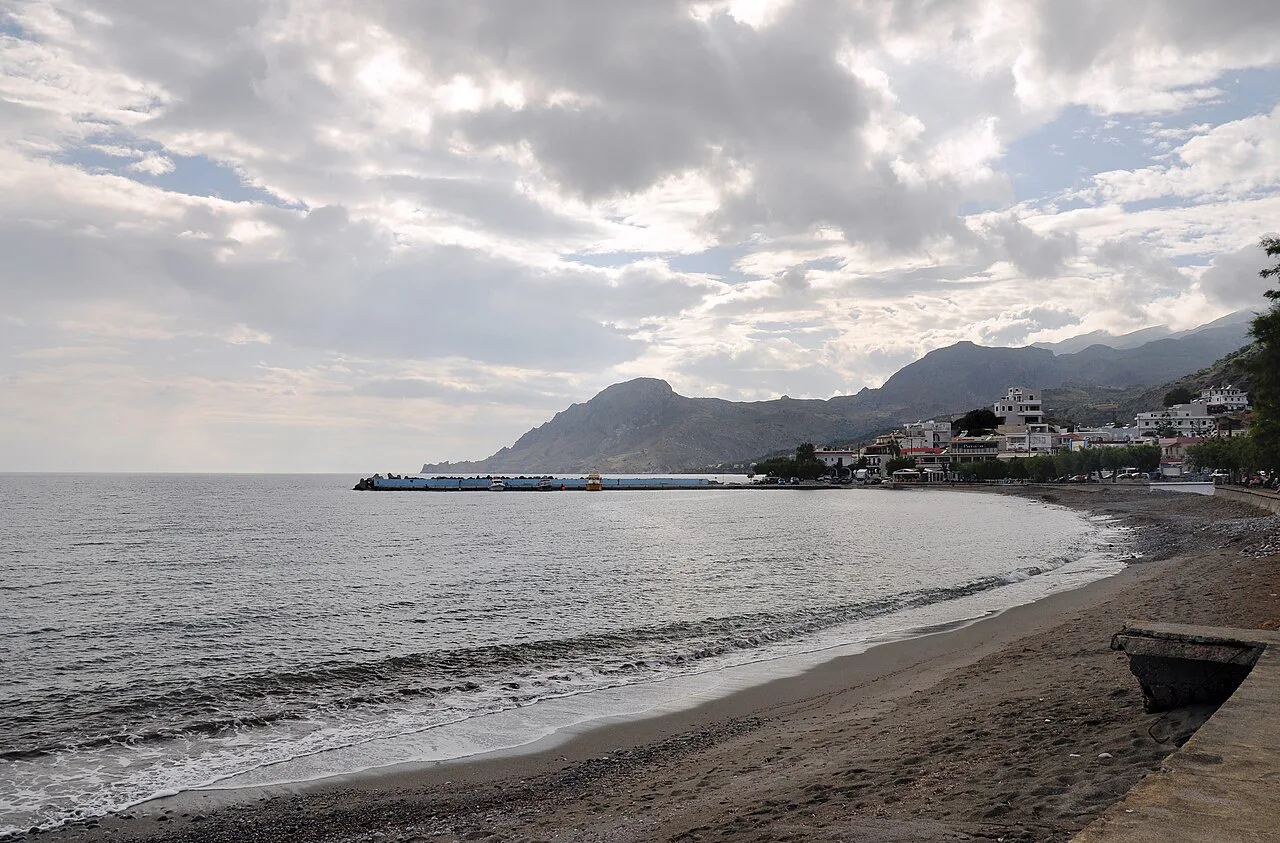
Rhodes takes the prize for the warmest nights, at an average minimum of 14.2°C (57°F), and its daytime average of 20°C (68°F) matches Athens and Crete. That combination makes the Dodecanese the safest April bet if you want to eat outside in the evening. Rhodes Old Town, the valley of the butterflies and the west-coast villages all work well in this weather.
Heraklion and the Cretan south coast come next, with 20.3°C (69°F) by day and 12.3°C (54°F) at night and 7.7 rain days on average. Further east, Sitia and the Lasithi plateau are cooler at altitude but dry, and the drive down to the south coast is pleasant before the summer heat arrives; our guide to Crete in April covers how the island shifts through the month.
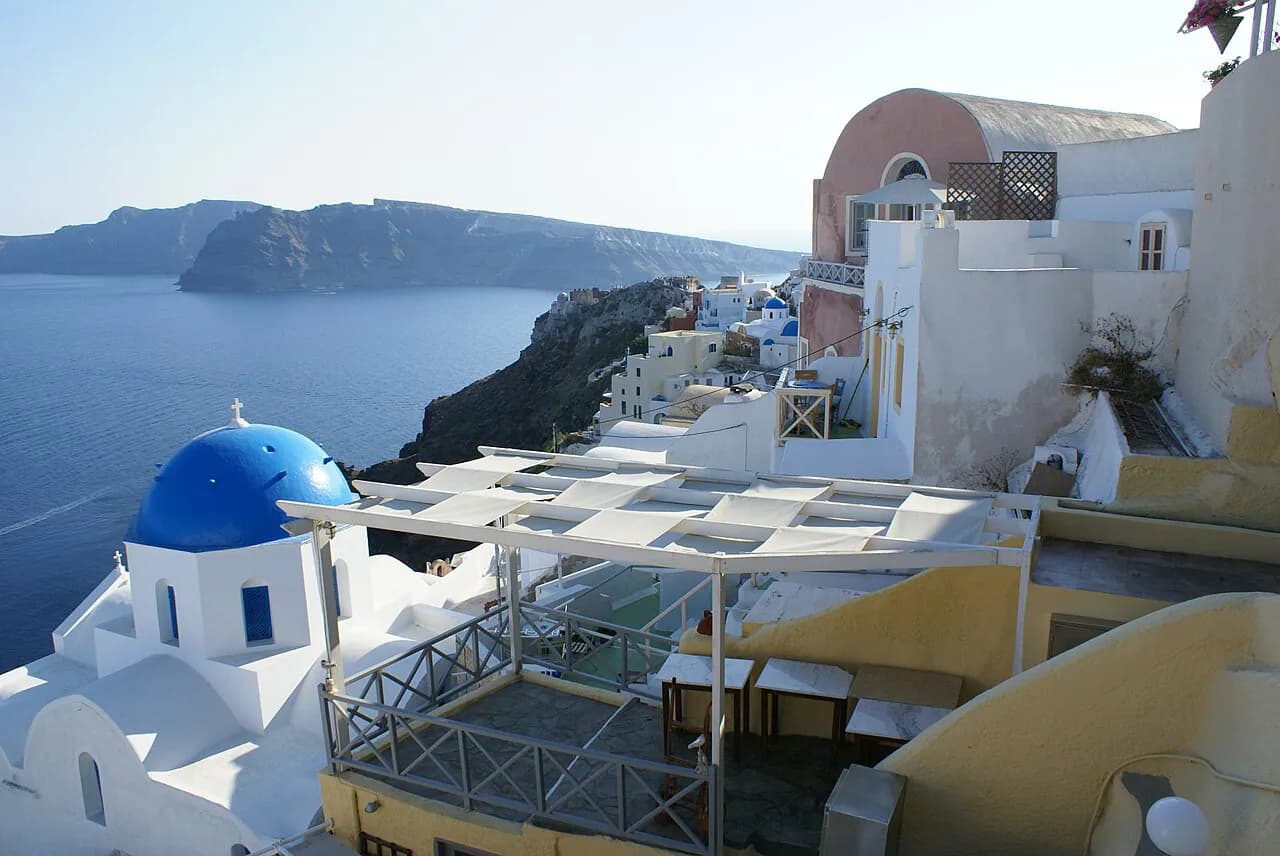
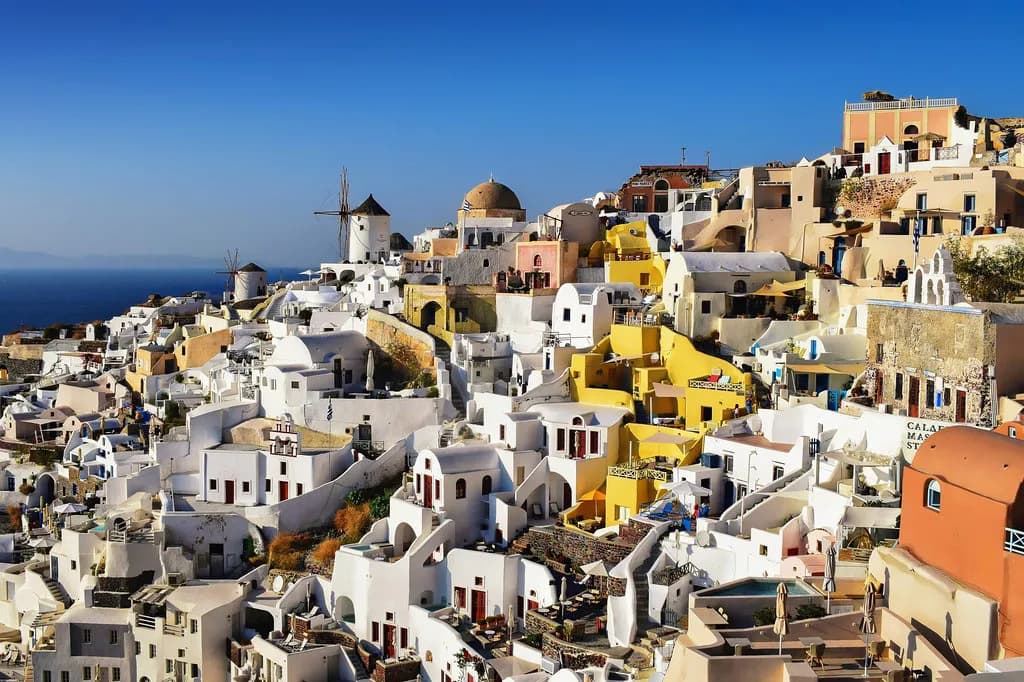
Santorini and Kos are a degree or so cooler by day at 18.9°C (66°F) and 19.2°C (67°F) but have milder nights than the Ionian, so cliff-top villages such as Oia and the walk along the caldera rim remain comfortable. Neither island is hot in April, and the meltemi wind has not yet arrived, so the caldera path is at its most walkable.
Further south still, the small Dodecanese islands around Rhodes and Karpathos track the same pattern, and the Cyclades sit between the two extremes. If you want the warmest possible April, put Rhodes and Crete at the top of the list and treat the Ionian as a cooler, greener alternative.
Early vs late April
The last ten days of April feel materially different from the first ten. The sea is still cold throughout — swimming is for the hardy only — but the air warms steadily and the rain days thin out. If you have a choice, book the second half of the month.
Easter moves, and in years when Orthodox Easter falls in April it brings a busy, pricier few days and some closures, so check the calendar before you commit. Late April also coincides with the run-up to the May bank holidays, when domestic demand picks up. Our month-by-month guide to the best time to visit the Greek islands sets out the shift in more detail.
April compared with March and May
March is cooler and wetter, with many island tavernas and boat operators still closed, while May lifts average daytime highs to around 25°C (77°F) in Athens and 23.9°C (75°F) in Heraklion, with the sea warming too. April sits between them: cheaper than May and far more pleasant than March, but still a month of layers.
On the islands the step up is just as clear: Rhodes reaches 23.8°C (75°F) by day in May, and Corfu 23.8°C (75°F) with the rain easing to 8.0 rain days. If you want reliable outdoor lunches and a sea you can actually enter, May is the better month. If you want to walk and sightsee without heat, April wins.
June is a different proposition entirely, with Athens averaging 30.3°C (87°F) by day and Crete 27.5°C (82°F), and very little rain. That is beach and early-summer territory, and our guide to Greece in June explains what changes as the season opens fully.
What is open in April
The main archaeological sites, including the Acropolis and Knossos, run through the year, and April is one of the best months to see them without summer queues. Tavernas in the big cities and in Heraklion, Rhodes Town and Chania are open as normal, so you will not struggle to eat well.
The seasonal layer opens gradually. Many small family-run places on the smaller islands, boat operators and beach bars start up during the month rather than on the first day, so a mid-April visit may find your first-choice taverna shut for another week. Ferries run, but pre-season timetables are thinner and some inter-island routes operate only a few times a week, which is why a two-base trip beats ambitious island-hopping.
On Corfu, Paleokastritsa and the villages around Corfu Town come to life through the month, though the Ionian swimming season proper is still weeks away. If you are weighing the Ionian against the Aegean, our guides to Corfu in April and Kefalonia in April explain the local pace.
Things to do in April
April is a walking month. The Acropolis and the Ancient Agora in Athens are comfortable in the mild air, and the spring wildflowers make the lower slopes of the mountains around Athens and in the Peloponnese a pleasure. On Crete, the Samaria Gorge and the paths around the Lasithi plateau open up before the summer heat makes them punishing.
City days work well too: Thessaloniki's Ano Poli lanes, the archaeology museums and the covered markets are all built for a cool, bright month. Our guide to Thessaloniki in April covers the neighbourhoods to prioritise, and there are enough indoor options to cover a wet day.
On the islands, April is for hill villages and coastal paths rather than beaches: Ermoupoli on Syros, the marble lanes of Tinos and the old town of Rhodes all reward a slow morning. The water is cold, so plan your day around the land and let the sea be scenery.
Spring is also the season for the Greek kitchen at its best: artichokes, broad beans, wild greens and lamb, served in tavernas that are still cooking for locals rather than visitors. Our guide to things to do in Greece in April has more on how to fill a wet afternoon.
Crowds and prices in April
April is still shoulder season. The cruise ships and tour groups are returning to Santorini and the big sites, but you are not queuing as you would in July, and hotels generally charge shoulder-season rates that undercut high summer. Easter week is the exception, when demand and prices rise sharply.
Domestic travellers fill the islands around the May bank holidays too, so the last days of April begin to feel busier. If you want the quietest version of the month, aim for the first half; if you want the warmest, the second half is worth the extra company.
Should you swim in April?
No, not comfortably. The Aegean and Ionian remain too cold for swimming in comfort in April, well behind the air temperature, and even on Rhodes, where the nights are mild, the water is bracing. The exception is a quick dip on a hot afternoon, and even then most people last a minute or two.
Treat April as a land month and you will enjoy it more: swimming, sunbathing and boat days belong to May and June. If the water is the point of your trip, wait a month.
Crete, Rhodes or Corfu in April?
Crete and Rhodes are the strongest April choices for warmth. Heraklion averages 20.3°C (69°F) by day and 12.3°C (54°F) at night with 7.7 rain days, while Rhodes averages 20°C (68°F) by day and 14.2°C (57°F) at night with 7.6 rain days — the mildest nights of the three main options. Both have enough open to fill a week without a car.
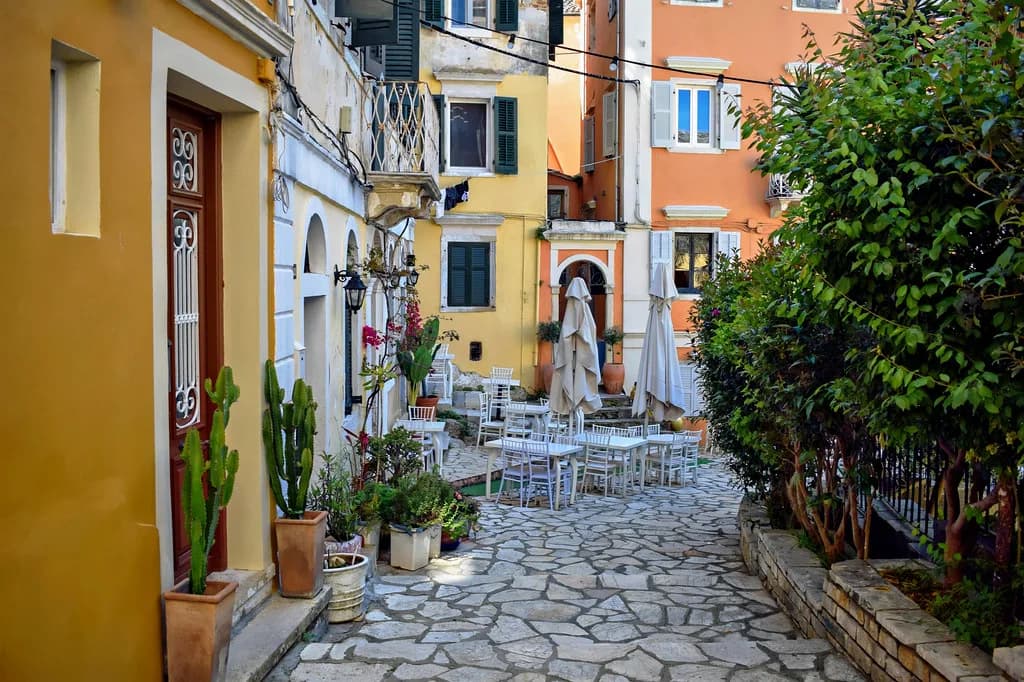
Corfu is the greenest and the coolest, with 19.0°C (66°F) by day and 9.2°C (48°F) at night and 12.9 rain days. Its draws are the old town, the Paleokastritsa coast and the inland villages, which are lovely in spring light but come with a real chance of rain. It suits walkers and town lovers more than sun-seekers.
If you are undecided, the wider comparison of where is warm in Europe in April makes the case for the eastern Mediterranean. Our guide to Greece in spring, the best time to visit Greece and the case for seeing Greece in May will all help you place April in the context of the whole season.
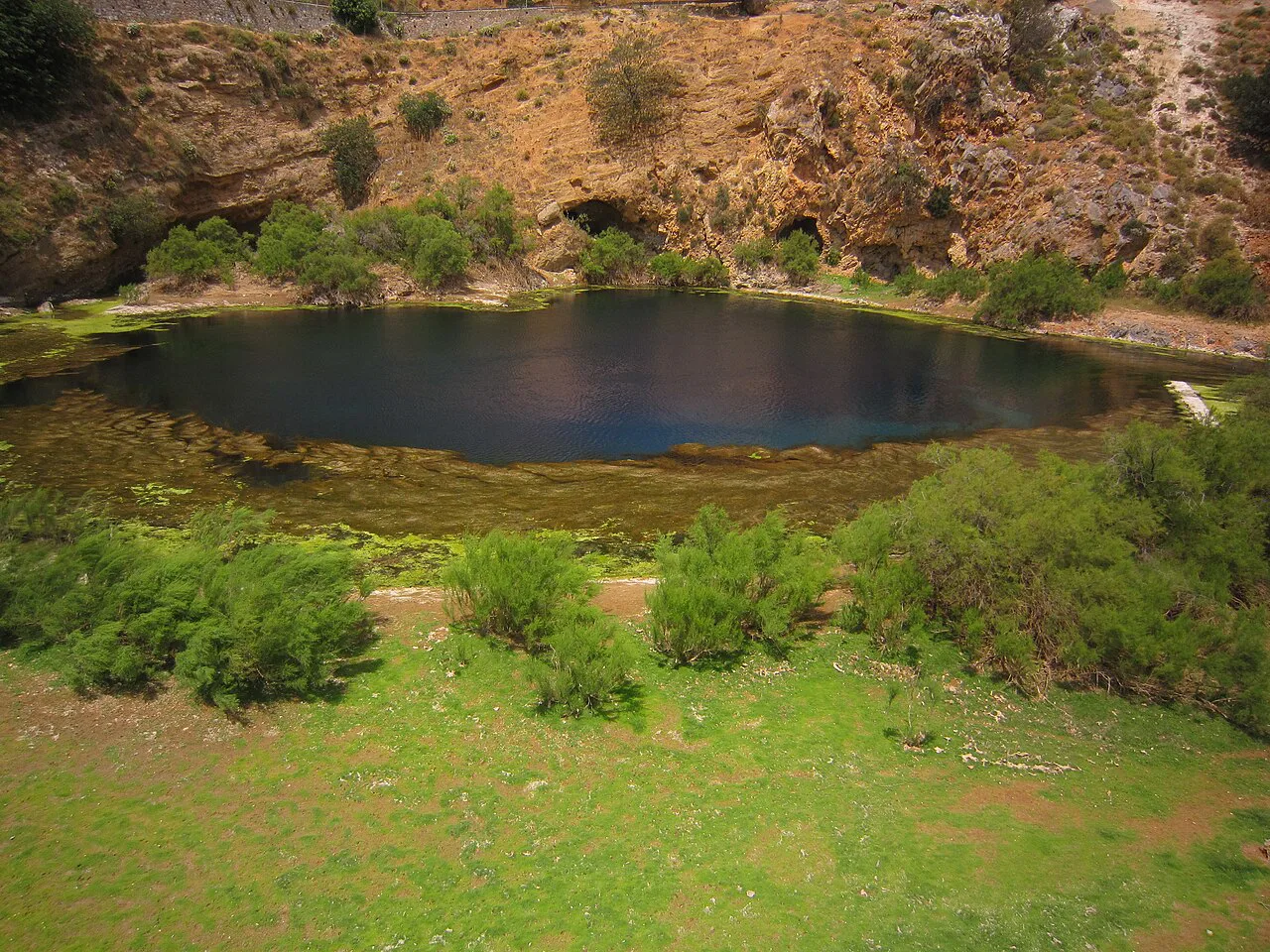
Athens and the mainland in April
Athens is at its most useful in April: the Acropolis, the Ancient Agora and the Acropolis Museum are all manageable in a day, and the evenings are cool enough to eat outside without the summer heat. The city is also the easiest place to start, with the widest choice of open tavernas and the best transport links.
From Athens, the Peloponnese is a straightforward day trip or two: Delphi, Mycenae and Nafplio are all within reach, and the spring flowers in the mountains around Mount Taygetos are a reward in themselves. The mainland is cooler and wetter than the south-east, so pack for changeable weather.
A realistic April itinerary is one city plus one island: Athens for four or five days, then a ferry or short flight to Crete or Rhodes for a week, with no more than two bases. That gives you time to walk, eat and see the sites without spending half your holiday in transit.
April or May for Greece?
Choose April if you want to walk, sightsee and eat well without heat, and if you are happy with cool evenings and a cold sea. Choose May if you want warmer days, fewer rain days and a sea you can enter comfortably — Athens averages 25.2°C (77°F) by day in May, and Corfu 23.8°C (75°F).
April is also cheaper and quieter than May, which matters around the May bank holidays and half term. If you have a fixed week in April, the south-east is the safest bet; if your dates are flexible and swimming matters, move to May.
The verdict
April is a genuinely good month for Greece if you go for the right reasons: it is walking and sightseeing weather, not beach weather, with daytime highs near 19-20°C (66-68°F) in Athens, Crete and Rhodes and cool nights almost everywhere. The sea stays cold, the rain is patchier in the Ionian and the north, and some seasonal places are still opening, but you get lower prices, thinner crowds and the country at its greenest.
Pick the south-east — Rhodes or Crete — for the mildest nights and the least rain, go late in the month if you can, and build your trip around one city and one island. If you want to swim and eat outside every evening, May is the better month; for everything else, April delivers.
More Greece spring guides
Frequently Asked Questions
Is Greece warm in April?
In the daytime, yes. Average daily highs sit around 19-20°C (66-68°F) in Athens, Crete and Rhodes, with nights of 12-14°C (54-57°F) on the southern islands and closer to 9°C (48°F) in Corfu and Thessaloniki. It is pleasant for walking and sightseeing, not for swimming.
Which Greek island is warmest in April?
Rhodes has the mildest nights, with an average low of 14.2°C (57°F), and daytime highs of 20°C (68°F). Heraklion on Crete is close behind, with a 20.3°C (69°F) average high and 12.3°C (54°F) low and slightly fewer rain days.
Is Santorini warm in April?
Santorini is mild rather than warm, averaging 18.9°C (66°F) by day and 13.3°C (56°F) at night. The caldera walk and the villages are comfortable, but the sea is still cold and the evenings need a layer.
Can you swim in Greece in April?
Not comfortably. The sea is still cold in April, well behind the air temperature, and most people find it bracing even on the southern islands. Swimming is better from May onwards.
Is Greece busy in April?
It is shoulder season, so the big sites and the main islands are manageable, with lower prices than in high summer. The busiest and most expensive period is Easter week, and demand picks up again around the May bank holidays.
Should I visit Athens or the islands in April?
Do both if you can, staying a few days in Athens and then choosing one island rather than island-hopping. Pre-season ferry timetables are thinner, so one island base gives you a calmer week, and Athens is at its best in the mild April air.
Sources
Spring sun notes
Optional updates when we add destinations and months.
You might also like
Continue reading
More guides you'll find useful