Best Time to Visit the Greek Islands: Month by Month
May and June give the Greek islands the best mix of warm days, working ferries and quiet sights. See what each month delivers, island by island.
On this page
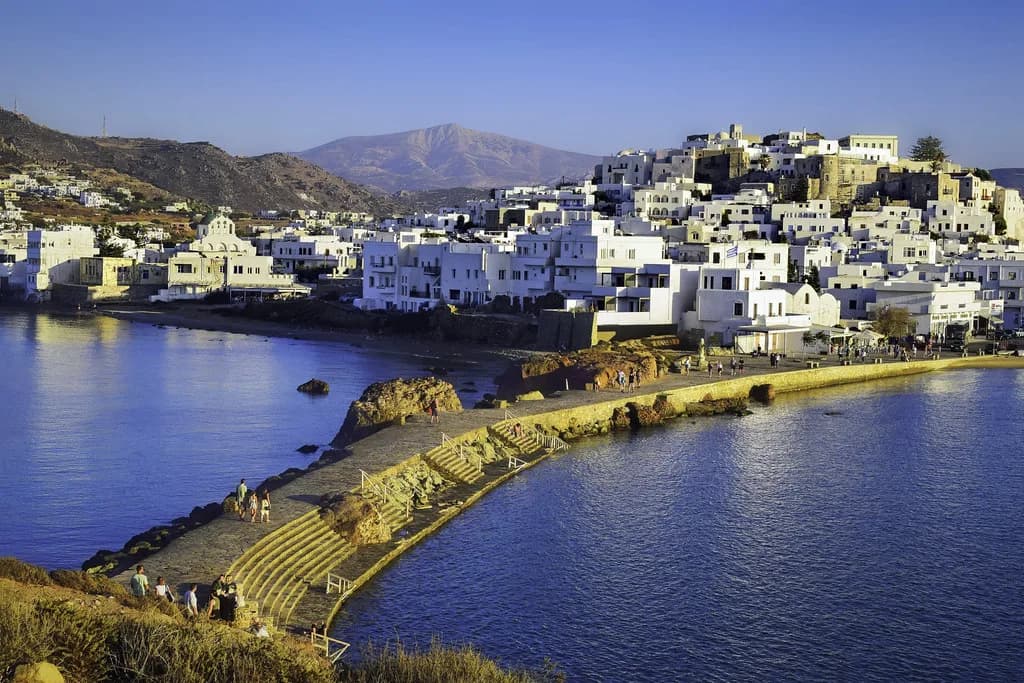
For most trips, late May and June are the best time to visit the Greek islands: daytime highs sit in the mid-twenties Celsius, rain becomes rare, ferries and seasonal businesses are running, and the August crowds have not yet arrived. April is cheaper and quieter but genuinely unsettled in the Ionian and the north, while July and August deliver heat, peak prices and the meltemi wind that reshapes beach days in the Cyclades. Our guide to Greece in april covers this in depth.
The Greek islands are not one climate. Crete and Rhodes in the south-east dry out and warm up earliest, Corfu and Kefalonia in the Ionian run wetter through spring, and the Cyclades sit in between with strong summer winds. Picking a month without picking an island group first is how people end up with a week of cloud on a beach they cannot use.
What each season actually gives you
Spring, roughly April to early June, is the connoisseur's window: mild air, green hills, wildflowers, open archaeological sites and ferries that are easy to book. The trade-off is cooler evenings, a sea that most people find bracing until June, and reduced hours at boat operators and coastal tavernas before the season proper starts.
Summer from late June to August is hot, dry and busy, with the Cyclades exposed to the meltemi, a persistent northerly wind that can cancel small-boat trips and whip up rough water on exposed coasts. Autumn, especially September and October, brings the warmest sea of the year and calmer harbours, but daylight shortens and some island businesses wind down after mid-October.
How the island groups differ
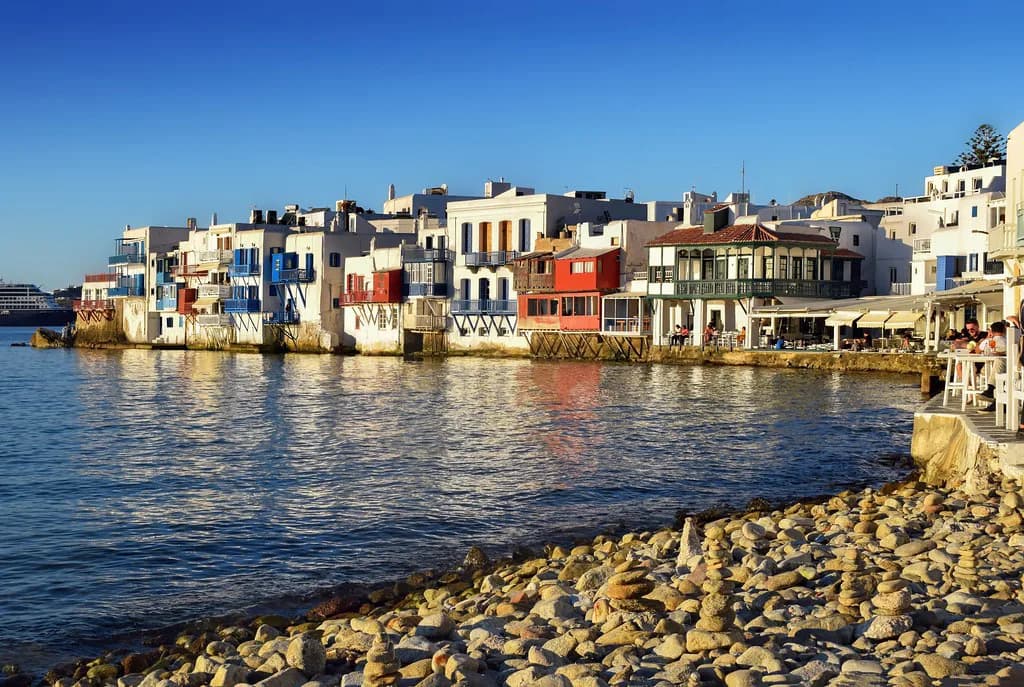
Crete and the Dodecanese, with Rhodes and Kos, are the most reliable spring bet: warmest air, least rain, and a long season that starts earlier and ends later than the rest. The Cyclades, including Santorini, are drier than the Ionian in spring but windier in summer, which matters if your plan centres on boat trips and sheltered swimming.
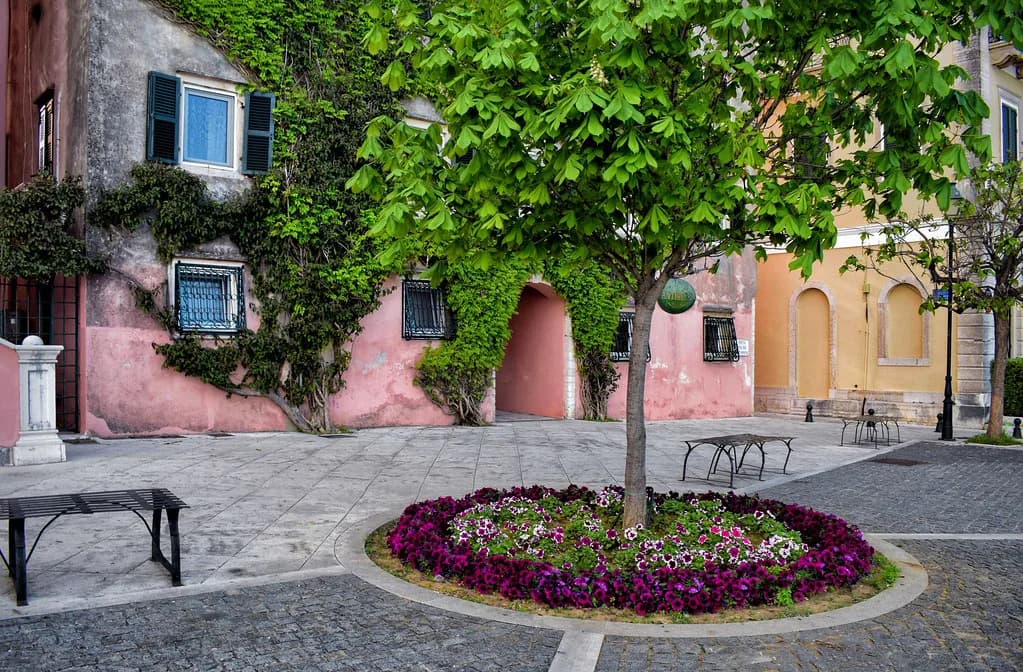
The Ionian Islands, led by Corfu and Kefalonia, are lush for a reason: spring rain is heavier and more frequent here, so April can mean genuinely mixed days. The northern Aegean around Thessaloniki is cooler and wetter still in spring, with a later start to settled weather.
April: mild days, unsettled spells and a season still opening
Expect average daily highs around 19–20 °C (66–68 °F) and night-time lows of 9–14 °C (48–57 °F) across the main islands, with the warmest nights in Rhodes and Santorini. Rain is the deciding factor: Thessaloniki averages 11.2 rain days in April, Corfu 12.9, Athens 9.7, Heraklion 7.7 and Rhodes 7.6, so the south-east is meaningfully drier.
April suits walkers, sightseers and anyone who wants archaeological sites without heat or queues, and our Greece in April guide sets out where the month works best. It does not suit a beach holiday: evenings are cool, many boat trips and beach clubs are not yet running, and short rain spells can wipe out a day. If you go, head for Crete or Rhodes rather than Corfu or the north.
May: the sweet spot for walking, sightseeing and ferry-hopping
May transforms the islands. Average highs climb to about 24 °C (75 °F) on Crete, Rhodes and Corfu, with lows of 13–18 °C (55–64 °F), and rain days drop sharply: 4.4 at Heraklion, 4.6 at Rhodes, 8.0 on Corfu and 6.8 at Athens. That is walking weather, not sunbathing-at-midday weather, and the light on ruins and hill villages is superb.
Seasonal businesses reopen through the month, ferry networks fill out and the meltemi has not yet settled in, so island-hopping works well without the August scramble for seats. The sea remains cool for most people until June, which is the main reason to pick May for land-based days and June for swimming; Greece in May covers the month in more detail.
Crowds build around the UK bank holidays and half term and around Orthodox Easter when it falls in May, so book ferries and popular island beds early. Prices sit well below August levels but are no longer winter-low.
June: reliable sun, warm sea and rising crowds
June is when the Greek islands start to feel like the postcard. Average highs reach about 28 °C (82 °F) on Crete, Rhodes, Corfu and Kefalonia, and 30 °C (86 °F) at Athens, with lows of 16–21 °C (61–70 °F). Rain essentially stops: 1.3 rain days at Heraklion, 1.2 at Rhodes and 3.7 at Athens.
The sea finally warms enough for most swimmers, sailing conditions stabilise and everything is open. The cost is rising prices and busier harbours, especially from mid-month, and heat that can make midday sightseeing on Crete and Rhodes genuinely uncomfortable. Early June is the better half, and our Greece in June guide breaks the month down week by week.
Plan sightseeing for mornings, keep afternoons for water and shade, and expect the Cyclades to show their wind. Families with school-age children often find late June the best compromise between warm sea and manageable crowds.
July and August: heat, peak prices and the meltemi wind
High summer is hot and dry, with Athens regularly averaging around 30 °C (86 °F) and the southern islands close behind. The meltemi blows hardest in July and August across the Cyclades, which can mean cancelled small-boat trips, choppy crossings and beaches that are more exhilarating than relaxing on exposed shores.
This is peak season in every sense: highest prices, fullest ferries and the busiest sites. It suits heat-seekers, sailors who want strong wind and families tied to school holidays, but anyone who wilts above 30 °C should look at June or September instead. Book ferries and beds well ahead.
September and October: warm sea, quieter harbours, better value
September keeps summer temperatures while crowds thin and the sea stays warm from months of sun, making it arguably the best all-round month for swimming and sightseeing together. October remains pleasant on Crete and Rhodes but becomes genuinely uncertain in the Ionian and north, where rain returns first.
Ferries and seasonal businesses begin reducing services from late October, so late autumn rewards a single-island trip over ambitious hopping. Prices ease noticeably once the school holidays end.
Crete and the far south versus the Cyclades and the Ionian
Crete is the safest bet in every shoulder month: Heraklion averages 20.3 °C (69 °F) in April, 23.9 °C (75 °F) in May and 27.5 °C (82 °F) in June, with far fewer rain days than the west. Rhodes and Kos are close behind, with Rhodes averaging 20 °C (68 °F), 23.8 °C (73 °F) and 27.8 °C (82 °F) across the same three months.
Santorini and Kos publish temperature normals but no usable rain or sunshine figures, so judge them on air temperature and wind rather than rainfall. Corfu and Kefalonia in the Ionian are the wettest of the major groups in spring, with Corfu averaging 66.7 mm across April and 12.9 rain days; the WMO World Weather Information Service page for Corfu gives these figures without stating its averaging period, so treat them as indicative rather than directly comparable with the 1991–2020 normals.
The northern Aegean and the Thessaloniki coast run cooler and wetter in spring, with 19.3 °C (67 °F) in April and 11.2 rain days, and only become reliably beach-friendly in June. Choose them for city-and-coast combinations, not for an early beach week.
Athens and the mainland coast as a spring or autumn base
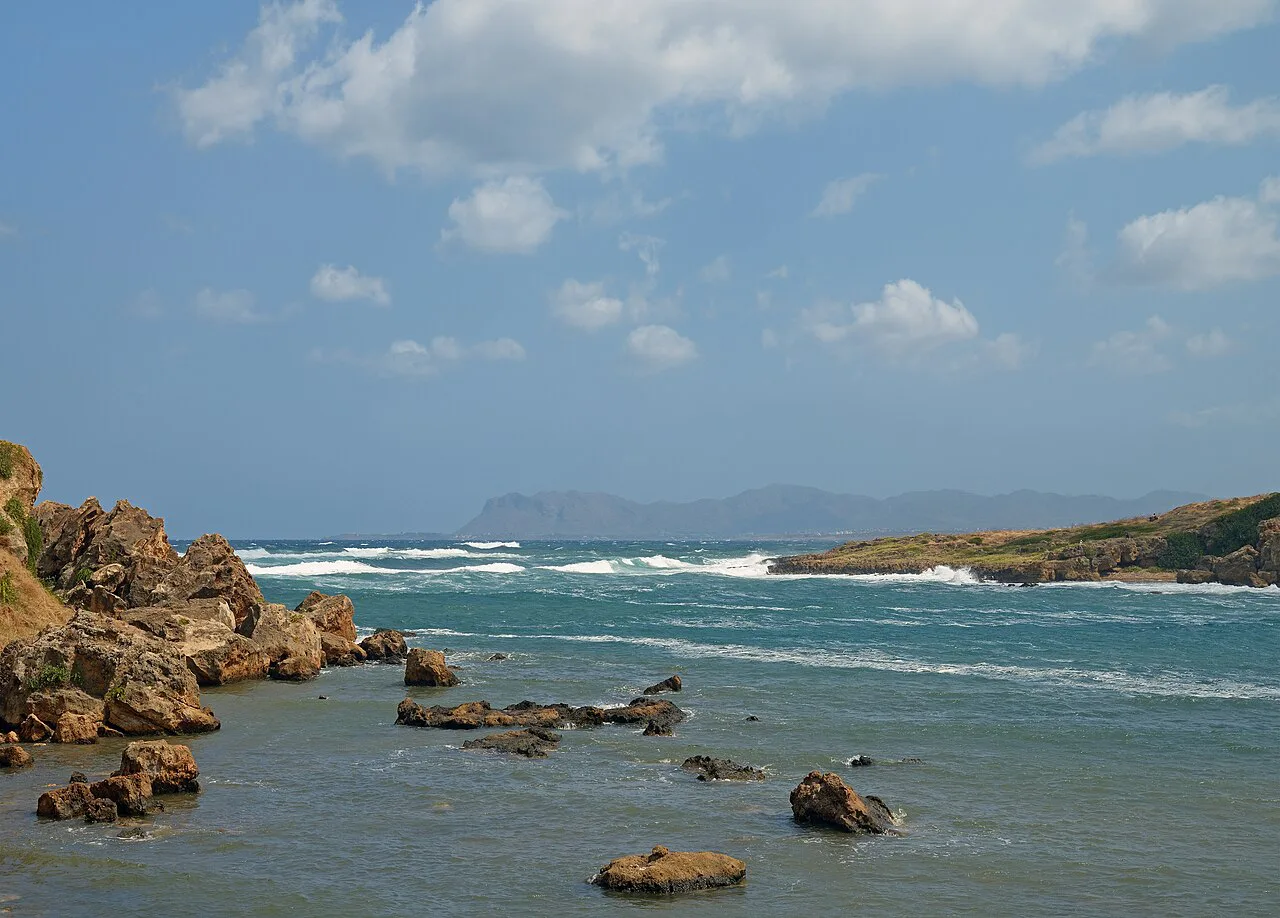
Athens works well as a base in April and May, when the Acropolis and the city's museums are comfortable to walk and the heat has not yet arrived. Average highs run from 20.2 °C (68 °F) in April to 25.2 °C (77 °F) in May and 30.3 °C (86 °F) in June, with rain days falling from 9.7 to 6.8 to 3.7.
The Peloponnese and the mainland coast let you combine ruins, mountain walking and quiet coastal towns before the islands fully open, which suits anyone travelling in early April. The season is also the time for wildflowers and green hills inland, so if you want a mix of ruins and high ground, things to do in Greece in May shows how the mainland fits around the islands.
Crowds and prices in words
April is the cheapest and quietest month, with the exception of Orthodox Easter, when Greek families travel and island ferries and rooms fill fast. May brings UK bank holidays and half term, pushing prices up in the Ionian and Cyclades, and June climbs steadily towards peak.
July and August are the most expensive and the most crowded, with August the peak of both. September is the value sweet spot for warm sea and thinner crowds, and October is cheapest of the autumn months but increasingly weather-dependent.
What is open: ferries, boat trips and seasonal businesses
In April, ferry networks run reduced schedules and some inter-island links only start later in the spring, so a multi-island plan built for July will not work in early April. Many boat operators, beach clubs and seasonal tavernas are still preparing to open, particularly on the smaller Cyclades.
By May the picture improves markedly, with the sailing season running and most island businesses open, and by June everything is running. Archaeological sites generally stay open year-round but with shorter hours outside summer, so check the official Greek culture ministry listings for the specific site before you build a day around it.
Early versus late season within each month
Early April behaves like late March: cooler, wetter and quieter, with the Ionian particularly unsettled. Late April warms noticeably, especially on Crete and Rhodes, and the first beach days become plausible for hardy swimmers.
Early May is fresh and green with the season still opening; late May is warm, busy around half term and close to summer. Early June is the best of the summer months for sightseeing, while late June brings real heat and the first serious crowds.
Who each month suits
Walkers and sightseers should target late April and May, when temperatures are comfortable and sites are quiet. Families with young children are best off in late June or September, when the sea is warm and the days are long but the August crush has not arrived.
Sailors get the most reliable wind in July and August but the most pleasant conditions in late May and June; heat-avoiders should skip July and August entirely and choose May or late September. Anyone wanting a beach-and-swimming holiday should not book April, whatever the brochure says.
The verdict
Book late May or June for a first trip that combines sightseeing, ferries and some swimming; choose September if warm sea and fewer people matter more than long evenings. Pick April only for walking, ruins and cities, and only in Crete, Rhodes or Athens.
Avoid July and August unless you want heat, wind and peak prices, or you are tied to school holidays and can book early. If you are comparing Greece with the rest of southern Europe for an early spring escape, our guide to where is warm in Europe in April puts the Greek south in context.
Plan Your Trip
Decide the trip type before the month: ruins and walking point to late April or May, swimming and lazing to June or September, and sailing to late May or July. Then match the island group, favouring Crete and the Dodecanese in spring and the Cyclades in early summer.
For entry rules, use the official UK government travel advice page for Greece once and leave it at that. Everything else is a judgement about weather, crowds and what is running when you arrive.
More Greece spring guides
Frequently Asked Questions
What is the best month to visit the Greek islands?
Late May and June suit most people best, with warm days, little rain, working ferries and manageable crowds. September is the strongest alternative if you want the warmest sea and quieter harbours, while April suits walkers and sightseers who accept unsettled weather.
How warm are the Greek islands in April?
Typical daytime highs sit around 19–20 °C with night-time lows of 9–14 °C, warmest in Rhodes and Santorini and coolest in the north. Rain is the bigger variable, with roughly 7 to 8 rain days on Crete and Rhodes and around 13 on Corfu.
Is May warm enough for the beach?
Air temperatures in May reach roughly 24 °C on Crete, Rhodes and Corfu, which is pleasant for walking and sightseeing but not hot. The sea is still cool for most swimmers, so May suits land-based days and June is better for swimming.
When are the Greek islands least crowded?
April is the quietest month outside Orthodox Easter, when Greek families travel and ferries and rooms fill. Early May and late September and October are also relatively calm, while July and August are the busiest.
Which island group is best in spring?
Crete and the Dodecanese, including Rhodes and Kos, are the most reliable in spring, with the warmest air and least rain. The Ionian islands of Corfu and Kefalonia are wetter and cooler, and the northern Aegean starts later.
Should I choose the Cyclades or the Ionian?
The Cyclades are drier in spring but windier in summer, when the meltemi can disrupt boat trips. The Ionian is greener and wetter in spring but often calmer and warmer for swimming in early autumn.
Sources
Spring sun notes
Optional updates when we add destinations and months.
You might also like
Continue reading
More guides you'll find useful