Corfu in April: Weather and What to Expect
Corfu in April averages 19°C by day and 9.2°C at night, with around 13 rain days. Here is who the month suits and how it compares with May.
On this page
April in Corfu is warm enough for walking, sightseeing and long lunches outdoors, but not warm enough for a beach holiday. Average daytime highs reach 19.0°C (66°F) while nights drop to 9.2°C (49°F), which means a jacket after dark and a heated terrace rather than a seafront table.
Rain is part of the deal: the island averages 12.9 rain days and 66.7 mm across the month, typically arriving as passing spring showers that clear the air rather than settling in for days. The payoff is an island at its greenest, with olive groves, wildflowers and hill villages far more inviting than they are in high summer.
Weather in April
The long-term normals for Kerkyra, the island's weather station, give an average daily maximum of 19.0°C (66°F) and an average daily minimum of 9.2°C (49°F) for April, with 12.9 rain days and 66.7 mm of precipitation. Treat these as typical conditions rather than a forecast: individual Aprils swing either side, and a warm spell can push daytime temperatures into the low twenties while a wet week can feel more like March.
The rain figure is the one people misread. Thirteen wet days does not mean a fortnight of washouts: spring rain in the Ionian tends to come in short, heavy bursts with bright intervals between, and the ground and light are spectacular afterwards. Build flexibility into your days rather than cancelling plans over the forecast.
Is it warm enough?
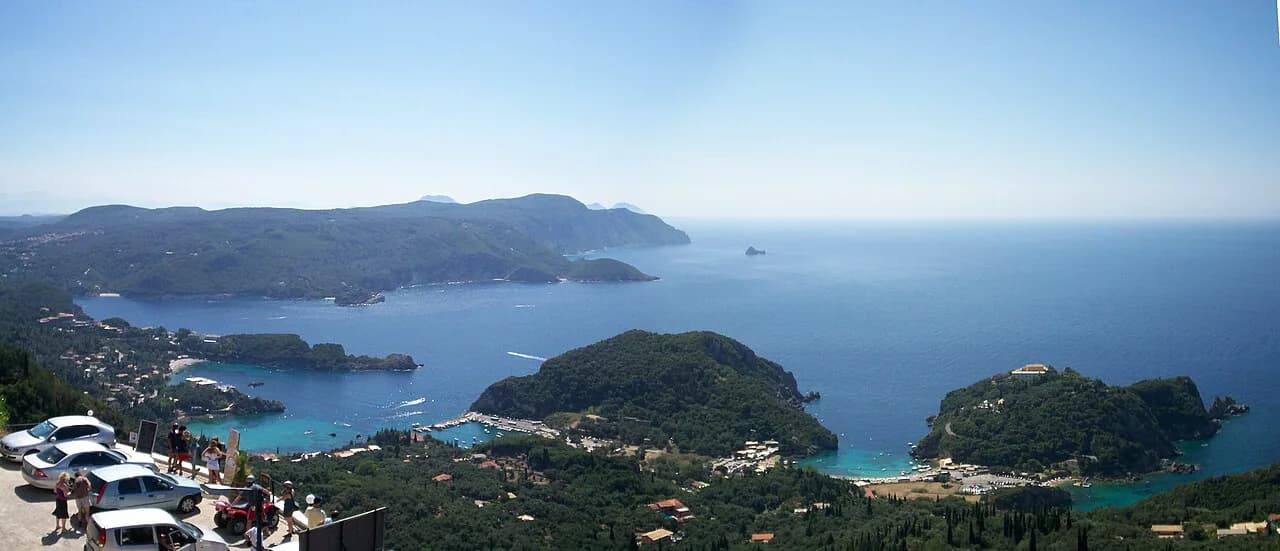
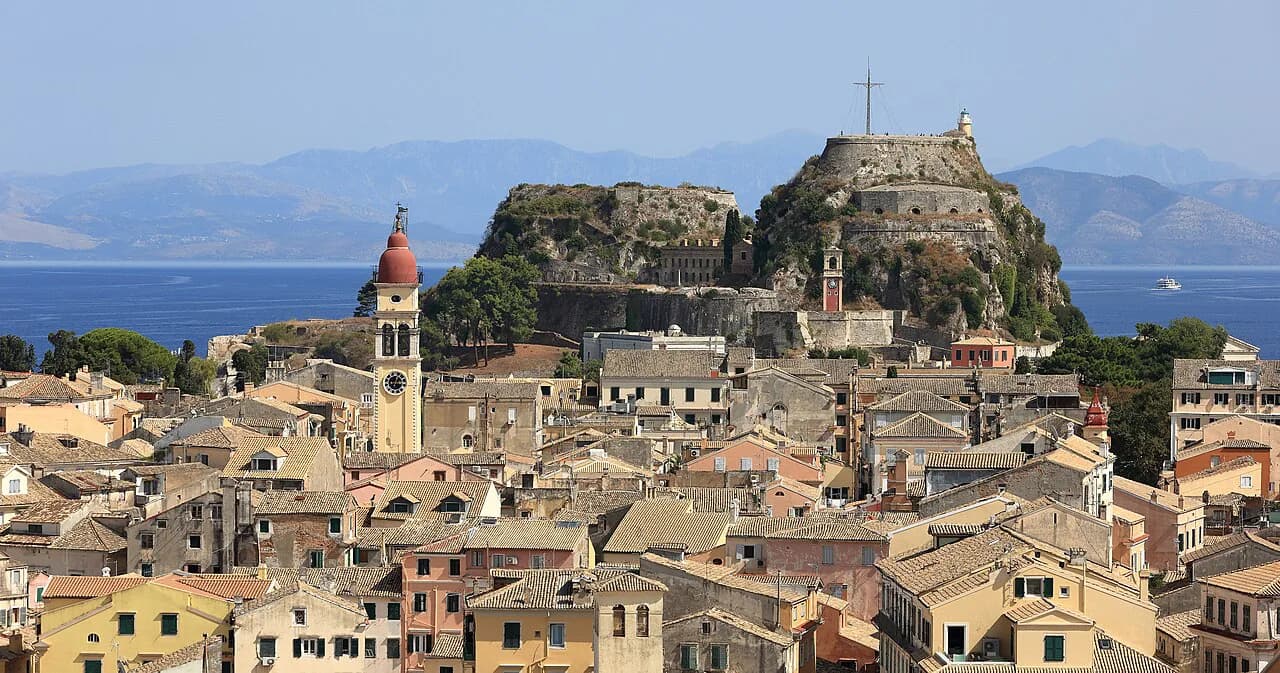
For sightseeing and walking, yes. A 19°C afternoon is close to ideal for the lanes of Corfu Town, the Old Fortress ramparts, the Achilleion Palace and its gardens above Gastouri, or the climb to the Virgin Mary monastery at Paleokastritsa with its view over the bay. You will walk comfortably for hours without the heat that makes the same circuit a slog in July.
For lazing on a beach or swimming, no. The air is mild but the sea is still cold in April, and the honest expectation is a walk along the shore with shoes on, not a day in the water. If the beach is the point of the trip, April will disappoint, and you should look at later months or a warmer corner of Southern Europe, so see where it is warm in Europe in April before you commit.
Families with small children sit in the middle. Older children who like castles, boats and hill walks will be fine; toddlers who need shallow water play and long afternoons outdoors will get more from May or June, when evenings are warm enough to stay out.
Early vs late April
The month warms steadily. Early April is closer to March in feel, with cooler evenings, more unsettled days and the sense of an island still waking up; by late April you can reasonably expect the warmer end of the normal range, with lunch outside comfortable and evenings needing only a light layer.
The bigger variable is Orthodox Easter, which can fall in April and is the busiest and most expensive window of the month. When it does, Corfu Town and the Liston arcade fill with visitors and prices firm up; outside that period, April is one of the quietest months of the spring. If you want the island at its most peaceful, aim for a week that avoids the Easter period entirely.
April against March, May and June
March is cooler and wetter, so April is the first month when long days outdoors genuinely work. May is a clear step up: the average daily maximum climbs to 23.8°C (75°F), nights to 12.9°C (57°F), and rain days fall to 8.0 with 37.0 mm. That is the shift from walking weather to sitting-out weather, and it changes what the island offers.
June goes further, with an average high of 28.0°C (82°F), a night-time low of 16.4°C (63°F) and only 4.9 rain days. By then the landscape is drying and the heat is building, which suits beach-led trips but makes midday walking harder. April remains the best month for seeing the island on foot.
What is open
April sits in the pre-season on Corfu, and that has practical consequences in the resorts. Beach clubs, boat trips and the water park tend to run reduced hours or open only part of the month, and the north-coast strips around Sidari are quiet, with some places still shut before the season starts.
The reliable core of the trip is the island itself: Corfu Town, the villages, the monasteries, the viewpoints and the walks are not seasonal. Base your days around those and treat boats, beach bars and water parks as a bonus if they happen to be running, checking the relevant boat company, beach bar or water park directly.
Things to do
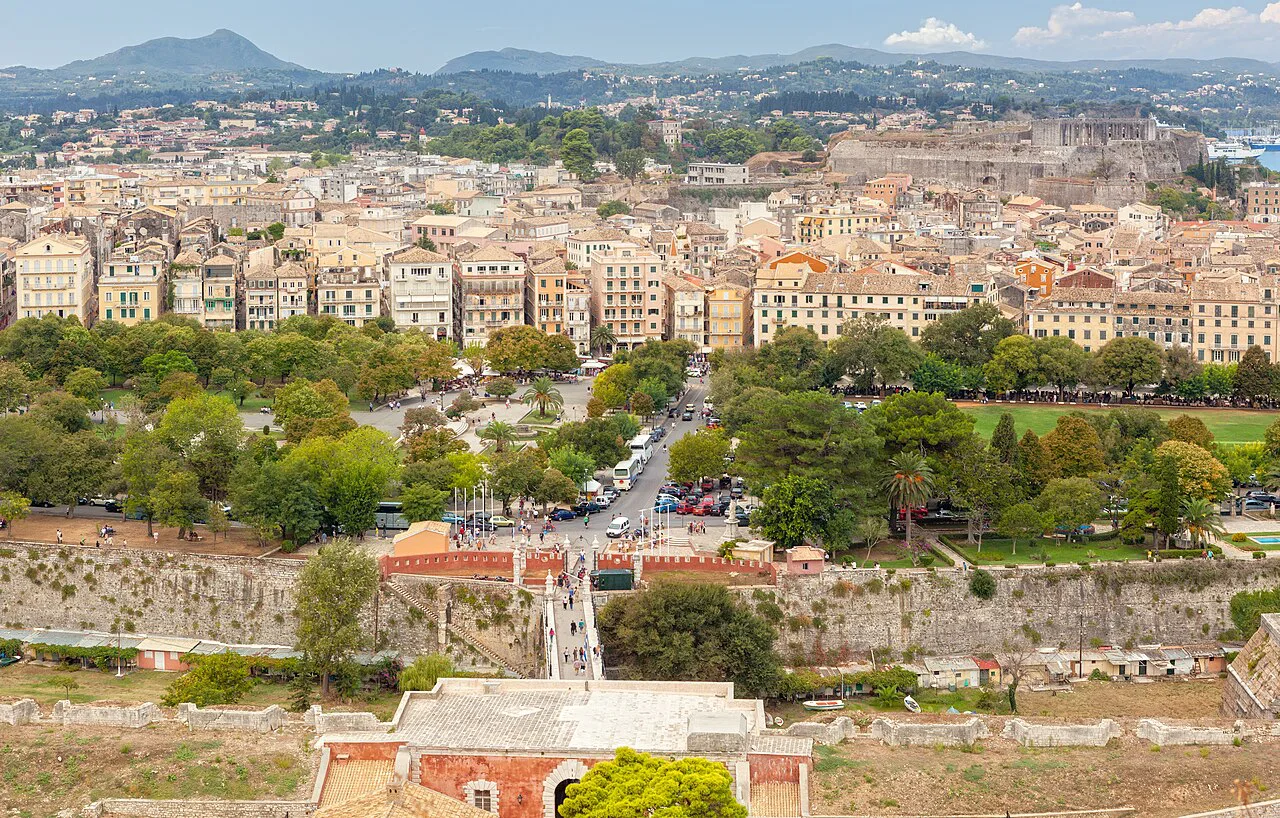
Start in Corfu Town. The Liston arcades, the maze of Venetian lanes and the Old Fortress give you a full day of walking with cafes to break it up, and the town is far more pleasant in April's mild air than in the summer crush. The Achilleion Palace at Gastouri, with its gardens and sea views, makes an easy half-day and works well on a showery day.
West and north of the town, Paleokastritsa is the standout: the walk up to the Virgin Mary monastery rewards you with a wide view over the bays, and the surrounding coast road is one of the island's best drives in spring light. Above Pelekas, the Kaiser William II Observatory gives a panoramic sunset perch that is worth the drive on a clear evening.
Inland is where April earns its reputation. The olive-covered hills around Pelekas, Lakones and Ano Korakiana are at their greenest, with wildflowers along the paths and village squares quiet enough to sit in for an hour. This is walking country, not beach country, and it is the single best reason to choose April over June.
Food in season
Spring is the best time of year to eat on Corfu. Tavernas in Corfu Town and the villages make the most of spring greens, artichokes, wild herbs and fresh lamb, and the menus feel lighter and more local than the grilled staples of high summer. Around Easter the table gets more serious, and lamb dishes come into their own.
Pair that with the island's own wines and a long lunch in a village square, and April starts to look less like a compromise and more like a deliberate choice. Evenings are cool, so book a table with an indoor room or a heated terrace rather than counting on seafront dining being comfortable.
Crowds and prices
Outside the Easter period, April is one of the quietest months on Corfu. The north-coast resorts are barely awake, the old town is walkable without queues, and accommodation is cheap by the island's own summer standards. The pressure points are Orthodox Easter, which can fall in April, and the very end of the month as May bank holidays and half term approach.
If your dates are fixed by school holidays, book early and expect to pay more for the Easter window; if they are flexible, a mid-April week outside Easter gives you the best combination of mild weather, low prices and open roads. May then brings warmer evenings, more reliable boat trips and fuller beaches.
The honest drawbacks
Evenings are cool enough that outdoor dinners need a jacket, and an onshore wind on the exposed west-coast beaches can make a sunny afternoon feel chilly. Rain arrives in spells rather than as a constant, but a wet week is possible, and the sea stays cold for most swimmers throughout the month.
Some places are simply not open yet, and a resort that looks lively in July can feel empty in April. None of this is a reason to avoid the month, but it is a reason to plan around towns, villages and walks rather than around beach days and boat schedules.
Corfu in April or May?
Choose April for walking, culture, green landscape and quiet, and accept cool evenings and the odd wet day as part of the deal. Choose May for a trip that mixes sightseeing with real time outdoors in the evening and dependable boat trips, since the average high rises to 23.8°C (75°F) and rain days drop to eight.
If you are still comparing islands, other Ionian destinations behave similarly in April, with Kefalonia offering the same mild, green, half-open feel. Further south, Crete is noticeably warmer, which may suit you better if the beach matters more than the walking.
How many dry hours will you actually get between rain days?
Corfu's April figures are often read as a single verdict, but the rain is concentrated rather than constant. The island averages 12.9 rain days in April, with 66.7 mm of precipitation across the month, according to climate normals published by the WMO World Weather Information Service. That leaves a good share of the month dry, even if a handful of days turn wet. Framing your days around that split is more useful than treating April as an all-or-nothing bet.
The step into May is sharp on both counts: rain days fall to 8.0 and precipitation to 37.0 mm, while the average daily maximum rises from 19.0 °C in April to 23.8 °C. June continues the trend with 4.9 rain days, 14.1 mm and an average daily maximum of 28.0 °C. If your priority is fewer interruptions rather than warmth alone, late April into early May sits on the better side of that curve.
Within April, the daily range matters as much as the average. The average daily minimum is 9.2 °C against a maximum of 19.0 °C, so mornings and evenings sit well below the afternoon figure. A wider shoulder-season range, 15°C to 22°C, is what the TUI weather guide describes for March to April, which points the same way: plan outdoor time for the warmer middle of the day.
For planning, that suggests keeping at least one indoor-leaning option in reserve for each block of days, and not stacking every outdoor excursion into a single stretch. A wet day costs you less if the itinerary has slack in it. The figures describe averages over a long period, not a forecast for your week, so treat 12.9 rain days as a planning allowance rather than a promise about any specific date.
The verdict
April on Corfu is a shoulder-month island break rather than a beach holiday. The island is at its greenest, the old town and the villages are quiet outside Easter, and 19°C days are close to perfect for walking; 9.2°C nights and cold sea are the trade-off you accept.
Book April for the landscape and the towns, and hold the beach-led trip for May or June. Check the Foreign, Commonwealth and Development Office travel advice for Greece once before you book, then build your days around Corfu Town, Paleokastritsa and the inland villages.
More Corfu spring guides
Frequently Asked Questions
How warm is Corfu in April?
Average daytime highs reach 19.0°C (66°F) and nights fall to 9.2°C (49°F), based on long-term climate normals for Kerkyra. Around thirteen days see rain, usually as passing spring showers, so mild afternoons alternate with cooler, wetter ones.
Is Corfu warm enough to swim in April?
For most people, no. The air is mild but the sea is still cold in April, so plan on coastal walks rather than swimming, and save the water time for May or June when the air and sea have both warmed up.
What is Corfu like at the end of April?
Late April is the warmer end of the month, with comfortable outdoor lunches and evenings that need only a light layer. It is also when May bank holidays and half term start to push up demand, so book early if your dates are fixed.
Is Corfu busy in April?
Outside Orthodox Easter, which can fall in April, the island is quiet. The north-coast resorts are barely awake, the old town is easy to walk, and prices are low by summer standards; Easter week is the exception and the most expensive window.
Should I visit Corfu in April or May?
Choose April for walking, culture and quiet, and May for warmer evenings and dependable boat trips. May averages a 23.8°C (75°F) high and eight rain days, which shifts the trip from sightseeing-led to outdoor-living-led.
What is the best time of year to visit Corfu?
It depends on the trip: April for green landscape and uncrowded towns, May and June for warmer weather and more of the island open, and high summer for beach-led holidays at the cost of heat and crowds.
What is the rainy season in Corfu?
Corfu's wetter months are in winter, not spring. April still averages 12.9 rain days and 66.7 mm, but these usually arrive as short spring showers rather than settled rain, so plan flexible days rather than cancelling.
Sources
Spring sun notes
Optional updates when we add destinations and months.
You might also like


Continue reading
More guides you'll find useful