Santorini in April: How Warm It Is and What's Actually Open
Santorini in April averages 18.9°C by day and 13.3°C at night. Expect wind, a cold sea and a half-open island — good for walking, not for swimming.
On this page
April is warm enough for walking and sightseeing on Santorini, but not warm enough for the sea or for evenings outdoors without a jacket. The island typically sees an average daytime high of 18.9 °C (66 °F) and a night-time low of 13.3 °C (56 °F) in April, according to the Greek national weather service climate normals for Thira airport. That puts it firmly in shoulder season: pleasant in the sun, chilly once it drops, and far quieter than June.
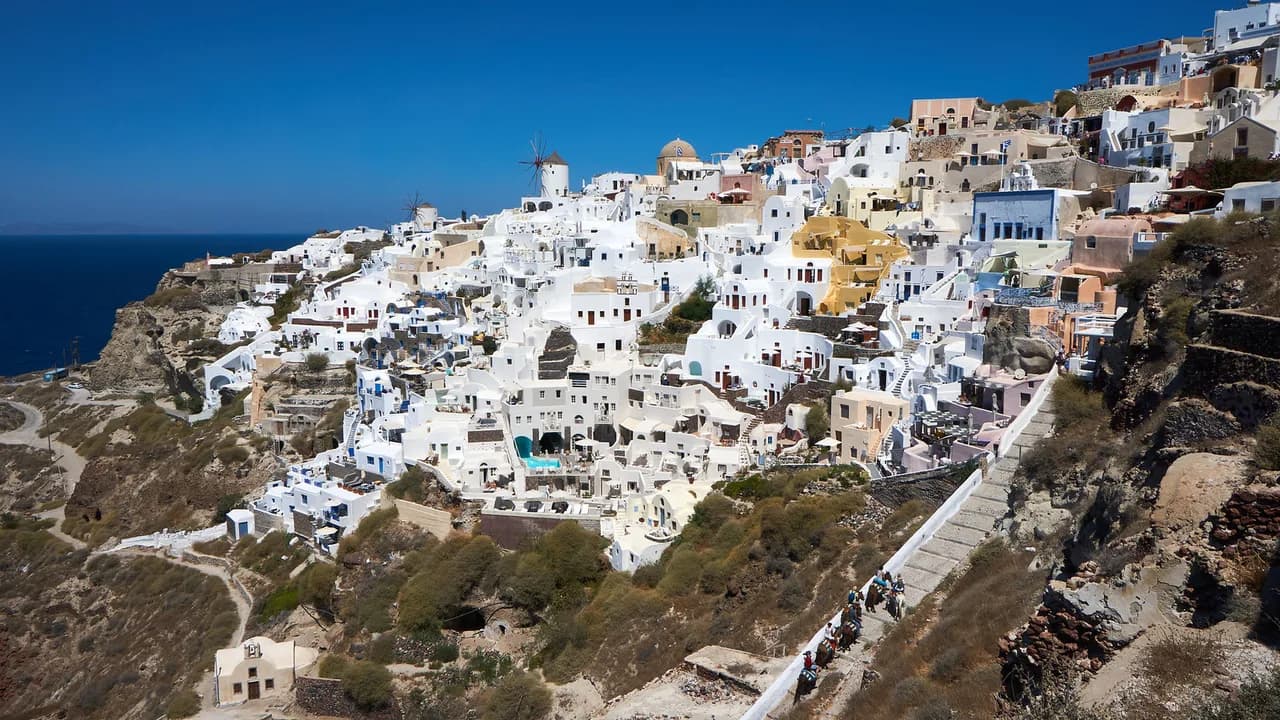
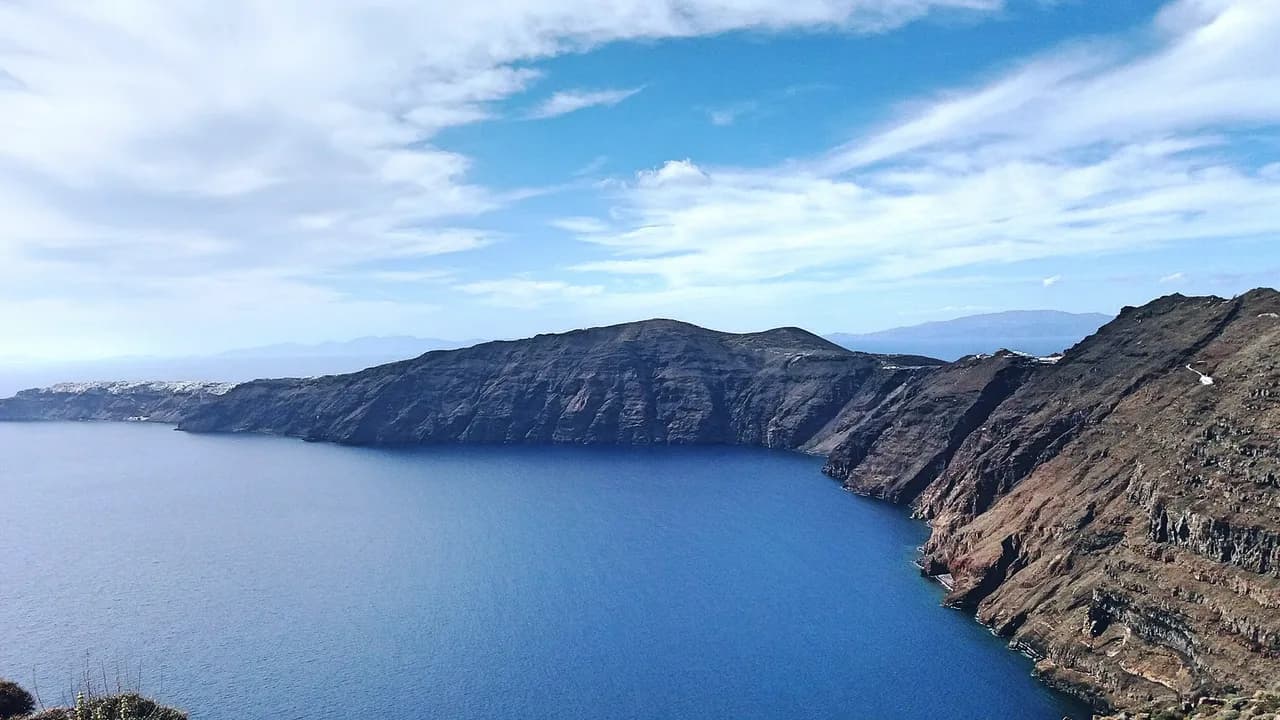
Treat April as a month for the caldera rim rather than the coastline. The famous walk between Fira and Oia, the villages of Pyrgos and Megalochori, the wineries and the archaeological sites all suit these temperatures far better than July does. The trade-off is real, though: wind is a constant April companion on the cliff tops, and plenty of seafront places are still easing into the season. If you came for swimming and sunbathing, wait for May, or look at where it is warm in Europe in April and pick somewhere further south.
Is Santorini warm enough in April?
By the numbers, April is mild rather than hot. The average daily maximum of 18.9 °C (66 °F) is T-shirt weather when the sun is out and you are moving, but the average minimum of 13.3 °C (56 °F) means evenings, early mornings and shaded alleys on the caldera rim feel cool. Expect to want a layer from late afternoon onwards, especially in Oia and Imerovigli, which sit high on the cliff and catch the wind.
Sunshine is generous enough to make outdoor sightseeing the obvious plan for most of the day, and this is the month when the island starts to feel awake after winter. What you will not get is reliable beach weather: the Aegean is still cold in April, and most people who go in are making a point rather than enjoying themselves. Plan your days around walking and wine, and treat any swim as a bonus rather than the reason for the trip.
If your idea of a spring holiday is lying by water in swimwear, April will disappoint. That is a May or June trip, when the averages climb to 23.1 °C (74 °F) by day and 16.9 °C (63 °F) at night in May, and 27.7 °C (82 °F) and 20.9 °C (75 °F) by June, which is why our guide to Santorini in May is the better fit for a beach-led holiday.
April weather: wind, rain and what the averages leave out
Temperatures are the one part of April's climate you can pin down precisely; the rest is more variable. The national service publishes solid temperature normals for the island but no usable monthly rain-day counts or sunshine totals for the month, so treat any blog claiming a precise number of wet days with suspicion. What matters in practice is that April can deliver a run of clear, bright days and then a spell of unsettled weather with rain and low cloud that shuts down the view for a morning.
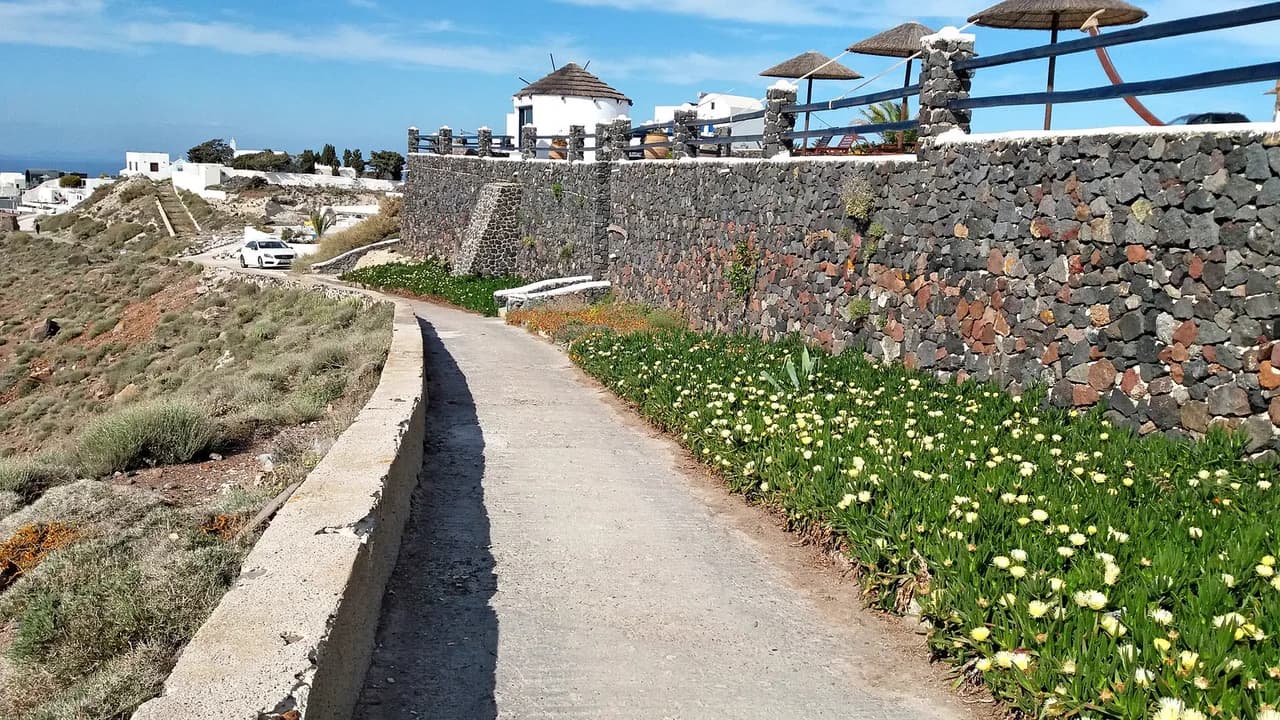
Wind is the defining April nuisance on Santorini, more so than rain. The island is exposed, the caldera villages are strung along an unprotected rim, and April gusts can be strong enough to make a mockery of a nice-looking terrace or a hairdo. On the windiest days the caldera path is hard work and boat trips are the first thing to be affected, so give yourself some flexibility in the itinerary rather than scheduling a cruise on your only full day.
Early vs late April on the caldera
The last week of April is a noticeably different proposition from the first. Through the month the daytime temperature climbs steadily, the days lengthen, and more tavernas, wineries and tour operators come back online as the season starts. Early April feels closer to winter: quiet, sometimes raw in the wind, and with a shorter list of places open for dinner. Late April feels like the island has switched on, with the first real warmth in the sun and far more choice.
There is also the Easter variable, which shifts year to year because Orthodox Easter often falls in April. When it does, the island gets a short, sharp burst of domestic visitors and higher demand around that weekend, then settles back down. If your dates are flexible, checking when Orthodox Easter falls in your year is worth two minutes of planning; the rest of the month behaves like normal shoulder season.
Who April suits — and who should wait
April suits walkers, sightseers, photographers and anyone who wants the caldera villages without the summer crush. It suits couples and independent travellers happy to build a day around a long hike, a winery and a late lunch, and it suits people who would rather have Oia's lanes half-empty than perfectly sunny. It is a genuinely good month for a first visit where seeing the island matters more than lying on it.
It does not suit families planning to base the holiday on beaches and shallow water, or anyone whose ideal day involves a sun lounger from morning to evening. It also does not suit travellers who hate wind or who need every restaurant and boat operator running full schedules. Those groups should look at June, when the heat and the sea have arrived and everything is open, or at a different island entirely.
What is open: tavernas, wineries, boat trips and sites
April sits between the winter shutdown and the full summer machine. Wineries are the safest bet, with Santo Wines near Pyrgos and Venetsanos among the established names that visitors build an afternoon around, and tastings of Assyrtiko and Vinsanto are exactly the kind of thing a cool, windy April day is good for. Caldera-view restaurants in Oia and Imerovigli increasingly open through the month, but booking ahead still matters because the number of covers is smaller than in summer.
Boat trips and caldera cruises depend on the weather more than the calendar in April, and operators ramp up as the month progresses. Rather than assume a sailing is running on your dates, contact the boat company directly in the week before you travel and have a land-based alternative ready. Catamaran cruises out of the main port, with a stop near the volcanic islets, are the classic version of the day, and a windy forecast can cancel them at short notice.
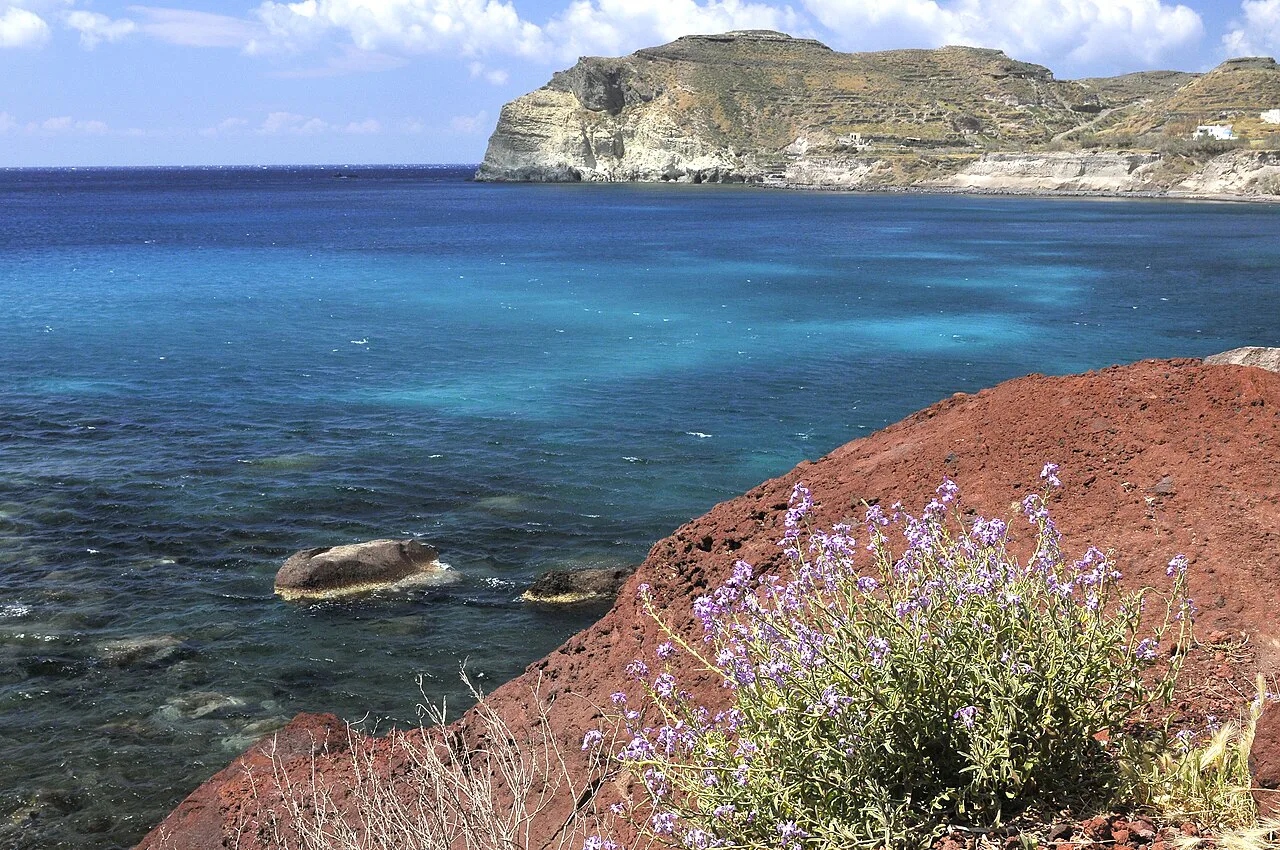
For the sites, Akrotiri is the standout April activity because it is largely covered and rewarding whatever the weather does. The prehistoric town buried by the Bronze Age eruption is one of the most important archaeological sites in the Aegean, and a guided visit makes far more sense of the ruins than wandering alone. The surrounding excavation near the Red Beach area pairs naturally with a half-day in the south of the island.
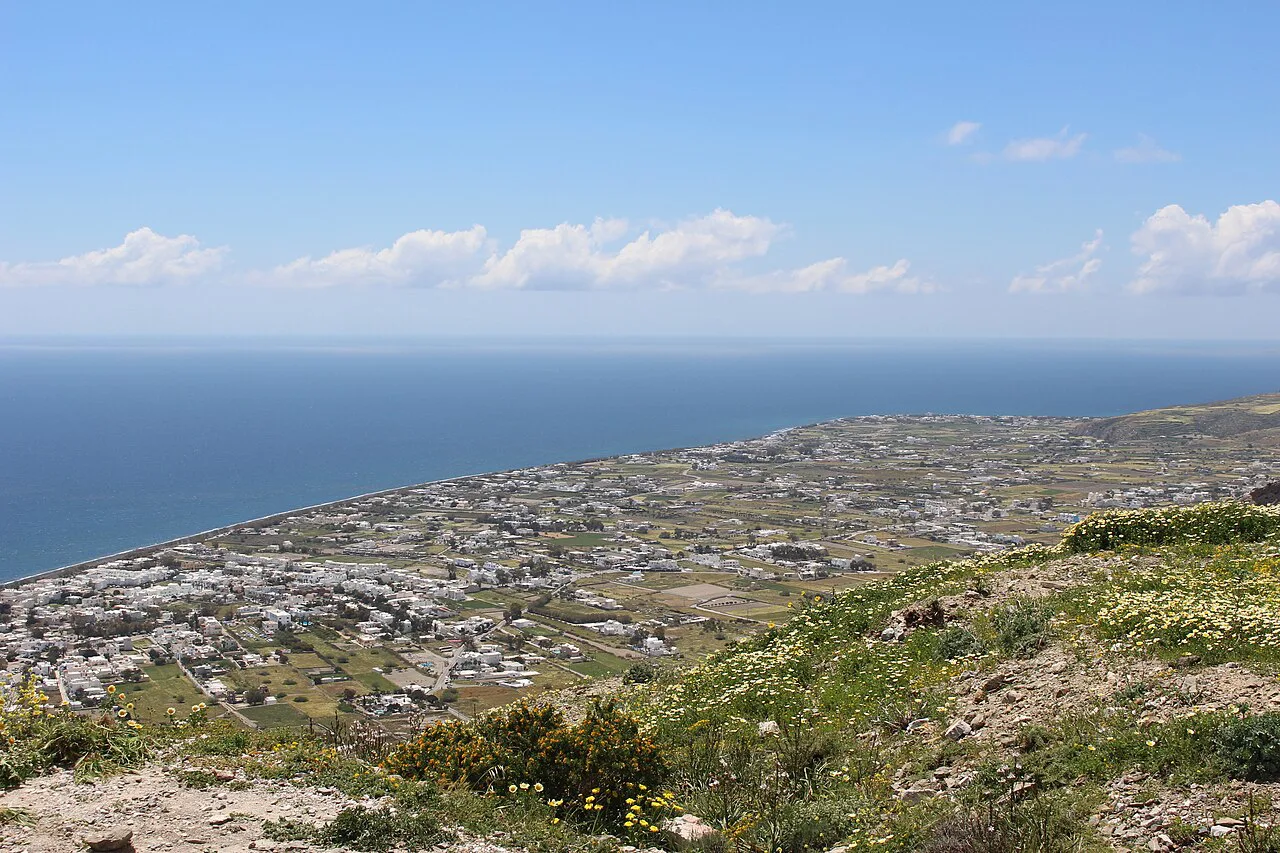
Walking the Fira to Oia caldera path
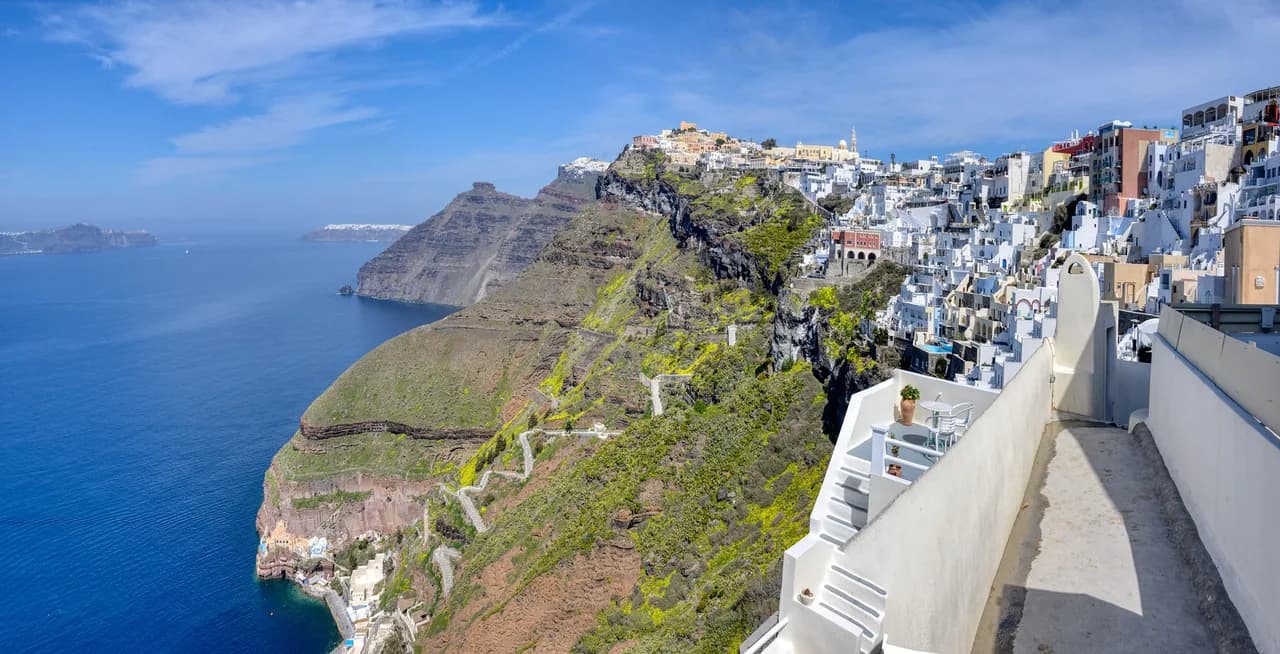
The cliff path from Fira through Firostefani and Imerovigli to Oia is the single best reason to come in April. It runs roughly 10 km along the caldera rim, taking most walkers several hours with stops, and the April temperatures make it comfortable in a way it never is in July. Start early from Fira, carry more water than you think you need, and finish in Oia for a late lunch rather than trying to rush it.
Two short detours are worth building in. The path out to Skaros Rock below Imerovigli adds steps and a scramble but gives you the best view back at the village and the caldera, and the blue-domed church at Firostefani is a two-minute stop right beside the route. Both are exposed and both are considerably less fun in a strong wind, so pick your day.
Villages that work in April: Pyrgos, Megalochori and Imerovigli
Away from the caldera rim, Pyrgos is the best April village on the island. It sits inland and uphill, wrapped around a Venetian castle, with narrow lanes, dozens of small churches and far fewer people than Oia, and its position gives you views across the whole island. It is also wine country, which makes it a sensible base for an afternoon of tasting without a long drive back.
Megalochori is smaller and quieter still, a compact knot of whitewashed streets and courtyard houses that takes minutes to walk through. It rewards a slow lunch more than a sightseeing checklist, so pair it with Pyrgos rather than treating it as a destination in itself. Imerovigli, meanwhile, is the calm alternative to Oia on the caldera itself: fewer shops, fewer crowds, the same view and easier evenings.
The archaeological sites: Akrotiri and Ancient Thira
Akrotiri is the one site to prioritise in April. The Minoan town, preserved under volcanic ash and often compared to Pompeii, sits under a large modern roof, so rain or wind does not ruin the visit, and the site is quiet enough in spring to actually see it. It is in the south-west of the island near the Red Beach, so it combines well with a half-day loop.
Ancient Thira is a different proposition: a clifftop site above Kamari reached by a steep, narrow, hairpin-heavy road, with the option of a bus from Kamari instead of driving. Access and opening arrangements change with the season, and there has been reporting that the site has been closed to the public, so check its current status with the Greek archaeological service before you build a morning around it. If it is shut, the walk up Profitis Ilias, the island's highest point, gives you the views instead.
Food in season: fava, cherry tomatoes and Assyrtiko
Santorini's volcanic soil produces a short, distinctive list of things worth ordering in April. Start with fava, the yellow split-pea purée served with olive oil and capers, which is the island's signature mezze and appears on almost every menu. Cherry tomatoes, small and intensely sweet, turn up dried, in fritters and in sauces, and the local cheese used in melitinia pastries is worth seeking out.
To drink, Assyrtiko is the grape to know: taut, saline and grown in basket-trained vines that survive the island's wind. Order it by the glass with seafood at Ammoudi Bay, the small harbour below Oia where the fish tavernas sit at the water's edge, and you have the best simple lunch on the island. Book ahead even in April, because the good harbourside tables are limited.
Crowds and prices in April
April is quiet by Santorini standards, but not empty. The caldera villages are comfortable to walk for most of the month, restaurant bookings are far easier to come by, and accommodation rates sit well below high-season levels, though exact prices change constantly and are best checked directly with the places you are considering. The exception is cruise traffic: even in spring, a heavy ship day can fill Fira and Oia for a few hours around midday.
The practical response is to work around the ships rather than fight them. Do Oia early in the morning or in the evening, spend the middle of a busy day walking the caldera path or in Pyrgos, and save the sunset viewpoint for a day when you are already in the village. If you want the island's mood without the shoulder-season compromise, our guide to the best time to visit Santorini sets out the alternatives.
April or May? April or October?
April versus May is a straightforward trade. April gives you lower prices, emptier villages and excellent walking, at the cost of cool evenings, a cold sea and a shorter list of open places. May gives you 23.1 °C (74 °F) days, 16.9 °C (63 °F) nights, a warmer sea and a fully awake island, with more people and higher rates. If you want warmth and the option of swimming, May wins; if you want solitude and long hikes, April does.
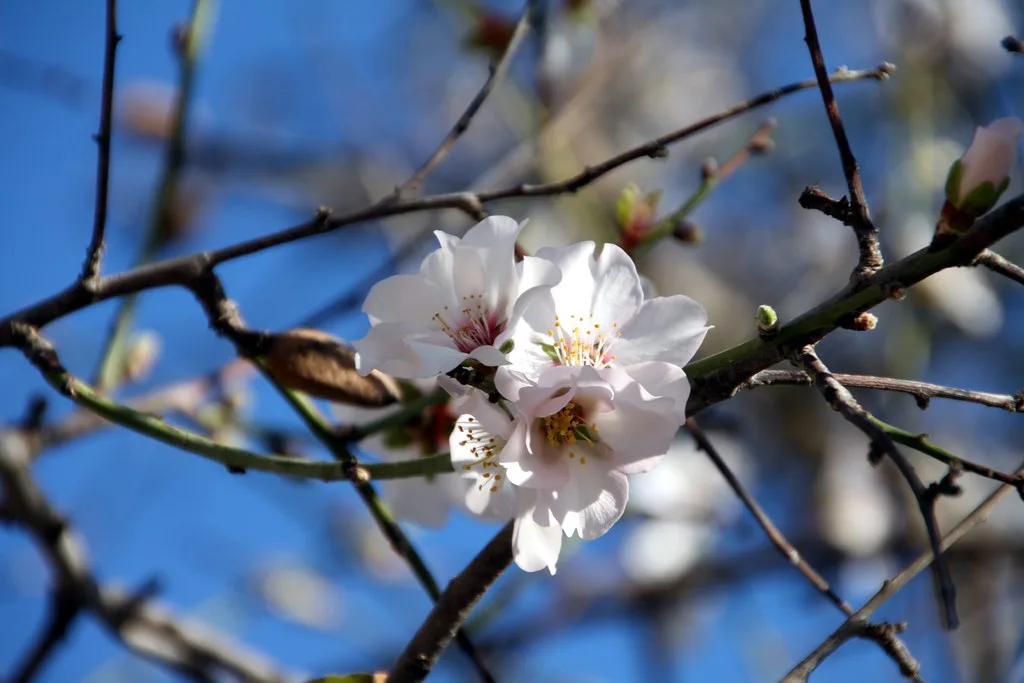
April versus October is a closer call than it looks. Autumn has the advantage of a sea still warmed by summer and a settled, golden feel, but the island's mood is winding down rather than opening up, and the light and the landscape are different. For spring green, wildflowers on the caldera and the sense of a season beginning, April is the one; for warm water and relaxed swimming, October is better.
The verdict
Go to Santorini in April if you want to walk the caldera, taste Assyrtiko, see Akrotiri without a crowd and eat well without booking weeks ahead. Accept the wind, pack for cool evenings and treat the sea as scenery. It is one of the most rewarding months on the island for the kind of trip that does not revolve around a sun lounger.
Wait for May or later if warmth, swimming or a fully open island matter to you. Either way, check the official UK government travel advice page for Greece once before you book, and confirm any boat trip or site visit directly with the company running it in the days before you go.
More Santorini spring guides
Frequently Asked Questions
Is Santorini warm in April?
Mild rather than hot. Average daytime highs are around 18.9 °C (66 °F) and nights around 13.3 °C (56 °F), so it is comfortable for walking and sightseeing in the sun but cool once the sun drops and in the wind. It is not beach or swimming weather.
Can you swim in Santorini in April?
The sea is still cold in April and most travellers will not want to spend time in it. If swimming is central to your holiday, May or June is the better choice, when air and water temperatures have both risen.
Is Santorini crowded in April?
Generally quiet, but not empty. Villages are comfortable to walk for most of the month, though a heavy cruise-ship day can fill Fira and Oia around midday. Plan Oia for early morning or evening and use the middle of the day for walking or inland villages.
What is there to do in Santorini in April?
Walk the Fira to Oia caldera path, detour to Skaros Rock, explore Pyrgos and Megalochori, visit the covered site at Akrotiri, and spend afternoons at wineries tasting Assyrtiko. Boat trips run increasingly through the month but depend on the weather.
Is April a good time to visit Santorini?
Yes, for walking, wine, archaeology and quiet villages at lower prices than summer. It is a poor choice if you want reliable beach weather, warm evenings or every restaurant and tour running at full capacity.
April or May for Santorini?
April is cooler, cheaper and quieter, with excellent conditions for hiking. May is warmer, with average highs around 23.1 °C (74 °F) and a more fully open island, which suits swimming and lazing outdoors far better.
Sources
Spring sun notes
Optional updates when we add destinations and months.
You might also like
Continue reading
More guides you'll find useful