Greece in May: How Warm It Is and Where to Go
Greece in May brings warm, dry days on Crete and Rhodes but cooler, wetter weather in the north. Compare the islands, crowds and the sea before you book.
On this page
Greece in May is warm almost everywhere you would want to be, but not equally so. The south Aegean islands lead: Heraklion on Crete averages 23.9°C (75°F) by day and 15.6°C (60°F) at night, and Rhodes runs 23.8°C (75°F) and 17.8°C (64°F) over the same normals. Those figures are typical conditions, not a forecast, and they are the reason May is the month most people should be looking at rather than July.
The caveat is the north and west. Thessaloniki averages 24.9°C (77°F) by day in May but still sees around 10.7 rain days, and Corfu is wetter still at roughly eight rain days and noticeably cooler nights. If you want guaranteed dry warmth, book the south Aegean; if you want green landscapes, empty beaches and lower prices, the Ionian and the mainland reward you and occasionally soak you.
Weather in May
Start with the numbers that decide the trip. Athens averages 25.2°C (77°F) by day and 16.1°C (61°F) at night in May, Heraklion 23.9°C (75°F) and 15.6°C (60°F), Rhodes 23.8°C (75°F) and 17.8°C (64°F). The Greek national meteorological service publishes these as 1991–2020 normals, which is the right basis for judging a month rather than trusting a single hot week.
Rain is where the regions split. Athens sees roughly 6.8 rain days and 15.2 mm in May, and Rhodes around 4.6 rain days and 18.6 mm. Rainfall is where the difference between a Greek May and a Greek June really shows, and it is the strongest argument for the south Aegean if your trip is short and fixed.
The north and west tell a different story. Thessaloniki records about 10.7 rain days and 44.4 mm in May, Kefalonia 4.6 rain days and 17.9 mm, and Corfu roughly eight rain days with 37 mm. These are averages supplied to the WMO World Weather Information Service by the Greek service; the page does not state its averaging period, so treat them as a rough guide to how often you might lose an afternoon rather than a precise count.
Santorini and Kos have temperature normals on the national service but no published rainfall or rain-day figures in the same dataset. For those islands, plan on May behaving like the rest of the south Aegean — generally dry, occasionally windy — and expect the meltemi to pick up late in the month on the Cyclades. Sunshine is generous across Greece in May, though the number of hours varies enough by island that it is not worth planning around.
Is it warm enough?
For sightseeing and walking, May is close to ideal. Daytime highs of 24–25°C mean you can spend a full day at Knossos, the Acropolis or Lindos without the midday retreat that July demands, and evenings in the high teens keep taverna terraces comfortable. This is the month for ruins and old towns, and it is why so many travellers choose May over June for archaeology-heavy itineraries.
Hiking is at its best in May, particularly on Crete, where the Samaria Gorge season and mountain trails sit comfortably within daytime temperatures and the worst of the heat has not arrived. Expect snow patches on high ground early in the month and check trail conditions with the local management body before committing to a long gorge walk.
Families with young children will find May manageable but not beach-perfect: air temperatures suit outdoor days, water is still cool, and pools heated only by the sun take time to lose their bite. If the priority is children swimming happily all day, June or later is the safer bet. If the priority is exploring without heatstroke, May wins comfortably.
For lazing outdoors, May is good rather than great. Sunbathing works, beach clubs are opening, but wind on the Cyclades can make a lounger day feel bracing, and the sea is cool enough that many adults will swim briefly rather than settle in. Travellers who want long, warm swims should look at the second half of June instead.
Early vs late May, and how it compares
Early May behaves like an extension of April: the south Aegean is pleasant, the north and Ionian still catch rain spells, and the sea has not warmed at all. Late May is meaningfully different, with the meltemi picking up on the Cyclades and daytime temperatures pushing towards June levels on Crete and Rhodes. If you want the driest, warmest version of the month, aim for the last ten days. Our guide to Greece in april covers this in depth.
Compare the months and the progression is obvious. In April, Heraklion averages 20.3°C (69°F) by day and Rhodes 20°C (68°F); by June, Heraklion climbs to 27.5°C (82°F) and Athens to 30.3°C (87°F). May sits in the sweet spot between April's uncertainty and June's building heat, which matters most if your itinerary includes a lot of walking.
June is warmer, drier and better for swimming, and it is the better month for a beach-led holiday. But Athens at 30.3°C and Thessaloniki at 29.9°C make long days at archaeological sites harder work, and prices and crowds climb with the season. Readers who want to see where else in the region hits these temperatures in May can compare destinations in our guide to where is warm in Europe in May.
The sea in May
The sea lags the air by roughly two months, and May is when that gap is most noticeable. By late May the Aegean sits close to 20°C, which is cool for most adults and genuinely cold for children. That does not rule out swimming, but it does mean a beach holiday in May is really a sunbathing and walking holiday with optional dips.
Where the water matters most is on the islands with the longest, sandiest beaches and the most beach-club infrastructure, because those are the places where a cool sea shapes the whole day. On Crete and Rhodes, southern coasts warm first and sheltered bays feel less bracing than exposed west-facing strands. If swimming is the point of the trip, push your dates into June rather than hoping for a warm May.
Where to go in May
Crete is the strongest all-round choice. It has the warmth of Heraklion's 23.9°C days, the space to absorb visitors without feeling crowded, and a range of terrain from the Lasithi plateau to the south coast that suits a mixed itinerary. Base yourself around Chania or Agios Nikolaos and use the island's road network for day trips rather than trying to cover the whole island in a week.
Rhodes offers the best combination of warmth and culture in May: 23.8°C days, the lowest night-time discomfort of the major islands, and a walled medieval old town that rewards unhurried wandering. Lindos and the west coast beaches are within easy reach, and the island works well for a first trip to Greece where you want history and coast in one base.
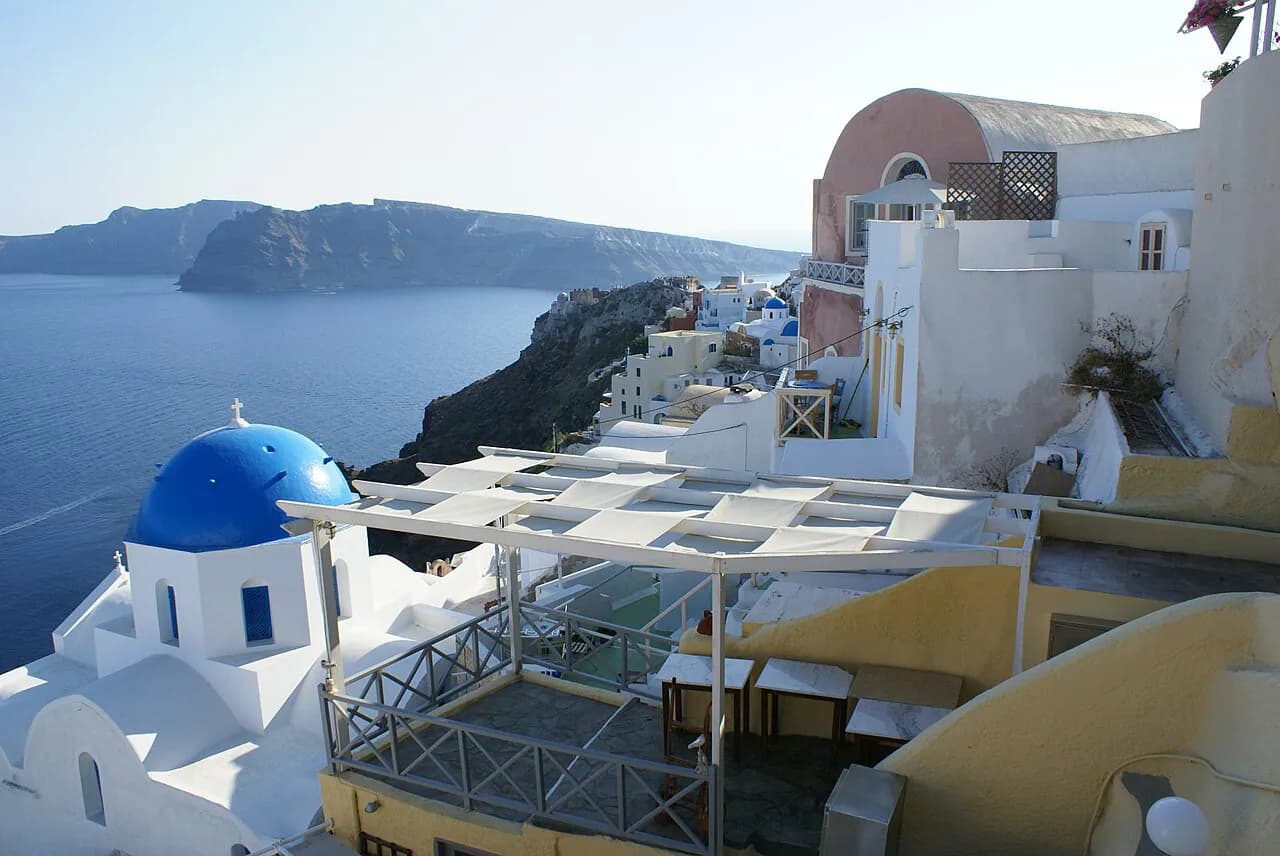
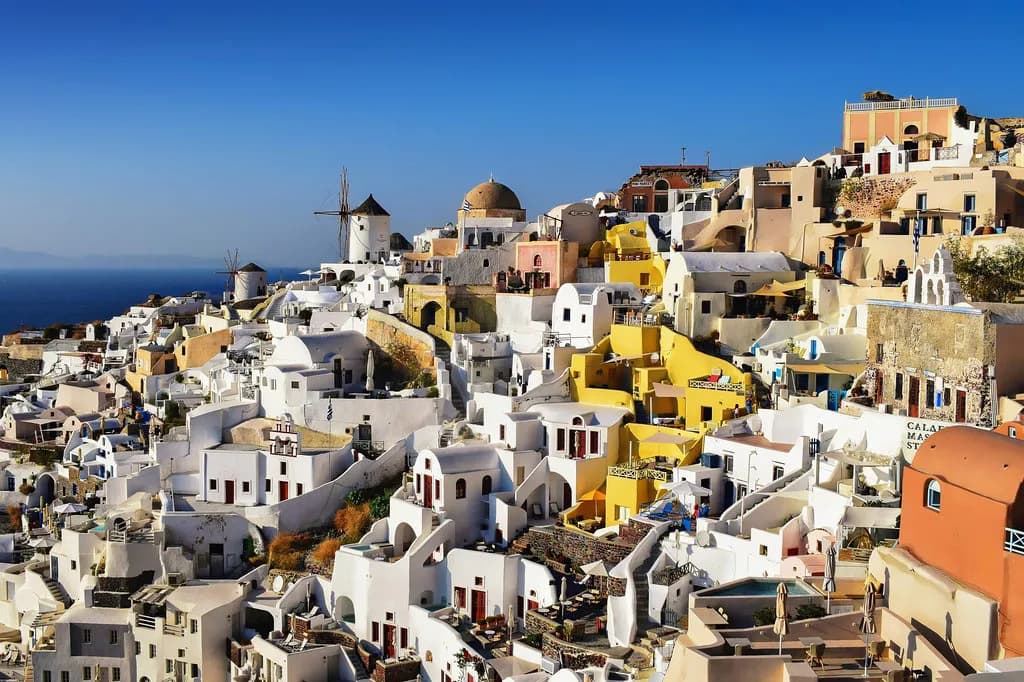
Santorini is at its most usable in May: 23.1°C (74°F) days, caldera walks without the August crush, and the villages of Oia and Imerovigli still quiet enough to enjoy. The trade-off is that the island is small, expensive and increasingly busy even in shoulder season, so it suits a short, focused stay rather than a week. Kos, at 23.8°C days, is the quieter alternative with good cycling and the Asklepion within easy reach.
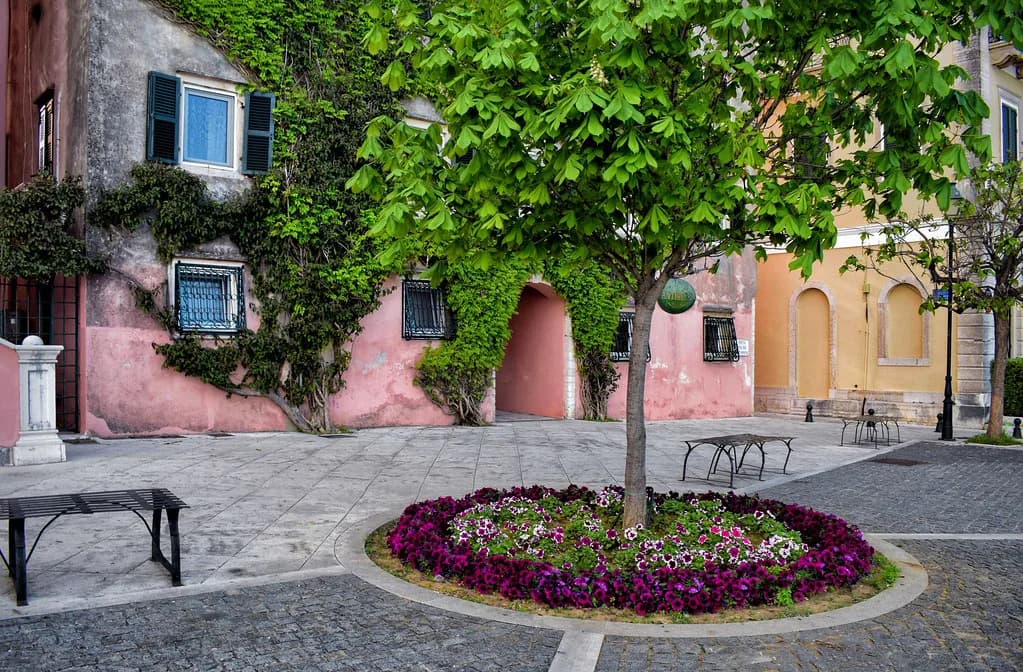
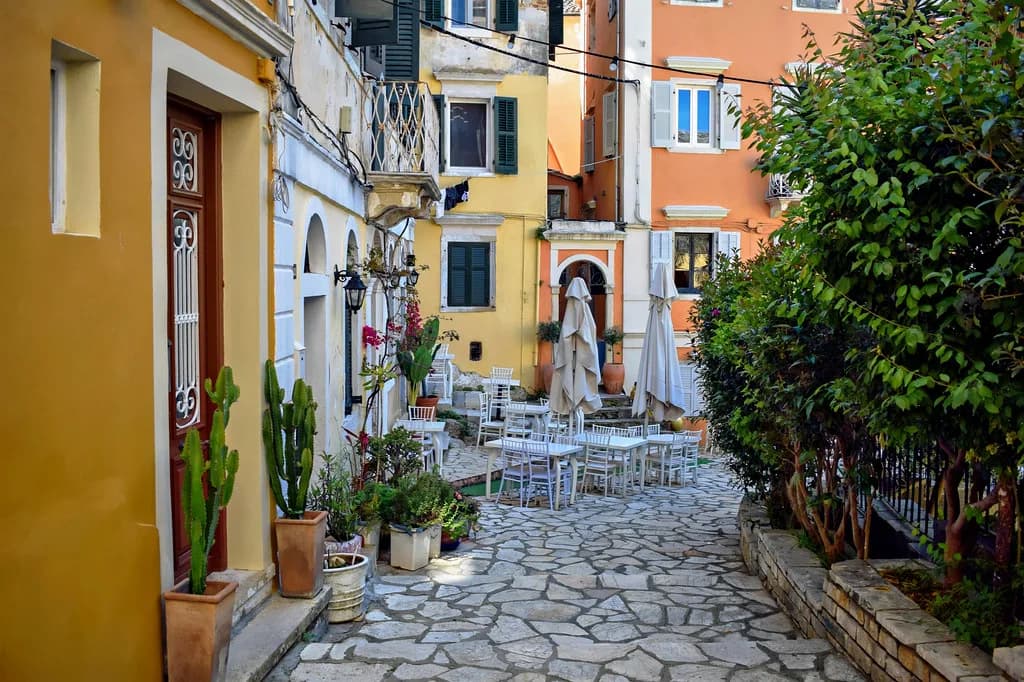
Kefalonia and Corfu are for travellers who want green rather than guaranteed sun. Kefalonia's 23.4°C days and 4.6 rain days make it a reasonable bet, with Myrtos and the Melissani cave as the obvious draws. Corfu is cooler and wetter but rewards with Corfu Town's Venetian architecture and a lush interior that is at its best before summer dries it out.
If you are still choosing between islands rather than committing to one, our Greek Islands in May guide compares them by character, ferry access and how each behaves as the season opens. It is the better next read if your dates are fixed but your destination is not.
Athens and the mainland in May
Athens in May is a city at its most comfortable: 25.2°C days, warm enough for the Acropolis and the Ancient Agora, cool enough to walk between them without wilting. The city empties of August tourists, tavernas in Plaka and Koukaki are pleasant in the evening, and a day trip to Cape Sounion or the Saronic island of Aegina is easy. It is one of the best months of the year for a city break that combines ruins with a coast.
The Peloponnese rewards the same window. Nafplio, Mycenae, Epidaurus and Monemvasia are all manageable in May temperatures, and the interior of the peninsula is green before summer burns it off. If you want archaeology without heat and without crowds, this is the month.
Central Greece and the mountain regions are cooler and less predictable. The foothills around Delphi and the fringes of Mount Parnassos suit walkers in May, while the higher ground still holds snow early in the month. Treat mountain itineraries as flexible: build in a spare day for weather and confirm locally before setting out on long ridge walks.
Northern Greece and the Ionian
Thessaloniki and the north are the cool, wet end of a Greek May. Days average 24.9°C, which is comfortable, but roughly 10.7 rain days means you should plan around showers rather than expect a dry week. The compensation is a city with excellent food, a lively waterfront and easy access to Vergina and the Chalkidiki peninsula before the summer rush.
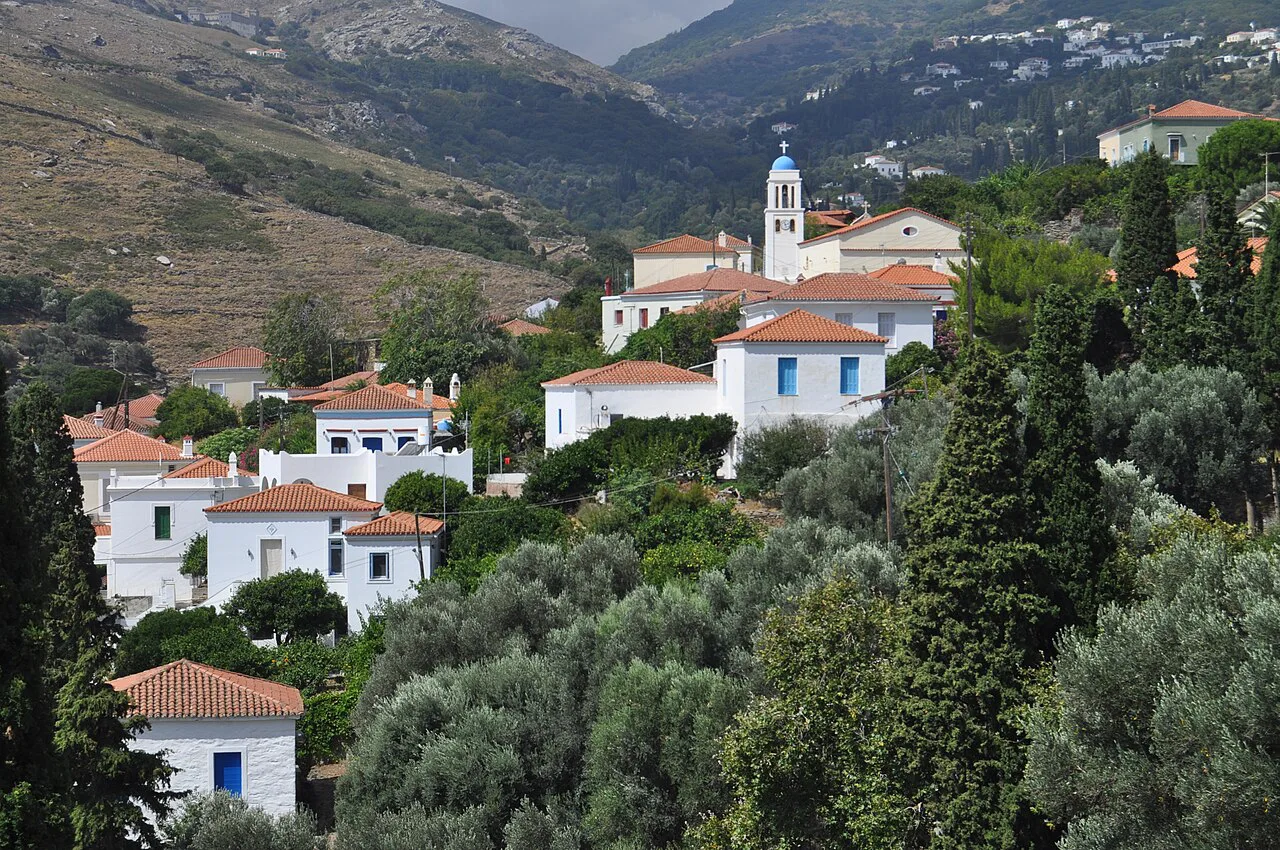
The Ionian islands are the greener, softer option. Corfu's 23.8°C days and Kefalonia's 23.4°C come with more rain than the Aegean, but also with a landscape that is still lush rather than parched, quieter coastal roads and a slower pace. This is the region to choose if you want walking, villages and views rather than guaranteed sunbathing, and it is where shoulder-season travel still feels like a genuine off-peak experience.
For a broader look at how the Ionian and the Aegean compare across the season, our guide to the best time to visit the Greek islands sets out month-by-month trade-offs, including where May sits for swimming, walking and price.
What is open
May is transition month, and the honest answer is that most of what you want is open but not everything runs at full summer frequency. Ferries generally operate on fuller schedules from around mid-May, with more conventional routes and more daily departures on the main island chains, though the fast catamaran network and small-island links fill in gradually rather than on a fixed date. Some ferry timetables early in May are not yet on the full summer pattern, so book the specific crossing you need rather than trusting that a daily departure runs.
Archaeological sites and museums are open year-round, with summer hours generally kicking in later in the season. Boat trips to places like Kleftiko, the sea caves and the smaller satellite islands start running when demand and weather allow, which usually means late May rather than early. Beach clubs, seasonal tavernas and water-sports operators on the Cyclades typically open gradually through the month, so check whether the specific place you are travelling for is operating before building a day around it.
Two sentences of practical advice on checking are enough here: confirm ferry times with the ferry company directly, and check opening hours on the official site of the specific site or museum you plan to visit. Everything else about a Greek May is flexible enough to plan around.
Crowds and prices
May is a shoulder month, and it shows. Early May is quiet, with short queues at major sites and easy availability in most accommodations; late May picks up, especially around the UK bank holidays and half term, when flights and hotels are noticeably fuller and pricier. Greek Easter sometimes falls in May, and the week around it is the busiest and most expensive in the month on the islands, so check the date before you book.
Prices rise as the season opens but sit well below July and August levels for flights, rooms and car hire. Ferry fares are less seasonal than hotels, but capacity is the real constraint early in the month rather than cost. Santorini and Mykonos are expensive even in May, and while they are quieter than in summer, they are not cheap; Crete, Rhodes and Kefalonia give far better value for the same weather.
Where money goes furthest is the mainland and the north, where a shoulder-season room costs meaningfully less than the same standard on a fashionable island. It is worth noting that May's savings are largest on accommodation and smallest on flights, because the bank-holiday weekends are exactly when airfares spike.
Seasonal food in May
May is one of the best months to eat in Greece. Spring vegetables are at their peak: artichokes, broad beans, peas and wild greens, often served simply with olive oil and lemon. Fresh cheese, including soft mizithra, appears in markets and tavernas, and the first tomatoes are worth ordering in the south.
On the coast and islands, the catch is at its most varied. Grilled octopus, red mullet and small fried fish suit the season, and Easter lamb gives way to lighter spring cooking as the month progresses. Look for village tavernas away from the waterfront for better value and more seasonal cooking, and expect menus to be shorter in early May as seasonal kitchens open.
Honest drawbacks
The main drawback is the water. Air temperatures in the mid-20s are pleasant, but the sea is cool enough that many people will swim once and then watch. If your holiday is built around long days in the water, May will disappoint, and June or September will serve you better.
Rain and wind are the second issue. The north and Ionian still get meaningful rain, and the meltemi builds on the Cyclades as the month progresses, which can cancel boat trips and make exposed beaches uncomfortable. Evenings are cool, particularly early in the month and on the islands, so a light layer is not a wasted item.
Third, heat is already building towards the end of May, and by June Athens and Thessaloniki routinely reach around 30°C. If you are walking ruins with children or older relatives, late May can feel hotter than the averages suggest. And some seasonal places, particularly on the smaller islands, simply are not open yet.
May or June? May or April?
Choose May if you want dry, warm days for sightseeing and walking, quieter sites, and a realistic chance of good weather without peak-season prices. Choose June if swimming, evening warmth and reliable beach days matter more than cool walking weather. The difference in daytime highs is only a few degrees, but the difference in sea temperature and evening comfort is significant.
April is a real option for Athens, the Peloponnese and Crete, with milder days and more rain, and it is cheaper and quieter still. It suits city breaks and archaeology rather than beaches. If you are comparing April and May across the region, our guide to where it is warm in Europe in April shows how Greece fits into the wider picture.
If you are timing a broader trip around the Greek spring, our Greece in Spring guide covers what blooms when and how the season develops from March onwards. Our best time to visit Greece page is the place to start if you have not fixed a month at all.
The verdict
May is the best month of the spring for most Greek trips, with the south Aegean the safest choice for warmth and the Ionian and mainland the better choice for landscape, value and quiet. Crete and Rhodes are the strongest all-round picks; Athens is excellent for a city-and-ruins break; Thessaloniki and Corfu reward travellers who accept some rain in exchange for green scenery and lower prices.
Go in May if you want to walk, sightsee and eat well in comfortable temperatures without summer crowds. Book June instead if the sea and long warm evenings are the point. Either way, the first ten days of May are the quieter, cheaper and less reliable version of the month, and the last ten are the warmer, busier and drier one.
Plan Your Visit
Pick your region before your island. The south Aegean delivers the most reliable May warmth, the mainland gives the best value for culture, and the Ionian trades a little rain for greener landscapes and quieter roads. Match the region to what you actually plan to do each day, not to a temperature you saw on a forecast.
Travel in the second half of May if you want everything open, and the first half if you want space and lower prices. Treat the sea as a bonus rather than the centrepiece, and you will find May is the most comfortable month Greece offers for actually being outdoors.
More Greece spring guides
Frequently Asked Questions
Is Greece warm in May?
Yes, in most of the country you would visit. The south Aegean is the warmest and most reliable, with Crete and Rhodes typically seeing daytime highs of 24–25°C (75–77°F) and nights in the mid to high teens. Thessaloniki and Corfu are only a degree or two cooler by day but see considerably more rain days, so the warmth is less consistent.
Is it warm enough to swim in Greece in May?
Usually not comfortably. The Aegean is still cool in May, reaching roughly 20°C by the end of the month, which suits a brief dip rather than long sessions. If swimming is central to your trip, June is the better choice; if you mainly want sun and walking, May works well.
Which Greek island is warmest in May?
The southern Aegean islands lead, with Kos, Crete and Rhodes all averaging around 24°C (75°F) by day. Rhodes has the warmest nights. Thessaloniki and Corfu, on the mainland north and in the Ionian, are cooler and wetter, so the difference is mostly between the south Aegean and the rest.
Is Greece crowded in May?
Mostly not, though it builds through the month. Early May is quiet, with short queues at major sites and easy availability of rooms. Late May fills up around the UK bank holidays, half term and, when it falls in May, Greek Easter, which is the busiest week of the month on the islands.
Should I go to Greece in May or June?
Choose May for walking, ruins and comfortable daytime temperatures without peak-season crowds or prices. Choose June if swimming, warm evenings and dependable beach weather matter more. Athens and Thessaloniki both push towards 30°C (86–87°F) in June, which makes long days at archaeological sites harder work.
Sources
Spring sun notes
Optional updates when we add destinations and months.
You might also like
Continue reading
More guides you'll find useful