Greek Islands in May: Which Island and How Warm It Really Gets
Greek islands in May run from about 23°C highs in Corfu and Kefalonia to 23.9°C on Crete. See which island suits an early-season trip and what is open.
On this page
The Greek islands in May are warm rather than hot, and the differences between them matter more than any single national figure. Crete and Rhodes deliver the most reliable early heat, Corfu and Kefalonia trade sunshine for green landscapes and more rain, and Santorini sits warm enough for long walks but not for lying out all afternoon. Pick by what you want to do, because the thermometer will not settle the argument for you.
Sea temperatures are not published in the normals used here, so treat swimming as a bonus rather than the plan; the Aegean and Ionian take time to lose their winter chill. If you are weighing May against the month before, our guide to Greece in April sets out how much cooler and wetter the shoulder season still is.
Greek Islands in May: The Answer First
May is the best-value month for a first Greek island trip that mixes sightseeing with time outdoors. Days are consistently pleasant, rain becomes occasional rather than routine, and the season has restarted without peak-summer crowds or prices. It is not a beach-holiday month in the way July is, and anyone who wants to swim daily and eat dinner outside in a T-shirt should look at June instead.
The spread across the islands is real: Heraklion on Crete averages a 23.9°C (75°F) daytime high, Rhodes 23.8°C (75°F) with notably warmer nights at 17.8°C (64°F), and Corfu 23.8°C (75°F) but with 8.0 rain days against Crete's 4.4, according to the Greek national weather service normals. Santorini averages 23.1°C (74°F), Kos 23.8°C (75°F), and Kefalonia 23.4°C (74°F), so nowhere is cold; the difference is in the evenings and the showers.
If you are still deciding between countries rather than islands, see where is warm in Europe in April for how Greece compares with Spain, Portugal and the Canaries at the start of the season.
How Warm Is It, Island by Island
These are long-term climate normals, not forecasts. Heraklion averages 23.9°C (75°F) by day and 15.6°C (60°F) at night in May, with 4.4 rain days; Chania and the west of Crete run a touch cooler but follow the same pattern. Rhodes manages 23.8°C (75°F) by day and 17.8°C (64°F) at night, the mildest nights of the islands compared here, and Kos is close behind at 23.8°C (75°F) and 16.6°C (62°F).
In the Ionian, Corfu averages 23.8°C (75°F) by day and 12.9°C (55°F) at night with 8.0 rain days, supplied to the WMO World Weather Information Service by the Greek national meteorological service. Kefalonia averages 23.4°C (74°F) and 14.6°C (58°F) with 4.6 rain days. Those night figures are the ones that catch people out: an evening on a Corfu terrace in May often wants a jacket.
Santorini averages 23.1°C (74°F) by day and 16.9°C (62°F) at night, and Athens, the main gateway, averages 25.2°C (77°F) and 16.1°C (61°F) with 6.8 rain days. Thessaloniki, useful as a northern gateway rather than a beach base, averages 24.9°C (77°F) by day but 10.7 rain days, the wettest of the stations compared here; use it for Macedonia and Halkidiki, not as evidence that the islands are wet.
Is the Sea Warm Enough in May?
No official sea-temperature figures are published alongside these normals, so the honest answer is that it depends on the year, the island and how hardy you are. Late May in the south-east, around Rhodes and Crete, is when the water stops being a shock; early May in the Cyclades usually is not. Treat a swim as something you might do once or twice, and plan the rest of the day around walking, ruins and harbours.
Families with small children should book late May rather than early, when air temperatures are climbing and the shallows have had a few more weeks of sun. Anyone who wants guaranteed warm water should shift to June altogether.
Early vs Late May: What Changes
The month changes quickly. Early May still behaves like a late-spring month, with cooler nights, a higher chance of a wet day and many seasonal businesses just opening; late May is close to summer, with warmer evenings, drier days and the first proper beach weather on Crete and Rhodes. The gap between the two halves is bigger than the gap between late May and early June.
Rain-day counts show the direction of travel: Crete drops from 4.4 rain days in May to 1.3 in June, and Rhodes from 4.6 to 1.2, so the drying trend is steep. Corfu goes from 8.0 to 4.9 over the same step, which tells you the Ionian takes longer to settle.
Crete in May: The Most Reliable Early Heat
Crete is the island to choose if you want the best odds of dry, warm days without waiting for June. Heraklion's 23.9°C (75°F) highs and only 4.4 rain days make outdoor plans realistic, and the island is big enough to move around when the weather turns. The south coast, around Ierapetra and the Messara plain, runs warmer than the north, while the White Mountains and the Lasithi plateau stay distinctly cooler.
For walking, the Samaria Gorge and the paths around Knossos and Phaistos are far more comfortable in May than in high summer, and the archaeological sites are open without the midday crush. Heraklion's Venetian walls and the old harbour at Chania give you good town days when the wind picks up.
Rhodes and Kos in May: The Dodecanese Answer
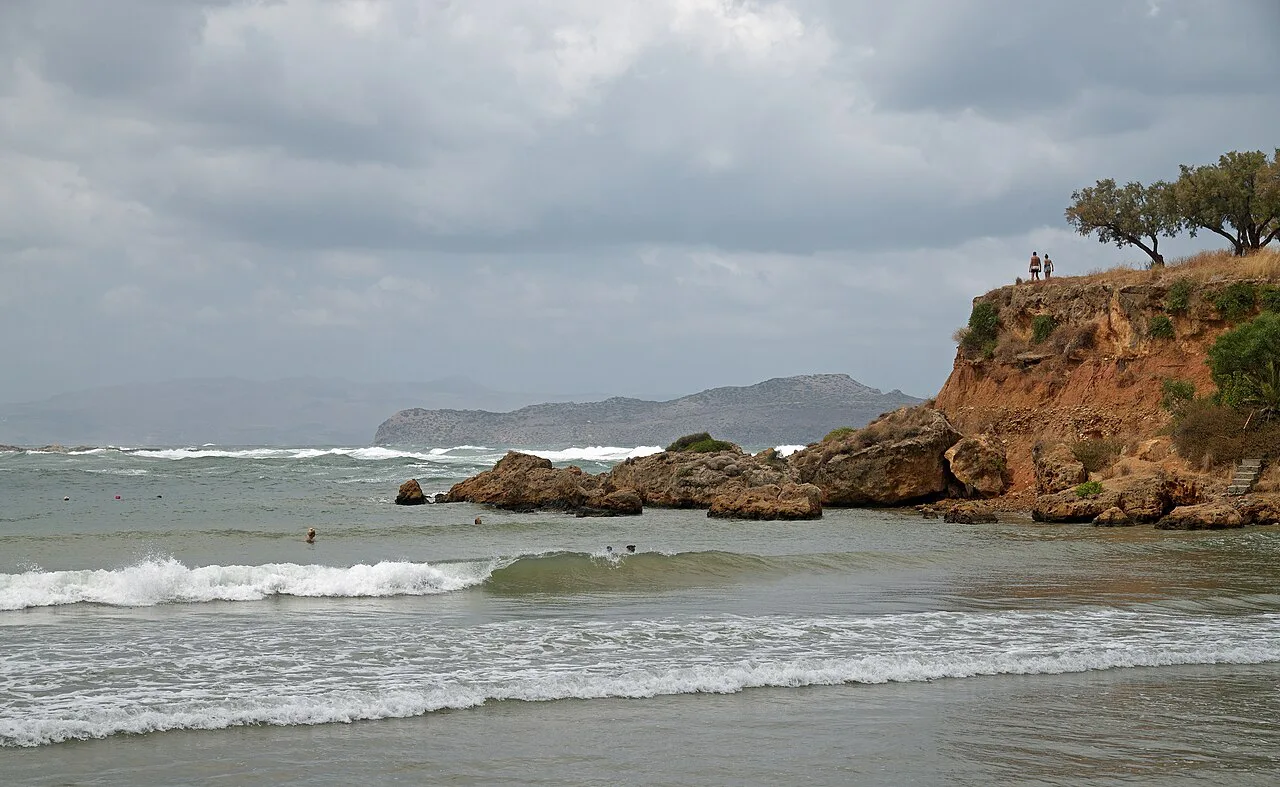
Rhodes is the strongest choice for anyone who wants warm evenings as well as warm days. Its 17.8°C (64°F) average night is the mildest in this comparison, so dinner outside is comfortable from mid-May, and 4.6 rain days put it close to Crete for dryness. The medieval Old Town, Lindos and the acropolis above it are all better in May than in July, when the heat and crowds make the climb up to Lindos a chore.
Kos is the quieter Dodecanese option, with 23.8°C (75°F) days and 16.6°C (62°F) nights, and it suits cyclists and walkers who want flat coastal routes. Both islands sit close to Turkey, which brings a dry, settled feel and occasional breeze. May is also when boat trips to Symi and the nearby islets start running in earnest, though the shoulder season means fewer departures than in summer.
Corfu and Kefalonia in May: The Ionian Trade-Off
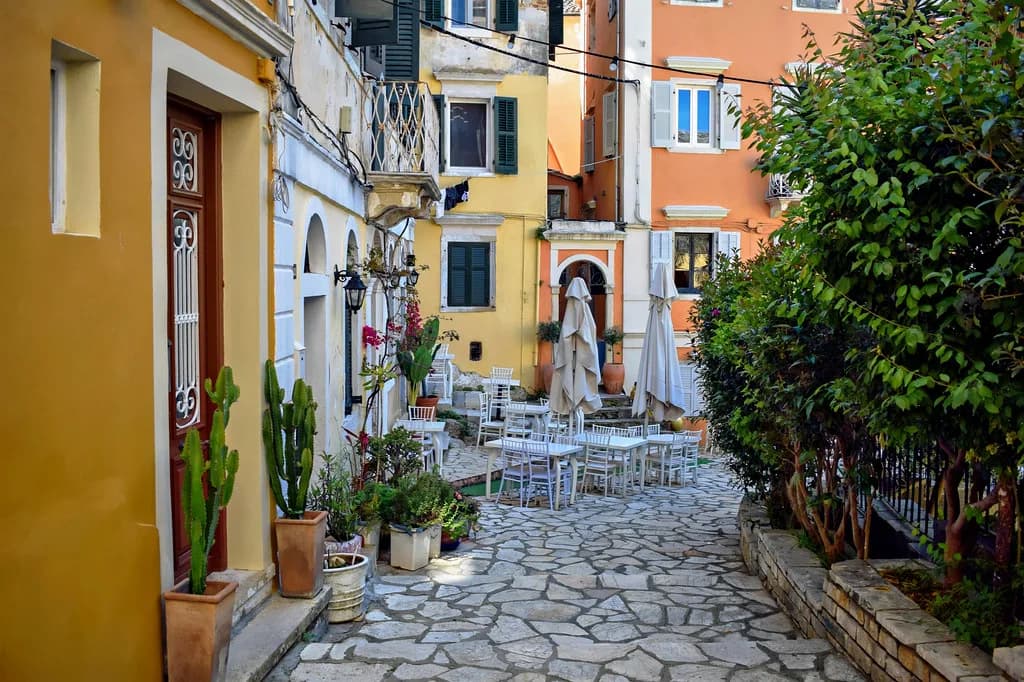
The Ionian islands are greener, lusher and wetter in May, and that is the whole trade. Corfu averages 23.8°C (75°F) by day but 8.0 rain days, so a week there usually includes at least one washed-out afternoon; Kefalonia does better at 4.6 rain days with 23.4°C (74°F). In exchange you get wildflowers, cypress-covered hills and a Corfu Old Town that is far more pleasant before the summer ferries unload.
Kefalonia's coast, from Myrtos beach to Assos and Fiskardo, is at its best for walking and photography in May, before the heat haze and the crowds. Corfu's Venetian lanes and the intact old town reward a slow day when it rains, so the wet days cost you less than they would on a beach-only island.
Santorini and the Cyclades in May: Warm Enough for Walking, Not for Lazing
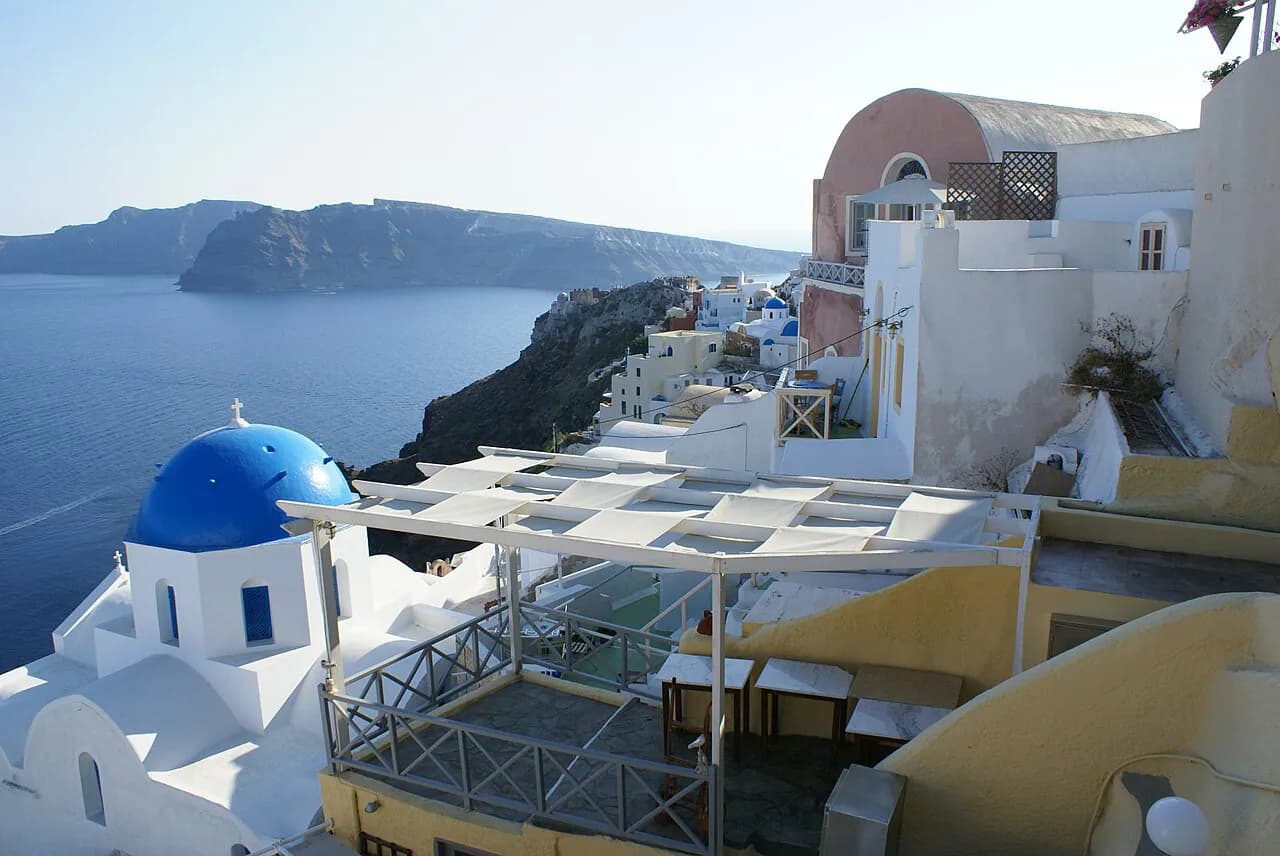
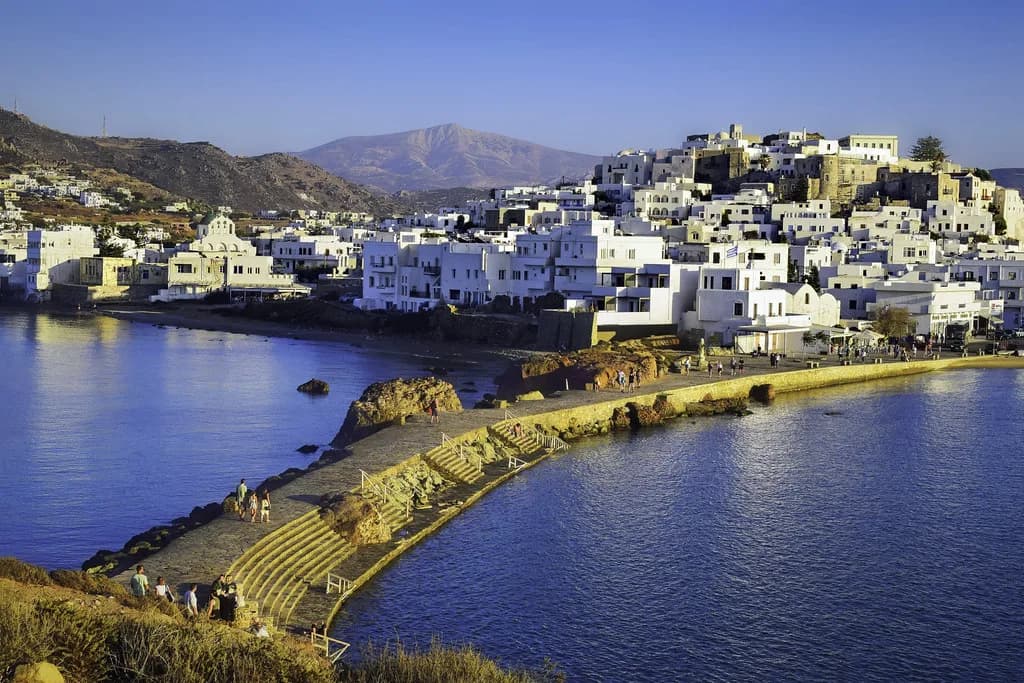
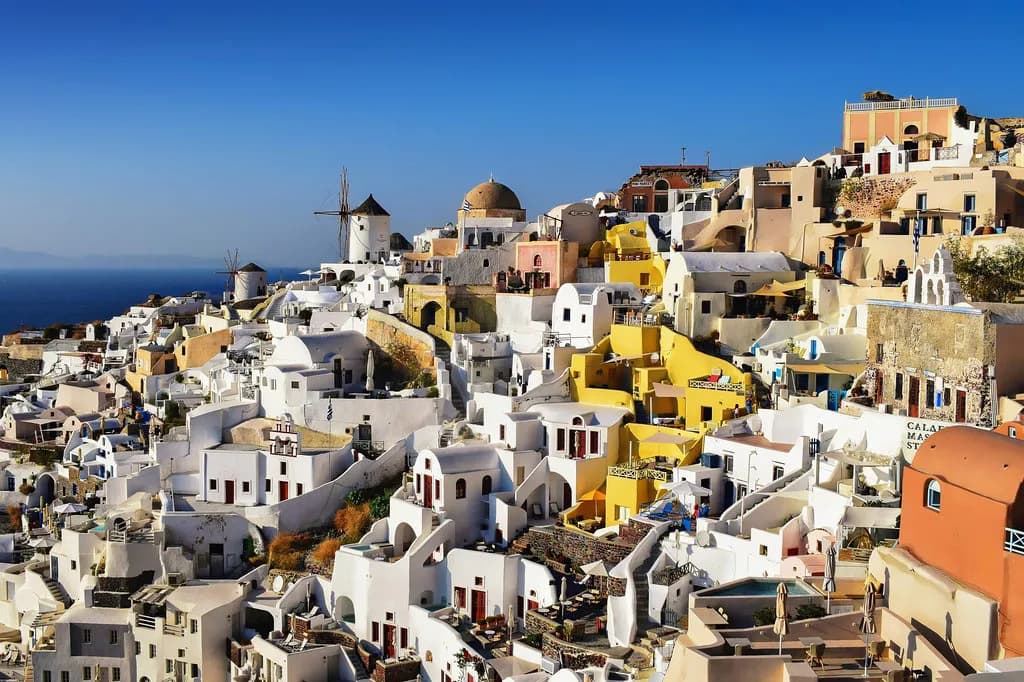
Santorini averages 23.1°C (74°F) by day and 16.9°C (62°F) at night in May, which is comfortable for the cliff paths between Fira and Oia and for the archaeological site at Akrotiri. It is not a month for spending whole afternoons flat on a sun lounger, and the meltemi wind can make the caldera rim feel cooler than the thermometer suggests. The same is true across the Cyclades: Naxos, Paros and Milos are all walkable, and the villages are quieter than in June.
The wind is the Cyclades' honest drawback in May. It keeps the heat bearable and clears the haze, but it can cancel small-boat trips and makes the exposed terraces and viewpoints chilly at dusk. On Andros and Tinos the walking and the marble villages are the reason to come; the beaches come later.
What Is Open: Ferries, Boat Trips and Seasonal Sites
May is when the island season switches back on. Ferries generally move from reduced winter timetables to fuller spring schedules, seasonal boat trips and tavernas reopen, and the big archaeological sites and museums run on their regular hours rather than winter ones. Operators publish their sailing dates and opening hours as the season approaches, so book ferries once you have chosen the island rather than building the trip around a hoped-for sailing.
Some beach clubs, water-sports operators and remote tavernas still open only partway through the month, so the further you go from a main port, the more likely you are to find something shut. Staying near a main town for the first night or two, and moving to the quieter coast later, avoids the problem. For the islands' pattern of open and closed in the shoulder season, our guide to Greece in May is the companion piece.
Crowds and Prices: Easter, May Bank Holidays and Half Term
May crowds in the Greek islands are driven by two things: the Easter period, when Greek families travel and domestic ferries and hotels fill, and the UK bank holidays and half-term week, when British families arrive. Outside those windows the islands are notably calm. Prices rise around both, particularly on the islands with direct UK flights such as Rhodes and Corfu, so book early or shift your dates away from the holiday weeks.
If Easter, bank holidays and half term matter to your dates, compare the same week in the month either side; the Greece in April guide covers the Easter period and the earlier, quieter weeks.
Honest Drawbacks
Cool evenings are the main surprise: Corfu's average night of 12.9°C (55°F) and Kefalonia's 14.6°C (58°F) mean you will want a layer after sunset, and even Rhodes' warm nights only arrive reliably in the second half of the month. Rain is still possible, especially in the Ionian, and short windy spells can interrupt boat plans anywhere.
The sea is cold early on, some seasonal places are still shut, and the Cyclades can feel breezier than the brochure suggests. None of these is a reason to avoid May; they are reasons to choose the island and the week with your eyes open.
May or June? Choosing Between the Two
June buys you several degrees more warmth, fewer rain days and a warmer sea. Crete's average high rises from 23.9°C to 27.5°C (75°F to 82°F) and its rain days fall from 4.4 to 1.3, while Santorini goes from 23.1°C to 27.7°C (74°F to 82°F). The cost is higher prices and more people, especially on the islands with UK flights.
Choose May if you want walking, ruins, quiet villages and lower prices, and you are willing to carry a layer and dodge a shower. Choose June if the trip is really about the sea, long evenings outside and reliable sun. For the full comparison, see our guide to the best time to visit Greece, which sets May against both April and June.
The Verdict
May is the month to pick for a Greek island trip built around walking, archaeology, harbours and long lunches rather than all-day sunbathing. Crete and Rhodes are the safest bets for warmth and dryness, Kos is the quieter Dodecanese option, and Corfu and Kefalonia reward you with green landscapes if you accept a wetter, cooler pattern. Santorini and the Cyclades are best for walking and views.
If you can only take one week, aim for the second half of May, after the bank-holiday and Easter rush, and book ferries once you know the island. Leave June for the year you want guaranteed heat and warm water, and plan the sea accordingly. The Greek islands in May are not a compromise; they are a different, and often better, kind of trip.
For a wider view of the season, our guide to Greece in spring covers how April, May and early June fit together across the islands and the mainland.
More Greece spring guides
Frequently Asked Questions
What is the weather like on the Greek islands in May?
Days are warm rather than hot: Crete and Rhodes average around 24°C (75°F) by day, Santorini about 23°C (74°F) and Kefalonia 23.4°C (74°F). Nights are much cooler in the Ionian (Corfu around 13°C; 55°F) than in Rhodes (about 18°C; 64°F). Rain becomes occasional rather than routine, with the south-east drying fastest.
Is Greece swimmable in May?
Sometimes, but do not count on it. The south-east around Crete and Rhodes is the most likely to be comfortable, and late May is more reliable than early May. The Cyclades and Ionian take longer to warm up, so plan the rest of your days around walking and sightseeing rather than daily swims.
Which Greek island is warmest in May?
Of the islands compared here, Crete and Rhodes both average around 24°C (75°F) by day. Rhodes has the warmest nights at about 18°C (64°F), which makes it the best choice if you want to eat outside in the evening. The averages are close; the real difference is the milder nights and lower rain.
Is May a good month to visit the Greek islands?
Yes, if you want walking, ruins, quiet villages and lower prices without the peak-summer crowds. It is less good for a beach-only holiday, because the sea is still cool and the weather can turn. Late May is noticeably better than early May for warmth and reliable outdoor days.
Is May or June better for the Greek islands?
June is warmer, drier and better for swimming, with average highs three to six degrees higher and far fewer rain days. May is quieter and cheaper away from the bank holidays. Choose May for sightseeing and walking, June for the sea and long evenings outside.
Do ferries and boat trips run in May?
The island season is back on in May: ferries move to fuller spring schedules, boat trips and tavernas reopen, and major sites run their regular rather than winter hours. Schedules and opening days vary by island and operator, so book ferries once your island is fixed and treat early-May boat trips as flexible.
Sources
Spring sun notes
Optional updates when we add destinations and months.
You might also like
Continue reading
More guides you'll find useful