Things to Do in Greece in June: Where to Go and What to Do
June in Greece brings hot, sunny days before peak-season crowds arrive. Here is where to go, what to do, and which islands and sites suit the month best.
On this page
June is the first month when Greece feels like proper summer almost everywhere, and it is still a month before the crowds and prices of high season arrive. The trade-off is straightforward: you get reliable sunshine and warm evenings in exchange for late-June heat that can flatten midday sightseeing.
Plan the month around two different holidays. Early June suits walking, archaeological sites and town time; late June tilts towards the beach, swimming and shade. If you need convincing that an earlier trip is cooler, our guide to Greece in May sets out the difference.
What the Weather Does to Your Plans
The Greek islands come into their own in June: summer is in full flow, days are long, and the peak-season crowds and high prices have yet to arrive. Kos sees an average June temperature of around 29°C (84°F), Crete around 28°C (82°F) with roughly 20 mm of rain for the month, and Mykonos around 27°C (81°F).
Those are average figures rather than forecasts, and they hide the difference between midday and evening. On Kos, evenings stay above 20°C (68°F) even in June, which is what makes late dinners and harbour strolls so pleasant. Crete is the most southerly of the big islands and its long days of sunshine make the south coast feel noticeably warmer than the north.
Northern and mainland Greece runs a little cooler and, in Corfu and Paxos, can still produce brief rain showers in June, though it will feel hot. Halkidiki in the north behaves similarly. Rainfall drops sharply as the month wears on, so if you are mainly sightseeing, early June in the north is more comfortable than late June.
One recent June showed what late-June heat can do: temperatures topped 40°C (104°F) on some islands and in Athens. Treat that as the extreme end of the range rather than the norm, but it is the reason to put exposed sites early in the day and keep the afternoons free.
Athens and the Acropolis Before the Heat Builds
Start with the Acropolis on your first morning in Athens, when the light is good and the rock is not yet radiating heat. There is little shade on the summit, so both heat and crowds build through the morning, and Greece now runs timed entry at its busiest archaeological sites.
Pair the hill with the Acropolis Museum across the way, whose top-floor gallery displays the surviving Parthenon frieze in the same orientation as the temple itself. Allow at least half a day for both, and book your Acropolis slot before you leave home.
The rest of central Athens fits neatly around the early start: the changing of the guard at Syntagma Square is short and worth catching on the way through, and the National Garden gives you shade afterwards. This is the kind of practical sequencing that distinguishes a workable early trip from a rushed one; our notes on things to do in Greece in April show the same principle applied to a cooler month.
The Ancient Agora and a Slower Half-Day in the City
The Ancient Agora is quieter than the Acropolis and arguably better at explaining how Athens actually worked, since this is where citizens traded, argued politics and ran the city. Walk the paths between foundations and olive trees to the Temple of Hephaestus, one of the best-preserved ancient temples in Greece, then look into the Stoa of Attalos and its museum.
In June, place it straight after an early Acropolis visit: the site has more shade and fewer people, so the afternoon heat matters less. It also suits travellers who want one substantive half-day rather than a tick-list of ruins.
Delphi and Arachova as a Day Out of Athens
Delphi rewards an early start more than almost anywhere else in Greece. The sanctuary climbs the lower slopes of Mount Parnassus, and the walking route passes the treasuries and the Temple of Apollo before continuing to the theatre and, higher still, the stadium. Do that climb before the middle of the day in June.
Do not skip the site museum, which explains fragments that mean little on the hillside, and stop in the mountain town of Arachova for lunch or an overnight. Arachova also works as a base for the wider Central Greece region if you are extending the trip.
A day out and back from Athens is realistic, but you will spend a chunk of it on the road. If ancient history matters more to you than beaches, give Delphi a night and pair it with Meteora rather than squeezing both into a single day.
Nafplio as a Base for Mycenae and Epidaurus
Nafplio solves a practical itinerary problem: it puts Mycenae and Epidaurus within easy reach so you do not go back and forth to Athens. The old town sits beneath the Palamidi fortress, with neoclassical buildings, narrow streets and a waterfront facing the little Bourtzi fortress in the harbour.
At Epidaurus, the fourth-century BCE theatre is the obvious draw, but the surrounding Sanctuary of Asklepios grew up around healing as well as performance, and together they form a UNESCO World Heritage Site. At Mycenae, you enter through the Lion Gate and walk uphill through the citadel, and the scale of the stone walls only registers when you are standing beside them.
Stay for the evening, when day-trippers have gone and the old town is at its best. On a five- or six-day island-focused trip, Nafplio will stretch the itinerary too far; it earns its place on a trip of ten days or more.
Ancient Olympia on a Peloponnese Road Trip
Olympia is the archaeological sanctuary in the western Peloponnese where the ancient Olympic Games were held, and it is not the same place as Mount Olympus in the north. Walk in through the stone tunnel of the ancient stadium and stand on the starting line: it is the moment the site makes sense.
For the 2026 season, a combined €20 ticket covers the archaeological site and museums, with longer opening hours from April to October. That ticket is worth knowing about before you arrive at the gate, and the longer summer hours are what make a late-afternoon visit possible in June. For more detail, see Greece in april.
Olympia is too far for a comfortable day trip from Athens, so plan it as a stop on a Peloponnese drive with Nafplio. Make time for the archaeological museum as well as the ruins themselves.
Meteora: Monasteries and Sandstone Pillars at Sunset
Meteora deserves more than a passing stop. Sandstone columns rise abruptly from the Thessalian plain with monasteries perched on top, and the landscape and monastic complex together form a UNESCO World Heritage Site.
Six monasteries are open to visitors, but two or three is enough; Great Meteoron and Varlaam give the best sense of scale, while Agios Stefanos is the easiest to reach if steep stairs are a concern. These remain places of worship, so shoulders and knees should be covered.
Each monastery keeps its own opening days and hours, so confirm the schedule with the Meteora monasteries shortly before you travel. Stay in Kalambaka or Kastraki rather than attempting it as a day trip from Athens, and give it at least one night.
Santorini's Caldera Walk Without the Peak-Season Crush
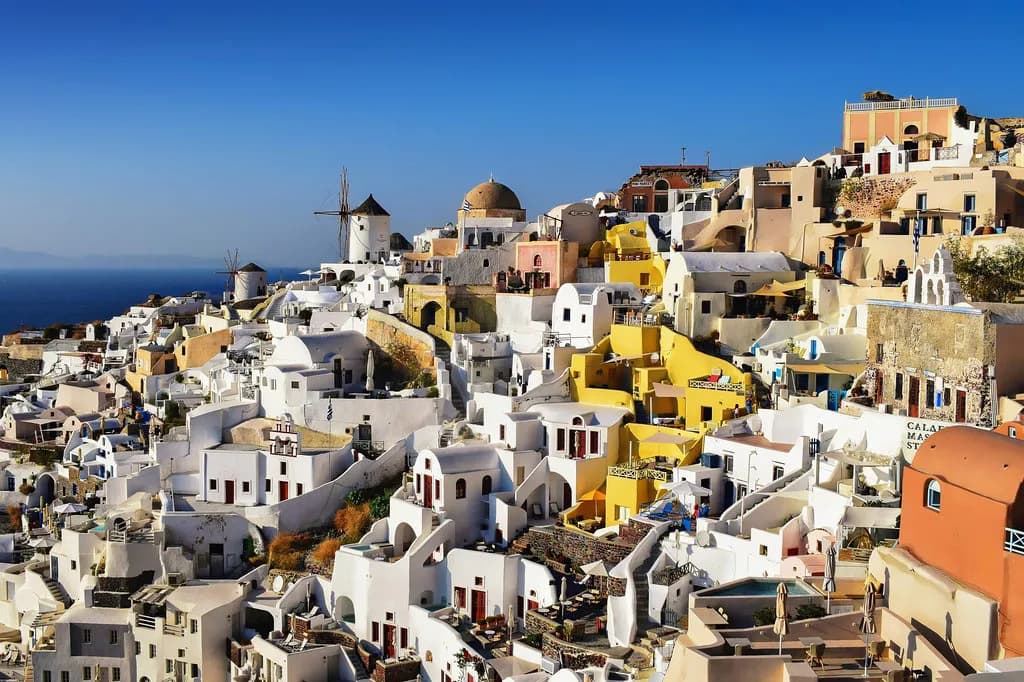
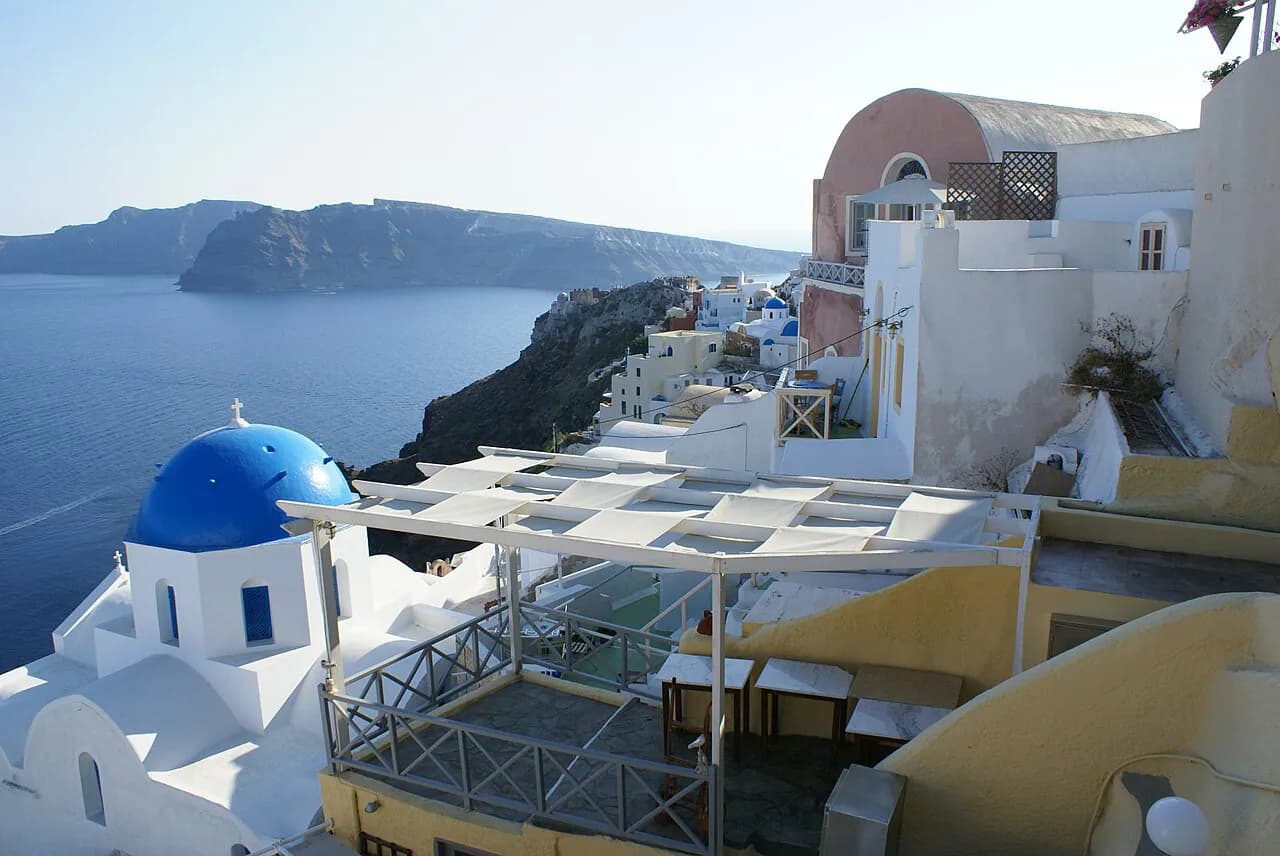
Santorini's caldera is the reason to come: villages sit high above the flooded volcanic basin with white buildings lining the dark cliff edge. Oia is famous for sunset and the fame brings crowds, so you do not need to squeeze in beside the castle ruins with hundreds of others.
Imerovigli and stretches of the Fira-to-Oia walking path give you more space, especially if you care more about the view than the classic postcard shot. Do the walk early or late in the day in June and keep the exposed middle hours for swimming or shade.
Stay at least one night: day-trippers arrive during the busiest hours and leave as the evening gets calmer. That single decision changes how the island feels in June more than any other.
Delos from Mykonos: The Archaeological Island
Delos feels nothing like Mykonos despite sitting close by. The UNESCO-listed site was once a major religious and trading centre of the ancient Aegean, and its best-known remains include the Terrace of the Lions, the Sanctuary of Apollo and houses with mosaic floors.
There is very little shade on the island, which makes June a month to visit on the first boat of the day rather than at midday. Bring water and shoes for uneven ground, and confirm the boat schedule and the time of the last return before you set off.
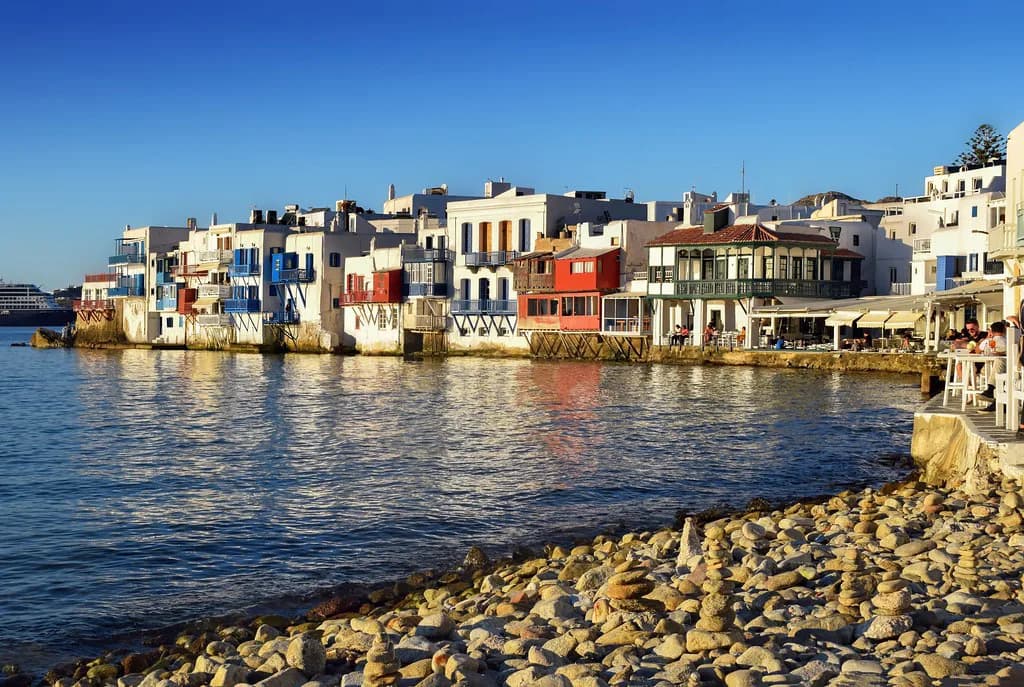
Delos is easiest from Mykonos and does not fit neatly into a general island-hopping day. Mykonos itself is polished, busy and expensive in peak summer, but June is a bit more relaxed than high season, and it is also the departure point for Delos.
Naxos or Paros for Beaches and Mountain Villages
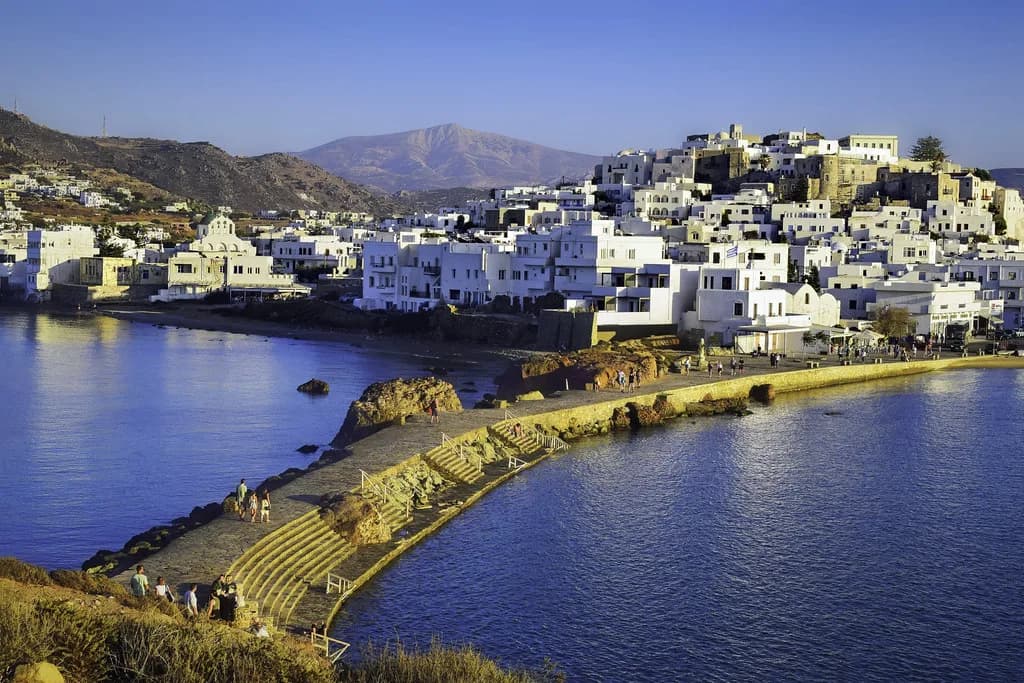
Choose Naxos for long beaches, mountain villages, inland drives and a sense of space. Choose Paros for attractive towns, easy ferry connections and a compact mix of beaches, restaurants and nightlife. Both sit neatly between Athens and Santorini, and both suit travellers who find the best-known islands crowded around a handful of sights.
If you only have seven days, pick one. It is easy to underestimate how much time goes on checking out, reaching the port, waiting for a ferry and checking in again, and in June you want that time on the island, not in transit.
June is when Cyclades ferry connections genuinely open up for island-hopping. Current 2026 schedules show Piraeus to Paros taking roughly two hours forty minutes to five hours depending on the vessel, which is the sort of range worth checking before you commit to a route.
Milos and the Volcanic Coves at Sarakiniko
Sarakiniko looks more like a moonscape than a beach: smooth white volcanic rock rolls down to deep blue water in ledges, inlets and narrow channels instead of a wide stretch of sand. Come to swim and explore the rocks, and expect bare stone rather than sunbeds and umbrellas.
Shade is scarce and the pale rock reflects the sun strongly, so go early or late in June. Milos rewards more than one night because its coastline breaks into coves and mineral-coloured cliffs, and the pleasure lies in moving between them.
In July and August, Meltemi winds can affect both sea conditions and ferries across the Cyclades, so build flexibility into a tight itinerary. In June the wind is usually less of a factor, which makes it the more forgiving month for a short island-hopping plan.
Rhodes Old Town in the Medieval Lanes
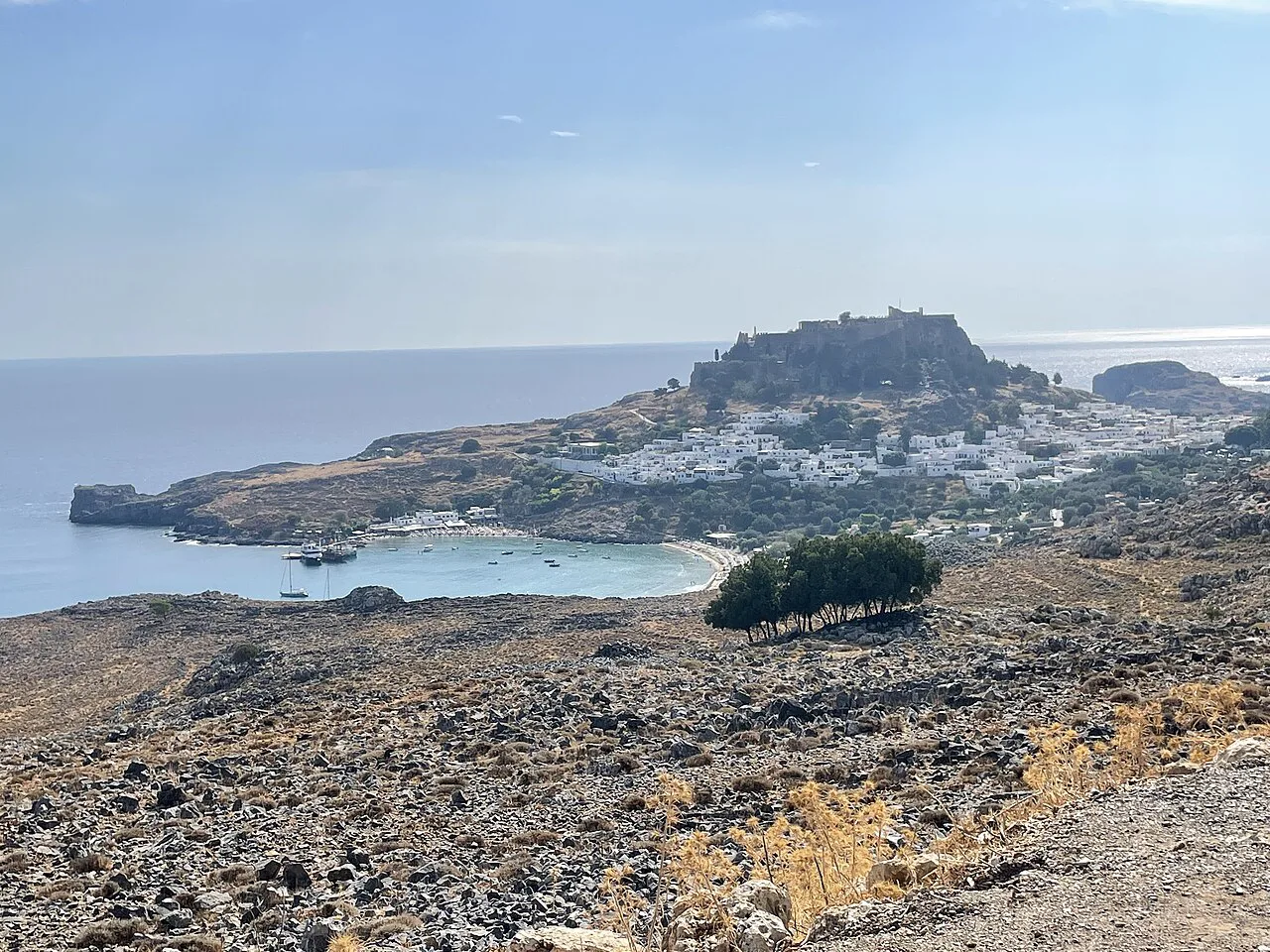
Rhodes gives an island trip something the Cyclades cannot: a large medieval city inside its fortifications. The UNESCO-listed old town grew up under the Knights of St John and still has the Street of the Knights, the Palace of the Grand Master, gateways, defensive walls and later Ottoman buildings.
See the old town outside peak excursion hours; once the day visitors leave, the lanes feel very different from the shop-lined routes at midday. Rhodes sits a long way from the central Cyclades, so treat it as the centre of a Dodecanese itinerary or an island you fly into rather than an add-on to a Santorini and Mykonos trip.
Nearby Kos has a similar climate in June, with hardly any rain and evenings above 20°C (68°F). That makes the Dodecanese the warmest realistic choice for a late-spring trip that still wants comfortable evenings.
Crete: Knossos, Chania and Rethymnon
Crete is the most southerly Greek island and one of the sunniest places in the country in June, with roughly 20 mm of rain for the month. That makes it the safest bet for a trip built around both sightseeing and time outdoors.
Do the Palace of Knossos early, when it is quieter than later in the season, and save Chania and Rethymnon for evenings, when the old towns are made for wandering and eating. If a full-day gorge walk is on your list, our guide to things to do in Crete in June sets out how the month affects it.
Crete suits families and walkers in June better than the smaller Cyclades because it has the range to fill a fortnight without relying on ferries. Just accept that late June in the south can feel properly hot by mid-afternoon.
Thessaloniki and Halkidiki in the North
Thessaloniki is the food city of the north, and June is a good month to eat your way through it in the cooler evenings. From there, Halkidiki is around an hour's drive from the airport, and it remains relatively undeveloped, with good beaches and plenty of historical sites.
The north usually runs a degree or two cooler than Crete and the Dodecanese, which matters in late June. If you want archaeology in the morning and a long dinner afterwards without wilting, this is where to base yourself.
Corfu and Paxos, further west, get around eleven hours of daily sunshine in June and feel hot, with only brief showers. Corfu is worth considering if you want a greener, less arid version of the Greek summer; our guide to things to do in Corfu in June covers the island in more detail.
Eating and Drinking in June: Markets, Tavernas and Wine
June is the month when the produce shifts: tomatoes, peaches, apricots and the first serious melons arrive, and tavernas start cooking lighter dishes. An Athens food market early in the day is one of the best free things to do in the city, and it is cooler than any archaeological site at noon.
Greek wine is worth planning around rather than leaving to chance. Nemea in the Peloponnese and Santorini both have tasting rooms, and a winery visit slots naturally into a June itinerary that already includes Nafplio or the caldera.
Crowds and Prices in June
June is busy but not yet peak season. The Greek islands are in full summer flow with long sunny days, yet the crowds and high prices of peak season have not arrived, which is the month's central appeal for anyone paying for their own trip.
Expect the busiest conditions at the headline sights: the Acropolis mid-morning, Delos at midday and Oia at sunset. Booking timed slots at the Acropolis is the single most useful thing you can do to protect your days, and early or late starts solve most of the rest.
Prices rise with demand. Popular islands such as Mykonos and Santorini charge more than Naxos, Paros and the mainland, and the gap widens as the summer goes on. Book ferries as soon as your route is settled, since the best connections fill first.
June or Late May and September?
June wins on reliability: settled weather, long days and everything open. May is cooler and greener and better for walking, while September keeps the warmth with fewer people once schools return. If heat is the deciding factor rather than sunshine, our guide to the best time to visit Greece lays out the months side by side.
Choose June if the trip is built around the sea, island-hopping or long evenings outdoors. Choose May if you want to walk, and choose September if you want June's warmth without June's school-holiday build-up in the resorts. For island-specific comparisons, the best time to visit the Greek islands narrows the choice further.
If you are weighing the season as a whole rather than a single month, see where is warm in Europe in April, which shows where the warmth arrives first around the Mediterranean and the Canary Islands, and how June's settled heat compares with the earliest reliable sun.
The Verdict
June is the best all-round month for a first Greek trip that mixes ruins and coast. Put Athens, Delphi and the Acropolis early in the month, take the heat seriously at midday, and choose one island group rather than three. Our month-by-month guide to Greece in June sets out the same trade-offs in more detail.
If you want the season at its freshest, look at Greece in Spring; if you are planning a return, our guide to Greek islands in May shows what the quieter weeks look like. Either way, the month rewards planning around heat rather than ignoring it.
More Greece spring guides
Frequently Asked Questions
Is June a good time to visit Greece?
Yes. June delivers reliable summer weather, long days and everything open, without the crowds and high prices of peak season. The main caveat is heat: late June can be very hot, so plan exposed sites for the morning and keep afternoons for shade or the sea.
How hot is Greece in June?
It varies by region. Kos averages around 29°C, Crete around 28°C and Mykonos around 27°C, with evenings staying above 20°C on Kos. Northern and mainland areas are usually a degree or two cooler, and brief showers can still occur in Corfu and Paxos.
Which Greek islands are hottest in June?
Kos and Crete are consistently among the warmest, with Kos averaging around 29°C and Crete around 28°C. Rhodes has a similar climate to Kos. Mykonos is slightly cooler at around 27°C, and the northern islands such as Corfu and Paxos cooler again.
What should you not miss on a first trip to Greece in June?
The Acropolis and its museum, Delphi, the Peloponnese sites around Nafplio, and one Cycladic island pair such as Naxos and Paros. Add Meteora if you have the time, but do the Acropolis and Delos early in the day because shade is scarce.
Is the sea warm enough to swim in Greece in June?
It is warming through the month rather than reliably warm everywhere. Southern islands and Crete are the safest bet, and late June is noticeably better than early June. If swimming is central to the trip, plan it for the back half of the month.
Is June busy in Greece?
Busy but not peak. The headline sights such as the Acropolis, Delos and Oia at sunset get crowded, and popular islands command higher prices, but the overall crush of August has not arrived. Early starts and booked time slots make the biggest difference.
Is June or September better for Greece?
Both are strong. June offers long days and fully open ferries and sites; September keeps the warmth with fewer people once schools return. Choose June for the sea and island-hopping, and September if you want similar weather with a calmer feel.
Sources
Spring sun notes
Optional updates when we add destinations and months.
You might also like

Continue reading
More guides you'll find useful