Kefalonia in April: How Warm Is It and Is It Worth Going?
Kefalonia in April averages 19°C by day and 11°C at night, with about nine wet days. It suits walkers and sightseers far better than swimmers.
On this page
Kefalonia in April is mild rather than hot: long-term records for the island's airport station put a typical daytime high near 19°C and a typical night near 11°C, with 9.5 rain days and around 60 mm of rain across the month. That mix suits walkers, sightseers and anyone who prefers green hills and quiet villages to packed beaches. It does not suit travellers whose main aim is warm sea, guaranteed sunshine or a resort running at full speed.
Think of April as the island waking up. The hills above Argostoli and the slopes of Mount Ainos are still green, the roads are quiet outside the Easter period, and tavernas in the villages are already cooking, but boat trips and beach service are only partly running. If you want the sea to feel inviting and the season to be in full swing, May or June is the better call. If you want long walks, cave visits and empty viewpoints, April delivers.
Weather in April
The Hellenic National Meteorological Service figures for Kefalonia, covering 1991 to 2020, give an average daily maximum of 19.2°C (about 67°F) and an average daily minimum of 11.2°C (about 52°F) for April. The same station records 9.5 rain days in the month. Treat all of this as typical conditions rather than a forecast; a given April can run warmer, cooler or wetter.
Rainfall is the number to take seriously. Greece's national weather service reports through the WMO World Weather Information Service a monthly total of about 60.4 mm for this station, which is enough to mean several genuinely wet afternoons rather than the odd shower. Those rain-day and rainfall figures come from the WMO city page supplied by the Greek service, which does not state its averaging period, so read them as a long-run indication rather than a strict 1991-2020 normal.
Practically, that means changeable days: a bright morning that builds cloud by afternoon, a spell of rain that clears overnight, and wind that comes and goes. Sunshine is generous between the showers, but April is not a month of cloudless skies. Days are already long enough for a full day out, with daylight lasting well into the evening.
Is it warm enough?
For walking and sightseeing, yes. A 19°C afternoon is comfortable for hiking the trails of Ainos National Park, exploring the castle of Agios Georgios or wandering the lanes of Assos and Fiskardo without the summer heat. The forested slopes of Mount Ainos are at their greenest, and the island's marked paths are far quieter than in high season.
For sitting outdoors, it depends on the hour. A sunny lunchtime terrace in Argostoli or Lixouri is pleasant, but by late afternoon the temperature drops and the wind picks up, so an evening outdoors needs a jacket. Coastal tavernas in April are more comfortable at midday than at dusk.
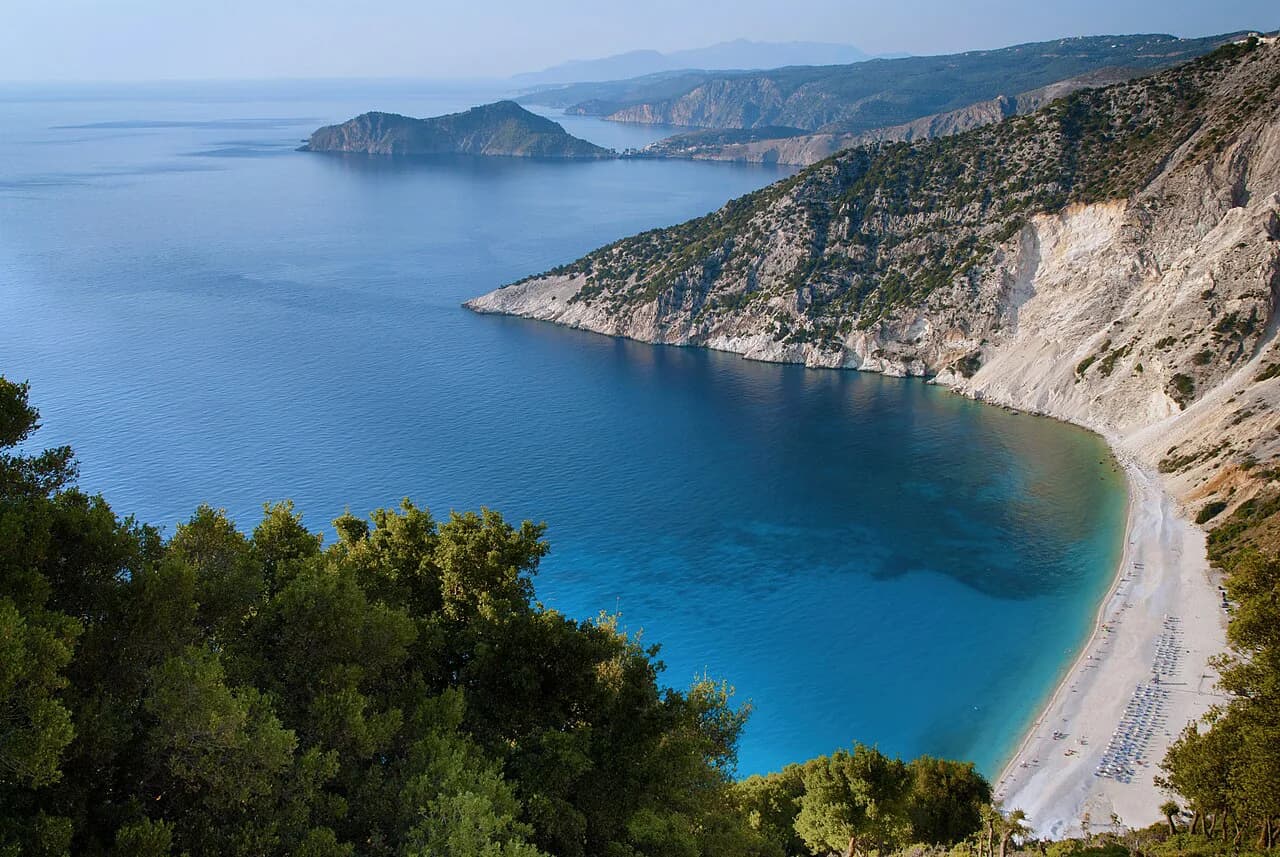
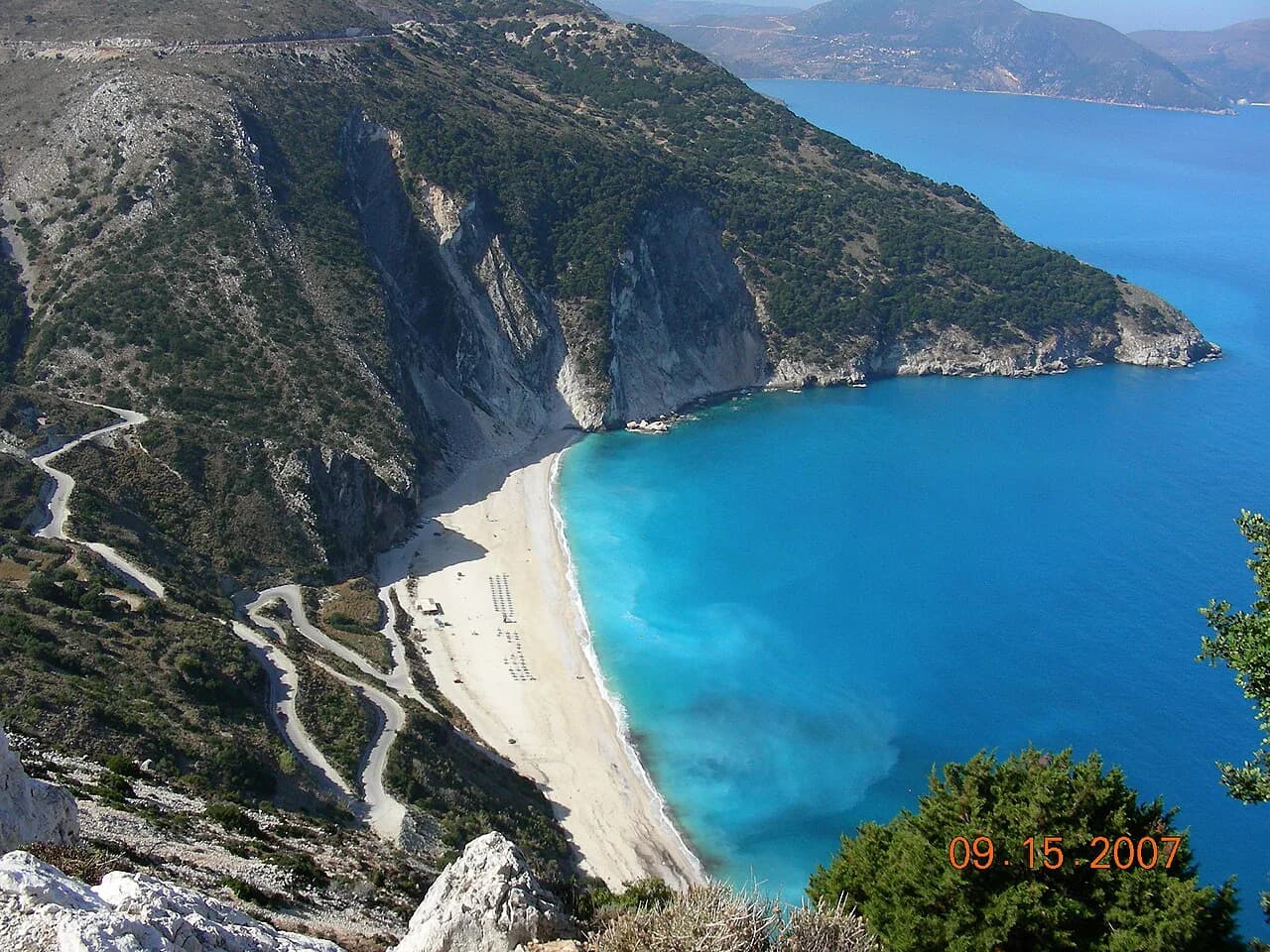
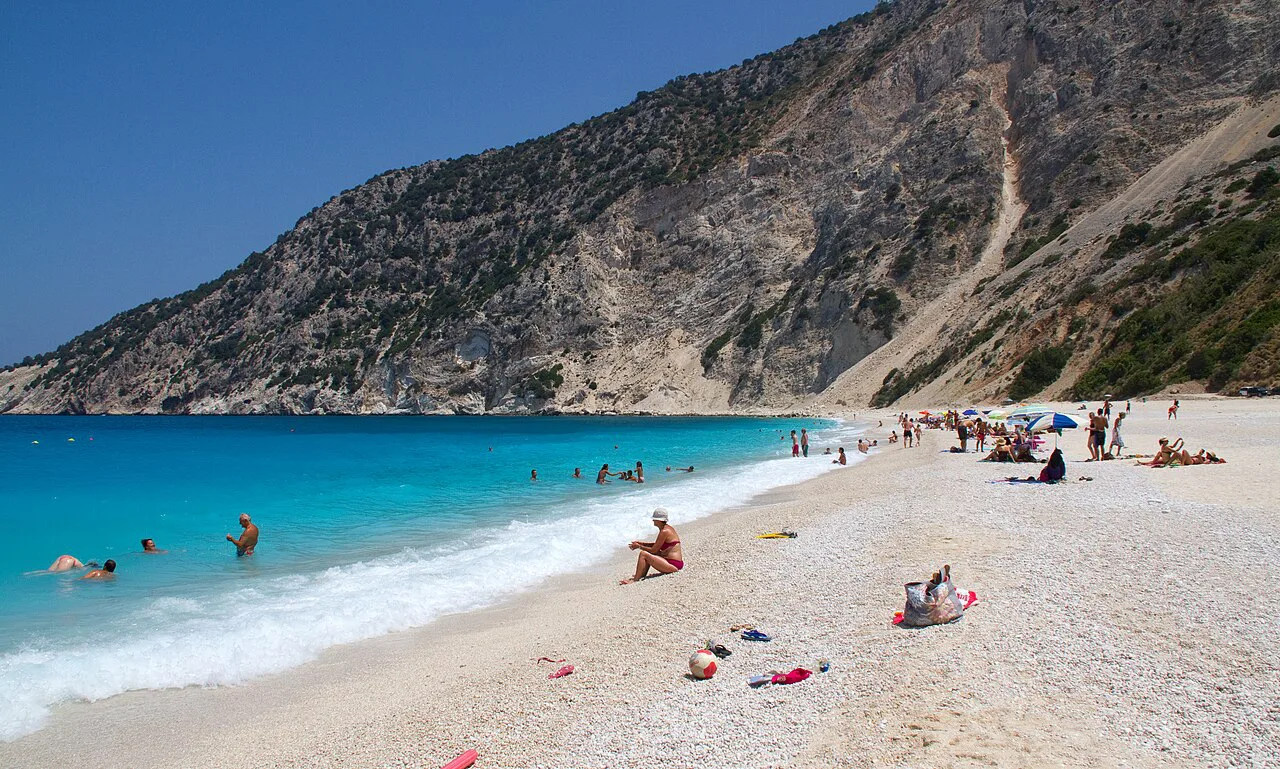
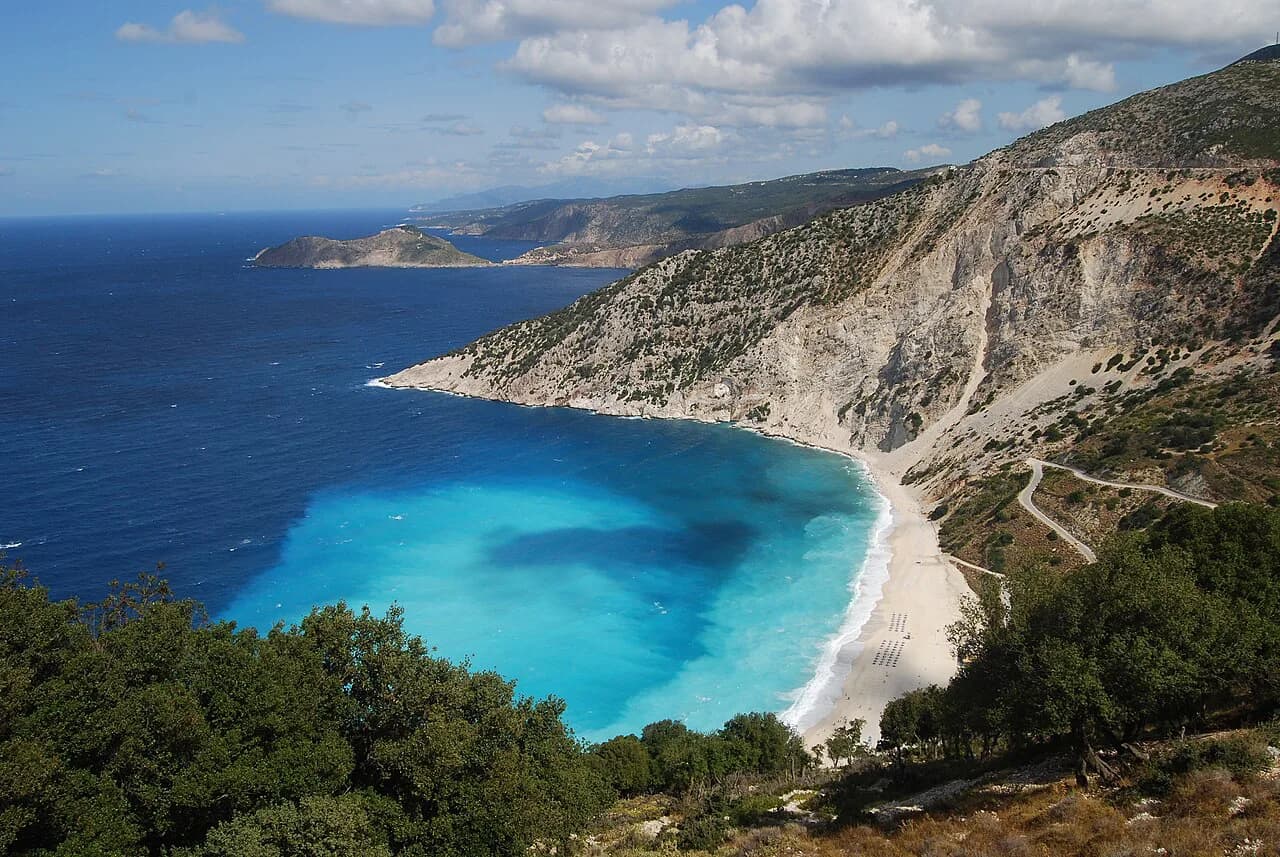
For lazing on a beach, April is a compromise. The sands at Myrtos, Antisamos and Petani are quiet and the light is beautiful for photographs and viewpoints, but the air is not reliably hot and the water is still cold. Treat beach time as a walk and a picnic rather than a day of lying out and swimming. Families with small children who want water play should look at later months.
Early vs late April
The month shifts meaningfully from start to finish. Early April can still feel like a continuation of March, with cool nights, more frequent rain and mountain cloud that hides the higher views. Late April usually brings longer settled spells, warmer afternoons and better odds of a clear day on the summit road above Ainos.
Late April also aligns with the island waking up commercially. More village tavernas are cooking daily, more boat operators are advertising trips, and the caves and archaeological sites are into their fuller April pattern. If you have a fixed week to choose, the second half of the month is the safer bet for both weather and services.
One timing factor works the other way: the Easter period, when it falls in April, brings Greek visitors and family reunions, filling ferries and the more popular waterfront tables for a few days. Book travel around it rather than hoping to improvise.
April compared with March and May
March is noticeably cooler and wetter, with more unsettled spells and colder evenings, so April buys you a real step up in usable outdoor hours. May is where the season changes character: the Greek weather service records a typical May daytime high of 23.4°C (about 74°F) with 4.6 rain days, which is a different proposition for beach time and outdoor dinners.
The gap between April and May is larger than the numbers alone suggest, because it also includes warmer sea, longer settled spells and a fuller set of open restaurants and boat trips. If you are weighing the two, our guide to Kefalonia in May sets out what changes.
June pushes further again, with the national service recording a typical high around 27.8°C (about 82°F) and only 1.5 rain days. By then the island is dry and hot, the sea is warm, and the trade-off is bigger crowds and higher prices. April is the choice for cool-weather walking; June is the choice for reliable summer conditions.
What is open
April sits between the winter closure and the full summer season, so opening patterns vary by business. The island's tourism department publishes April opening hours for Melissani and Drogarati caves, which normally run reduced schedules at the start of the month and longer hours as the season opens. Use those published hours when planning a cave day, since they change within the month.
Tavernas and cafés follow a patchier pattern. Argostoli and Lixouri keep places open year-round, while seaside villages such as Assos, Fiskardo and Skala bring tables back gradually through the month. Expect some places still closed, some open only at lunch, and a warm welcome where you find them. It is worth checking a place is serving before you build a day around it.
Boat trips and ferries are the biggest practical variable. Inter-island and local boat services build up through spring, and excursion boats to beaches and sea caves usually start running nearer the end of April. Ask the ferry company or excursion boat you plan to use for its spring timetable instead of counting on a summer schedule from the start of the month.
Things to do in April
Start with Argostoli, the island capital, and the lagoon at Koutavos, where you can walk a flat waterfront path and watch for turtles in the shallows. The town's museum and library give a rainy-afternoon option, and the food market is the place to pick up local cheese, honey and wine. The nearby village of Kourkoumelata, rebuilt in a distinctive style, makes an easy short detour.
North of the capital, the Leivathos villages — Svoronata, Metaxata, Peratata — are pleasant for a slow drive with stops for lunch, and they sit close to several quiet beaches. Inland, the castle of Agios Georgios offers views over the southern half of the island that are clearer in spring than in summer haze.
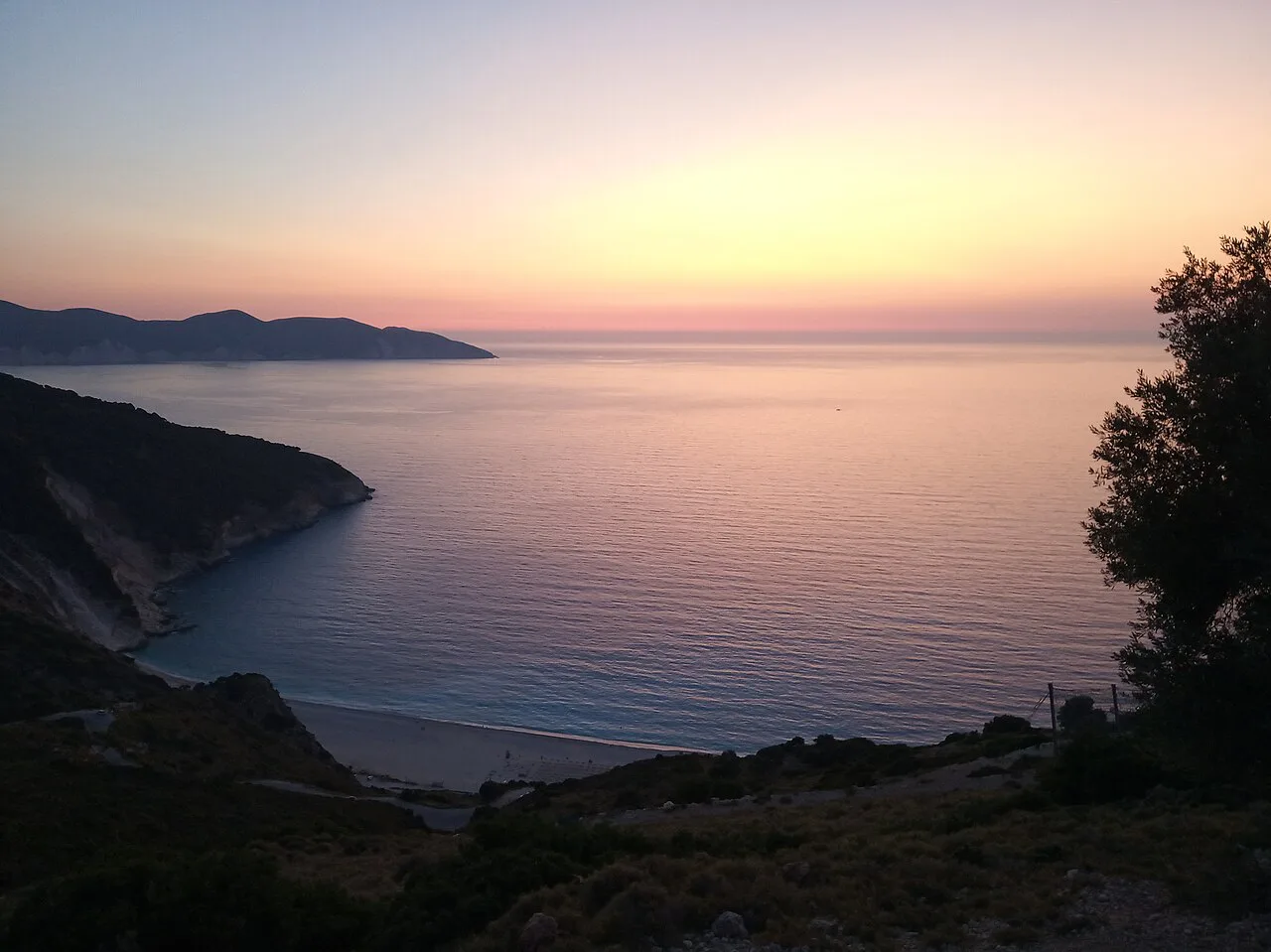
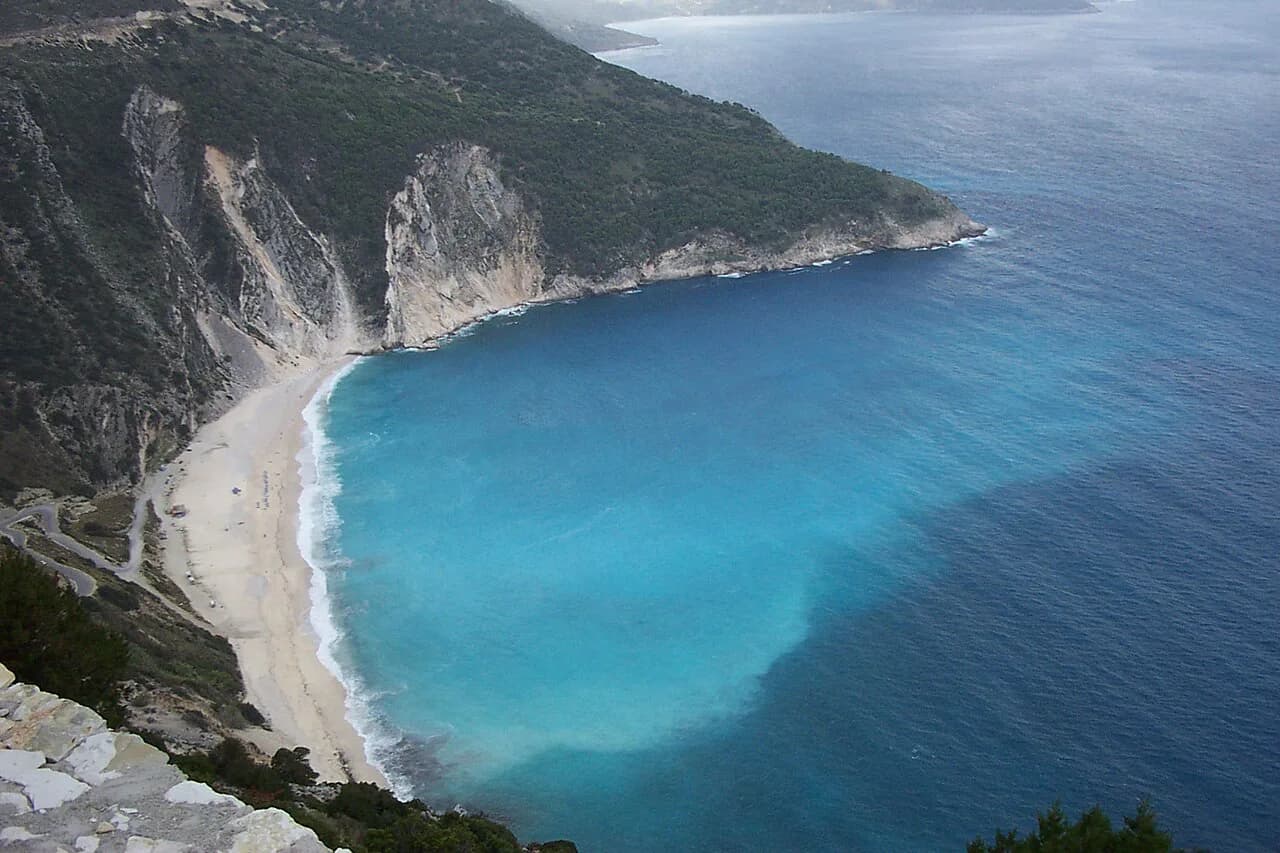
On the west coast, Assos is the classic April stop: a small peninsula village below the Venetian fortress at Assos, with a sheltered bay and a hillside walk. Treat the fortress visit as an easy ramble rather than a full day, and pair it with the viewpoint over Myrtos Beach on the road north. In April the Myrtos Beach viewpoint is quiet, though the beach itself is not yet in summer service.
Up in the far north, Fiskardo is attractive year-round and works well in April for a harbour lunch and a walk out along the coast path towards the lighthouse. The village is quieter and less polished than in high summer. On the east side, Sami and Antisamos sit in the same day's reach, with the cave country between them.
Food is a genuine reason to come now. Spring greens, wild herbs, artichokes, lamb and fresh cheeses appear on menus, and the island's Robola wine is a natural match for a long lunch. Look for Kefalonian meat pie and the local sweet mantolato, and eat where the village, rather than the marina, is doing the eating.
Beaches and the sea in April
The sea is the honest limitation of an April trip. It is cold, having lost the summer's heat, and the air is not consistently warm enough for long stretches on the sand. The island's main beaches — Myrtos, Antisamos, Petani, Xi, Makris Gialos — are at their quietest and most photogenic, and best enjoyed as walks rather than swims.
For families, this matters. Children will happily paddle in sheltered shallows on a sunny afternoon, but a full beach-holiday routine of swimming and sunbathing is realistic only later in spring. If the beach is the point of the trip, shift to late May or June, when water and air both cooperate.
Crowds and prices
April is one of the quietest months of the island's year, apart from Easter. Roads, viewpoints and the popular caves are manageable, and you can often arrive at a sight without queuing. Accommodation and flights are at pre-season levels, with the caveat that some hotels and villas are not yet open.
Easter is the exception. When Orthodox Easter falls in April, Greek visitors arrive for family and religious holidays, ferries fill and the most popular tavernas get busy for several days around the weekend. UK school holidays can also put pressure on flights in early April. Outside those windows, prices and crowds are both lower than at any point in summer.
The trade-off is half-open resorts: a low rate can come with a limited restaurant choice and no beach service nearby. Weigh the saving against what you actually plan to do rather than chasing the cheapest week.
Honest drawbacks
April's weaknesses are real. Evenings can be cool enough to need a jacket, rain arrives in proper spells rather than quick showers, and wind is common on exposed coasts and higher ground. Mountain cloud can hide Ainos for a day at a time, and some coastal roads are still quiet because seasonal businesses have not reopened.
The upside of those drawbacks is that the island feels like itself. You get green hills, working villages and room to move at the viewpoints, which is exactly why walkers and sightseers rate April highly. Come expecting a spring island rather than a beach resort and the month holds up well.
April or May?
Choose April if you are travelling for walking, hiking, archaeology, food and quiet roads, and you are comfortable with changeable weather and a jacket after dark. It is also the better month for a lower-cost trip, provided you check that your chosen base has restaurants open.
Choose May if you want warm afternoons, a sea you can actually swim in, and a full set of open tavernas and boat trips. The weather figures make the case plainly: May is warmer and much drier than April, and by late May the season is properly running.
If you are still deciding between months or considering a June trip instead, our guide to the best time to visit Kefalonia compares the whole spring and summer season. For wider options across the Mediterranean in April, see our guide to warm places in Europe in April, which ranks the Ionian against the Aegean, southern Spain and the Canary Islands.
The verdict
Kefalonia in April is a spring island, not a summer one. The national weather service figures — around 19°C by day and 11°C at night, with roughly nine wet days — describe a month that rewards walking, sightseeing and eating well while asking you to accept cool evenings and the odd wet afternoon.
Go now if you want green landscapes, quiet villages like Assos and Fiskardo, empty viewpoints over Myrtos and a low-key, pre-season feel. Wait until May or June if warm sea, beach days and a fully open resort matter more than solitude. Both are good decisions; they are just different holidays.
Plan Your April Trip
Build your April days around the weather rather than against it: keep a walking day ready to swap with a cave, museum or town day if rain sets in, and plan the Ainos views for the clearest morning of your stay. Check current cave hours with the island's tourism department and ask boat operators directly before you commit.
For passport, visa and entry requirements, use the official UK government travel advice for Greece once before booking. Everything else — where to base yourself, what to see and when the season opens — follows from deciding whether you want spring quiet or early-summer warmth.
More Kefalonia spring guides
Frequently Asked Questions
Is Kefalonia warm in April?
It is mild rather than hot. Long-term records for the island's airport station give a typical daytime high near 19°C and a night-time low near 11°C, so a sunny afternoon feels pleasant but mornings and evenings are cool. It is warm enough for walking, sightseeing and outdoor lunches, not for reliable sunbathing.
Can you swim in Kefalonia in April?
The sea is still cold in April, having lost the summer's heat, and the air is not consistently warm enough to dry off comfortably afterwards. Sheltered shallows are fine for a quick paddle on a sunny afternoon, but a proper swimming and beach routine belongs to late May or June.
Is May a better time to visit Kefalonia than April?
For most holidaymakers, yes. May brings a typical daytime high around 23°C, far fewer wet days than April, warmer sea and a fuller set of open tavernas and boat trips. April wins only if you specifically want cool-weather walking, green hills and the quietest roads of the season.
What is there to do in Kefalonia in April?
Walking in Ainos National Park, wandering Argostoli and the Leivathos villages, drives to Assos and Fiskardo, viewpoints over Myrtos Beach, and cave visits at Melissani and Drogarati. Rainy afternoons are best covered by museums, the library in Argostoli and long village lunches.
Is Kefalonia busy in April?
Mostly no. Outside the Easter period, roads, viewpoints and the popular caves are quiet and you can often arrive without queuing. The exception is the days around Orthodox Easter, when Greek visitors arrive for family holidays and ferries and waterfront tavernas get busy.
Is April or June better for Kefalonia?
They are different holidays. April gives you a green, quiet, changeable island suited to walking and sightseeing. June gives typical highs near 28°C, very little rain, warm sea and a fully open season, at the cost of bigger crowds and higher prices.
Sources
Spring sun notes
Optional updates when we add destinations and months.
You might also like
Continue reading
More guides you'll find useful