Greece in Spring: Where to Go and How Warm It Gets
Greece in spring runs from 19°C highs in April to 30°C in June. See which islands and mainland regions suit each month, and what changes as the season opens.
On this page
Spring in Greece is a season you can use from March, but it only becomes reliably warm from late April, and by June the south is already into summer heat. Expect average daytime highs in the high teens to low twenties Celsius in April, the mid twenties in May and around 30°C (86°F) in Athens by June, with nights that stay cool in April and mild by June. That makes April best for walking, ruins and empty villages, May the sweet spot for combining sightseeing with time outdoors, and June the month for people who want dependable sun and can handle midday heat.
Spring in Greece: the short answer
The season opens wet and cool in the north and on the Ionian islands, and dries out steadily as you move south and east. Athens averages 20.2°C (68°F) by day and 11.8°C (53°F) at night in April, with 9.7 rain days; by June it reaches 30.3°C (87°F) by day and 20.7°C (69°F) at night, with only 3.7 rain days. Crete is a touch cooler by day in April than Athens but warmer at night, and much drier in June.
If your priority is warmth with some green landscape left, late April and May are the months to book. If you want heat and near-certain sunshine, June delivers, but you lose the wildflowers, the empty sites and the cooler walking days. Families with young children often do better in late May or early June, when evenings are mild and tavernas are fully open, rather than in early April, when nights are genuinely chilly.
Weather month by month: April, May and June
April is a month of two halves. Rhodes averages 20°C (68°F) by day and 14.2°C (58°F) at night, with 7.6 rain days and 27.8 mm of rain, while Heraklion on Crete averages 20.3°C (69°F) by day and 12.3°C (54°F) at night, with 7.7 rain days. Thessaloniki, further north, is cooler at 19.3°C (67°F) by day and 8.8°C (48°F) at night, and wetter, at 11.2 rain days and 37.5 mm.
May is when the season settles. Athens climbs to 25.2°C (77°F) by day and 16.1°C (61°F) at night, with 6.8 rain days; Crete reaches 23.9°C (75°F) by day and 15.6°C (60°F) at night, with 4.4 rain days; Rhodes gets 23.8°C (75°F) by day and 17.8°C (64°F) at night. That combination of warm days, mild nights and less rain is why May suits almost every kind of trip.
June is effectively summer. Rhodes averages 27.8°C (82°F) by day and 21.8°C (71°F) at night with only 1.2 rain days, and Crete averages 27.5°C (81°F) by day and 19.7°C (68°F) at night with 1.3 rain days. Athens is hotter still at 30.3°C (87°F) by day, which is fine for the beach and hard work for archaeological sites at midday. June suits sun-seekers and late-season walkers who start early, not people who wilt in heat.
Corfu shows the Ionian pattern clearly: 19°C (66°F) by day and 9.2°C (49°F) at night in April, with 12.9 rain days and 66.7 mm; 23.8°C (75°F) by day and 12.9°C (55°F) at night in May, with 8 rain days; and 28°C (82°F) by day and 16.4°C (62°F) at night in June, with 4.9 rain days. If you want early spring sun, Corfu is the wrong island; if you want a green, dramatic Ionian spring with some rain risk, it is excellent.
Early vs late season: what changes between March and June
March is still winter in all but name across most of Greece, with cool days, cold nights and a good chance of rain, though the Peloponnese and Crete can produce warm spells. The real shift happens through April: hillsides are green, wildflowers are out, and the first genuinely warm days arrive, but evenings remain cool enough to need a jacket. By late April, the south and east feel convincingly spring-like.
May is the month when the country visibly switches over: tavernas and beach clubs start opening, boats begin running, and the landscape dries from green to gold. June brings full summer conditions and prices, with beaches busy and sites hot by midday. If you are choosing between the months either side, our guide to the best time to visit Greece sets out the trade-offs in more detail.
Athens in spring: the city before the heat
Athens is at its most usable in April, when daytime highs of 20.2°C (68°F) make the Acropolis and the Ancient Agora comfortable and the evening Plaka streets pleasant. The catch is rain: nearly ten rain days in April, and cool nights at 11.8°C (53°F). May is drier and warmer, with 25.2°C (77°F) by day, and by June the city is hot and crowded.
Use Athens as a spring city break rather than a beach base, and pair it with the Argolid or Delphi if you want to add ruins and mountain scenery. Easter and the May bank holidays push up flight and hotel demand, so late April and the second half of May are the quieter windows. For more ideas on the city and the surrounding region in April, see things to do in Greece in April.
The islands in spring: Crete, Rhodes, Corfu, Kefalonia, Santorini and Kos compared
Rhodes is the warmest of the big islands in April, with nights at 14.2°C (58°F) and 20°C (68°F) by day, which makes outdoor eating and the medieval Old Town genuinely comfortable. Crete is close behind and slightly warmer at night, and its size means you can move between coast and mountains to chase the better weather. Both suit April better than the Cyclades.
Kefalonia averages 19.2°C (67°F) by day and 11.2°C (52°F) at night in April, with 9.5 rain days and 60.4 mm, so its nights are noticeably cooler than Rhodes despite similar daytime highs. By May it reaches 23.4°C (74°F) by day and 14.6°C (58°F) at night, with 4.6 rain days, which is a better fit for the island's walks and beaches.
Santorini and Kos are covered in the same climate series but without local rainfall or sunshine figures: Santorini averages 18.9°C (66°F) by day and 13.3°C (56°F) at night in April, and Kos 19.2°C (67°F) by day and 12.9°C (55°F) at night. Both are better in May and June, when the Cyclades and Dodecanese settle into reliable sun. If you are comparing Greece with the rest of the Mediterranean, our guide to the warmest places in Europe in April puts these figures alongside Spain, Portugal and the Canaries.
Corfu is the greenest and wettest of the group in April, with 12.9 rain days and 66.7 mm, but its Old Town and gardens are at their best before the summer crowds. If you are set on the Ionian in spring, read our guide to Corfu in spring before you commit to dates.
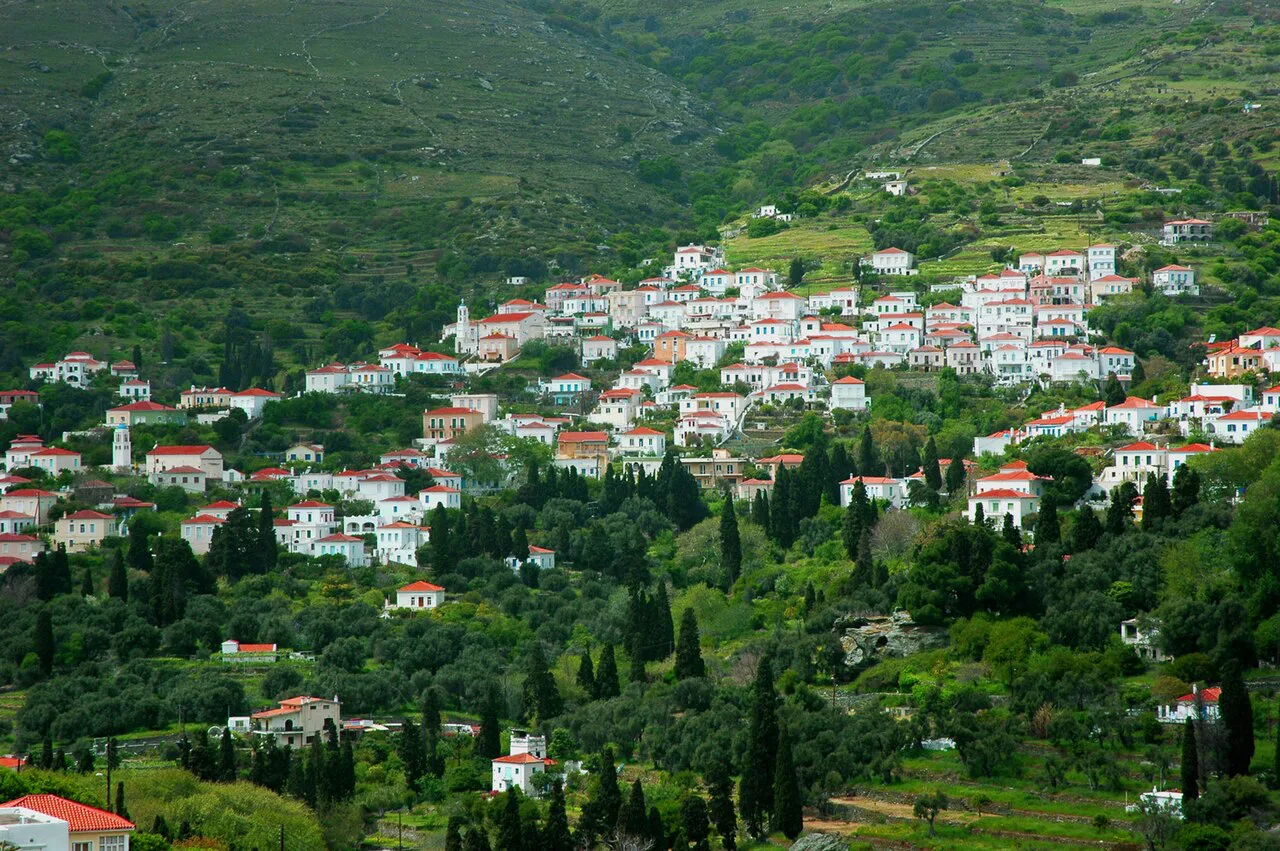
The mainland in spring: Mani, Pilio, Drama and the north
The Mani peninsula in the southern Peloponnese is ideal in April and May, when the coastal road below Mount Taygetos is green, the villages around Kardamyli are quiet, and walking routes such as the Viros Gorge are at their best before the heat. Snow can still cling to the Taygetos peaks in April, which tells you how cool the upper ground remains.
Pilio, on the mainland east coast, is a spring walking destination: villages such as Tsagarada sit among apple and chestnut trees, with trails down to the sea at Damouchari. Drama, in eastern Macedonia, is greener and cooler still, with river and mountain excursions, and it suits May better than April. For the northern mainland, treat spring as a walking and food season rather than a beach one.
Chios and Amorgos are the quieter island options for spring: Chios for the citrus groves of Kampos and its biking lanes, Amorgos for hill walking between Aegiali, Tholaria, Langada and the monastery of Hozoviotissa. Both reward travellers who want fewer people and are willing to accept changeable weather in April.
What is open: ferries, boat trips, sites and tavernas as the season starts
Spring is a gradual opening rather than a switch. Restaurants, tavernas and guesthouses begin welcoming visitors through April, and more of the seasonal places open as May arrives. In April you should expect a reduced choice, especially on smaller islands, and some places that only trade in summer will not yet be running.
Ferries and boat trips are thinner in April and early May, and inter-island connections are less frequent than in summer; Mykonos, for example, has just two little boats a week to Delos pre-season compared with the summer service. That makes island-hopping in April possible but slower, and it argues for fewer islands and longer stays. Check timetables with the ferry operator or a booking site once your dates are fixed.
Archaeological sites and museums generally keep regular hours, and spring is when you can see them without queues. The benefit is real: the moat around Rhodes Old Town is full of wildflowers in spring, and the Valley of the Butterflies is quiet before the summer visitors arrive. Check official sources for current entry rules and opening times before you travel.
Things to do that suit the season: walking, wildflowers, villages and spring food
Walking is the defining spring activity: the Mani, Pilio, Amorgos and the countryside around Chios all offer trails that are too hot by June and too wet in winter. Wildflowers peak in April, and the green hillsides that follow winter rain are a genuine reason to travel then. Birdlife is also strong, with the Korission wetland on Corfu hosting flamingos, herons and egrets in spring.
Village life is another spring pleasure: the tower houses and plane-shaded squares of the Mani, the whitewashed lanes of Amorgos, the citrus estates of Kampos on Chios. Spring food follows the season, from wild greens and asparagus in Pilio to mandarin sweets on Chios, and tavernas are more likely to be cooking for locals than for crowds.
Crowds and prices in words: Easter, May bank holidays and half term
Spring is cheaper and quieter than summer almost everywhere, but the calendar matters. Greek Orthodox Easter, which falls in April in 2026, brings domestic travel, family visits and higher demand on ferries and in Corfu Town and Crete. The UK May bank holidays and school half term also push up prices on the islands, so book those windows early.
Outside those peaks, April and late May are the value months, with lower accommodation rates and no need to book restaurants. June prices climb towards summer levels as the season gets going. Travellers report that spring offers lower prices and fewer people alongside good weather, which matches the pattern of the season.
Honest drawbacks: cool evenings, wind, rain spells and a cold sea
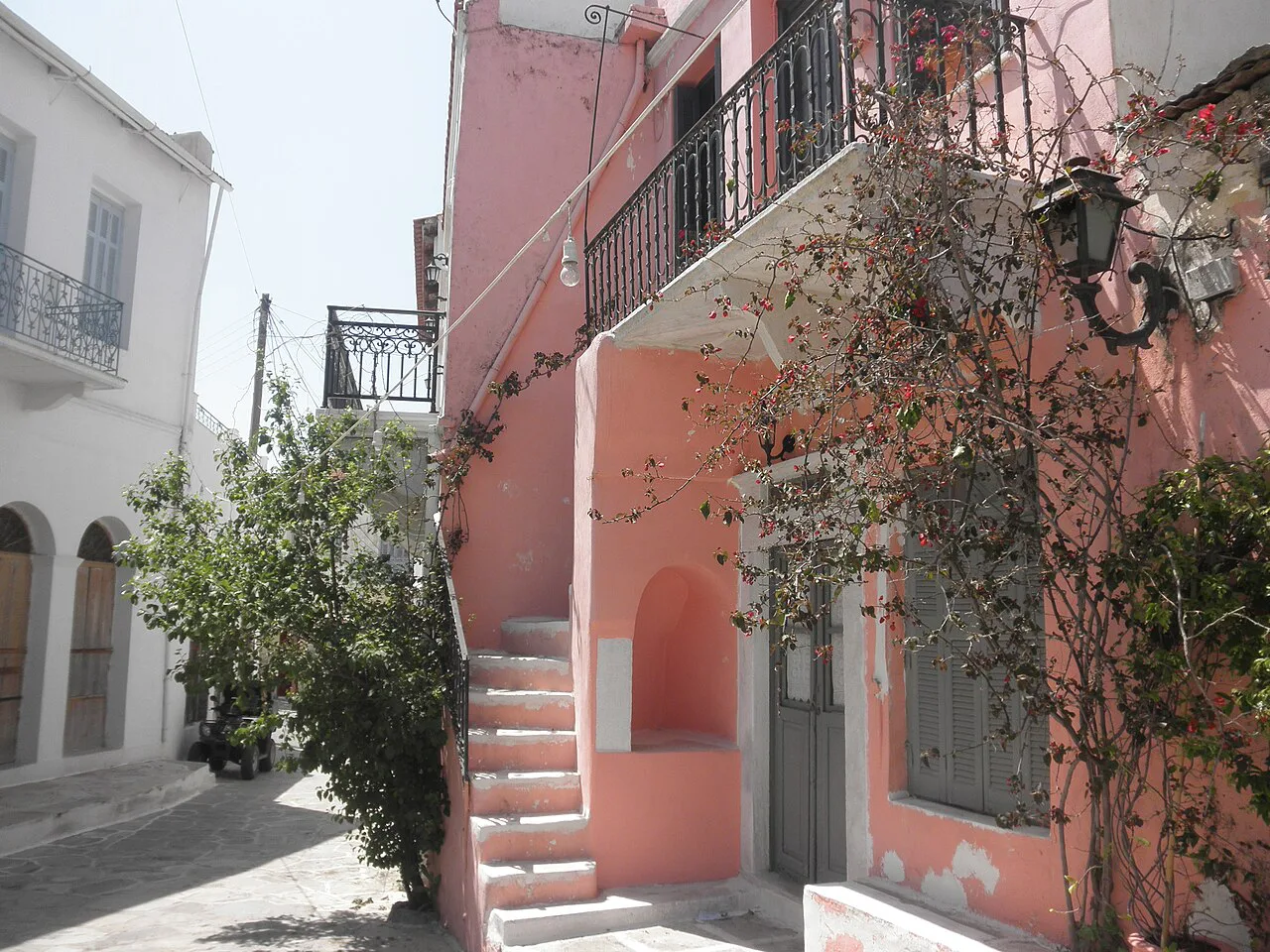
April evenings are cool, especially in the north and on the Ionian islands, where Thessaloniki drops to 8.8°C (48°F) and Corfu to 9.2°C (49°F) at night. Rain is a real risk: Thessaloniki has 11.2 rain days in April and Corfu 12.9, so a week can include wet days. The sea is cold well into May, so swimming is for the hardy rather than the holidaymaker.
Wind is another factor, particularly in the Cyclades, where meltemi winds build through the season and can disrupt boats. By June the heat is the drawback: Athens at 30.3°C (87°F) by day is draining for sightseeing, and the south is dry and crowded. Spring rewards flexibility, so build in a backup plan for wet or windy days.
April or May? Choosing your month
Choose April if you want empty sites, green landscapes, wildflowers and lower prices, and you are happy with cool evenings and some rain. Rhodes, Crete and the Mani are the safest bets for warmth, while the Ionian and the north are better in May. April suits walkers, photographers and couples more than families with young children.
Choose May if you want the best balance: warm days, mild nights, more places open and reliable conditions for both sightseeing and time outdoors. The second half of May, after the bank holidays, is the sweet spot. If you are still weighing the two months, our Greece in May guide and our Greece in April guide break down the differences in detail.
Island or mainland? Choosing your base
Islands give you the classic Greek spring: coastline, villages and ruins, with Rhodes and Crete the warmest and Corfu the greenest. The mainland gives you easier logistics, cheaper car hire and access to mountains such as Taygetos and Pilio, plus cities such as Athens and Thessaloniki. For a first spring trip, a single island plus Athens is hard to beat.
If you want maximum warmth with minimum travel, pick Crete or Rhodes. If you want variety and don't mind rain, choose the mainland or Corfu. Families often prefer the mainland coast because it is easier to combine beaches with day trips, while couples and walkers do better on the quieter islands.
The verdict
Spring is the best-value and most comfortable season for most of Greece, provided you pick the right month and the right latitude. Late April and May give you warm days, green hills and space at the sites; June gives you dependable sun but loses the spring character. If you want warmth above all, go south and east; if you want scenery and walking, the mainland and the Ionian are at their best in May.
Book around Greek Orthodox Easter and the UK bank holidays rather than against them, and check current ferry schedules and site hours closer to your dates. For official travel advice, see the UK government's Greece travel page once and move on to the more interesting decisions.
More Greece spring guides
Frequently Asked Questions
Is spring a good time to visit Greece?
Yes, for most travellers. Spring gives warm days without the summer heat, green landscapes and far fewer people. April suits walkers and sightseers; May is the best all-round month; June is warm and dry but busier.
Is April too early to go to Greece?
It depends where you go. Rhodes, Crete and the southern Peloponnese are warm enough by day in April, with highs around 20°C (68°F), but nights are cool and rain is likely on the Ionian islands and in the north. April is fine for sightseeing and walking, less so for reliable beach weather.
How warm is Greece in spring?
Typical daytime highs run from about 19–20°C (66–68°F) in April to 25°C (77°F) in May and 28–30°C (82–86°F) in June, with cooler nights in April and warm nights by June. Conditions vary by region, with the south and east warmer than the north and the Ionian.
Which Greek island is warm in April?
Rhodes and Crete are the warmest of the main islands in April, with daytime highs around 20°C (68°F) and warmer nights than the Ionian. Corfu and Kefalonia are cooler and wetter in April, so they suit later in the season.
What is Greece like in May?
May is the sweet spot: warm days, mild nights, less rain and more places open. Tavernas and boats start running, the landscape is still partly green, and the sites are manageable before the summer crowds.
Is June too hot in Greece?
June is hot rather than unbearably so, with Athens around 30°C (87°F) by day and the islands a degree or two cooler. It is fine for the beach and early starts but hard work for midday sightseeing, and it is busier than May.
Is the sea warm enough to swim in Greece in spring?
The sea stays cold well into May and only becomes comfortable in June. Hardy swimmers do go in April, but most people find it bracing; for comfortable swimming, plan for late May or June.
Are ferries and tavernas open in Greece in April?
Some are, but not all. Ferries and boat trips run less often in April and early May, and some seasonal tavernas and hotels are still closed. Check schedules with the ferry operator and expect a reduced choice of places to eat on smaller islands.
Sources
Spring sun notes
Optional updates when we add destinations and months.
You might also like

Continue reading
More guides you'll find useful