Best Time to Visit Ibiza: Month-by-Month Weather and Crowds
May, June and September give Ibiza warm days without midsummer crowds. A month-by-month look at the weather, the season and what each month really delivers.
On this page
For most travellers the best time to visit Ibiza is late May to mid-June or September: daytime temperatures sit comfortably in the low to mid-20s Celsius, sunshine is generous and the island is lively without being overwhelmed. Choose July or August only if you want guaranteed heat and every beach club, boat trip and restaurant running at full capacity, and accept the crowds and higher prices that come with it.
Ibiza's Climate in Brief
Ibiza is a Mediterranean island with mild winters, a dry summer and a spring that warms steadily rather than dramatically. The most reliable long-run picture comes from AEMET's climate normals for Ibiza Airport, covering 1981 to 2010, which show a clear step up in both temperature and sunshine from April through June. Treat those numbers as typical conditions, not a forecast, and expect individual years to run warmer or cooler.
The practical consequence is that Ibiza's spring is a gradual build, not a switch. April can feel like a bright, breezy mainland spring day, while June already feels like summer. If your trip hinges on lying by a pool in short sleeves all evening, the island only reliably delivers that from June onwards.
April: Bright, Mild and Quiet
April averages a daytime high of 19.7 °C (67 °F) and a night-time low of 11.4 °C (53 °F), with around 246 hours of sunshine across the month, 4.1 rain days and 31 mm of rain. In practice that means pleasant midday walking and sightseeing weather, with evenings that still call for a layer and the occasional wet spell. The sea stays cold through spring, so this is not a month for long days in the water.
April suits walkers, cyclists and anyone who wants Ibiza Town and the villages without queues. It is also the month when much of the island is still in pre-season mode: some beach clubs, boat operators and seasonal restaurants run reduced hours or open later in the month. If a specific place matters to your trip, contact the venue directly before you build a day around it.
Compare April with the months around it and the trade-off is obvious: March is cooler and quieter still, while May is noticeably warmer and busier. If you want spring sunshine but not a full summer island, April is the value choice. If you want to eat outside in the evening without a jacket, it is not.
May: The Sweet Spot
May lifts the average daytime high to 22.7 °C (73 °F) and the night-time low to 14.6 °C (58 °F), with 272 hours of sunshine, 3.2 rain days and 27 mm of rain. That is a meaningful jump from April: warmer afternoons, milder evenings and fewer wet days. For sightseeing, coastal walks and long lunches outdoors, May is hard to beat.
Early and late May behave differently. The first half keeps some of April's freshness and a quieter island, with the season still opening up around the beaches and in the smaller resorts. By the second half, the island feels like summer is arriving: more places open, more boats running, more people around Santa Eulària des Riu and Sant Antoni de Portmany.
If you are weighing up where to go for early warmth across the continent, Ibiza in May is competitive but not the hottest option; see where is hot in April for the destinations that peak earlier. The advantage here is balance rather than raw heat.
June: Summer Arrives
June averages 26.8 °C (80 °F) by day and 18.4 °C (65 °F) at night, with 299 hours of sunshine, just 1.4 rain days and 11 mm of rain. This is the month when Ibiza genuinely feels like a summer island, with warm evenings, dependable sunshine and the sea finally losing its spring chill. It is also when the season fully opens, so boats, beach clubs and seasonal restaurants are generally running.
The trade-off is that June is no longer quiet, particularly in the second half once school terms in the UK and US begin to wind down. Early June still gives you space; late June is busy. If heat is the priority and you do not mind sharing the island, June delivers the best combination of reliable weather and a fully functioning season.
July and August: Heat, Crowds and Peak Prices
July and August are the hottest, busiest and most expensive weeks of the Ibiza year. Days are long and reliably sunny, evenings stay warm well into the night, and the whole island operates at full capacity. That is exactly what some travellers want: a holiday where nothing depends on whether a place has opened for the season yet.
The downside is equally real. Beaches fill early, roads and car parks are congested, and accommodation and restaurant prices climb to their annual peak. If you want the summer atmosphere without the crush, late June and early September are the compromise months, offering most of the warmth with fewer people.
September and October: Warm Sea and Thinner Crowds
September often feels like the best-value summer month: the sea is at its warmest after a long season of sunshine, days remain warm and the crowds begin to thin as schools return. It suits travellers who want summer weather without midsummer intensity, and it works well for both beach time and exploring the villages inland.
October shifts noticeably. Days stay mild and often sunny, but evenings cool and rain becomes more likely, with October typically the wettest month of the year on the island. Many seasonal businesses begin to close towards the end of the month, so late October is a quieter, more local version of Ibiza rather than a beach holiday.
November to March: Quiet and Mild
Winter on Ibiza is quiet, mild and often sunny, with daytime temperatures that rarely feel cold and a landscape that turns green after the autumn rain. Large parts of the seasonal tourist economy shut down, so the island reverts to its resident rhythm: markets, village life and long walks on empty shores. It is a genuinely attractive off-season escape, but it is not a beach holiday.
Around the Island: How the Season Differs
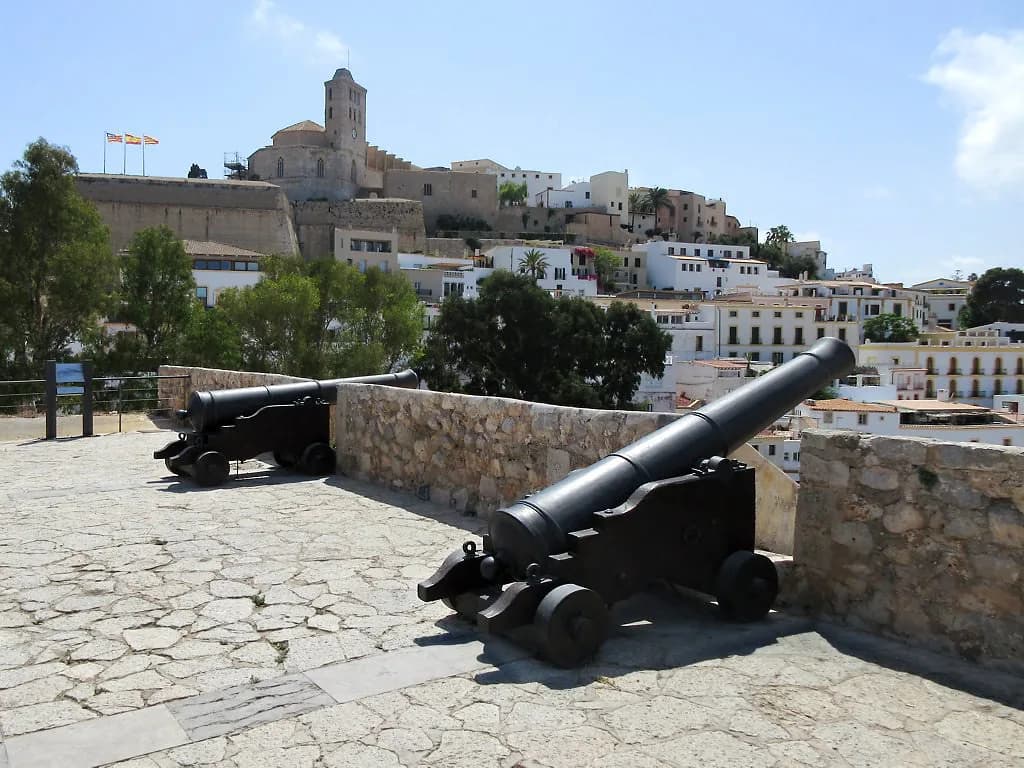
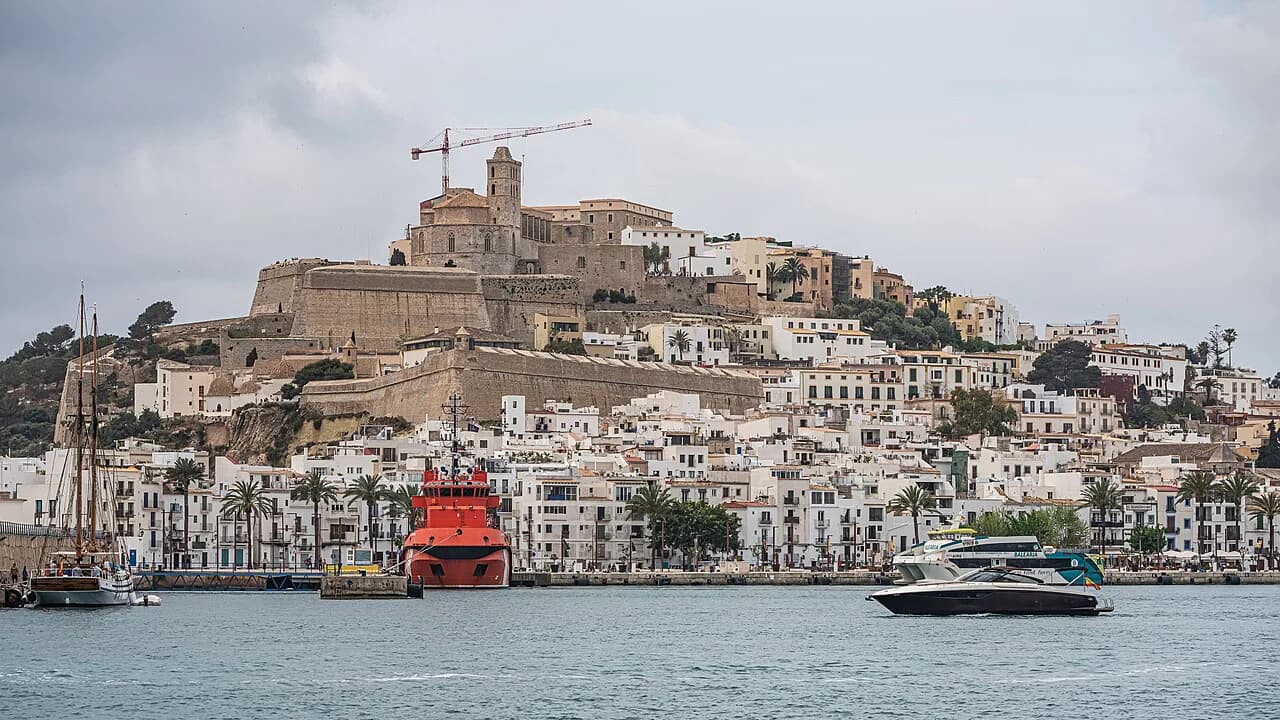
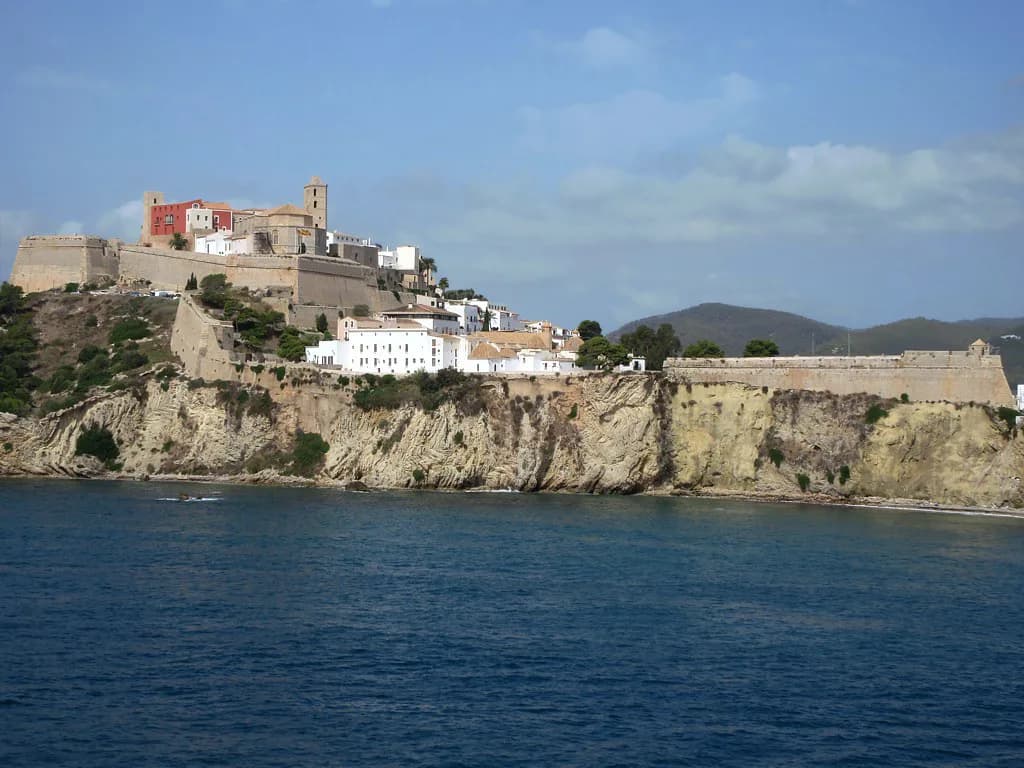
Ibiza Town, with Dalt Vila above it, is the island's year-round anchor: the old town, the marina and the restaurants around them stay active well outside the summer months. It is the best base for a spring trip where you want culture, food and harbour life rather than a resort strip.
Santa Eulària des Riu and Sant Antoni de Portmany follow the season more closely. Santa Eulària is the gentler, family-oriented option, with a promenade and a calmer feel that suits May and early June particularly well. Sant Antoni has the larger seasonal infrastructure, so it comes alive later in spring and quietens faster in autumn.
The north of the island, with its coves, rural lanes and small villages, is at its best in spring for walking and cycling, when the countryside is green and the heat is manageable. In high summer the same roads are hot and busy, which changes the experience considerably.
Matching the Month to the Trip
For walking, cycling and sightseeing, April and May are the strongest months: cool enough to move, bright enough to enjoy the views, and quiet enough to eat where you like. For beach days and long outdoor evenings, June and September are the sweet spot. For a classic summer holiday with everything open, July and August are the obvious choice, provided you accept the crowds.
Families often do best in late May, June or early September, when the weather is warm but not punishing and the island is not at absolute peak. Couples and walkers should look at April and early May. Anyone chasing the island's summer scene should target June onwards, when the season is in full swing.
Crowds and Prices in Words
Ibiza's calendar drives both crowds and prices. Spring bank holidays and UK half term push up demand in late May, and the summer school holidays make July and August the most expensive and busiest weeks. Easter can be lively too, but the island's infrastructure often runs a reduced schedule around it.
Outside those peaks, late April, early May, early June and September offer a noticeably calmer island at lower cost. Accommodation and car hire are the biggest swing factors, so book early for the peak weeks and stay flexible if you can travel in the shoulder months.

The Honest Drawbacks
Spring on Ibiza is not summer. Evenings in April and early May are cool, the sea stays cold until well into June, and rain spells can interrupt a short trip. Wind is a factor on exposed coasts, which matters if your plan revolves around boats or long beach days.
High summer has its own drawbacks: heat that builds through the day, crowded beaches and roads, and prices at their annual high. Late autumn brings cooler evenings and more rain, while winter is quiet to the point that some places you might want to visit simply are not running.
For official travel advice, consult the UK government's Spain travel page or the US State Department equivalent, which cover entry requirements and local rules. Beyond that, base your timing on the weather patterns above and on what you actually want from the trip.
Mallorca or Ibiza?
If you are torn between the two Balearic islands, the difference is scale and character. Mallorca is larger and more varied, with the Serra de Tramuntana for walking, bigger beaches and a wider spread of towns, while Ibiza is compact, easier to cover and more focused on its coast and its summer scene. Mallorca suits travellers who want variety and long hikes; Ibiza suits those who want a short-transfer island with a strong identity.
The Verdict
Pick late May to mid-June or September for the best balance of warm days, reasonable crowds and an island that is open but not overwhelmed. Choose April for quiet walking and sightseeing, July and August for full summer heat and atmosphere, and October for a milder, quieter version of the island. Winter is for a different kind of trip entirely.
Plan Your Visit
Start with the month, not the hotel: decide whether you want spring walking, early-summer warmth or peak-summer atmosphere, then match the resort to it. Ibiza Town for year-round life, Santa Eulària for a calmer family base, Sant Antoni for the fuller seasonal scene and the north for countryside and walking.
More Ibiza spring guides
Frequently Asked Questions
What month is hottest in Ibiza?
July and August are the hottest months, when daytime temperatures regularly push into the low 30s Celsius and evenings stay warm. June is already reliably warm, but the peak heat and the peak crowds arrive in the two months that follow.
Is May a good month to visit Ibiza?
Yes. May averages around 23 °C by day and 15 °C at night, with plenty of sunshine and relatively few wet days. Early May is quieter and slightly fresher, while late May feels like the start of summer, with more places open and more visitors around.
When is the party season in Ibiza?
The island's summer season builds from late spring and runs through the summer months, with the busiest period in July and August. Spring is quieter, with a pre-season feel in April and more venues opening through May and June.
Is the sea warm enough to swim in spring?
The sea stays cold through spring and only warms properly from June onwards, after a long stretch of summer sunshine. April and May are better for walking and sightseeing than for long swims, while September often has the warmest water of the year.
Is Ibiza or Mallorca better for a spring trip?
Mallorca offers more variety and serious walking, particularly in the Serra de Tramuntana, while Ibiza is smaller, easier to cover and more coast-focused. For a short spring break with warm days and good food, both work; choose Mallorca for landscapes and Ibiza for compactness.
How busy is Ibiza in April?
April is one of the quietest months of the spring, with far fewer visitors than midsummer. Some seasonal businesses run reduced hours or open later in the month, so the island feels local rather than resort-like.
Sources
Spring sun notes
Optional updates when we add destinations and months.
You might also like
Continue reading
More guides you'll find useful