Things to Do in Crete in April: Spring Walks & Ruins
April in Crete suits walking, Minoan ruins and empty coast roads rather than swimming. Here is what genuinely works in the month and what stays shut.
On this page
April in Crete is a month for walking, ruins and long coast drives, not for lying on a beach. Days are mild enough for a full day at Knossos or on a gorge path, while the sea stays cold and much of the resort strip is only beginning to wake up. If your trip hinges on swimming, book later; if it hinges on seeing the island without crowds, April is one of the best windows of the year. Crete in april has the full picture.
The trade-off is real. You get space at Elafonisi, easy tables in Chania and Rethymno, and comfortable temperatures on exposed archaeological sites. You also get cool evenings, occasional rain and a pre-season feel in the big resorts. Our guide to Crete in April sets out the month in full, and this piece focuses on what to actually do with the days.
Weather in April
Expect typical daytime highs in the high teens Celsius, with nights that still drop into low double figures or below inland. Present those as normals rather than forecasts: the Hellenic National Meteorological Service (EMY) publishes the climate tables for Heraklion and Chania, and those are the figures to plan around. In Fahrenheit, the afternoons sit roughly in the low to mid 60s, which is pleasant for moving and cool once the sun goes.
Rain is possible in spells rather than steady all-day drizzle, and the island is at its greenest because of it. Sunshine hours climb through the month, so a wet morning often turns into a usable afternoon. For a wider comparison of which Mediterranean destinations are warmest in April, see where is hot in April before you commit to Crete.
Is April warm enough for sightseeing?
Yes, and it is arguably better than summer for exactly that. Knossos and the archaeological sites offer very little shade, so a day in the low twenties is far more workable than the same site in July. Walking the open paths at Gortyna or the Palace of Malia in April means you can linger over the information boards instead of hunting for shadow, and the sites are far quieter than in high season.
The exception is anyone who wants to spend the afternoon on a sun lounger in swimwear. April afternoons are mild, not hot, and a breeze off the sea can feel cool. Families with small children usually do better with shorter site visits and a walk in the afternoon than with a full beach day.
Early vs late April
Late April is noticeably warmer and drier than the first week, and more of the island is open. Boats, tavernas and beach clubs along the resort strips tend to inch into service as the month progresses, and the south coast feels busier once the Easter period arrives. Early April is the quieter, greener, more unpredictable half: you may get a washed-out day, but you will have Chania's alleys and the southwest roads almost to yourself.
Compared with March, April is warmer, sunnier and better supplied with open businesses. Compared with May, it is cooler, cheaper in feel and less crowded, but May brings reliably warmer evenings and a fully functioning tourist infrastructure. May is also when the Samaria Gorge season normally begins, which changes the walking options substantially.
Walks and gorges
The Samaria Gorge is the island's signature walk, a roughly 16-kilometre descent from the Omalos plateau to Agia Roumeli, and its season runs from early May to late October. That means April walkers should not plan on the full traverse; the national park gate is not open for the season yet. Plan Imbros instead, a shorter and gentler gorge that suits a half-day, or the Kourtaliotiko gorge near Preveli, where you can walk a section without committing to a full day.
Agiofaraggo, which finishes at the sea on the south coast, is another good April option because the walking is not punishing in the mild heat. If Samaria is the reason for your trip, our guide to Crete in May explains why the season start matters, and things to do in Crete in June covers the crowds that arrive later. For a first visit, the best time to visit Crete lays out how the seasons compare.
Treat any gorge walk as a proper outing: paths can be loose after winter rain, and you want sturdy shoes and a check on local conditions before setting out. The reward in April is a route that is green, flowing and almost empty compared with summer.
Minoan and Roman sites
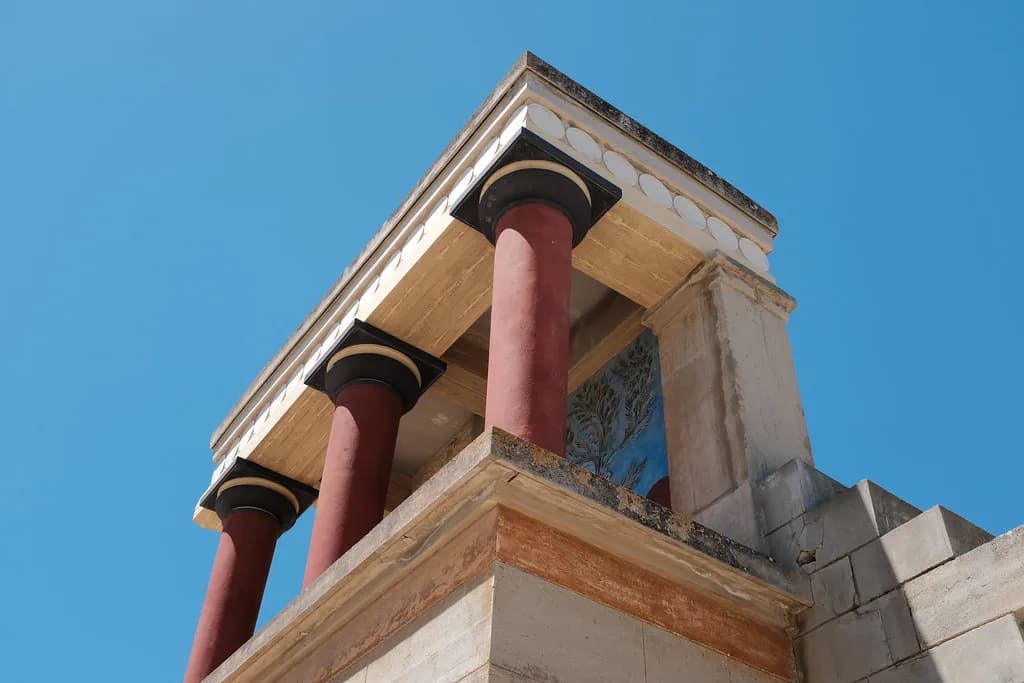
Knossos, just south of Heraklion, is the obvious starting point and pairs naturally with the Heraklion Archaeological Museum, where the frescoes and finds make sense of the ruins. April is the month to do both on the same day without wilting. Book a guided visit if you want the site to mean something, because the reconstruction and layout are hard to decode from the labels alone.
Then go quieter. The Palace of Malia, east of Heraklion, gives you the same Minoan story with a fraction of the visitors, and Gortyna in the Messara plain adds Roman baths, temples and a theatre to the mix. Combining one Minoan and one Roman site in a day is realistic in April because the driving is easy and the heat is not draining.
Chania and Rethymno old towns
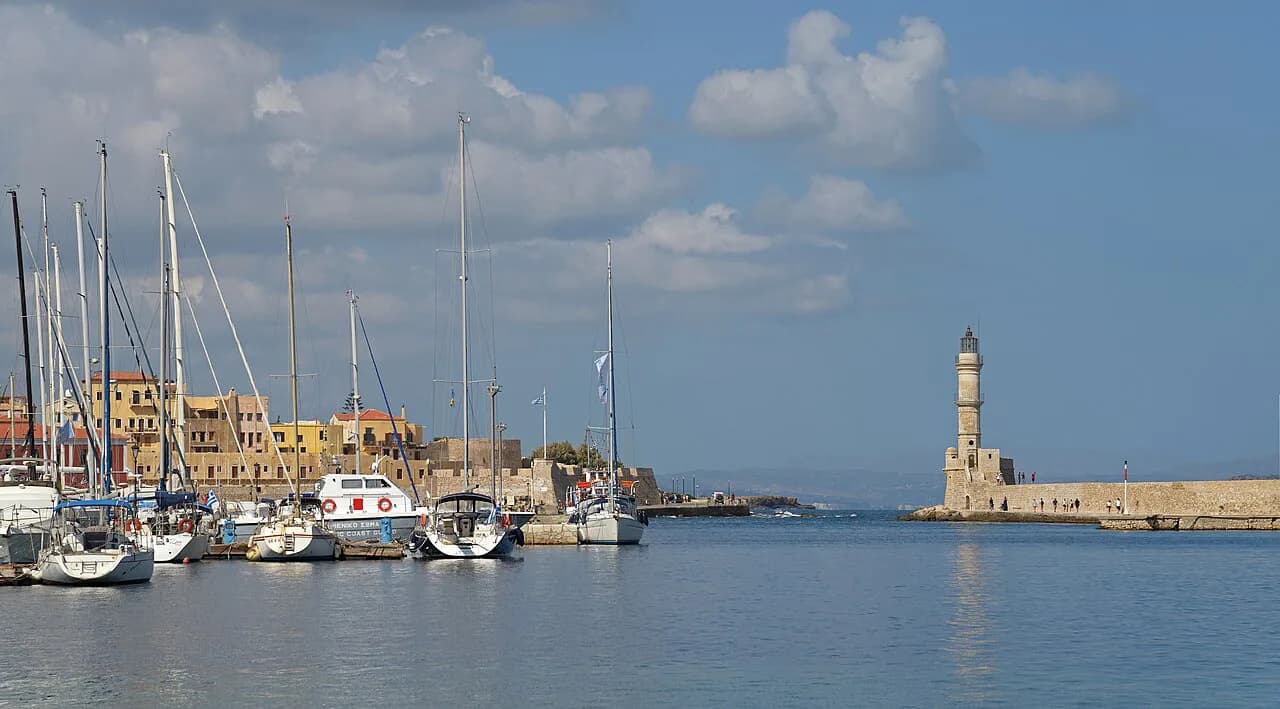
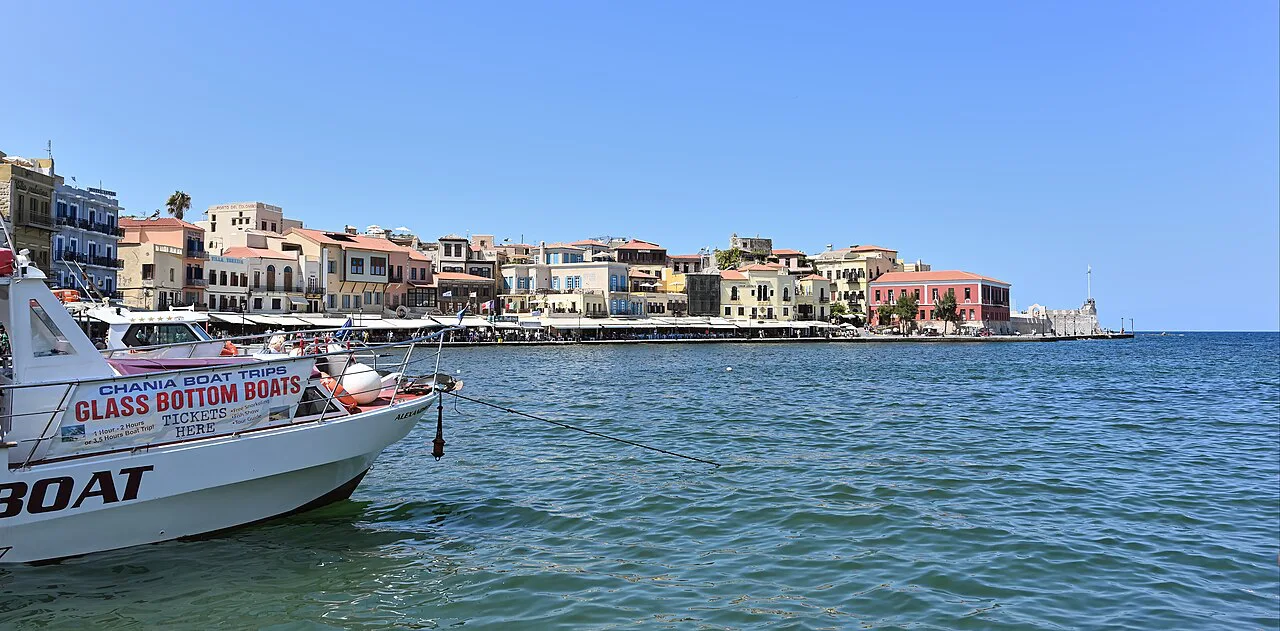
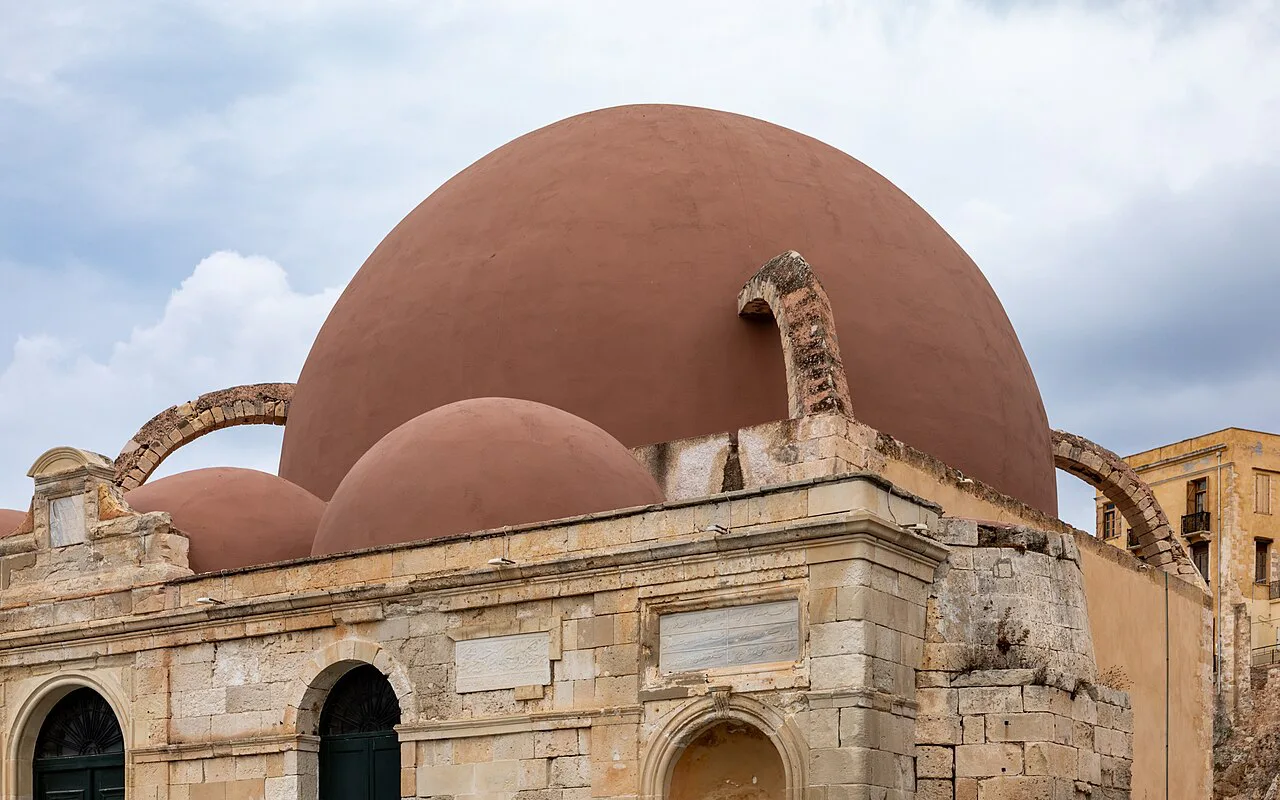
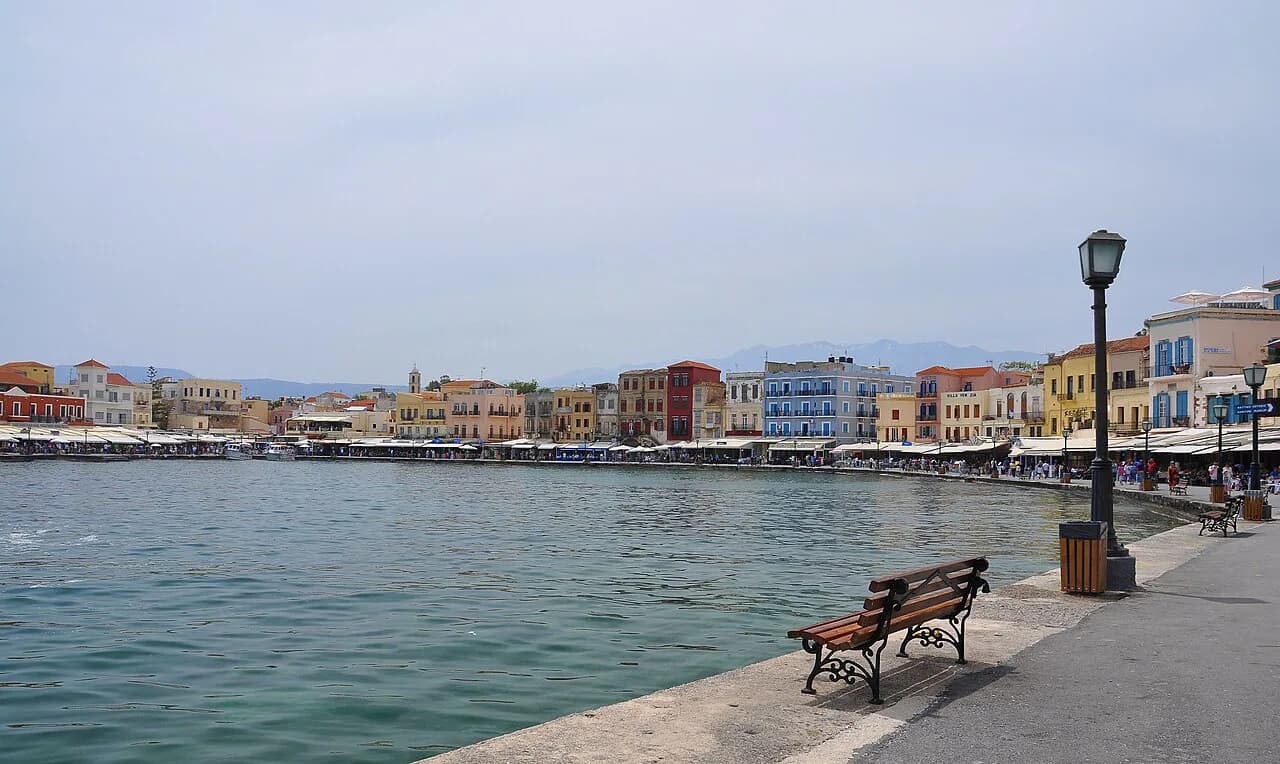
Chania's Venetian harbour, with its Egyptian lighthouse and layers of Venetian and Ottoman architecture, is the prettiest urban half-day on the island. Go mid-week and early: the alleys fill on Fridays and Saturdays, and some shops close on Sundays. Rethymno is the calmer alternative, with its own Venetian harbour and the Fortezza fortress above the town.
April suits both because you can walk for hours without the summer crush. Harbour-front tables are pleasant in the afternoon sun, though evenings still call for a jacket. This is also the month for the old towns' food shops and craft studios, which are open without the queues of high summer.
Elafonisi and the southwest coast
Elafonisi, the pink-sand lagoon in the far southwest, is at its best in spring for space and light. The colour in the sand shows clearly in sunshine, and the nature reserve is quiet enough in April that you can walk the sandbar to the offshore dune island without a crowd. Kedrodasos, a few kilometres east, is the smaller, less-visited alternative with similar sand and a wilder feel.
Be honest about the water: the sea is still cold in April, and most people will wade rather than swim. Go for the light, the walking and the emptiness rather than for a day of swimming. The drive from Chania is long, so start early and combine it with a stop at Falassarna or a look at the hilltop above Balos.
Our guide to Crete in spring explains how the coast changes through the season, and Crete in June covers what the same beaches look like once summer is in full swing.
Lasithi and the east
The east is where April feels most like a secret. Psychro Cave on the Lasithi Plateau, the hilltop village of Kritsa with its lace and weaving workshops, and the ruins of Spinalonga island off Elounda all work well in mild weather. Spinalonga is reached by short boat trips from Elounda, Plaka and Agios Nikolaos; in April the boats run on reduced, weather-dependent timetables, so it is worth asking at the Elounda or Plaka harbour ticket kiosks about departure times the day before.
Further east, Sitia and the Vai palm forest make a good full day from Agios Nikolaos, and the roads are quiet enough in April to enjoy the drive. The east also has the island's best food stops, with tavernas serving the first wild greens and artichokes of the year.
What is open in April
Expect a patchwork. City restaurants, museums, archaeological sites and the main car-hire desks operate year-round, but resort strips in Malia, Hersonissos and Stalis are still in pre-season mode, with hotels and beach clubs opening gradually through the month. Water parks and organised boat excursions often start later, so build your days around walking and sightseeing rather than relying on a fixed activity schedule.
The same applies to ferry and excursion timetables, which ferry companies and excursion operators finalise in the late winter and early spring. If a particular boat trip or site is the point of your trip, ask the ferry company or site directly before you book flights. Otherwise, keep the plan flexible: April rewards people who can move a beach day to a walking day when the weather turns.
Food and drink in season
April is a good month to eat on Crete. Wild greens, artichokes and fresh broad beans appear on taverna menus, alongside dakos, the barley rusk topped with tomato, mizithra cheese and olive oil. Cretan olive oil and local wine are table staples everywhere, and April is a comfortable month to visit a winery near Heraklion or Chania without the summer heat.
Eat lunch rather than dinner outdoors: the afternoon sun is pleasant, while evenings still cool quickly. Harbour tavernas in Chania and Rethymno are quiet enough in April to linger over a long lunch, which is one of the month's real pleasures.
Crowds and prices
April sits well below July and August in crowding, and also below the May half-term week. The main spike is the Easter period, when Greek families travel and internal ferries, buses and popular restaurants get busier for a few days. Accommodation and flights are generally at their most reasonable outside those dates, but fares move with demand, so compare prices for your own dates rather than relying on last year's numbers.
The practical advantage is that you can book late and still find space. The disadvantage is that some places are not fully staffed or fully open, so service can be slower and menus shorter than in summer. Neither is a problem if you treat April as a walking and eating month rather than a resort month.
April or May?
Choose April for empty roads, green landscapes, comfortable site visits and lower prices, and accept that you will not swim much and that some places stay shut. Choose May for the Samaria Gorge, warmer evenings, more reliable beach weather and a fully open tourist economy, at the cost of more people and higher prices.
For walkers and sightseers, April is the stronger month. For families who want a pool-and-beach holiday, May is the safer bet. If you want to compare across the Mediterranean, see where is hot in April, and if you are considering Greece more broadly, Greece in April covers the mainland and the islands.
The verdict
Go in April if you want Crete for its landscape and its history: the gorges, the Minoan and Roman sites, the old towns and the quiet southwest coast. Go later if you want the island as a beach destination. April is the month to see Crete as it actually is, before the summer machinery starts up, and that is the argument for booking now rather than waiting.
Plan Your Visit
Build an April itinerary around three bases: Chania for the west and the southwest coast, Heraklion for Knossos and the museum, and Agios Nikolaos or Elounda for the east. That keeps driving sensible and lets you shift days around the weather. Our guide to Crete in April has the full month-by-month context, and things to do in Crete in May covers what changes as the season opens.
Before you book flights, check the official UK government travel advice for Greece for entry requirements, and confirm individual boat trips and gorge openings directly with the boat companies and the national park authority, since April timetables are limited and not all services are running yet.
More Crete spring guides
Frequently Asked Questions
Is Crete warm enough in April for sightseeing?
Yes. Daytime temperatures in April are typically mild, which makes exposed sites such as Knossos, Gortyna and Malia far more comfortable than in summer, and evenings are cool enough to need a layer. Check the Hellenic National Meteorological Service climate normals for Heraklion or Chania for the expected range in the week you plan to travel.
Can you swim in Crete in April?
The sea stays cold through April, so most visitors wade rather than swim. The beaches themselves are at their quietest and most photogenic, especially Elafonisi and Kedrodasos in the southwest. If swimming is the point of the trip, plan for May or later.
Is the Samaria Gorge open in April?
The Samaria Gorge season normally runs from early May to late October, so April walkers should choose the Imbros or Kourtaliotiko gorges instead. Conditions can affect access, so check current details with the national park authority.
Is April a good time to visit Crete?
For walking, archaeology and eating, April is one of the best months of the year, with quiet roads and mild days. For a beach holiday it is too early, because the sea is cold and part of the resort strip is still closed. Match the month to what you actually want to do.
What is there to do in Crete in April with a family?
Short site visits such as Knossos and the Heraklion museum pair well with easy walks, the old towns of Chania and Rethymno, and a boat trip to Spinalonga when services are running. Keep days flexible, since April weather can turn, and avoid committing to long gorge hikes with young children.
Should I visit Crete in April or May?
April suits walkers and sightseers who want empty roads and lower prices. May brings the Samaria Gorge season, warmer evenings, more reliable beach weather and a fully open tourist economy. If swimming matters, choose May.
Sources
Spring sun notes
Optional updates when we add destinations and months.
You might also like
Continue reading
More guides you'll find useful