Things to Do in Crete in May: Where to Go This Season
Crete in May brings warm days, cool evenings and quiet trails before the summer rush. Plan the sights, walks and boat trips worth building a trip around.
On this page
May is the best-value month of the Cretan spring: daytime warmth you can walk and sightsee in comfortably, evenings that still need a layer, and the big sites running properly without the August crush. It suits walkers, couples and families with young children far better than high summer, but the sea stays bracingly cool and the mountains can still bite back.
The honest trade-off is the last week of the month, when UK school half term and the first Greek bank-holiday weekend fill the west and the coast around Chania and Rethymno. Early May is quieter and greener; late May is beachier and busier. If you want a base-by-base comparison, our crete in may guide covers the weather in more detail.
May Weather on Crete
Expect real summer-adjacent daytime heat on the coast, and genuinely cool evenings — a split that catches people out because the daytime is warm enough to make the night feel optional. The south coast, around Palaiochora and Agia Roumeli, runs warmer than the north, while the Omalos plateau above Samaria and the Lasithi plateau are noticeably cooler and can be windy or damp.
Rain in May tends to arrive as short, sharp spells rather than settled grey days. The Hellenic National Meteorological Service publishes the official climate normals by station, and those figures should be treated as typical conditions rather than forecasts. If you want to know how much cooler the previous month runs before you commit to dates, crete in april sets out the difference.
Is It Warm Enough?
Yes for walking, sightseeing and long lunches outside; marginal for swimming and unreliable for bare-shouldered evenings. Daytime is comfortable in shorts and a T-shirt, museums and ruins are bearable rather than punishing, and taverna tables stay outside from lunch until late. If you want guaranteed evening heat without adding a layer, June is the better match; our guide to Crete in June sets out what changes.
Families with small children get the best of it: nobody is overheating, the car parks at the big sites aren't yet full at nine in the morning, and the sea shallows warm fastest along the south coast. If you are comparing the wider region, Europe's warmest spots in April are a useful benchmark for how quickly the Mediterranean turns.
Early vs Late May
Early May is the walker's window. The gorges are at their greenest, water is flowing, and the full traverse of the Samaria Gorge is not yet crowded — the seasonal opening runs from spring into October each year, and the national park authorities at Samaria post the current dates.
Late May is the swimmer's and beach-club window. Boat operators along the north coast, including the crossings for Balos and Spinalonga, shift to fuller schedules, more beach tavernas open for the evening, and the sea creeps up to tolerable. It is also when half term lands, which changes the feel of Chania and the resort strip between Malia and Hersonissos.
Chania Old Town and the Venetian Harbour
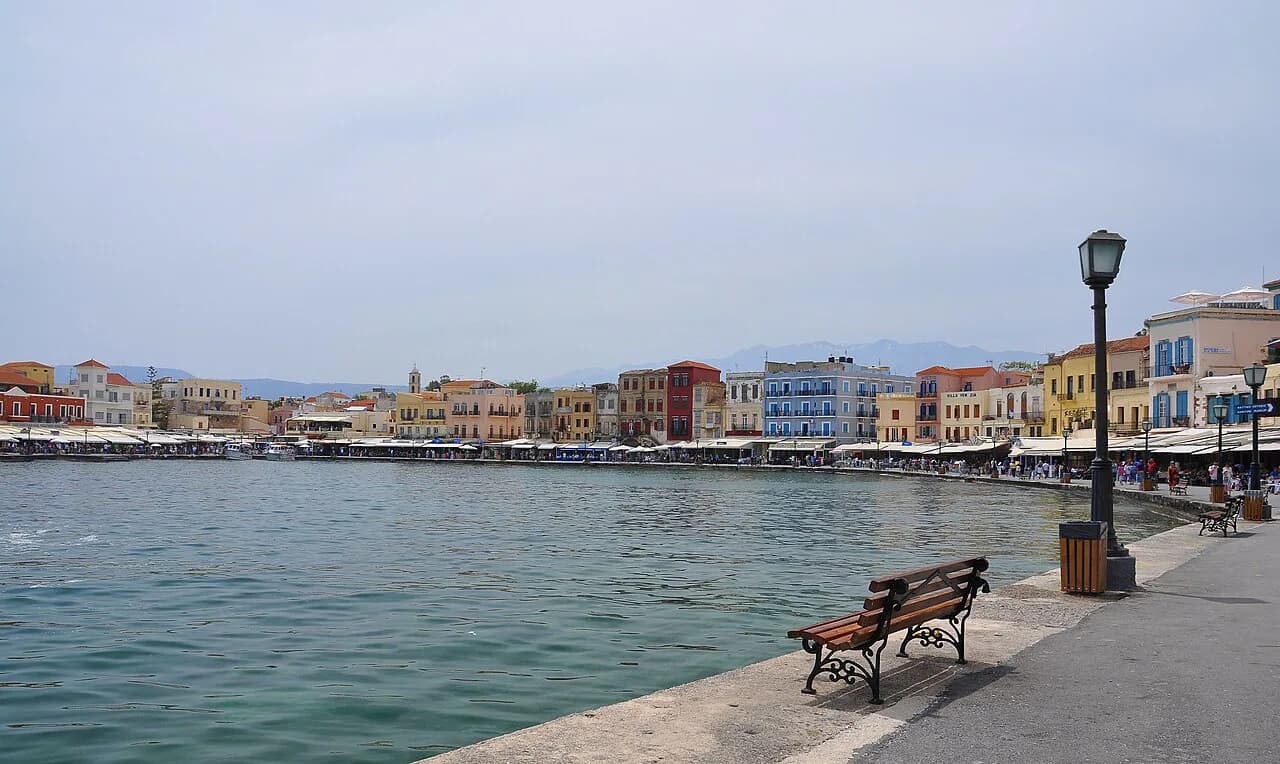
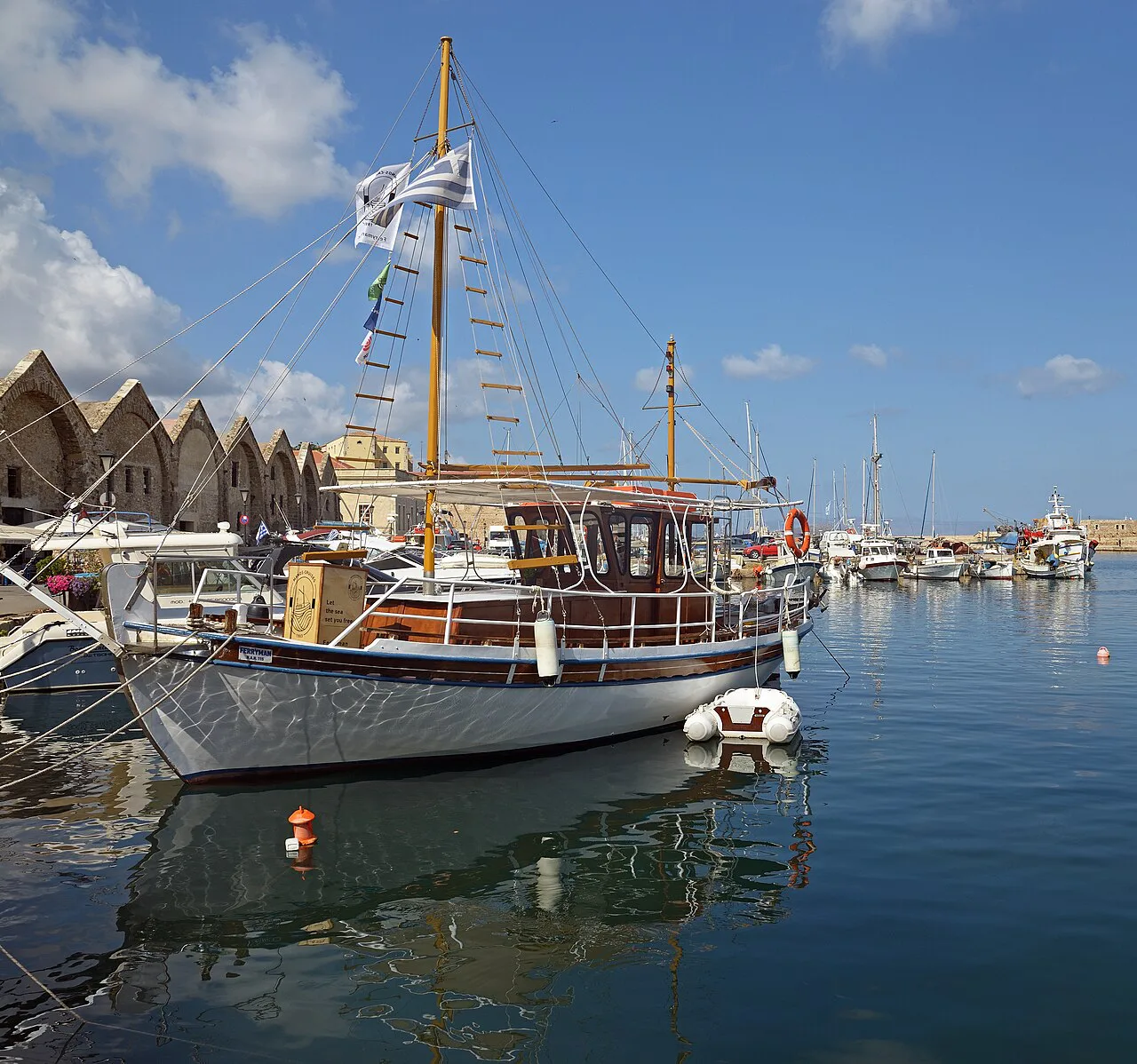
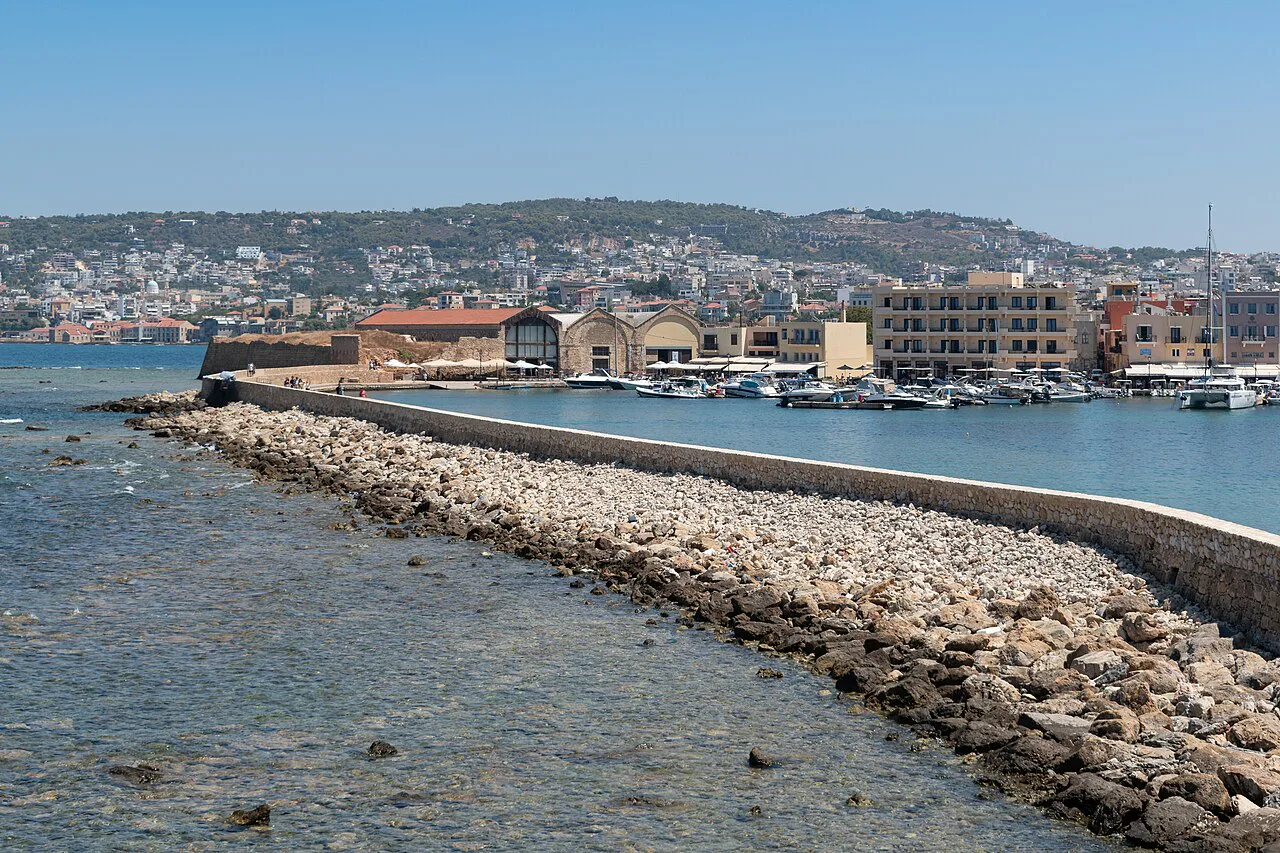
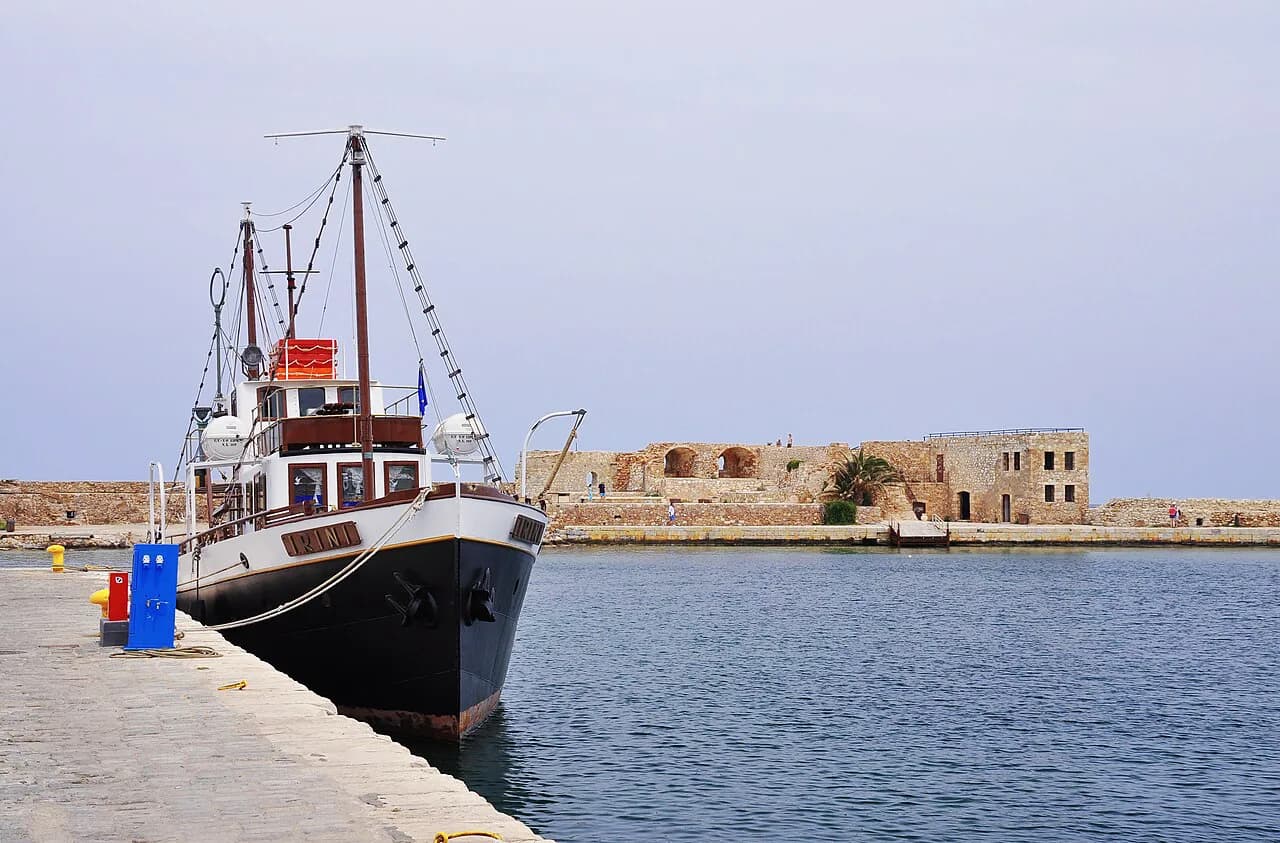
Chania is the strongest single base for a May trip: a Venetian harbour, a 16th-century Egyptian lighthouse at the harbour mouth, Ottoman mosques and a maze of alleys behind, all walkable in a morning before the heat builds. Weekdays are noticeably calmer than Friday and Saturday, and the harbour at sunset is one of the best free views on the island. It is also the sensible base for the far-west beaches and the Samaria trailhead.
Chania rewards an unhurried day rather than a checklist: leather shops and goldsmiths in the backstreets, the covered market for cheese and olives, and a slow lunch on the water. A road trip west from Chania also gets you to the quieter Akrotiri peninsula and its cliff-backed bays, which fill more slowly than the resort beaches in early May.
Knossos and the Heraklion Archaeological Museum
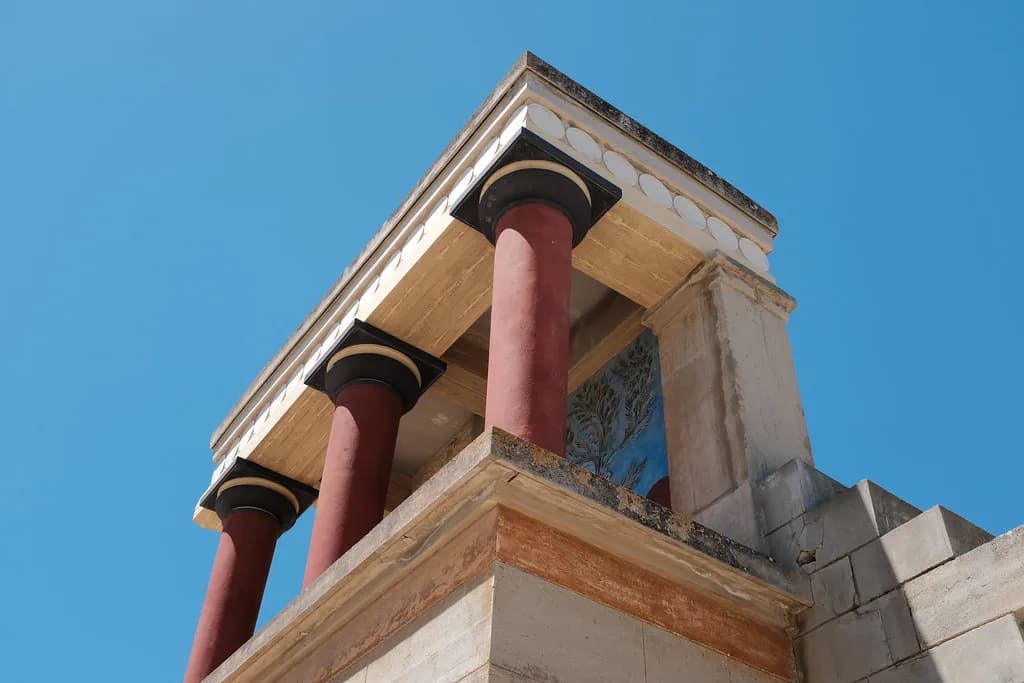
Do these two on the same day with a combined ticket, and start early: Knossos is about 7km south of Heraklion, is reached by city bus or car, and has very little shade, so by late morning the tour buses have arrived. Budget two to three hours at the palace and at least two at the museum, which holds the finds that make the ruins legible.
The museum is the more comfortable May stop, being indoors and cool. An audio guide or a licensed guide at Knossos transforms the site from red columns and rubble into a coherent story. If you want to see the same places a month earlier, when they are emptier and cooler, try things to do in Crete in April.
Rethymno Old Town and the Fortezza
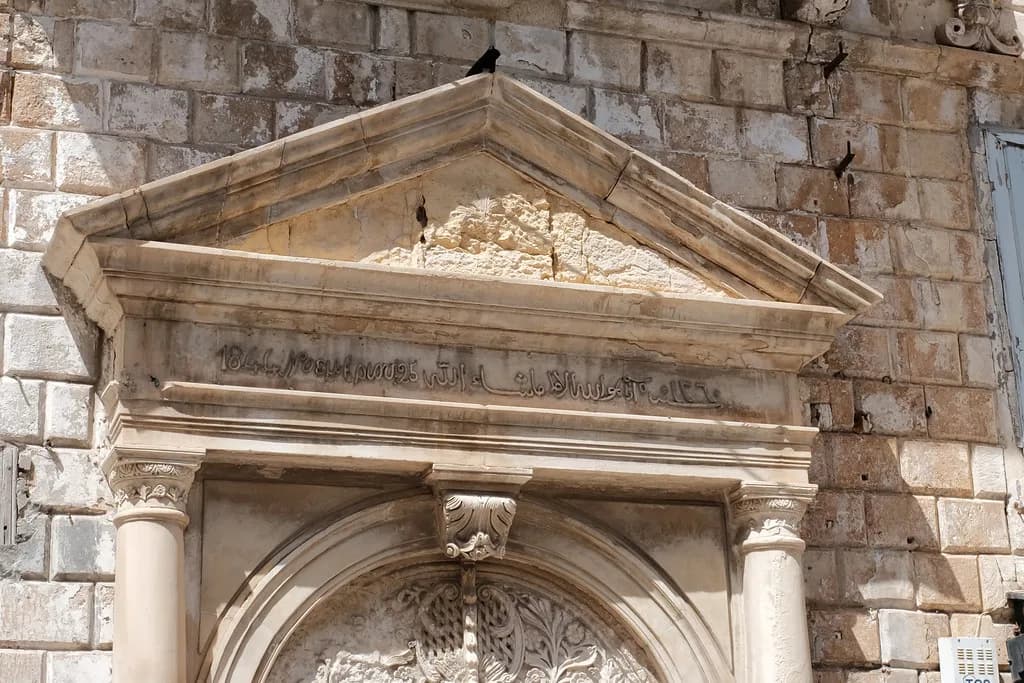
Rethymno is the quieter, smaller alternative to Chania, and in May that difference matters — its old town still has working Venetian and Ottoman fabric without the coach-tour compression of the west. The Fortezza fortress above the town is a good early-morning or late-afternoon walk with views over the coast, and the harbourfront is made for a long lunch.
It also sits well geographically: Rethymno is roughly midway between Chania and Heraklion, so it works as a single base for both halves of the island. For a wider comparison, our guide to the best time to visit Crete lays out how the months either side compare.
The Samaria Gorge and Quieter Alternatives
The full walk from Xyloskalo on the Omalos plateau down to Agia Roumeli is about 16km and takes most of a day; the path is rocky and the descent hard on the knees. It is the standout May activity because the gorge is at its greenest and the heat is manageable, but the plateau at 1,200m can be cold and wet in the morning even when Chania is warm. Buses and organised tours run from Chania to the trailhead, and boats return from Agia Roumeli to Chora Sfakion and Sougia.
If you want the drama without the full traverse, walk up from Agia Roumeli to the Iron Gates, where the walls narrow to a few metres — mostly flat and easy underfoot. Quieter alternatives include the Imbros gorge, the Kourtaliotiko gorge near Preveli, and the Agiofaraggo gorge, which drops to the sea.
Balos, Elafonisi and the Far West
Balos Lagoon at the northwest tip is reached either by a rough gravel road and a steep walk down, or by boat from Kissamos. Early May is one of the best times to take the walk, because the tour boats arrive around late morning and before that the lagoon is close to empty. The clifftop view near the car park is arguably better than the beach itself; sturdy shoes are needed and a four-wheel drive is a sensible call on the gravel.
Elafonisi, about 74km from Chania, is the pink-sand lagoon where you wade across a shallow sandbar to a dune island with a circular path and a lighthouse, and it is a protected reserve. Spring is genuinely its best season; by June you need to be there before nine. Falassarna, half an hour south of Balos, is the more laid-back west-coast beach for a lazy afternoon.
Spinalonga and the Mirabello Bay Villages
Spinalonga sits in Mirabello Bay off the northeast coast: a Venetian fortress later used as a leper colony, with informative signs, cobbled lanes and bay views from the walls that justify the crossing alone. Boats run from Elounda, Plaka and Agios Nikolaos, the shortest of which is a few minutes from Plaka. A visit takes one to two hours, so it works well as a half-day combined with lunch in Plaka or Elounda.
The peninsula around Elounda is one of the calmest corners of Crete in May: cool mornings, warm afternoons, and hillside tavernas that open earlier in the season than the south coast resorts. There is little shade on the island itself, so an early crossing is more comfortable than a midday one.
East Crete and the Lasithi Plateau
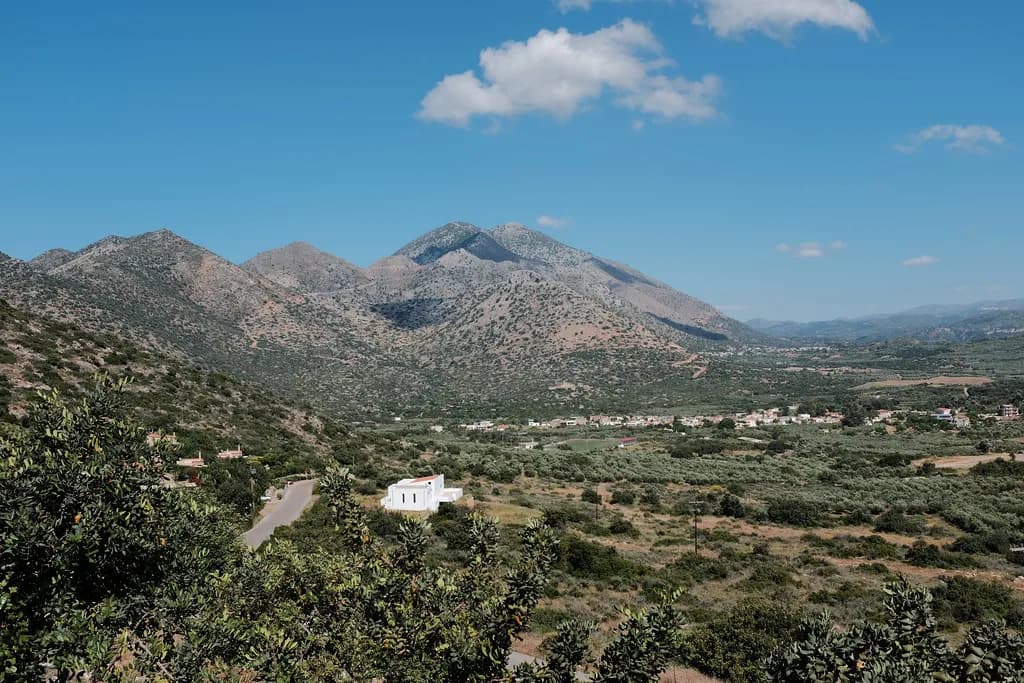
Agios Nikolaos, about an hour from Heraklion, is a working port town with a small lake in the centre, a decent choice of restaurants and easy access to both Spinalonga and the eastern beaches. Inland, the Lasithi plateau is the counterpoint to coastal May: cooler, greener, dotted with windmills and orchards, with the Psychro Cave (Dikteon Cave) as the main stop.
East Crete sees fewer May visitors than the west, so the roads up to the plateau are quiet and the village tavernas are not yet stretched. The trade-off is a longer drive from Chania airport, which makes it a poor base if you want to see the west.
Food in Season: Mountain Villages and Spring Greens
May is the tail of the spring-greens season, when tavernas serve horta, wild greens, artichokes and fresh broad beans alongside the standard Cretan staples of dakos, graviera and slow-roast lamb. Mountain villages such as Spili, Archanes, Vamos and Margarites are where this food is best, partly because the villages themselves are worth a detour.
Eat inland at lunchtime and by the sea in the evening. Chania, Rethymno and Heraklion all have serious restaurant scenes — Heraklion is arguably the island's culinary capital — and in May you can still walk into somewhere good rather than booking days ahead.
Crowds and Prices in May
May is the pre-season window, and that shows in the prices: ferries, car hire and accommodation are still below high-summer levels, and the difference is biggest in the west. The exception is the last week of the month, when UK half term and the Greek bank-holiday weekend push up demand around Chania, Rethymno and the resort strip east of Heraklion.
Crowding is concentrated rather than island-wide. Knossos, Balos and Elafonisi are the three places where you feel it, and early mornings solve all three. Elsewhere, midweek in the first three weeks of May feels markedly quieter than late June, and island operators are already advertising their May and June departures for guided excursions.
May or June?
Choose May for walking, archaeology, space and lower prices, and accept cooler evenings, a cold sea and an outside chance of rain. Choose June for warm evenings, reliably swimmable water and a livelier coast, and accept higher prices, busier sites and real heat at Knossos by midday. Families with school-age children often find late May the sweet spot, since half term gives them the trip without the August prices.
Drawbacks to Plan Around
The evenings are the surprise: after a hot afternoon, temperatures drop enough that a terrace dinner needs a jumper, especially near the coast and in the hills. Wind is the second issue — the north coast and the Lasithi plateau can be gusty, occasionally disrupting small boats to Balos or Spinalonga. The sea is cold by any reasonable standard in early May and only becomes comfortable later in the month, and along the south coast it warms faster than the north.
Some places are still half-open: beach clubs, seasonal tavernas and some boat services ramp up through the month rather than being fully running from the first, which is part of what makes crete in spring feel unhurried. Book the Samaria walk through a licensed operator and treat any published schedule you see before you travel as provisional.
The Verdict
May is the month Crete rewards planning over spontaneity: pick a base — Chania for the west, Rethymno for the middle, Elounda or Agios Nikolaos for the east — and cluster your days around it rather than zig-zagging across 260km of island. Book the Samaria Gorge and any Spinalonga or Balos crossing once operators publish their season, and keep your first two mornings early for the big-name sites.
What May gives you in return is the island at its most workable: warm enough for a full day outdoors, quiet enough to enjoy it, and cheap enough that you don't feel you are paying August prices for June weather. Just don't pack for August.
More Crete spring guides
Frequently Asked Questions
Is Crete warm in May?
Yes, on the coast: days are comfortably warm and often genuinely hot in the afternoon, while evenings and nights are distinctly cooler. The south coast runs warmer than the north, and the mountain plateaus are cooler still. Treat daytime as early summer and evenings as spring.
What is there to do in Crete in May?
Walk the Samaria Gorge or the easier stretch from Agia Roumeli, see Knossos and the Heraklion museum together, wander Chania and Rethymno old towns, take a boat to Spinalonga or Balos, explore the Lasithi plateau, and eat spring greens and mountain food in the inland villages. The far-west lagoons at Balos and Elafonisi are at their best before the summer crowds.
Is May a good time to hike the Samaria Gorge?
It is one of the best months: the gorge is green, water is flowing, the heat is manageable and the trail is quieter than in summer. The full traverse is about 16km and the Omalos plateau can be cold and wet at the start, so start early and carry a layer. The seasonal window opens in spring and closes in autumn; check current opening dates for your trip.
Is the sea warm enough to swim in Crete in May?
Early May is cold by most standards and only the shallows are pleasant. Swimming gets easier through the month, and the south coast warms faster than the north. If swimming is the point of the trip, June is the more reliable choice.
How busy is Crete in May?
The first three weeks are quiet by Cretan standards, with easy parking and walk-in tables. The last week gets busy with UK half term and the Greek bank-holiday weekend, especially around Chania, Rethymno and the resorts east of Heraklion. Knossos, Balos and Elafonisi are the places where early starts matter.
Is May or June better for Crete?
May wins on walking, archaeology, space and lower prices, at the cost of cool evenings and a cold sea. June wins on warm evenings and comfortable swimming, at the cost of higher prices, busier sites and real midday heat at exposed ruins. Late May is a reasonable compromise for families tied to school holidays.
Do I need a car in Crete in May?
Not necessarily, but it helps. Chania, Rethymno and Heraklion are walkable and reachable by bus, and Knossos is on a city bus route, but the gorges, the far west and the Lasithi plateau reward a car. In May, car hire is still below summer rates.
Sources
Spring sun notes
Optional updates when we add destinations and months.
You might also like
Continue reading
More guides you'll find useful