Things to Do in Thessaloniki in April: Sun, Ruins, Sea Air
April in Thessaloniki brings mild sightseeing weather, uncrowded Roman and Byzantine monuments, and day trips to Halkidiki before the summer rush.
On this page
April in Thessaloniki suits sightseeing, hill walking and long lunches outdoors, not swimming. Days are mild rather than hot, rain comes in spells rather than settling in, and the city's Roman and Byzantine core is walkable without the July crush. For a fuller picture of the month across the city, see Thessaloniki in April.
What April weather actually does
Treat April as a hinge month: warm enough for a coat-free afternoon on the waterfront, cool enough that you will want a jacket after the sun drops. Rain arrives in short, sharp spells rather than all-day drizzle, so a flexible plan with an indoor fallback works better than a rigid itinerary. This is typical spring behaviour, not a forecast, so check the Greek national weather service's climate normals for the specific week you are considering.
That mix shapes the trip. It is excellent weather for climbing Ano Poli's cobbled lanes, walking the Roman Forum site and standing on the White Tower's viewing level without overheating. It is poor weather for a beach holiday: the Thermaic Gulf stays brisk, and Halkidiki is a day out for landscape and lunch rather than lying on sand.
If guaranteed heat is the priority, look at Europe's warmest spots in April and compare before committing to northern Greece.
Is it warm enough to sit outside?
Yes, in the middle of the day and out of the wind. The waterfront promenade and Aristotelous Square fill with people at lunchtime on bright days, and tavernas in Ladadika put tables out early in the season. The practical rule is to eat outside at midday and plan an indoor table for the evening, when the temperature drops quickly.
Sunset from a waterfront bar is one of the city's reliable April pleasures, with a drink in hand rather than a booked sun lounger. Locals recommended Kitchen Bar and Thermaikos Bar for watching the sun sink over the gulf.
Early vs late April, and how it compares with March and May
Early April still feels like a continuation of March: cooler, more unsettled, and with fewer people around. By the second half of the month the city settles into proper spring, outdoor tables stay occupied longer and the first day-trippers appear on the waterfront. The gap between the two halves is bigger than you might expect for four weeks.
Compared with May, April is cheaper and quieter, but May brings more reliable warmth and the start of the city's outdoor season proper. If you want the city at its best for walking and eating outside, see Thessaloniki in May; if you are chasing heat, Thessaloniki in June delivers it, along with the first real summer temperatures.
Roman Thessaloniki on foot
The Roman core fits into one unhurried morning. Start at the Rotunda, a vast fourth-century circular building with a dome over 30 metres tall, then walk five minutes to the Arch of Galerius and its carved reliefs, and finish at the Roman Forum, a second-century marketplace now sunk below street level between apartment blocks.
Admission to the Rotunda costs 10 EUR for adults, and it opens from 8 AM to 8 PM from April through September, closing on Tuesdays. Budget for the Tuesday closure when you plan your days, and note that the old 15 EUR combined ticket is no longer the option to rely on.
Byzantine churches and the Museum of Byzantine Culture
Thessaloniki's Byzantine churches sit within walking distance of each other. The Holy Church of Hagia Sophia opens from 7 AM to 9 PM daily, and the Church of St. Demetrios, built over an ancient Roman bath house, opens from 6 AM to 10 PM daily. Both reward a slow look at the mosaics rather than a quick photograph.
The Museum of Byzantine Culture is the best single stop for context, with sixth-century mosaics, icons and frescoes from the fourth to the fifteenth centuries. It makes a solid choice for a wet afternoon as well as a dry one.
Ano Poli and the walls on a clear day
Ano Poli, the upper town, is the best April walk in the city. Cobbled lanes climb past the Church of Prophet Elijah with its red dome, the twelfth-century Byzantine Bath, the frescoed Church of Saint Nicholas Orphanos and the hilltop Vlatadon Monastery, all inside a neighbourhood that feels far from the centre below.
Go up in the morning while the air is clear and come down via the Trigonion Tower and the Byzantine walls for the view over the Thermaic Gulf. Good shoes matter more than anything else here, because the surfaces are uneven and the gradients are real.
The waterfront, the Umbrellas and the White Tower
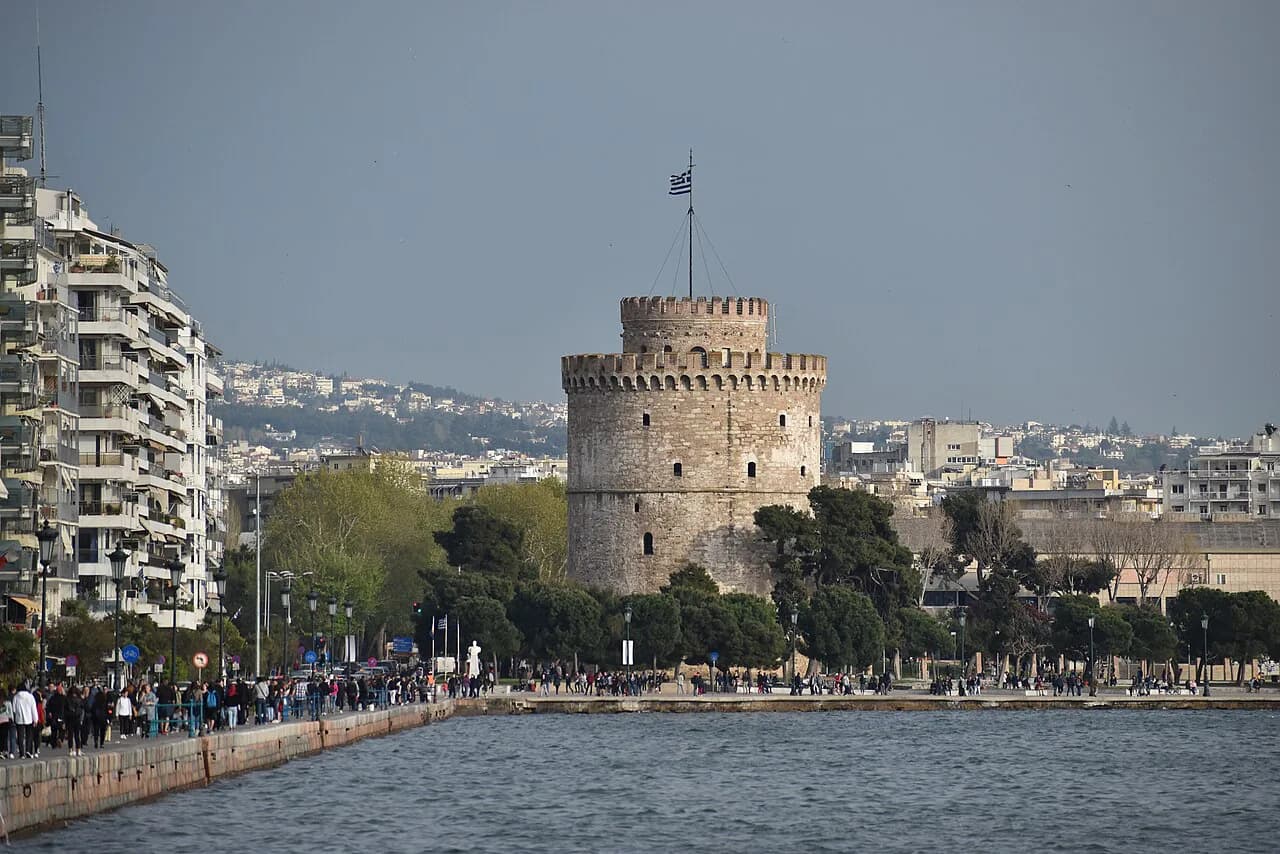
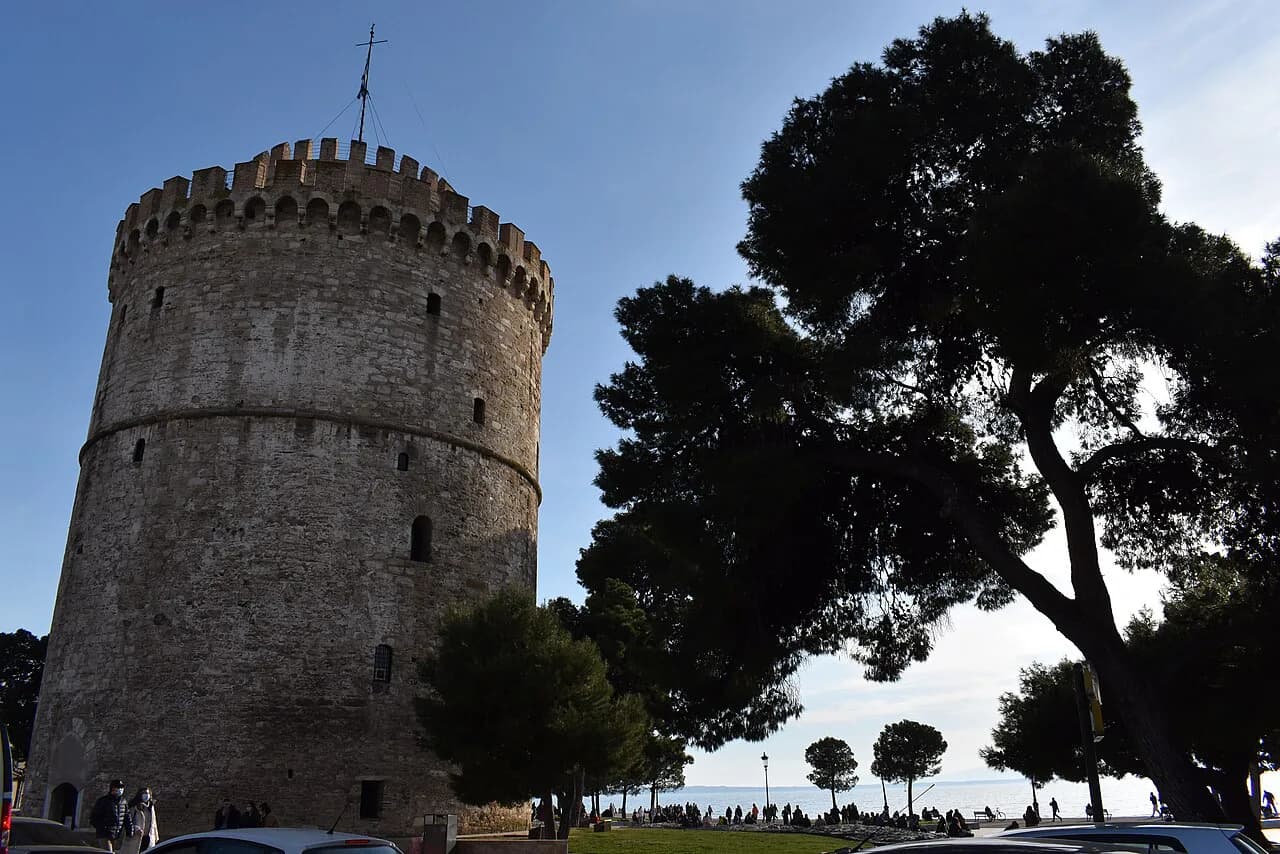
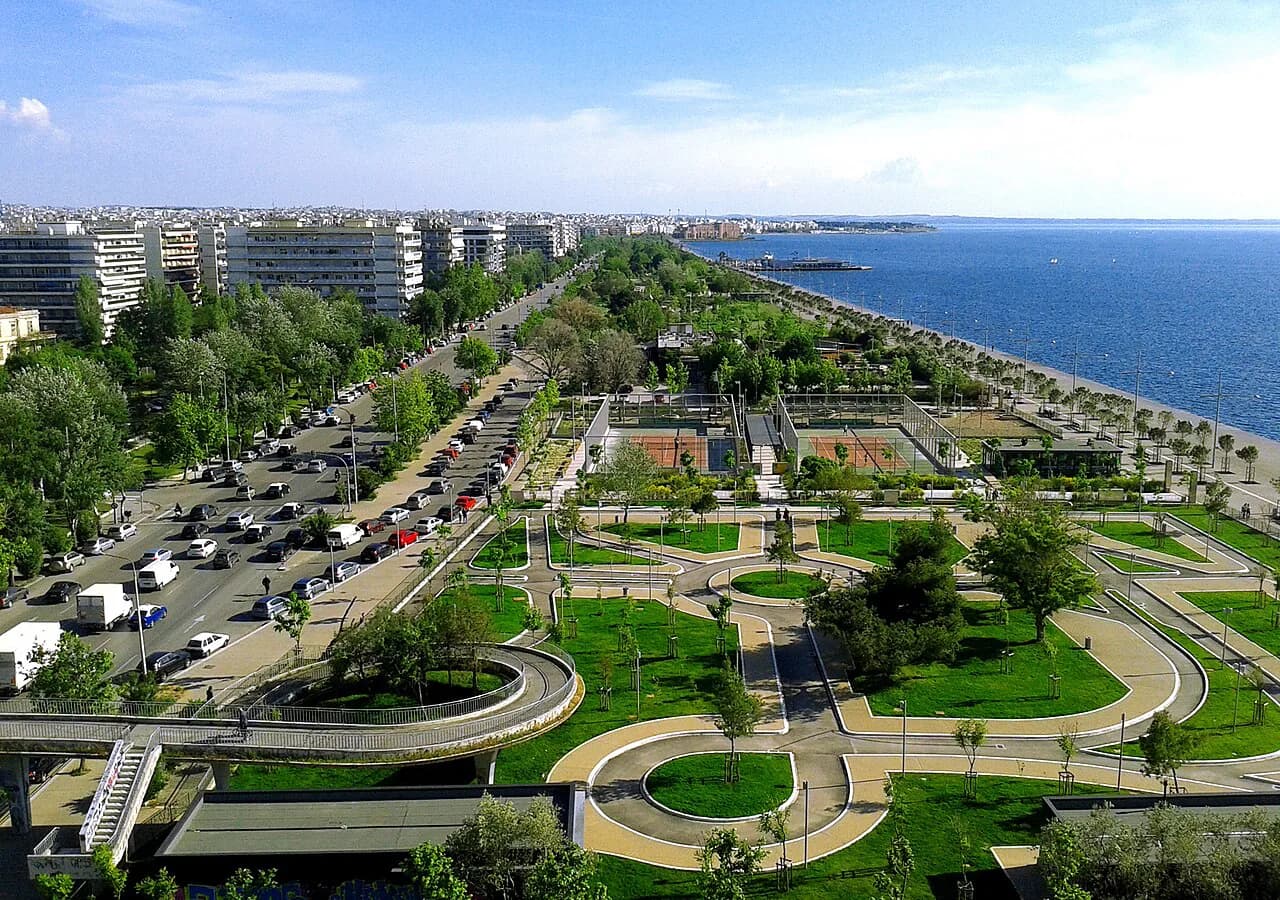
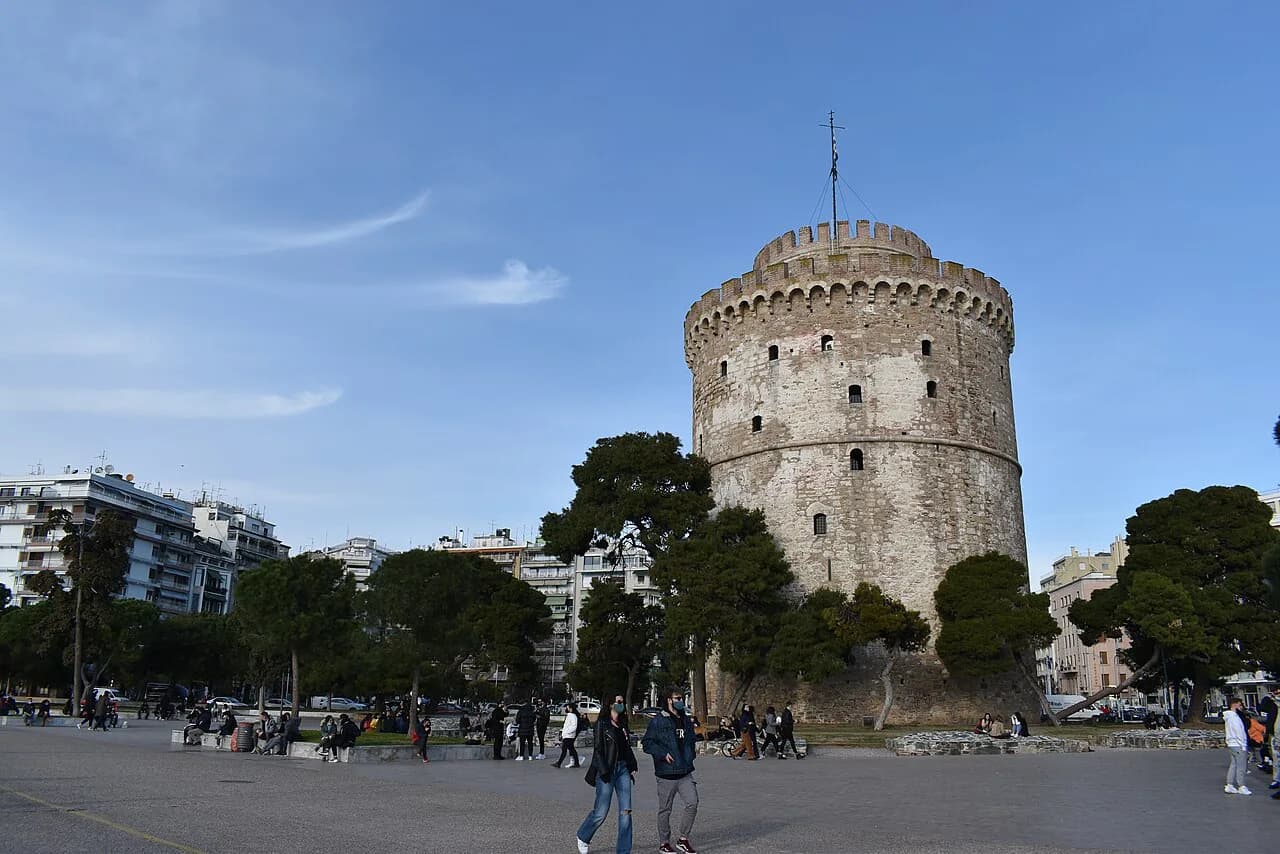
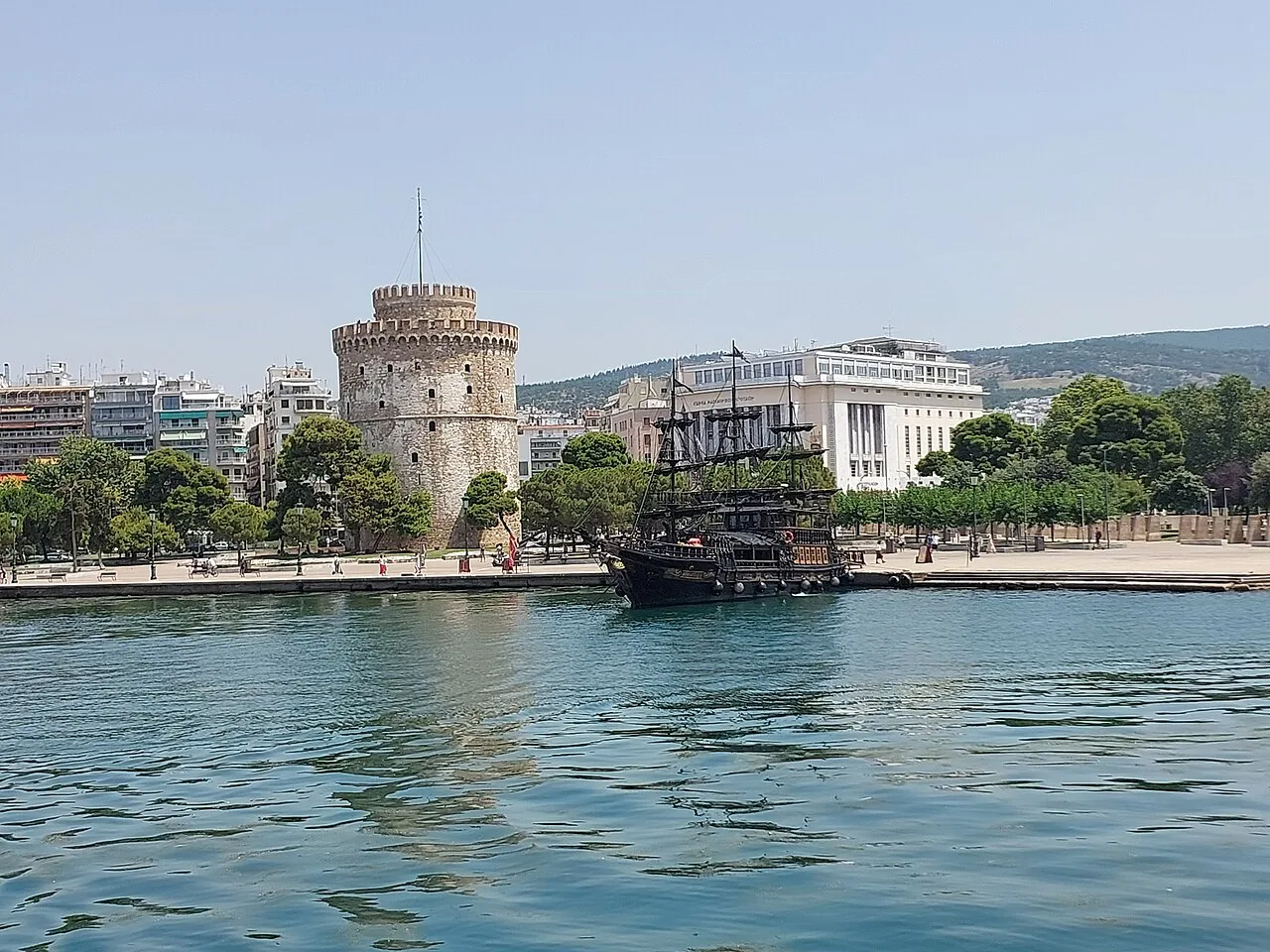
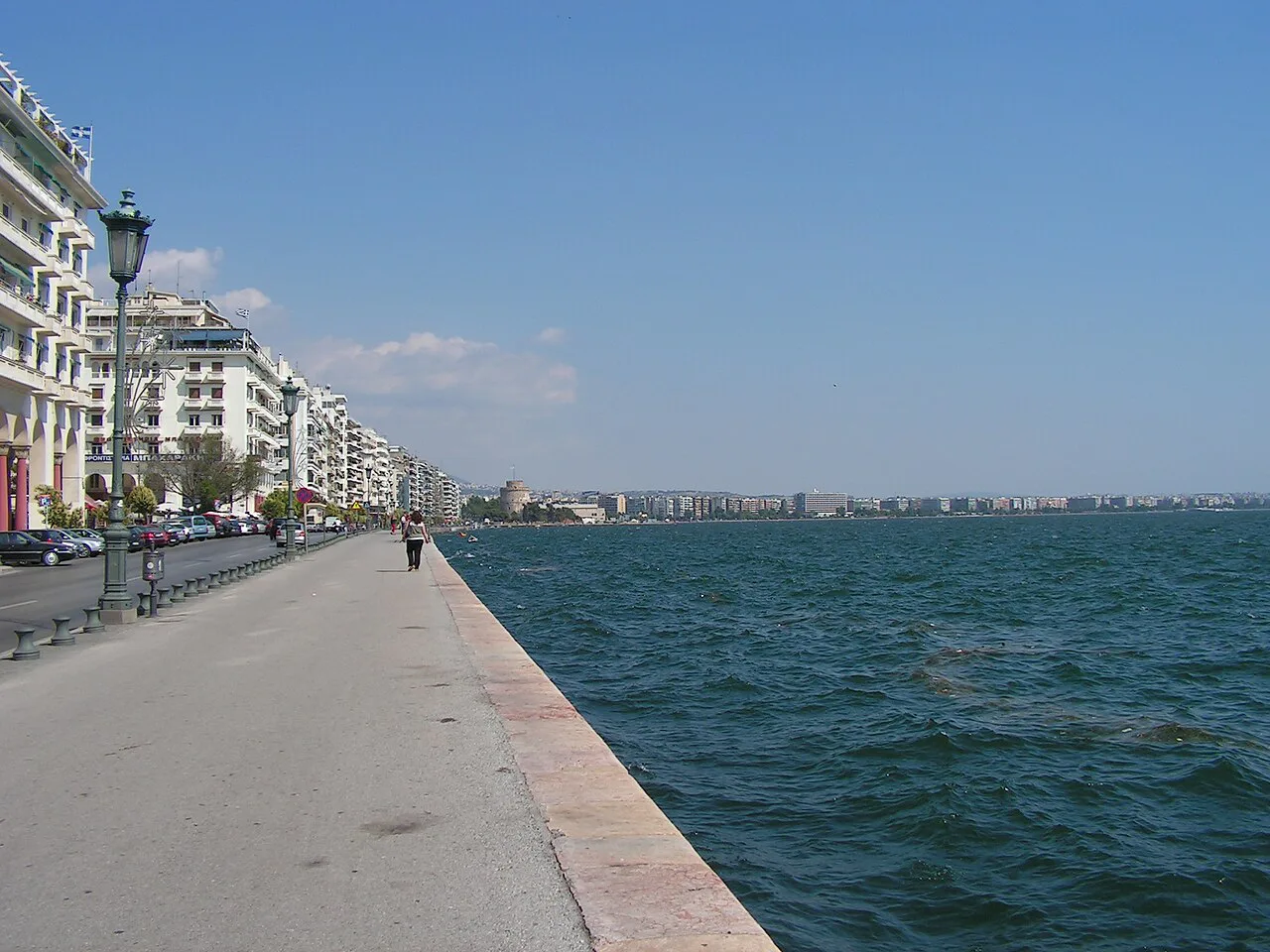
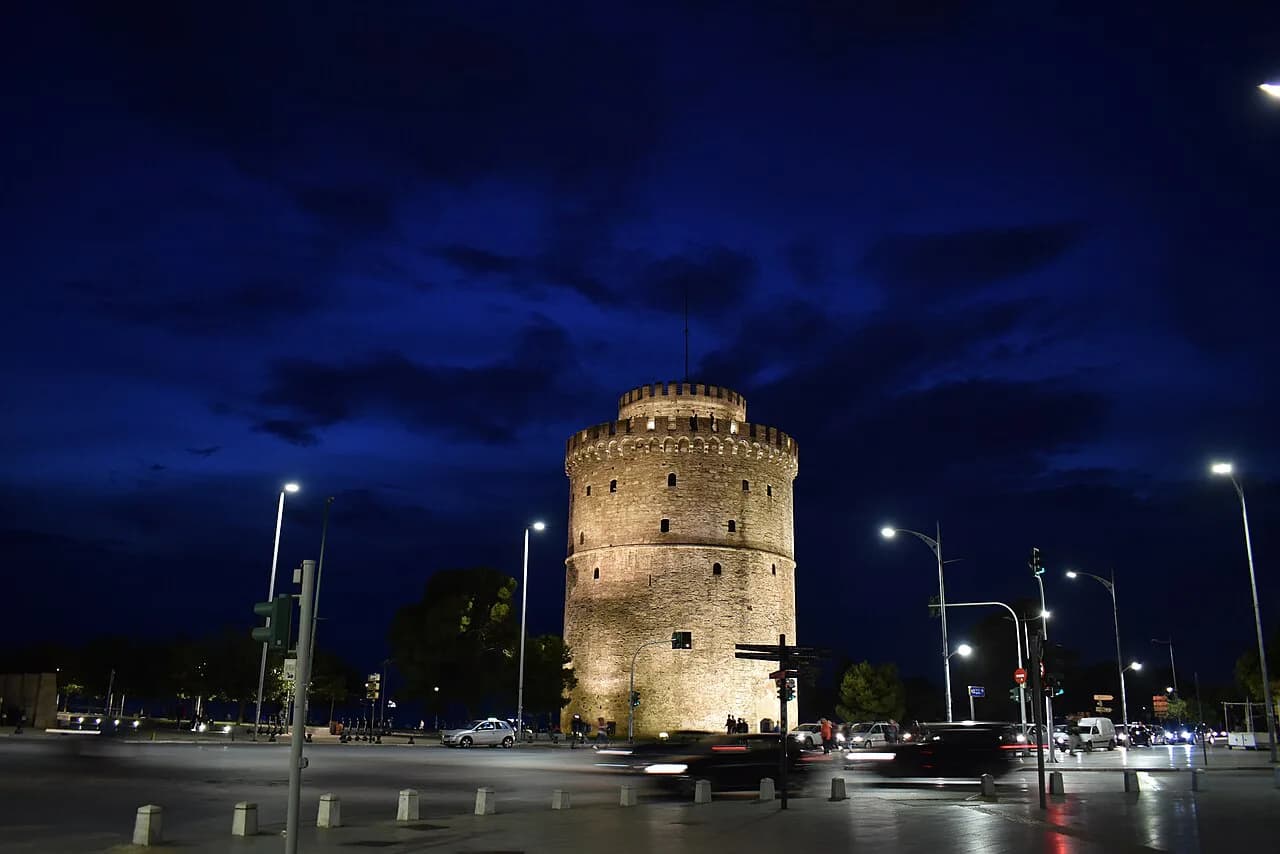
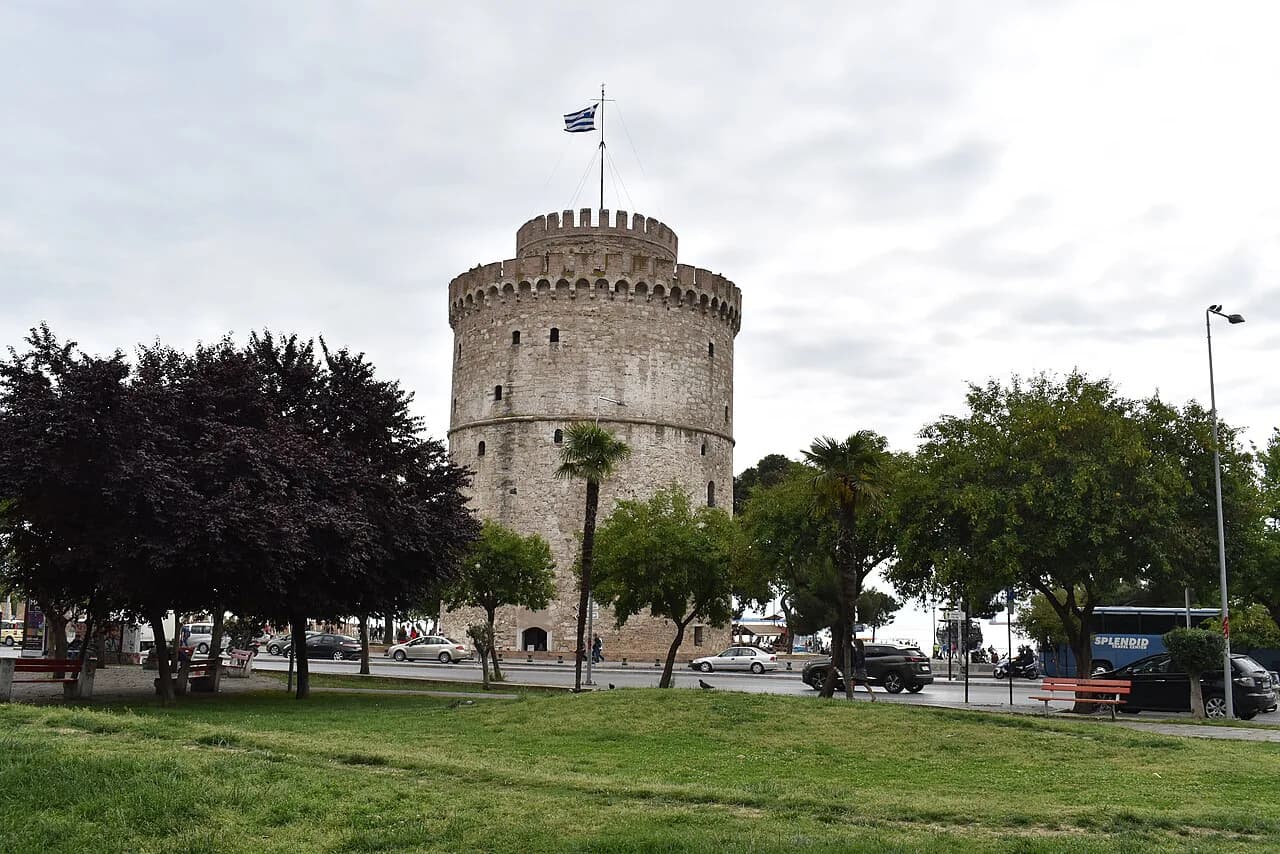
The seafront promenade is where April shows its best face. Walk past the Umbrellas, George Zongolopoulos's stainless-steel installation from 1997, ideally in the evening when it is lit, and continue to the White Tower at the end of the day. The tower climbs past museum exhibits to a viewing level with the gulf, the city and Ano Poli spread out below.
White Tower admission is 8 EUR for adults, and the tower opens from 8 AM to 9 PM daily from April to October. Sunset is the time to aim for, when the light drops behind the water.
Indoor cover for a wet April spell
April rain rarely lasts all day, but when it does, the Archaeological Museum of Thessaloniki is the answer. It holds the Derveni Krater and the Vergina Sun among finds spanning prehistory to the late Roman period, and an hour or two covers it comfortably. Adult admission is 10 EUR, with opening from 9 AM to 5 PM daily and later hours on the first Thursday of May, June, July, August and September.
The Atatürk Museum, in the house where Mustafa Kemal was born, is free and opens from 10 AM to 5 PM, closed Mondays. It is a curious, quietly fascinating stop and an easy one to slot into a wet morning near the centre.
Halkidiki and Sithonia as a day trip
Halkidiki's three fingers reach south-east of the city, and in April they are places for coastal drives, pine-backed coves and seafood lunches rather than swimming. Sithonia, the middle finger, has the strongest reputation for beaches, with Spathies among the prettiest and easiest to reach.
Be realistic about the drive: allow one and a half to two hours each way, which eats a large share of an April day with limited daylight. Hiring a car gives you the freedom to stop, though the rental desk may sit a short shuttle ride from the airport rather than inside it.
Meteora, Mount Olympus and Dion
For a bigger day out, Meteora's monasteries sit on rock pillars west of the city and are the classic long excursion from Thessaloniki. Organised full-day trips run from the city, which saves you the driving, though it makes for a long day.
South of the city, the Mount Olympus foothills and the archaeological site at Dion pair well for a day combining mountain views with Macedonian and Roman ruins. Both are realistic from the city by car and suit the cooler April temperatures far better than a midsummer visit.
Food, markets and the city's foodie reputation
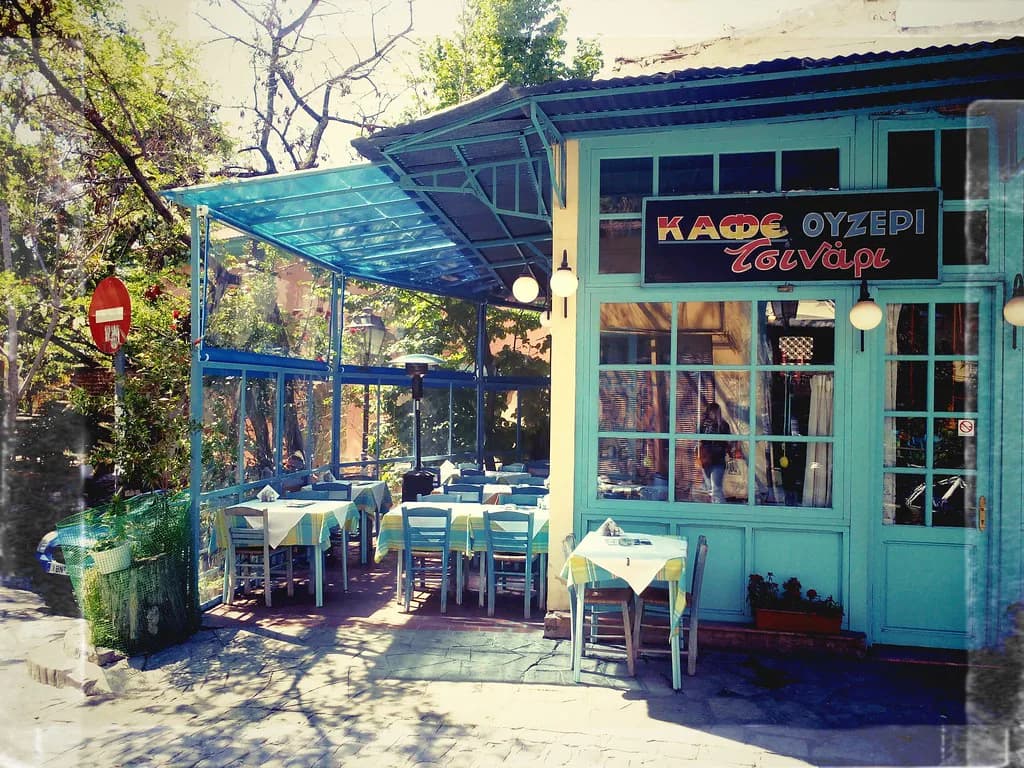
Thessaloniki calls itself Greece's foodie capital, and April is a good month to test the claim: the Modiano and Kapani markets are working markets rather than tourist set pieces, and the tavernas in Ladadika fill with locals rather than visitors. Order meze and share, and eat late, because many locals do not sit down to dinner before 8.30 or 9 PM.
What is open, and what is still pre-season
The city's monuments and museums run year-round, with longer hours from April, so the core of a Thessaloniki trip is never at risk in spring. Where April can catch you out is on the coast and at seasonal venues, where some places may not be fully open or may keep shorter hours earlier in the season.
For anything that matters to your plan, ring or check the venue's own page before you travel rather than relying on a season-wide assumption.
Crowds and prices around Easter and the May bank holiday
April is generally quiet by Mediterranean standards, and Thessaloniki does not see the overtourism that Athens and the islands do. Prices for food, drink and museum tickets stay reasonable, and you can walk into monuments without much of a queue. The variables to watch are Greek Orthodox Easter, which can fall in April, and the run-up to the May bank holiday and half term, when domestic travel picks up.
If your dates overlap Easter, expect fuller tavernas and higher demand, and book the parts of the trip you care about rather than leaving everything to the last minute.
April or May for Thessaloniki?
Choose April if you want the cheapest, quietest version of the city and do not mind carrying a jacket and dodging a rain shower. Choose May if reliable outdoor weather matters more than saving money, and you want the waterfront and the hilltop tavernas at their sociable best. Our guide to the best time to visit Thessaloniki sets out the trade-offs month by month.
Travellers comparing Greek destinations in spring will find Corfu Old Town and the Ionian islands a different proposition, with their own April character and their own weather patterns.
The verdict
April is the right month for Thessaloniki if your idea of a spring trip is Roman ruins, Byzantine mosaics, a long climb through Ano Poli and a slow lunch by the gulf. The city is at its most comfortable and least crowded, and the trade-off is a cool evening and a rain shower you should simply plan around.
If you want to swim, eat dinner outside every night and rely on unbroken sunshine, push the trip to late May or June. Otherwise book April, keep a museum in reserve for wet afternoons, and treat Halkidiki as a scenic day out rather than a beach holiday.
More Thessaloniki spring guides
Frequently Asked Questions
Is April a good time to visit Thessaloniki?
Yes, if you want mild weather for sightseeing and walking rather than a beach holiday. The Roman and Byzantine monuments, the museums and Ano Poli are all comfortable in April, the city is quieter than in summer, and prices are lower than in high season. Expect changeable days, with rain spells and cool evenings.
Is it warm enough to swim in Thessaloniki in April?
No, not for most people. The Thermaic Gulf is still cold in April, and the season is better suited to walking and sightseeing than to swimming. Treat the beaches of Halkidiki as a scenic day out with a coastal lunch rather than a beach day.
What can I do in Thessaloniki when it rains in April?
Head indoors to the Museum of Byzantine Culture or the Archaeological Museum of Thessaloniki, both of which hold major collections and take an hour or two each. The Atatürk Museum is free and a good short stop, and the city's Byzantine churches offer shelter as well as remarkable mosaics.
How many days do you need in Thessaloniki?
Three days covers the city's highlights comfortably, including the Roman core, the Byzantine churches, Ano Poli and the waterfront. Add a fourth day if you want a full day trip to Halkidiki or Meteora, since both involve substantial driving.
Is Thessaloniki warm in April compared with the Greek islands?
Thessaloniki sits in northern Greece, so April days are generally milder than in the southern Aegean and Crete, and evenings are noticeably cooler. It is pleasant for walking and sightseeing, but if warmth is the main aim, look further south.
Sources
Spring sun notes
Optional updates when we add destinations and months.
You might also like
Continue reading
More guides you'll find useful