Things to Do in Santorini in June: What to Choose
Santorini in June brings hot, sunny days, a sea warm enough for boat trips and growing crowds. Here is what to do, what to skip and how the month changes.
On this page
June suits Santorini better than any other summer month for sightseeing and walking, because the island's restaurants, boat trips and wineries are running properly while the heat has not yet reached its August peak. Days are hot and sunny, the sea is warm enough for a proper swim off a catamaran, and the meltemi wind that gives the island its character is a real presence on exposed cliffs. If you want guaranteed wall-to-wall heat and a packed beach-club scene, late July and August do that better; June is the month for combining long walks with time on the water.
The trade-off is crowds, which climb noticeably as the month progresses and spike whenever cruise ships are in the caldera. Sailing into June from a quieter spring trip is a genuine step up in heat and people, and if you have been weighing Santorini in April against a summer visit, the difference in how the island operates is stark: April is a waking-up island, June is a working one.
Why June changes Santorini
June marks the point where Santorini shifts from shoulder season into full operation. Boat trips around the caldera, winery visits and the organised tours that stall in spring are all running, and restaurants that opened tentatively in spring now expect a full evening. The practical effect is that you can plan a proper itinerary rather than hoping a taverna or tour will be available.
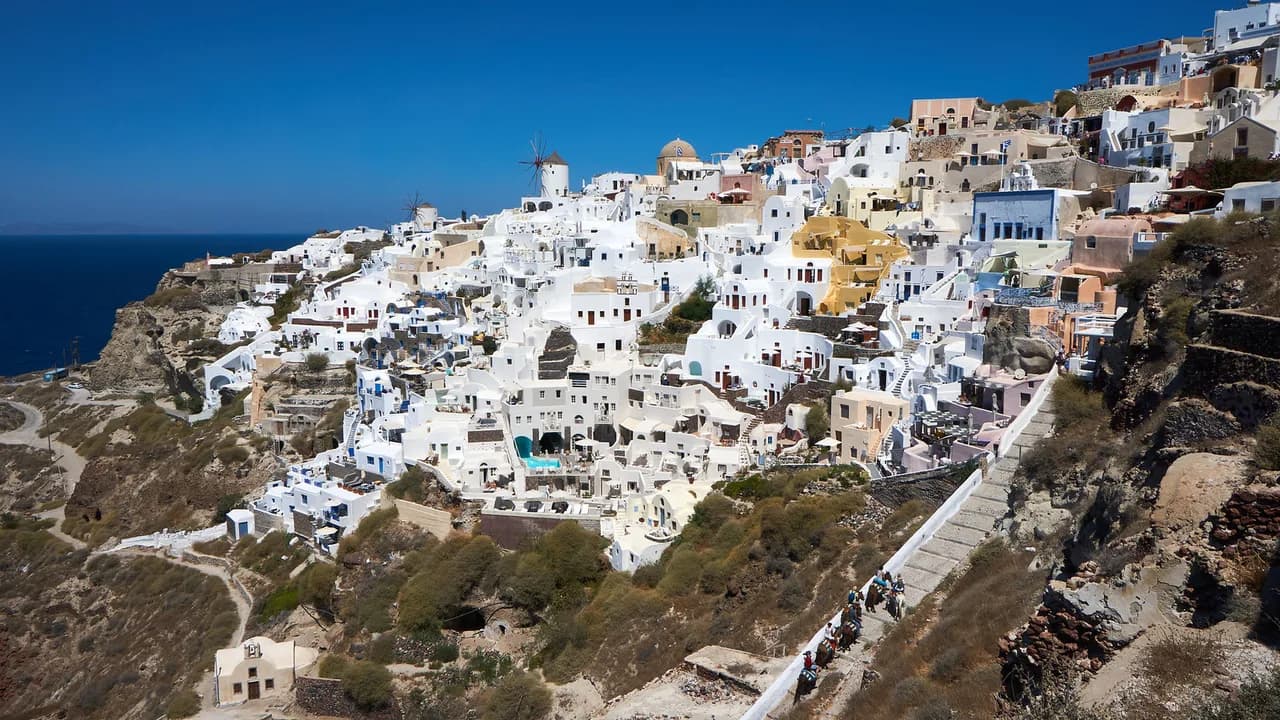
The other change is the crowd curve. Early June still feels manageable, especially on weekdays, but by late June the caldera villages are busy from mid-morning and the sunset hour at Oia becomes a scrum. Cruise-ship arrivals concentrate the pressure into a few hours rather than spreading it, so a day spent inland or on the water can feel entirely different from a day in Fira.
What the June weather feels like
June in Santorini is hot, bright and dry, with long sunny days and a sea that has warmed through enough for comfortable swimming and snorkelling from a boat. This is the month when the water stops being a quick plunge and becomes the reason to book a caldera cruise. Walkers and sightseers get the best of it in the morning and late afternoon; the middle of the day is for shade, wine tasting or the sea.
Wind is the caveat. Santorini is an exposed Cycladic island and gusts strong enough to knock people over are part of the deal, particularly at the Akrotiri lighthouse and along the cliff path, so a cliff-edge picnic is a gamble. The upside is that the wind keeps the worst of the heat in check, which is exactly why June walking works when July walking does not.
Families with older children do well in June, when the sea is swimmable and the days are long but not yet punishing. Anyone chasing serious heat, or wanting the island at its most reliably beach-friendly, should look at later summer; anyone who wants to walk, swim and eat well without August's intensity should take June seriously, and the same logic explains where to find warmth in Europe in April for an earlier trip.
If heat tolerance is your main worry, our guide to Santorini in April sets out what the island feels like when the season is only just opening, and it is a useful benchmark for how much more demanding June's sun is.
Early June vs late June
Early June is the better-value window: the island is fully open, the sea is warm, and the caldera villages are busy without being overwhelmed. Late June brings hotter middays, fuller restaurants and a sunset crowd that arrives earlier and stays longer. If you have flexibility, the first ten days of the month buy you noticeably more breathing room.
Prices climb across the month too, though Santorini is an expensive island at any point in summer and the caldera villages carry a premium over inland ones. Booking restaurants ahead matters well before high summer; in April, several places already needed a reservation, so by late June it is close to essential for anywhere with a caldera view. The full-season picture, month by month, sits in our guide to the best time to visit Santorini.
Walk the caldera rim from Fira to Oia
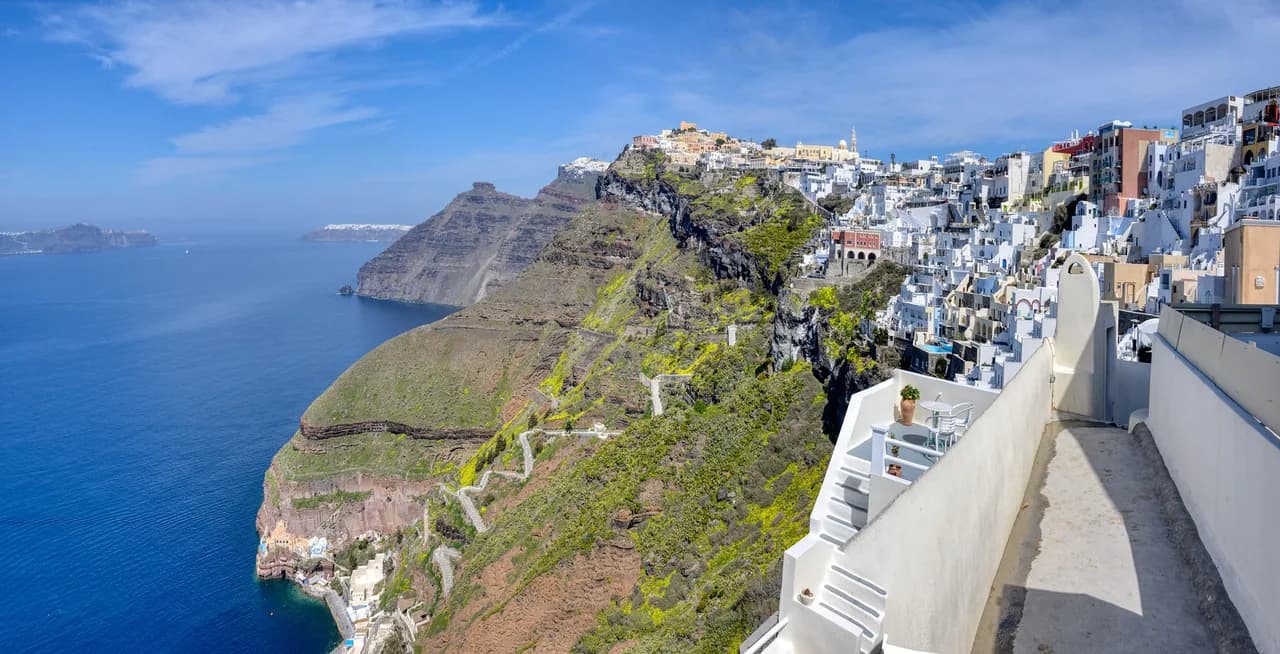
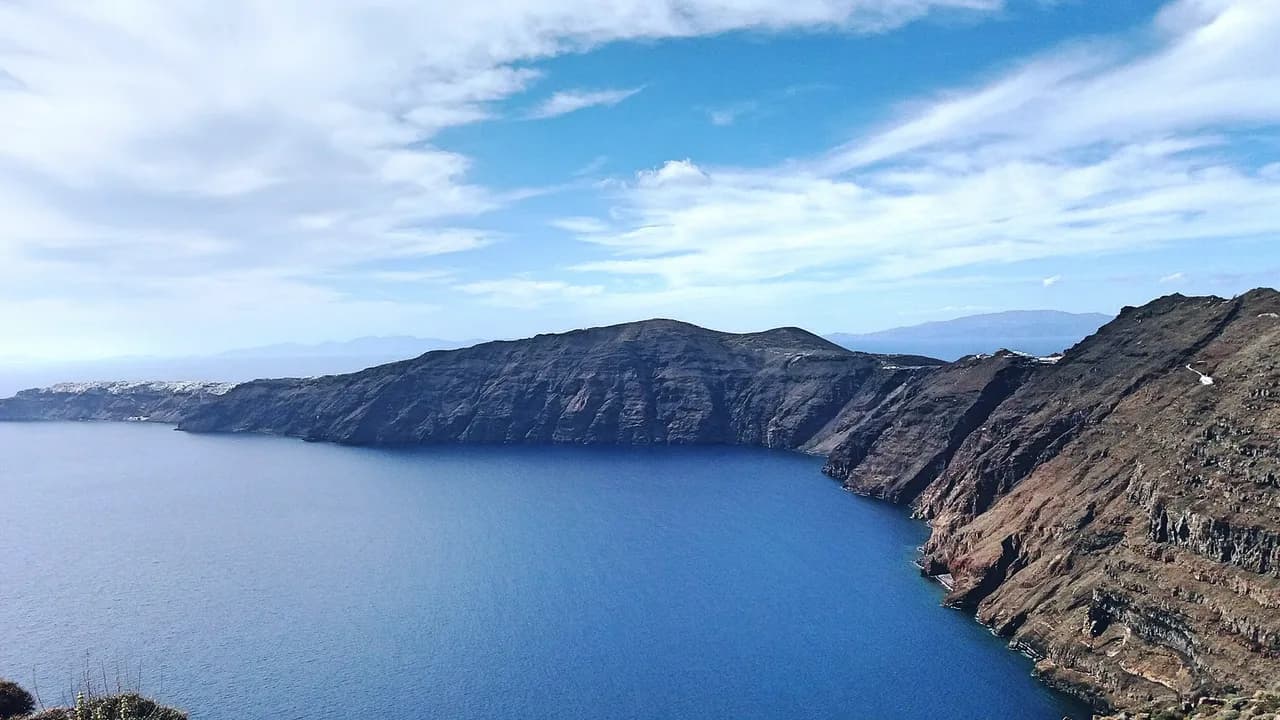
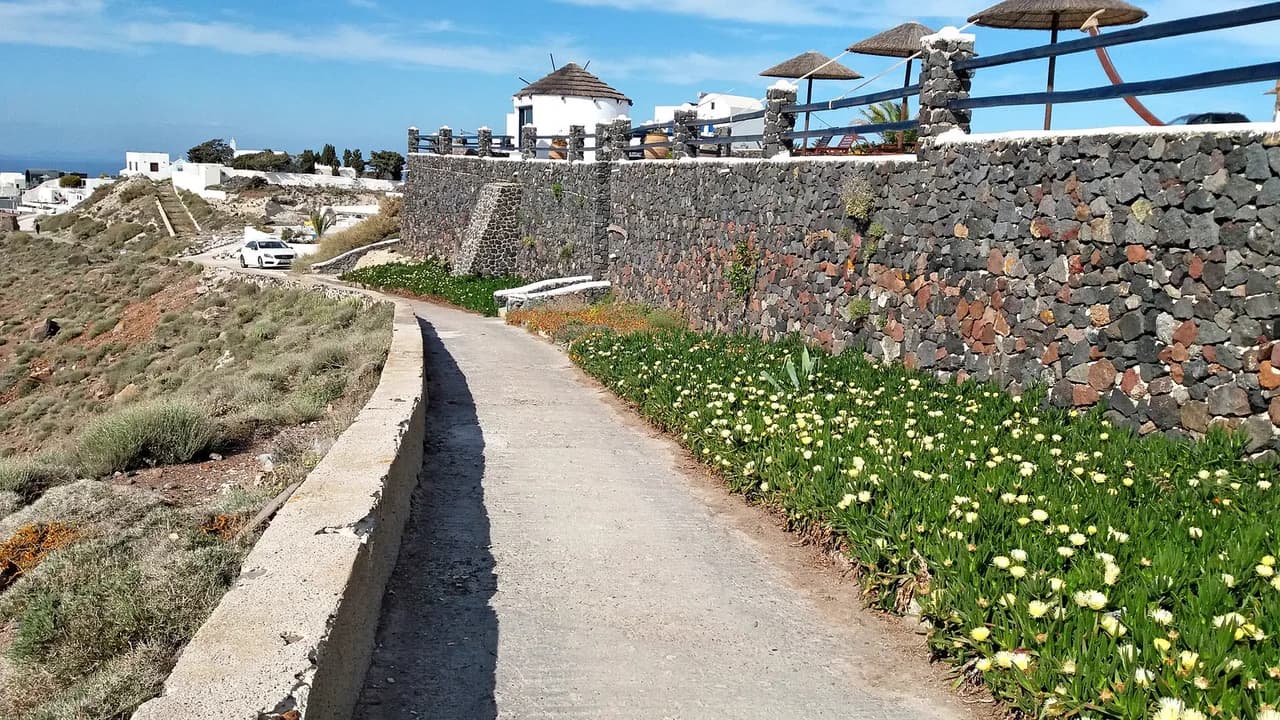
The cliff path from Fira to Oia is the single best thing to do in June, provided you start early. It runs about 10 km along the caldera edge, takes roughly three hours or more depending on stops, and passes through Imerovigli and past small churches, with the best views looking forward towards Oia rather than back. Walk it Fira to Oia for that reason, and finish in the village for lunch.
Imerovigli and Skaros Rock suit June mornings particularly well: the promontory below the village is a short, steep descent along a zig-zag path past Agios Ioannis Church, and you get the caldera views and the old fortress ruins without the crowds of the main villages. Go before the sun is high and take water; there is very little shade on the rock.
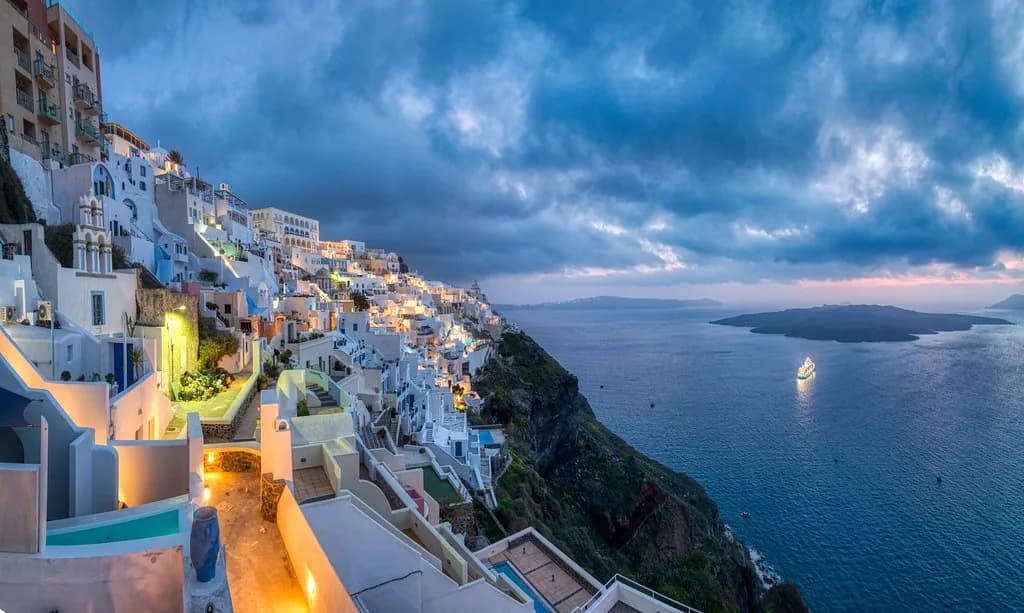
Sunset at the blue domes or Imerovigli
Everyone heads for Oia Castle at sunset, and the result is a crush that can sour the experience. The better photograph is beside the three blue domes in Oia, where you get the domes and a church bell in frame and share the spot with far fewer people. Oia itself is just as rewarding by day, when the lanes and cafés are open and the light is still good.
Imerovigli is the quieter alternative for the sunset itself, with terraces and restaurant tables looking over the caldera and the lights of Oia twinkling in the distance afterwards. Arrive with time to spare if you want a table with a view, and remember that parking in Oia is limited and fills hours before the sun goes down.
Get on the water
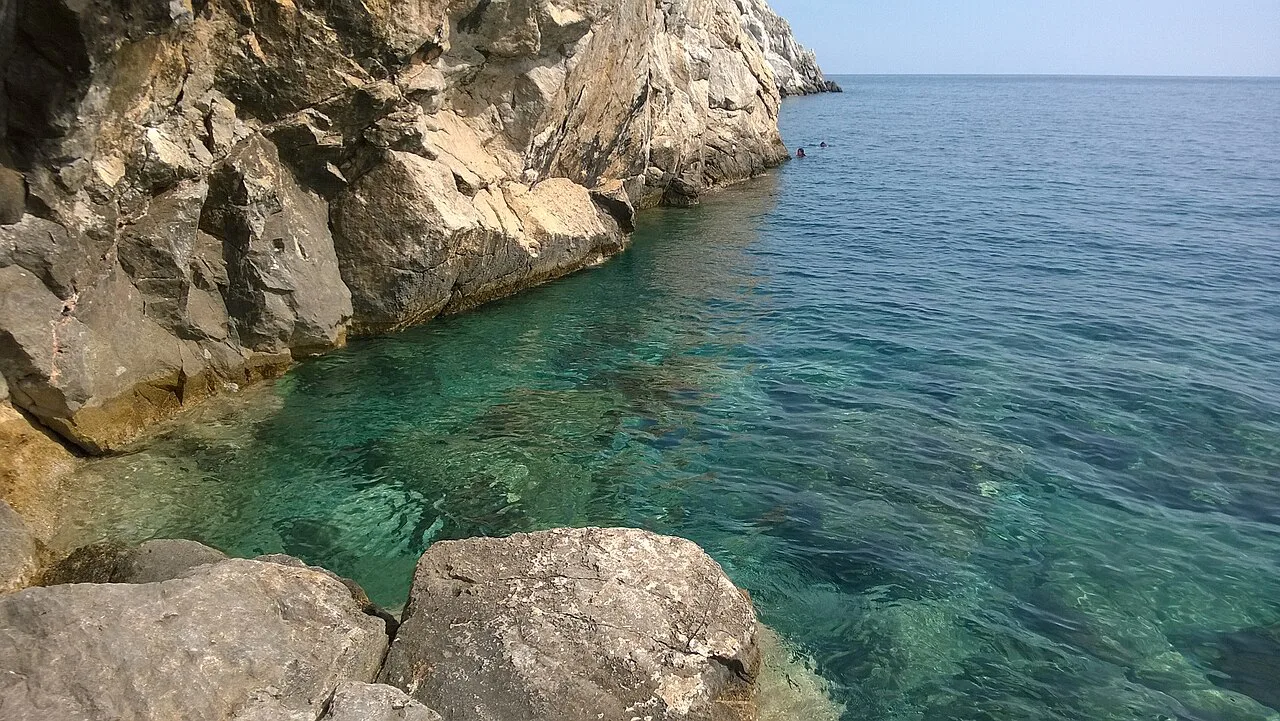
A caldera cruise is the month's best-value way to see the island, combining the view back up at the white villages with a swim and often a meal and drinks on board. Catamaran trips typically stop at the hot springs near Nea Kameni and off the Red and White beaches, so you see the volcanic coastline from the water rather than fighting the roads to reach it. In June the swimming is genuinely pleasant rather than bracing.
For a cheaper, shorter outing, walk down the switchbacks from Oia to Ammoudi Bay, a cove reached by roughly 300 steps, where seafood tavernas sit at the water's edge and the water is clear and shallow. Do the climb back up in the morning or towards evening rather than at midday.
Wine tasting in Pyrgos and the vineyards
Santorini's wine is built on Assyrtiko, grown on vines coiled low to the ground against the wind, and a tasting is one of the most rewarding indoor-ish activities when the midday sun is at its strongest. Santo Wines near Pyrgos is the best-known stop, with Venetsanos another good option, and organised tours link several wineries in an afternoon. Book ahead in June, when tasting rooms fill.
Pyrgos itself is worth an hour before or after: a small village of twisting lanes and cafés above the wine country, with a Venetian fortress and a swarm of churches, and far fewer visitors than the caldera villages. It makes a sensible base for a half-day that combines history, wine and shade.
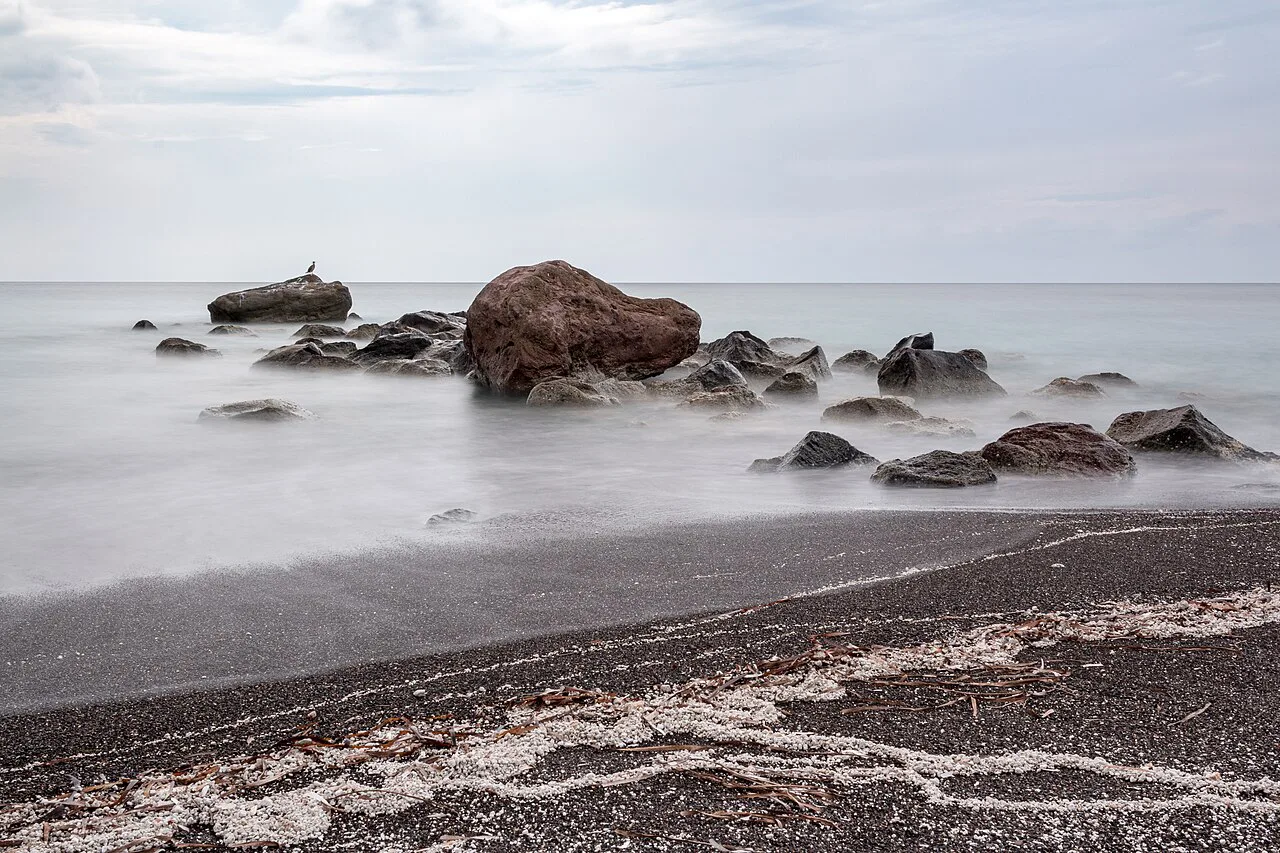
Black-sand beaches: Kamari, Perissa, Perivolos and Vlychada
The black-sand beaches along the southeast coast are where June's warm sea pays off. Kamari and Perissa both have long volcanic strands lined with cafés, beach bars and restaurants, so you can swim, eat and settle in without planning. Perivolos continues the same stretch and is a good choice when Kamari feels full.
Vlychada, the so-called Moon Beach, trades amenities for scenery: enormous eroded cliffs behind black sand, and a wilder feel than the resort beaches. It suits a half-day with a car rather than a full day of lounging, and the contrast with the caldera villages is the point.
Red Beach and White Beach
The Red Beach is Santorini's most famous, its colour coming from pulverised volcanic rock, and it sits near the Akrotiri archaeological site. The cliffs above it are unstable enough that the sensible move is to admire it from a distance or from the water rather than commit to a spot directly beneath the rock face.
The White Beach is reachable only by boat, and the overland route involves a rough, narrow dirt road and a faint trail to a viewpoint. If you are not on a cruise that calls there, the effort returns a view rather than a beach day. That is a fair trade for photographers and a poor one for families.
History and archaeology
Akrotiri is the island's essential archaeological stop: a Minoan settlement buried in volcanic ash in the sixteenth century BC and preserved in a covered excavation, often compared to Pompeii. Allow about an hour, buy tickets at the entrance, and go early in the day when the site is cooler and quieter.
Ancient Thira sits high on the Messavouno ridge above Kamari, with a bus from Kamari a less stressful alternative to driving the twisty road up. The ruins span centuries of habitation, but the site is currently closed to the public according to the Ephorate of Antiquities of the Cyclades, with no reopening date announced, so treat it as a bonus rather than a plan.
Profitis Ilias, the island's highest point, gives near-360-degree views and is reachable by car, on foot or on a tour, with trails linking it to Kamari, Ancient Thira and Perissa. In June, go early or late; the summit has little shelter from the sun.
Villages away from the caldera
Megalochori is charming but tiny, and a slow wander through its centre takes only minutes, so pair it with something else rather than making it the day's destination. Pyrgos is the more substantial inland village, and Mesa Gonia, near Panagia Episkopi, gives you a quieter slice of island life with the church as the anchor.
If you are weighing a June city break against a June island trip, our guide to things to do in Corfu in June shows how another Greek destination handles the same month, with more green landscape and a historic old town instead of a caldera.
Food in June
Santorini's volcanic soil makes its cherry tomatoes worth seeking out, and the local table adds fava, the fish dish brantada and the cheese-and-yoghurt biscuits called melitinia. Metaxi Mas is the reliable stop for traditional Greek cooking and takes reservations even at lunch, while Oia's rooftop tables at Pelekanos pair good food with a village view.
By June, a table with a caldera view needs booking ahead, and that applies to lunch as much as dinner in the busiest weeks. If you want the sunset from your seat rather than standing in a crowd, reserve and arrive early; the alternative is to eat well inland and watch the light from a quiet terrace.
Crowds and prices in June
June is busy, and it gets busier as the month runs. Cruise-ship days concentrate thousands of day visitors into Fira and Oia for a few hours, so plan that day inland, on the water or on the black-sand beaches. Weekends bring Greek and European short-break visitors on top of the ship traffic.
Santorini is an expensive island in season, with the caldera villages carrying the highest premium and inland villages and beaches better value. Food, transport and excursions are not uniformly punishing, but anywhere with a view charges for it. Late June, with school holidays beginning in parts of Europe, is the point where value drops fastest.
Honest drawbacks
Wind, haze and hot middays are the real costs of June. The meltemi can spoil a cliff-edge plan, the sun between late morning and mid-afternoon makes the caldera path unpleasant, and the sunset hour at Oia is genuinely crowded. Build your day around mornings and evenings and you avoid most of it.
The sea is warm but the beaches are volcanic and the popular ones fill early, and some sights keep shorter hours than you might expect — at Akrotiri, staff have sent visitors away well before the published closing time — so it pays to have a second option each day. That flexibility is what separates a good June trip from a frustrating one.
June or May, and June or September?
May is cooler and quieter, with the island still opening up and the sea colder; June gives you everything running and a sea worth swimming in, at the cost of crowds and heat. If you want that gentler version of the island, our guide to Santorini in May is the honest comparison, and Santorini in April covers what the season looks like before the tours start at all.
September is the closest rival to June: warm sea, warm days and thinning crowds once the European holidays end, though the wind picks up later in the month. June wins on daylight and on everything being fully open; September wins on breathing room. For the month you are actually asking about, Santorini in June sets out the full picture of the island at full season.
If you are comparing Greek islands for the same month, our guide to things to do in Crete in June covers a much larger island where you can trade caldera crowds for gorges, beaches and mountain villages.
The verdict
June suits walkers, swimmers, boat-trippers and wine drinkers who want the island fully open and are willing to start early and book ahead. It does not suit anyone who wants guaranteed heat with empty viewpoints, or who resents paying a premium for a caldera view. If crowds are your main concern, shift to early June or to May; if swimming is the priority, June is the first month that properly delivers.
Plan Your June Trip
Build your days around mornings and evenings: walk the caldera path early, take the boat trip when the sun is high, and keep the sunset for a booked table in Imerovigli rather than the Oia Castle scrum. Check which ships are due before committing to Fira or Oia, and reserve restaurants with a view well before you travel.
For entry rules and travel advice, use the UK government's foreign travel advice page for Greece, and leave the rest of your planning to the island itself. Everything else — which beach, which winery, which walk — depends on how much heat and how many people you are willing to trade for the view.
More Santorini spring guides
Frequently Asked Questions
Is Santorini warm enough to swim in June?
Yes. By June the sea has warmed through enough for comfortable swimming and snorkelling, which is why caldera cruises with swim stops make sense this month. It is the point in the season when the water stops being a quick plunge and becomes part of the day.
What is the weather like in Santorini in early June?
Hot, sunny and dry, with long days and a sea warm enough to swim in. Early June is slightly cooler and noticeably quieter than late June, and the wind can still gust hard on exposed cliffs. Plan walks and sightseeing for the morning and late afternoon.
Is the sunset better in Fira or Oia?
Oia is the classic sunset village, but the crowd at Oia Castle is heavy. The blue domes in Oia give a better photograph with fewer people, and Imerovigli offers a quieter sunset with terraces and restaurant tables looking over the caldera.
How crowded is Santorini in June?
Busy and getting busier. Early June is manageable on weekdays, while late June brings fuller restaurants and an earlier, longer sunset crowd. Cruise-ship days concentrate visitors into a few hours in Fira and Oia, so plan those days inland or on the water.
Is June a good time to walk from Fira to Oia?
Yes, if you start early. The cliff path runs about 10 km and takes roughly three hours or more, and the best views look forward towards Oia, so walk it in that direction. There is little shade, so avoid the hot middle of the day.
Do boat trips and caldera cruises run in June?
Yes. Caldera cruises and catamaran trips operate through June, typically combining the view back up at the white villages with a swim stop and often a meal and drinks on board. Trips commonly call at the hot springs near Nea Kameni and off the Red and White beaches.
Is Akrotiri worth visiting in June?
Yes. Akrotiri is a Minoan settlement buried in volcanic ash and preserved under a roof, and an hour there is well spent. Go early, when the site is cooler and quieter, and buy tickets at the entrance.
Should I visit Santorini in June or September?
June gives you longer days, a warm sea and everything fully open, but with growing crowds. September offers warm sea and thinning crowds once European holidays end, though the wind picks up later in the month. Choose June for daylight and full operation, September for breathing room.
Sources
Spring sun notes
Optional updates when we add destinations and months.
You might also like
Continue reading
More guides you'll find useful