Things to Do in Santorini in May: What to See & Skip
Santorini in May brings warm walking weather, open boat trips and wineries, and calmer caldera villages before the summer rush. Here is what to do.
On this page
May is the month Santorini becomes a walking island again. Days are warm and mostly sunny, the caldera path from Fira to Oia is comfortable rather than punishing, and boat trips and wineries are back in business without the midsummer crush. If you want long coastal walks, hilltop views and a table with a caldera outlook, this is one of the best windows of the year.
The honest caveat is the sea. May water is still cold enough to shorten a swim, and the meltemi wind is the real variable: it can make an exposed cliff path or a lighthouse headland feel raw even under blue sky. Book for sightseeing, hiking and eating rather than for lazy beach days, and May rewards you.
If you are weighing the shoulder months, our guide to Santorini in April shows how much quieter and cooler the island is a few weeks earlier, while Santorini in June is the point where heat and crowds start to bite and the sea finally feels inviting.
Weather in May
Expect typical May conditions of warm, bright days with a strong sun, cool evenings once the sun drops behind the caldera, and a wind that shows up often enough to shape your plans. The island is at its most reliable for dry sightseeing weather now, though short unsettled spells are normal in spring.
Daytime conditions suit walkers, sightseers and couples who want terrace dinners and long views; they do not suit anyone whose main goal is warm sea swimming or guaranteed sunbathing heat. The volcanic soil and dry, breezy climate that make Santorini good wine country also explain why the island feels windswept, and gusts here can be strong enough to knock you off balance on exposed ground.
For precise climate normals rather than a general impression, the Greek national weather service publishes monthly figures for the Cyclades, and checking those gives you a clearer sense of average highs and lows than any single traveller's account.
Early vs Late May
Early May still has a waking-up feel: the season is opening, some places are running shorter hours, and the island has room to breathe. By late May the machinery is fully running, restaurants are busier, and the light and heat have moved closer to summer. April arrivals find an island just coming out of winter, with hotels and restaurants opening their doors after the off-season.
The jump from April to May is bigger than the jump from May to June in terms of how much is open and how comfortable the walking is. June adds heat and volume; May keeps the caldera path pleasurable and the villages navigable. Our month-by-month view in the best time to visit Santorini sets out where May sits across the whole season.
If you are travelling in the first half of the month, build in flexibility for a windy or overcast day and keep a museum or a winery visit in reserve. Later in May you can plan outdoor days back to back with more confidence.
Walk the Caldera Rim from Fira to Oia
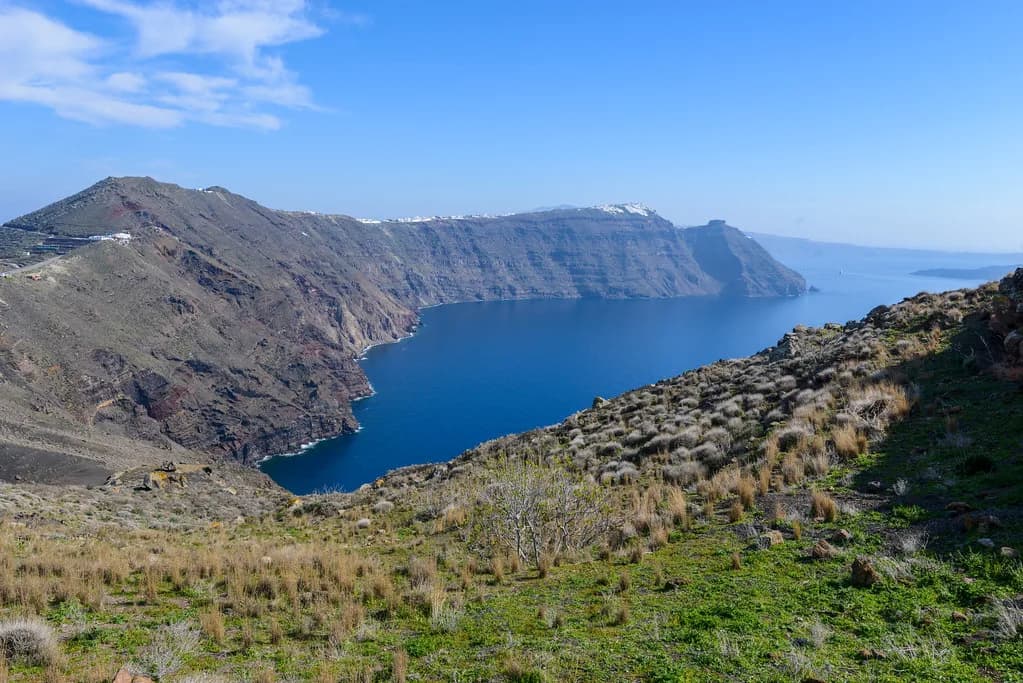
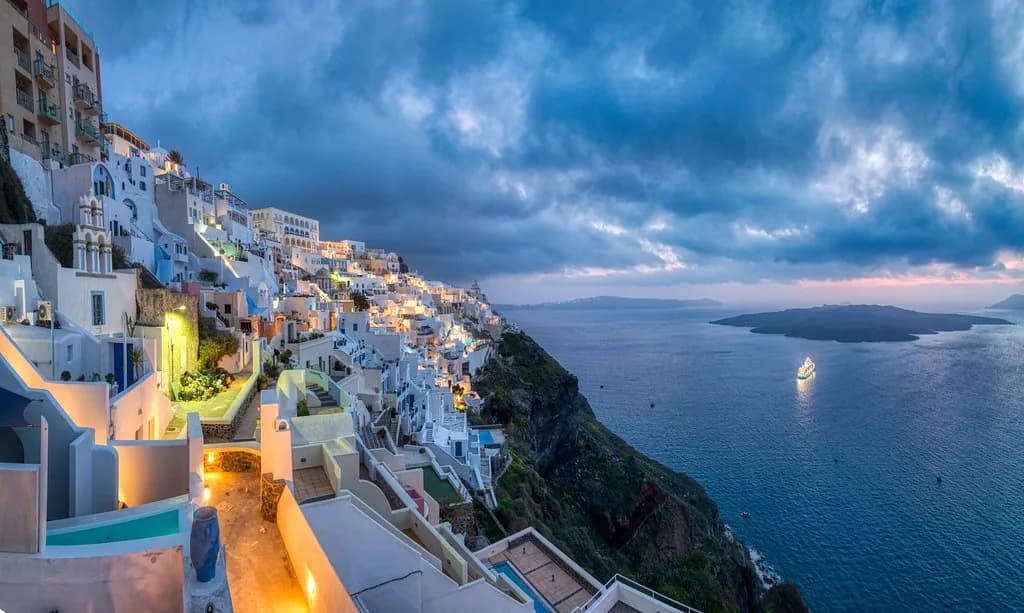
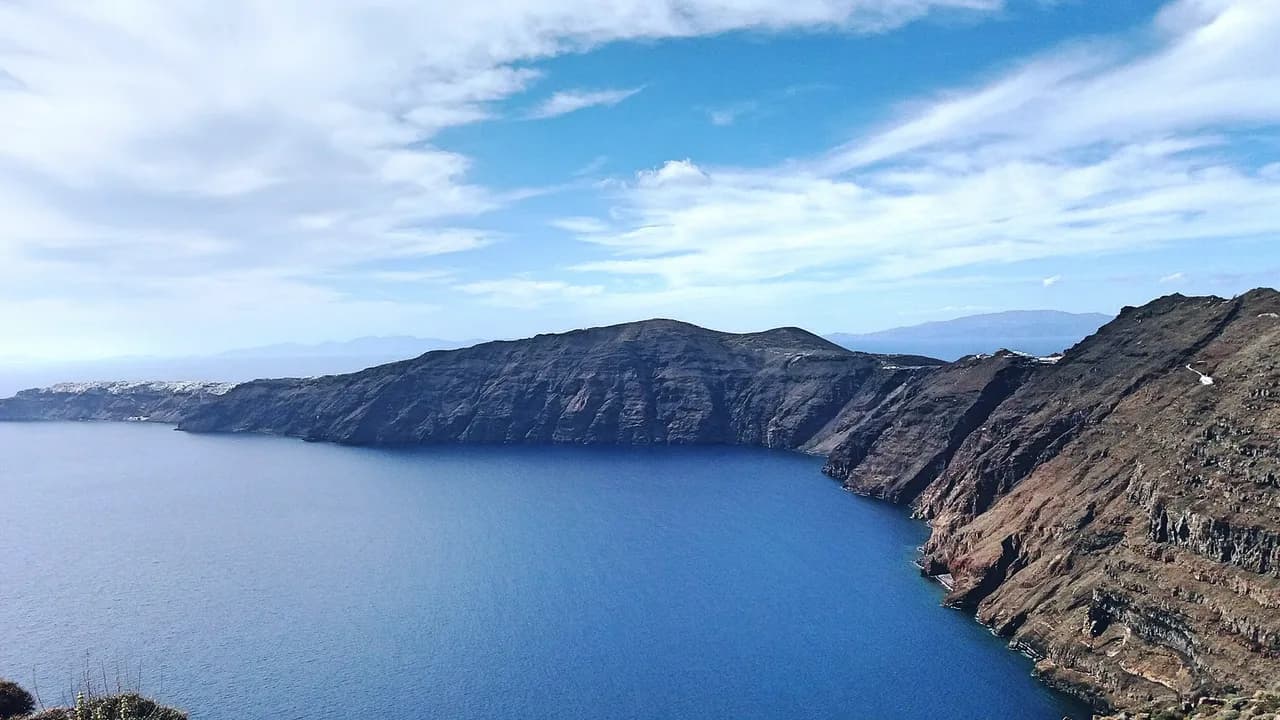
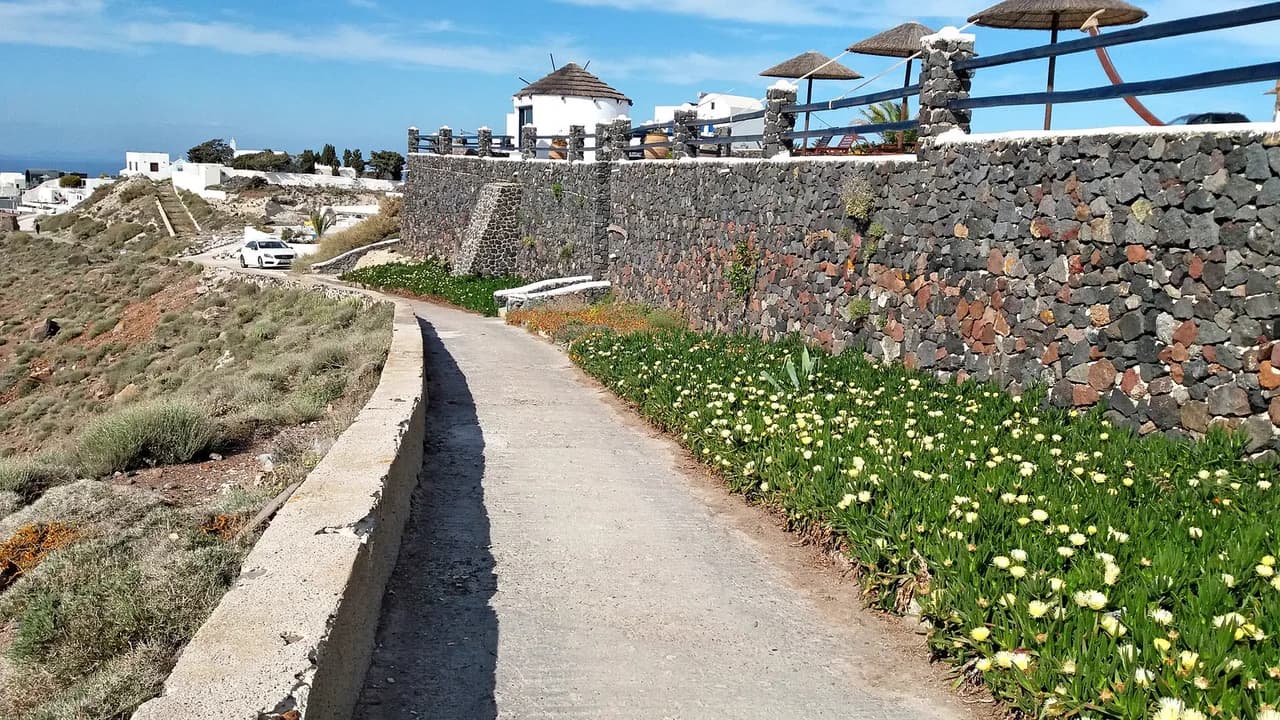
The cliff-edge route from Fira through Firostefani and Imerovigli towards Oia is the single best thing to do in May. It runs roughly six miles and takes three to five hours with stops, part paved, part dirt trail with climbs and descents, so treat it as a hike rather than a stroll.
Walk it from Fira towards Oia if you can: you keep the famous village in front of you, the overall gradient works in your favour, and you finish where you want to be for the evening. Start early to avoid the strongest sun, carry water, and wear shoes with grip for the unpaved sections.
The walk passes the blue-domed Agios Theodori church at Firostefani, an easy detour and one of the island's most photographed corners. For a shorter version, the Imerovigli-to-Fira stretch gives you the caldera views without committing to the full distance.
Skaros Rock and the Path Below Imerovigli
Below Imerovigli, a zig-zag path drops to the Agios Ioannis chapel and continues onto Skaros Rock, the promontory that once held a Venetian fortress. The climb involves around 300 stairs at the toughest point, and the reward is a view back onto Imerovigli and straight down the caldera.
Go in the morning or late afternoon when the rock is in softer light and the wind is less fierce. It pairs naturally with a slow wander through Imerovigli, which is quieter than Oia or Fira and has some of the island's best viewpoints from its narrow lanes.
Oia by Day and Sunset Alternatives
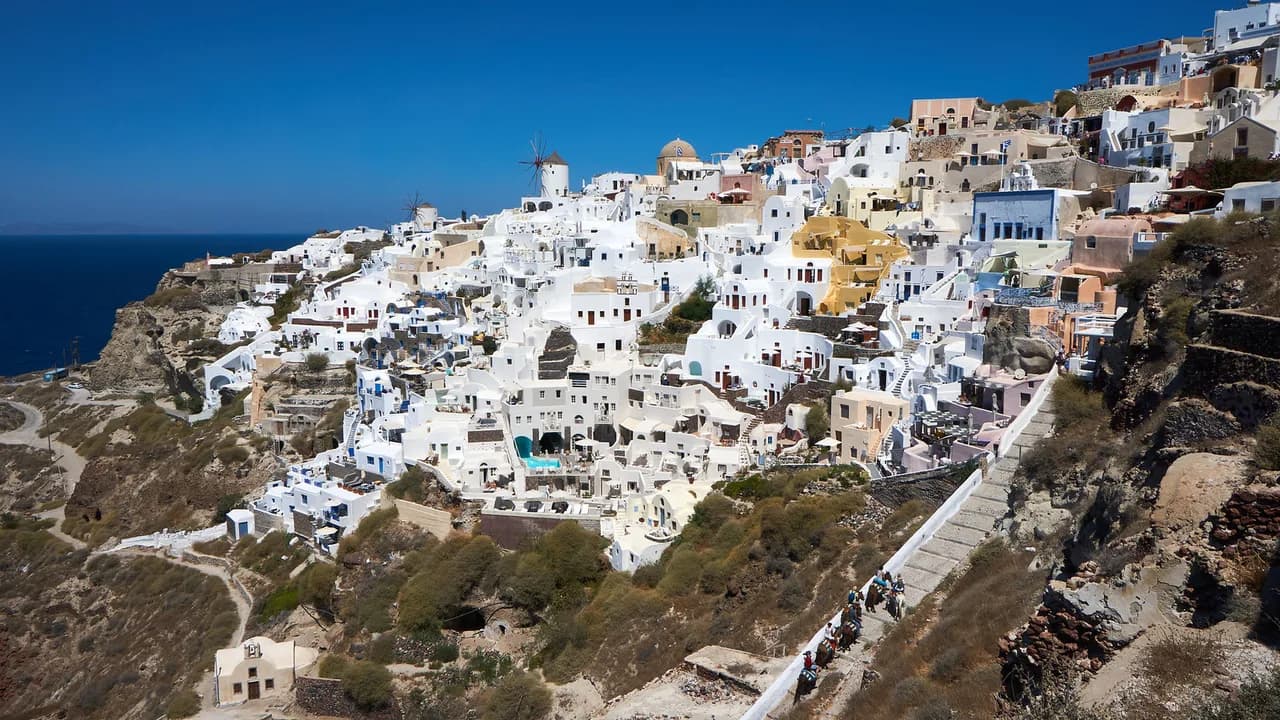
Oia is worth more than a sunset slot. In daylight you can wander the narrow lanes, browse the galleries, and stop for coffee without the evening squeeze, and the village is at its most photogenic in the softer morning light.
Come sunset, the area around the castle draws heavy crowds, and the blue domes nearby give you the iconic frame with far fewer people around you. If you want the view without the crush, Imerovigli's walkways and terraces offer a calmer sunset over the same caldera.
For a third option, head up to Profitis Ilias, the island's highest point, where the monastery hill gives near-360-degree views across the whole island at sunset. There is no bus to the top, so you need your own transport, and the road is narrow.
Caldera Boat Trips and Catamaran Sails
May is when the water starts working for you again. Catamaran and boat cruises leave from Athinios port and run around the caldera, with many including meals, drinks and a stop for swimming or snorkelling near the volcanic islets. Tours were not yet being offered when the island was still in its mid-April lull, so May is the month the season properly opens.
Book a sunset sailing early in your trip so you have a weather window to fall back on, and choose a small-group catamaran over a packed vessel if you want space on deck. Sea conditions can still be choppy in a meltemi, so if you are prone to seasickness pick a calmer morning slot.
Ammoudi Bay and Seafood Below Oia
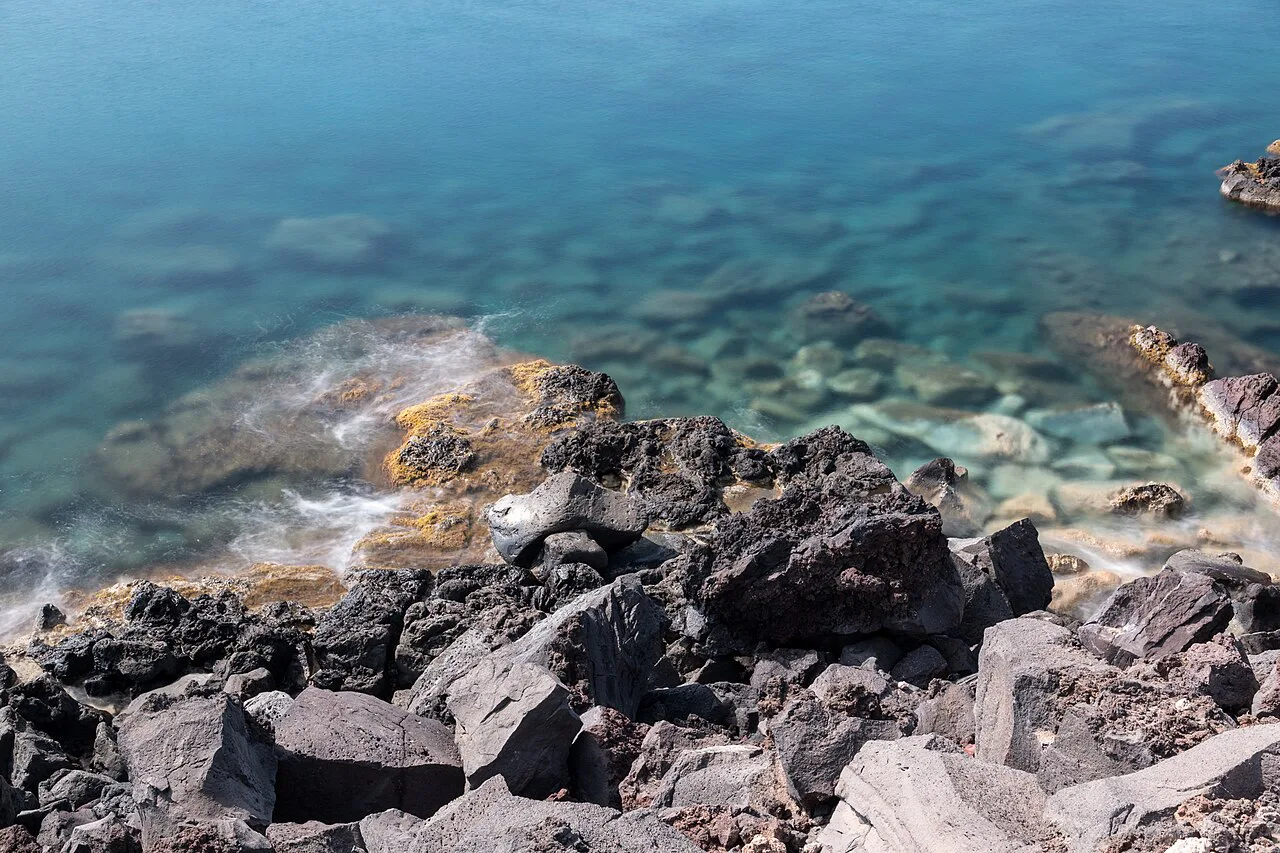
Down the switchback steps from Oia, Ammoudi Bay is a small fishing harbour with tavernas set right at the water, serving fresh fish and seafood. It is one of the most atmospheric meals on the island and a natural end point after a day in Oia.
Walk the steps rather than taking a donkey, and if you are driving, park just before the bay. The climb back up is tiring but short, and doing it after a long lunch is the only real downside.
Wine Tasting: Assyrtiko and Vinsanto
Santorini's volcanic vineyards produce Assyrtiko, the island's signature white, and Vinsanto, its sweet wine, and May is ideal for a winery visit: the terraces are warm, the light is long, and the tasting rooms are calmer than in high summer. Santo Wines near Pyrgos is the best-known stop, with Venetsanos another strong option.
The vines here are grown in low coils on the ground rather than on trellises, a response to the wind, which makes a vineyard walk genuinely different from anywhere else in Europe. A wine tour by van is a sensible way to cover several wineries without worrying about driving.
Akrotiri and the Red Beach Viewpoint
The prehistoric town of Akrotiri, buried by a Bronze Age eruption and often compared to Pompeii, is the island's most important archaeological site and a good half-day in May before the heat builds. The site is covered by a large protective roof, which also makes it a sensible choice on a windy day.
Nearby, the Red Beach is a striking volcanic landscape, but the approach path is rough and the cliff is prone to rockfall, so many visitors take in the view from a distance rather than descending to the sand. Combine the two on the same morning and you have a solid inland day.
Volcanic Beaches and Early-Season Conditions
Kamari, Perissa and Perivolos give you black-sand beaches backed by tavernas, cafes and beach bars, while Vlychada, the so-called Moon Beach, pairs dramatic white cliffs with a quieter stretch of coast. In May the beach bars and restaurants along Perissa and Perivolos are generally up and running again.
Be realistic about the water: May is fine for a quick dip in the heat of the middle of the day, not for long swims. Treat the beaches as places to eat, read and take in the volcanic scenery rather than as the centrepiece of the trip.
Hilltop and Inland Villages
Pyrgos spreads across a hilltop in the island's wine country, with twisting lanes, small cafes and far fewer visitors than the caldera villages. It makes a good morning stop before a winery lunch.
Megalochori is charming but very small, and unless you are touring the island by car and enjoy tiny villages, it is a quick stop rather than a destination. Profitis Ilias, the island's high point, is the better use of a hire car, with views that take in most of Santorini on a clear day.
Local Food to Seek Out in May
Santorini grows cherry tomatoes in volcanic soil that give them real intensity, and the island's fava, a pureed yellow split pea dish topped with onion and olive oil, is one of the best things you will eat. Order it as a starter wherever you go; it is on almost every menu.
Look also for Brantada, a local Santorini fish dish, and melitinia, small cheese-and-yogurt cookies, which round out the island's food identity beyond the standard Greek taverna list. A long lunch with a caldera view is one of the best uses of a warm May afternoon.
Crowds and Prices in May
May is busy but not packed. The UK bank holidays and half term push up demand, and Greek Orthodox Easter, which usually falls in April, can spill into early May and fill the island quickly, but outside those windows you can still eat well and walk the caldera without queueing. For a full picture of how the month fills up, see Santorini in May, where the bank-holiday and half-term pattern is set out week by week. Restaurants still need booking, even in spring, so reserve the ones you care about.
Prices are noticeably lower than in July and August for the same rooms and tables, and May is a good month for getting value on the island. The trade-off is that a few places, especially the smaller beach bars and some seasonal restaurants, run shorter hours until later in the month.
Wind, Cool Evenings and What Is Not Running Yet
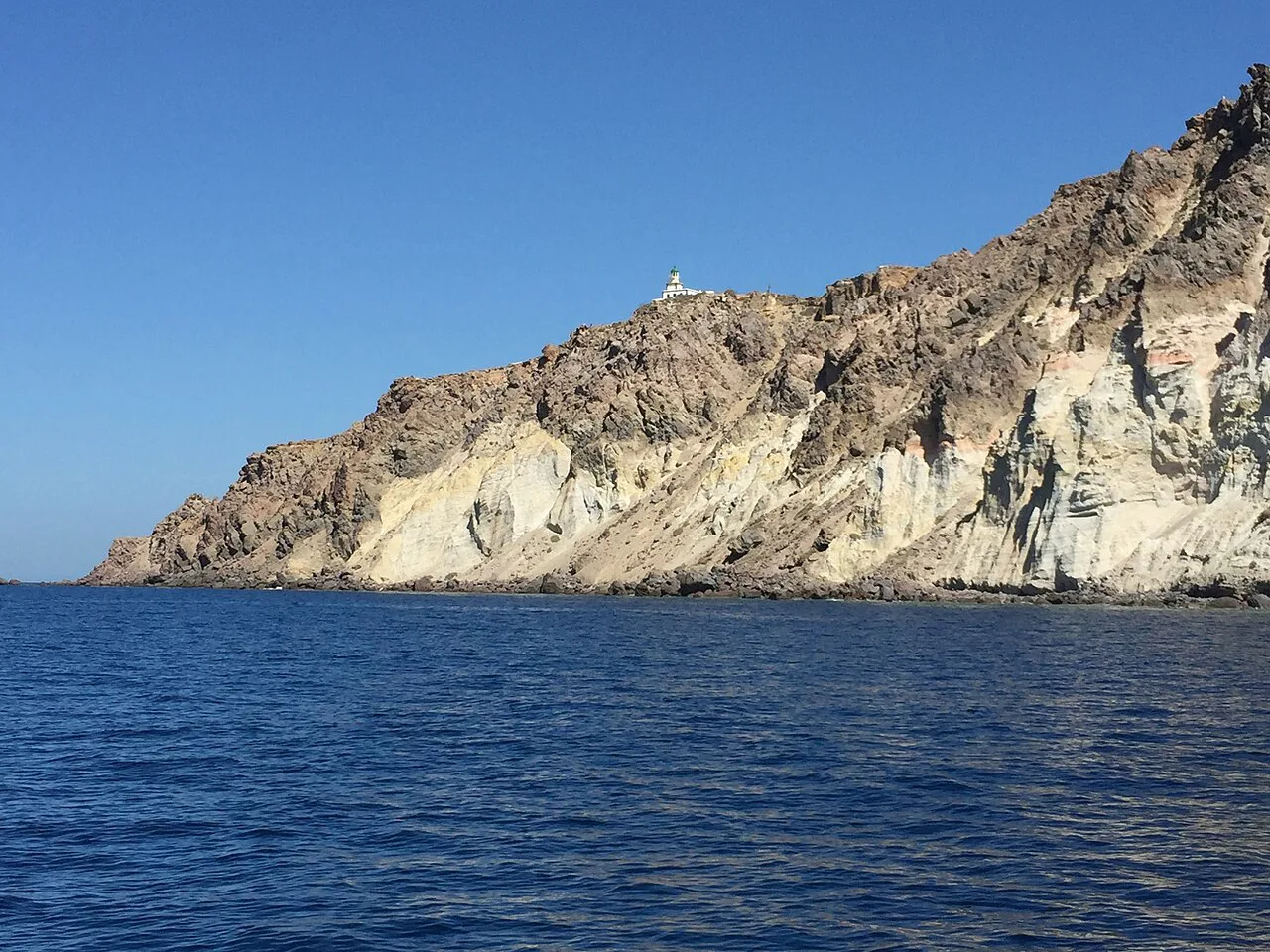
The meltemi is the honest drawback. It can blow for days, making the exposed caldera path and headlands like the Akrotiri lighthouse feel wild and raw even in sunshine, and it can ground or reroute boat trips. Pack a windproof layer and keep a flexible plan.
Evenings are cool enough that you will want a jacket for terrace dinners, and the sea is still bracing. Some seasonal businesses will not be at full summer hours until June, and a few attractions open later or on reduced schedules in spring, so if something is central to your trip, check current opening hours before you go.
May or June?
Choose May if you want to walk, sightsee, wine-taste and see the island without the midsummer heat. Choose June if swimming and beach time are the point of the holiday, or if you want the reassurance that everything on the island is fully open.
For a beach-first holiday where warm sea matters more than caldera walks, look further south or later in the season. If you are comparing May on different islands, things to do in Crete in May and things to do in Corfu in May give you two contrasting alternatives with warmer water and a different pace.
The Verdict
May is the best month for the Santorini most people come for: the caldera walk, the villages, the wineries, the boat trips and the long dinners, all with weather that cooperates and crowds that have not yet peaked. Book your boat trip early, walk the rim in the morning, and save the beaches for the middle of the day.
If you are still mapping out the shoulder season across the region, Europe's warmest spots in April helps you work out where to go before Santorini hits its stride, and our guide to Santorini in spring pulls the whole season together. Entry rules and travel advice are a matter for the official UK or US government travel page, not for this guide.
More Santorini spring guides
Frequently Asked Questions
Is Santorini warm in May?
Yes for walking and sightseeing: days are warm, mostly sunny and breezy, with cool evenings. It is not yet reliably warm enough for long swims or lazy beach days, so if swimming is the point of your trip, June is a better bet.
Is Santorini packed in May?
Busy rather than packed. UK bank holidays, half term and the tail end of Greek Orthodox Easter can fill the caldera villages, and restaurants still need booking, but outside those windows you will find room to move.
Can you swim in Santorini in May?
You can, but the sea is still cold and the meltemi wind can make it feel colder. A quick dip at midday is realistic; long swims are not. If you want comfortable water, wait until June.
Is May or June better for Santorini?
May for walking, sightseeing, wine tasting and quieter villages; June for warmer sea, longer beach days and everything fully open. June brings heat and higher prices, so pick according to what you plan to spend your days doing.
Is the sunset better in Fira or Oia?
Oia has the iconic castle-and-blue-dome view but the biggest crowds. Imerovigli gives you a calmer sunset over the same caldera, and Profitis Ilias offers the widest view of the island with fewer people around you.
What is there to do in Santorini in May?
Walk the caldera rim from Fira to Oia, climb Skaros Rock below Imerovigli, take a catamaran trip from Athinios, eat seafood at Ammoudi Bay, taste Assyrtiko and Vinsanto, visit Akrotiri and the Red Beach viewpoint, and explore Pyrgos and the Profitis Ilias hilltop.
What can you do in Santorini when it rains?
A rainy spell is a good moment for Akrotiri's covered archaeological site, a long winery tasting, or a slow lunch. Keep one of these in reserve on a breezy May trip so a change in the weather does not cost you a day.
Sources
Spring sun notes
Optional updates when we add destinations and months.
You might also like
Continue reading
More guides you'll find useful