The Best Time to Visit Santorini: Month by Month
Santorini suits late May and June for warm days without peak crowds, and September for a warm sea. Here is how each spring month really feels.
On this page
The best time to visit Santorini is late May or June if you want reliable warmth for walking, sitting outside and boat trips without the August crush; April suits sightseers who value quiet over comfort, and September wins if a swimmable sea matters most. The island's climate normals make the difference plain: the average daytime high climbs from 18.9°C (66°F) in April to 27.7°C (82°F) in June, while the average night-time low rises from 13.3°C (56°F) to 20.9°C (70°F). Santorini in april has the full picture.
What you plan to do decides the month more than the calendar does. Caldera villages, archaeological sites and the long cliff walk between Fira and Oia all reward mild air, but evenings in spring still turn cool, and the sea lags well behind the land. The sections below separate 'warm enough to walk and eat outside' from 'warm enough to swim', because in spring those are genuinely different questions.
Why the Answer Depends on Your Trip
Santorini is a small, cliff-heavy island where the experience shifts sharply between a sunny midday and a windy evening. Someone who wants to hike the caldera rim and wander Akrotiri will be comfortable far earlier in the season than someone whose plan revolves around lying on a beach or swimming off a boat. A couple happy with long lunches and viewpoints can travel in April; a family set on water time should look at June or later.
The figures below come from the Hellenic National Meteorological Service normals for Santorini's Thira airport station, covering 1991 to 2020, so treat them as typical conditions rather than a forecast for your dates. That station is the most reliable official record for the island, and it gives temperature clearly. It publishes no usable monthly breakdown of rain days, rainfall totals or sunshine hours, so this guide describes those in words rather than inventing numbers.
Weather in April
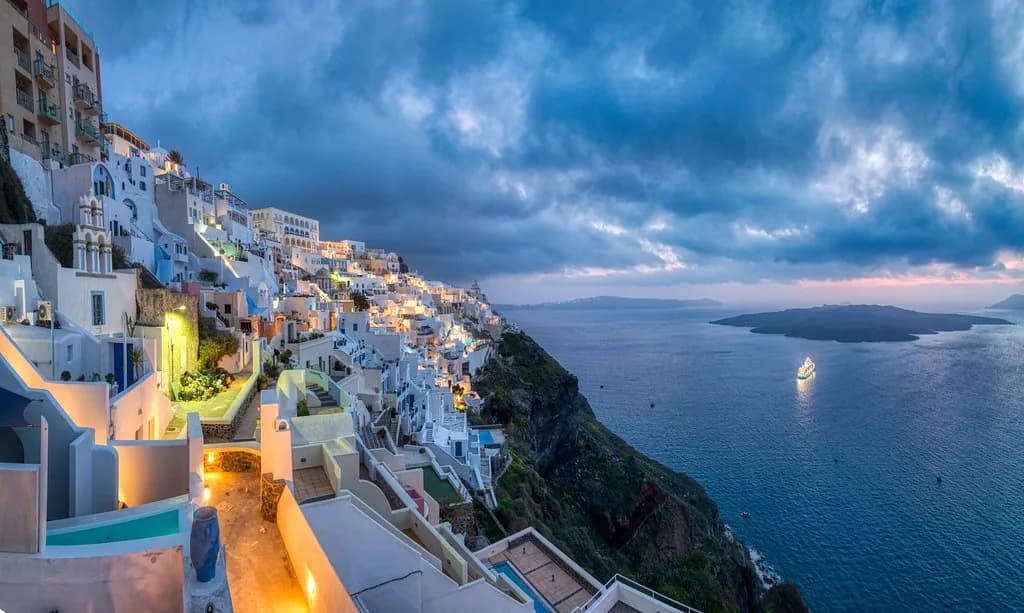
April averages a daytime high of 18.9°C (66°F) and a night-time low of 13.3°C (56°F) on Santorini, which is pleasant in sun and cool the moment the light goes or the wind picks up. Rain is possible in spells rather than all day, and you should plan at least one flexible indoor or village day. Evenings on a caldera terrace can feel distinctly chilly, so a spring trip here is not yet a shorts-and-sandals affair after dark.
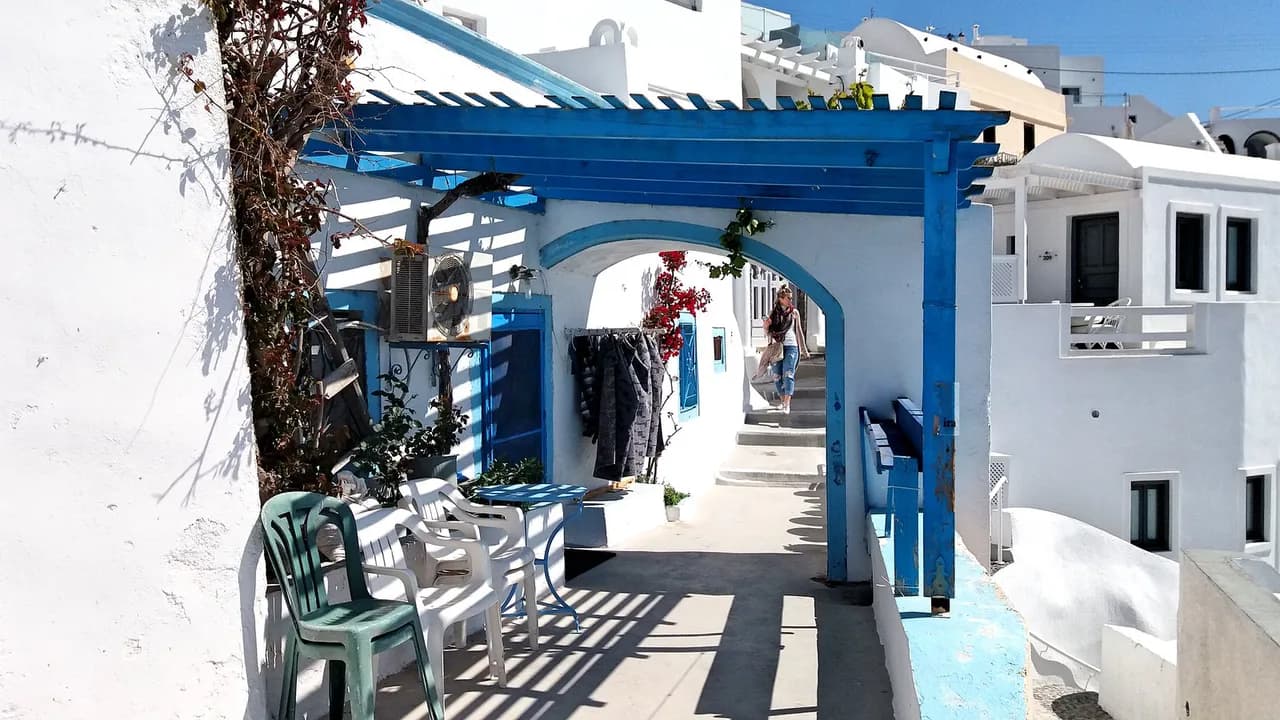
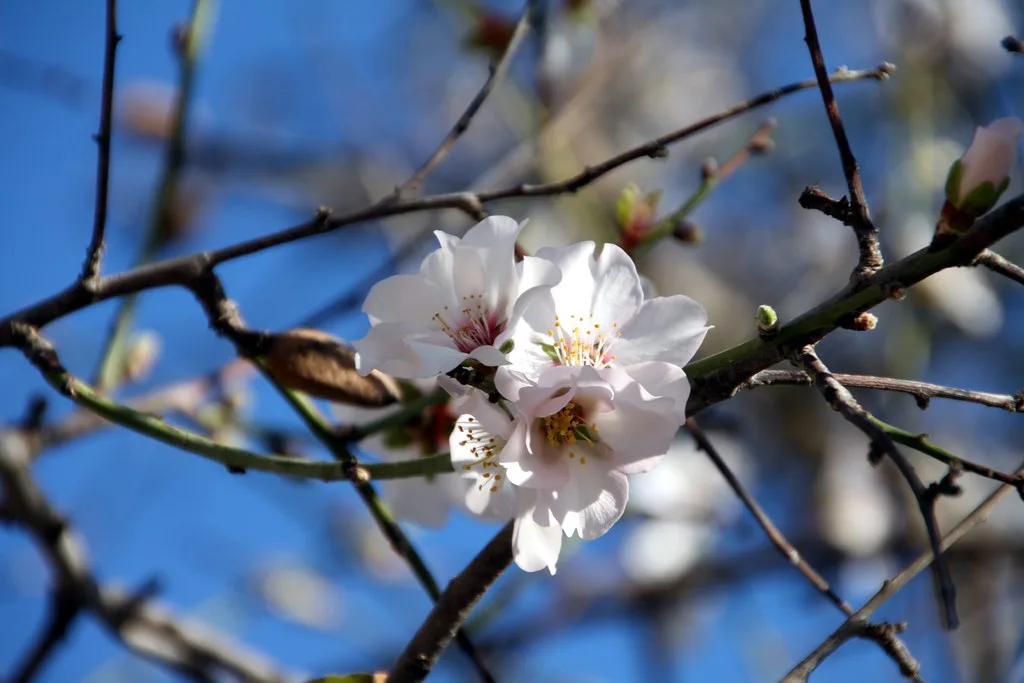
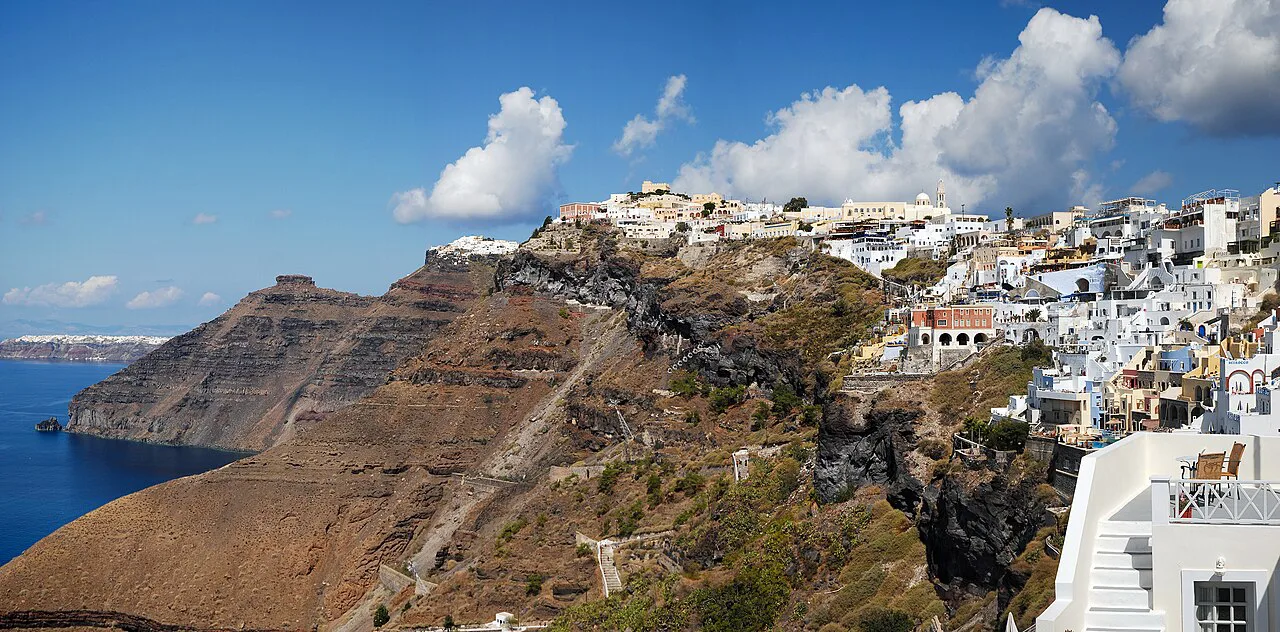
This is the month for sightseeing without heat or queues, and for the Fira to Oia cliff path taken early in the day when the air is still fresh. Akrotiri, the covered Bronze Age settlement, and Ancient Thera on the ridge above Kamari both work well in these temperatures, as does a slow afternoon in Pyrgos or Megalochori away from the caldera edge. April is also when wildflowers are still on the slopes, which softens the island's stark volcanic look.
The trade-off is that the island is only just waking up. Some seasonal places open late in the month or not until May, so the atmosphere is quiet rather than lively. If you want guaranteed bustle, April will feel underpopulated; if you want the villages largely to yourself, it is hard to beat.
Weather in May
May lifts the average high to 23.1°C (74°F) and the average low to 16.9°C (62°F), which is the comfortable middle ground most visitors are looking for. Midday sun is strong enough for a terrace lunch and a long walk, while evenings remain mild rather than hot. Rain becomes less likely as the month goes on, though a spring shower is still possible.
Late May is the sweet spot: warm enough for the caldera path, the climb to Profitis Ilias for the island-wide view, and a boat trip across to Nea Kameni without the summer heat. Winery tastings are a natural fit too, with Assyrtiko and the island's sweet Vinsanto served in courtyards that are pleasant rather than baking.
Early and late May feel quite different in practice. Early in the month you get April's cool evenings and a still-quiet island; by the end you get reliably warm afternoons and the first real sense of the season opening. If your dates are flexible, the last ten days of May give the best balance of weather, open businesses and manageable crowds.
Weather in June
June averages 27.7°C (82°F) by day and 20.9°C (70°F) at night, so the island finally feels properly Mediterranean and evenings stay warm enough to sit out. The sea is also catching up, making boat trips and time in the water far more appealing than in April or early May. Sunshine is plentiful and rain becomes unusual.
The catch is that June is when the island fills up and heat starts to build. Midday sightseeing at exposed sites such as Ancient Thera or Red Beach becomes a matter of going early or late, and the caldera villages get busy as the day goes on. For walking, June mornings are lovely but the afternoons are no longer gentle.
For families and anyone who wants the sea as part of the trip, June is the first month that truly delivers. For hikers and photographers who prefer soft light and elbow room, late May is the better choice.
Is It Warm Enough for Walking, Sitting Outside and Swimming?
For sightseeing, hiking and sitting outside, April is workable, May is comfortable and June is warm with hot afternoons. The Fira to Oia walk is best done in the morning in any spring month, and the short climb up to Skaros Rock above Imerovigli is easier when the air is mild rather than fierce. Restaurant terraces are pleasant from mid-May onwards; in April you will often want to be in the sun rather than the shade.
For swimming, the land warms much faster than the Aegean, so spring afternoons can be lovely while the water remains bracing. No official service publishes a sea-temperature average for this stretch of the Aegean, and even where one exists it describes the water, not the day you will be there. If the sea is central to your idea of Santorini, June onwards, or a September trip, makes far more sense.
What Is Open as the Island Wakes Up
Santorini's tourist infrastructure follows the season rather than the calendar, so April feels noticeably quieter than May and June. Rather than assume a particular taverna, boat operator or winery is running, contact the place you have in mind directly before you build a day around it, especially in April. Each business's own booking pages and the official Visit Greece site are the most dependable places to look.
By late May the island has usually shifted into its summer rhythm, with more boats running caldera trips and more terraces open in the evenings. June is the safer bet if you want everything available without making calls first. The trade-off is straightforward: earlier means quieter and less certain, later means busier and more dependable.
Things to Do That Suit the Season
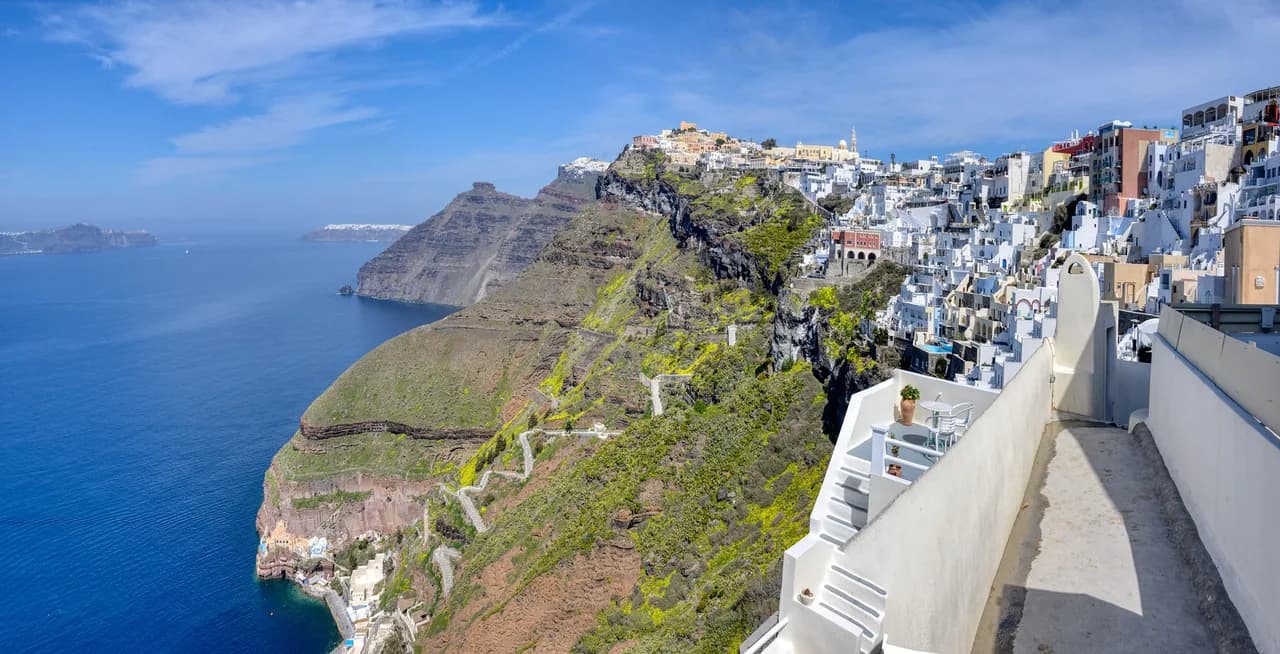
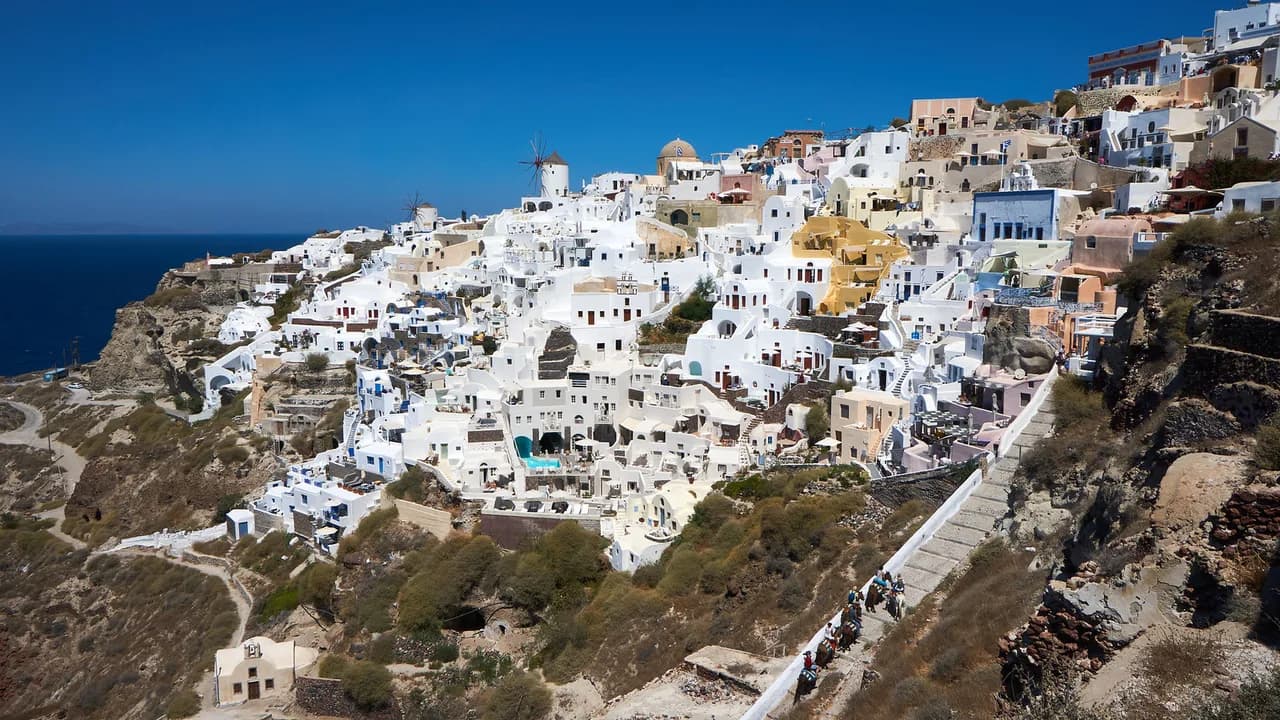
The Fira to Oia path along the caldera rim is the island's signature walk, and in spring it is at its best: mild air, fewer people and long views across the caldera to Nea Kameni and Thirassia. The route passes through Imerovigli and can be broken up at several points, which makes it flexible for a warm day.
Ancient Akrotiri, the excavated Bronze Age town under its protective roof, and Ancient Thera above Kamari are both better in spring than in summer, when the sun is unforgiving. Pair Akrotiri with the nearby Red Beach area for the landscape rather than the swim, and Pyrgos or Megalochori for a slow village afternoon.
Winery tastings suit every spring month, and the island's Assyrtiko is the reason to go. Caldera boat trips to Nea Kameni and the hot springs become more enjoyable as the season advances, while cooler or windier days are good for the archaeology and the villages instead.
Crowds and Prices in Words
April is the quietest of the three months, with Greek Easter being the main exception: when the Orthodox calendar places it in April, islanders travel home and the atmosphere and demand both rise. May brings UK bank holidays and half term, which show up in ferry traffic and the more popular caldera villages. June is when early summer visitors arrive in force and Santorini starts to feel like the busy island people picture.
Prices generally climb with demand, so April and early May are the softer end of the spring range and June the firmer one. Published seasonal rates rarely settle into a pattern you can plan around, so check current rates for your actual dates with the hotels, tour companies and wineries you are considering. If budget matters, early May usually beats both the Easter peak and June.
A wider comparison helps if your dates are fixed: for the warmest options a little further from the Cyclades, see the warmest places in Europe in April before committing to Santorini's slow start to the season.
The Honest Drawbacks
Spring on Santorini is not summer, and the biggest surprise is the evenings. April nights at 13.3°C (56°F) and even May nights at 16.9°C (62°F) feel cool on a breezy caldera terrace, and the meltemi wind can make a sunny day brisker than the thermometer suggests. Rain spells are possible in April and less so in May, so build some flexibility into your plans.
The sea is the other reality: it stays cold well into spring, and a boat trip to the hot springs will feel refreshing rather than relaxing in April. Some seasonal places are still shut early in the season, and by June the heat and crowds have begun to build, so no month gives you everything. Choosing well means deciding which of those compromises you can live with.
June or September?
Both months are warm, with June averaging 27.7°C (82°F) by day and a night-time low of 20.9°C (70°F) on Santorini. June brings long days, a rising sea temperature and the first wave of summer visitors; September trades a little of the heat and most of the crowds for a sea that has had all summer to warm through. If the water is the point of your trip, September edges it.
If you cannot travel in autumn, June is the better summer option, but late May is often the smarter choice for anyone who dislikes queues and heat: warm days, mild evenings and a quieter island than the one waiting in high summer.
Santorini or Mykonos, and How Many Days to Allow
Santorini rewards walking, archaeology and caldera views; Mykonos is flatter, with a beach-and-town rhythm and a livelier summer scene. If your priority is scenery and sightseeing, Santorini is the stronger spring island; if you want beaches and a shorter, more relaxed stay, Mykonos may suit better. Spring is a fair time to compare them, because neither is at full summer intensity.
Three to four full days is enough for Santorini's main sights without rushing: one day for the Fira to Oia walk, one for Akrotiri and the southern beaches, one for Ancient Thera and the east coast, and a half day for a boat trip or a winery. Add a day if you want a slower pace or a second caldera sunset.
Santorini or Crete for a Spring Trip
Crete is bigger, warmer in feel and easier to combine with a longer trip, with more to do when the weather turns unsettled. Santorini is more dramatic and better for a compact short break, but it offers less shelter from wind and rain and a narrower range of things to do when conditions are poor. For a first spring trip and more than four days, Crete usually wins on flexibility; for a short, scenic break, Santorini does.
The pattern in the Cyclades holds either way: air temperatures rise steadily from April into June, and the sea lags behind. That single fact should drive your choice of month more than any brochure description of the island.
April, May or June: The Verdict
Choose late May or June if you want reliable warmth, open businesses and the caldera at its best, and accept that June brings heat and crowds. Choose April if quiet villages, low prices and cool, clear walking days matter more to you than warm evenings or the sea. Choose May if you want the best of both and can travel in the second half of the month.
If your heart is set on swimming, plan for June or later and treat spring trips as a sightseeing holiday. That one decision is enough to make the rest of the planning fall into place.
Plan Your Visit
Start with what the trip is for: walking and sightseeing point to late May, sea and long warm evenings point to June or September, and a quiet island points to April. Then check the season's practicalities directly with the places that matter, because the tourist infrastructure opens on its own schedule rather than a fixed date.
For official travel guidance, the UK government's Greece travel advice page is the single place to look. After that, the choice is simply which month's weather you would rather live with.
Frequently Asked Questions
Is Santorini warm in April?
Mildly, not hotly. The average daytime high is 18.9°C (66°F) and the average night-time low is 13.3°C (56°F), so midday sun is pleasant for walking and sightseeing, but evenings on a caldera terrace feel cool. It suits people who want quiet villages and lower prices more than those who want to swim or sit out late.
When is the best time to visit Santorini to avoid crowds?
April and early May are the quietest spring months, with Greek Easter the main exception because islanders travel home for it. Late May and June bring UK bank holidays, half term and the first wave of summer visitors, so the more popular caldera villages fill up as the season advances.
Is May a good time to visit Santorini?
Yes, especially the second half. Average highs reach 23.1°C (74°F) and nights 16.9°C (62°F), which is comfortable for the Fira to Oia walk, winery tastings and boat trips. Early May still carries some of April's cool evenings and quieter conditions.
Is June too hot for sightseeing in Santorini?
It is warm rather than unbearable, averaging 27.7°C (82°F) by day and 20.9°C (70°F) at night, but exposed sites such as Ancient Thera or the southern beaches are best visited early or late. If you dislike heat or crowds, late May gives you most of the warmth with less of both.
When is the best time to visit Santorini to avoid crowds?
April and early May are the quietest spring months, with Greek Easter the main exception because islanders travel home for it. Late May and June bring UK bank holidays, half term and the first wave of summer visitors, so the more popular caldera villages fill up as the season advances.
How many days are enough for Santorini?
Three to four full days covers the main sights without rushing: the Fira to Oia walk, Akrotiri, the southern beaches, Ancient Thera and either a boat trip or a winery. Add a day for a slower pace or a second caldera sunset.
Is Mykonos or Santorini better?
It depends on the trip. Santorini is stronger for scenery, walking and archaeology on a short break; Mykonos is flatter, more beach-focused and livelier in summer. Spring is a good time to compare them, since neither is at full summer intensity.
Sources
Spring sun notes
Optional updates when we add destinations and months.
You might also like
Continue reading
More guides you'll find useful