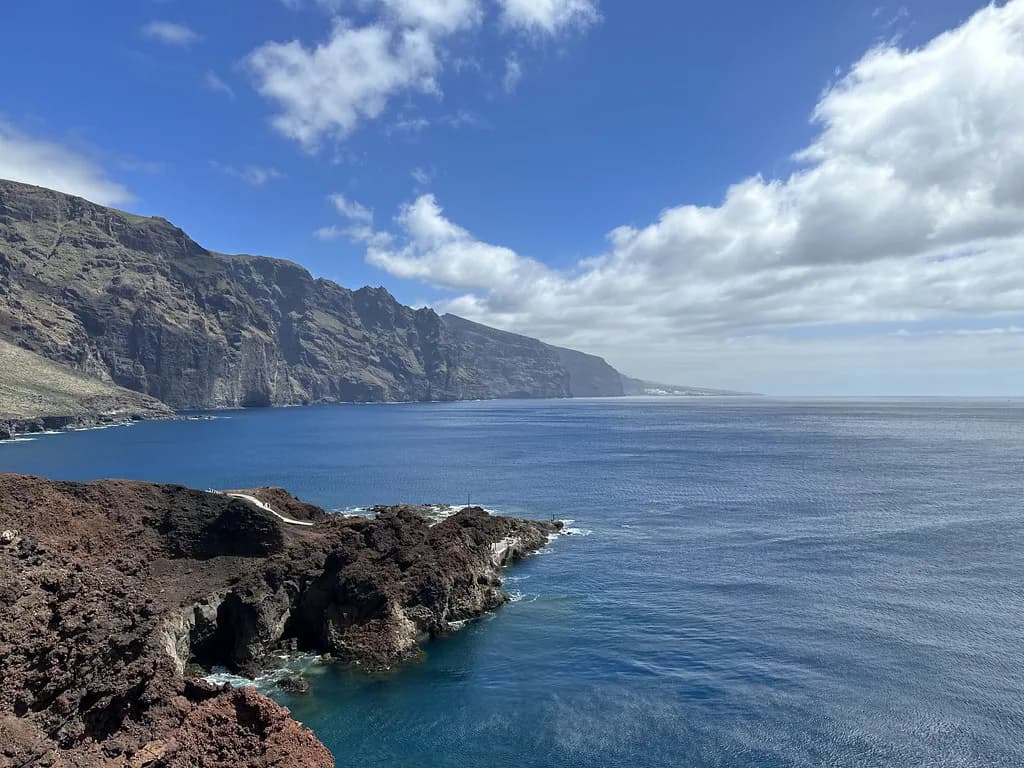
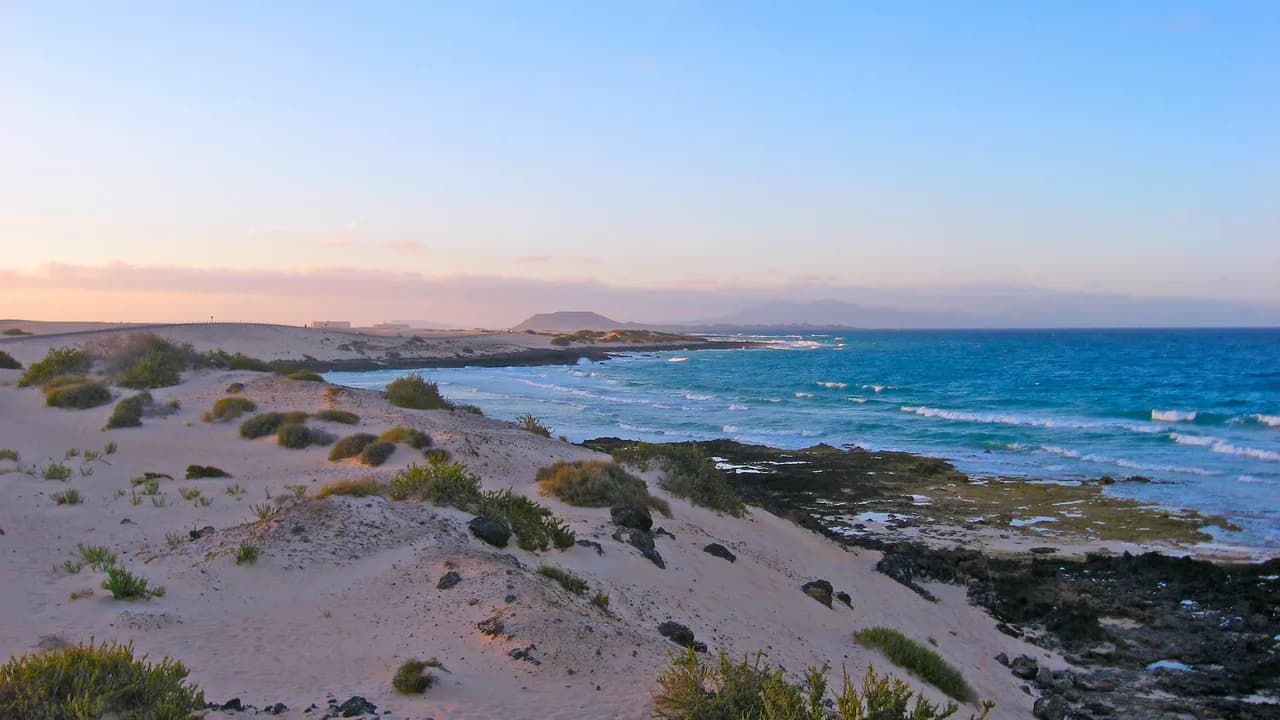
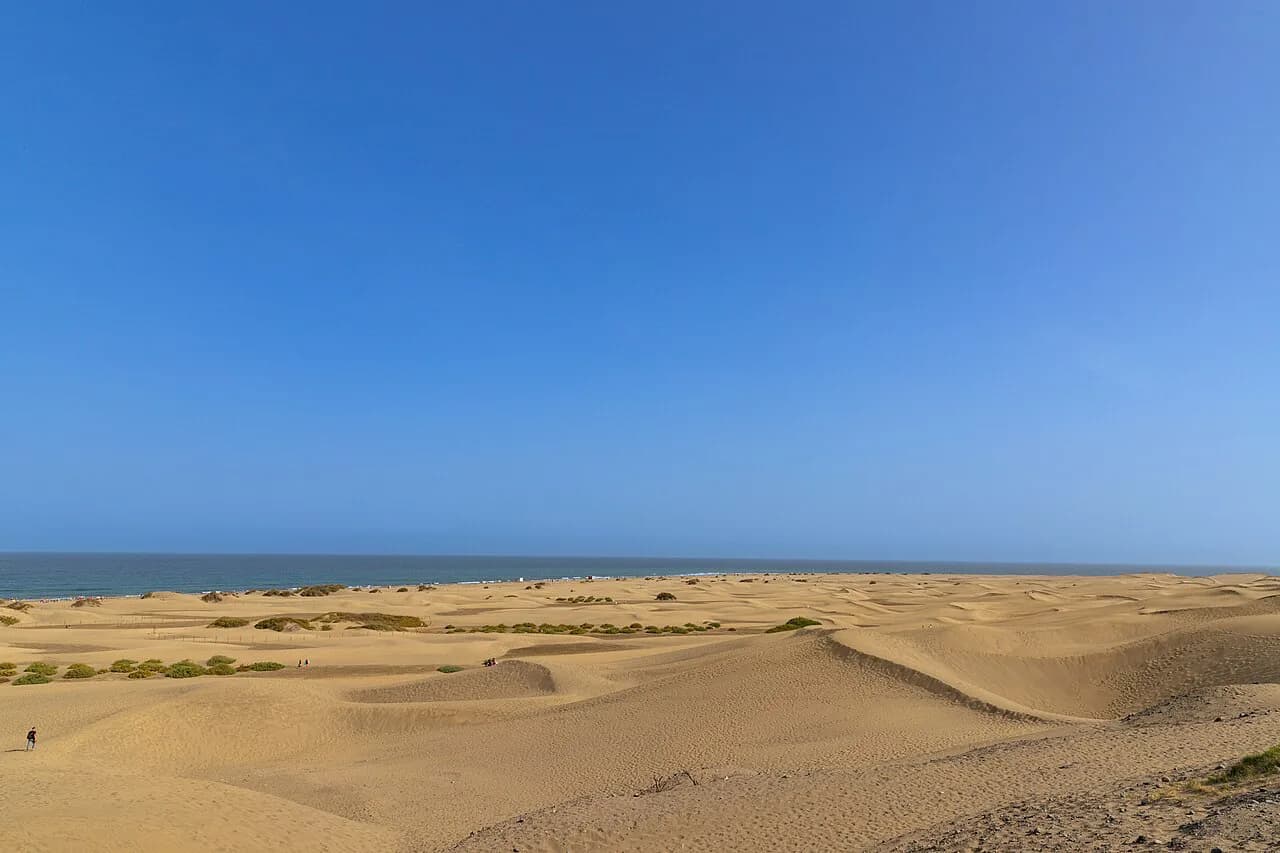
Best Time to Visit the Canary Islands: When to Go
The Canary Islands are warm all year, so the best time depends on your trip. Compare April, May and June with winter and high summer, island by island.
On this page
April to June is the best window for most trips to the Canary Islands: daytime highs of roughly 22 to 26 °C (72 to 79 °F) at the airports on the four main islands, plenty of sun, and rain that fades almost to nothing by June. Winter is the classic winter-sun choice and the busiest season, while July and August bring genuine heat and peak crowds. Pick spring if you want walking, sightseeing and outdoor lunches with a decent chance of sun, and you will not be fighting for space.
The figures below come from AEMET climate normals for the 1981-2010 period at Tenerife South, Gran Canaria, Lanzarote and Fuerteventura airports, so they are directly comparable. Treat them as typical conditions rather than a forecast: individual weeks vary, and the south coast of each island usually runs sunnier than the north, as our guide to Gran Canaria in May sets out.
Weather in April
April is a genuinely pleasant month across the main islands. At Tenerife South the normal daily maximum is 23.1 °C (73.6 °F) and the minimum 16.0 °C (60.8 °F), with 219 hours of sunshine and about seven millimetres of rain over roughly one rain day. Gran Canaria Airport averages 22.6 °C (72.7 °F) by day and 16.2 °C (61.2 °F) at night with 228 hours of sun, while Lanzarote comes in at 23.5 °C (74.3 °F) and Fuerteventura at 22.9 °C (73.2 °F) by day.
In practice, April feels like a good British early summer: warm enough for a T-shirt on a sheltered terrace, cool enough in the evening to want a layer, and bright enough for long days outdoors. The sea is still cool, so this is a month for walking, sightseeing, touring by car and eating outside rather than long swims. Fuerteventura and Lanzarote, flatter and drier, are the most reliable picks when your priority is sunshine over scenery.
Rain in April is occasional rather than persistent, and it tends to arrive as a passing shower rather than a washed-out day. The north coasts of the taller islands catch more cloud and drizzle than the southern resorts, so if you want dependable sun, look south and plan the mountain days for later in the week.
Weather in May
May steps up: Tenerife South averages 23.9 °C (75.0 °F) by day and 17.0 °C (62.6 °F) at night with 246 hours of sun and around one millimetre of rain. Gran Canaria reaches 23.6 °C (74.5 °F) and 272 hours of sunshine, Lanzarote 24.6 °C (76.3 °F) and 297 hours, and Fuerteventura 24.1 °C (75.4 °F) with 280 hours. Rain effectively stops being a planning factor, since all four airports average well under half a rain day for the month.
For most travellers May is the sweet spot: the days are noticeably longer and warmer than April, the evenings are mild rather than chilly, and nothing has yet reached high-summer intensity. It suits a mixed trip of coastal walks, village lunches and one or two full days in the mountains. If your idea of a holiday is sunbathing on a lounger by a pool, May delivers it reliably without the heat that builds later.
School half term and the late-May bank holiday push up demand for a week or so, so book flights and car hire earlier than you would for early May. Outside those dates the island feels calm, and the resorts have shaken off their winter rhythm.
Weather in June
June is the driest month of the spring run: Tenerife South shows 0.0 rain days and 259 hours of sunshine, with an average high of 25.4 °C (77.7 °F) and a night-time low of 18.8 °C (65.8 °F). Gran Canaria climbs to 25.3 °C (77.5 °F) and 284 hours of sun, Lanzarote to 26.3 °C (79.3 °F) with 292 hours, and Fuerteventura to 25.8 °C (78.4 °F). The figures are averages, and a hot spell can push the southern resorts well above them.
June suits anyone who wants guaranteed warmth and long, bright evenings, and it is the first month where an afternoon spent lazing outdoors feels like the main event. It is a good time for families with school-age children, since the UK summer holidays have not started, and for anyone who wants upland walking before the interior heats up. In the south of Gran Canaria, particularly around Maspalomas and Puerto de Mogán, the heat begins to build.
Travellers who dislike heat should either choose June on the cooler western islands or shift to May. The trade winds still moderate temperatures, but do not expect the spring freshness to survive past the middle of the month.
Winter versus spring versus summer
Winter is the Canaries' signature season: mild temperatures and about six hours of sun a day made the islands a favourite for escaping a northern European January. The trade-off is that winter is high season, with the south of Gran Canaria and Tenerife the standout choices for sun. Spring offers similar daytime temperatures with longer days and far less competition for space; high summer adds real heat and peak prices.
If your trip is primarily about walking, spring wins easily. Interior Gran Canaria, the laurel forests of Garajonay on La Gomera, and the high ground of La Palma and Tenerife are far more comfortable in April and May than in July, and the vegetation is at its best. Summer is better suited to pool days and coastal relaxation, and winter to anyone who wants to escape the cold at home without committing to high-summer heat.
The trade winds and the islands' mountains explain the split: the north and west coasts are cooler and more likely to be under cloud, while the south and east are sheltered and sunnier. That pattern is more useful than any difference between islands on a headline average, so pick your base accordingly and read the current conditions on AEMET before travel if weather is central to your plans.
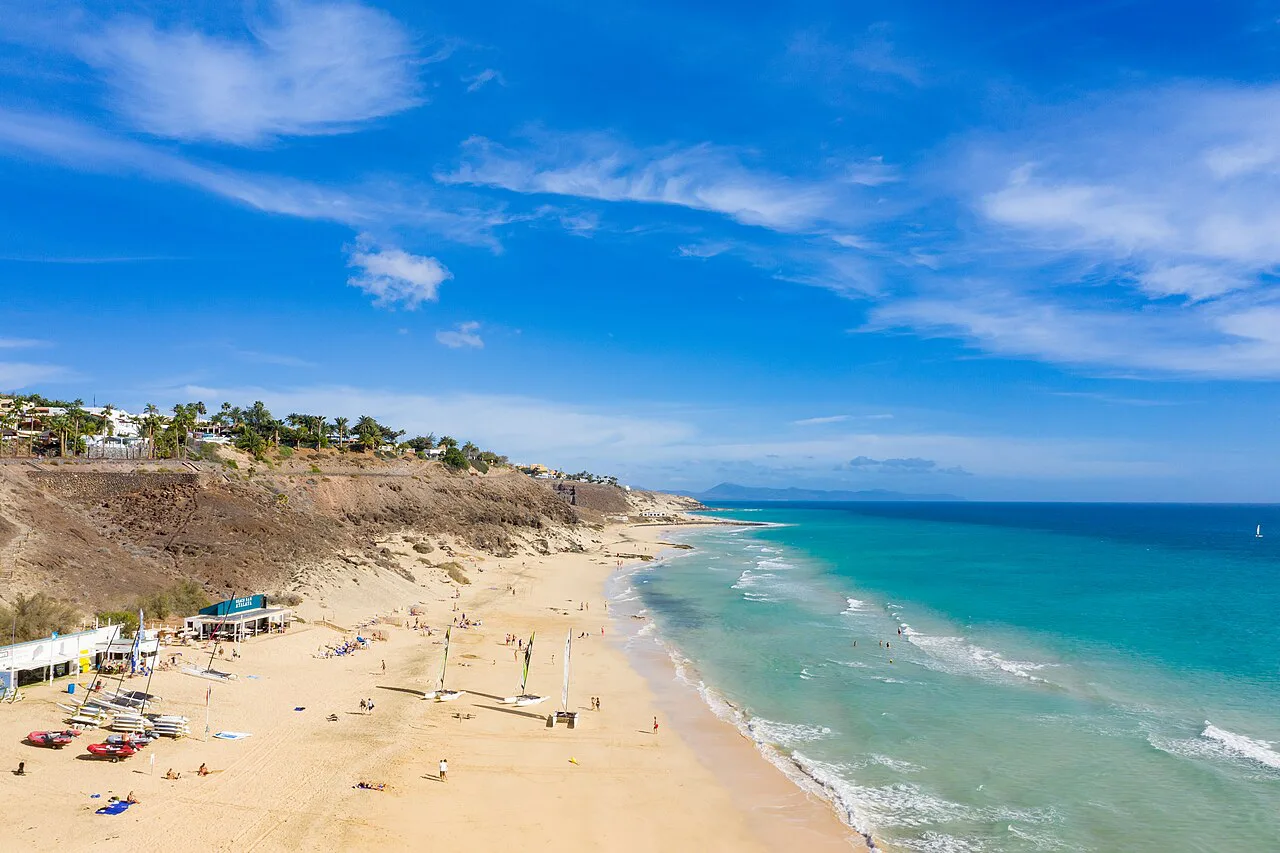
Choosing an island
Tenerife is the biggest and most varied: the south around Costa Adeje and Los Cristianos for sun, the north for historic San Cristóbal de La Laguna, and Teide for mountain days that are genuinely cold at the summit compared with the coast. Gran Canaria is often described as a miniature continent, combining southern resort beaches with green interior valleys and Maspalomas's dunes. Both suit first-time visitors who want a mix of comfort and scenery.
Lanzarote and Fuerteventura offer the most reliable sunshine and the least rain; Lanzarote's volcanic landscape and César Manrique's designs, including Jameos del Agua and Mirador del Río, are the main cultural draw. Fuerteventura has the long sands and wind that make it a favourite for anyone who wants the beach to be the whole point of the trip.
The western islands are greener and quieter. La Palma and La Gomera reward walkers, and La Gomera's Garajonay National Park and the whistled silbo language are worth the ferry crossing; El Hierro and La Graciosa are the places to go for solitude. Their weather is cooler and cloudier than the eastern islands, so spring is the better fit than a hot summer month.
What is open and what is running
Spring is when the islands switch into holiday mode. Ferries between the islands run year-round, but smaller boat trips, guided walks and some coastal restaurants ramp up as the season opens. Timetables and opening hours vary by island and by week, so check them directly with the boat companies and venues you plan to use rather than assuming a fixed pattern.
The national parks stay open throughout the year. Timanfaya on Lanzarote, Teide on Tenerife, Garajonay on La Gomera and Caldera de Taburiente on La Palma are the core sights of any walking or touring trip; book timed visitor slots for the busiest parks before you fly, because visitor numbers are capped. Guachinches in Tenerife and beach bars elsewhere come to life as the weather improves, so a spring trip gives you more of them in full swing than an early-March one.
If you plan to split your time between islands, spring is the easiest season to do it: ferries are less crowded and accommodation is easier to juggle, though the crossings themselves deserve booking ahead for the late-May holiday period. Nothing on the islands is derailed by April weather, which is why it works as a touring month with a base on two islands rather than one.
Crowds and prices
Crowds follow school calendars more than weather. The Easter period and the late-May half term are the busiest weeks of spring, and Gran Canaria's guide to visiting notes that both holidays push prices up considerably. Late April and early May are the calmest weeks for a holiday, and autumn shoulder months are similarly cheaper than winter or summer.
Winter is the high season in the south of the islands, with many long-stay visitors booking months ahead, so spring outside the school holidays is where the value is. April and May still have plenty of space, and the same holds for early June before the UK summer break begins. If price matters more than exact weeks, aim for early May or the first half of June.
Walking, sightseeing and lazing outdoors
For serious walking, April and May are the best months, with cooler temperatures on the high ground and good daylight. Tenerife's Teide paths and Gran Canaria's central peaks are more pleasant in April than in June, and the western islands are at their greenest. If you want an active spring trip, pair the mountains with the sea and check the difference between north-coast and south-coast weather each morning.
For sightseeing and lazing, June takes the prize: long days, almost no rain and warm evenings suit late dinners outside. April is better for a combined city-and-coast trip that includes San Cristóbal de La Laguna, La Orotava or Las Palmas, since you will not cut a walking day short to escape the afternoon heat.
Families with younger children often prefer June, when the sea and the evenings are warmer, and pool time is easier to plan. Anyone who wants to avoid heat and crowds should lean towards April or early May.
What to plan around
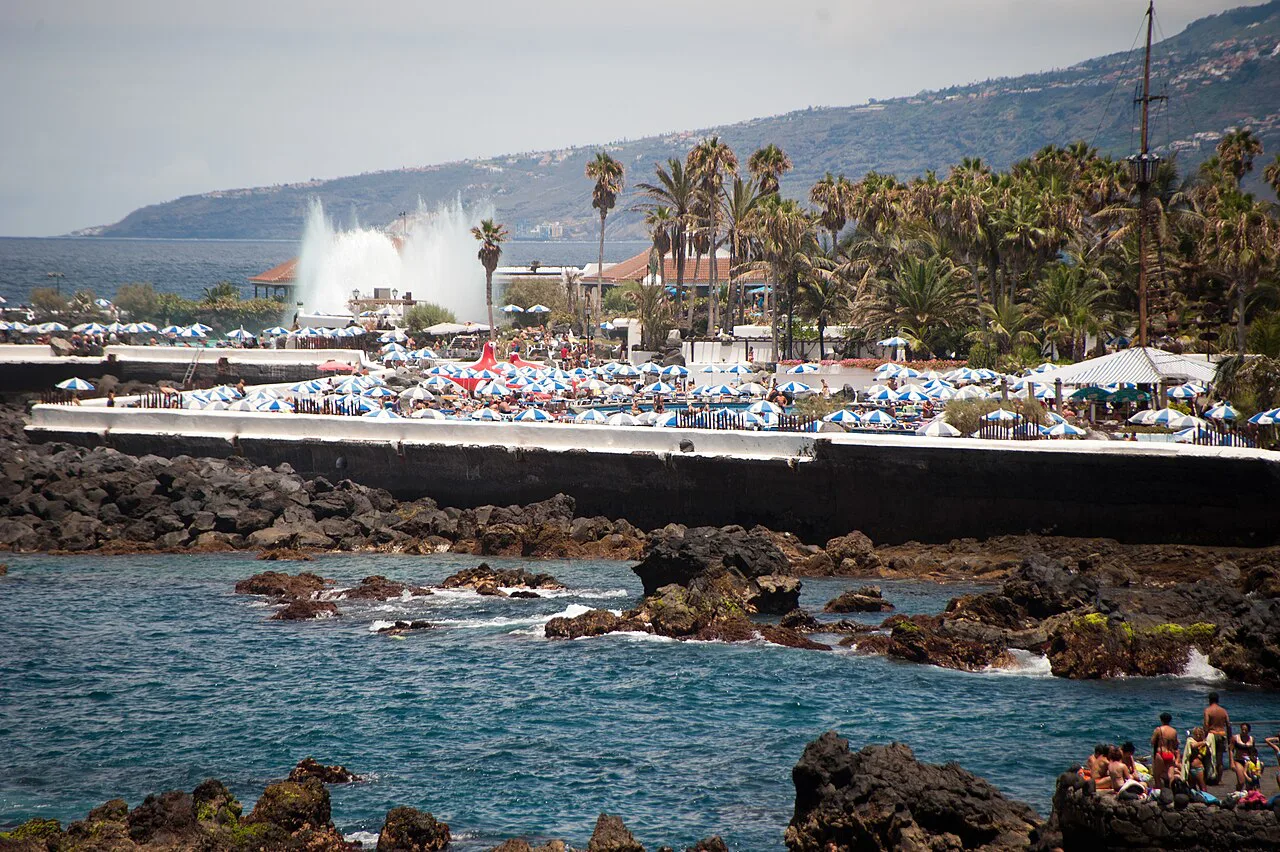
The main trade-off in spring is cold sea and cool evenings: daytime temperatures in the low 20s °C are lovely for sitting out, less so for swimming. Evenings need a layer until June, and the north coasts can be cloudy for days, especially on the taller islands. If you want sunbathing guaranteed, choose the southern resorts of the flatter islands instead of a romantic north-coast base.
Calima, the dust-laden Saharan wind, can arrive at any time and raises temperatures while cutting visibility; Lanzarote's proximity to the Sahara makes it the island most exposed. Spring is generally too early for high-summer heat alerts, but June in the south sees temperatures climb. Check conditions with your boat or mountain guide if you have a day on the water or the peaks planned.
The verdict: which month and which island
Choose May if you want the best overall balance of warmth, sunshine, space and price, with easy sea access and no high-summer heat. Choose early June if sunbathing and long evenings are the point of the trip, and April if you want the cheapest fares and the best walking. Winter is still an excellent trip, but only if you accept that it will be busier and pricier.
Pair the month with the island: Fuerteventura or Lanzarote in April for the surest sun, Tenerife or Gran Canaria in May for variety, and La Palma or La Gomera in May or June for walking. In April the islands are also a sensible alternative to the Mediterranean; our guide to the warmest places in Europe in April compares the two. For the detail by month, start with Canary Islands in April, followed by our guides to the Canary Islands in May and the Canary Islands in June.
Plan Your Trip
Book for the month that matches your priority: May for balance, June for reliable sun and warmth, April for value and walking. Choose the south of the island you pick unless you are deliberately going for the green, quieter north, and treat the AEMET normals as guidance rather than a forecast. Between two islands, check ferry timetables and national park visitor slots before you finalise dates, and reserve the popular weeks early.
If you are travelling from the UK, the main practical step is to keep your dates flexible by a week either side of the school holidays and to check timetables directly with ferry firms and tour operators. For entry rules, refer to the official UK government travel advice page for Spain.
More Canary Islands spring guides
Frequently Asked Questions
When is the best time to visit the Canary Islands?
April to June suits most trips. AEMET climate normals for Tenerife South, Gran Canaria, Lanzarote and Fuerteventura airports put average daytime highs at roughly 23 °C to 26 °C across those months, with sunshine increasing and rain fading to almost nothing by June. Winter is also warm and sunny but is the high season; July and August bring real heat and peak crowds. Choose May for the best balance, June for dependable warmth and April for walking and value.
Are the Canary Islands warm in April?
Yes, but gently so. AEMET normals for the 1981-2010 period show April averages of about 23 °C by day at the four main airport stations, and around 16 °C at night. Days are bright, with more than 200 hours of sunshine in the month, and rain is occasional rather than persistent. Expect it to feel like a good early summer's day: comfortable for walking, sightseeing and eating outside, with a layer useful in the evening and the sea still cool.
Is May a good time to visit the Canary Islands?
May is the strongest all-round month for most travellers. Temperatures edge up a couple of degrees on April, the evenings turn mild, and rain stops being a planning factor, since the airport normals show well under one rain day for the month. It is warm enough for the beach and pool without the heat of high summer, and the ground is comfortable for walks in the mountains. The late-May half term and bank holiday week are the busy exception.
Which Canary Island is the greenest?
La Palma is usually described as the greenest of the islands, with La Gomera close behind thanks to the laurel forests of Garajonay National Park. Both are western islands with cooler, cloudier weather than Lanzarote or Fuerteventura, which makes them stronger choices for walking than for guaranteed sunbathing. El Hierro is similarly quiet and green. If you want dry, bright conditions, look east to Lanzarote and Fuerteventura instead.
Which part of the Canary Islands is the hottest?
The south and east coasts of each island are the sunniest and warmest, because the trade winds drop their cloud on the north and west first. Among the islands, Lanzarote sits closest to the Sahara and posts the highest spring daytime averages of the four main airports in AEMET normals, with Fuerteventura and Gran Canaria just behind. Within an island, the southern resorts beat a northern base almost every week, and altitude cools the high ground sharply.
Sources
- Gran Canaria climate normals (AEMET, Gran Canaria Airport (AEMET C649I))
- Lanzarote climate normals (AEMET, Lanzarote Airport (AEMET C029O))
- Fuerteventura climate normals (AEMET, Fuerteventura Airport (AEMET C249I))
- Which is the hottest Canary Island - 101 Holidays
- Best Time to Visit Gran Canaria - When To Come On Holiday
- Autumn and winter sunshine holidays: travel to the Canary | spain.info
Spring sun notes
Optional updates when we add destinations and months.
You might also like

Continue reading
More guides you'll find useful