Rhodes in June: How Hot It Gets and Whether to Go
Rhodes in June averages 27.8°C by day and 21.8°C at night with barely any rain. See who the heat suits and when May or September works better.
On this page
Rhodes in June is warm to hot and close to rain-free: the island's long-term normals put the average daytime high at 27.8 °C (82 °F) and the average night-time low at 21.8 °C (71 °F). Rain is negligible, averaging 1.2 rain days and 2.3 mm across the month. That combination makes June the first month of the year when you can plan outdoor days without a weather fallback.
It suits anyone who wants dependable sunshine, comfortable evenings and a sea that has finally warmed through, including families with school-age children and couples who want dinner outside without a jacket. It does not suit travellers who wilt in strong sun, prefer empty villages, or want long walks and archaeological sites at midday. If you want cooler sightseeing weather, May is the better month; if you want the sea at its warmest, wait until September.
Is Rhodes warm enough in June?
Yes, comfortably. The Hellenic National Meteorological Service normals for Rhodes, covering 1991 to 2020, give a June average daily maximum of 27.8 °C (82 °F) and an average daily minimum of 21.8 °C (71 °F). Those are averages rather than forecasts, so expect individual days above and below them, but the baseline is genuinely summer-like.
The nights are the quiet advantage. At around 21.8 °C after dark, you can eat outside in Rhodes Town or Lindos without a layer, and hotel rooms cool down properly. Compare that with April, when evenings still drop into the mid-teens and a jumper earns its place.
Where June still bites is the sun rather than the air temperature. UV levels are high, the light is intense from mid-morning, and stone-paved streets in the Old Town radiate heat by early afternoon. Build your day around mornings and late afternoons and the month is easy; treat midday as sightseeing time and it will feel much hotter than 28 °C.
June weather in numbers
Rain essentially stops. The World Weather Information Service figures for Rhodes, supplied by the Greek national service, show 1.2 rain days and 2.3 mm of precipitation across June, down sharply from May. A wet day is possible but unusual, and it rarely lasts.
Sunshine is abundant through the month, though the reliable normals for Rhodes give temperatures and rainfall rather than a sunshine total. Treat June as a sunny month in practice and plan on shade, hats and water rather than on cloud cover.
Wind is the variable that shapes how hot a day feels. The northern Aegean meltemi can reach exposed coasts and make the east side feel fresher, while sheltered spots inland and on the south coast run hotter. Attavyros, the island's high point, shields part of the south from wind, so the same June day can feel noticeably different depending on which coast you choose.
Early vs late June
Early June is the sweet spot for anyone who wants heat without the full summer intensity. The first ten days typically sit a degree or two below the monthly average, the sea has had a few weeks of strong sun, and the island is still relatively calm before the UK half-term wave arrives. Book the first week and you get near-summer weather with a gentler edge.
By late June the pattern has shifted towards July. Afternoons push past the monthly average more often, the Old Town's walls hold the heat into the evening, and the resorts fill with families as British and other European school holidays begin. Sightseeing then means starting at eight, not ten, and saving the beach or a long lunch for the middle of the day.
The practical rule: if your trip is built around ruins, walls and walking, aim for early June or shift to May. If it is built around swimming, boat days and long evenings outside, late June delivers more reliably and the extra heat costs you little.
How June compares with May and July
May on Rhodes averages 23.8 °C by day and 17.8 °C at night, with 4.6 rain days, so it is cooler, breezier and far quieter. It is the better month for hiking, for the acropolis at Lindos without a crowd, and for anyone who finds 28 °C tiring. June trades some of that comfort for dependable dry heat and a warmer sea, and our guide to Rhodes in May sets out that cooler alternative.
July is hotter again and markedly busier, with the island at full summer capacity and prices at their peak. June gives you most of July's weather with fewer people and softer rates in the first half of the month. The gap between the two is smaller than the gap between May and June, which is why late June is often the best-value warm week of the season.
If you are still deciding whether Rhodes is the right Greek island for your dates, it is worth comparing it with the wider picture. Our guide to where is warm in Europe in June sets Rhodes against Crete, the Cyclades and the Canary Islands so you can see which destination matches the heat and crowd level you actually want. If your plans slip back into spring, see where is warm in Europe in April for the earlier comparison.
Is it too hot for sightseeing, walking and families?
For most people, no, but the timing matters more than in May. The Medieval City of Rhodes, a UNESCO site, is a maze of stone lanes with limited shade, and the walk up to the Acropolis of Lindos is exposed. Do either before ten in the morning or after five, and the heat is manageable; attempt them at one in the afternoon and you will remember the temperature rather than the view.
Families do well in June because the sea is usable, evenings are warm and the days are long. Younger children cope best with a beach morning and a shaded afternoon, while teenagers will happily spend whole days in the water. The main caveat is sun exposure rather than heatstroke risk, so plan around shade and hydration and keep the midday hours slow.
Walkers should head inland and uphill. The interior around Mount Attavyros is cooler and greener than the coast, and the high villages give you a genuine alternative to beach days. Expect the interior to feel a few degrees fresher and, on some days, cloudier than the south coast.
The sea in June
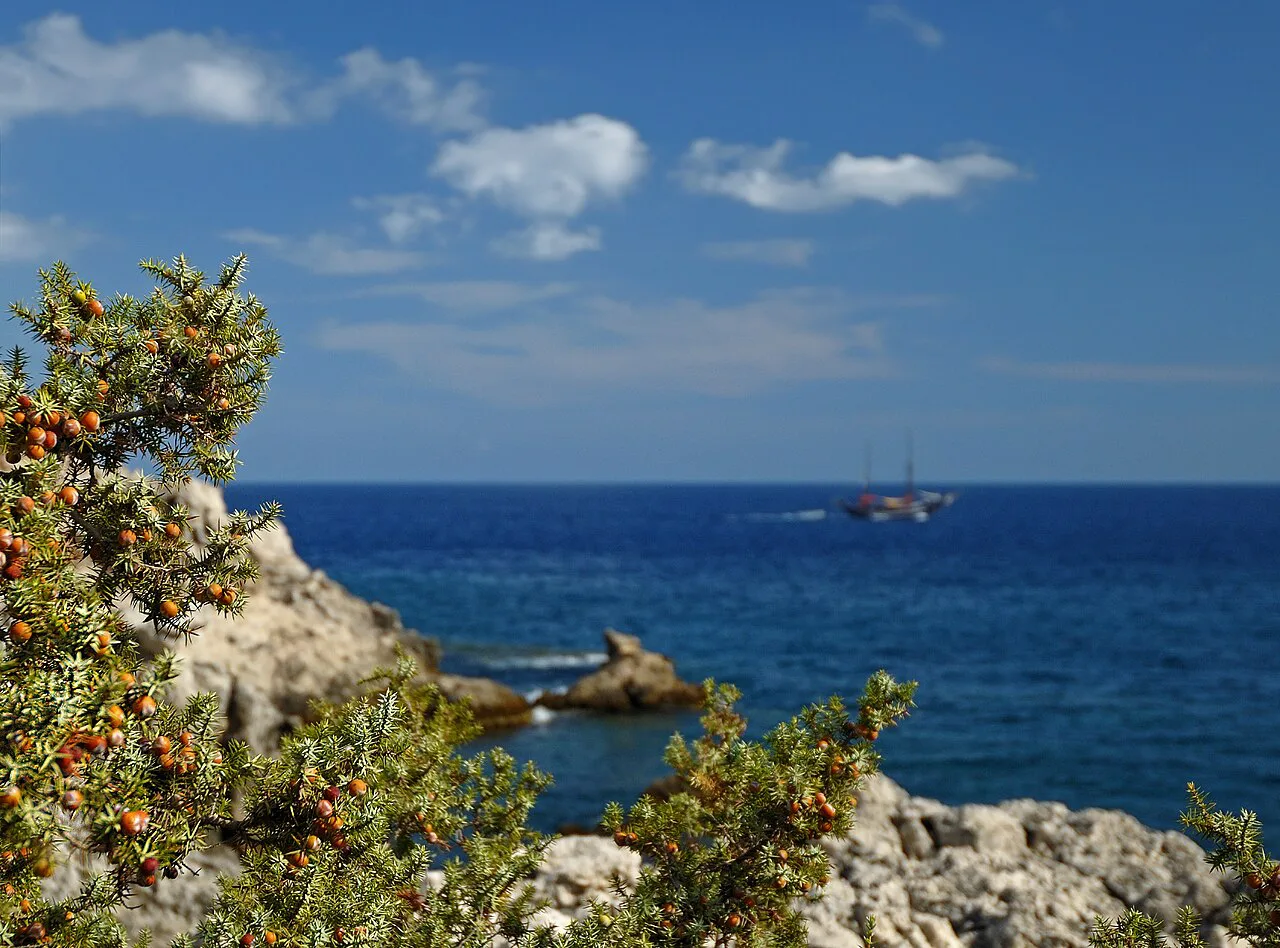
The sea warms steadily through the month and is comfortable for most swimmers by mid-June, having absorbed weeks of strong sun. Early June is brisker, particularly on the west coast where the wind picks up, while late June is easy for long swims and for children who want to stay in the water.
Choose your coast by conditions rather than by name. The east side, around Faliraki and Lindos, is generally calmer and more sheltered, which suits families and nervous swimmers. The west side catches more wind and chop, which appeals to windsurfers and anyone who wants the sea to feel refreshing rather than bath-warm.
What is open in June
June is when the island shifts from pre-season to full operation. Ferries between Rhodes and the other Dodecanese islands, as well as the longer crossings to Piraeus, run on fuller summer timetables, and day boats to Symi and the nearby bays operate regularly. Check schedules and tickets with the ferry companies directly, since timetables shift with demand and weather.
On land, beach clubs, tavernas and seasonal hotels that open late in spring are running by June, and the water-taxi and excursion circuits are in full swing. Seasonal attractions in Rhodes Town such as the sound-and-light show generally operate through the summer, though exact days and times change year to year and are best taken from the venue.
June is also when the summer event calendar begins, with film and cultural programming appearing in Rhodes Town. If a specific festival matters to your trip, the organiser publishes the dates, which vary year to year.
Things to do in June
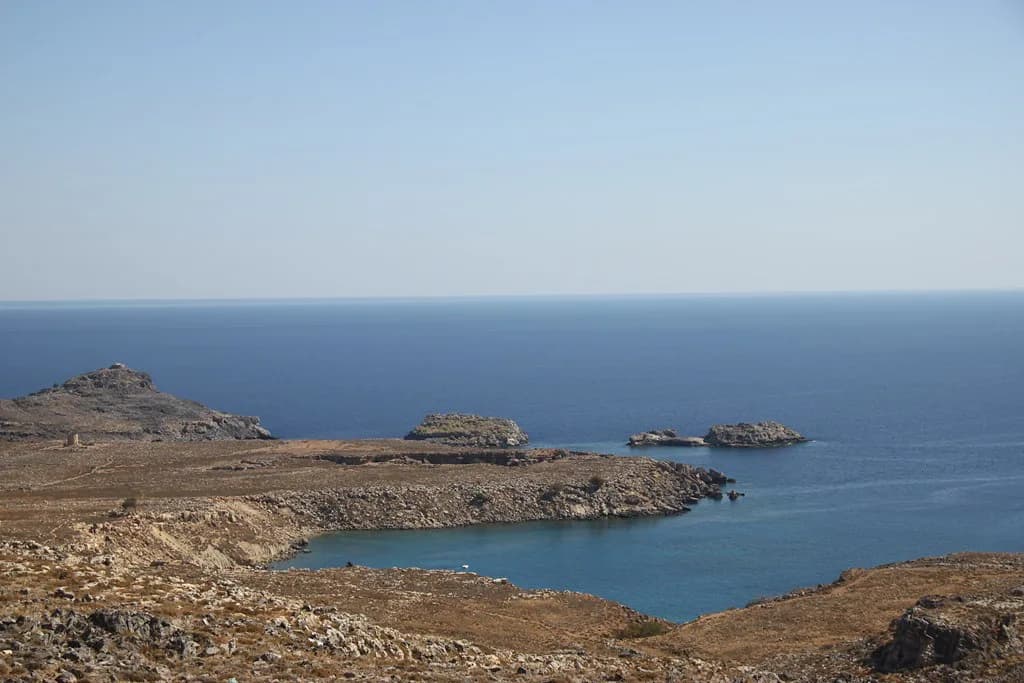
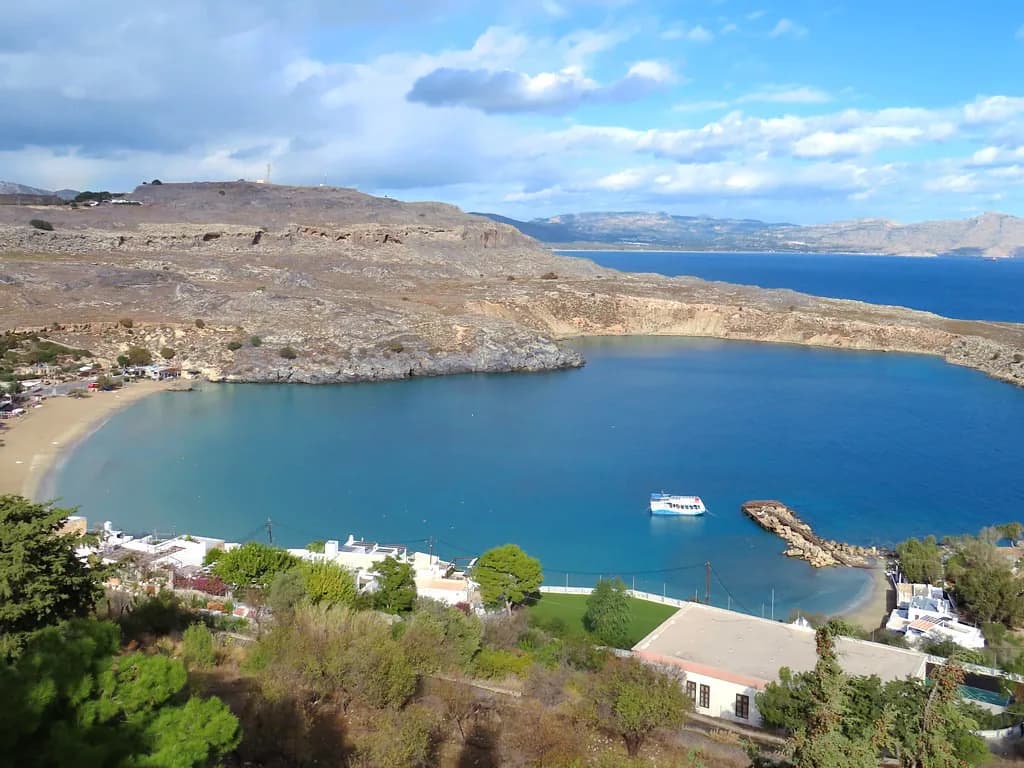
Start with Rhodes Town itself: the Palace of the Grand Master, the Street of the Knights and the medieval walls reward an early-morning walk before the day heats up. Then take the short trip to Lindos, where the Acropolis sits above the village and the view over the bay is the island's signature. Go at opening time and you will have the climb largely to yourself.
For something cooler and quieter, head west to ancient Kamiros, a terraced Hellenistic city on a hillside with few crowds and a breeze off the coast. Inland, the villages around Attavyros offer shaded squares and long lunches, and the Valley of the Butterflies is at its best before the summer crowds build. Our guide to things to do in Rhodes in June covers more options in detail.
Boat trips are at their best in June: the crossing to Symi, swim stops off the east coast and sunset cruises all run with more reliability than in spring, and the sea is warm enough to make the swimming stops worthwhile. Book a day or two ahead rather than months ahead, and keep one day free in case the wind changes your plans.
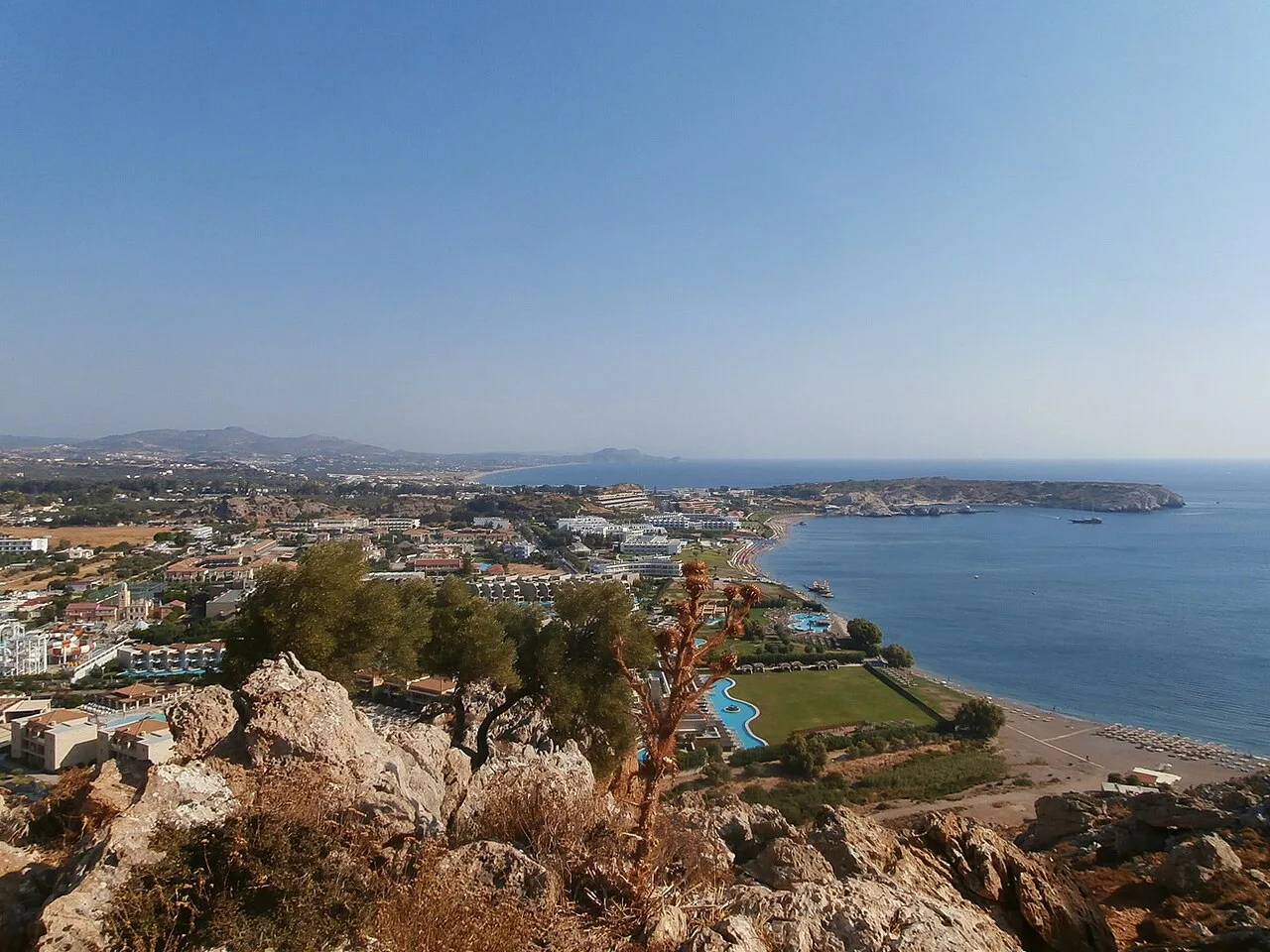
Crowds and prices
June builds in stages. The first half is relatively relaxed, with room to move in the Old Town and easy tables at dinner. UK half term brings a noticeable surge, and from late June the summer school holidays begin to fill the resorts, so the last week feels closer to July than to spring.
Prices follow the crowds. Early June is usually the last stretch of reasonable rates before peak summer, and late June climbs towards July levels, particularly for car hire, boat trips and accommodation near Lindos and Faliraki. Exact prices vary by operator and season, so compare quotes rather than relying on any published average.
If your dates are flexible, the best value sits before half term. You get near-summer weather, a warm sea and a quieter island, and you avoid the premium that comes with the school-holiday rush.
Honest drawbacks
The sun is the main one. High UV, intense midday light and heat radiating off stone mean you need shade, water and a slower middle of the day. It is not a month for ambitious all-day walking unless you start early and finish by noon.
Wind can surprise you. The meltemi makes exposed east-coast beaches breezy and can cancel or reroute boat trips, and it makes the sea choppier on the west side. Sheltered coves and the south coast are the fallback when the wind picks up.
June is also not the quiet island that May is. Villages that felt empty in spring have their seasonal businesses running, and the popular sites draw steady groups from mid-morning. And while nights are warm, the sea in early June is still cooler than in September, so swimmers who feel the cold should aim for the second half of the month.
June or September?
Both months deliver hot, dry weather and a warm sea, so the choice is about crowds and light rather than climate. June brings longer days, a livelier island emerging into summer and the sense of a season beginning. September brings warmer water, fewer families and a calmer atmosphere, with the sea at its most comfortable after a whole summer of sun.
Choose June if you want the long evenings and the island at full energy and can travel before the school holidays bite. Choose September if you want the same heat with fewer people and warmer swimming. If you are comparing the whole spring-to-autumn window, our guide to the best time to visit Rhodes lays out the trade-offs month by month, and Rhodes in April covers the cooler spring alternative.
The Verdict
Rhodes in June is the safest bet of the spring months for warm, dry weather: around 27.8 °C by day, 21.8 °C at night and almost no rain. It suits swimmers, families and anyone who wants evenings outside, and it rewards early starts over midday ambition.
Go in the first half of the month for the best balance of heat, space and value, and treat late June as early summer proper. If you want cooler sightseeing weather, look at May; if the sea matters most, September is the stronger choice.
More Rhodes spring guides
Frequently Asked Questions
How hot is Rhodes in June?
The long-term normals for Rhodes give an average daytime high of 27.8 °C (82 °F) and an average night-time low of 21.8 °C (71 °F) in June. Individual days can run above or below that, and late June tends to push closer to July heat.
Does it rain in Rhodes in June?
Very little. The monthly figures show around 1.2 rain days and 2.3 mm of precipitation across June, which is effectively the end of the wet season. Any rain that does fall is usually brief.
Is the sea warm enough to swim in Rhodes in June?
Yes for most people, especially from mid-June once the sea has had weeks of strong sun. Early June is brisker, and the sheltered east coast is calmer and warmer-feeling than the windier west side.
Is June a good time to visit Rhodes?
It is one of the best months for reliable sunshine, warm evenings and a usable sea. The trade-off is strong midday sun and a busier island from UK half term onwards, so early June gives the best balance.
Is Rhodes busy in June?
The first half is relatively calm, with room to move at the main sites. Crowds build around UK half term, and the last week of June feels close to peak summer as school holidays begin across Europe.
Is early or late June better in Rhodes?
Early June is better for sightseeing, walking and value, with slightly milder temperatures. Late June is better for swimming and long evenings outside, but it brings more heat and more people.
Is June too hot for sightseeing on Rhodes?
Not if you time it well. Visit the Old Town and Lindos before ten in the morning or after five, keep the middle of the day for shade or the sea, and the heat is manageable. All-day walking at midday is uncomfortable.
Should I pick Rhodes or Corfu in June?
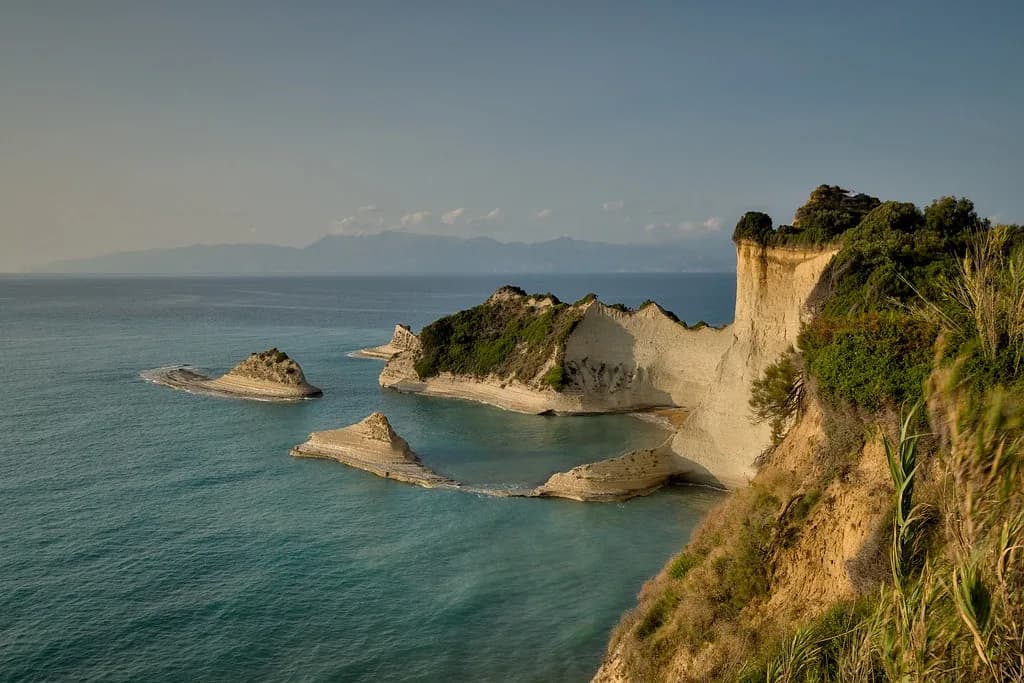
Rhodes is further south and generally hotter and drier, which suits swimmers and sun-seekers. Corfu is greener and slightly cooler, with more of an Ionian feel. Our guide to Corfu in June sets out how the two compare.
Sources
Spring sun notes
Optional updates when we add destinations and months.
You might also like
Continue reading
More guides you'll find useful