The Best Time to Visit Rhodes: A Month-by-Month Guide
The best time to visit Rhodes is May, June or September, when days are warm and bright without peak-season crowds. Compare April to October here.
On this page
May, June and September are the best months to visit Rhodes for most travellers: daytime temperatures sit comfortably in the low twenties to high twenties Celsius, rain becomes scarce, and the island is busy without being overwhelmed. April rewards sightseers with mild, quiet days but keeps evenings cool, while July and August deliver dependable heat at the cost of crowds and high prices. Rhodes in april has the full picture.
The figures that follow come from the Hellenic National Meteorological Service climate normals for Rhodes, so treat them as typical conditions rather than a forecast. Use them to decide whether you want a walking-and-sightseeing trip or a proper summer break, then match the month to that choice.
The Verdict: Which Months Suit Which Trips
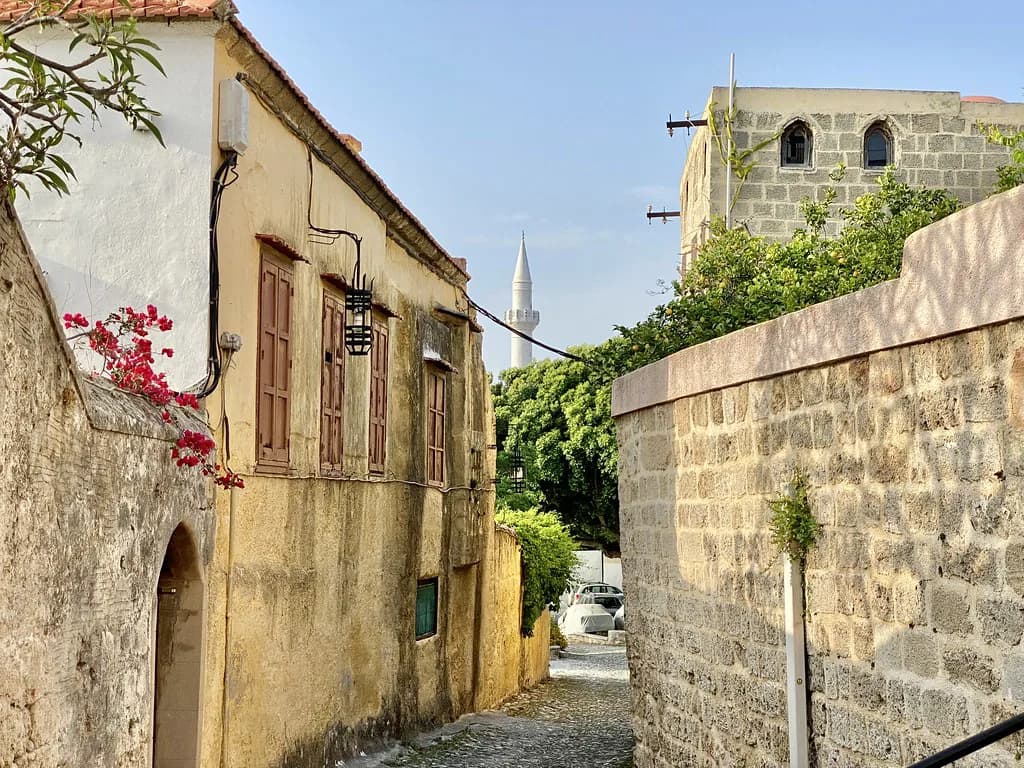
For sightseeing in Rhodes Old Town, the Palace of the Grand Master and the Acropolis at Lindos, April and May give you the best combination of comfortable temperatures and thinner crowds. The medieval streets trap heat in high summer, so walking them in May is far pleasanter than in August.
For a classic beach-and-pool holiday with children, June and September are the sweet spots: the sea has had time to warm, the days are long, and the peak-season crush has not yet arrived or has already eased. July and August work too, but you pay for them in crowds and heat.
For walkers and anyone wanting the interior at its greenest, spring is the season. The hills around Kritinia, the Valley of the Butterflies and the trails near Epta Piges are at their most inviting before the summer sun dries them out.
Rhodes Weather at a Glance: April to October
The official normals show a clear warming curve. April averages a daytime high of 20 °C (68 °F) and a night-time low of about 12.5–14.2 °C (55–58 °F), May climbs to 23.8 °C (75 °F) by day and 17.8 °C (64 °F) at night, and June reaches 27.8 °C (82 °F) by day and 21.8 °C (71 °F) after dark.
Rain tells the same story in reverse. April sees roughly 7.6 rain days and 27.8 mm, May drops to about 4.6 rain days and 18.6 mm, and June is close to dry with around 1.2 rain days and 2.3 mm. The summer months that follow are drier and hotter still, though the figures summarised here stop at June.
For July through October, plan on the pattern rather than precise figures: July and August are the hottest and driest stretch, September cools gently, and October marks the transition back towards autumn rain. The shift from month to month matters more than any single number for planning, so judge the trend rather than chasing a precise figure.
April: Mild Days, Cool Evenings, Quiet Sights
April is Rhodes in soft focus. Days around 20 °C (68 °F) are made for wandering the Old Town, exploring Kamiros or driving the west coast, but evenings near 13 °C (55 °F) mean you will want a jacket for dinner outdoors. This is a sightseeing month, not a lazy beach one.
Expect some rain — roughly a week of rain days on average — so build flexibility into your plans and keep indoor options like the archaeological museum in reserve. In exchange you get the island at its least crowded and the interior at its greenest, with wildflowers on the hillsides.
If warmth is your priority and April looks marginal, compare it with southern options further along the Mediterranean before you commit. Our guide to where to find warmth in Europe in April sets Rhodes against the Canaries, Cyprus and southern Spain.
May: The Strongest All-Round Month
May is the month that suits almost everyone. A typical high of 23.8 °C (75 °F) is warm enough for outdoor lunches and short-sleeve sightseeing, nights around 17.8 °C (64 °F) are comfortable, and rain becomes occasional rather than disruptive. It is our pick for a first trip to Rhodes.
The sea is still on the cool side in May after the winter, so treat swimming as bracing rather than balmy and put the emphasis on the island itself: Lindos early in the day, the Old Town in the late afternoon, and the west-coast villages when the east side gets busy.
UK half term and the late-May bank holiday push prices and crowds up for a week or so, particularly in family-friendly resorts. If you can travel in the first half of the month, you get most of the weather with noticeably more room to move.
June: Reliable Heat and Long Days
June is when Rhodes starts to feel like proper summer. A normal high of 27.8 °C (82 °F) and a low of 21.8 °C (71 °F) mean warm evenings and easy outdoor dining, while rain is rare enough — around a single rain day on average — to ignore in planning.
The sea finally warms through, so this is the first month when a beach-focused trip really delivers. It also brings long daylight hours, which makes boat trips along the coast and day excursions to Symi or the quieter beaches more rewarding.
Crowds build through the month but stop short of the August peak, and prices follow. For families tied to school holidays this is often the best compromise: hot enough for the water, not yet uncomfortably so for sightseeing.
July and August: Hot, Crowded and Dry
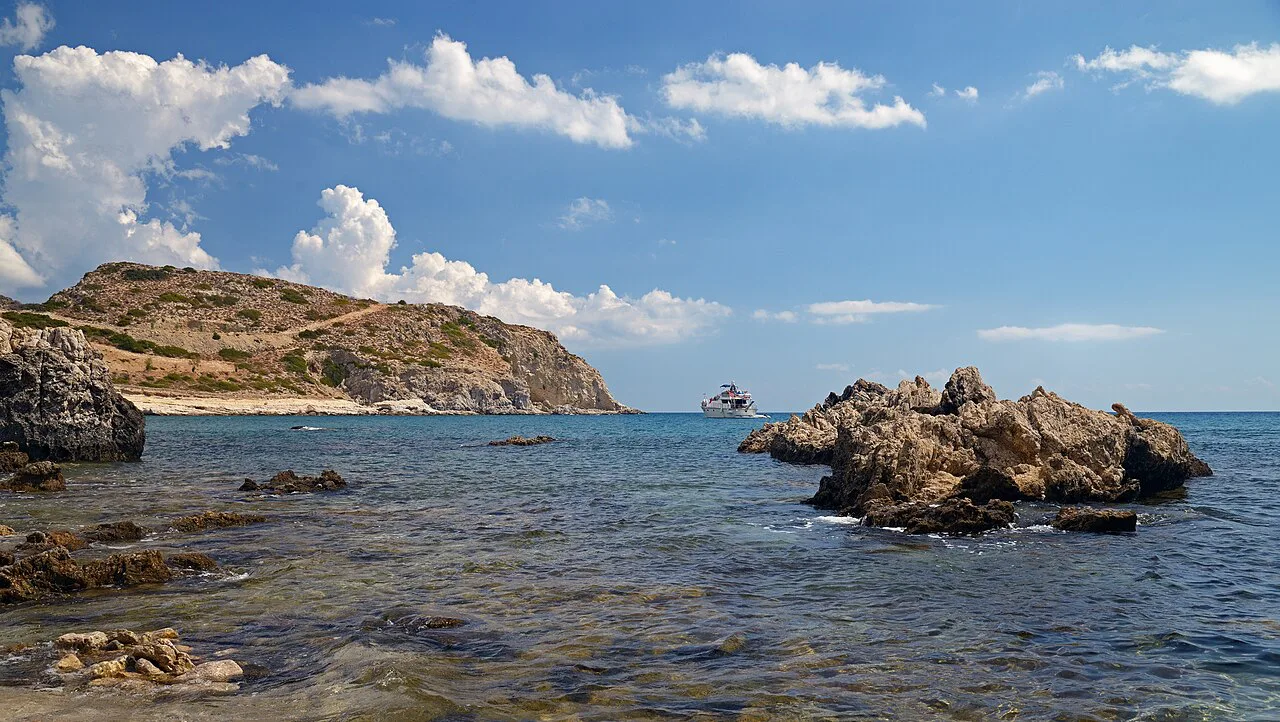
High summer is hot, sunny and almost rainless, with heat that builds through the day and can make midday sightseeing a slog — the exposed ruins at Kamiros and the climb at Lindos are best done early. The meltemi wind, which blows across the Aegean in summer, takes the edge off on the east coast even on the hottest afternoons.
This is peak season in every sense: the Old Town, Lindos and the main resorts are at their busiest, accommodation costs the most, and restaurants fill early. Book well ahead if you are travelling in these weeks, and expect to share the famous viewpoints.
September: The Best of the Summer Without the Crush
September is the connoisseur's month. The heat eases back from the August peak while the sea stays warm from a whole summer of sun, days remain long, and the crowds thin noticeably once the school holidays end. It suits both beach days and comfortable sightseeing.
Prices soften too, and the atmosphere in the Old Town becomes more relaxed as the season winds down. If you have flexibility and want the best balance of warmth and calm, put September at the top of your list alongside May and June.
October: Warm Seas, Thinning Crowds
October is a gentler, quieter month. Days cool from the summer highs and rain returns in spells, but the sea holds much of its summer warmth, which makes it appealing for anyone who values swimming over sunbathing. The main sights are far less crowded.
The trade-off is variability: you can get bright, pleasant days or a wet, windy stretch, so plan around the weather rather than a fixed itinerary. Some seasonal businesses wind down as the month progresses, so if a particular boat trip or restaurant matters to you, contact the boat company or restaurant directly before you rely on it.
Early or Late Season: How the Shoulder Weeks Differ
Within each month the edges matter. Early April is closer to winter than late April, and late May is already brushing against summer heat and half-term crowds. Late June is noticeably hotter than early June, and late September is calmer and cooler than the first week.
If you have a choice, aim for the middle of May, June or September. Those weeks sit in the sweet spot where the weather has settled but the peak-season pressure has not yet arrived or has already passed.
What Is Open in the Shoulder Months
The major sights, including the Palace of the Grand Master and the archaeological sites, are the constants you can plan around. Beyond that, ferry timetables, boat trips, beach clubs and some seasonal restaurants run to their own patterns and switch on and off at different points in spring and autumn.
Rather than assume, check the specific venue or boat company for the dates you have in mind — a quick email or a look at its own timetable will tell you more than any general guide. For entry rules and travel advice, use the official UK government travel advice page for Greece.
Things to Do That Suit the Season
Spring and early summer reward the interior and the quieter coasts. The Valley of the Butterflies, the wooded slopes around Epta Piges and the hill village of Kritinia are all at their best before high summer, and the wine country inland makes a good half-day out in April or May.
For a spring-specific shortlist of walks, sights and outdoor eating, see our guide to things to do in Rhodes in April. In June the emphasis shifts towards the water and the long evenings, with more boat trips running and the coast at its most inviting.
The far south around Prasonisi, where the two seas meet, is a rewarding day trip in the shoulder months when the roads are quiet. Save the exposed archaeological sites for the cooler hours whatever month you choose.
Crowds and Prices in Words
Rhodes follows a predictable rhythm. April is quiet, May builds with half term and bank holidays, June is busy, July and August are peak, September eases back, and October is quiet again. Expect the highest accommodation rates and the fullest restaurants in high summer.
Travelling in May, June or September gives you most of the weather with less pressure on both your budget and your patience. Shoulder-season pricing is generally kinder, though the exact cost depends on where you stay and when you book.
Rhodes or Elsewhere in the Dodecanese?
Rhodes is the largest and most complete island in the Dodecanese, with the best range of sights, restaurants and transport links, which makes it the natural base for a first trip to the region. Smaller neighbours such as Symi and Kastellorizo are quieter and make good add-ons by boat.
If you are weighing Rhodes against other Greek islands, our guide to the best time to visit Greece compares the mainland and the islands month by month. For a greener, wetter alternative in spring, the best time to visit Corfu covers the Ionian side of the country.
The Verdict
Choose May, June or September for the best balance of warmth, sunshine and manageable crowds, with May the strongest all-round choice for a first visit and September the pick for warm seas and a calmer island. April suits sightseers who can accept cool evenings and some rain, while July and August are for those who want guaranteed heat and do not mind the peak-season bustle.
Decide what kind of trip you want first — sights, walking, beach or family — and the month follows naturally. For a closer look at the late-spring options, start with our guide to Rhodes in June and work backwards through the season from there.
More Rhodes spring guides
Frequently Asked Questions
What is the best month to visit Rhodes?
May is the strongest all-round month, with typical daytime highs around 24 °C (75 °F), comfortable nights and only occasional rain. June and September are close behind: June brings reliable heat and warm seas, and September keeps the summer warmth with thinner crowds.
Is Rhodes warm enough in April?
April averages a daytime high of about 20 °C (68 °F) with nights near 13 °C (55 °F), so days are pleasant for sightseeing but evenings are cool. Rain is still fairly frequent, with roughly a week of rain days on average, and the sea remains cold.
How hot is Rhodes in July and August?
July and August are the hottest, driest stretch of the year, with strong sun and heat that builds through the day. Midday sightseeing can be uncomfortable, so plan exposed sites such as Kamiros and Lindos for the early morning.
Does Rhodes shut down in October?
No, but the island quietens as the season winds down, with cooler days, more rain and fewer visitors. Some seasonal businesses wind down during the month, so ask the specific operator if a particular boat trip or restaurant matters to you.
When is the cheapest time to travel to Rhodes?
The quietest and generally cheapest periods are April and October, with May, June and September sitting in the middle. July and August carry peak-season prices, so book early if you must travel then.
Is May or September better for Rhodes?
May gives you fresh, green landscapes and warm days before the summer heat sets in, while September offers a sea warmed by the whole summer and a calmer island. Choose May for walking and sightseeing, September for swimming and relaxed outdoor dining.
How many rainy days does Rhodes get in spring?
April sees roughly 7.6 rain days on average, May about 4.6 and June around 1.2, so the spring dries out quickly as the season progresses. Treat these as typical figures rather than a forecast for your particular week.
Sources
Spring sun notes
Optional updates when we add destinations and months.
You might also like

Continue reading
More guides you'll find useful