Best Time to Visit Kefalonia: When to Go by Month
Late May and June are the best months for Kefalonia: warm days, quiet roads and dry weather. Here is how every month from April to October compares.
On this page
For most travellers the best time to visit Kefalonia is late May and June, when daytime highs sit between roughly 23°C (74°F) and 28°C (82°F), rain becomes rare and the island is still quiet enough to enjoy. That window suits walkers, sightseers and couples who want warm evenings without the August crush; families tied to school holidays and anyone who wants guaranteed heat should look at July and August, or push to September for warm sea with fewer people.
The figures below come from the Hellenic National Meteorological Service normals for Argostoli airport, the island's main weather station, covering 1991 to 2020. Treat them as typical conditions rather than a forecast, and remember that the west coast around Myrtos and Assos catches more cloud and wind than the sheltered east around Sami and Poros.
Kefalonia's Weather at a Glance
Kefalonia sits in the Ionian Sea off western Greece, which means mild, wet winters and a spring that arrives gradually rather than in a rush. April still carries real rain, May dries out fast and June is reliably sunny, so the months differ more than the temperature figures alone suggest. Evenings stay cool well into May, which changes how you plan dinners and early starts.
The Argostoli airport normals show April averaging a high of 19.2°C (66.6°F) and a low of 11.2°C (52.2°F) with 9.5 rain days and 60.4 mm of precipitation; May rises to 23.4°C (74.1°F) by day and 14.6°C (58.3°F) at night with just 4.6 rain days and 17.9 mm; June reaches 27.8°C (82°F) and 18.4°C (65.1°F) with 1.5 rain days.
Read those numbers as a progression rather than three separate climates: the jump from April to May matters more for comfort than the jump from May to June, because May is the month when sitting outside in the evening stops being a gamble. June mainly adds heat and removes the last of the showers.
April: Walking Weather, Not Beach Weather
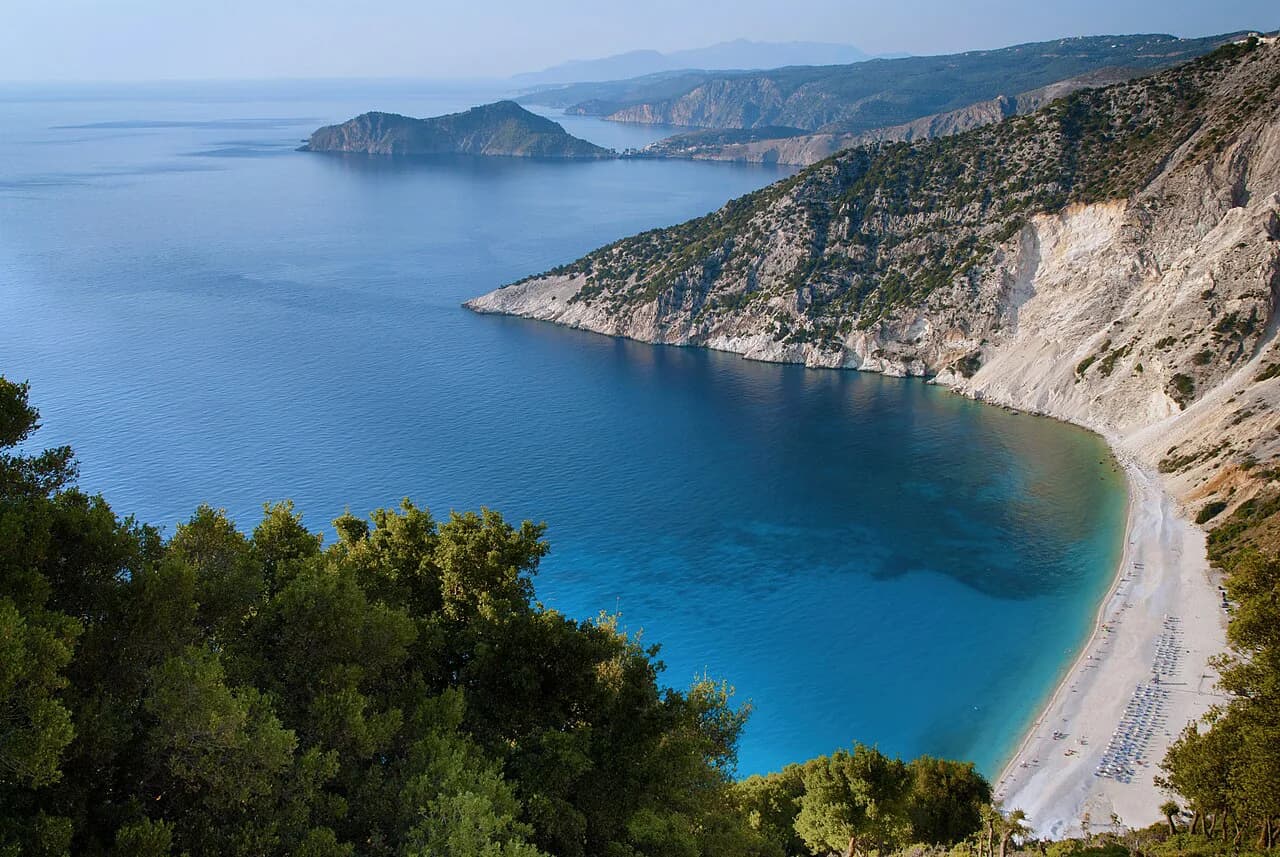
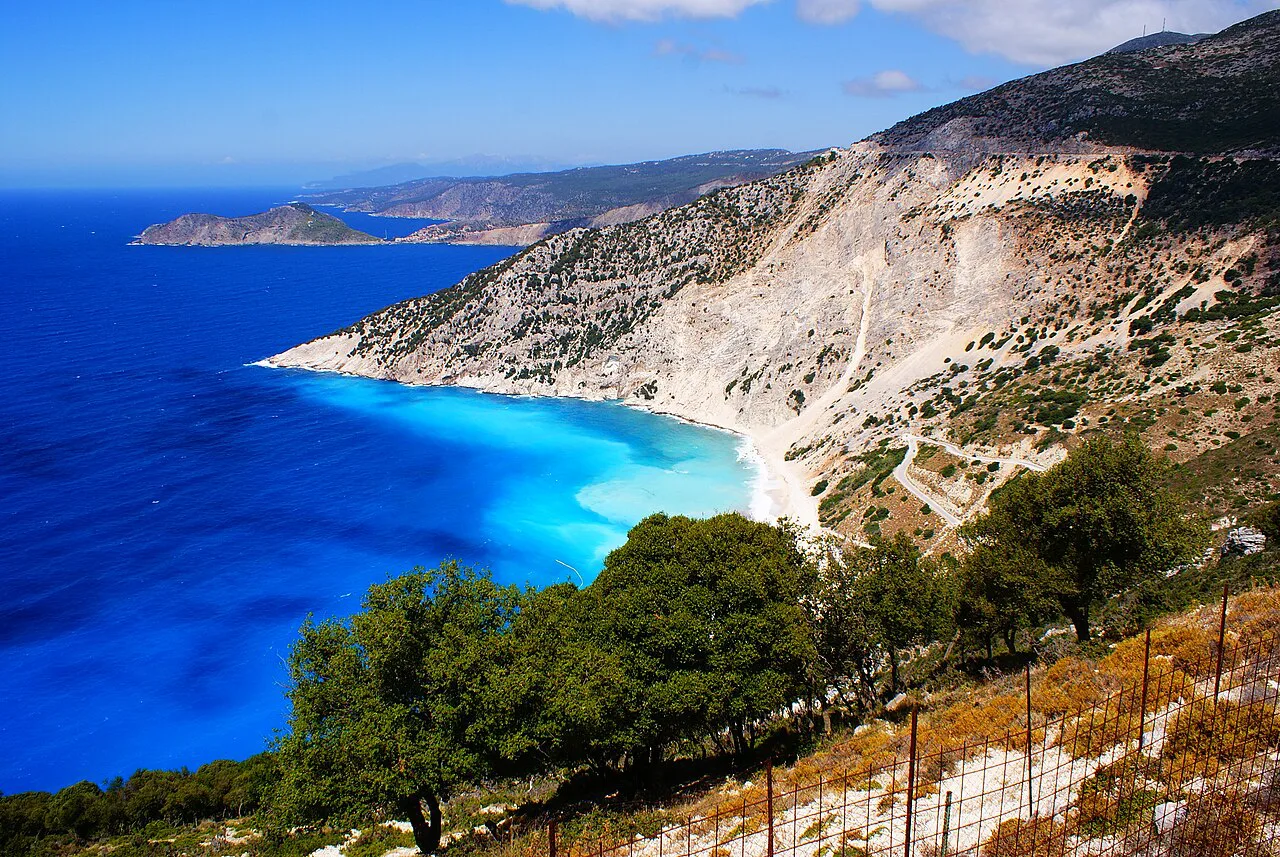
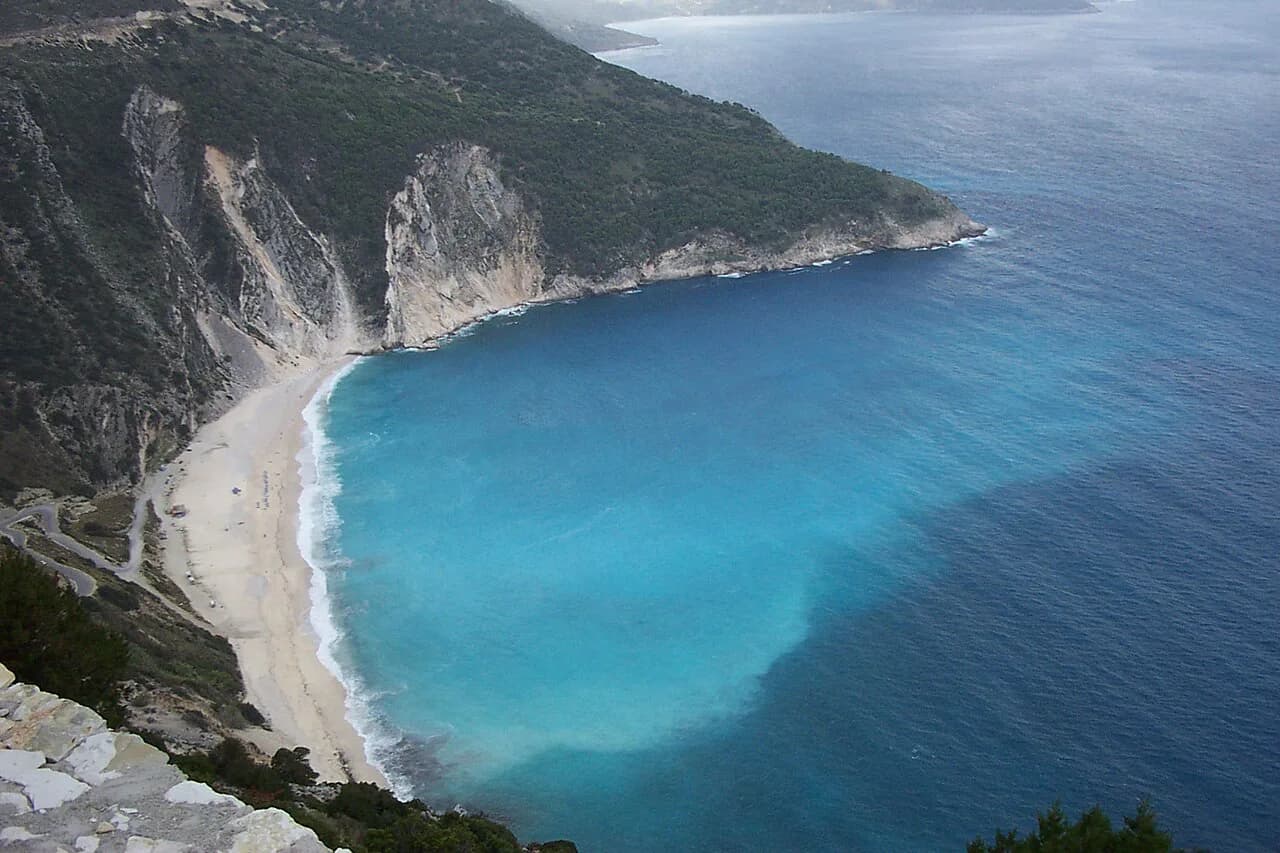
April on Kefalonia is a sightseeing and walking month. Days around 19°C (66°F) are pleasant for moving around Myrtos Beach, the Melissani Cave area or the villages of the interior, but 9.5 rain days means you should expect at least one wet spell in a week-long trip. Evenings at 11°C (52°F) are cool enough for a jacket, and the sea is still cold for most people.
The compensation is emptiness. Villages such as Assos and Fiskardo are quiet, tavernas are unhurried and the roads to the main viewpoints are clear. If your priority is photography, hiking or simply avoiding other people, April delivers more than any summer month, as long as you accept that the weather can interrupt a day.
If you are weighing up southern Europe more broadly for an early spring break, April in the Ionian is warm but not the warmest option; our guide to the warmest places in Europe in April sets Kefalonia against drier, hotter corners of the Mediterranean.
Early vs Late April
Early April behaves like a late-winter month with brighter afternoons: showers are more frequent, the wind off the Ionian can be sharp and many seasonal businesses are still waking up. Late April usually brings longer dry spells between fronts and noticeably warmer middays, which makes the last ten days the better bet for a walking trip.
Whichever half you pick, plan around the weather rather than against it. Keep one flexible day for a cave visit or a boat trip and another for a mountain drive, so a washout does not wipe out your main plan.
May: The Month Where Everything Works
May is the sweet spot. Average highs of 23.4°C (74.1°F) and lows of 14.6°C (58.3°F) mean warm days, comfortable evenings and only 4.6 rain days across the month. That is warm enough for long lunches outdoors, coastal walks and boat trips, without the heat that makes midday hiking uncomfortable.
This is also when the island's best-known excursions become genuinely enjoyable: paths on Mount Ainos dry out, the northern villages open their shutters and the coast road between Sami and Antisamos is at its best. For a detailed plan of the month, our guide to Kefalonia in May covers walks, villages and boat trips in depth.
For walkers and sightseers, late May is arguably better than June, because the heat has not yet arrived and the crowds are still modest. The trade-off is that the sea remains cool for many swimmers, so treat swimming as a bonus rather than the main event.
Early vs Late May: Bank Holidays and Half Term
Early May is one of the quietest, cheapest-feeling stretches of the whole season, with accommodation easy to find and restaurants operating on relaxed spring hours. The two UK bank holidays and the late-May half term change that quickly: the last week of May and the first days of June bring the first real surge of British families and a noticeable rise in demand.
If you want May's weather without May's crowds, book the first half of the month. If you are travelling with school-age children, accept the late-May peak and book early, since the best-value places around Fiskardo, Assos and Lixouri fill first.
June: Reliable Sun and Warm Evenings
June is the safest month for anyone who wants sun without extreme heat. Highs average 27.8°C (82°F), lows 18.4°C (65.1°F) and rain days drop to 1.5, with just 10.8 mm across the month. Warm evenings open up outdoor dining, and the sea has usually warmed enough for comfortable swimming by the middle of the month.
The first half of June is calmer than the second, when school holidays in parts of Europe begin and the popular beaches start to fill. By the end of the month the heat is building and midday activity slows, so shift walking and sightseeing to the morning and keep afternoons for the coast. Our guide to Kefalonia in June sets out how to pace the hotter days.
July and August: Heat and Full Capacity
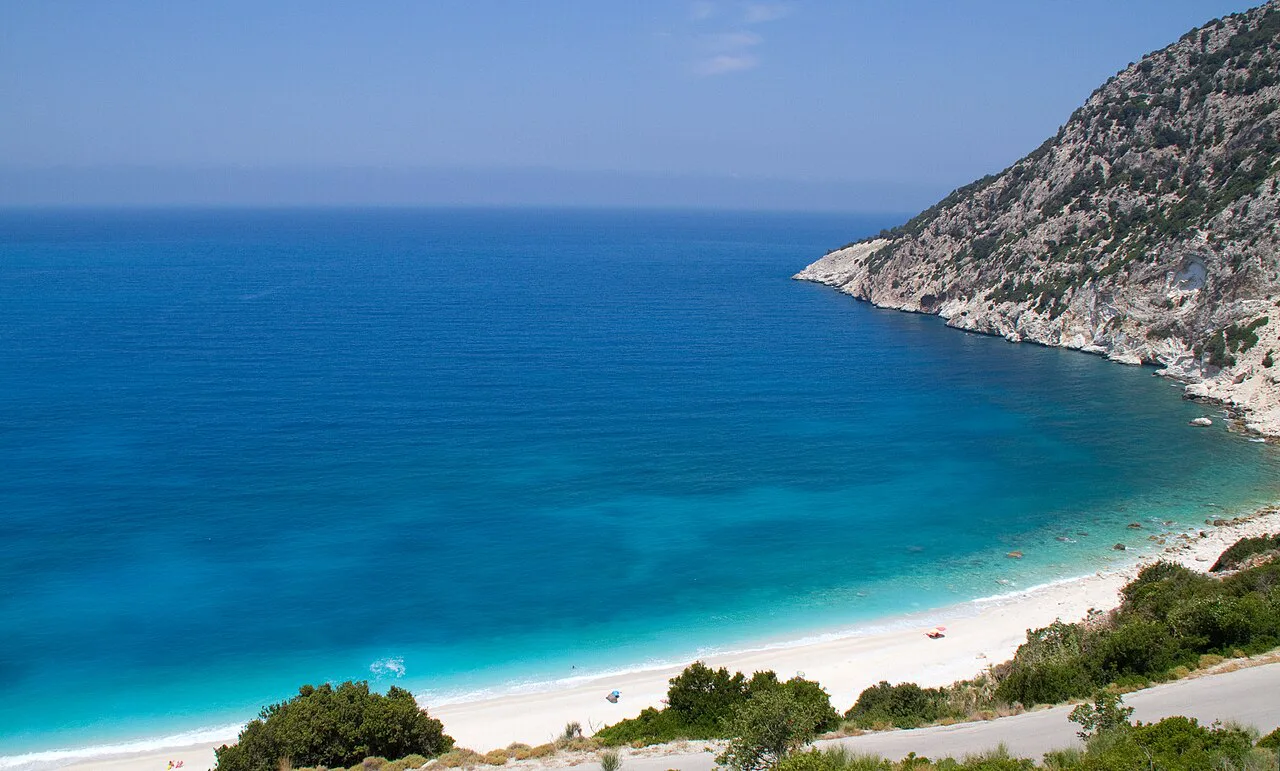
High summer brings intense heat and the island at full capacity. This is the period for people who want the sea and little else; it is the worst time for walking, driving long distances at midday or expecting quiet villages. Book transport and popular excursions well ahead, and treat Myrtos and the Melissani Cave as early-morning stops.
If your dates are fixed to the school holidays, plan around the heat rather than fighting it. Early mornings and late afternoons do the heavy lifting, with the middle of the day spent by the water or indoors.
September and October: Warm Sea, Quiet Roads
September is the connoisseur's month: the sea is at its warmest, the summer crowds thin after the first week and the light softens. Days remain hot but the edge comes off, making it better than August for sightseeing and coastal walks. October cools further and rain returns, but early October can still deliver pleasant walking weather.
For anyone torn between June and September, the trade-off is straightforward. June gives you the longest days and a fresher landscape; September gives you warmer water and fewer people, at the cost of slightly shorter evenings and the first hints of autumn weather.
What Is Open Through the Season
Kefalonia's season starts later than many Greek islands because much of its tourism is concentrated in the summer months. In April, some hotels, boat operators and tavernas in resort areas such as Skala and Lassi are still preparing for the season, while year-round businesses in Argostoli keep the island functioning. By late May, most of the tourist infrastructure is up and running.
Boat trips to the Melissani Cave and Drogarati Cave, and excursions around Fiskardo and Assos, generally run on reduced schedules in spring before settling into full summer timetables. Check departure days directly with the local boat operators and excursion companies you plan to use, since these shift from year to year and with demand.
Further south, coastal resorts such as Karavados follow the same pattern, with the season opening gradually from spring onwards.
Things to Do That Reward Each Month
In April and early May, the walking is the point. The trails above Myrtos Beach and on the slopes of Mount Ainos are at their best before the heat arrives, and the Venetian fortress at Assos is more pleasant to explore without summer crowds. Spring also brings wildflowers to the interior and fresh produce to village tables, so ask what is local rather than ordering the same dishes you would in August.
From late May into June, add the water to your plans. Melissani Cave and the coastal boat trips around Sami and Antisamos are at their most comfortable, and the northern villages of Fiskardo and Assos are fully open for long lunches. For more ideas across the month, our guide to things to do in Kefalonia in May covers hikes, boat trips and village days in detail.
In July and August, switch your sightseeing to the early morning and save the afternoons for the coast. In September, the reverse applies: the sea is warm and the roads are calm, so you can combine swimming with drives to the island's viewpoints without the midsummer rush.
Crowds and Prices in Words
Kefalonia's calendar is shaped by Easter, the UK bank holidays, half term and the July–August peak. April is quiet outside Easter week, May is moderate until the bank holidays and half term, June builds steadily, and July and August are the busiest and most expensive months. September eases off quickly after the first week.
Expect prices to rise with demand rather than to follow a fixed schedule: late May and June cost more than April, and high summer costs most of all. The practical move is to book early for late May and June, when the weather is good and the island is not yet full.
Who Each Month Suits
Walkers and sightseers should aim for late April and May, when temperatures are moderate and the main sights are quiet. Families with school-age children are better served by late May, June and September, when the sea is warm enough for swimming and more of the island's facilities are open. Couples who prioritise atmosphere over heat will find May and September the most relaxed.
Anyone who wants guaranteed sunshine and is happy to trade quiet roads for beach time should look at June and September. Those who cannot handle heat should avoid July and August altogether and choose the shoulder months instead.
April or May?
April is cooler, wetter and emptier; May is warmer, drier and busier towards its end. If you can tolerate one or two wet days and want the island to yourself, April works well, especially for walking. If you want evenings outdoors without a jacket and more reliable weather, May is the safer choice.
For a direct comparison of the two months, our guide to Kefalonia in April covers the spring conditions in detail.
June or September?
June gives you the longest days, a fresher landscape and the start of reliable swimming; September gives you warmer water, fewer people and softer light, with a small risk of early autumn rain. Both are excellent months, so base the decision on whether you value long evenings or warm sea more.
If you are comparing islands across the Ionian, our guide to the best time to visit Corfu sets out a similar trade-off for a nearby destination.
The Verdict
For most readers, late May and June are the best time to visit Kefalonia: warm days, dry weather and an island that has not yet filled up. April is the runner-up for walkers and sightseers who value quiet over guaranteed sunshine, while September offers the best sea and fewer crowds for anyone who can travel then.
Before you book, check the Foreign, Commonwealth & Development Office travel advice for Greece; conditions vary by season, but the bigger variable is your own tolerance for rain, heat and crowds.
More Kefalonia spring guides
Frequently Asked Questions
What is the best month to visit Kefalonia?
Late May and June offer the best balance of warm weather, low rainfall and manageable crowds. April suits walkers and sightseers who accept rain, while September gives warm sea and quieter roads.
Is Kefalonia warm in April?
April is mild rather than hot, with average daytime highs around 19°C (66°F) and nights near 11°C (52°F). Rain is still common, so treat it as a walking and sightseeing month rather than a beach one.
What is the temperature like in Kefalonia in May?
May averages roughly 23°C (74°F) by day and 15°C (58°F) at night, with rain becoming uncommon as the month goes on. It is warm enough for outdoor lunches, coastal walks and boat trips.
Is June a good time to visit Kefalonia?
June is one of the most reliable months, with highs near 28°C (82°F), warm evenings and very little rain. The first half is calmer; the second half starts to fill as school holidays begin.
What is the rainy month in Kefalonia?
Rain is concentrated in the cooler months, and April still carries a fair number of wet days before the dry season sets in. By June, rain becomes rare.
How many days do you need in Kefalonia?
Allow at least a week to cover the main sights without rushing, given the island's size and winding roads. A shorter trip works if you base yourself in one area and accept that you will not see everything.
Which part of Kefalonia is the nicest?
The north around Fiskardo and Assos is the most atmospheric, the west coast around Myrtos has the dramatic scenery, and the east around Sami and Antisamos is sheltered and convenient for boat trips. The best base depends on whether you prioritise scenery, swimming or quiet villages.
Is Kefalonia better in June or September?
June gives longer days and a fresher landscape; September gives warmer sea and fewer people. Choose June for evenings outdoors and September for swimming and calm roads.
Sources
Spring sun notes
Optional updates when we add destinations and months.
You might also like
Continue reading
More guides you'll find useful