Best Time to Visit Corfu: A Month-by-Month Guide
Corfu is at its best from late May to June, with warm days and space to move. Compare spring, summer and autumn weather, crowds and what opens when.
On this page
Late May to June is the best window for most travellers to Corfu. You get genuinely warm afternoons, a sea that has had time to lose its winter edge, and an island that is busy enough to feel alive without the August crush on Corfu Old Town's lanes.
April and early May reward anyone whose priority is walking, village life and olive-grove scenery rather than lying on a beach, but they come with cool evenings and rain days you should plan around. September is the other sensible answer, warm and noticeably calmer than high summer. For more detail, see Corfu in april.
The verdict: late May to June is Corfu's sweet spot
Pick the second half of May or June if you want warmth without the peak-season pressure. In June the average daytime high is 28.0 °C (82 °F) and the night-time low 16.4 °C (62 °F), with rain on 4.9 days and 14.1 mm across the month, according to the Kerkyra normals carried by the WMO World Weather Information Service.
That combination suits sightseeing, walking and long lunches outdoors, and it still works for families who want afternoons by the water without the ferocious heat of late summer. If your holiday depends on guaranteed wall-to-wall sunshine and a bathtub-warm sea, push into July or pick a more southerly Greek island.
June is also when the island feels fully awake: enough visitors to keep the tavernas and boat operators in business, not so many that the old town's narrow streets become a shuffle. Compare the detail in our month guide to Corfu in May if you are weighing an earlier date.
Weather in April: cool-ish days, cool nights and the wettest of the spring months
April on Corfu is a genuine spring month rather than an early summer one. The Kerkyra averages show a daytime high of 19.0 °C (66 °F) and a night-time low of 9.2 °C (48.6 °F), with 12.9 rain days and 66.7 mm of precipitation, so expect a proper shower or two across a week.
Daytime temperatures are pleasant for strolling the old town, visiting Paleokastritsa's viewpoints and driving into the olive groves and hill villages, but evenings cool quickly and a wet spell can wipe out a planned coastal walk. It is a month for people who value space and green landscape over beach time.
Anyone comparing Greek islands for early spring should note that Corfu's position in the Ionian and its mountains make it a wetter proposition than the Aegean in the same weeks. Our wider guide to where is warm in Europe in April sets out which destinations trade sunshine for greenness this way.
Weather in May: the month the season turns
May is the transition month, and the numbers move decisively. The same normals give a daytime high of 23.8 °C (74.8 °F) and a night low of 12.9 °C (55.2 °F), with rain days dropping to 8.0 and precipitation to 37.0 mm.
In practice that means warm, comfortable afternoons for exploring Corfu Old Town, the Achilleion Palace or the inland villages, and evenings that need a layer but no more than that. Early May can still throw a damp, breezy day into the mix; by the last ten days the pattern has usually settled.
May is a strong month for walking the island's trails and for boat trips along the coast before the height of the season. For a sense of how the month feels in resorts and on the water, read our Corfu in May guide for the month in detail.
Weather in June: reliably hot, sunny and dry
June delivers the most dependable weather of the spring. The Kerkyra average high reaches 28.0 °C (82.4 °F), the low 16.4 °C (61.5 °F) and rain falls on just 4.9 days, totalling 14.1 mm.
This is when the island's courts and squares feel properly Mediterranean and when the sea has had weeks of sun to shed its chill. It suits everyone from walkers who start early to families who want a settled forecast, though the last week of the month begins to feel like summer proper.
If you want the detail on late-June heat and what is running by then, our Corfu in June guide covers the month's rhythm. For most people, this is the single best month to book.
July and August: heat and crowds peak together
High summer brings the hottest conditions and the biggest numbers of visitors, and the two reinforce each other. The island is at its busiest from July to August, when prices rise and beaches and sights become crowded, so shoulder-season value disappears fast.
If your dates are fixed in these months, plan around the heat rather than fighting it: early mornings for the old town and inland villages, midday shade, and afternoons in the water. The compensation is that everything is open and the sea is at its most inviting.
For a calmer version of warm weather, a September trip keeps much of the heat while the crowds thin, which is why many repeat visitors switch their booking to the back end of summer.
September and October: warm sea, quieter beaches, rain returning later
September is the strongest alternative to June. Average highs sit around 28 °C (82 °F) with lows of about 17 °C (63 °F) and roughly 40 mm of rain over eight days, while the sea holds much of its summer warmth and the peak-season crowds have gone.
That makes it excellent for swimming, boat trips and unhurried days in Paleokastritsa, and it is still lively enough that restaurants and hotels are fully running. By October highs fall to roughly 23 °C (73 °F) and rain climbs to about 120 mm over eleven days, so the season closes quickly.
Treat September as your second choice if June is unavailable and you want warmth without the crush. October is for walkers and sightseers who accept wet days and a quieter island.
Early vs late month: why a week matters in spring
Corfu's spring shifts within weeks, so the precise dates you book matter more than the month label. April rain days stay frequent throughout, but the second half generally brings longer dry spells and warmer afternoons than the first; late April is a different proposition from the first week.
May turns most visibly of all: early May still behaves like April in the evenings, while the final ten days often feel like early summer, with settled afternoons and the sea warming. June is steadier, but the last week of the month starts to carry real afternoon heat.
If your trip depends on boat trips and coastal walks, aim for the back half of May. If it depends on dry weather for hiking, June is the safer booking.
Things to do in spring: old town, villages, walks and viewpoints
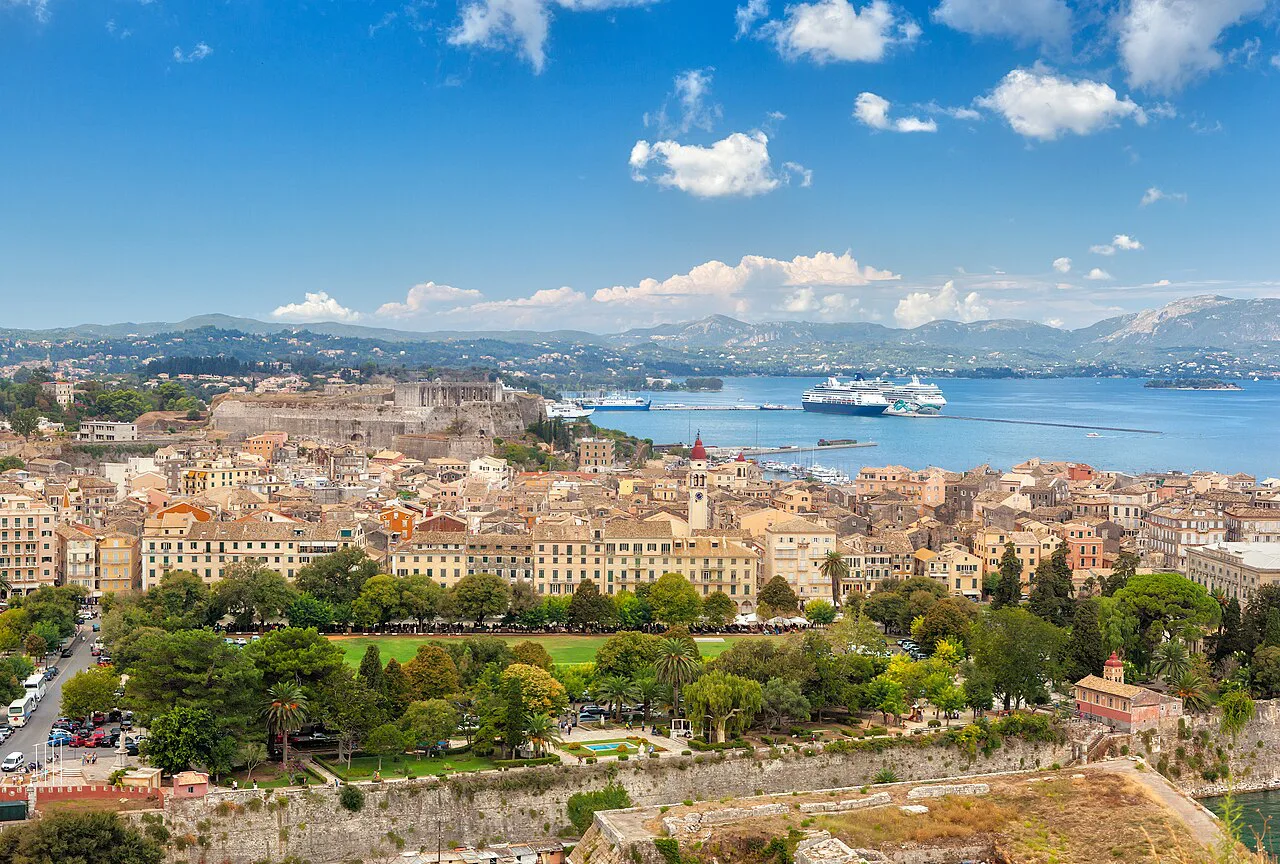
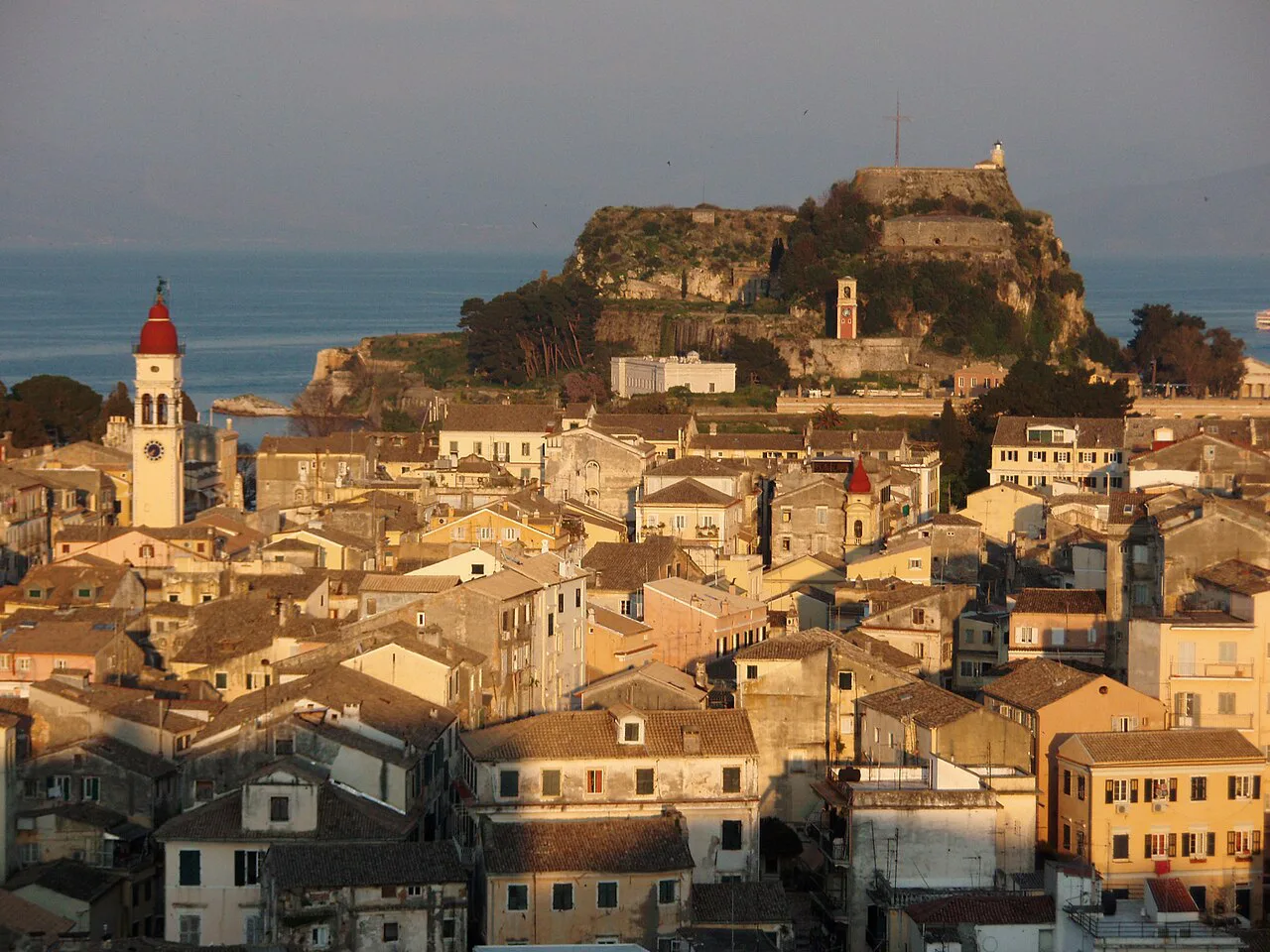
The cooler months are when Corfu's cultural sights make most sense. The UNESCO-listed old town rewards unhurried wandering through its Venetian lanes and squares without the summer squeeze, and the Achilleion Palace and its gardens are a comfortable half-day when the temperature is in the low twenties.
Inland is the other spring draw. Corfu's interior is a patchwork of olive groves and traditional settlements that were never turned into resorts, and the mild temperatures from March to May suit hiking there and bring wildflowers and green landscapes.
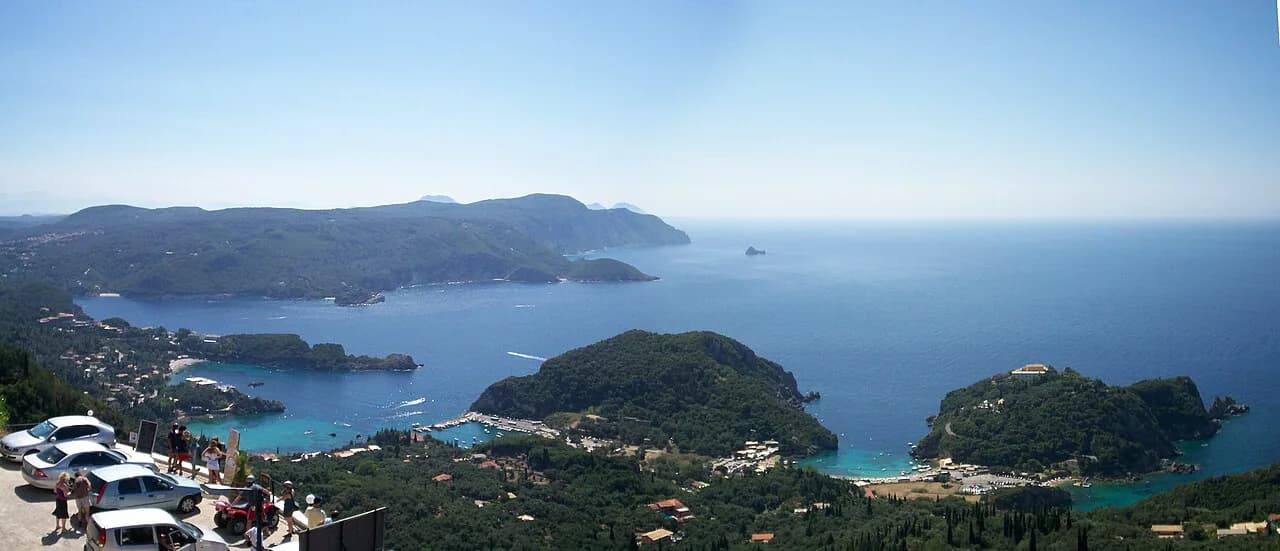
On the coast, Paleokastritsa's inlets and green headlands are the classic viewpoint stop, best visited before the summer crowds arrive. Boat trips to Paxos and along the west coast run once operators are in season, so late May onwards is the reliable window.
For a fuller list of what works in the cooler weeks, see things to do in Corfu in April.
What is open as the season starts
Corfu opens gradually rather than on a single date. Spring is just before the tourist season, so finding a place to stay is far easier than in summer, and the island has plenty to keep a visitor occupied even while some seasonal businesses are still waking up.
The old town's shops and restaurants generally keep going through the quieter months, while coastal resorts and boat operators scale up as the weather settles. Late April and May are the weeks when more places come back to life, and by June the coastal strip is fully running.
Schedules shift from year to year, so if a specific ferry crossing, boat trip or seasonal restaurant matters to your plan, check directly with the ferry company, boat tour operator or restaurant before you commit your itinerary around it.
Crowds and prices in words
Spring is the value window. April and early May are quiet, with plenty of room in the old town and on the roads; late May brings a lift without the summer squeeze; and by June the island is busy but not yet at capacity.
High summer is the opposite: from July to August prices rise and accommodation books up quickly, and beaches and sights are crowded. Easter, the May bank holidays and school half term are the pinch points within the shoulder season, when UK demand overlaps with Greek holiday dates.
September offers better value than summer even though the weather remains warm. If you need exact fares or rates, check current prices with the ferry company or the hotel directly, as they change by season and by booking date.
What the evenings and the sea are like in spring
Spring evenings are cooler than the daytime figures suggest. April nights average 9.2 °C (48.6 °F) and May nights 12.9 °C (55.2 °F), so outdoor dining is pleasant but rarely balmy until June, when the average low reaches 16.4 °C (61.5 °F).
The sea warms more slowly than the land, and in April and early May it still carries the memory of winter, which matters if swimming is central to your trip. From late May the water becomes comfortable for most people, and June is reliably inviting.
If a warm sea is non-negotiable, September beats June on that count and is the better choice for a swimming-led holiday.
Corfu or elsewhere? Comparing with the Aegean
Corfu sits in the Ionian, which is greener and wetter than the Aegean islands in spring. If you want the highest chance of dry, sunny days in April and May, Crete and the southern Aegean generally outperform Corfu, which is why the best time to visit Greece varies so much by island group.
Choose Corfu if you want landscape, Venetian architecture and a gentler, greener spring; choose the Aegean if you want the sun to do the work. Our guide to the best time to visit Crete makes the comparison concrete for anyone weighing the two.
For a spring trip that has to be warm, the balance tips south. For a spring trip that should be beautiful and uncrowded, Corfu holds its own.
The verdict
Book the second half of May or June for the best balance of warmth, open businesses and manageable crowds. April and early May suit walkers, photographers and anyone who prefers an emptier island and can live with rain and cool evenings.
September is the strongest back-up if June is out, warmer at sea and quieter on land. For official travel advice before booking, use the FCDO's Greece page for entry and safety information.
Once your dates are set, read our Corfu in April guide for the early-season picture if you are travelling before May. Whichever month you pick, the island rewards those who plan around its weather rather than against it.
Frequently Asked Questions
What is the best time of year to visit Corfu?
Late May and June give most travellers the best mix: warm afternoons with average highs of 23.8 °C in May and 28.0 °C in June, rain days falling sharply, and an island that is lively without being packed. April and early May suit walkers and sightseers who accept wetter, cooler days, while September is the strongest alternative for warmth with fewer people.
Is Corfu warm enough in April?
Daytime is mild rather than hot, averaging 19.0 °C, and nights drop to about 9.2 °C. Rain falls on around 12.9 days, so a week will usually include showers. It is a good month for the old town, inland villages and coastal viewpoints, but not for anyone who wants dependable beach weather.
Is May a good time to visit Corfu?
Yes, especially from the middle of the month onwards. Average daytime highs reach 23.8 °C and nights around 12.9 °C, with rain days down to eight. Early May can still produce a cool, damp day, while the final ten days often feel like early summer.
Is Corfu hot in September?
September stays warm, with average highs around 28 °C and lows near 17 °C, and the sea holds much of its summer heat. Rain picks up compared with midsummer, averaging about 40 mm over eight days, and October turns wetter and cooler quite quickly.
What is the rainy season in Corfu?
The wettest stretch runs through the autumn and winter, with October alone averaging around 120 mm over eleven days and November typically wetter still. Spring dries out steadily: April still sees frequent rain days, May is noticeably drier, and June is the driest of the spring months. Summer is the driest season overall.
How much time do you need in Corfu?
Three or four days covers Corfu Old Town and one coastal area without rushing, while a week lets you add inland villages, Paleokastritsa and a boat trip to Paxos. In spring, build in a spare day for a wet spell, particularly in April and early May.
Sources
Spring sun notes
Optional updates when we add destinations and months.
You might also like

Continue reading
More guides you'll find useful