Europe Weather in April: Where It's Warm and Where It's Not
April in Europe splits sharply: Lanzarote and Cyprus reach the low 20s while Nice and Dubrovnik stay cooler. Here is where to go and what to expect.
On this page
April in Europe is a continent of two climates. The Canary Islands and Cyprus sit comfortably in the low 20s Celsius, warm enough for outdoor lunches, coastal walks and unhurried sightseeing, while northern cities such as London, Paris and Berlin hover in the mid-teens and still need a jacket. If your priority is reliable warmth without flying long-haul, look south and offshore first. If you are still choosing, where is warm in Europe in May lays out the options.
The practical dividing line runs through the Mediterranean itself. The dry Canaries and eastern Cyprus rarely spoil a day, whereas the Atlantic-facing Algarve, the Adriatic and the northern Italian lakes keep their spring rain. Pick your destination by what you want to do, not just by the thermometer: Seville and Rome suit long museum and plaza days, the Greek islands and the Balearics suit walkers, and the Canaries suit anyone who wants to laze outdoors.
How warm is Europe in April?
The warmest reliable April means in the Canaries come from the south-coast airports, so resort readings can run a shade higher. Lanzarote averages 23.5°C (74°F) by day and 15.7°C (60°F) at night, while Gran Canaria is 22.6°C (73°F) and 16.2°C (61°F). Tenerife averages 23.1°C (74°F) and Fuerteventura 22.9°C (73°F), giving four islands that all clear the 22°C mark in a typical April.
Cyprus is the other dependable corner. Larnaca averages 23.0°C (73°F) by day and 12.1°C (54°F) at night with 274 hours of sunshine across the month, and Paphos is a little softer at 21.8°C (71°F) and 11.9°C (53°F). Those night-time figures matter: Paphos evenings in April still want a light layer if you plan to eat outside.
On the mainland, Seville is the standout at 23.4°C (74°F) by day and 11.1°C (52°F) at night, the classic split of a blazing afternoon and a cool evening. Málaga is gentler at 21.4°C (71°F) and 11.1°C (52°F), while Valencia reaches 20.8°C (69°F) and Barcelona 18.0°C (64°F). No destination in this data set averages above 25°C in April, so treat any promise of beach heat with scepticism.
The Mediterranean islands sit in the middle. Mallorca averages 19.8°C by day and 7.4°C at night with 234 hours of sunshine, Ibiza is warmer overnight at 19.7°C and 11.4°C, and Menorca is the coolest of the three at 18.0°C and 10.6°C. Malta records 19.1°C and 11.9°C, and Palermo on Sicily manages 18.7°C and 11.4°C.
Greece delivers warm afternoons but cool nights, especially in the north. Heraklion on Crete averages 20.3°C and 12.3°C, Rhodes 20°C and 14.2°C, and Athens 20.2°C and 11.8°C. Corfu is cooler at 19.0°C and 9.2°C, with around 13 rain days in the month and 67 mm, so it is a place to keep a wet-day plan in reserve.
The cooler southern fringe is where expectations most often go wrong. Nice averages just 17.4°C and 10.8°C in April, and Dubrovnik is 16.9°C and 10.9°C with roughly 11 rain days. The northern lakes are cooler still: Lake Como near Milan averages 17.0°C by day and 5.9°C at night, so lakeside evenings are firmly jacket territory.
April compared with March and May
April is a transition month almost everywhere, and the gap to May is bigger than the gap back to March. Seville climbs from April's 23.4°C (74°F) to 27.2°C (81°F) in May, and Lanzarote moves from 23.5°C (74°F) to 24.6°C (76°F). Crete's Heraklion goes from 20.3°C (69°F) to 23.9°C (75°F), which is the difference between a pleasant walk and a genuinely warm afternoon.
Sunshine shares the same upward curve. Palma de Mallorca logs 234 hours in April, 283 in May and 316 in June, while Rome moves from 209 hours to 271, then 297. That makes April workable for sightseeing but less generous for long days outdoors than most travellers assume.
Rain is the more decisive difference. The Algarve around Faro records about five rain days in April and three in May, whereas Corfu has around 13 rain days in April and eight in May. If you are choosing between a Greek island and Portugal's south coast for the same week, that gap should shape the decision.
The warmest places in April
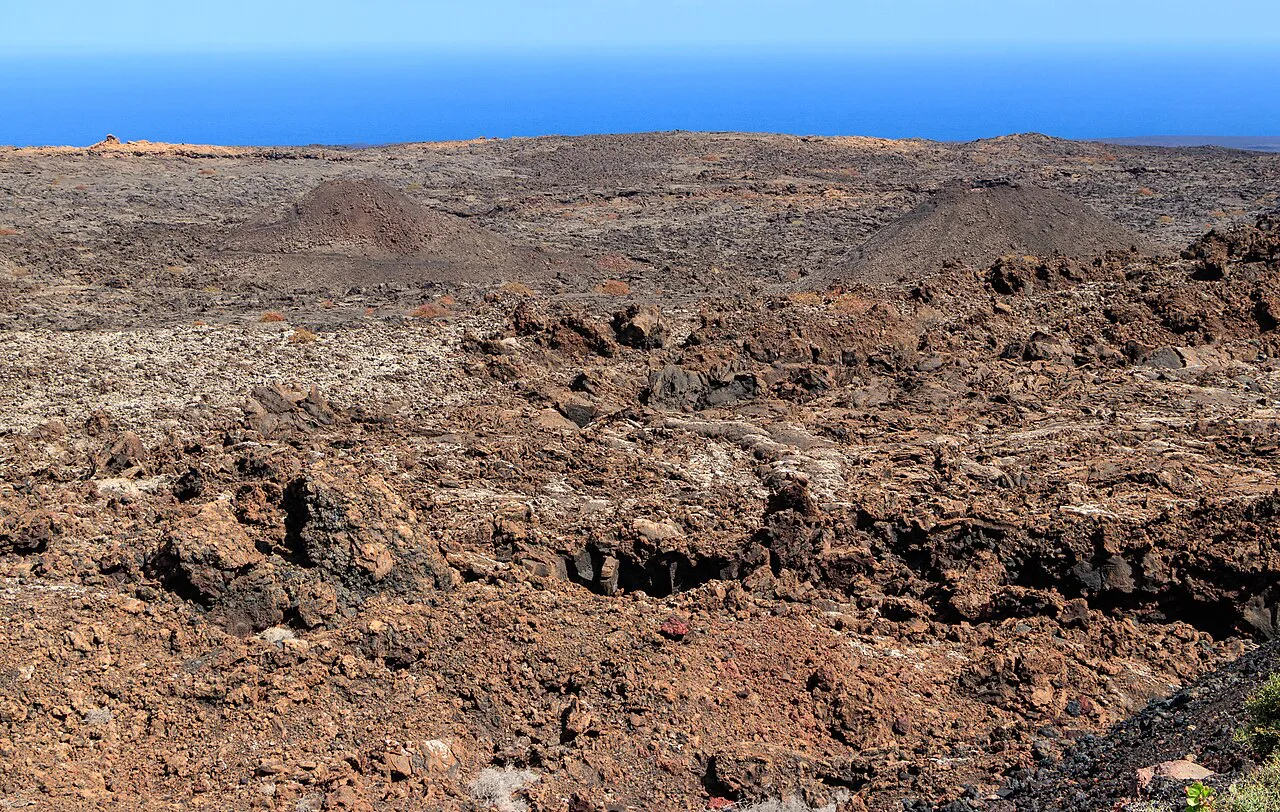
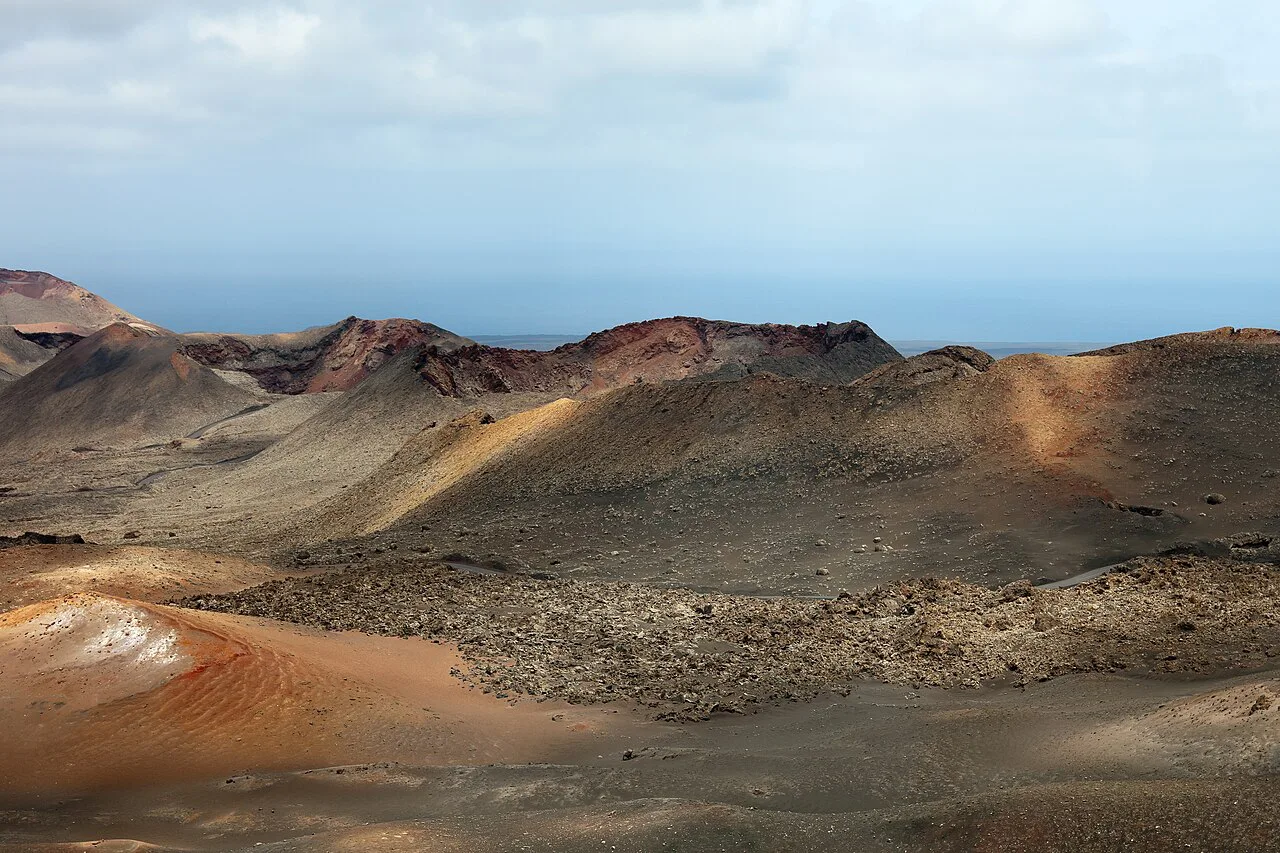
If warmth is the whole point, the Canaries and Cyprus are the two safe bets. Fuerteventura's dry, breezy coast suits walkers and wind sports, Tenerife pairs warm beaches with highland scenery, and Gran Canaria's interior offers the most variety of the four. Lanzarote's volcanic landscape is at its best in comfortable spring temperatures rather than the summer heat.
On Cyprus, Larnaca's 23.0°C (73°F) days and 274 sunshine hours make it the warmest typical April in this data set, and Paphos is only marginally behind. Both sit on the coast, so mornings and evenings stay milder than the inland hills. Cyprus is also the shortest hop from the UK to genuinely warm weather in April, which is why it fills quickly around school holidays.
Seville is the warmest major mainland city for a spring city break, with 23.4°C (74°F) afternoons and about six rain days in April. It is a walking city, so warm-but-not-hot matters: the same streets that are punishing at 40°C in summer are pleasant in April. The trade-off is that its nights are cool at 11.1°C (52°F), so book a table indoors or dress for the drop after sunset.
Southern Turkey offers a similar balance on the Aegean and Mediterranean coasts. Antalya averages 21.8°C (71°F) and 11.3°C (56°F) in April, and Bodrum is 21.7°C (71°F) and 13.1°C (56°F) with around five rain days. Inland Cappadocia is a different proposition entirely: Nevşehir sits near 1,260 metres and averages just 16.3°C (61°F) by day and 5.2°C (41°F) at night, so balloon mornings are genuinely cold.
The Mediterranean islands in April
Mallorca in April is a walker's island rather than a beach one. At 19.8°C (68°F) by day, the Serra de Tramuntana trails and coastal paths are comfortable, and Palma's old town is uncrowded. The catch is the 7.4°C (45°F) average night, which is cool enough to change how you plan evenings.
Ibiza in April is quiet and green, with warmer nights than Mallorca at 11.4°C (53°F) and 246 sunshine hours. Menorca is the coolest and wettest of the Balearics, averaging 18.0°C (64°F) with six rain days and 45 mm, so build in flexibility for walking days.
Malta in April is a strong compromise for anyone torn between culture and warmth. Luqa averages 19.1°C (66°F), and the island's compact scale means Valletta, Mdina and the harbours fit into a short break without long transfers. The sea is still cool, so treat April as a sightseeing month rather than a swimming one.
Crete in April rewards walkers: Heraklion averages 20.3°C (69°F) and 12.3°C (54°F), and the island's gorges and plateau villages are at their greenest. The windy, cooler Lasithi plateau sits higher than the coast and runs noticeably colder, so plan it for a midday visit. Rhodes and Kos are warmer still, with Rhodes at 20°C (68°F) and 14.2°C (58°F).
Sicily and Sardinia fill out the western Mediterranean picture. Catania, inland of Sicily's east coast, averages 21.4°C (71°F) and 8.7°C (48°F) in April, warm by day and cool at night, while Cagliari in southern Sardinia is 19.9°C (68°F) and 9.7°C (49°F). Both suit archaeological sites and coastal drives before the summer crowds arrive.
Mainland southern Europe in April
Spain's south and east coasts are the most forgiving mainland options. Málaga's 21.4°C (71°F) suits the city and the coastal paths, while Valencia at 20.8°C (69°F) works for the Turia gardens and the old town. Barcelona is a step cooler at 18.0°C (64°F) with about five rain days, so it feels more like a city break than a sun trip.
Portugal divides by coast. The Algarve around Faro is mild and fairly dry at 20.7°C (69°F) with roughly five rain days, good for cliff walks and quiet towns. Lisbon is breezier and wetter at 20.4°C (69°F) with around eight rain days and 72 mm, so keep a museum or two in reserve. Madeira stays mild at 21.0°C (70°F) but with more rain, so it suits lush levada walking rather than sunbathing.
Italy offers the best city walking. Rome averages 18.8°C (66°F) and 8.6°C (47°F) with 209 sunshine hours, ideal for long days between monuments and piazzas. Florence is warmer by day at 20.0°C (68°F) but has more rain, with about nine wet days and 67 mm, so mornings are the safer bet for outdoor plans.
The Amalfi Coast and Capri are workable but firmly spring. Capri averages 19.8°C (68°F) and 12.1°C (54°F) with around six rain days and 42 mm, which makes boat crossings and cliff paths weather-dependent. Bologna and Tuscany's interior sit around 17.7°C (64°F) and 7.4°C (45°F) in April with eight or more rain days, so they reward a flexible itinerary over a beach plan. If you are still choosing, where is warm in Europe in June lays out the options.
The cooler south: Nice, Dubrovnik and the Italian lakes
Nice in April is a café-and-promenade month, not a beach one. At 17.4°C (63°F) and 10.8°C (51°F) with 229 sunshine hours, the Promenade des Anglais and the old town are pleasant, but the sea breeze keeps things fresh. Plan a light jacket for evenings and treat the afternoon as the main event.
Dubrovnik is one of the wettest options on this list, averaging 16.9°C (62°F) with about 11 rain days and 91 mm. The old town walls are spectacular but exposed, so an April visit needs a flexible plan and a willingness to dodge showers. Once the rain clears, the light and the lack of summer crowds are the reward.
The northern Italian lakes are cool in April but far quieter than in July. Verona, the gateway to Lake Garda, averages 18.7°C (66°F) and 7.6°C (46°F) with about nine rain days, and Lake Como near Milan is cooler still at 17.0°C (63°F). The lakeside gardens and lake boats suit the month, but the water is too cold for more than a paddle.
Cinque Terre is best in April for walking, though it is not a warm destination. The Sarzana-Luni station near La Spezia records 18.0°C (64°F) and 9.2°C (48°F) with 80 mm of rain across about seven wet days. The coastal paths and terraced villages are lovely in soft spring light, but check whether the paths you want are open before you build a day around them.
Is it warm enough for what you want to do?
Match the destination to the activity and April works well for most of them. Walking suits Mallorca, Crete, the Algarve and the Amalfi Coast, where highs sit between about 18°C and 21°C and the sun is strong but not punishing. City sightseeing suits Seville, Rome, Valencia and Athens, where 20-23°C afternoons keep you on your feet without seeking shade. If you are still choosing, where is warm in Europe in April lays out the options.
Lazing outdoors is genuinely reliable only in the Canaries and Cyprus, where daytime highs clear 22°C and rain days are few. Families with young children will find those islands the easiest choice, since outdoor pools and terraces are usable and the heat is not yet draining. In the Balearics and Malta, plan sightseeing and pool time around a jacket rather than expecting beach days.
If you need heat, wait. June lifts Heraklion to 27.5°C (82°F), Seville to 32.2°C (90°F) and Mallorca to 28.1°C (83°F), which is a different holiday entirely. April's advantage is exactly its moderation, and travellers who chase temperatures above 25°C in April will end up disappointed or far from Europe.
Early versus late April, crowds and prices
Early April behaves more like March than like May. Wet days are more likely across the Algarve, the Adriatic and the Italian lakes, and the average figures for the month mix warm late-April afternoons with cooler early ones. If you are travelling in the first week, pick a destination where one wet day does not ruin the trip.
Late April is the better bet for reliable sunshine almost everywhere, and it usually coincides with warmer seas and longer days. For a European city break in spring, the choices around Easter and the early May bank holidays are the ones to plan around, as accommodation fills and short-haul flights rise in cost. Standard school half-term weeks in England, Wales and Scotland fall in late May, so the pressure eases east of the May bank holiday weekend.
Prices and crowds peak around Easter and the early May bank holiday, then drop back. Outside those windows, April is one of the cheaper months in the Mediterranean and the Canaries, with capacity still building toward summer. If you can travel midweek in the second half of April, you get the warmth without the premium.
Where the April rain falls
Rain in April is strongly regional. The Atlantic-facing Algarve records 5.3 rain days and 39 mm, while Lisbon has about eight rain days and 72 mm. Madeira is milder but wetter, with 4.7 rain days in Funchal and 45 mm, so build a flexible walking plan around the showers.
Northern Italy and the Adriatic are wetter still. Lake Garda around Verona sees about nine rain days, Rome about eight, and Dubrovnik around 11 with 91 mm. These are not washouts, but they are the places where a week of bad luck is possible, so build in indoor options like galleries, churches and covered markets.
The dry end of the scale is dramatic. Lanzarote and Gran Canaria average barely more than one rain day in April, Tenerife about one, and Fuerteventura about one with 5 mm. Cyprus is also dry, with Paphos recording 15 mm and Larnaca 16 mm across the month. That is the real reason the Canaries and Cyprus dominate April recommendations.
April or May?
April wins for the Canaries, Cyprus, Seville, Málaga and southern Turkey, where the warmth arrives early and the crowds have not yet built. May wins for the Balearics, Greece, the Adriatic and the Italian lakes, where the extra degree or two and the drying trend make walking and outdoor dining much more reliable. If your dates are flexible, ask whether you want comfortable warmth now or dependable warmth soon.
June is the month for heat-seekers, and it is a different trip. Mallorca jumps to 28.1°C (83°F), Seville to 32.2°C (90°F), and Rome to 28.1°C (83°F) with almost no rain. That suits a beach holiday or an early-summer city break, but it loses the temperate edge that makes April so good for walking and sightseeing.
One practical note for anyone weighing the two months: April is the better month for a first trip to a destination where the guidebook highlights involve long outdoor days. May and June are better if the plan is swimming and late dinners. Neither is wrong, but choosing the month around the activity rather than the other way round saves disappointment.
The verdict
For guaranteed April warmth, choose the Canary Islands or Cyprus. Lanzarote, Gran Canaria, Tenerife and Fuerteventura all average above 22°C by day with barely any rain, and Larnaca and Paphos deliver similar conditions with more sunshine. Seville is the best warm mainland city for a short break if you want culture with your sun.
For scenery and walking, choose Mallorca, Crete or the Algarve, and accept that evenings are cool and one wet day is part of the deal. For a gentler spring city break, Rome, Valencia or Athens work well. Leave Nice, Dubrovnik and the Italian lakes for May or June if warmth matters, and treat April there as a cool, quiet, bargain-priced version of the summer trip.
More Europe spring guides
Frequently Asked Questions
Where is warmest in Europe in April?
The Canary Islands and Cyprus are the warmest reliable choices. Lanzarote averages about 23.5°C by day, Gran Canaria about 22.6°C, Tenerife about 23.1°C and Larnaca about 23.0°C, all with few rain days. No destination in this data set averages above 25°C in April.
Is April still cold in Europe?
It depends where you are. The Canaries and Cyprus are genuinely warm in the daytime, while Nice, Dubrovnik and the northern Italian lakes average between about 17°C and 18°C by day and need a jacket in the evening. Northern European cities stay in the mid-teens.
Can you swim in Europe in April?
The sea is still warming in April, so most travellers treat it as a sightseeing and walking month rather than a swimming one. If swimming matters, choose the Canaries or Cyprus, where daytime air temperatures are highest, and plan around the water rather than the air.
Is April a good time to visit the Mediterranean?
Yes, for sightseeing, walking and uncrowded towns. The Balearics, Malta, Greece and southern Italy are comfortable rather than hot, and the summer crowds have not arrived. Expect cool evenings and a chance of rain in the Algarve, the Adriatic and the Italian lakes.
What is the best month between April and May for southern Europe?
April suits the Canaries, Cyprus, Seville, Málaga and southern Turkey. May suits the Balearics, Greece, the Adriatic and the Italian lakes, where temperatures rise and rain becomes less frequent, so pick the month around the activity you want.
Should I worry about rain in April?
Only in the Atlantic and northern Mediterranean. The Algarve, Lisbon, the Adriatic and the Italian lakes see several wet days in April, while the Canaries and Cyprus record barely any. Build indoor options into the itinerary where rain is likely.
Sources
- Mallorca climate normals (AEMET, Palma de Mallorca Airport (AEMET B278))
- Ibiza climate normals (AEMET, Ibiza Airport (AEMET B954))
- Menorca climate normals (AEMET, Menorca Airport, Mahon (AEMET B893))
- Málaga climate normals (AEMET, Malaga Airport (AEMET 6155A))
- Lanzarote climate normals (AEMET, Lanzarote Airport (AEMET C029O))
- Gran Canaria climate normals (AEMET, Gran Canaria Airport (AEMET C649I))
- Tenerife climate normals (AEMET, Tenerife South Airport (AEMET C429I))
- Fuerteventura climate normals (AEMET, Fuerteventura Airport (AEMET C249I))
- Seville climate normals (AEMET, Seville Airport (AEMET 5783))
- Greek climate normals (HNMS)
- Corfu climate normals (WMO World Weather Information Service, Kerkyra / Corfu (HNMS))
- Sicily climate normals (WMO Climate Normals 1991-2020, Catania Sigonella (WMO 16459))
- Sardinia climate normals (WMO Climate Normals 1991-2020, Cagliari Elmas (WMO 16560))
- Amalfi Coast climate normals (WMO Climate Normals 1991-2020, Capri (WMO 16294))
- Lake Garda climate normals (WMO Climate Normals 1991-2020, Verona Villafranca (WMO 16090))
- Lake Como climate normals (WMO Climate Normals 1991-2020, Milano Malpensa (WMO 16066))
- Tuscany climate normals (WMO Climate Normals 1991-2020, Firenze Peretola (WMO 16170))
- Bologna climate normals (WMO World Weather Information Service, Bologna (Aeronautica Militare))
- Cinque Terre climate normals (WMO Climate Normals 1991-2020, Sarzana Luni, near La Spezia (WMO 16125))
- Rome climate normals (WMO Climate Normals 1991-2020, Roma Ciampino (WMO 16239))
- Malta climate normals (WMO World Weather Information Service, Luqa (Malta Meteorological Office))
- Algarve climate normals (IPMA, Faro Airport (IPMA station 554))
- Lisbon climate normals (IPMA, Lisboa / Instituto Geofisico (IPMA station 535))
- Madeira climate normals (IPMA, Funchal / Observatorio (IPMA station 522))
- Paphos climate normals (WMO Climate Normals 1991-2020, Paphos Airport (WMO 17600))
- Larnaca climate normals (WMO Climate Normals 1991-2020, Larnaca Airport (WMO 17609))
- Cappadocia climate normals (MGM, Nevsehir (MGM))
- Antalya climate normals (MGM, Antalya regional station (MGM))
- Dalaman climate normals (WMO Climate Normals 1991-2020, Bodrum (WMO 17290))
- Nice climate normals (Meteo-France, Nice Cote d'Azur Airport (Meteo-France 06088001))
- Barcelona climate normals (AEMET, Barcelona Airport, El Prat (AEMET 0076))
- Valencia climate normals (AEMET, Valencia city (AEMET 8416))
- Dubrovnik climate normals (WMO World Weather Information Service, Dubrovnik (DHMZ))
Spring sun notes
Optional updates when we add destinations and months.
You might also like
Continue reading
More guides you'll find useful