Menorca in June: How Warm It Is and What to Expect
Menorca in June averages 25.8°C by day and 17.8°C at night, with 311 hours of sunshine and two rain days. Here is what that means for your trip.
On this page
June is the month Menorca stops being a gamble and becomes reliably warm: average daytime highs of 25.8°C (78.4°F) and night-time lows of 17.8°C (64°F), with 311 hours of sunshine and just two rain days across the month, according to AEMET's 1981–2010 normals for Menorca Airport. That profile suits walkers, sightseers and families who want dinner outside without a jacket, and it falls short only for anyone whose holiday depends on bath-warm water.
If you want the sea to feel like a bath and lazy beach days to be the whole point, July and August deliver that better. If you want the island at its most usable, with dry footpaths, long evenings and room to move in Ciutadella and Maó, June is the stronger choice, and our guide to where is warm in Europe in June shows how it stacks up against the rest of the Mediterranean.
It also helps to see June as the far end of a spring curve rather than the start of summer. April on the same island is a walking month with jackets in the evening; by June the balance has tipped towards outdoor living, which is why so many travellers compare the two before committing. Our guide to where is warm in Europe in April sets out which destinations are already mild that early, and how Menorca fits among them.
Weather in June
The headline numbers are steady rather than dramatic: 25.8°C (78.4°F) average daily maximum, 17.8°C (64°F) average daily minimum, 311 hours of sunshine, 2.0 rain days and 14 mm of precipitation for the month, all from AEMET's published normals for the Menorca Airport station at Mahón. In practice, 311 hours of sunshine across roughly thirty days means the great majority of days are clear or mostly clear, and a fortnight's trip can realistically come home without a washed-out afternoon.
Two rain days does not mean two days of drizzle; it means the month's modest 14 mm usually arrives in a single sharp shower or a brief, unsettled spell rather than settled grey weather. The island's exposure to the north wind and the Tramuntana-style breezes of the Balearics keeps June short of truly hot, which is exactly why it works for walking and sightseeing rather than only for lying down. For more detail, see Menorca in april.
Humidity sits at moderate levels in June, and the coastal breeze off the water makes the middle of the day comfortable on the south-coast calas and along the cliff paths. Inland, in the stone lanes of Ciutadella and around the old town of Maó, the same sun feels hotter by early afternoon, so plan shaded wandering and a long lunch when the day peaks.
Early vs Late June
The first week of June still behaves like a warm late May: pleasant by day, fresh by night, with the water at its coolest and the coastal restaurants still finding their rhythm. The last week behaves like a mild July, with evenings that no longer need a layer watching the sunset and beaches that fill noticeably earlier in the morning.
Evening light is the real difference for planning. Early in the month you can be on a cliff path at Cap de Cavalleria in the late afternoon and still be back at the car before the light goes; by the end of June, the light lasts long enough that dinner outdoors at nine feels entirely natural. If your priority is walking the Camí de Cavalls in cooler conditions, aim for the first ten days.
If you are choosing between the run-up and the peak, the earlier half gives you a quieter island at a lower price level, while the later half gives you warmer evenings and the start of the summer atmosphere. Menorca in May is the cooler, quieter version of the same trip if you can travel before the season turns.
Is it warm enough?
For sightseeing, walking and outdoor eating, yes, without reservation: 25.8°C (78.4°F) by day and 17.8°C (64°F) at night is close to ideal for a day that mixes a morning on foot with an afternoon on a terrace. For families whose children want hours in the water, it is more marginal, because the sea lags well behind the air temperature in June and stays bracingly cool.
That gap is the decision point. Confident swimmers and adults who like a brisk dip will be happy; small children and anyone who feels the cold will spend more time on the sand than in it. If warm water is the non-negotiable part of your holiday, shift to July or August, or look at a warmer sea elsewhere with our guide to where is warm in Europe in June.
Compared with April, June is in a different league: the April normals show 18.0°C (64.4°F) highs and 10.6°C (50.9°F) nights, so the island asks for a jacket in the evening and rewards walkers rather than swimmers. For a full comparison of the shoulder months, see the best time to visit Menorca.
June compared with May and July
May averages 21.6°C (70.9°F) by day and 13.9°C (57°F) at night on the same AEMET series, with 270 sunshine hours and 4.4 rain days, which is genuinely pleasant but noticeably cooler once the sun drops. June adds about four degrees to the daytime high and roughly four to the night-time low, which is the difference between an evening that needs a layer and one that does not.
July pushes the heat up again and brings peak-season crowds and prices with it, and August is hotter still. June sits in the sweet spot: dry ground underfoot, long days for walking, and an island that has not yet been squeezed by the school-holiday surge.
The trade-off is the water and the atmosphere. May gives you wildflowers and near-empty paths, June gives you warmth and full daylight, July gives you warm sea and company. Pick June if you want the best balance of all four rather than the maximum of any one.
What is open
By June the island has shifted into season: beach bars, boat trips and coastal restaurants are running at something close to full operation rather than the reduced spring pattern, and the south-coast calas have their seasonal infrastructure back. The Saturday vintage market at the Claustre del Carme in Maó runs from 10am to 2pm that day.
The month's fixed landmark is the Sant Joan festivities in Ciutadella from 22 to 25 June, when horses and riders move through the streets and the town fills with visitors. It changes the crowd and price profile of the island for that week, so either book around it deliberately or avoid it deliberately, and confirm the programme with the town's own sources rather than a hotel blog.
For boat trips, guided visits and seasonal openings, check the operator's own page for the current year: June schedules differ from May's, and published timetables from previous summers are only a rough guide.
Things to do
The Camí de Cavalls is the obvious centrepiece, and June suits it better than midsummer: the ground is dry, the days are long, and the heat has not yet reached the intensity that forces an early start. Break it into stages rather than attempting long sections in one go, and use the northern stretches around Cap de Cavalleria for cliff scenery and the lighthouse when the wind is manageable.
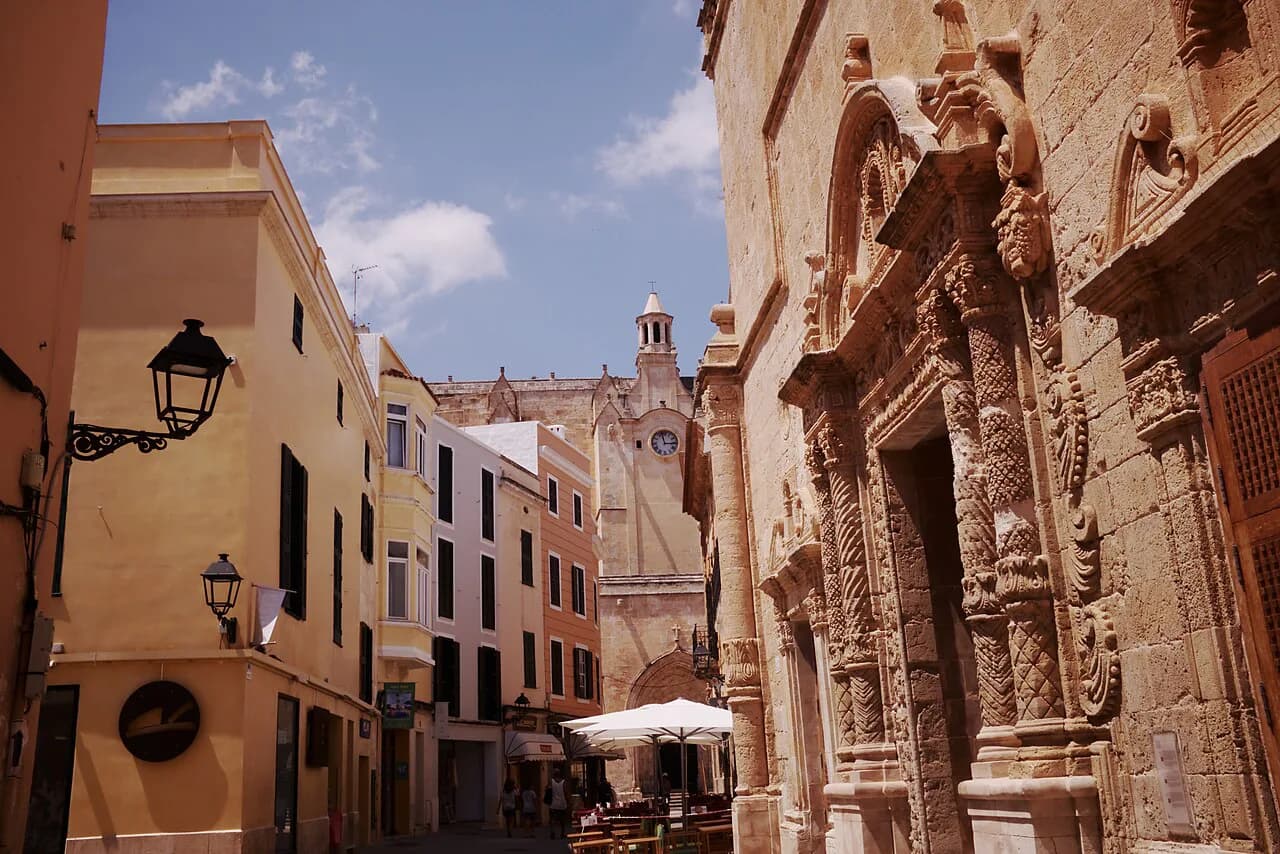
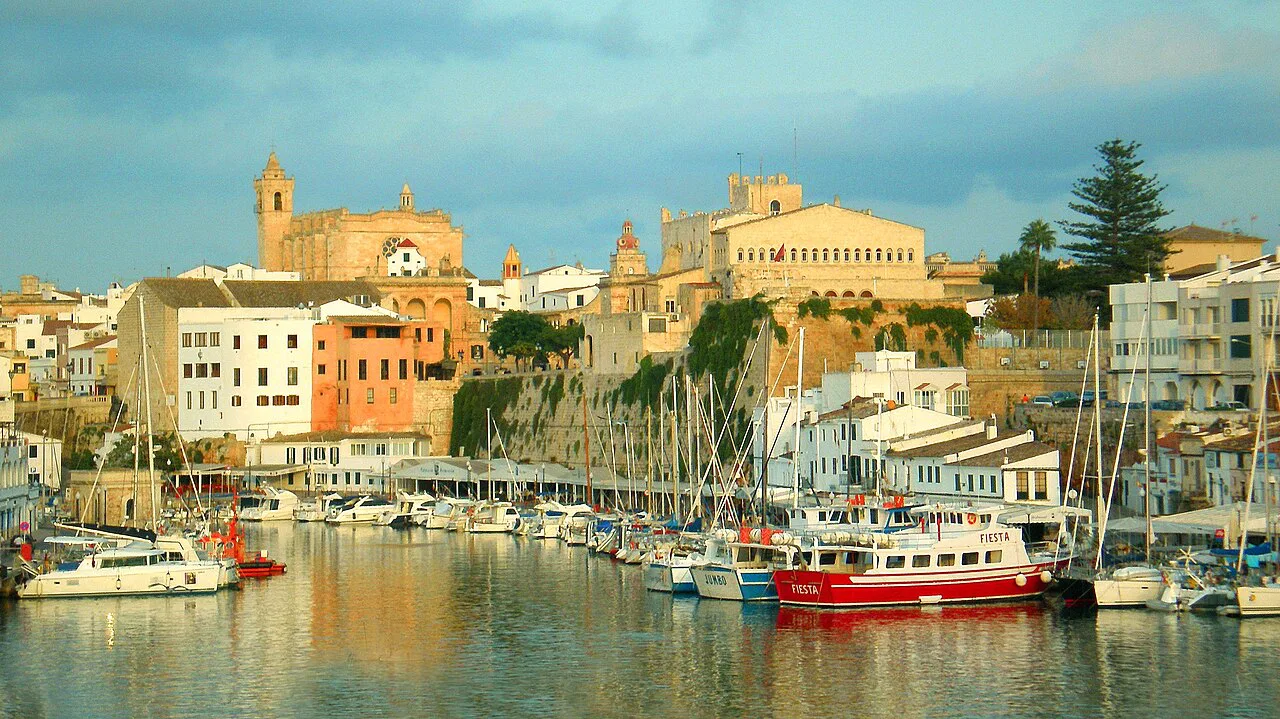
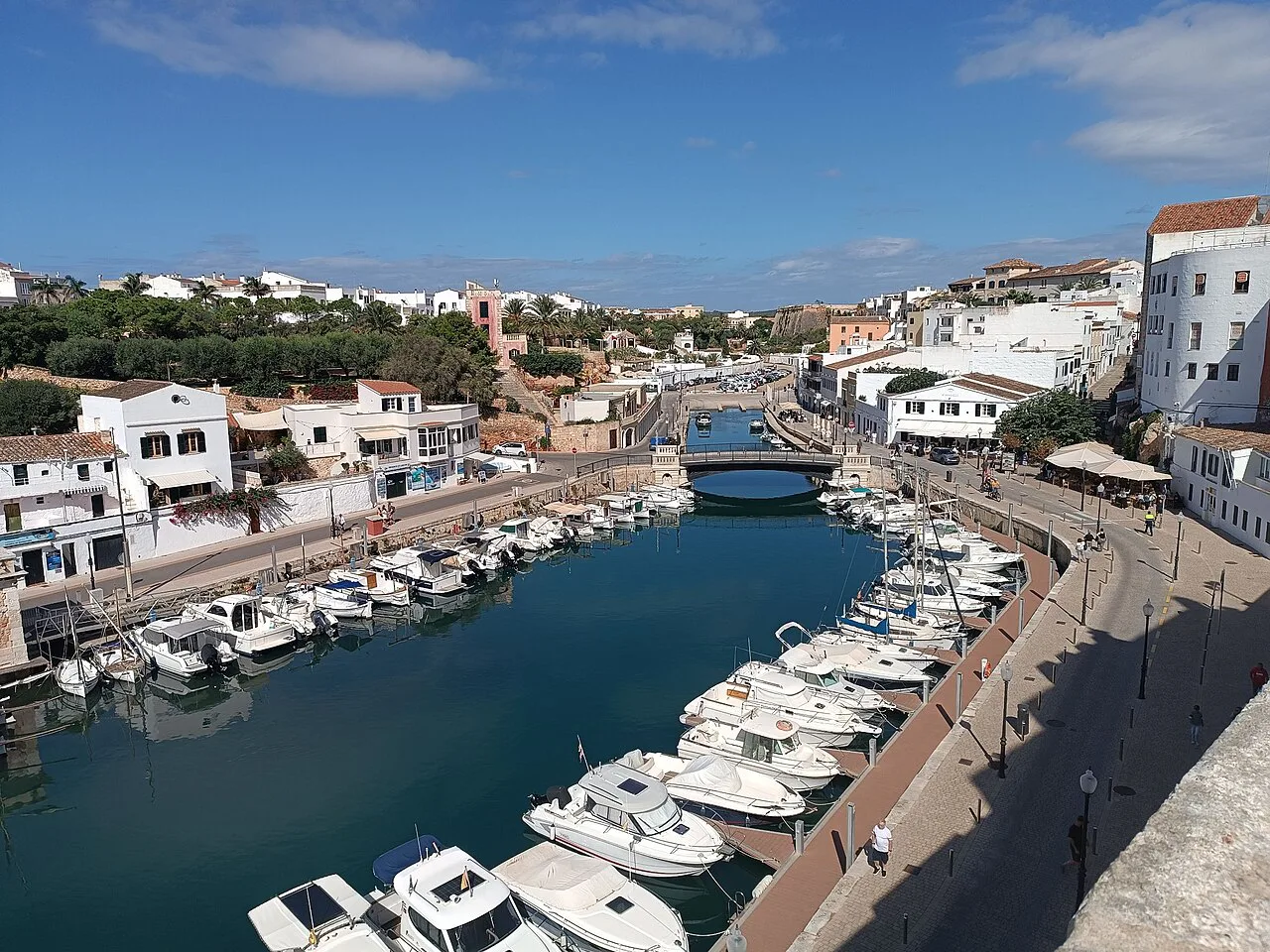
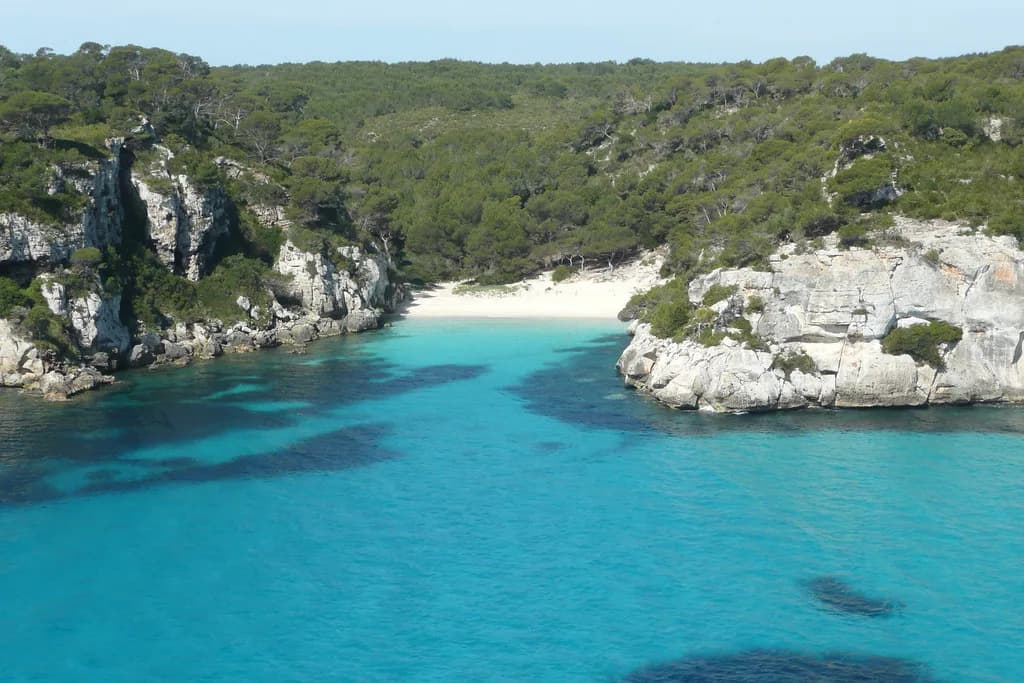
Ciutadella and Maó are the two old towns worth half a day each: Ciutadella for the narrow lanes and the harbour entrance, Maó for the long waterfront and the stepped streets above it. The Cova d'en Xoroi on the south coast is the classic sunset stop, and the south-coast calas at Macarella, Turqueta, Cala Galdana and Cala en Porter give you the beach half of the day.
For a fuller list of what the month offers beyond the obvious, our guide to things to do in Menorca in June goes deeper on markets, festivals and cultural visits. If your dates slip earlier, things to do in Menorca in May covers the quieter version of the same island.
June's combination of long daylight and dry paths makes the cliff and country walking more forgiving than in July, when you want to be off exposed ground by mid-morning. Build the day around an early walk, a long lunch, and a late afternoon swim or boat trip rather than a single long hike in the heat.
Beaches and coves
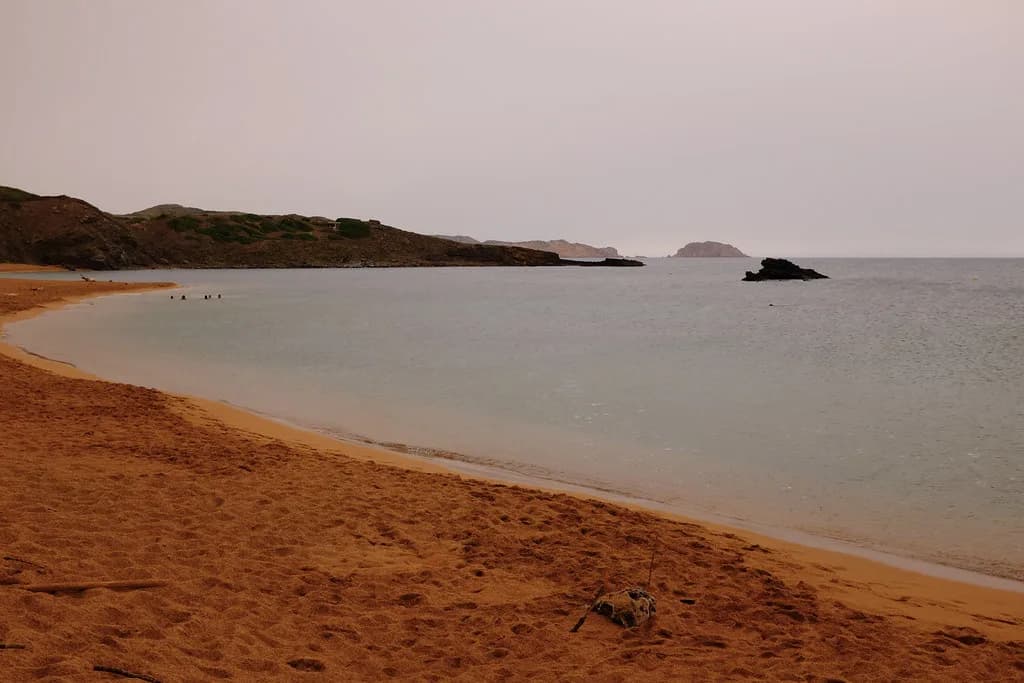
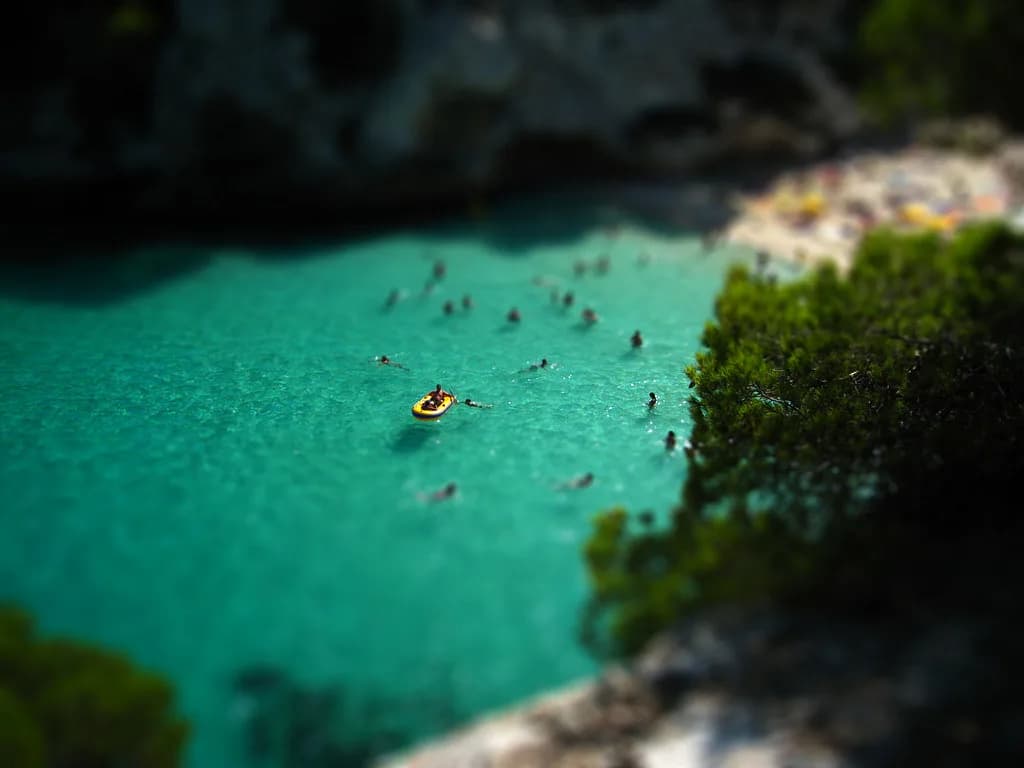
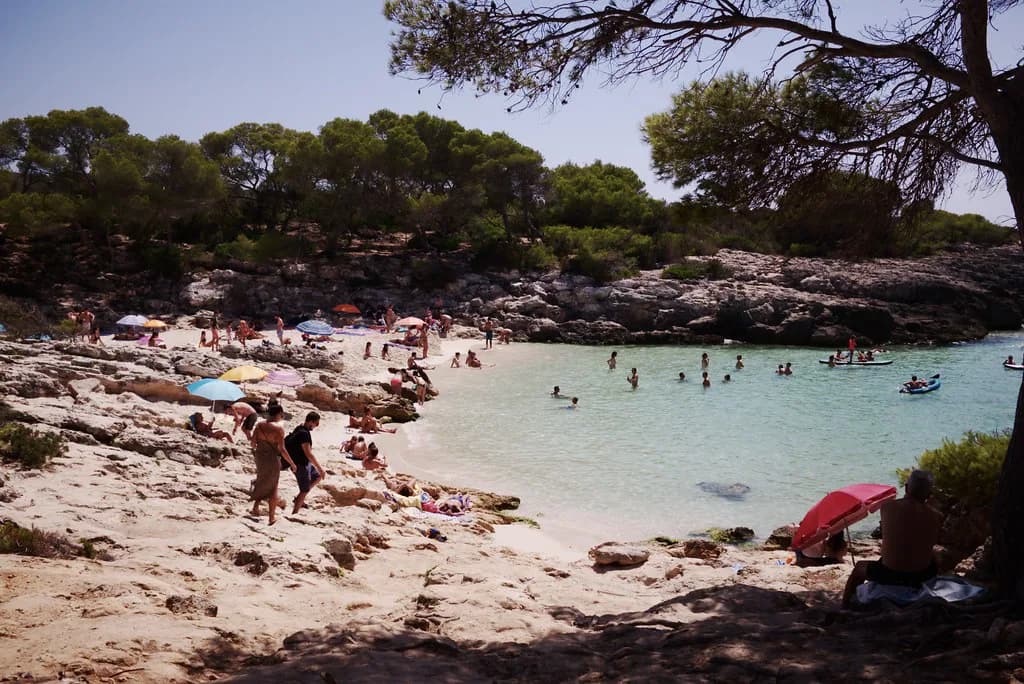
The south-coast coves, Macarella, Turqueta and Cala Galdana among them, are the island's most photographed and the first to fill in June. Go early in the morning, before the car parks and the access roads reach their limits, and treat the protected coves as places to arrive at rather than to circle looking for space.
Cala en Porter and the beaches near Es Castell give you a slightly easier, more developed version of the same day: facilities, parking and a shorter walk to the sand. Our guide to Es Castell and the surrounding coast is worth a look if you are basing yourself in the east.
The water is at its coolest early in June and warms gradually through the month, so the later you travel, the more comfortable a long swim becomes. The island's small coves are also where the sea breeze is most noticeable, which is pleasant on a hot afternoon and less so if you are planning to sit still.
Crowds and prices
Early June is still quiet by Menorca's standards, with space in the towns and on the paths and a price level closer to spring than summer. The Sant Joan weekend around 22 to 25 June is the moment the island's crowd and price profile changes, and the last week of the month carries the beginning of the UK school-holiday approach.
Expect mid-season rates rather than peak-season ones in the first half of the month, with accommodation and car hire tightening as the month goes on. The island is also a popular short-haul choice for British travellers, so late-June weekends and the Sant Joan dates are the ones to book well ahead rather than leave to the last minute.
If you want the full picture of how the seasons sit against each other, our comparison of where is warm in Europe in June shows how Menorca's crowd and heat profile compares with Greece, Italy and the Canary Islands in the same month.
A realistic day in June
Start early with a coastal walk, whether a stage of the Camí de Cavalls or a shorter clifftop stretch near Cap de Cavalleria, and be back before the middle of the day. Spend the afternoon on a cala or on a shaded terrace in Ciutadella or Maó, then eat late and outdoors, which by the end of the month is comfortable at 17.8°C (64°F) and often warmer.
The pattern to avoid is the midsummer mistake of a late start and a long hike in the heat. In June the day is long enough that there is no need to rush, and the dry ground means a morning walk is reliable rather than a gamble on mud.
Boat trips and water-based excursions slot best into the late morning or the late afternoon, when the light is good and the heat has eased. Coastal restaurants in the smaller resorts still follow seasonal patterns early in the month, so book where it matters and keep the first evening flexible.
Drawbacks
The honest drawbacks are the water temperature, the evenings that cool down after a hot day, and occasional windy or overcast spells, which the island's exposure to the north wind can produce even in June. None of these ruins a trip, but each shapes how you plan it.
The sea stays cool through June, so families with small children should think in terms of short dips rather than long sessions, and anyone who feels the cold will want to be on the sand in the middle of the day. The last week of the month also starts to feel like high season on the south coast, with fuller beaches and busier roads.
Compared with April, June is warmer, drier and busier; the Menorca in April guide is the place to look if you want the island before the season opens. If you are weighing Spain more broadly, Spain in April sets out how the mainland and islands compare earlier in the spring.
June or September?
June gives you the longest days of the year, dry ground for walking and an island that has not yet reached peak season. September gives you a warmer sea and thinner crowds once the school holidays end, at the cost of shorter evenings and a higher chance of rain.
For walkers and sightseers, June's daylight and reliably dry conditions are the stronger argument. For swimmers and anyone who wants the water to be the main event, September wins comfortably.
If June is your month but you want a warmer sea, look south: our guide to Gran Canaria in June covers an alternative with a different water temperature and a different crowd pattern.
The verdict
June is the best all-round month for walking, sightseeing and outdoor living in Menorca, provided you accept that the sea will still be cool and that the last week starts to fill. The AEMET normals make the case plainly: warm days, mild nights, long sunshine and very little rain.
Book early enough to avoid the late-June surge and the Sant Joan dates, and plan around the water rather than promising children a warm sea. If you can be flexible, the first ten days give you the best combination of weather and space.
For a sense of how the island compares with the rest of Southern Europe in the same month, and for other destinations in the same window, see where is warm in Europe in June and Ibiza in June.
Plan Your Visit
Choose the first half of June if you want space, a lower price level and cooler walking conditions, and book the Sant Joan week deliberately if you want the festival atmosphere. Either way, plan your days around an early start, a long lunch and a late outdoor dinner.
Treat the sea as the variable rather than the constant: it is cool in June and warms through the month, so families should keep expectations realistic and swimmers should aim late. For the wider context, our guide to where is warm in Europe in June and the Balearic Islands overview help you compare.
More Menorca spring guides
Frequently Asked Questions
How hot is Menorca in June?
AEMET's 1981–2010 normals for Menorca Airport give an average daytime high of 25.8°C (78.4°F) and a night-time low of 17.8°C (64°F). Sunshine averages 311 hours across the month, with two rain days and 14 mm of precipitation. These are typical conditions rather than a forecast, so expect individual days to run warmer or cooler.
Is the sea warm enough to swim in Menorca in June?
The sea lags behind the air temperature and stays cool through June, so it suits confident swimmers and short dips better than long family sessions. The water warms gradually as the month goes on, which makes late June more comfortable than early June. If warm water is essential, July, August or September are the better choices.
Is June a good time to visit Menorca?
June is the strongest all-round month for walking, sightseeing and outdoor eating. Days are long, rain is scarce and the island has not yet reached peak-season crowds. The trade-offs are the cool sea and a last week that starts to feel busy on the south coast.
What is Menorca like in early June compared with late June?
Early June behaves like a warm late May, with fresh evenings, cooler water and a quieter island. Late June behaves like a mild July, with long light, warmer evenings and fuller beaches. Early June suits walkers and sightseers; late June suits anyone who wants the summer atmosphere.
Is Menorca in June busy?
Early June is still quiet by the island's standards. Crowds build around the Sant Joan festivities in Ciutadella from 22 to 25 June and again as the UK school holidays approach at the end of the month. Book the festival dates well ahead if you want to be there.
Menorca in June or September — which is better?
June has the longer days, drier ground and a less crowded island. September has a warmer sea and thinner crowds once the school holidays end. Walkers and sightseers should pick June; swimmers should pick September.
Do I need to check anything before travelling?
Check entry requirements on the official UK government travel advice page for Spain, and check seasonal opening times and boat schedules for your dates.
Sources
Spring sun notes
Optional updates when we add destinations and months.
You might also like
Continue reading
More guides you'll find useful