Things to Do in Menorca in May: Walks and Coves Guide
Menorca in May brings mild walking days, half-empty coves and quiet trails. What to do, what is open and how May compares with April and June.
On this page
May is the best month of spring for walking and sightseeing on Menorca, with mild days that suit long stretches on the Camí de Cavalls and cool evenings that still call for a jacket. Treat it as a walking-and-town trip rather than a swimming holiday, and the island gives you its quiet version: open trails, half-empty coves and harbours that are busy without being crowded.
The trade-off is the sea and the evenings. Air temperatures climb steadily through the month, but the water has been warming since winter and lags well behind the land, so most people will find it bracing rather than balmy in early May. Anyone who wants guaranteed warm swimming or balmy nights is better served by June.
Why May Suits Menorca
Menorca is the northernmost of the Balearic Islands and the least developed of the three big ones, with a UNESCO Biosphere Reserve covering much of the island and a protected trail ringing the coast. May is when that landscape is at its most usable: the spring growth is still green, the paths are dry, and the heat that builds through June has not yet arrived.
For walkers and sightseers this is close to ideal. For families who want shallow, warm water for hours, late May works only if children are happy in cooler sea; if not, plan the trip for June. If you are weighing the whole season, our month-by-month guide to the best time to visit Menorca sets out how April, May and June differ.
Walk a Stage of the Camí de Cavalls
The Camí de Cavalls, registered as long-distance route GR 223, loops the entire island along a former defence path, and it is the single strongest reason to come in May. It is broken into stages that can be walked individually or combined, so you can pick a stretch to suit your legs and the day's heat rather than committing to the full circuit.
Plan two or three separate day walks rather than one long push. The eastern and southern sections are gentler and easier to link to Mahón, while the north-coast stages are rougher and more exposed, which matters more in a windy May than in a still June morning. Walking early in the day gives you the best light and the emptiest path.
Coves and Swimming
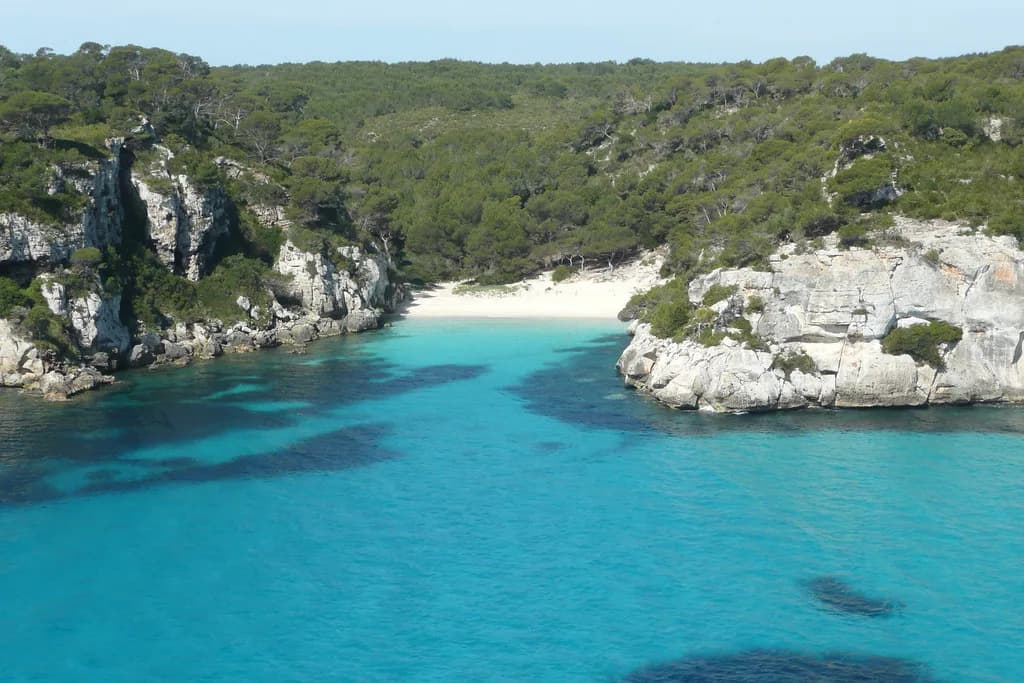
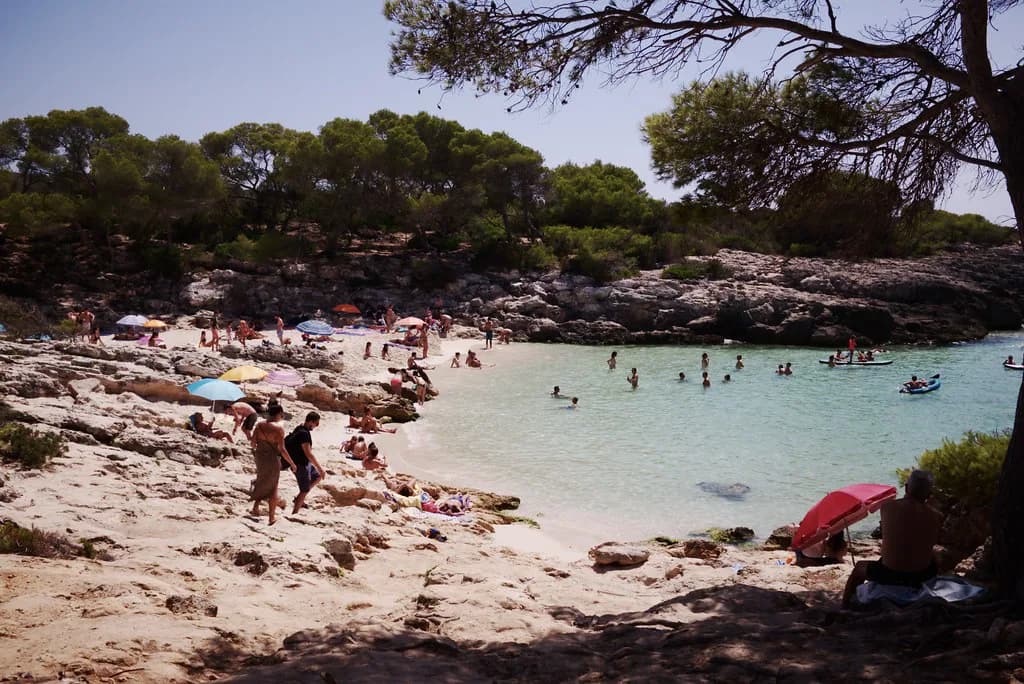
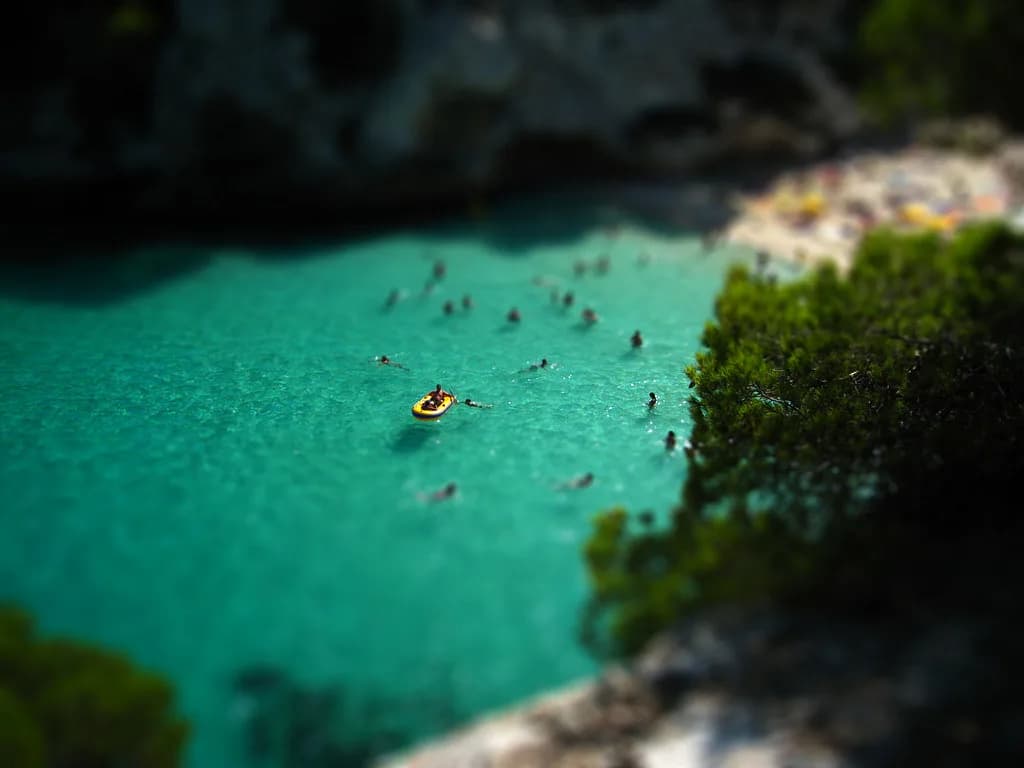
Menorca's coves are the island's signature, and in May you get them with far fewer people than in high summer. Cala Turqueta, one of the best-known white-sand inlets on the south coast, gets busy even in spring, so arriving early is the difference between a quiet swim and a crowded one. Neighbouring Cala Mitjana and its small companion Cala Mitjaneta sit among limestone cliffs and pine trees and are easy to pair with Turqueta in a single morning.
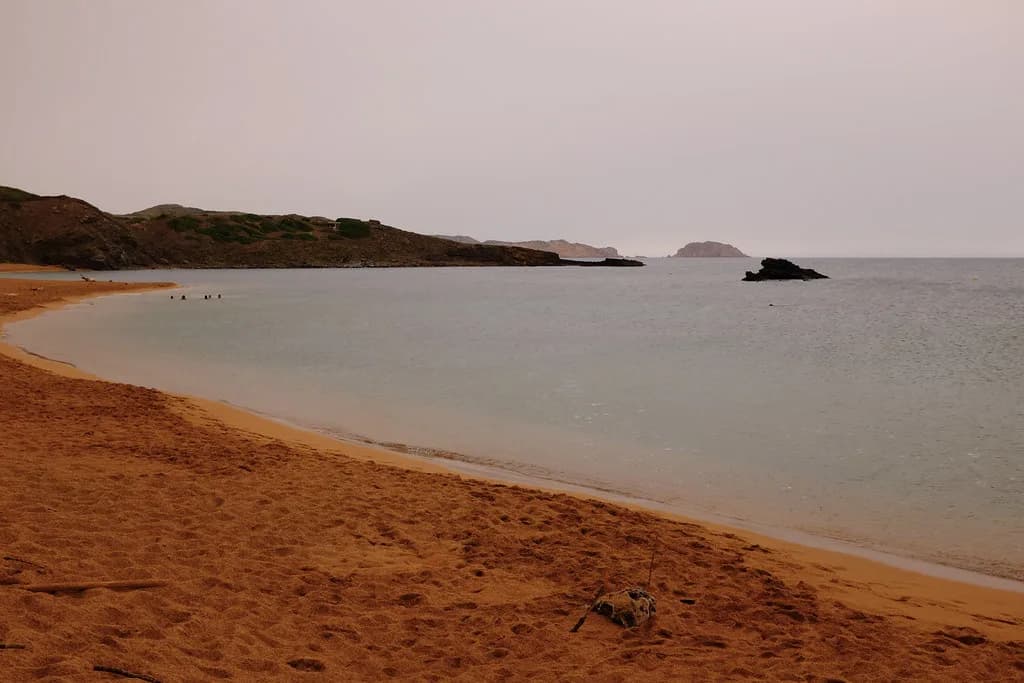
On the north coast, Cala Pregonda stands out for its reddish sand and sheltered water, but reaching it means a walk of roughly 20 to 30 minutes from the nearest car park through dunes and along the coast. That walk is a fair price for the seclusion, and in May the cooler air makes it a pleasure rather than a slog. Cala Cavalleria, reached by a short path and stairs, is a good shorter alternative on the same side of the island.
The swimming itself is the honest caveat. The water has been warming since winter and generally feels cold in early May, improving towards the end of the month; strong swimmers and hardy children will be fine, while anyone who feels the cold should plan on short dips.
Mahón and Ciutadella: Two Different Ends of the Island
Mahón, the island's capital, sits above one of the largest natural harbours in the Mediterranean and mixes Georgian, baroque and Spanish architecture from the island's long history of occupation. The historic centre is compact enough to cross in under fifteen minutes, but give it at least half a day: the pleasure here is slow wandering, a coffee on a square, a look at the harbour from above.
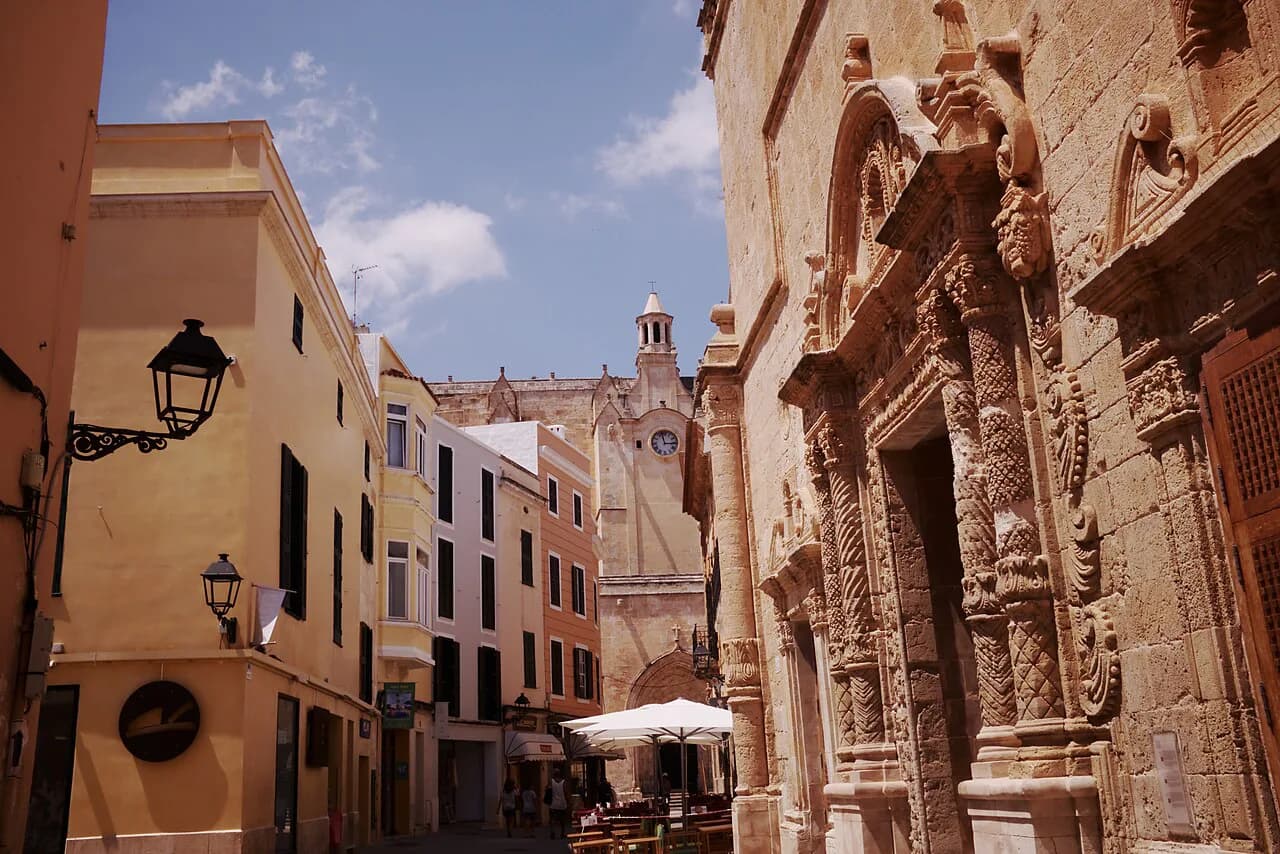
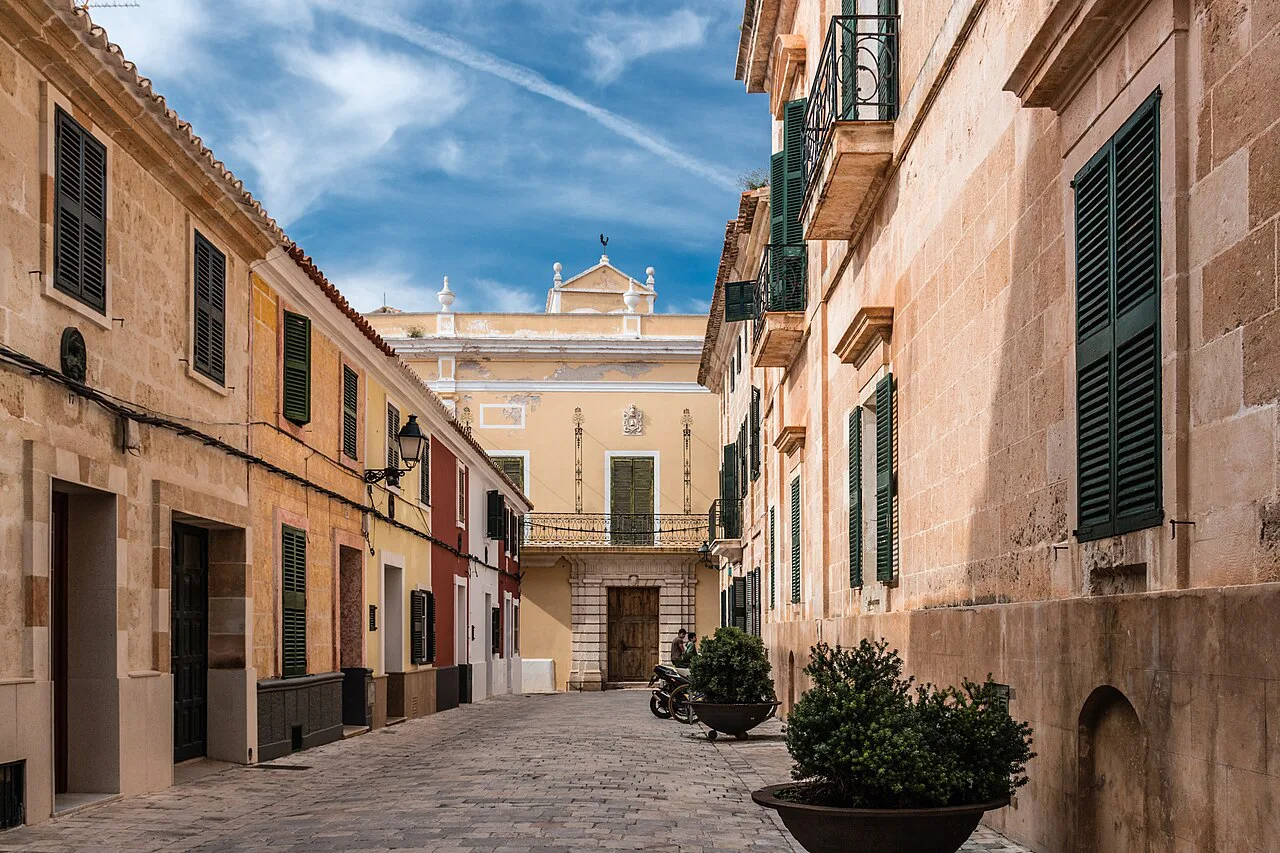
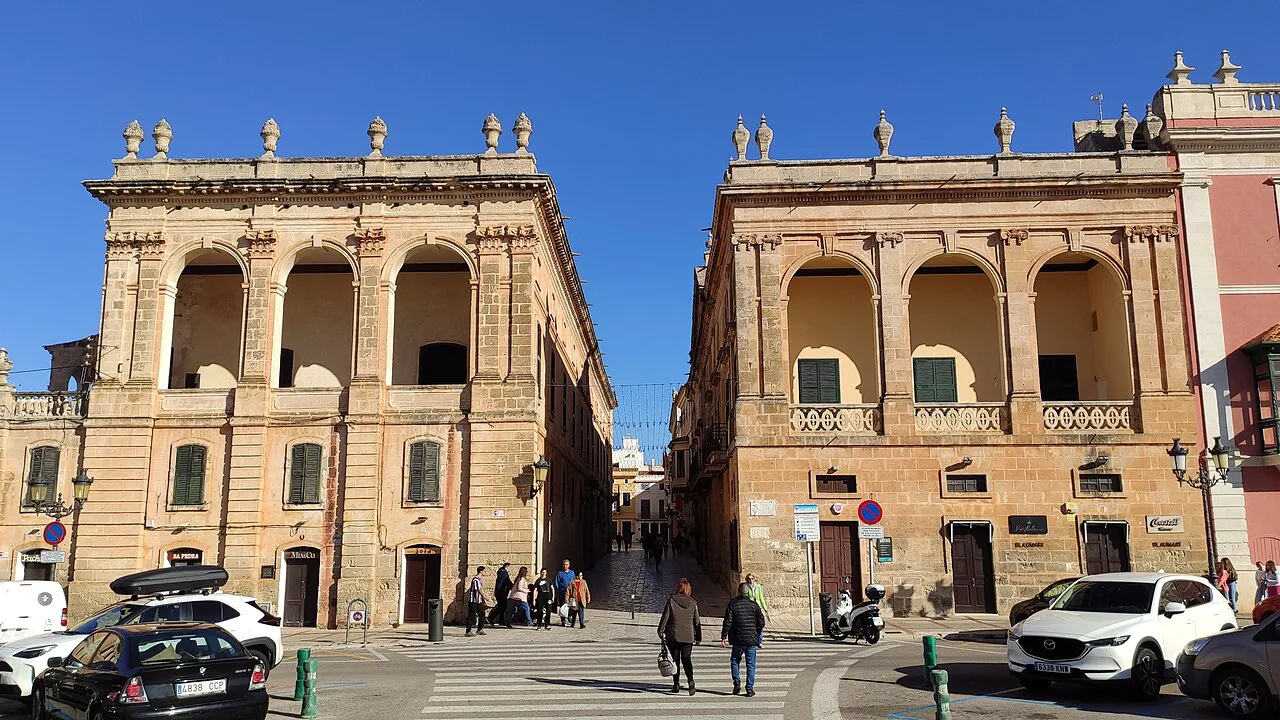
Ciutadella, at the western end, was the island's capital before the British moved it east. Its old town is the more photogenic of the two, with a Catalan Gothic cathedral built on the foundations of a mosque, baroque palaces and narrow streets that open onto the small old port. Come in the evening, when the squares fill with diners and the day's heat has gone.
The two towns are connected by a central road that crosses the island in about 45 minutes, which makes it practical to base yourself at one end and spend a day at the other. Splitting your stay between them is the other option and gives you both a harbour town and an old-town evening without a long drive.
Talayotic Menorca: Stone Monuments in the Open Air
Menorca holds well over 1,000 megalithic monuments, from stone towers to burial chambers, and most are open to wander freely rather than fenced off behind glass. The Trepucó settlement, close to Mahón, has some of the largest talayotic remains in the Mediterranean, with towers and walls you can walk right up to.
Naveta d'Es Tudons, a well-preserved ancient burial chamber, and the talayotic settlements at Torre d'en Galmés and Torre d'en Quart are the other names to know. These sites are exposed and offer little shade, which makes them far more comfortable in May than in July. They also make good wet-day substitutes when a spring shower rolls through.
S'Albufera des Grau and the Biosphere Reserve
S'Albufera des Grau, in the north-east, is the core of the UNESCO Biosphere Reserve: a wetland of lagoons, dunes and reed beds that suits gentle walks, cycling and kayaking. It is a fine May activity precisely because it does not depend on the sea being warm, and the birdlife is at its most active in spring.
Beyond the reserve, the island has around 19 designated natural areas and five nature reserves, which is why the coastline still feels wild in places. Access rules and car restrictions protect these zones, so check locally before driving to more remote stretches and be ready to walk the last part.
Forts and Harbours: The British Legacy
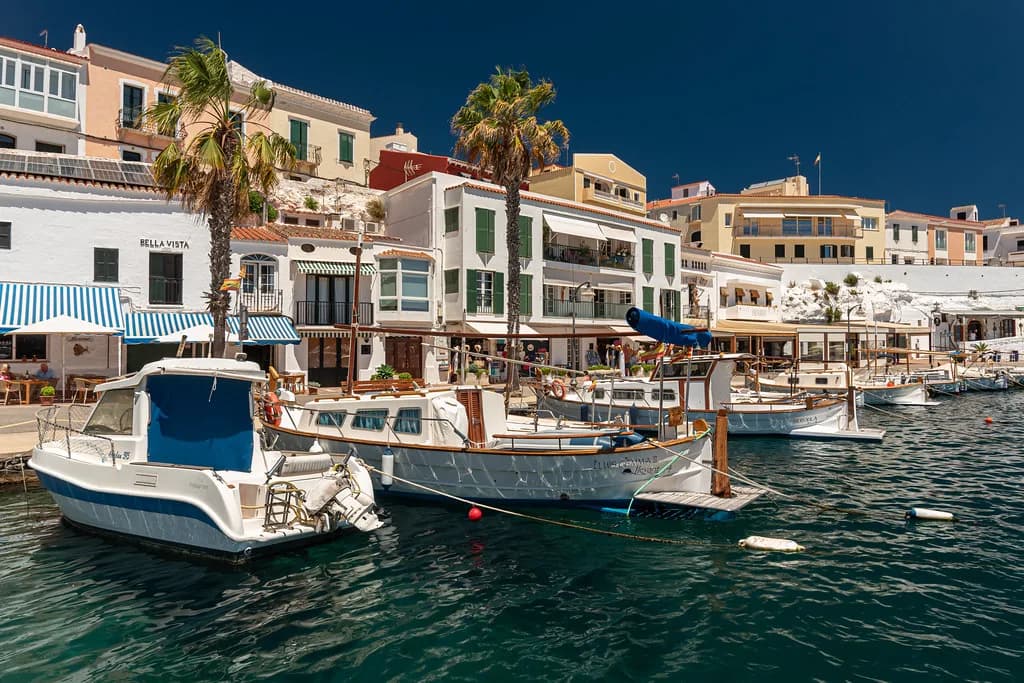
Mahón harbour is lined with fortifications from the eighteenth-century British period, and the cluster around Es Castell, including Fort Marlborough and the fortress of Isabel II, rewards a half-day. The harbour itself stretches some three nautical miles and is over 900 metres wide, so seeing it from the water makes sense of the scale.
The glass-bottomed catamaran Don Joan runs harbour trips several times a day out of Mahón, with commentary on the forts, naval base and colonial architecture, and a lower deck for looking at the marine life. Fares and departure times change with the season, so confirm them with Don Joan when you arrive. La Mola, the nineteenth-century Spanish fortress on the far side of the harbour, is the other major military site to put on the list.
Gin, Cheese and Pomada
Menorca's food and drink are a heritage inheritance: Queso de Mahón, a cow's-milk cheese that is creamy and nutty when young and sharp when aged, and Xoriguer gin, distilled in Mahón using a British method with Dutch botanicals. The distillery is small and central, and a bottle is the kind of souvenir that survives the flight home.
Order a pomada and you get the local way of drinking it: gin with lemon, not tonic, served over ice in every bar from Mahón to Ciutadella. Pair it with seafood, cured meats and the island's own wines; Bodegas Binifadet near Sant Lluís is the local winery to look out for.
Boats and Time on the Water
Boat trips are one of the best ways to see Menorca's coastline in May, before the summer rush. Glass-bottomed tours leave from Mahón, while sailing and kayak excursions tend to start from Fornells on the north coast, near the marine reserve, or from Ciutadella for the southern bays.
The south coast has only one port, at Cala'n Bosch, and large boats are not allowed in, which keeps that stretch quieter. Wind and chop are more likely in May than in June, so book water activities for early in your trip and keep a land-based day in reserve.
Early vs Late May
Early May is the quieter half of the month, with cooler evenings, fewer people on the trails and more of a sense that the season is still opening. Late May sees the island fill towards the UK half-term holiday, when families arrive and the popular coves and harbour restaurants get noticeably busier.
If your priority is empty paths, come in the first fortnight. If you want warmer water and livelier evenings, aim for the last week. If you want to compare with the month either side, our guides to Menorca in April and Menorca in June show where the line falls.
What Is Open in May
May is a shoulder month, and Menorca's seasonal businesses open gradually rather than all at once. Beach bars, boat operators and many coastal restaurants run reduced hours or open only at weekends early in the month, then extend as the half-term holiday approaches. Rather than assume a place is open or closed, ring the restaurant or operator directly in the week before you travel.
The Camí de Cavalls and the megalithic sites are public and year-round, which makes them the reliable backbone of a May itinerary. Town restaurants in Mahón and Ciutadella operate throughout the year and are the safest bet for an evening meal early in the month.
Crowds and Prices
May sits between the quiet of April and the full summer scrum, and the difference within the month is large. The UK May bank holidays and the school half term pull forward the pre-season crowd, so the last week of May feels much busier than the first. Accommodation and car hire cost more in the second half of the month, and the most popular coves fill earlier. For a fuller picture of how the month behaves, read our guide to Menorca in May.
For a sense of what the island costs at its quietest, compare with how the island behaves in April; for detail on the wider European picture, see where is warm in Europe in April and how the Balearics fit into it.
May or June? May or April?
Choose May if you want dry walking weather, half-empty coves and town evenings without the summer crowds. Choose June if swimming and reliably warm evenings matter more than solitude, and you are happy to trade some quiet for guaranteed comfort in the sea.
April remains the choice for the very quietest trails and the lowest prices, at the cost of more rain and cooler days. Our May guide sits between those two, and the comparison is easy to make if you read the April and June guides side by side.
Practical Points Before You Book
Mahón and Ciutadella are the two sensible bases, and the 45-minute road between them makes splitting your stay workable. The island rewards walking and cycling more than driving from cove to cove, so build in time on foot rather than trying to tick off every beach by car.
Menorca is a small island and the weather can shift quickly in spring; keep a flexible day in reserve. For entry rules, use the UK government's Spain travel advice page rather than any third-party summary.
The Verdict
May is the month to come to Menorca for walking, stone monuments, harbour towns and half-empty coves, when the island is dry, green and relatively quiet. It is not yet the month for warm sea or reliably balmy evenings, so if swimming is the point of the trip, wait for June.
Book early in the month if you want the quiet version, and late in the month if you want warmer water and a livelier island. Either way, let the Camí de Cavalls and the towns lead the plan and the weather fill the rest.
More Menorca spring guides
Frequently Asked Questions
Is Menorca warm in May?
May on Menorca is mild and springlike, with comfortable daytime temperatures for walking and sightseeing, though evenings still feel cool enough to need a layer. The island is at its best for land-based activity rather than swimming at this point in the year.
Is the sea warm enough to swim in Menorca in May?
The sea starts the month cooler than the air and warms gradually towards late May. Strong swimmers and hardy children will manage, but anyone who feels the cold is better off treating May as a coastal-walking month and planning on short dips rather than long swims.
What are the best things to do in Menorca in May?
Walk a stage or two of the Camí de Cavalls, visit the megalithic sites around Trepucó and Naveta d'Es Tudons, wander Mahón and Ciutadella, and visit S'Albufera des Grau. Boat trips, gin at Xoriguer and coves such as Cala Turqueta and Cala Pregonda round out a very good week.
Is May a good time to walk the Camí de Cavalls?
It is the best month for it. The trail is dry, the spring growth is still green and the summer heat has not arrived, while the route can be walked in short stages rather than the full circuit. Come in the first half of May for the emptiest paths.
Is Menorca busy in May?
Early May is quiet, with the season still opening and many coastal businesses running reduced hours. Towards the UK bank holidays and half term, the island fills quickly, so the last week of the month feels much busier than the first.
Should I visit Menorca in May or June?
Choose May for dry walking, quiet trails and half-empty coves; choose June if warm sea and reliably warm evenings matter most. May suits walkers and town wanderers, June suits swimmers and families.
Sources
Spring sun notes
Optional updates when we add destinations and months.
You might also like
Continue reading
More guides you'll find useful