Malta in June: Is It Too Hot? What to Know
Malta in June averages 27.5°C by day and 18.4°C at night, with barely any rain. Here is what that means for sightseeing, boat trips and crowds.
On this page
June is the month Malta stops hedging. Long-term normals for Luqa give an average daily maximum of 27.5°C (81.5°F) and an average daily minimum of 18.4°C (65.1°F), with rain on 1.1 days and just 3.2 mm across the month. That combination — reliably hot afternoons, genuinely mild evenings and almost no wet weather — makes June the first month when you can plan both sightseeing and time in the water without a backup plan.
It suits travellers who want heat without the August furnace: walkers who start early, families who need dependable outdoor days, and anyone who wants Valletta's museums and Mdina's lanes without queuing in 35°C. It suits swimmers far better than April or May. If you wilt above 30°C, book the first half of the month; if you want the island at its liveliest and don't mind the volume, late June works.
Weather in June
The official normals, recorded at Luqa for the Meteorological Office, describe a month that is dry and steadily warm rather than violently hot. Average daily maximum 27.5°C, average daily minimum 18.4°C, 1.1 rain days and 3.2 mm of precipitation — the kind of rain that interrupts an afternoon rather than a holiday. Sunshine hours aren't published on that normals page, so treat the long, bright days as the expectation rather than a figure.
Day to day, that means mornings that are already pleasant at nine, a genuinely hot middle of the day, and evenings when you can eat outside in a T-shirt. The figure to hold on to is the night-time low: 18.4°C is warm enough that a thin layer is optional on a terrace in Valletta or Sliema, which is not true in April or even much of May.
Rain essentially disappears as the month progresses. One rain day across the whole month is the average, so a wet-weather plan is a formality rather than a necessity — useful if you are booking boat trips and cliff walks in advance.
Is it warm enough?
For swimming, June is the first month that feels genuinely comfortable rather than bracing. The air temperature and the settled, sunny pattern mean the sea has had weeks of strong sun, and most people find a dip in the early evening a pleasure rather than a dare. The island's breezes help: the coast almost always feels a degree or two kinder than the interior.
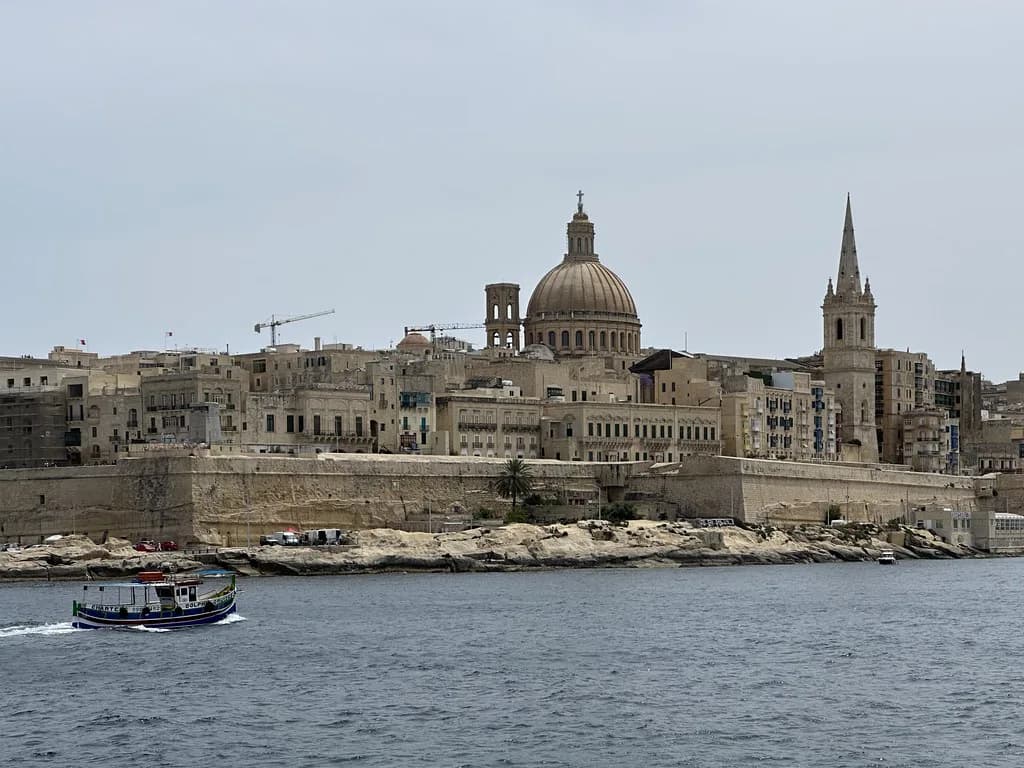
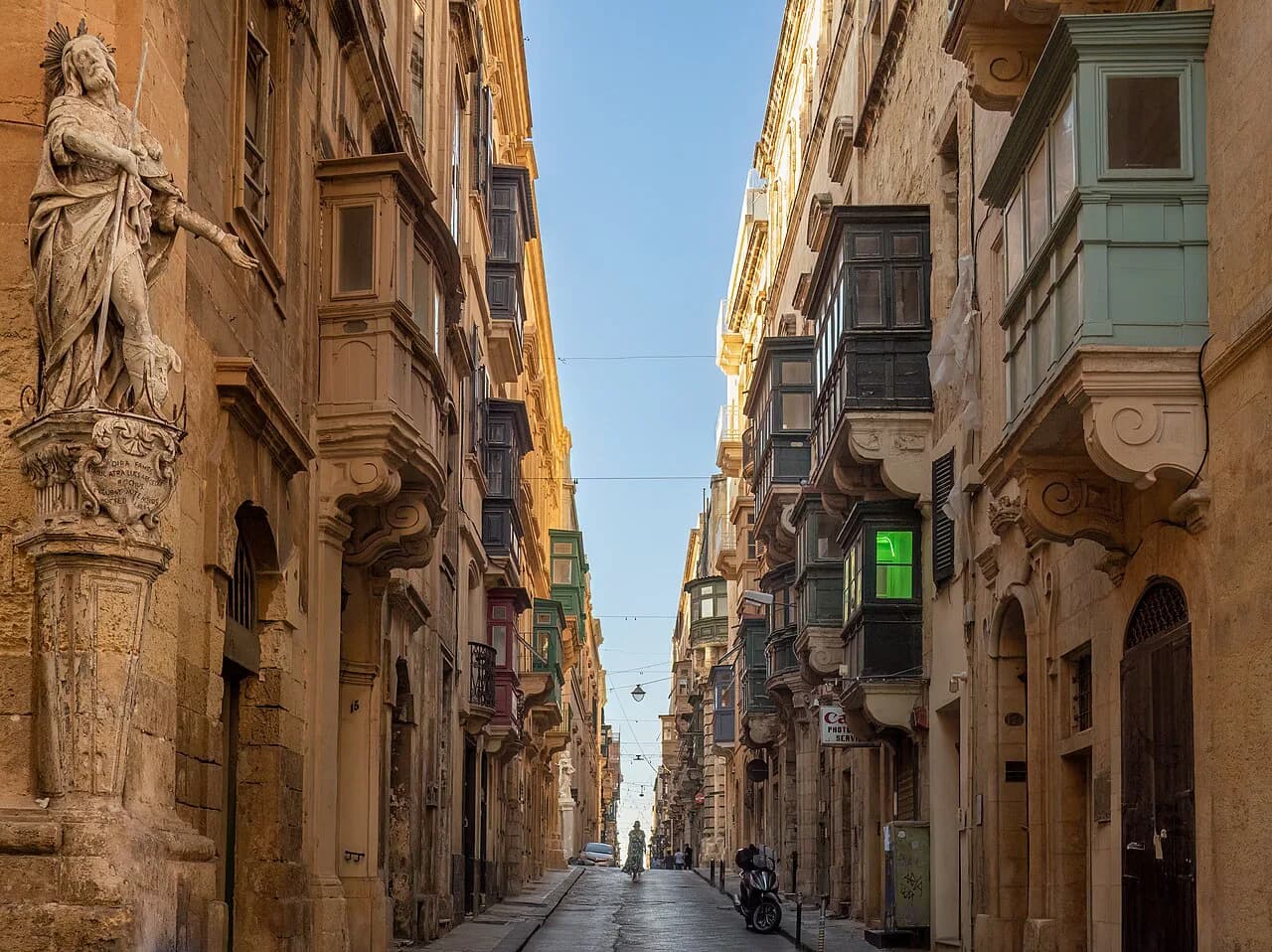
For sightseeing, the answer is yes, with a caveat about timing. Valletta's grid of limestone streets and stairways traps heat, and St. John's Co-Cathedral, the Grandmaster's Palace and the Upper Barrakka Gardens are far more enjoyable at opening time than at two in the afternoon. Build the day around a long, shaded lunch and a late-afternoon walk along the bastions.
For walking and cliff paths, June is workable if you start early and carry water; Gozo's Ta' Ċenċ cliffs and the Xwejni salt pans are exposed, and midday on either is punishing. Families do well in June because the sea is usable and the evenings are long, but anyone travelling with very young children should think about the strength of the sun rather than the temperature itself.
Early vs late June
Late June is noticeably hotter than early June. The month opens with something close to the best of May and closes with a foretaste of July and August, and the difference shows in the afternoons rather than the mornings. If your priority is walking, ruins and long lunches outdoors, aim for the first fortnight; if you want the sea at its warmest and the island fully switched on, the second half delivers.
The comparison with the months either side is straightforward. May averages a 23.3°C high and 14.9°C low, comfortable for sightseeing but unreliable for swimming. June jumps to 27.5°C and 18.4°C, which changes what you can do in the evening and in the water. July pushes further into the thirties and brings the peak-season crowds with it.
Where the two months sit side by side, the honest answer is that June buys you warm evenings and swimmable water at the cost of hotter afternoons and busier boats. If you want the same light and a gentler temperature, look at May. If the sea matters more than comfort at midday, June wins.
What is open
June is full season on the water. Boat trips run from Buġibba and Sliema to Comino and on to Gozo, with full-day and shorter sunset versions of the Comino cruise and a two-islands trip that stops at Victoria before the Blue Lagoon. Operators publish departure points and durations — the Comino cruise runs about seven hours from Buġibba, the sunset version roughly four — and a Comino cruise is priced around €35 per person while the two-islands return trip is about €36. On land, everything you came for is running: Valletta's churches and museums, the harbour crossings to the Three Cities, the Blue Grotto boats in the south and Gozo's ferry. Guided Valletta walks are in full swing, with a half-day tour of the Upper Barrakka Gardens, the Co-Cathedral and the Grandmaster's Palace costing roughly €52 per person including entrance tickets to the Malta Experience and the cathedral.
A multi-day pass makes sense if you plan to combine hop-on hop-off buses with heritage sites and a harbour cruise; the iSeeMalta Heritage Pass covers bus routes, more than twenty heritage sites and a live-commentary harbour cruise over six days from activation, at about €80 per person. Allow a full day for Gozo and another for the south coast rather than trying to compress both.
Things to do
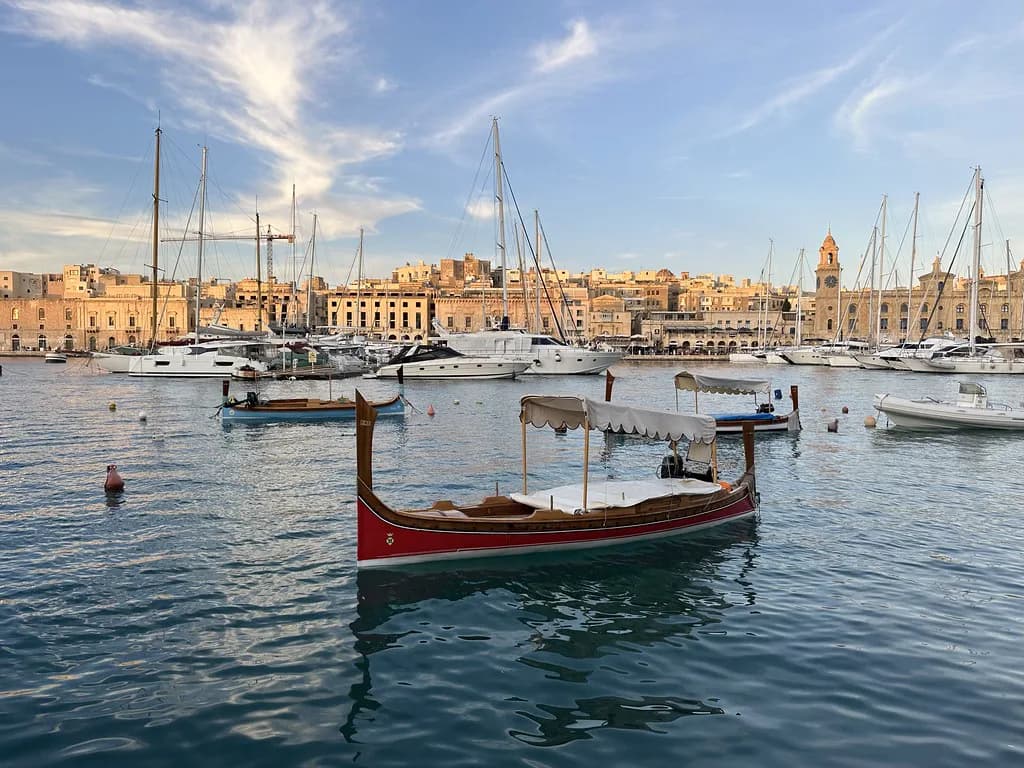
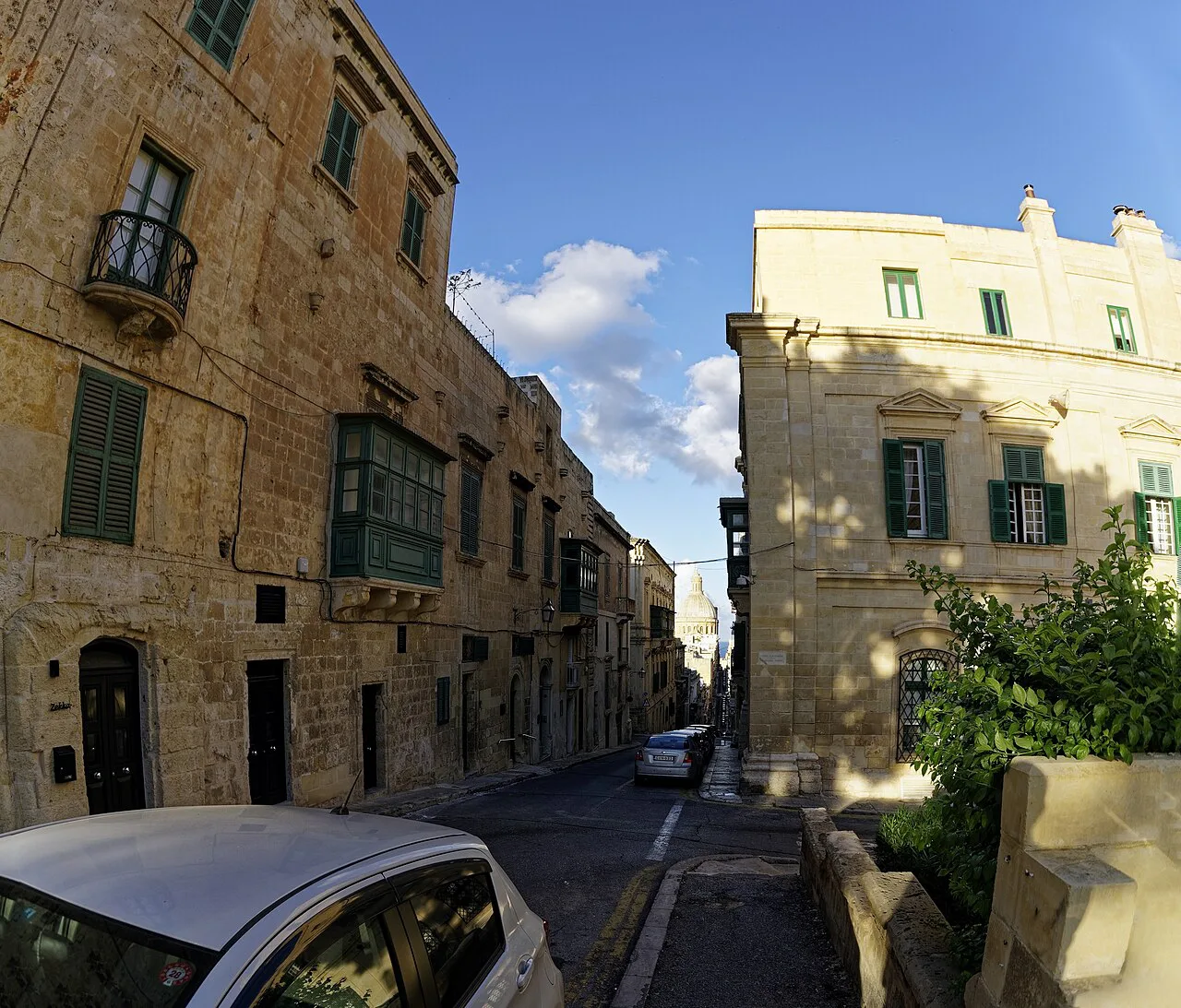
Start in Valletta. The Co-Cathedral with its Caravaggio paintings, the Grandmaster's Palace and the Upper Barrakka Gardens form a compact morning, and the gardens' view over the Grand Harbour is the one to save for the coolest hour you can manage. Cross by boat to Birgu in the Three Cities for a slower afternoon of narrow streets and waterfront lunch.
Inland, Mdina and Rabat make the best half-day of the trip. The Silent City's walls and lanes are shaded and quiet early and late, and Rabat's catacombs and Roman remains add substance without much walking in the open. This is the day to schedule when you want relief from the coast's glare.
On Gozo, the pull is landscape: the cliffs at Ta' Ċenċ, the salt pans at Xwejni, and the quiet village roads in between. A chauffeured tuk-tuk sunset tour covers the island from Marfa on the main island, including the crossing and a Gozitan dinner, at around €85 per person, and a quad-bike version with a sunset picnic runs at around €115 for a driver.
In the south, the Blue Grotto's caves and reflected colours are best on a calm, bright morning by boat. Pair it with a stop at one of the fishing villages and eat whatever is landed that day rather than chasing a specific dish.
Eating in June
June is when village festi season picks up, with the feast of St Peter and St Paul celebrated in Mdina and in Nadur on Gozo, and the summer folk festival L-Imnarja following at Buskett Gardens. Village feasts are food-and-band affairs as much as religious ones; go for the atmosphere rather than to tick off a specific procession.
The Malta International Arts Festival also falls in this stretch, with concerts, music and dance performances, alongside Earth Garden. For eating, June brings the summer pattern: long lunches in the shade, rabbit, pastizzi in the morning and fish when the boats are in. Reserve a table for anything with a harbour view.
Crowds and prices
June is busy but short of the July and August peak. Valletta and Mdina absorb crowds well, and the Sliema and St Julian's waterfront is lively without being unpleasant. The real pinch point is Comino's Blue Lagoon, which is Malta's most popular summer draw and fills quickly; take the first boat of the morning or choose a sunset departure to see it with elbow room.
Price levels sit between spring and high summer: car hire, boats and hotels are firmer than in May but below July and August rates. Because tour operators price per person and change seasonally, check current rates with the company you are booking through rather than relying on any quoted figure.
Honest drawbacks
The UV index is high in June, and the sea breeze disguises how strong the sun is — a day on a boat is where people get caught out. Hot afternoons inland are real, particularly in Valletta's stairways and around the temples, and the lagoon and its surrounding paths become crowded.
Those who want empty sights, cool walking weather and quiet restaurants should look at April instead. If you want the same warmth with gentler heat and fewer boats, the argument points to May.
June or May?
May is the connoisseur's choice for sightseeing: cooler highs, fewer people, comfortable walking, but water that only the hardy will enjoy. June adds roughly four degrees to the daily high and the best part of four to the night-time low, which makes evenings outdoors and swimming genuinely pleasant. The trade is hotter middays and busier boats.
If your trip is mostly museums, walking and long lunches, take May. If it is split between the sea and the island's sights, take June and start early. For a wider picture of how the month compares across the Mediterranean, our guide to where is warm in Europe in June sets Malta against the other reliable destinations, and there is a similar comparison of warm places in Europe in April if you are flexible on timing.
Where June fits
June is the best month for a combined beach-and-culture trip to Malta. It is not the best month for walking or for anyone heat-sensitive, and it is not the quietest. If you are deciding between months overall, our guide to the best time to visit Malta sets out the trade-offs, and Malta in spring covers the earlier window for cooler, greener conditions and fewer boats on the water.
The verdict
Book June if you want warm evenings, dependable sunshine and a sea you can actually swim in, and accept that the middle of the day belongs to shade and long lunches. Aim for early to mid-June for the best balance, and treat the Blue Lagoon as a morning errand rather than an afternoon plan.
Book May instead if sightseeing is the priority, and April if you want the island to yourself. One practical note before you go: check the UK government's travel advice page for Malta for current entry and safety information, and confirm boat and tour departure times directly with the company running them.
Frequently Asked Questions
Is June a good month to visit Malta?
Yes. June combines warm, dry weather with a sea that has warmed enough for comfortable swimming, and it is the first month when you can plan outdoor days without a wet-weather backup. It is busier than May and hotter at midday, but it stays short of the July and August peak.
How hot is Malta in June?
Long-term normals for Luqa give an average daily maximum of 27.5°C (81.5°F) and an average daily minimum of 18.4°C (65.1°F), with rain on about one day and 3.2 mm across the month. Late June runs hotter than early June as the island moves towards its summer pattern.
Can you swim in Malta in June?
For most people, yes. June is when the sea becomes comfortable rather than bracing, particularly in the second half of the month, helped by weeks of strong sunshine. Sheltered bays warm fastest, and the afternoon sea breeze makes an evening dip refreshing.
Is Malta busy in June?
Busy, but not at peak. Valletta, Mdina and the Sliema waterfront cope well, while Comino's Blue Lagoon is the place where volume really bites. Take the first boat of the morning or a sunset departure if you want space.
Is June or May better for Malta?
May suits sightseeing: cooler highs, fewer people and comfortable walking, though the sea is cool for many. June suits a mixed trip of culture and swimming, with warm evenings and reliable sun, at the cost of hotter afternoons and busier boats.
Sources
Spring sun notes
Optional updates when we add destinations and months.
You might also like
Continue reading
More guides you'll find useful