Málaga in Spring: What to Expect March to June
Málaga in spring is warm, bright and mostly dry, with April highs near 21°C and June near 28°C. See how each month differs and which one suits your trip.
On this page
May is the month most travellers should choose for Málaga in spring: warm enough for long days outdoors, mild enough to keep walking in the afternoon, and bright without the heat that builds by June. April runs it close and suits anyone who wants spring light and lighter crowds, while March stays a city break rather than a coast break. June is early summer in all but name. For more detail, see Málaga in april.
The figures come from AEMET climate normals for Málaga Airport (station 6155A, 1981–2010), the same station for every month, so April, May and June can be compared directly. Treat them as typical conditions rather than a forecast for your week. March has no comparable published figure here, so it is described in words.
Spring in Málaga: the answer first
Spring in Málaga runs from cool, changeable March to genuinely hot June, and the sweet spot sits in May. The city's coastal position keeps the range gentler than inland Andalusia, so a bright afternoon rarely turns punishing and evenings stay comfortable for eating outside. If you want one week that works for sightseeing, walking and time on the waterfront, book late April or May.
Who should go later or further south? Anyone whose main purpose is warm sea and lazy beach days should look at June or the summer months, because spring sunshine does not translate into warm water. Travellers who want guaranteed heat should pick June or compare southern Spanish options in our guide to where is warm in Europe in April.
Weather in March
March is the freshest month of the Málaga spring, and it behaves like a mild city break rather than a coastal holiday. Days can be pleasant in the sun and cool in the shade, mornings and evenings still need a jacket, and rain can arrive in spells rather than as a passing shower. It is the quietest month of the four and the easiest for getting into the Alcazaba, the cathedral and the Picasso Museum without planning around queues.
Choose March if museums, food and urban wandering matter more to you than baking warmth, and accept that a terrace lunch may end in a jumper. It is also the month when the beach is for walking, not lying down.
Weather in April
April is where spring becomes convincing. AEMET's normals for Málaga Airport give an average daily high of 21.4 °C (70.5 °F) and an average night-time low of 11.1 °C (52 °F), with 244 hours of sunshine across the month, 4.5 rain days and 44 mm of rain. In practice that means many bright, comfortable days for walking the old centre, with the occasional wet spell rather than a washout.
April suits sightseeing, hill walking up to Gibralfaro and long lunches outdoors, and it is the month when the city feels most like itself before the summer rush. Families with young children will find the daytime temperatures easy, though evenings still call for a layer.
Weather in May
May is the best-balanced month of the Málaga spring. AEMET records an average daily high of 24.3 °C (75.7 °F) and a night-time low of 14.2 °C (57.6 °F), with 292 hours of sunshine, 3.1 rain days and 20 mm of rain. Warm afternoons, mild evenings and a much lower chance of rain make it the easiest month to plan outdoor days around.
This is the month for the full Málaga package: the Alcazaba in the morning, a slow lunch in the old centre, a walk along Muelle Uno and a late dinner outside. It also works well for families, because the heat has not yet reached the point where midday needs to be spent indoors.
Weather in June
June tips into early summer. AEMET's normals show an average daily high of 28.1 °C (82.6 °F) and a night-time low of 18.0 °C (64.4 °F), with 329 hours of sunshine, 0.8 rain days and just 6 mm of rain. Rain effectively stops being part of the planning, and the evenings become properly warm.
The trade-off is heat: a climb to Gibralfaro at midday is a different proposition in late June than in April, and the old centre's narrow streets can feel airless by mid-afternoon. Shift strenuous sightseeing to the morning and keep the afternoon for the port, the waterfront or a shaded terrace.
Is it warm enough?
For sightseeing and walking, April and May are the strongest choices: warm enough for shirtsleeves in the sun, cool enough to keep moving. For eating outside every evening and time by the water, May and June are better, because the night-time lows climb from 11.1 °C in April to 14.2 °C in May and 18.0 °C in June.
If you are weighing Málaga against Spain's inland cities or a Greek island, bear in mind that the coast moderates the extremes in both directions. Seville and Granada warm faster and cool more sharply at night, while Málaga keeps a gentler range that suits mixed-age groups and anyone who wants a trip that does not demand recovery time.

Early vs late in the month
The first week of April is closer to March than to May: cooler mornings, a higher chance of a wet spell and quieter streets. By late April the sunshine hours have accumulated and the evenings have softened enough for a comfortable dinner outside. The same pattern repeats in May, where late May feels markedly warmer and busier than the opening week.
June has less internal variation in temperature but changes in crowd terms, as Spanish holidays begin and the city fills toward the end of the month. Late April and late May are therefore the two windows that give you the best combination of reliable weather and manageable numbers.
March or April?
March gives you cooler, quieter and cheaper days, with the trade-off of changeable weather and cool evenings. April gives you brighter, warmer days and the spring atmosphere at its best, but also the Easter period, when accommodation demand and prices rise sharply and the city centre becomes crowded.
If you are not tied to school holidays, choose late April to catch the light and warmth without the worst of the pressure. If quiet streets and low prices matter more than sunshine, take March and treat the weather as a bonus rather than a guarantee.
May or June?
May keeps the walking comfortable and the evenings mild, which makes it the better month if your trip is built around the old centre, the Alcazaba and day trips. June brings genuine early-summer heat, long warm evenings and near-certain dry days, which suits anyone who wants the water and the terraces to be the point of the trip.
The deciding question is how much heat you want to work around. If anyone in your group struggles in the afternoon sun, take May. If you want evenings that stay warm past ten and do not mind starting sightseeing early, take June.
What is open
Málaga's core sights run year-round, so the Alcazaba, Gibralfaro, the cathedral, the Picasso Museum and the port promenade are reliable anchors whatever spring month you choose. The seasonal rhythm sits around them: beach bars and waterfront businesses ramp up through the spring, and boat trips depend on operators starting their season and on the day's sea conditions.
The practical approach is to build each day around one fixed sight and leave the rest flexible, then book the seasonal extras directly on each provider's own page once your dates are set. The Alcazaba's official ticketing page is the place to fix times for the fortress, since capacity and schedules vary through the year, so check current dates and prices before locking anything in.

Things to do
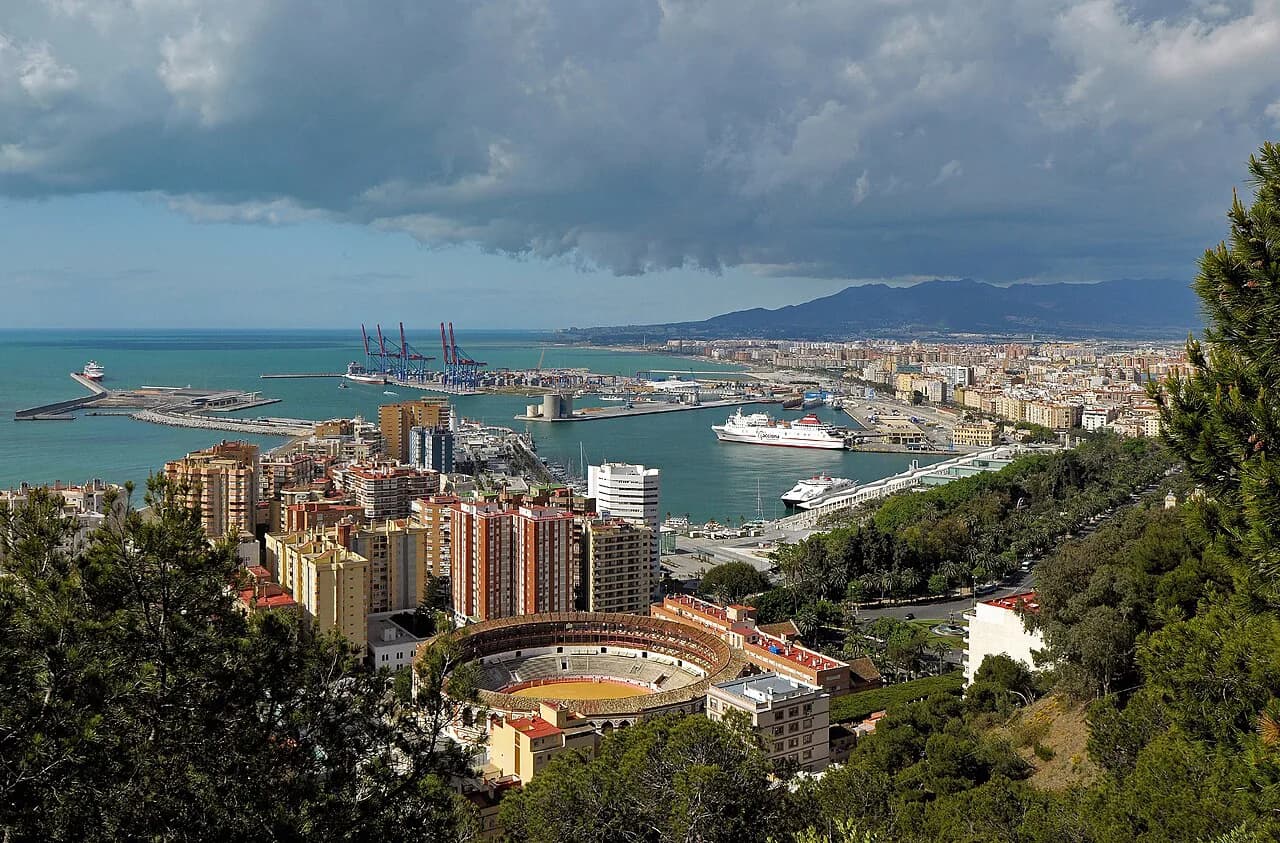
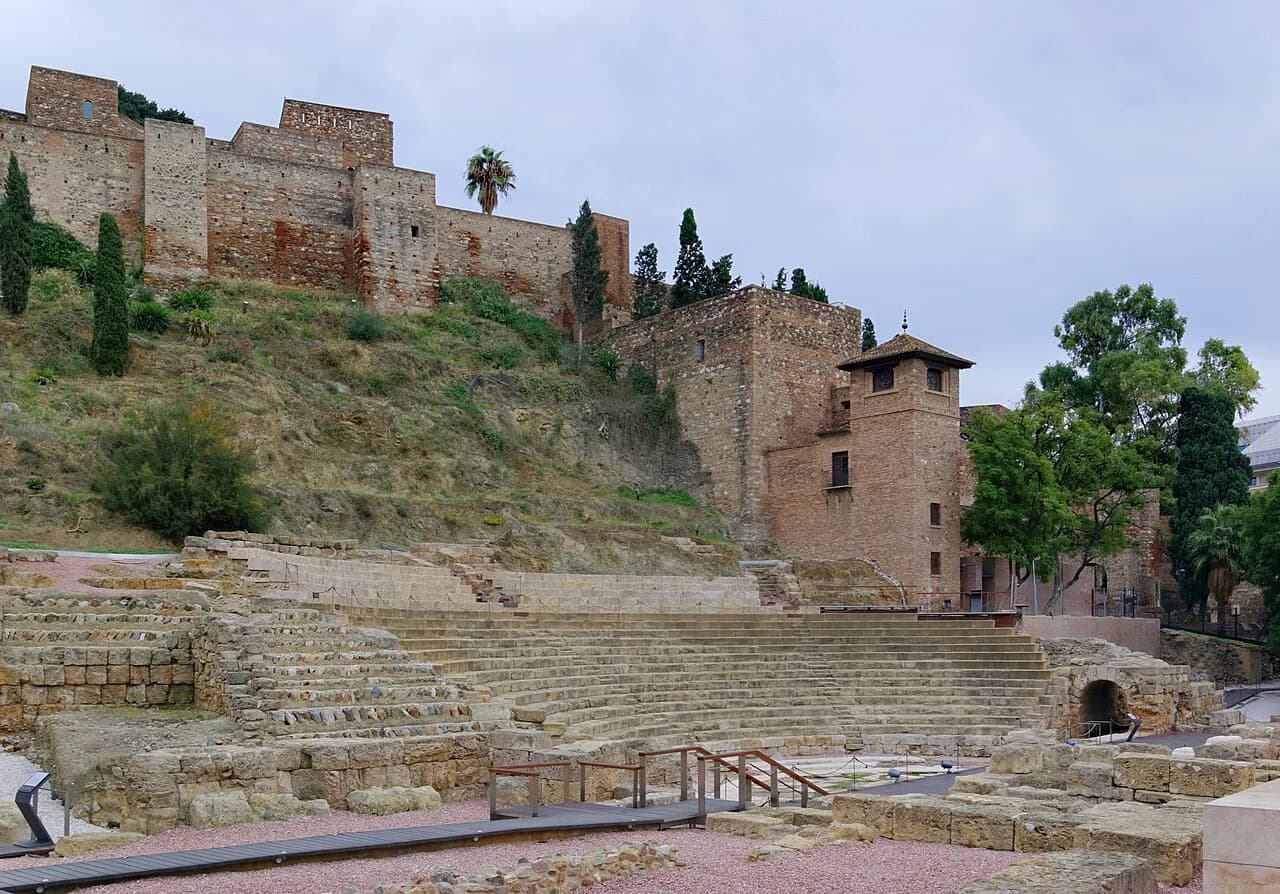
Start in the old centre, where the cathedral, the Roman Theatre and the narrow streets around the Picasso Museum sit within a short walk of each other. Then take the climb to Gibralfaro for the view over the port and the coast, which is one of the best reasons to be in Málaga in spring, when the walk is warm rather than punishing.
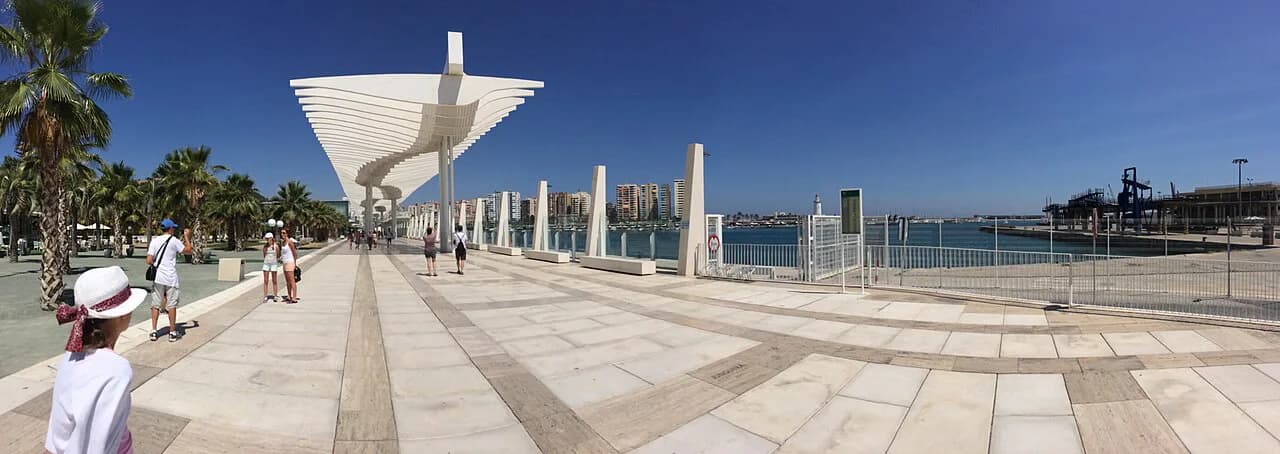
Muelle Uno and the waterfront give you an easy afternoon, with the Centre Pompidou Málaga as the cultural stop on the way. Spring food in the city leans on fresh vegetables, fried fish, and the first warm-weather terrace lunches, which are best taken in the old centre rather than on the exposed waterfront when the wind picks up.
Day trips that work in spring
Granada and the Alhambra make the obvious day trip, and spring is the best time to do it: cool enough for the hills and gardens, warm enough to linger in the Generalife. Book Alhambra tickets well ahead through the official site, because the Nasrid Palaces sell out before many travel dates, and allow a full day rather than squeezing it into an afternoon.
The white villages inland from the Costa del Sol are another realistic day out, best done by car and best in April or May, when the driving and the walking are comfortable. Inland Andalusia warms faster than the coast, so a late-May or June excursion can be noticeably hotter than Málaga itself.
Crowds and prices
Crowds follow the calendar more than the thermometer. March is the quietest month; April spikes around the Easter period, when the city fills, hotels tighten availability and prices climb; May brings Spanish holidays and UK bank holidays, with half term adding family demand toward the end; June builds steadily toward summer.
Prices are highest when demand is highest, so budget accordingly rather than expecting a spring discount in Easter week or a May bank holiday weekend. If you can shift your dates by a week in either direction, you often get the same weather with noticeably less pressure.
Honest drawbacks
Spring in Málaga is not uniformly warm. March and early April evenings are cool, rain spells happen, and the Levante wind can make the waterfront and the port feel colder than the thermometer suggests. The sea stays cold through the spring, so swimming is a brief dip for the hardy rather than a holiday activity.
June brings heat that builds through the month and can make afternoon walking uncomfortable, especially on the climb to Gibralfaro. Anyone who dislikes heat should choose April or May, and anyone who wants guaranteed beach weather should look at the summer months.
The verdict
For a city break, choose late April: bright, warm enough for outdoor days and not yet dominated by summer heat. For a coast-and-culture trip that fits together easily, choose May, which gives the best balance of sunshine, temperature and comfortable evenings.
For families, May is the safer month because the daytime heat stays manageable and the sea and waterfront become part of the trip rather than a brisk walk. Take June if you want heat and long evenings and can plan around the afternoon sun.
More Málaga spring guides
Frequently Asked Questions
Is Málaga warm in spring?
Yes, increasingly so as the season goes on. April averages around 21 °C by day and May around 24 °C, while June climbs to roughly 28 °C, so the month you choose makes a real difference to how warm the trip feels.
What is the weather like in Málaga in mid April?
Málaga in mid April is typically bright and comfortable, with daytime temperatures around 21 °C, cooler nights around 11 °C and a modest number of rain days across the month. It is good walking and sightseeing weather rather than beach weather.
Is April or May better for Málaga?
May is the better-balanced month, with warmer days, milder evenings and much less chance of rain. April is the pick if you want spring light, lower heat and quieter streets, but expect cool evenings and a higher chance of a wet spell.
Can you swim in Málaga in spring?
Only briefly. The sea remains cold through the spring, so most visitors use the waterfront for walking and the beach bars for sitting rather than for long swims, and June is when the water begins to feel more inviting.
How busy is Málaga in spring?
March is the quietest month. April is busy around the Easter period, May fills around Spanish holidays and UK bank holidays, and June builds toward summer, so shifting your dates by a week can make a noticeable difference.
What is there to do in Málaga in spring?
The old centre, cathedral, Roman Theatre, Picasso Museum, Alcazaba and the climb to Gibralfaro fill two or three days easily, with Muelle Uno and the waterfront for an easier afternoon. Granada and the Alhambra make a straightforward day trip, best booked in advance.
Sources
Spring sun notes
Optional updates when we add destinations and months.
You might also like


Continue reading
More guides you'll find useful