Málaga in April: How Warm It Is and What to Expect
Málaga in April averages 21.4°C by day and 11.1°C at night, with 244 hours of sunshine and 4.5 rain days. Here is what that means for your spring trip.
On this page
Málaga in April is warm enough for sightseeing and hill walking, not for lying on the sand. Average daytime highs reach 21.4°C (70.5°F) and nights fall to 11.1°C (52°F), with 244 hours of sunshine across the month and rain on only about 4.5 days, according to AEMET's long-term normals for Malaga Airport. That combination suits anyone who wants to explore a Mediterranean city on foot in comfort rather than chase beach heat.
The city delivers its spring in layers: almond and citrus blossom on the slopes, terrace tables full at midday, and a sea that stays cold enough to rule out anything more than a quick dip. If your priority is sunshine with a jacket in the evening, April works well. If you want to swim and eat dinner outdoors after dark, plan for later in the season.
Málaga in April: the short answer on warmth, sun and rain
Expect pleasant, changeable spring days rather than guaranteed heat. The AEMET averages for the airport station give 21.4°C (70.5°F) by day and 11.1°C (52°F) at night, 244 sunshine hours and 44 mm of rain spread over roughly 4.5 wet days. That is a month that mostly behaves itself, with the occasional unsettled spell.
Rain, when it comes, tends to arrive as a passing shower or a half-day of cloud rather than a washed-out week, so a flexible plan pays off: keep one indoor option such as the cathedral or a museum in reserve and move the Gibralfaro walk to the clearest morning. The light in April is long and soft, which is why photographers and walkers rate this month so highly.
April weather in Málaga: the AEMET normals in plain numbers
The figures below come from AEMET's published climate normals for Malaga Airport, station 6155A, covering 1981 to 2010, and describe typical April conditions rather than any particular year. Daytime highs average 21.4°C (70.5°F), night-time lows 11.1°C (52°F), sunshine totals 244 hours for the month and precipitation averages 44 mm over about 4.5 rain days.
Read those numbers as a range, not a promise. A warm afternoon can push into the mid-twenties, while a cloudy, wind-driven day keeps you in a jacket, and the gap between midday and evening is the detail that catches visitors out. The airport station sits at just 7 m above sea level, so the city centre and port feel much the same; the hills above town run a degree or two cooler.
Is it warm enough for sightseeing, walking and outdoor lunches?
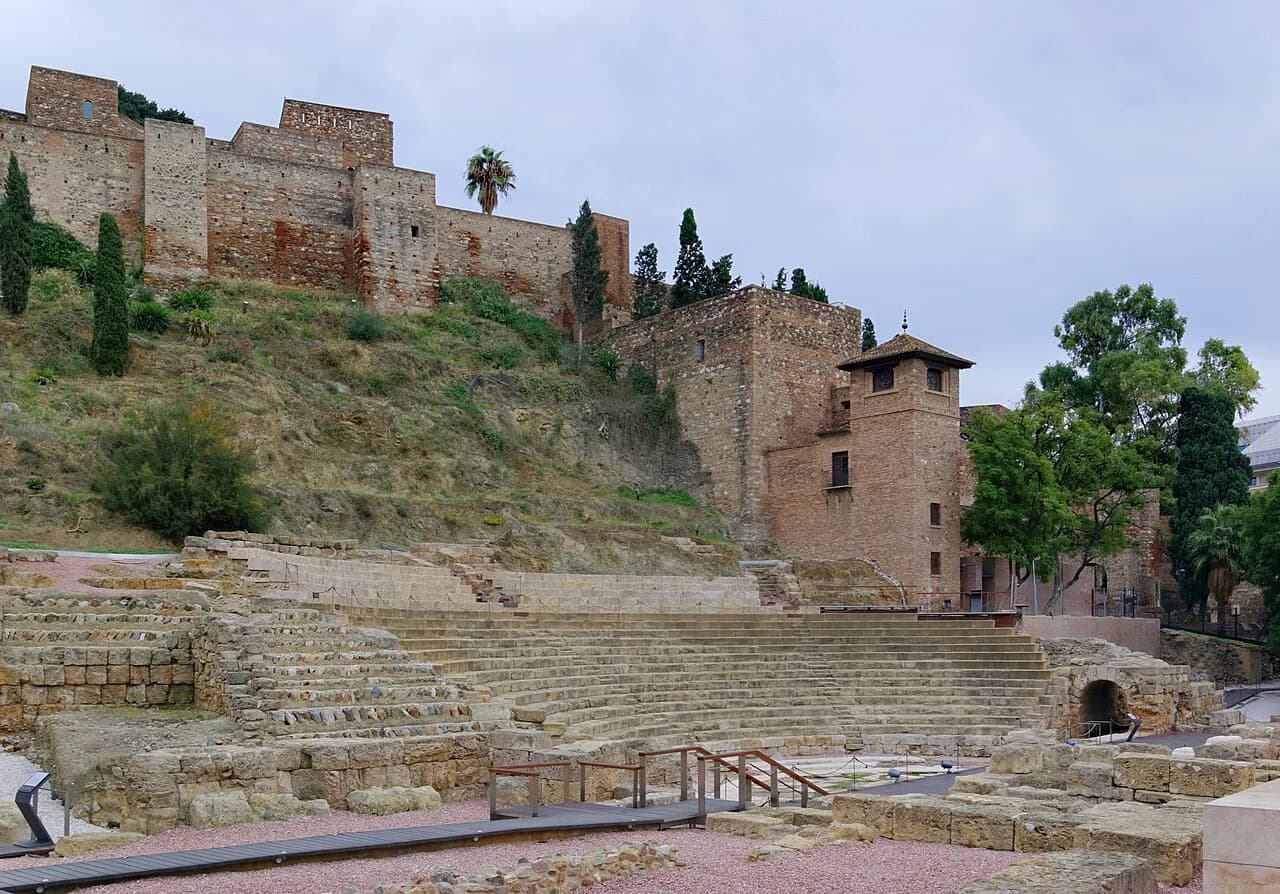
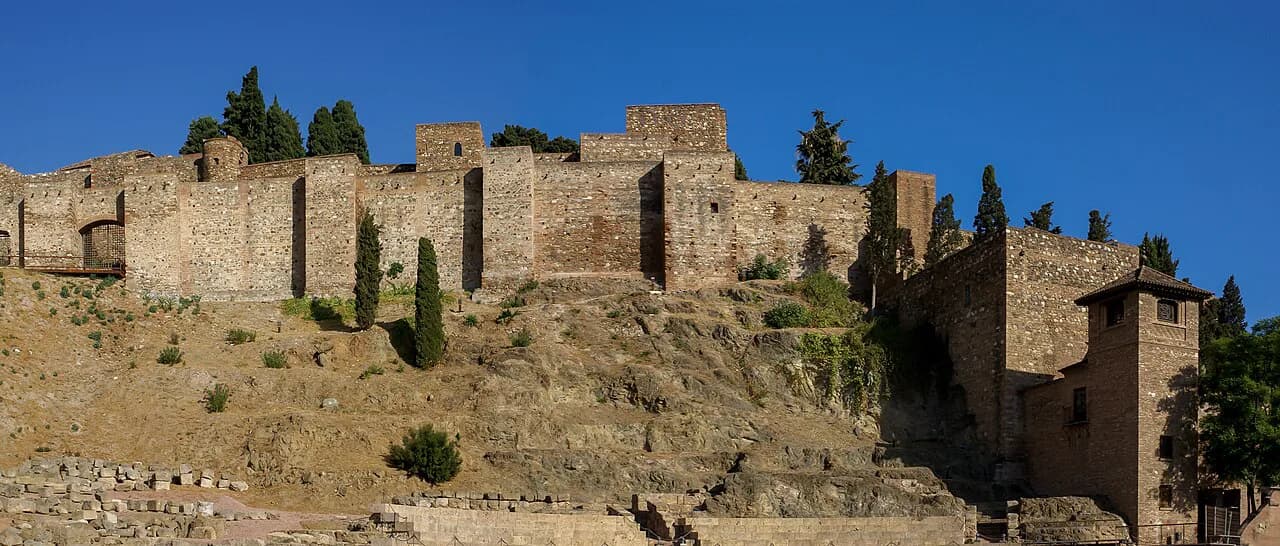
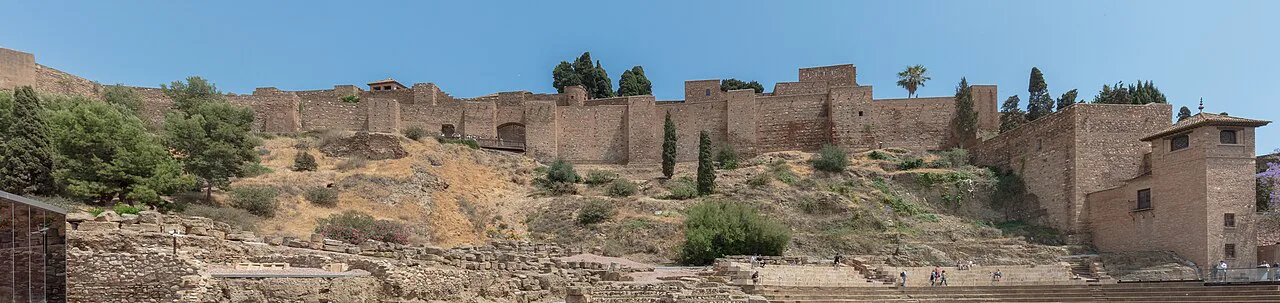
Yes, comfortably, provided you treat April as a walking month rather than a sunbathing one. At around 21°C, the Alcazaba, the Roman Theatre below it and the cathedral quarter are pleasant in the middle of the day, and the climb up to Gibralfaro is far more bearable than in July, when the same path bakes. Long lunches on a terrace are exactly what this weather is for.
Families with young children generally find April easier than high summer: no scramble for shade, shorter queues and a city that still feels lived-in. The catch is the evening, when temperatures drop to about 11°C and a jumper or light jacket becomes necessary even after a sunny afternoon.
Who should wait for May or June, and who should head further south
Book April if your trip is about the city, the food, the architecture and walking. Hold off if you want reliable sunbathing, warm sea swims or evenings spent in short sleeves outdoors; those belong to late May and June, when average highs climb to 24.3°C (75.7°F) and then 28.1°C (82.6°F) and rain all but disappears.
If warmth is the whole point and your dates are fixed in April, look further south and offshore: the Canary Islands run warmer than the Costa del Sol in spring, and there is a case for comparing the two before you commit. Our guide to where is hot in April sets out the realistic options across Southern Europe and the islands.
Early April vs late April in Málaga
The month warms steadily. Early April sits closer to March, with highs nearer the low twenties and a real chance of a cool, showery spell, while the last week or so of the month often feels like a preview of May, with longer sunny afternoons and the first genuinely warm evenings. If you have flexibility, the second half of April is the better bet for outdoor plans.
One practical consequence: the Easter period falls somewhere in or near this month in most years, and it brings the year's first big surge of Spanish and European visitors. Dates move each year, so if your trip depends on avoiding or joining that crowd, look up the official dates before booking rather than working from memory.
How April compares with March and May
March in Málaga is a genuine shoulder month, milder than the UK but with more unsettled weather and shorter sunny windows; April is the step change, adding a couple of degrees by day and noticeably more reliable sunshine. May then builds on that with average highs of 24.3°C (75.7°F), lows of 14.2°C (57.6°F), 292 sunshine hours and rain on only about 3.1 days, which is a different proposition entirely for anyone planning to swim or dine outside at night.
June pushes further still, with an average high of 28.1°C (82.6°F), lows near 18°C (64.4°F) and barely any rain, so the choice between April and later months is really a choice between comfortable sightseeing and full summer conditions. Our month-by-month guide to the best time to visit Málaga sets the three side by side if you are still deciding.
What is open along the port and promenade as the season opens
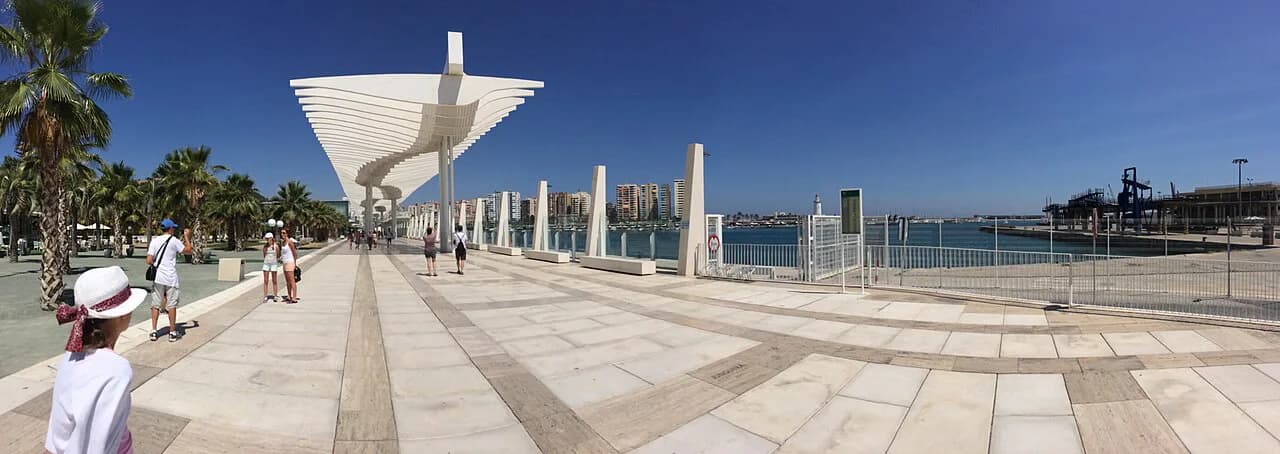
April is when the seafront wakes up. The Muelle Uno stretch of the port, the Pompidou Centre's colourful cube and the terraces along the Paseo del Parque are all at their best in this weather, busy at lunchtime and quiet again by mid-afternoon. Beach bars and seasonal chiringuitos start to reopen as the month goes on, but many keep reduced, weather-dependent hours until May.
Treat opening times as something to confirm locally rather than something to plan around: a chiringuito that is shut on a windy Tuesday may be full the next day. The same applies to boat trips and guided tours along the coast, which tend to build up through April rather than run a full summer timetable from the first of the month.
Things to do in Málaga in April: the Alcazaba, Gibralfaro and the old town
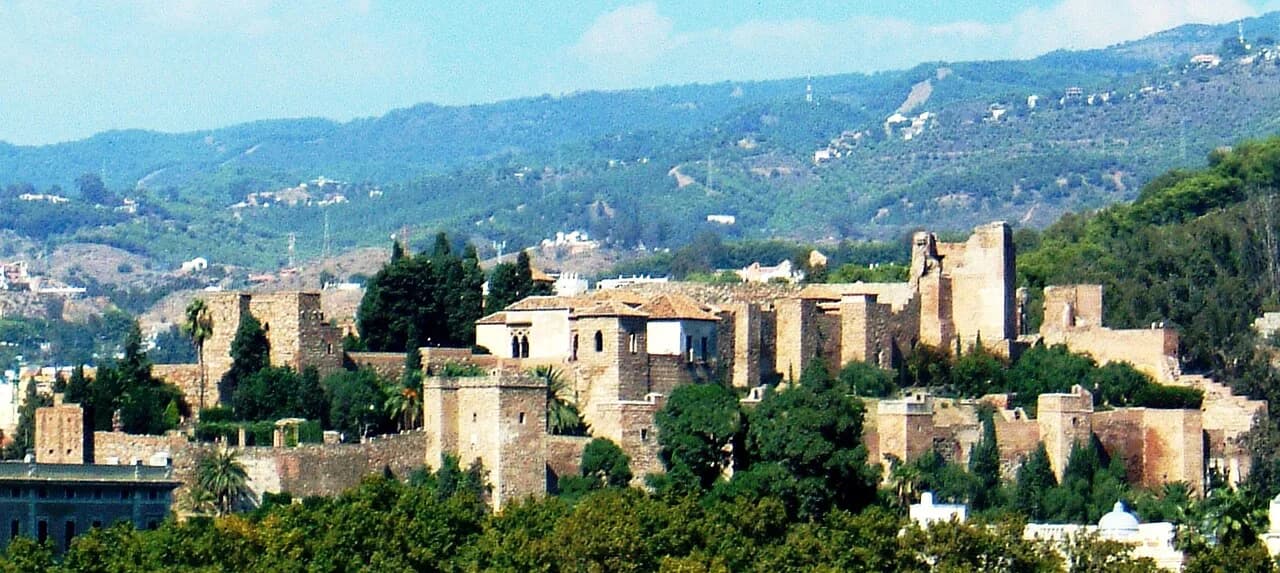
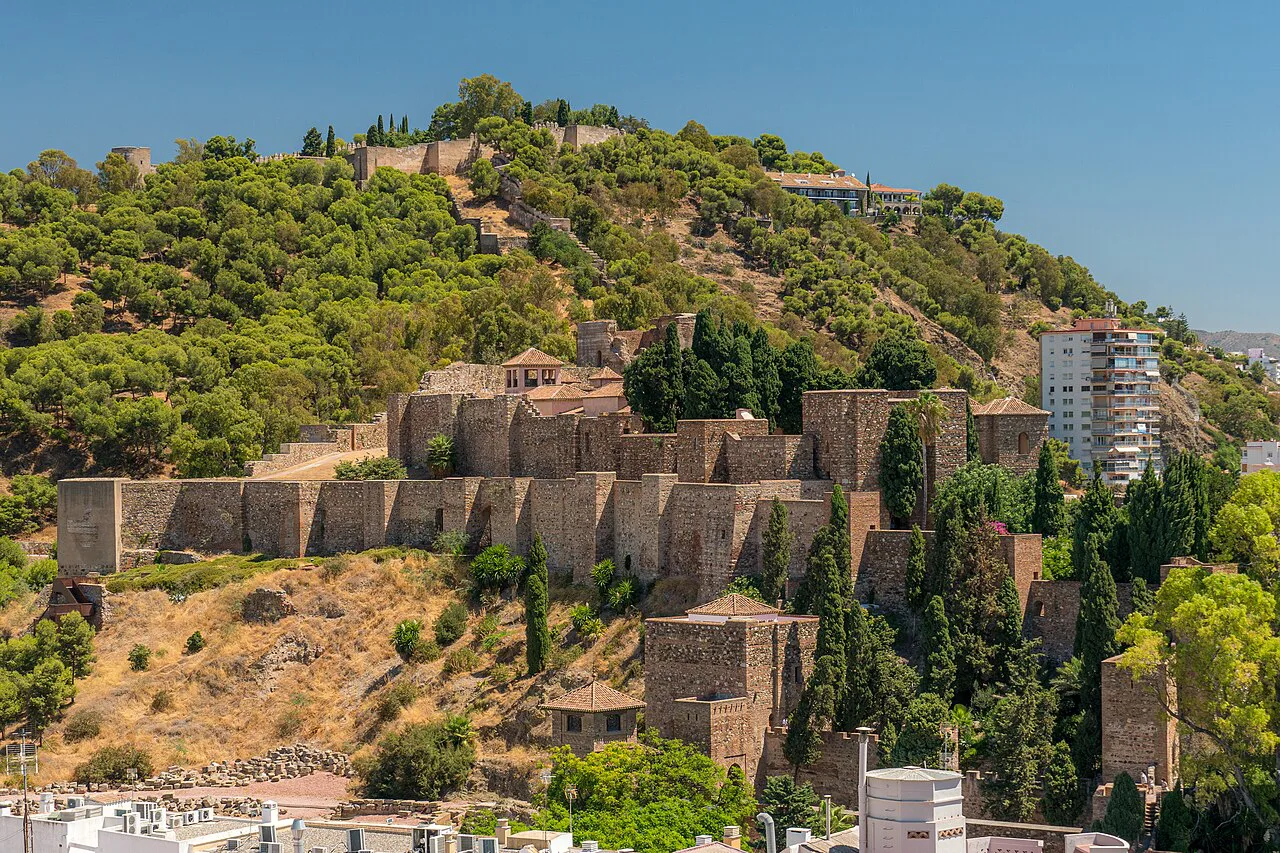
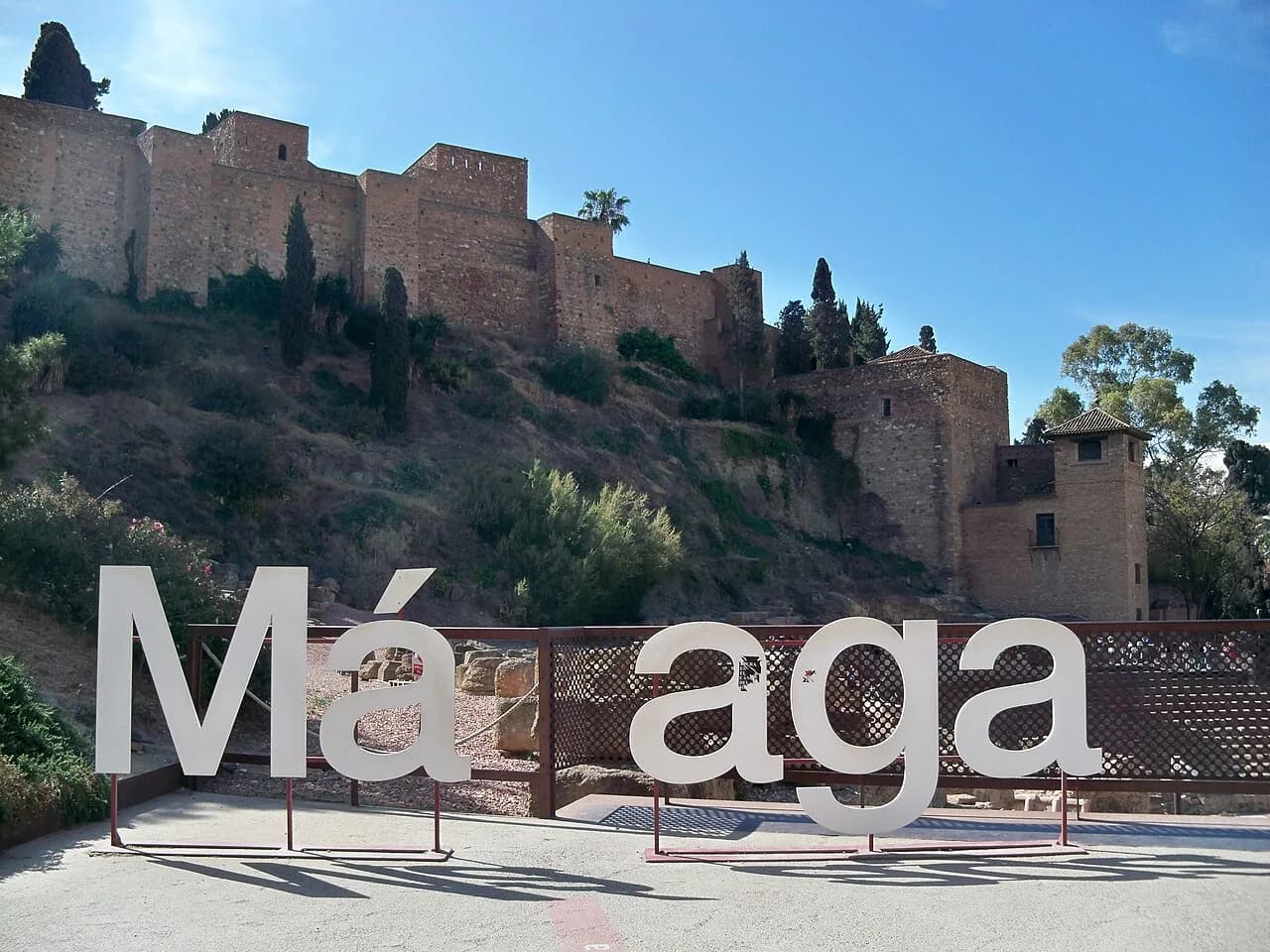
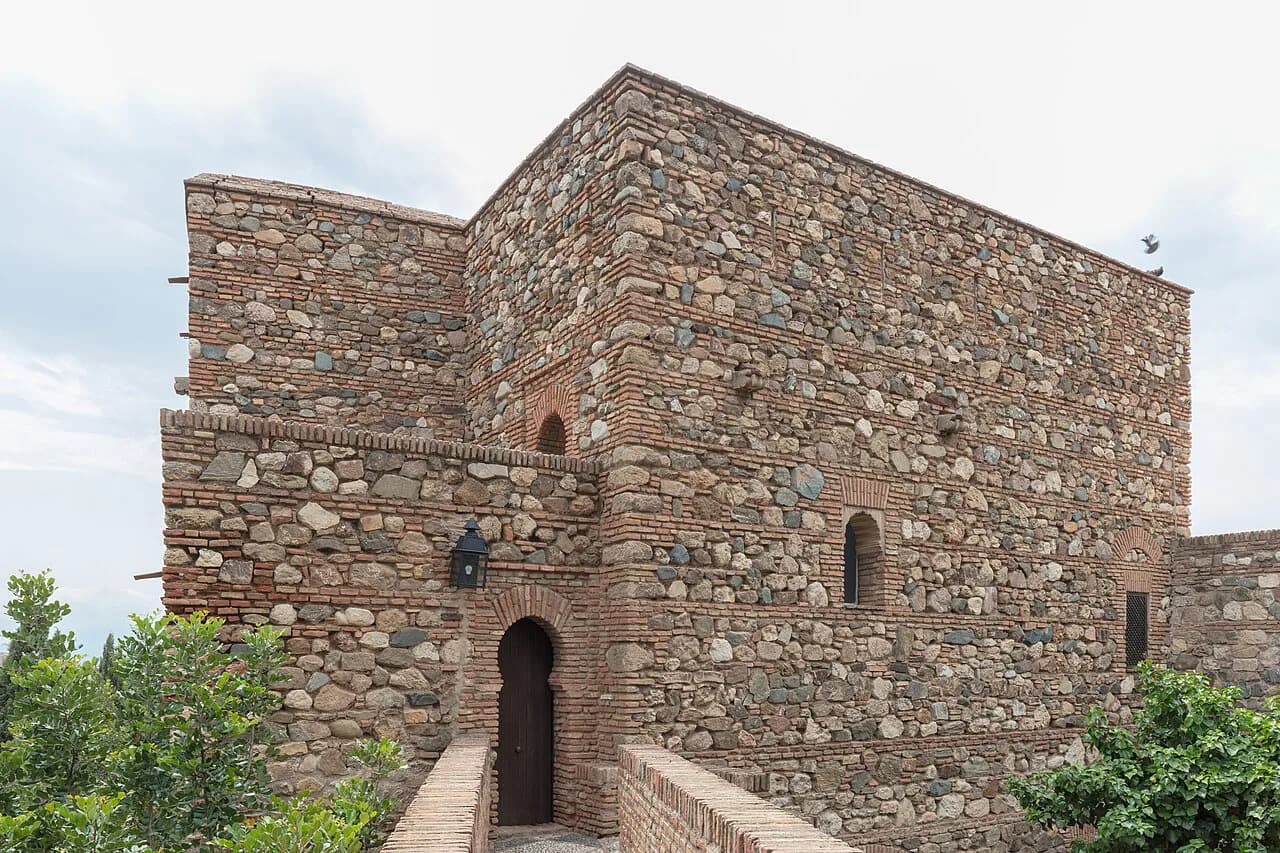
Start with the Alcazaba, the hilltop Moorish fortress whose terraces, gardens and fountains are made for a mild spring morning, then drop down through the Roman Theatre and into the old town around the cathedral. Calle Larios and the surrounding lanes are ideal for a slow afternoon of tapas and people-watching, and the Picasso Museum makes a sensible wet-weather anchor.
The month's calendar fills in around this. If you want a fuller list of what is running while you are there, from markets to temporary exhibitions, our guide to things to do in Málaga in April goes further without turning into an events diary.
A walk up Mount Gibralfaro and the views that justify it
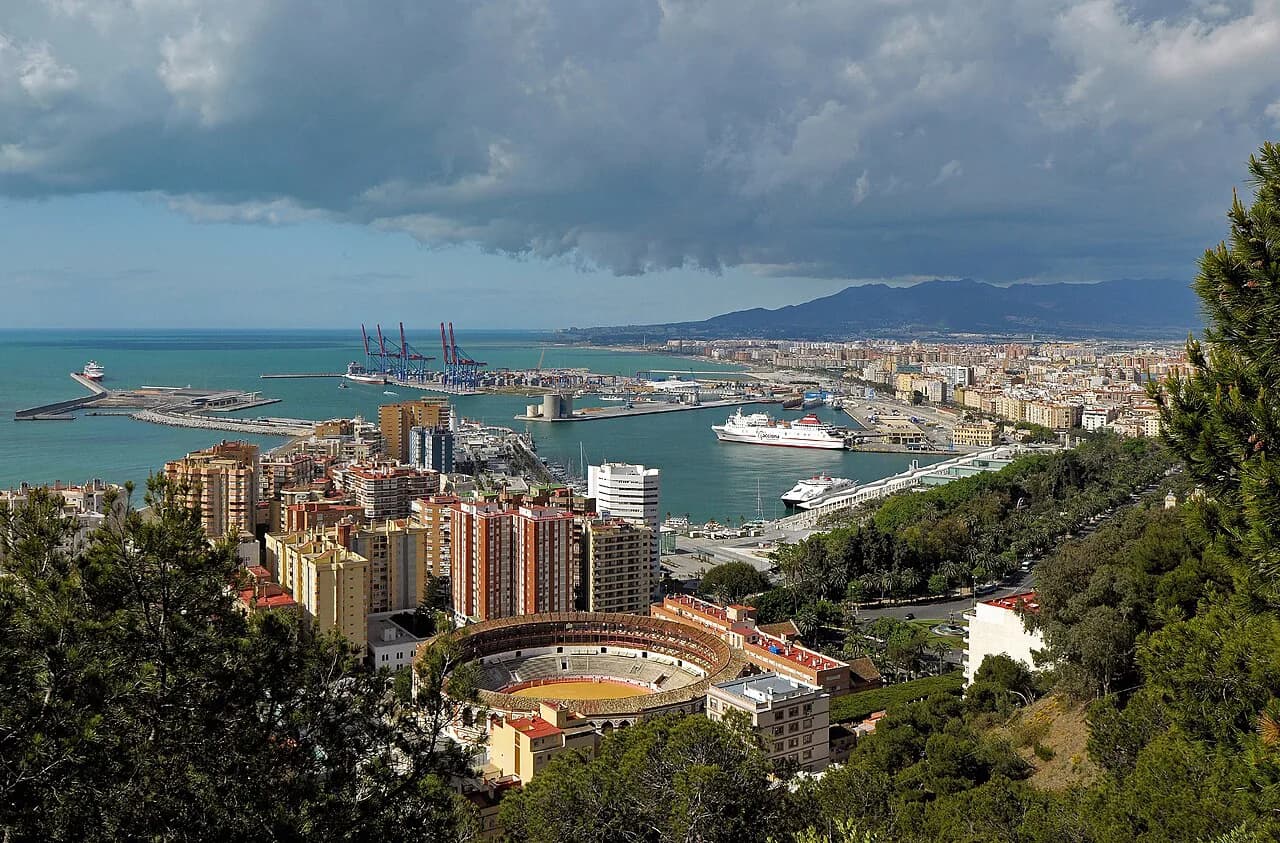
The climb from the city to Gibralfaro castle is the single best use of an April morning in Málaga. The path zigzags up through pine and cypress for roughly half an hour at a steady pace, and the reward is a terrace view over the port, the bullring and the whole sweep of the bay towards the Costa del Sol.
Do it early, take water and give yourself time at the top rather than racing back down. In April the ascent is warm but not punishing, and the castle walls and shaded walkways offer plenty of places to pause; by June the same climb in the middle of the day is a different experience altogether.
Food in season: spring vegetables and the city's tapas bars
Spring is a serious season in Andalucian kitchens. Look for broad beans, peas and artichokes cooked simply with olive oil and onion, wild asparagus where you find it, and the first decent tomatoes, alongside the year-round staples of fried fish, jamón and cold soups that appear as the days warm. The market at Atarazanas is the place to see what is actually in season.
Tapas culture here rewards grazing: a few stops around the old town and the streets behind the port will feed you better than one long sit-down meal, and April temperatures make the standing-at-the-bar model comfortable rather than a sweat. Expect the busiest bars to be packed during the Easter period and on any sunny weekend.
A day trip in the province: the Axarquía white villages
The Axarquía hills east of the city are the most rewarding day trip from Málaga in April. Frigiliana, with its steep whitewashed lanes and tiled steps, and nearby Nerja, with its cliffside balconies and famous cave, are both within easy reach by car or bus, and the hillsides are green and full of blossom at this time of year rather than scorched.
Go on a weekday if you can, since the villages are popular and the parking in Frigiliana is famously tight. This is hill country, so expect cooler, breezier conditions than on the coast and a few degrees less warmth at altitude, which makes April a far better month for walking these lanes than July.
Crowds and prices: Easter week and the April fair effect
April has two crowd peaks to know about. The first is the Easter period, when Spanish families travel and the city fills with visitors for processions and long weekends; the second, later in the month, is Seville's April fair effect, which pulls travellers towards Andalucía more broadly and pushes up demand for flights and rooms across the region.
Outside those windows, April is a bargain compared with summer. Accommodation and flights are calmer in the first half of the month and in the working weeks after Easter, while the May bank holidays and half-term in the UK start to tighten availability from late April onwards. Book early if your dates coincide with a holiday weekend.
What April does not give you: cool evenings, odd rain spells, a cold sea
Be honest about the trade-offs. The sea is still cold in April, fine for a bracing paddle and little more, and the evenings drop to around 11°C, so outdoor dinners need a layer. Rain is infrequent but real, and when the wind turns easterly the city can feel noticeably cooler than the sunshine suggests.
None of this is a reason to skip April, but it is a reason to build slack into the plan: keep one indoor morning in reserve, don't schedule the Gibralfaro walk for your only full day, and treat beach time as a bonus rather than the centrepiece. Readers who want the fuller seasonal picture should look at our guide to Málaga in spring.
Málaga in April or May?
Choose April for sightseeing, walking and lower prices; choose May for warmth, longer evenings and a sea you can actually swim in. May's average high of 24.3°C (75.7°F), night low of 14.2°C (57.6°F) and 292 hours of sunshine make it the stronger all-round month for a holiday that mixes city and coast, but it comes with more visitors and higher rates.
If your trip is built around the Alcazaba, the old town and long lunches rather than sunbathing, April gives you almost all of the pleasure at a quieter tempo. If the beach and warm evenings matter as much as the city, hold out for later in the spring or compare with what June delivers in our guide to Málaga in June.
The verdict
April is one of the best months to see Málaga as a city rather than a resort. The AEMET normals promise around 21°C by day, 11°C at night, 244 hours of sunshine and rain on only about 4.5 days, which is close to ideal for the Alcazaba, Gibralfaro and a week of tapas.
Come expecting spring, not summer: pack for cool evenings, keep a plan B for a wet day, and don't count on swimming. Do that, and April rewards you with a city that is warm, bright and far less crowded than it will be in two months' time.
More Málaga spring guides
Frequently Asked Questions
How warm is Málaga in April?
Average daytime highs reach about 21.4°C (70.5°F) and night-time lows fall to around 11.1°C (52°F), based on AEMET's long-term climate normals for Malaga Airport. Sunshine averages 244 hours across the month, with rain on roughly 4.5 days. Treat these as typical conditions rather than a forecast.
Is Málaga warm enough to sunbathe in April?
Generally no, not reliably. Days around 21°C are pleasant for walking and sitting outside, but the sea stays cold and a cloudy or windy day can feel cool. If sunbathing and swimming are central to your trip, later in spring or early summer is the safer choice.
Is April a good time to visit Málaga?
It is excellent for sightseeing, walking up to Gibralfaro, eating outdoors and exploring the old town, with lower prices and smaller crowds than summer outside the Easter period. It is a weaker choice for a beach holiday.
Is Málaga or Seville warmer in April?
Seville generally runs hotter than Málaga in spring, being inland and away from the cooling coast. If you want the warmest city break in Andalucía, Seville is the likelier bet; if you want comfortable temperatures for walking, Málaga's coastal moderation works in your favour.
Should I visit Málaga in April or May?
April suits city sightseeing and walking, with milder days, cooler evenings and fewer visitors. May brings warmer nights, more reliable sunshine and a sea that is closer to swimmable, at the cost of higher prices and busier streets.
What should I do in Málaga in April?
The Alcazaba, the Roman Theatre, the cathedral quarter, Calle Larios and the walk up to Gibralfaro are the core of an April visit, with the Atarazanas market for lunch and a day trip into the Axarquía hills if you have time. Indoor options such as the Picasso Museum cover a wet morning.
Sources
Spring sun notes
Optional updates when we add destinations and months.
You might also like
Continue reading
More guides you'll find useful