Tuscany in April: How Warm It Really Is and Who Should Go
Tuscany in April brings roughly 20°C days, cold nights and about eight wet days. See what suits sightseeing, walking and eating, and who should wait for May.
On this page
April in Tuscany is a sightseeing and walking month, not a beach month: around Florence the typical daytime high is 20.0°C (68°F) and the typical night-time low 8.05°C (46.5°F), with about 8.66 wet days across the month, according to the 1991-2020 climate normals for Firenze Peretola. Those numbers describe afternoons that feel properly spring-like and mornings and evenings that still call for a jacket. If you want reliable heat, outdoor swimming or long dinners in short sleeves, aim for late May or June instead.
Tuscany in April at a Glance
Think of April here as two seasons in one day. The Florence normals give a comfortable afternoon and a cold start, and the gap between the two is wide enough that a morning in the Boboli Gardens and an evening on a piazza need different clothes. Rain arrives in spells rather than as constant drizzle, so a wet morning often gives way to a bright afternoon.
The month suits city breaks, museum days, vineyard visits and hill-town walking, and it suits families who are happy to layer up. It does not suit anyone whose main reason for coming is lying on a beach or swimming: the Tyrrhenian is still cold in April, and the coastal resorts are only just waking up. If sunshine is the priority, compare the warm places in Europe in April first, because southern Sicily and parts of Greece run several degrees ahead of Tuscany.
Weather in April
The most reliable figures come from the long-term station record for Florence. For April, the 1991-2020 normals for Firenze Peretola give an average daily maximum of 20.0°C (68°F), an average daily minimum of 8.05°C (46.5°F), 8.66 days with measurable rain and 67.17 mm of precipitation across the month. Read those as typical conditions rather than a promise for your week: the same record shows May warming to a 24.34°C (75.9°F) average high, so the direction of travel through spring is clear.
Florence sits inland in a basin, so the city can feel warmer than the open countryside by mid-afternoon and cooler after dark. Coastal Maremma and the Elba ferry ports are milder at night but windier, and the Garfagnana hills north of Lucca run cooler and wetter than the Florentine plain. If you are splitting a week between city and countryside, expect the hill towns to be a couple of degrees fresher and to have more cloud.
Other published averages for the region sit close to the station record, with April highs around 19°C (66°F) and lows around 8°C (46°F). Treat the Florence normals as the most precise guide and expect variation of a degree or two across the region.
Is It Warm Enough?
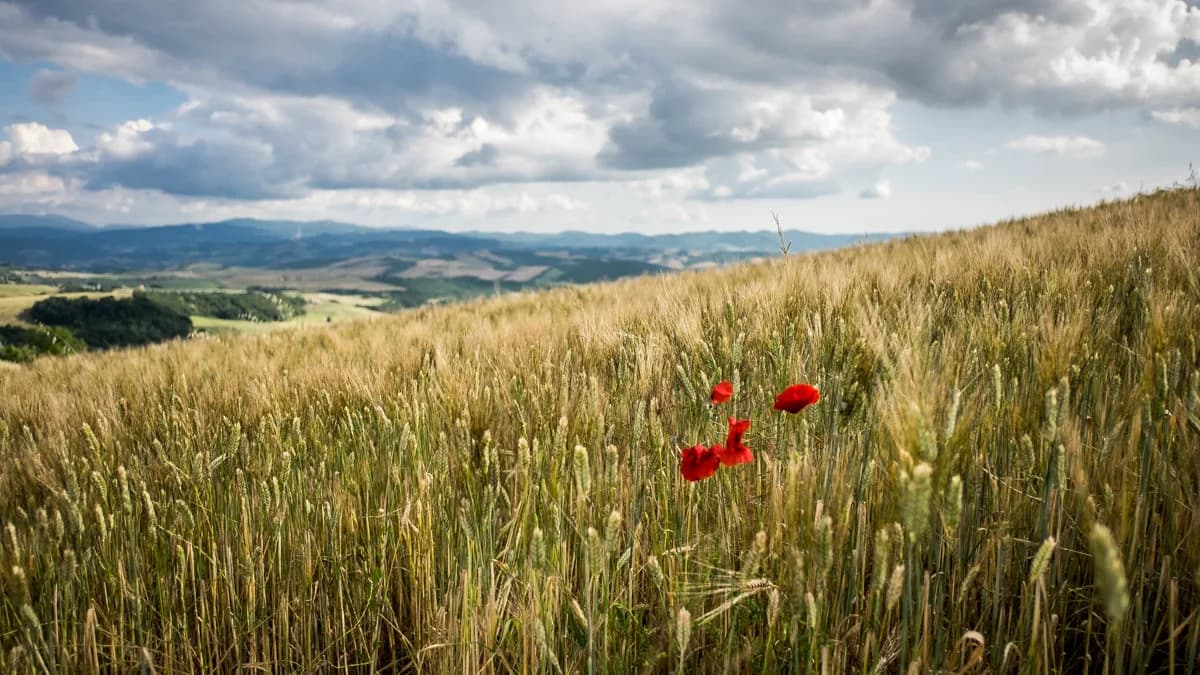
For sightseeing, yes. A 20°C afternoon is pleasant for the Uffizi, the Duomo and the medieval streets of Siena, Lucca and Arezzo, and the shoulder-season light on the Val d'Orcia is the reason photographers come in spring. Walking works well too, provided you start later in the morning once the ground has warmed and keep a waterproof layer in the day bag.
For outdoor lunches and aperitivi, April is genuinely good in the middle of the day, especially in the Chianti hills and around Montepulciano. Picnics are a Tuscan tradition on Easter Monday and on 25 April, and locals head for the countryside on those days, which tells you the weather is usually good enough for eating outside at midday. Evenings are the weak point: with a typical low near 8°C, dinner on a terrace needs a jumper and an indoor backup.
For families, April works if you plan around the weather rather than against it, with a mix of short walks and indoor sights. For lazing outdoors or anything involving water, choose a later month. Our guide to Tuscany in May shows how quickly the afternoons climb once the season opens.
Early vs Late April
The month changes noticeably from start to finish. Early April can still feel like March, with brisk mornings, more frequent showers and the chance of a genuinely cold spell in the hills. By late April the afternoons are reliably warm in Florence and the Val d'Orcia, and the evenings are just about bearable outside.
Compared with March, April brings more daylight, more open attractions and better walking, though it also brings Easter crowds. Compared with May, it is a couple of degrees cooler by day and several degrees cooler at night, and rain is more likely. If you want the sweet spot between warmth and quiet, the last ten days of April are usually a better bet than the first ten.
What Is Open
By April the main sights are running properly, and many museums shift to longer spring schedules as the days lengthen, so it is worth re-reading an individual museum's own page before you fix a day around it. Gardens are at their best: the Boboli Gardens and the great villas around Florence are green and flowering, and Lucca's walls and botanical corners are pleasant for an unhurried afternoon.
Wine country is open but not yet in harvest mode, so visits to estates in Chianti, Montalcino and Montepulciano are calmer and easier to arrange than in autumn. Spring menus are a real reason to come: wild asparagus, fresh fava beans and spring herbs appear on Tuscan tables in April, and the Garfagnana is known for its wild-herb cooking. Ask what is local rather than ordering the same dish you would eat in August.
Things to Do in April
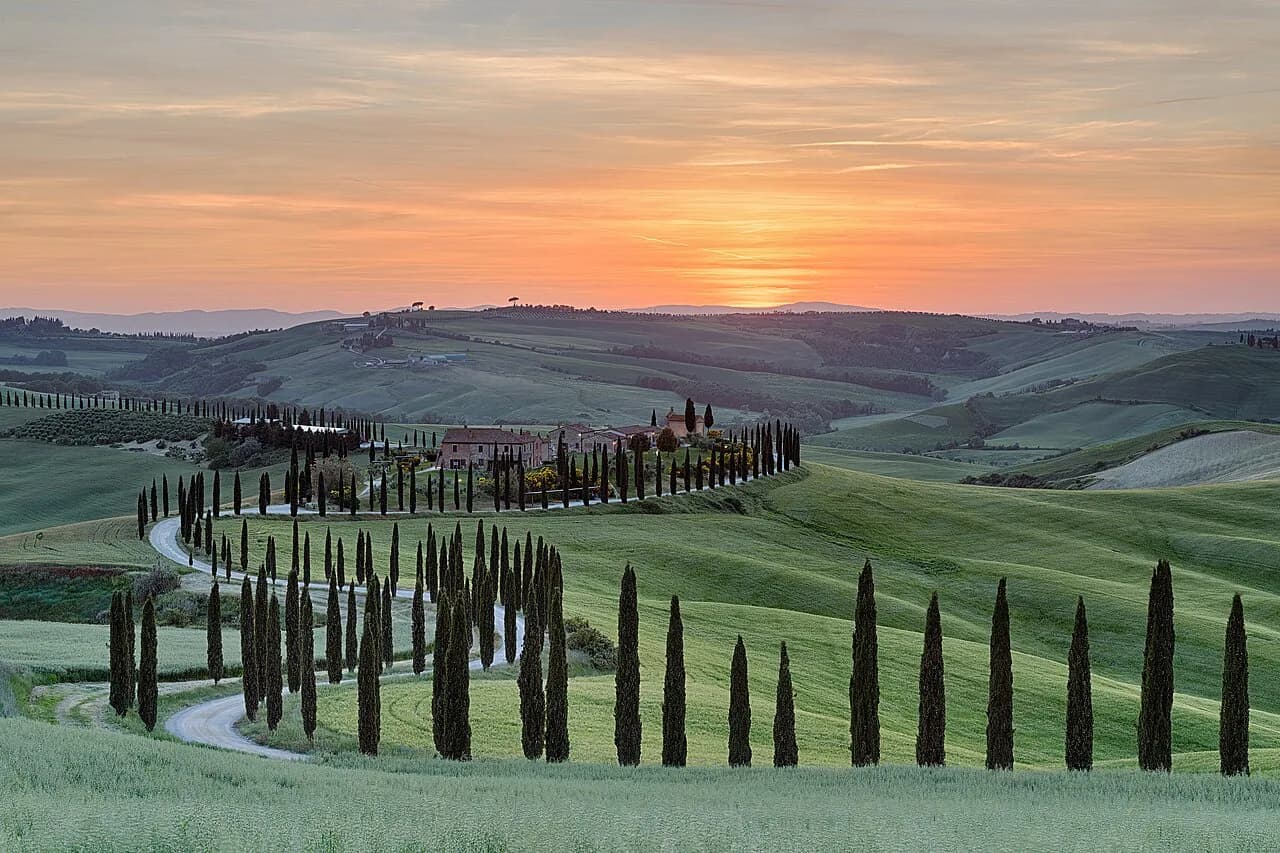
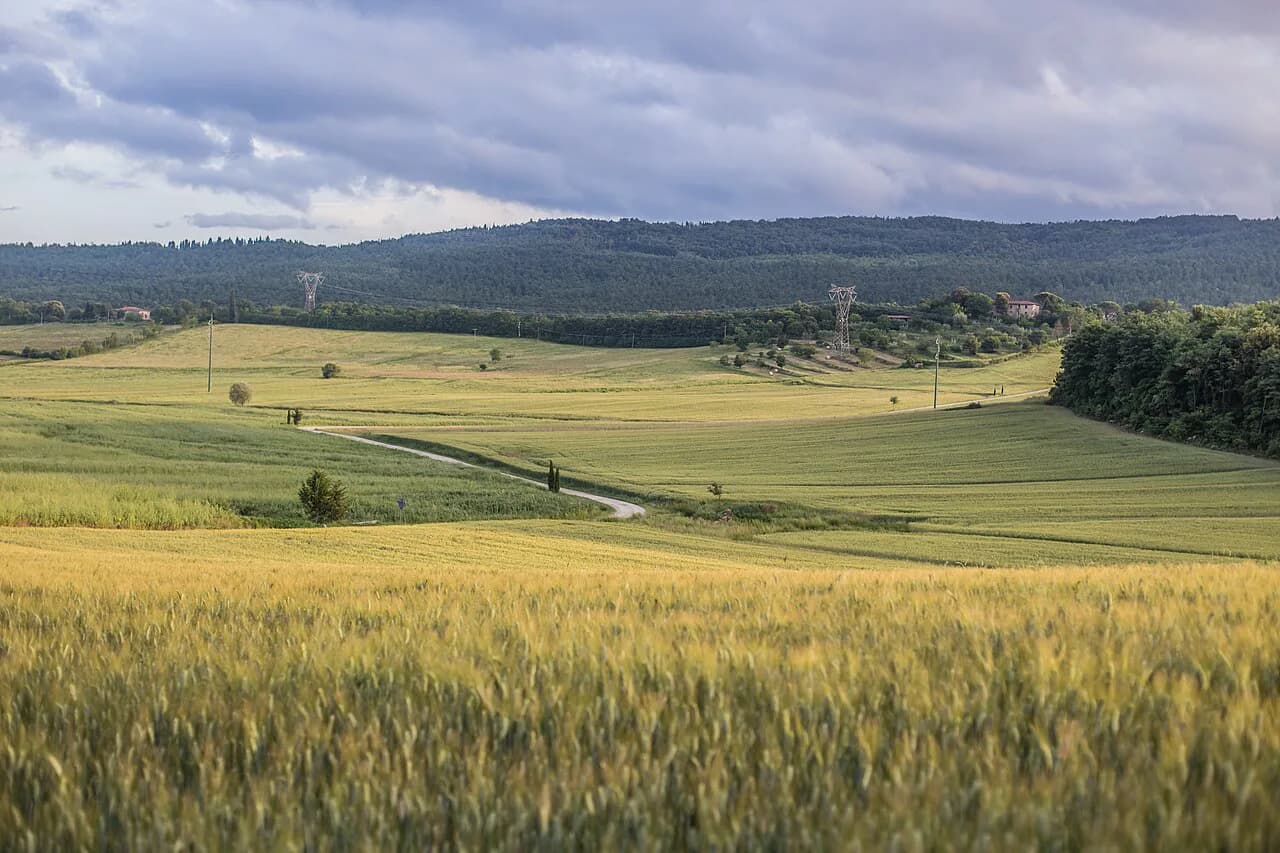
Build a day or two around the Val d'Orcia, driving the cypress roads between Pienza, San Quirico d'Orcia and Monticchiello, with a stop at the abbey of Monte Oliveto Maggiore. The countryside is green, the light is clear and the crowds are far lighter than in summer. It is the single best April excursion from Florence or Siena.
In the Chianti hills, use Greve, Panzano and Castellina as bases for short walks and estate visits, and time a Saturday for a market. Lucca rewards a full day on foot along its walls, and the Garfagnana north of the city suits anyone who wants mountain scenery without Alpine conditions.
Monthly fairs add texture without dominating a trip. Arezzo's antique fair fills the streets on the first Sunday of the month and the Saturday before it, while Panzano hosts a craft and vintage market on the first Sunday and Barga holds an antiques market on the second weekend. If you are travelling with children, check the official page for any event you plan to build a day around.
Crowds and Prices
April is shoulder season overall, which means better value than June, July and August outside the holiday peaks. The peaks are the ones that matter: the Easter weekend and Easter Monday, when Italians travel and eat out in large numbers, and 25 April, Liberation Day, when museums may change their hours and some shops close. Book the Easter period well ahead and expect the roads back into Florence to be busy on the evenings after those holidays.
Florence and Siena are busy in April but manageable outside Easter week, and hotel and flight prices generally sit below summer levels. Coastal resorts are quiet and some seasonal places are still opening, so do not plan a trip around a specific beach restaurant. If the trade-off between price and warmth matters to you, the best time to visit Tuscany compares the months directly.
Honest Drawbacks
April rain is real. Around eight or nine wet days in the month, as the Florence record shows, means you should plan at least one indoor option per day, whether that is a museum, a cellar visit or a long lunch. Showers tend to be short, but a two-day wet spell is entirely possible and will change your hill-town plans.
Cool evenings catch people out. A typical night-time low near 8°C means an evening outdoors needs more than a light shirt, and hill towns such as Montepulciano and Montalcino are fresher still. The sea is cold and the beach clubs are not in full swing, so a coastal leg in April is for walking and views rather than swimming.
Finally, do not bolt on a Dolomites or Apennine hiking leg in April. Higher trails can still be snow-covered or closed, and the mountain season starts later, so keep the trip focused on Tuscany's cities, hills and countryside.
April or May?
Choose April for cities, art, food and walking, and for the freshness of a countryside that has not yet dried out. Choose May for reliably warm afternoons, longer evenings outdoors and a better chance of a coastal day that does not depend on a jacket. The Florence normals make the jump plain: an average high of 20.0°C in April becomes 24.34°C in May, with slightly fewer wet days.
If you are weighing April against later spring, our guide to Tuscany in June shows how much hotter and drier the region becomes, with average highs near 29°C (84°F). April is the gentler choice for walking and sightseeing, and June is the better one for long evenings and heat. If you want a broader comparison of spring months in Tuscany, the Tuscany in spring guide sets out what changes across the season.
If your dates are flexible and you are travelling mainly for warmth, look south before you commit. Tuscany in April is a spring destination, and the dependable heat in April sits further south in the Mediterranean.
The Verdict
April is one of the best months for seeing Tuscany properly. Florence's long-term record gives you 20°C afternoons, around 8.66 wet days and cold nights, which is exactly the mix that makes city days and countryside drives comfortable without summer heat. Go for art, wine, hill towns and spring food, and accept that the evenings need a layer and the sea is out of bounds.
Plan Your Visit
Choose the last ten days of April if you want the best balance of warmth, open attractions and manageable crowds, and keep the Easter weekend and 25 April in mind when you book. Base yourself in Florence or Siena for the first half and shift into the countryside for the second, so rainy days fall on museum time rather than on your best walk.
Before you travel, confirm current opening hours and any holiday closures on the official pages for the specific museums and estates you plan to visit, and see the UK government's Italy travel advice for entry and safety information. If warmth is your main aim, read where is warm in Europe in April before fixing your dates.
More Tuscany spring guides
Frequently Asked Questions
How warm is Tuscany in April?
Around Florence, the 1991-2020 climate normals give an average daytime high of 20.0°C (68°F) and an average night-time low of 8.05°C (46.5°F). Coastal and southern parts of the region are a little milder at night, and hill towns run cooler.
Does it rain much in Tuscany in April?
Yes, April is changeable. The Florence station record shows 8.66 days with measurable rain and 67.17 mm across the month, so expect showers in spells rather than continuous rain. Plan one indoor option each day.
What is the weather like in Tuscany in late April?
Late April is warmer and more settled than early April, with pleasant afternoons around Florence and the Val d'Orcia and evenings that are just about comfortable outside. Rain is still possible, so keep a waterproof layer with you.
Is Tuscany warmer in April or May?
May is warmer. The same Florence normals show the average high rising from 20.0°C (68°F) in April to 24.34°C (75.9°F) in May, with slightly fewer wet days. April suits sightseeing and walking; May suits longer evenings outdoors.
Is April a good time to visit Tuscany?
April is excellent for cities, art, food and hill-town walking, with lower prices than summer outside Easter week and the 25 April holiday. It is not a beach month: the sea is cold and the coast is still waking up.
Can you sunbathe in Tuscany in April?
Not reliably. Afternoons can reach around 20°C (68°F) in Florence, which is pleasant for sitting outside, but the sea is cold and the beach clubs are not in full operation. Treat April as a sightseeing and walking month.
What is there to do in Tuscany in April?
Drive the Val d'Orcia between Pienza and Monticchiello, walk Lucca's walls, visit Chianti estates and eat the spring menu of wild asparagus and fava beans. Monthly antique and craft fairs in Arezzo, Panzano and Barga add variety.
Sources
Spring sun notes
Optional updates when we add destinations and months.
You might also like
Continue reading
More guides you'll find useful