The Best Time to Visit Bologna: Month by Month
April to June is the best time to visit Bologna, with mild days and warm evenings. See how each month compares for weather, crowds and local food.
On this page
May is the best time to visit Bologna for most travellers: days around 23 °C (73 °F), evenings near 12 °C (54 °F) and a city that is fully awake without summer's humidity. April and June are the close alternatives, one cooler and quieter, the other warmer and busier. Autumn runs spring a fair contest, and the deep summer months belong to people who genuinely like heat.
Bologna sits in the Po Valley, so its climate is continental rather than Mediterranean: warm days, noticeably cooler nights, and rain spread fairly evenly through spring. That matters when you are choosing a month, because the gap between afternoon and evening temperatures is wider than the Italian coast at the same time of year.
Weather in April: Mild Days, Cool Evenings
April averages a daytime high of 17.7 °C (about 64 °F) and a night-time low of 7.4 °C (about 45 °F), with 8.2 rain days and 74.2 mm of precipitation, the wettest of the three spring months on these normals. Those are typical conditions over the 1971–2000 averaging period, not a forecast. The rain is the month's weak point: it arrives in spells rather than constant drizzle, but you should plan on at least one wet day in a short break.
Daytime temperatures suit walking and sightseeing well, and the evenings are cool enough that a terrace dinner needs a jacket or a table under the porticoes. April rewards travellers who want the city without crowds, and it is a good month for the long walk under the arcades. Our guide to things to do in Bologna in April covers where that time goes.
Families with young children often find April evenings a stretch, and anyone hoping to eat outside late into the night should look at May instead. For a fuller picture of the month, see our guide to Bologna in April.
Weather in May: The Sweet Spot
May lifts the average daytime high to 23.0 °C (about 73 °F) and the night-time low to 12.0 °C (about 54 °F), with 8.1 rain days and 58.0 mm of precipitation. Day length is generous, the evenings finally work for outdoor eating, and the showers are less heavy than April's on the same normals. This is the month where Bologna's climate, food and street life line up.
Expect the city's main sights to be busy, especially around the May bank holidays and half term, and reserve the popular table you want in advance. The reward is a month that suits almost everyone: walkers, couples, food-led weekends and multi-generational trips. If May is your month, work through our guide to things to do in Bologna in May before booking.
The one caution is that thunderstorms can build quickly in the afternoons, so keep a flexible slot for indoor sights. For the month in full detail, including the food calendar, read Bologna in May.
Weather in June: Warm Days, Warmer Nights
June averages 27.1 °C (about 81 °F) by day and 15.7 °C (about 60 °F) at night, with 6.1 rain days and 57.3 mm of precipitation on the same 1971–2000 normals. Rain days fall, along with total monthly rainfall, so the showers are fewer and the month the driest of the three. Evenings are genuinely warm, which changes how you use the city: late dinners, long aperitivi, slow walks.
By late June the Po Valley humidity starts to bite, and sightseeing in the middle of the afternoon becomes a slog. Plan museum time or a long lunch for the hottest hours and save the walking for morning and evening. Our guide to things to do in Bologna in June is built around that rhythm.
June is a good month for travellers who want guaranteed warmth and don't mind sharing the centre, and a poor one for anyone who wilts above the mid-twenties. Read Bologna in June for the seasonal detail.
Early Versus Late Spring
The shift across spring is substantial. An early-April afternoon can sit close to 15 °C (59 °F) while a late-May one reaches the mid-twenties, and the same two months feel like different cities once the evenings warm up. If you are fixed on a month, go late rather than early within it.
Early April is best for travellers who prioritise empty streets and lower prices, and who accept a wet day or two. Late May and June suit anyone who wants outdoor dining to be the point of the trip. The middle of May is the compromise most people should take.
July and August: Hot, Humid and Quiet Locally
High summer in the Po Valley means heat and humidity rather than dry Mediterranean sun, and the city slows accordingly. Many locals leave for the coast and the hills, so the centre can feel oddly empty in the hottest weeks while the sights stay open for visitors. It is a month for early starts, air-conditioned interiors and long shaded lunches.
If you want to see how Bologna's spring warmth compares with the rest of the continent before committing, our guide to where is hot in April sets several Southern European destinations side by side. It is a useful benchmark for how much heat you are willing to trade.
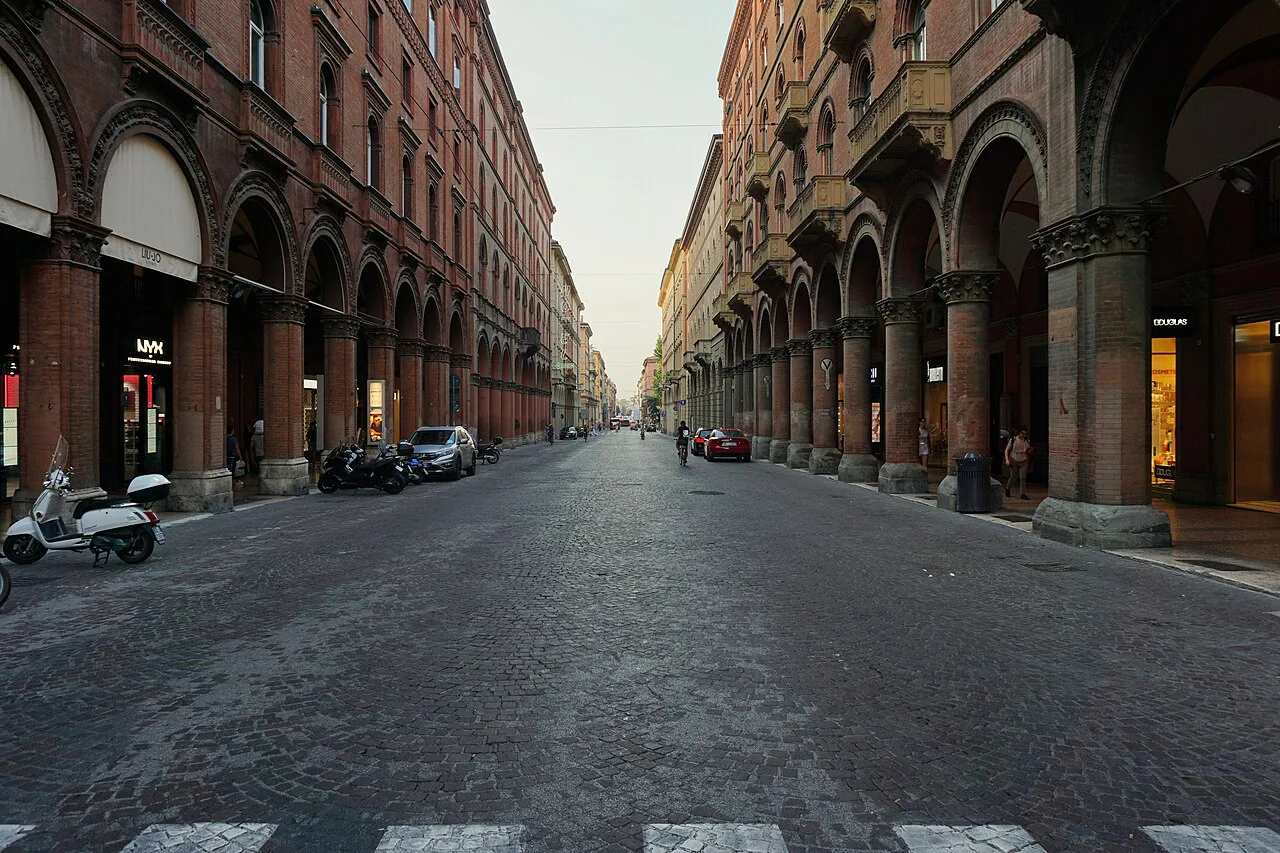
The porticoes do real work in these months, providing shade along routes like the climb to San Luca. Walking them early in the morning is the difference between a pleasant hour and a punishing one.
September and October: The Second-Best Window
September brings the warmth of late summer without the peak humidity, and the city fills again as locals return from the coast. It rivals May for comfort, with the advantage that the food calendar moves into autumn game, mushrooms and truffles. For many regular visitors it is the single best month of the year.
October is a step cooler and wetter than September, but it still delivers pleasant days for walking and a city that has emptied of summer tourists. It suits travellers who value atmosphere over guaranteed sunshine. The trade-off against May is shorter daylight and a higher chance of rain on any given day.
November to March: Cold, Wet and Short on Daylight
Winter in Bologna is chilly and often damp, with frequent rain between November and February, and daylight is limited. The upside is the city at its most local: the trattorias are full, the porticoes are quiet, and prices are at their lowest. It is a good season for a food-focused short break and a poor one for long walks or day trips into the countryside.
Snow is occasional rather than routine, but the cold is real and the evenings come early. If you want outdoor time in daylight, this is not your season.
What Is Open Through the Season
Bologna's core sights, churches and food markets operate year-round, and the porticoes are public routes that do not close with the season. Seasonal opening patterns matter more for day trips into the surrounding hills and for specific restaurants that take breaks, so it is worth asking directly when you plan a countryside excursion.
For anything with a published timetable, opening hour or event date, check the venue's own website close to your trip rather than relying on a general guide. That is the only reliable way to know what is running during your exact dates.
Things to Do in Spring: Porticoes, Walks and Food
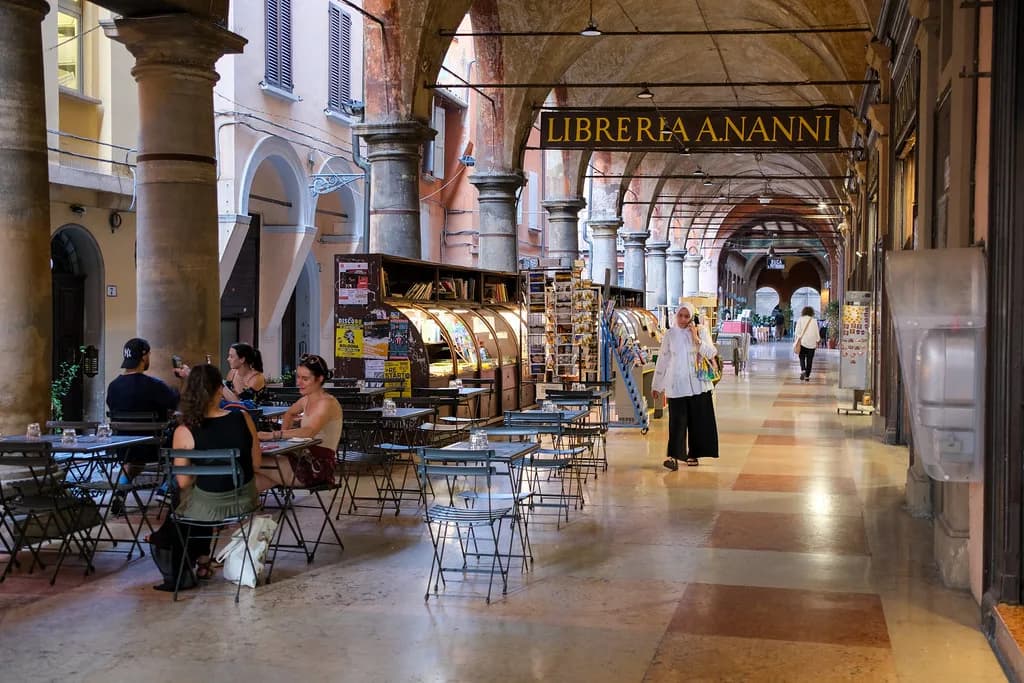
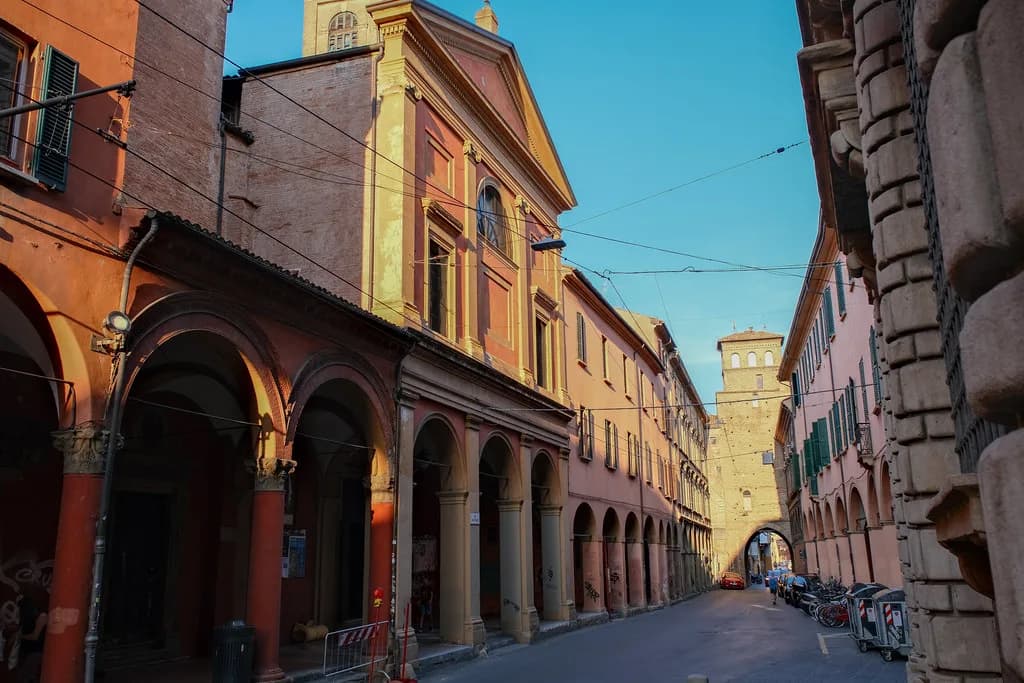
The porticoes are Bologna's defining experience and its best spring activity, giving you a covered route through the centre whatever the weather does. The long arcade up to San Luca is the classic walk, and in April and May the climb is cool enough to enjoy. In July you would want to start at dawn.
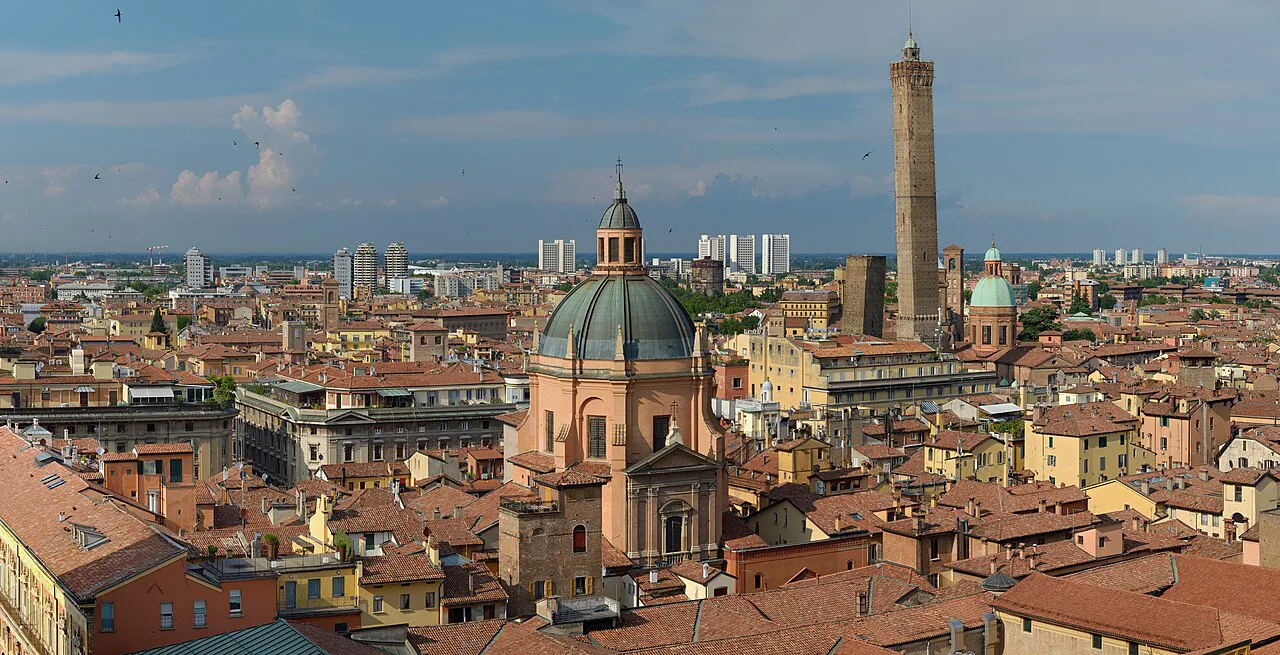
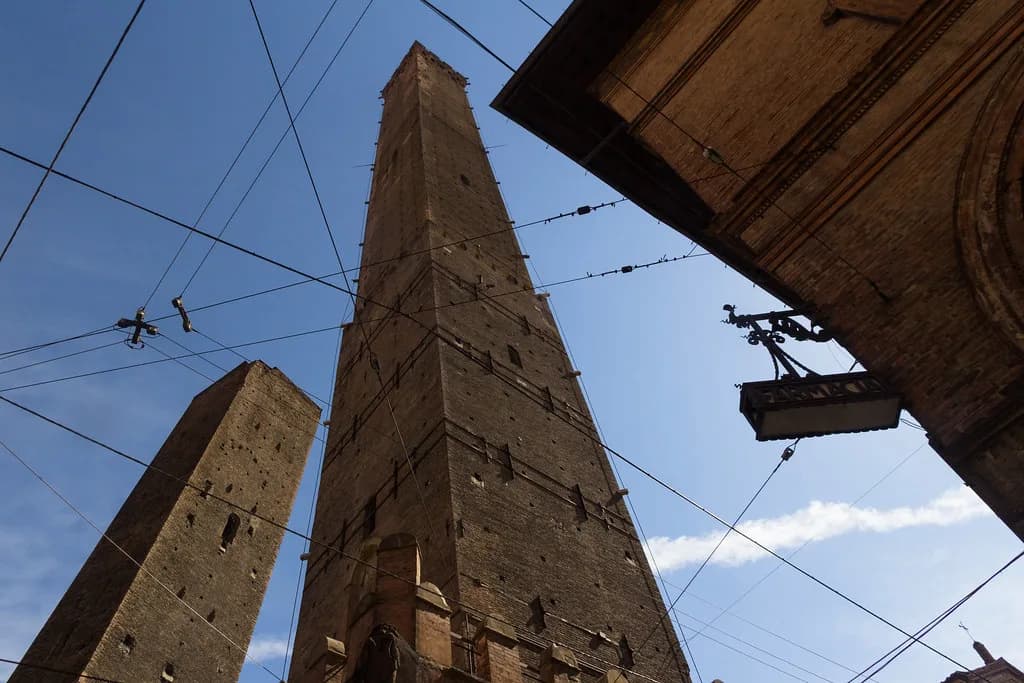
The Quadrilatero, the food quarter between Piazza Maggiore and the towers, is at its best in spring, when the market stalls, bakeries and wine bars spill into the streets. This is where you eat tagliatelle al ragù and tortellini, and where spring produce shapes the menus. Go in the morning for the market and return in the early evening for an aperitivo.
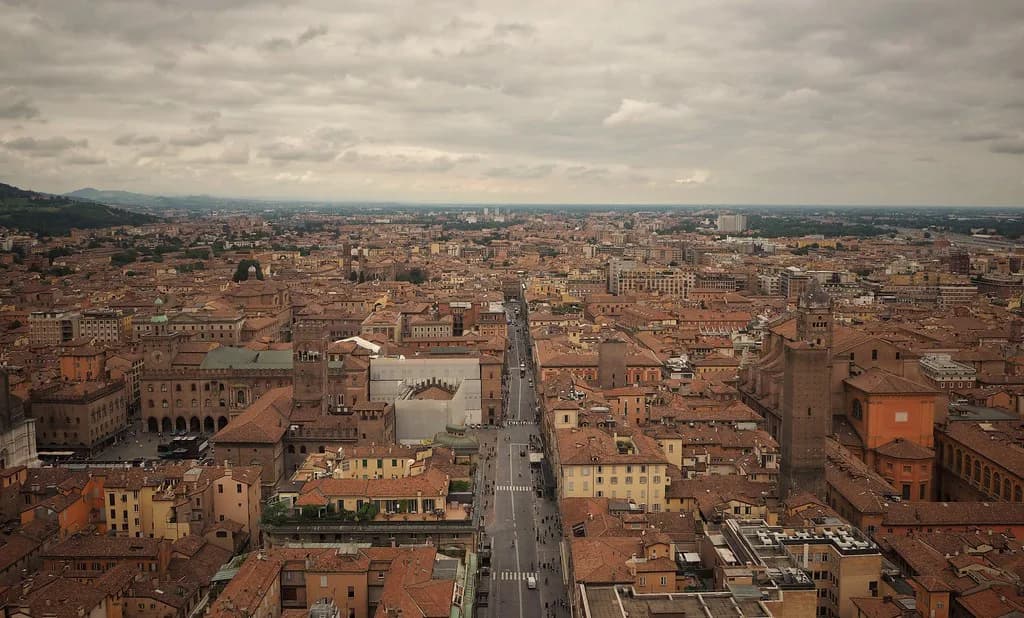
Spring cooking in Bologna leans on fresh peas, asparagus and herbs alongside the year-round classics, so menus change through April and May. Ask what is in season rather than ordering from habit. It is also the season for walking the hills above the city, where the views back over the red rooftops are the reward for the climb.
Crowds and Prices by Season
Bologna never suffers the crushing crowds of Florence or Venice, but it is busy in May, at bank holidays and half term, and during graduation week. April and late September are calmer, and the deep summer weeks can feel surprisingly relaxed because locals have left. Winter is the quietest season of all.
Prices follow the same pattern, with the highest accommodation rates around May and September and lower ones in winter. We do not quote figures here because rates move constantly; compare your dates directly across booking sites to see the real gap.
April or May?
Choose April if you want the quietest spring city, lower prices and can accept evening temperatures near 7 °C (45 °F) and roughly eight rain days. Choose May if you want to eat outside in the evening, walk without a coat and see the city at full energy, at the cost of higher prices and more people.
A useful rule: if your trip is built around restaurants, markets and long lunches, take May. If it is built around architecture, museums and photography, April gives you clearer streets for the same sights.
May or September?
These are the two best months, and the choice comes down to what you want to eat and how much you value evening light. May gives you the longest days, spring vegetables and the city at its most sociable. September gives you warmth with less humidity, a returning local population and an autumn kitchen that many food travellers prefer.
September has the edge on comfort for walking, while May wins on daylight and the sheer pleasure of the season opening. Neither will disappoint, and choosing between them honestly depends on whether you are a spring or an autumn eater.
The Verdict
May is the best time to visit Bologna. It has the most comfortable balance of day and evening temperatures, the least disruptive rain of the spring months, and a city that is fully awake. If May is unavailable, September is the next best choice, and April works well for travellers who prioritise quiet streets over warm evenings.
Avoid late July and August unless you handle humidity well, and treat November to February as a food-and-culture season rather than an outdoor one. Whenever you come, the porticoes and the food quarter will be waiting.
Plan Your Trip
Pick May if you can, September if you cannot, and April if you want the city to yourself. The single decision that matters most is whether warm evenings are part of your plan, because that is what separates Bologna's spring months from one another.
If you are still comparing destinations, our guide to the best time to visit Lake Como is a useful contrast for a northern Italian trip built around water and mountains rather than a city.
More Bologna spring guides
Frequently Asked Questions
How many days is enough in Bologna?
Three full days covers the centre comfortably: the porticoes, Piazza Maggiore and the surrounding streets, the food quarter, and the climb to San Luca. Add a fourth day if you want a day trip into the surrounding hills or a slower food-focused schedule. Because spring rain can cost you an afternoon, four days gives you margin without feeling rushed.
Does it rain a lot in Bologna?
Rain is spread fairly evenly through the year rather than concentrated in one season. In the spring months the normals show roughly eight rain days in April, eight in May and six in June, which means you should expect some wet weather on any spring trip but also plenty of dry days. Showers often pass through in an afternoon rather than settling in for the day.
Is Bologna worth visiting in April?
Yes, if you want quiet streets, lower prices and comfortable daytime walking. Daytime highs sit in the high teens, which is pleasant for sightseeing, and the porticoes keep you covered when a shower passes. The compromise is cooler evenings and a higher chance of rain than in May.
How hot is Bologna in June?
June averages around 27 °C (81 °F) by day and 16 °C (60 °F) at night, so it is warm rather than scorching, but Po Valley humidity makes the afternoons feel heavier than the numbers suggest. Plan the middle of the day indoors and take your walking in the morning or evening. Late June is noticeably hotter than early June.
Sources
Spring sun notes
Optional updates when we add destinations and months.
You might also like
Continue reading
More guides you'll find useful