Things to Do in Bologna in June: Warm Days and Long Evenings
June in Bologna brings warm days, shaded portico walks and tables spilling into the streets. Here is what to do and why early June beats late.
On this page
June in Bologna is warm, mostly sunny and dry enough to plan long days outdoors, which makes it the month when the city's piazzas finally work as places to linger rather than hurry through. Heat builds steadily towards the end of the month, so the sensible shape of a June day here is a shaded morning walk, an indoor lunch, and an evening back out under the porticoes.
The month suits sightseers, food-led travellers and couples who want a compact walkable city with long evenings and no need for a car. It is less comfortable for anyone who wilts in humidity or who wants cool walking weather, and those travellers are better served by Bologna in May or by waiting for September.
Weather in June
Expect typical daytime highs in the high twenties Celsius and night-time lows around the high teens, so evenings stay warm enough for outdoor tables without a jacket. The Italian Air Force weather service publishes Bologna's climate normals; read them as long-term averages rather than a forecast for your week.
Rain in June usually arrives as short, heavy afternoon or evening thunderstorms rather than the grey drizzle of spring, and sunshine hours are high. The practical consequence is that a morning outdoors is worth planning, while a late-afternoon plan should have an indoor alternative within a few minutes' walk.
Is it warm enough?
Yes, comfortably, for walking, eating outside and sightseeing, provided you build the day around shade. The porticoes are the reason Bologna handles June better than most Italian cities: you can cross much of the historic centre without direct sun, which turns a hot afternoon into a pleasant one.
June is not the month for anyone who wants brisk, cool air or who dislikes humidity, and the last ten days can feel genuinely hot by mid-afternoon. If your priority is long walks in comfortable temperatures, April or May is the better call. For more detail, see Bologna in april.
Early vs late June
Early June is the sweet spot: warm, bright, and still carrying a little of spring's freshness, with the university term winding down and the city not yet fully in summer rhythm. Late June brings settled heat, heavier evening crowds in the centre, and a stronger case for starting sightseeing at opening time and retreating indoors after lunch.
Late June also shifts the city's daily pattern: aperitivo starts earlier, restaurant tables move further into the streets, and the market halls fill later in the evening. That is pleasant if you like warm nights, but it makes the middle of the day a worse time to be climbing stairs or crossing open squares.
Piazza Maggiore, the Fountain of Neptune and San Petronio
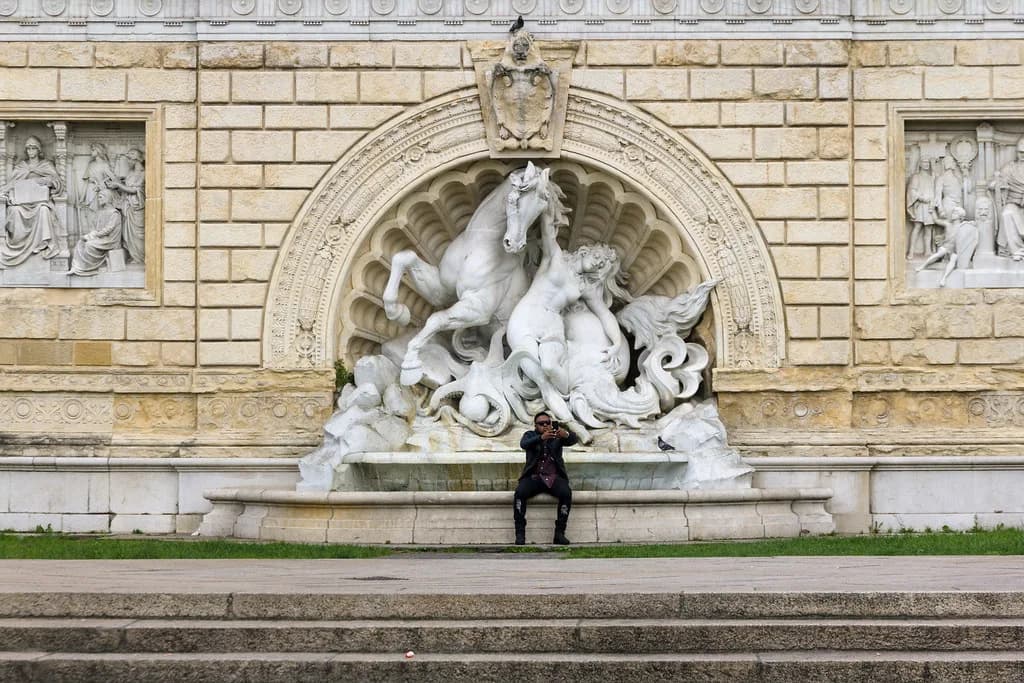
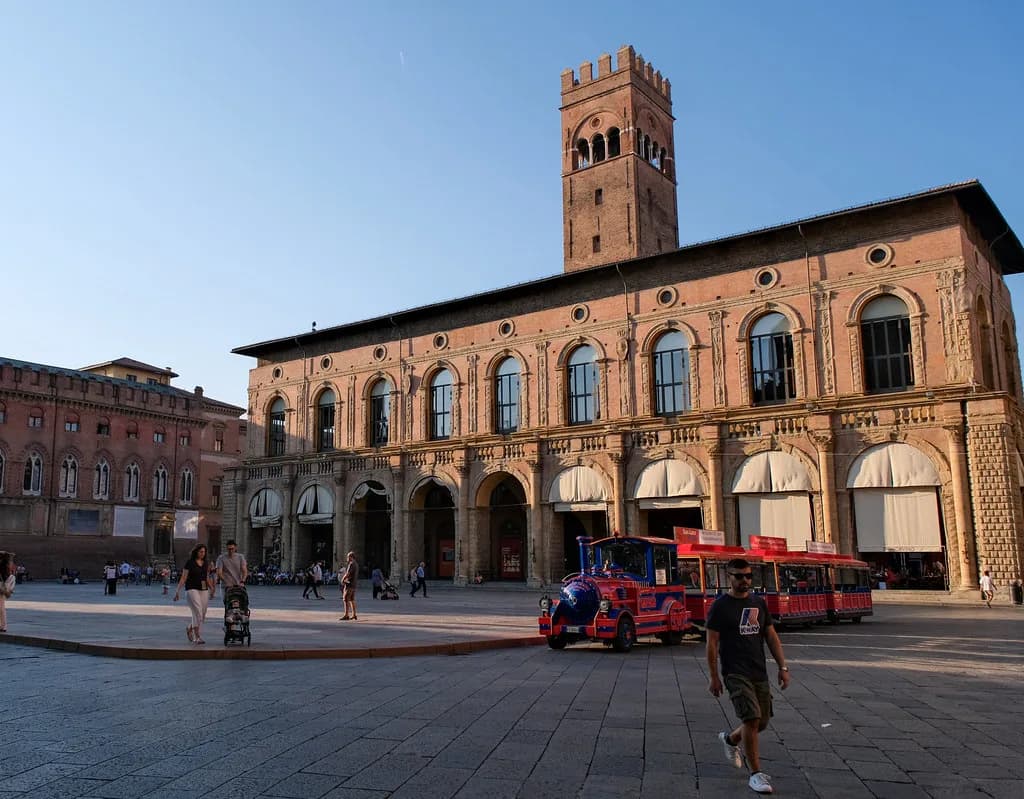
Start at the Fountain of Neptune, designed by Giambologna and Tommaso Laureti in the sixteenth century and dominated by a statue of the sea god standing on a central pedestal above four dolphins representing great rivers. A few steps away, Piazza Maggiore gathers the Palazzo del Podestà, the Palazzo dei Notai and the Palazzo Comunale, known as Palazzo d'Accursio, which houses the city's municipal art collections.
The Basilica of San Petronio, the red brick Gothic church on the square, is free to enter, and inside it holds a meridian line laid out in the seventeenth century that tracks the sun's position through the year; visit around midday if you want to see the beam fall on the floor. The chapels require a small fee and photography is not permitted inside them, while the terraces have been closed to visitors, so plan the basilica as an hour rather than a morning.
The Quadrilatero and Bologna's food markets
The Quadrilatero is the city's old market district, a knot of narrow streets lined with cheese and cured meat shops, wine bars and small restaurants, and Via Pescherie Vecchie is its most photographed lane. Order a board of mortadella and Parmigiano Reggiano with a glass of local white, or sit down properly for tortellini in broth or tagliatelle al ragù.
Mercato delle Erbe is the largest covered market, mixing produce stalls with eateries and wine bars, while Mercato di Mezzo inside the Quadrilatero behaves more like a food court in a medieval building, handy when you want to sit and eat in the cool. Both work well at lunch in June, when the shade and the refrigeration are as much of the appeal as the food.
Food tours and pasta-making classes
A half-day cooking class or food tour is the best use of a hot June afternoon: you are indoors, you learn to roll tagliatelle thin enough to read through, and you eat what you make with a glass of wine. Classes typically run for a few hours and often finish in the evening, leaving the morning free for the towers or the basilica.
Food tours that work through the Quadrilatero's bakeries, delis and wine bars are a sensible first-day move in June because the walking is broken up by stops indoors. Book ahead for the popular ones, since June sits inside the season when the city's food experiences fill up.
The Porticoes of Bologna
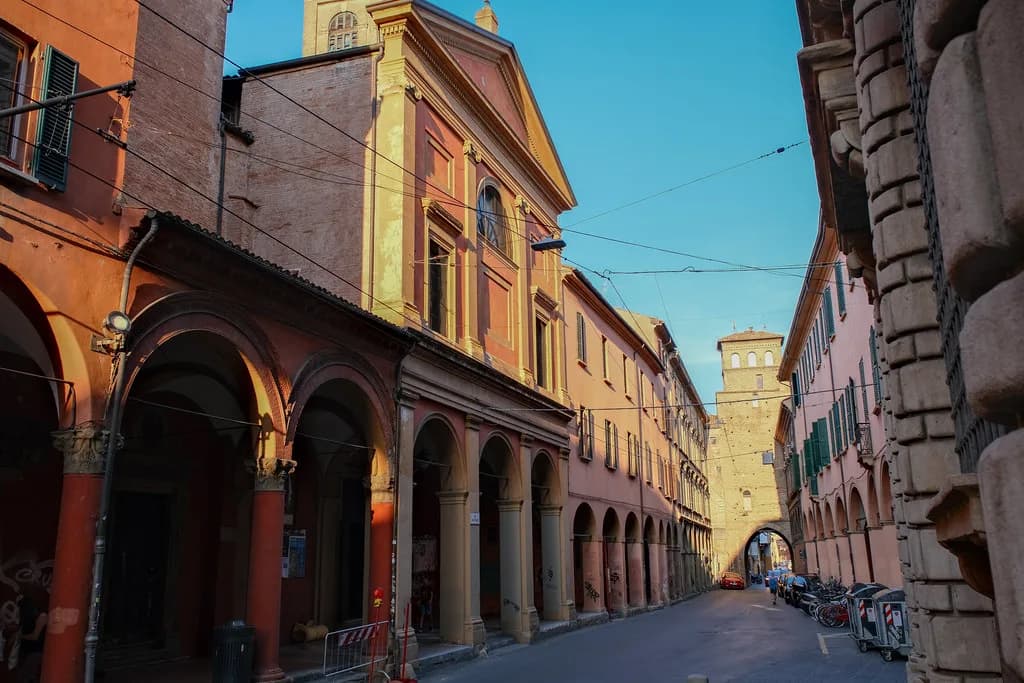
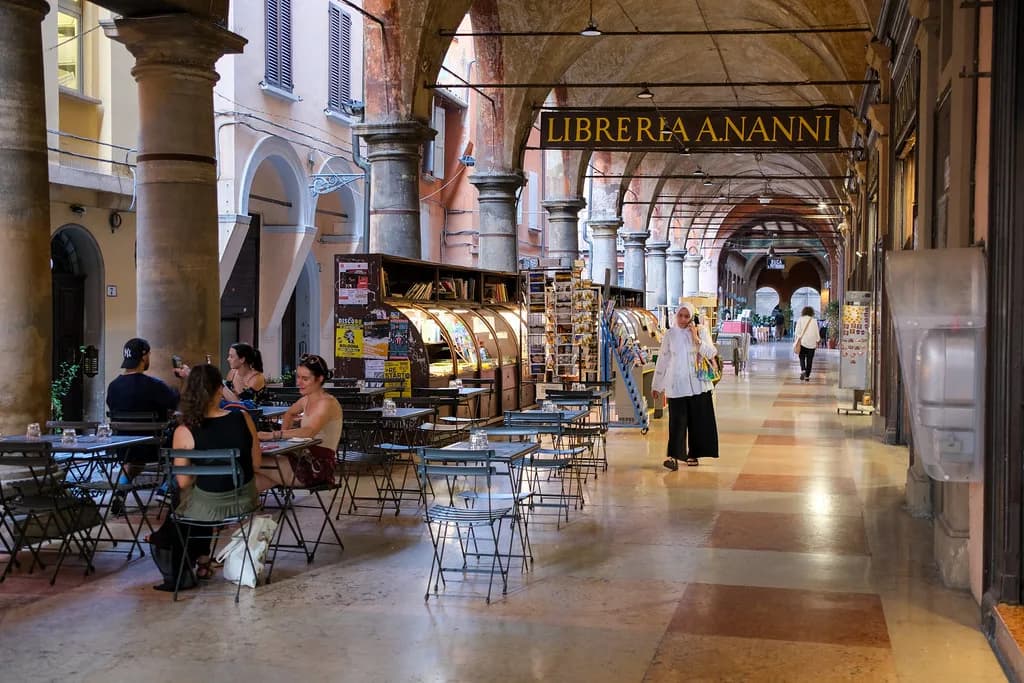
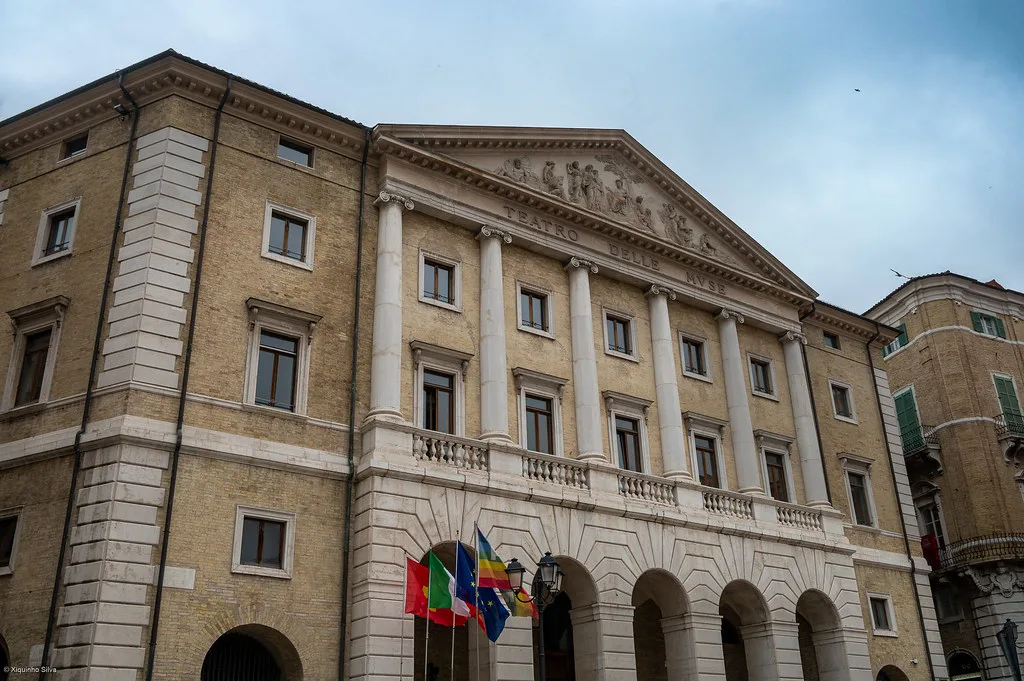
Bologna's porticoes run for roughly 62 kilometres in total, about 42 of them in the historic centre, and twelve stretches were inscribed as a UNESCO World Heritage Site in 2021 for their role in shaping the city's social and economic life over nearly a thousand years. They are the reason June is workable here: a shaded, continuous route between most of the things you want to see.
Walk them without a plan rather than hunting individual stretches; the pleasure is in the variety, from painted ceilings and ornate columns to narrow, intimate passages. Bring out the camera in the late afternoon, when the light turns golden and the temperature finally eases.
The Portico di San Luca walk
The Portico di San Luca climbs 3.8 kilometres to the Sanctuary of the Madonna di San Luca through 666 arches, making it the longest portico in the city and the best morning expedition of a June day. Start early, carry water and treat the climb as the day's main physical effort, because by mid-morning the covered route offers shade but not cool air.
The sanctuary itself is a working pilgrimage church, and the reward is the view back over the city rather than the building alone. If anyone in your group dislikes stairs or heat, the San Luca Express tourist train leaves from Piazza Maggiore, which turns the trip into a half-day rather than a climb.
Towers and viewpoints
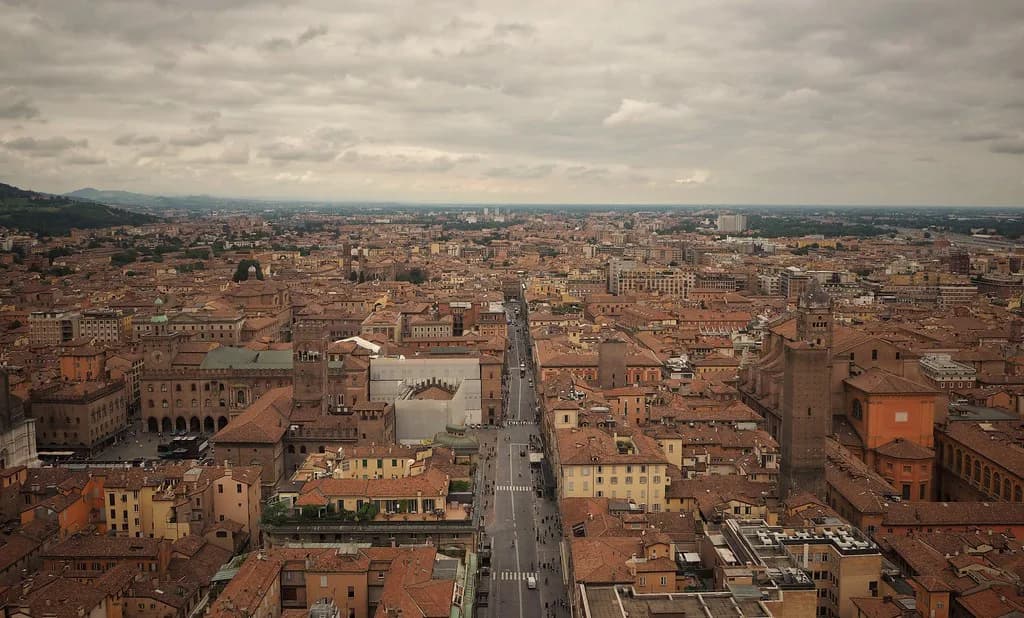
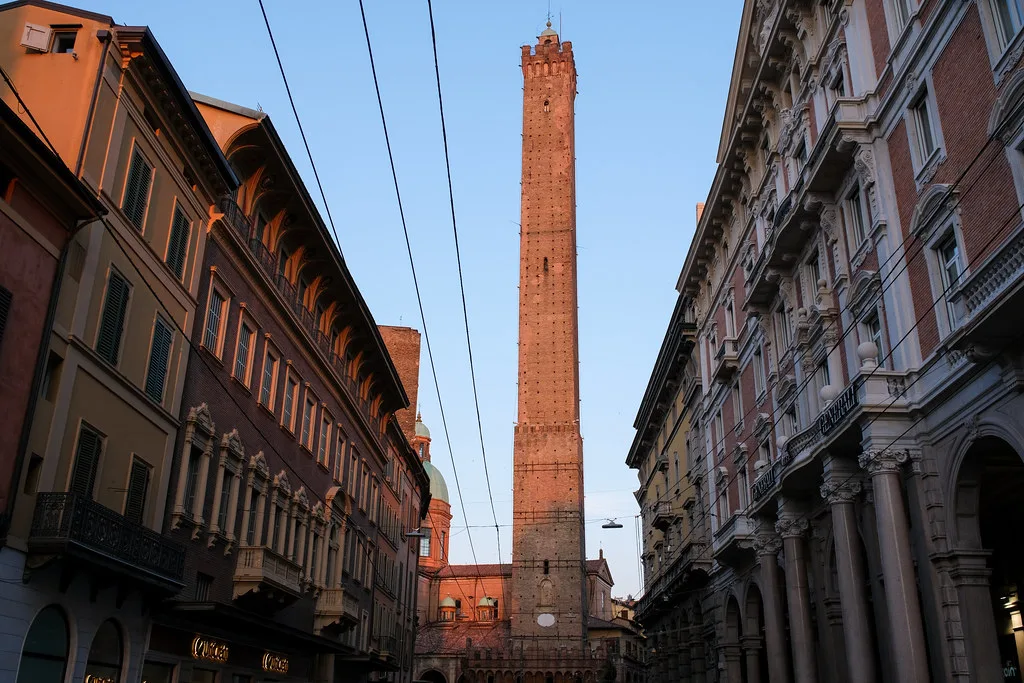
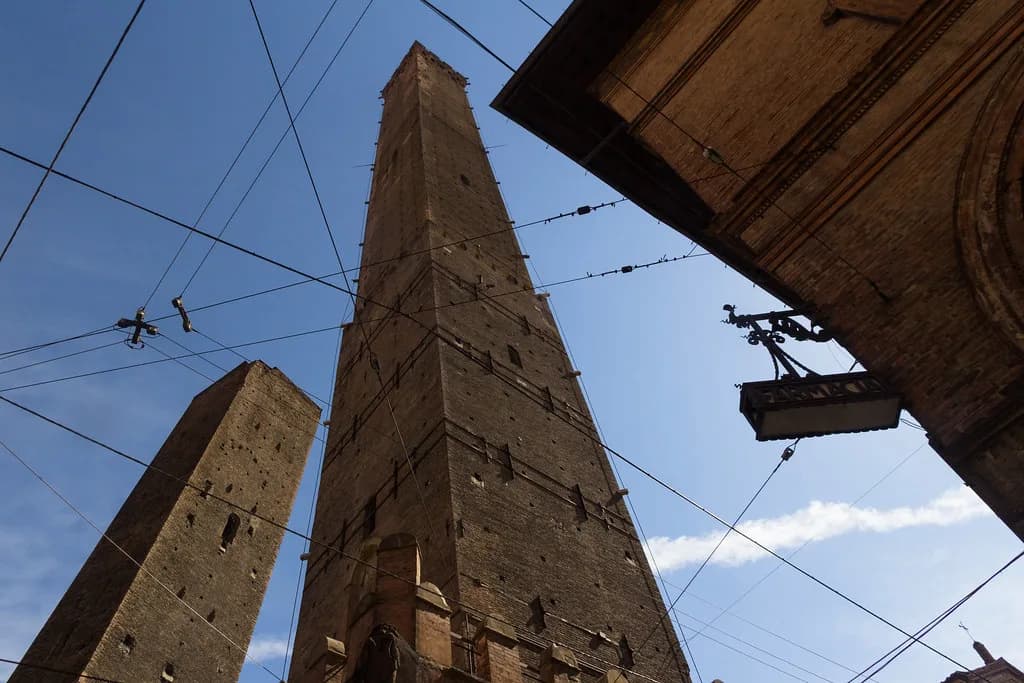
The Asinelli Tower, at 97.2 metres with 498 steps and no lift, is the city's signature climb, and the neighbouring Garisenda Tower has leaned since it was built and cannot be climbed. Access to the Asinelli has been interrupted for maintenance, so make the Clock Tower in Palazzo d'Accursio your first choice and treat the Asinelli as a bonus if it is open when you visit.
The Clock Tower view over Piazza Maggiore only takes about 30 to 45 minutes and around 106 steps, and the ticket includes the municipal art collections below, which makes it an easy June add-on. Book a slot in advance and go late in the day, when the square below is in shadow and the light is at its best.
Archiginnasio and the Seven Churches
The Archiginnasio was the seat of the university, and its porticoed courtyard with its coats of arms is free to explore, while the seventeenth-century Anatomical Theatre and the adjoining rooms charge a modest entrance fee of a few euros, making them one of the best-value stops in the city. The theatre is a small, theatrical wooden room that suits a hot afternoon indoors.
The complex of the Seven Churches of Santo Stefano on Piazza Santo Stefano is a cluster of sacred buildings and a medieval cloister rather than seven separate churches, and entry is free but the complex closes for a couple of hours over lunch, so time your visit for late morning or mid-afternoon.
Hidden canals and evening light
The Finestrella di Via Piella is a small window above a stretch of hidden canal, a two-minute stop that photographs beautifully and is easy to fit into any walk. Pair it with a slow loop back through the side streets towards Piazza Maggiore for the evening, when the stone has cooled and the square fills with people rather than sun.
Golden hour from the Clock Tower or simply from the steps of San Petronio is the best free show in Bologna in June, and it arrives conveniently late enough to follow dinner rather than interrupt it. Plan your table for after eight in the evening and you will see the city at its most relaxed.
Day trips that work in June
The Motor Valley museums dedicated to Ferrari, Lamborghini and Pagani sit in the countryside around Modena and Bologna and make a full day out, with the advantage that much of it happens indoors or in air-conditioned halls. Book timed entry before you travel, since these are popular and June is high season.
Producers of Parmigiano Reggiano and traditional balsamic vinegar in the Emilia-Romagna countryside run guided visits and tastings, often in the morning when the dairies are working. Go early, eat a long lunch, and be back in Bologna for the evening.
Crowds and prices
June sits inside Italy's high season, and the centre of Bologna gets busy at weekends and around Italian public holidays in early June, plus the UK half-term break. Prices for food and drink are highest in the streets immediately around Piazza Maggiore and the Quadrilatero, and fall noticeably two or three streets away.
The city's trade is largely business and food travel rather than beach tourism, so June crowds are concentrated in the centre and the famous food addresses rather than spread across the whole city. Book restaurants in the Quadrilatero and the popular cooking classes in advance, and eat lunch later than you would at home to catch the post-rush lull.
The honest drawbacks
Late June afternoons are hot and humid, and the thunderstorms, when they come, are sudden and heavy. Several of Bologna's attractions close for a couple of hours in the middle of the day, and some towers and terraces have been shut for maintenance, so a flexible plan beats a tight schedule.
Evenings are warm rather than refreshing, which matters if you sleep badly in heat, and the city's most famous sights are small and crowded in season. Anyone who wants cooler walking weather should choose April or May instead.
June or May? June or September?
Choose early June over late June if you want the freshness of spring with long evenings and everything open; choose May if comfortable walking temperatures matter more than settled sunshine. September offers a similar balance to early June from the other side of summer, with the city back in working rhythm and the heat beginning to ease.
If your trip is fixed to June and you want more than the city, a few days in Bologna combine well with the lakes or the coast; see things to do in Lake Garda in June for a contrasting northern Italian option. Keep the Bologna days for the porticoes, the markets and the towers rather than trying to reach the sea and back in a day.
The verdict
Book early June if you want warm days, long outdoor evenings and a walkable city where shade is always a few steps away. The porticoes, the food markets and the cooking classes are what make the month work, not the big-name sights alone, and a shaded morning plus an indoor afternoon is a realistic June day.
If you want cool air and brisk walking, come in April or May instead, and if you want the sea, look at a June stay on the Cinque Terre coast rather than adding a long day trip from Bologna; our guide to where is warm in Europe in April is the place to start if you are still weighing up destinations. Either way, plan around heat rather than fighting it, and accept the trade.
More Bologna spring guides
Frequently Asked Questions
What is the weather like in Bologna in June?
June is typically warm and mostly sunny, with afternoon temperatures in the high twenties Celsius and nights that stay warm. Rain usually comes as short thundery spells rather than all-day drizzle, so mornings are rarely wasted and afternoons are best planned with an indoor option nearby.
Is June a good time to visit Bologna?
Yes, especially early June, when the city is warm but not yet heavy with heat and the evenings are long. The porticoes give you a shaded way across the centre, the food markets and cooking classes fill the hot part of the day, and the city is compact enough to walk.
Is Bologna too hot in June?
Late June can feel hot and humid by mid-afternoon, particularly in the open squares and on the San Luca climb. Early June is gentler. Shift your walking to the morning and evening, use the covered porticoes at midday, and the month is comfortable rather than punishing.
What are the best things to do in Bologna in June?
Start early on the Portico di San Luca walk, spend midday in the Quadrilatero and the food markets, then take the Clock Tower view over Piazza Maggiore in the late afternoon. A pasta-making class or a food tour is a good use of a hot afternoon indoors.
What is there to do in Bologna for free?
The porticoes, the Finestrella di Via Piella and the Fountain of Neptune cost nothing, and the Basilica of San Petronio is free to enter. The courtyard and porticoes of the Archiginnasio are free too, though the Anatomical Theatre and its neighbouring rooms carry a small charge.
How many days do you need in Bologna?
Two full days covers the centre comfortably and three lets you add the San Luca walk, a cooking class and a day trip into the Emilia-Romagna countryside. In June, plan a slower midday and keep the evenings free for the piazzas.
Is Bologna worth visiting in June with kids?
Yes, if you keep the middle of the day light: the porticoes give shade, the Clock Tower is a short climb, and the markets are easy places to eat with children. The San Luca walk is a morning job, and the heat of late June can tire younger children, so early June is the easier choice.
Sources
Spring sun notes
Optional updates when we add destinations and months.
You might also like
Continue reading
More guides you'll find useful